Study in Pictures🌐 English (United States)
Search and Rescue Illustrated

Digital book in PDF · read it on your phone or print it

Search and Rescue Illustrated

Topo maps, compass and declination, UTM and GPS, pace count, radio, incident command, lost person behavior, search tactics and clues. Every topic gets its own page: the drawing first, then what you need to remember.

  • 67 illustrated pages
  • English
  • 30-day guarantee
US$ 27US$ 63
Get the book · US$ 27

Price shown for: United States. In other countries, the checkout shows the price that applies there.

About this book

What it is

Topo maps, compass and declination, UTM and GPS, pace count, radio, incident command, lost person behavior, search tactics and clues. Every topic gets its own page: the drawing first, then what you need to remember.

Who This Book Is For
  • You're studying for the SARTECH II
  • Your evaluation date is set
  • You already go on callouts
What it covers
  1. Before the Call-Out
  2. Reading the Topo Map
  3. Compass and Declination
  4. GPS, UTM and Pacing
  5. Radio and Incident Command
  6. Lost Person Behavior
  7. Search Tactics
  8. Clues and Tracking
  9. Review Before the Evaluation
Language
English (United States)
Pages
67
Format
Digital book in PDF · read it on your phone or print it
Price
US$ 27 (United States)
Delivery
This is a digital PDF book sent to your email: nothing is printed or shipped.
30-Day Guarantee
30-day guarantee: if a file doesn't open, if the content isn't what the product page describes, if you were charged twice or the email never arrived, write to us and we'll refund you in full.

Look Inside the Book

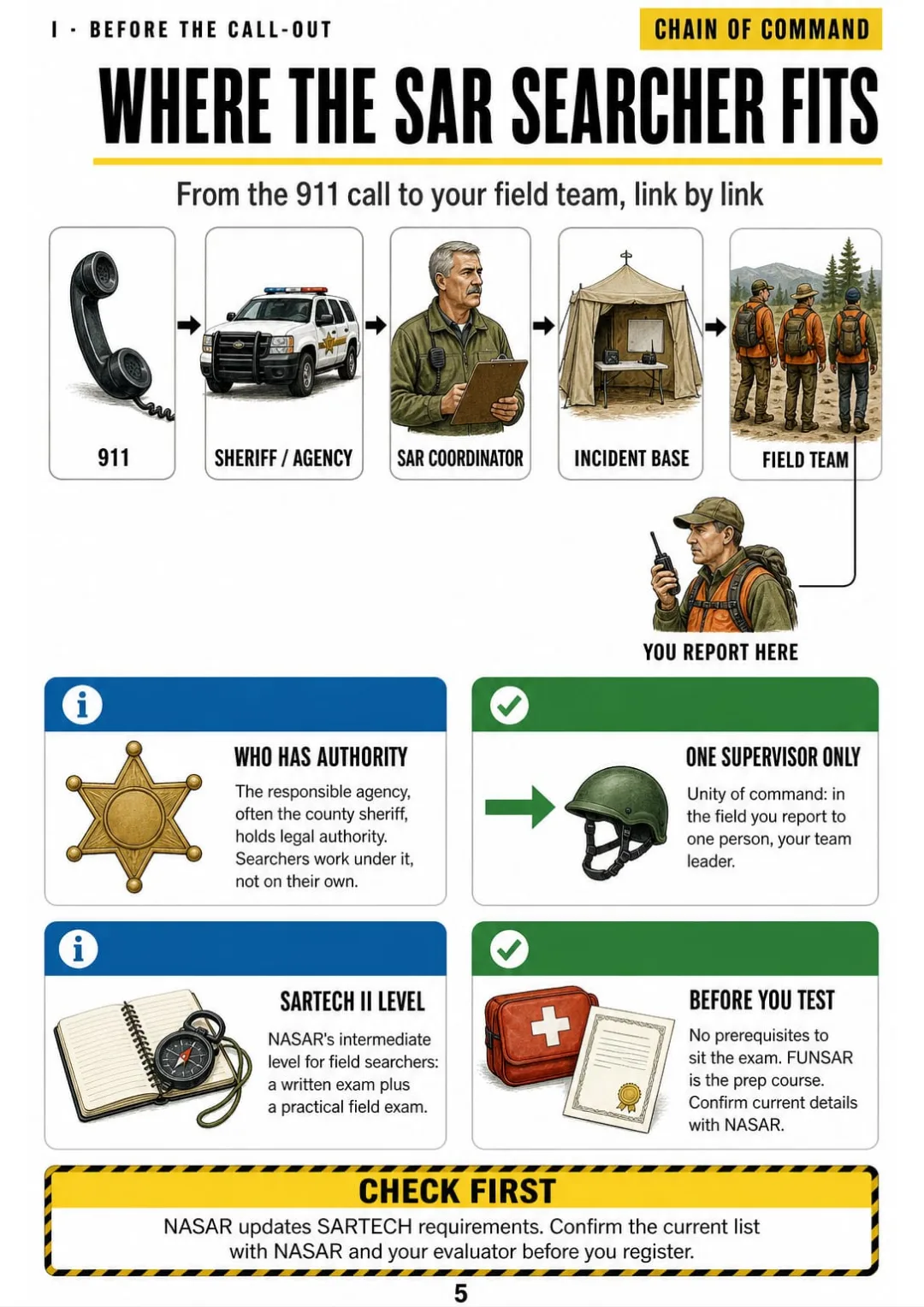
911 → agency → SAR coordinator → incident base → your team leader
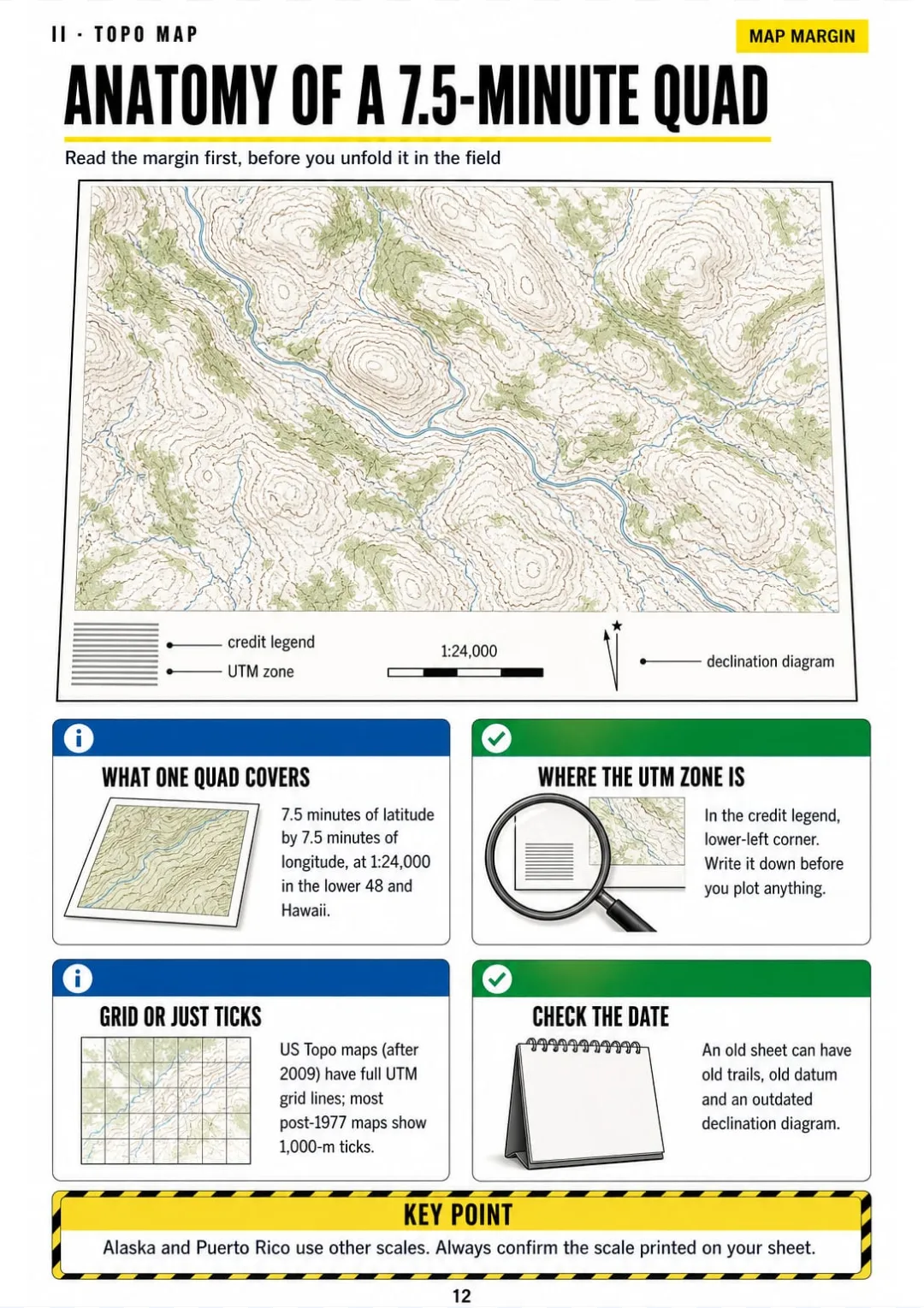
7.5' × 7.5' at 1:24,000: scale, interval, date, zone and declination, all in the margin
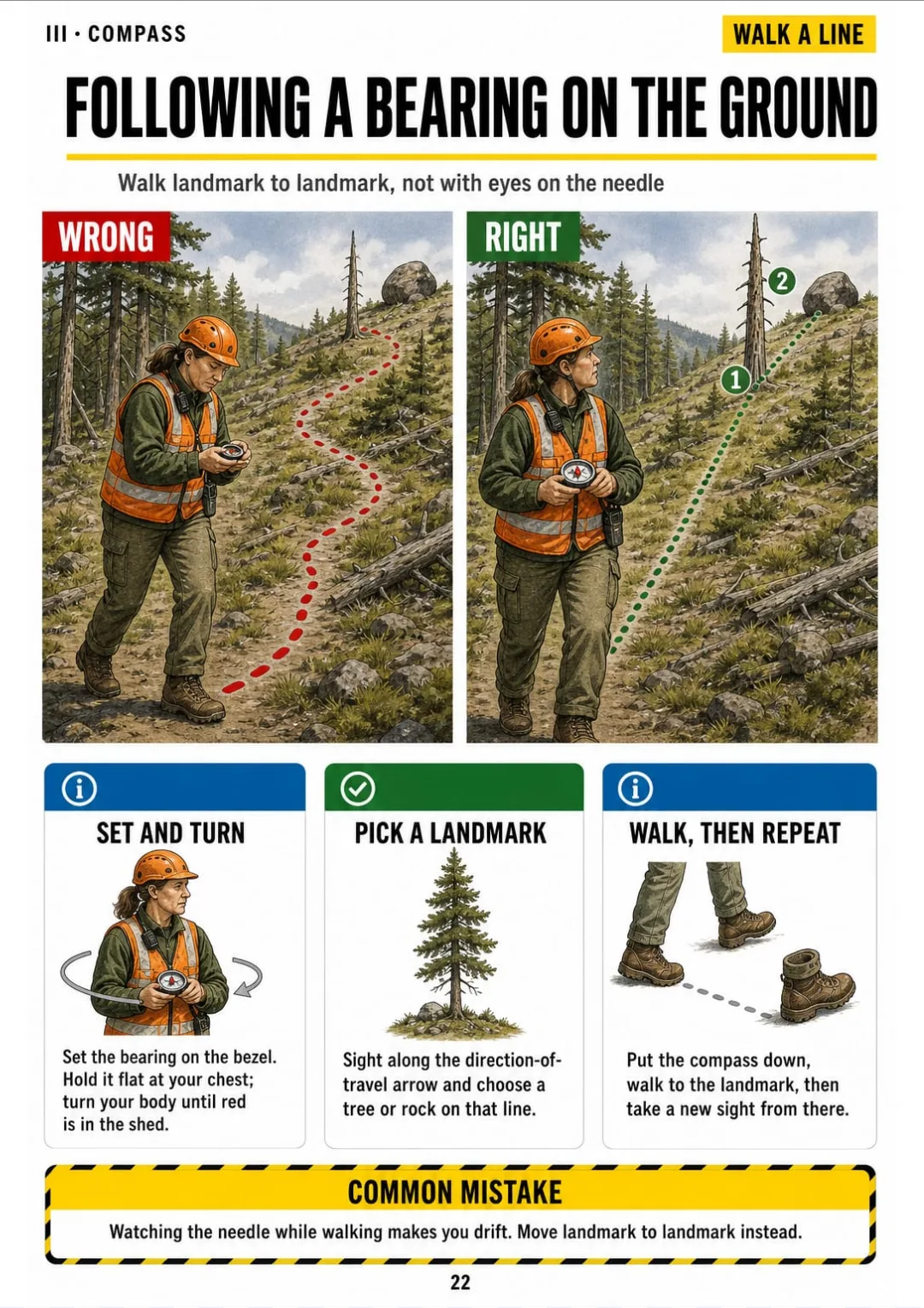
Following a bearing: body turn, landmark, walk, repeat.
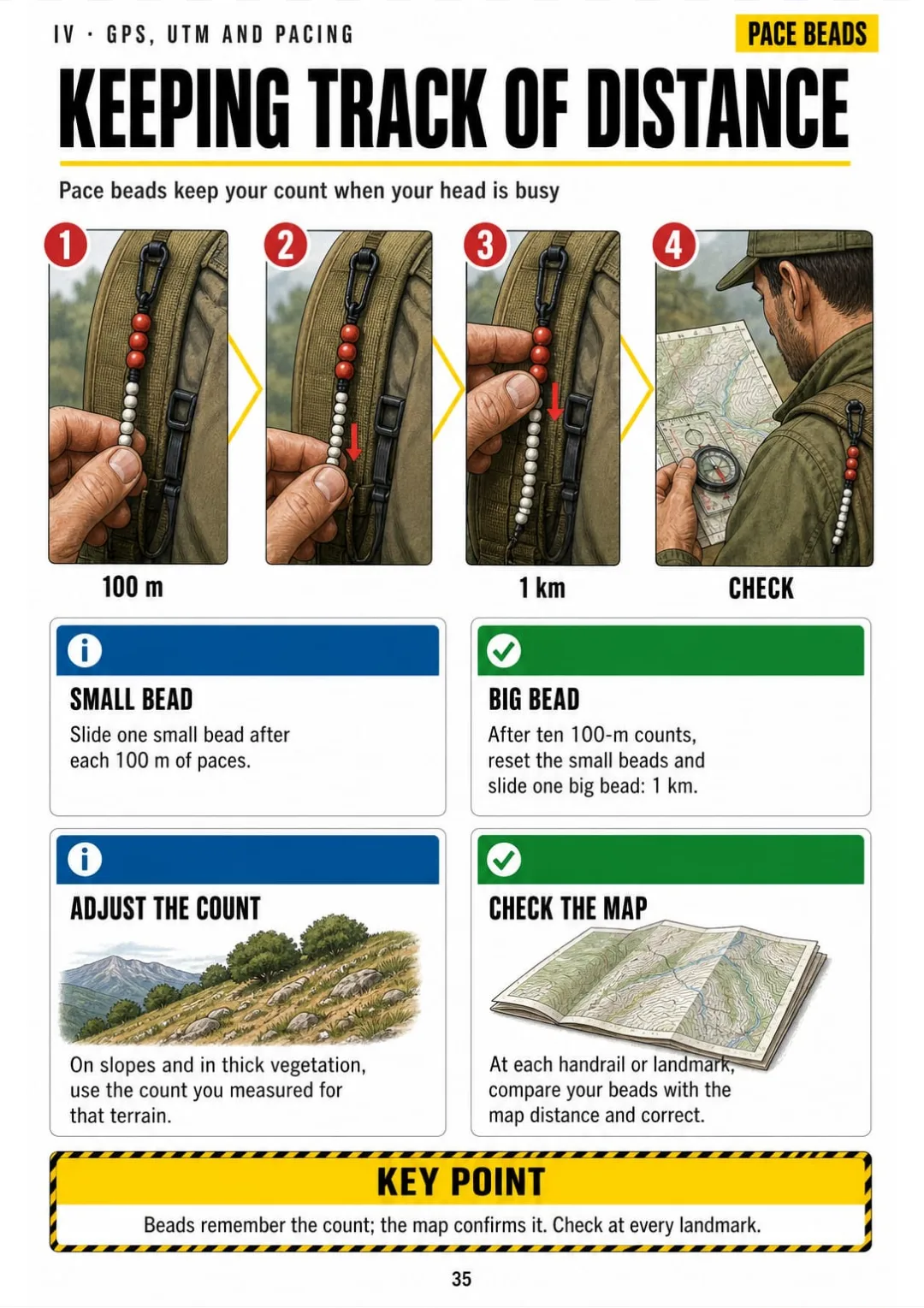
Pace beads: small bead every 100 m, big bead every kilometer, checked against the map
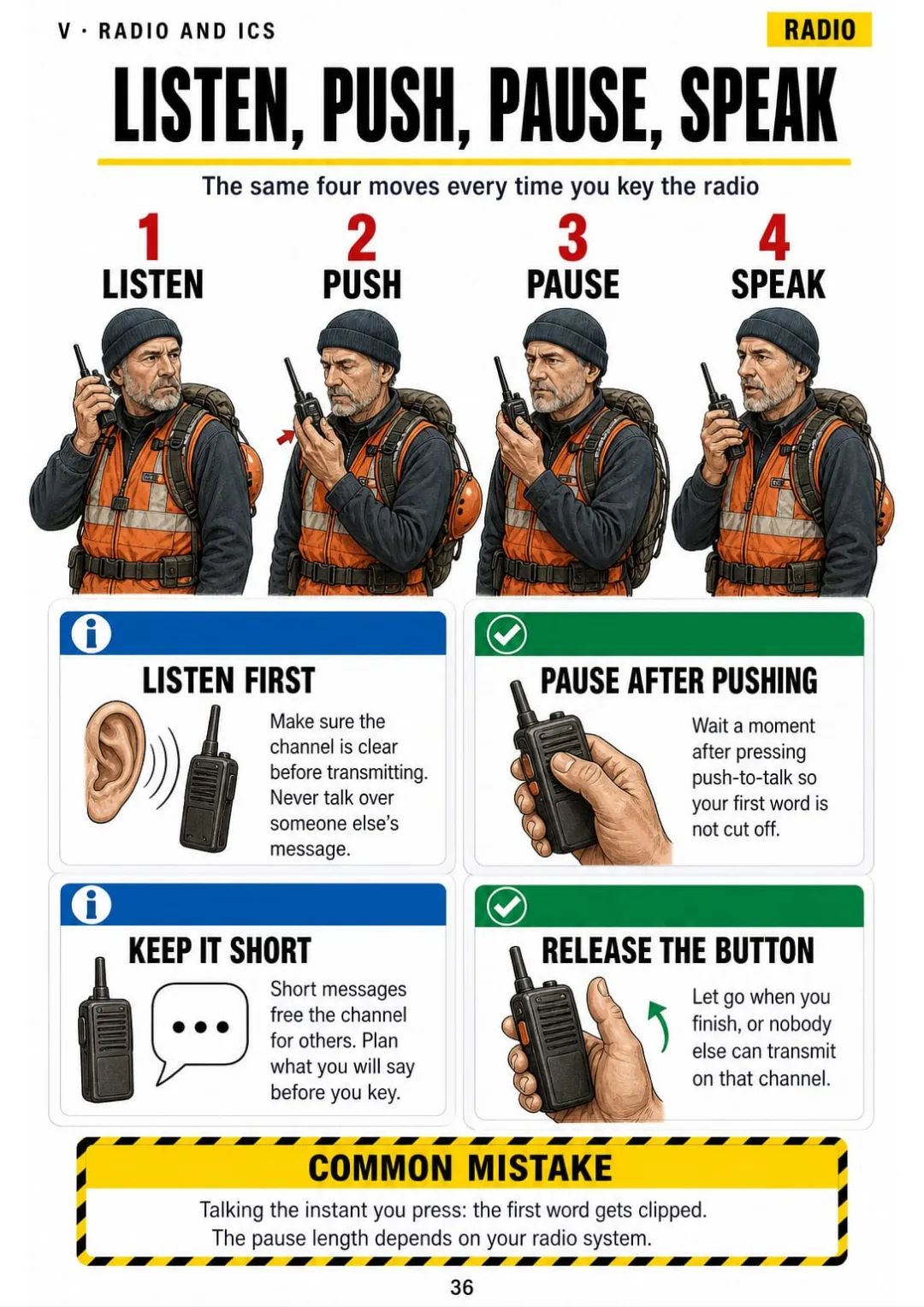
Listen, push, pause, speak, release: radio basics drawn in four panels
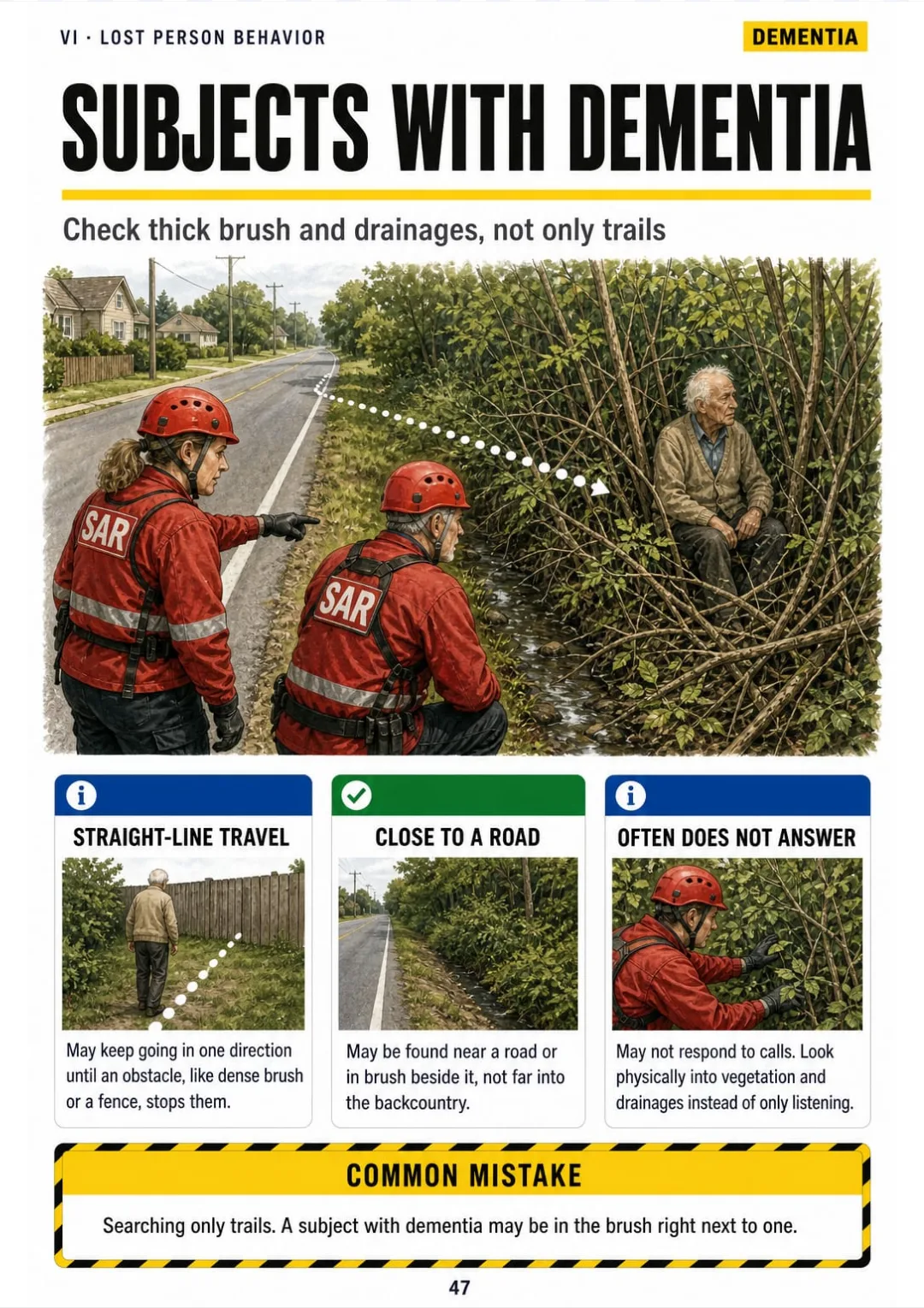
Dementia subjects: straight-line travel, near roads or in brush, often no answer
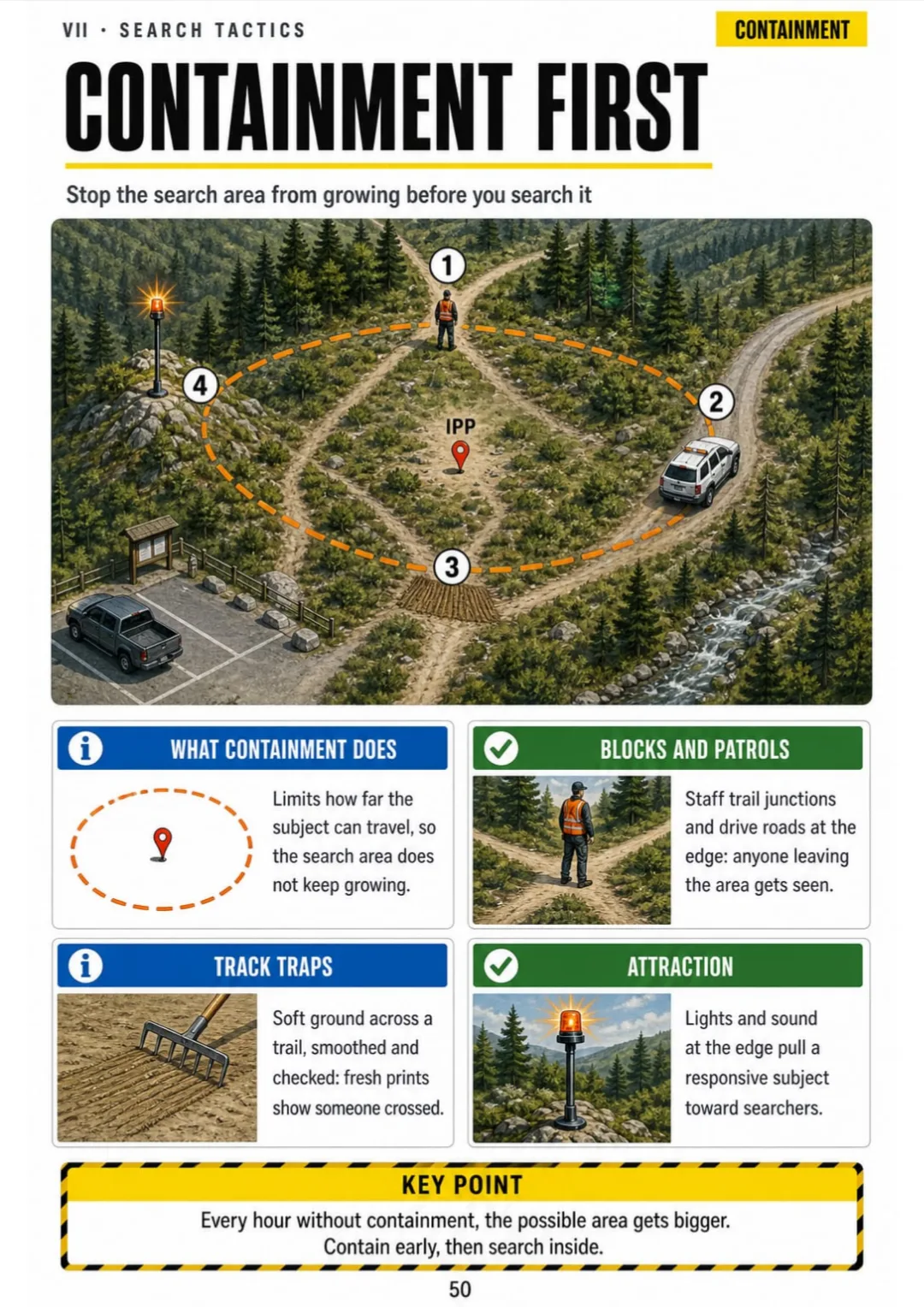
Containment: trail blocks, road patrols, track traps and attraction around the IPP
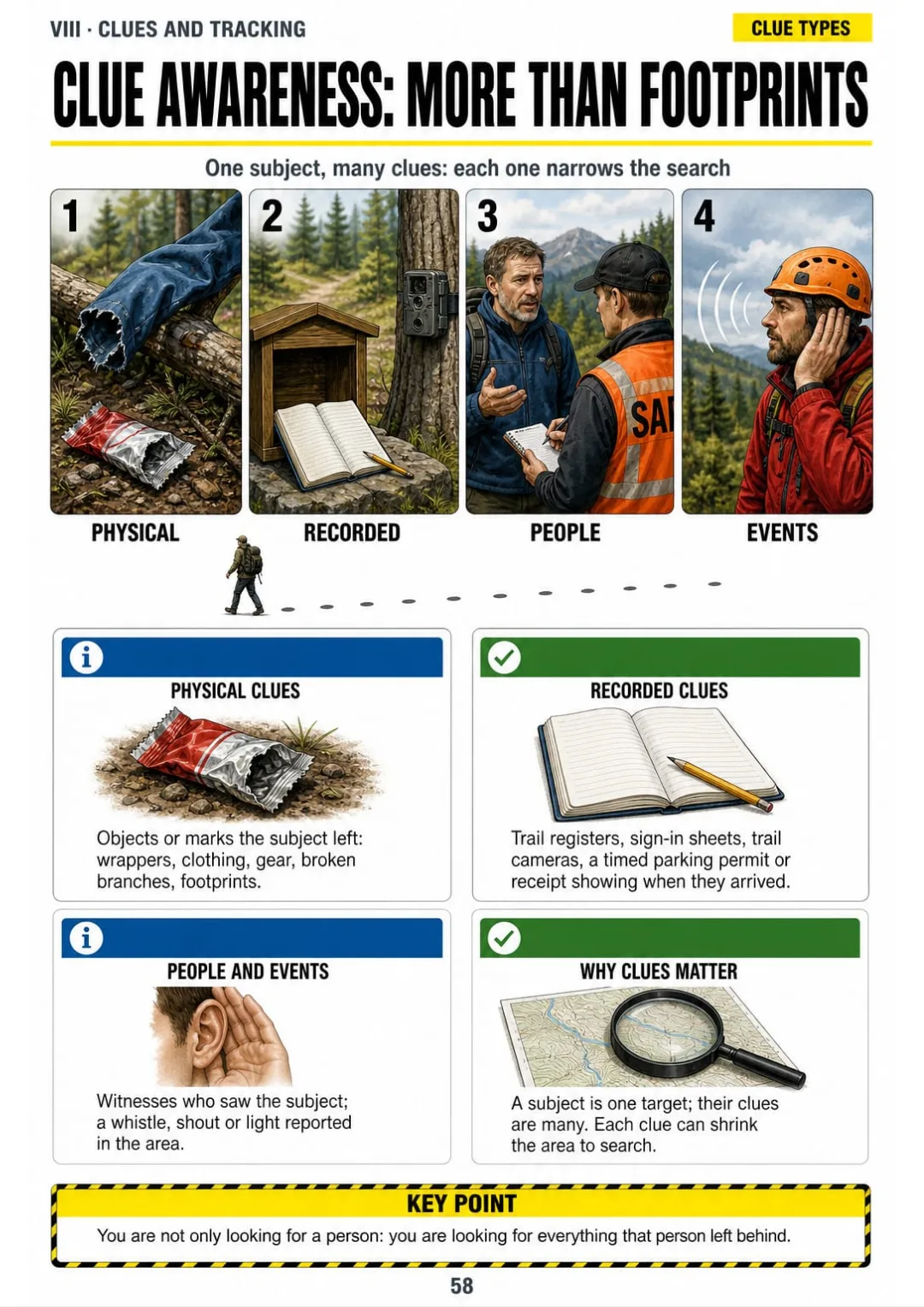
Physical, recorded, people and events: four clue types, one page

Take a Look at the 9 Parts and 63 Topics

Before the Call-Out

pp. 5-11
  1. Where the SAR Searcher Fits
  2. The 24-Hour Pack, Drawn as a Packing Diagram
  3. The Ten Essentials Behind the Pack
  4. Dressing in Layers for the Field
  5. Personal Safety Comes First
  6. Hypothermia and Heat Illness on the Trail
  7. Lightning, Water and Terrain Hazards

Reading the Topo Map

pp. 12-19
  1. Anatomy of a 7.5-Minute Quad
  2. Scale: 1 Inch Equals 2,000 Feet
  3. Contour Lines Without Guessing
  4. Ridges, Valleys and Saddles
  5. Map Colors and Symbols
  6. Orienting the Map to the Ground
  7. Handrails, Catching Features and Attack Points
  8. Measuring Distance and Elevation Gain

Compass and Declination

pp. 20-28
  1. Parts of a Baseplate Compass
  2. Taking a Bearing From the Field
  3. Following a Bearing on the Ground
  4. Taking a Bearing From the Map
  5. What Declination Is
  6. Declination Math: Map to Field and Back
  7. Back Bearings
  8. Triangulating Your Position
  9. Detours Around Obstacles

GPS, UTM and Pacing

pp. 29-35
  1. Why SAR Uses UTM
  2. Reading a UTM Coordinate: Right, Then Up
  3. Plotting a UTM Point With a Roamer
  4. Setting Up the GPS Before You Go
  5. Marking Waypoints and Track Logs
  6. Your Pace Count
  7. Keeping Track of Distance in the Field

Radio and Incident Command

pp. 36-42
  1. Radio Basics: Listen, Push, Pause, Speak
  2. The Call Format: Who You Call, Who You Are
  3. Phonetic Alphabet and Numbers
  4. ICS in One Org Chart
  5. Where the Field Team Sits in ICS
  6. Check-In, Briefing and the Task Assignment
  7. The Debriefing

Lost Person Behavior

pp. 43-49
  1. PLS, LKP and the IPP
  2. Why Profile the Subject
  3. How People Get Lost and What They Do
  4. Children by Age Group
  5. Subjects With Dementia
  6. Hikers and Hunters
  7. Responsive or Unresponsive Subject

Search Tactics

pp. 50-57
  1. Containment First
  2. The Hasty Search
  3. Sound and Attraction Techniques
  4. Grid Search: How It Works
  5. Spacing and Critical Separation
  6. Running a Line Search
  7. POA, POD and POS Without Fear
  8. Segments and Search Assignments

Clues and Tracking

pp. 58-62
  1. Clue Awareness: More Than Footprints
  2. When You Find a Clue: Stop, Mark, Report
  3. Protecting a Possible Crime Scene
  4. Sign Cutting and the Track Trap
  5. Step-by-Step Tracking With a Tracking Stick

Review Before the Evaluation

pp. 63-67
  1. The Written Exam: What to Review
  2. The Practical Stations, One Checklist Each
  3. Basic Knots at a Glance
  4. Ten Navigation Mistakes Drawn Wrong and Right
  5. The Night Before: Last Check

Who This Book Is For

You're studying for the SARTECH II

Every skill is laid out in the same order: what it is, how to do it, the frequent mistake. You review one topic at a glance instead of rereading a chapter.

Your evaluation date is set

Part IX gives you what to review for the written exam and one checklist per practical station, and the practice questions help you find the gaps before the test.

You already go on callouts

Print the pages you need, like containment or clue handling, and review them before a callout or a recertification.

Plus: 2 Free Books

Search and Rescue Practice Questions
BONUS 1

Search and Rescue Practice Questions

Exam-style questions with the answer explained, so you find the gaps before the written test instead of during it.
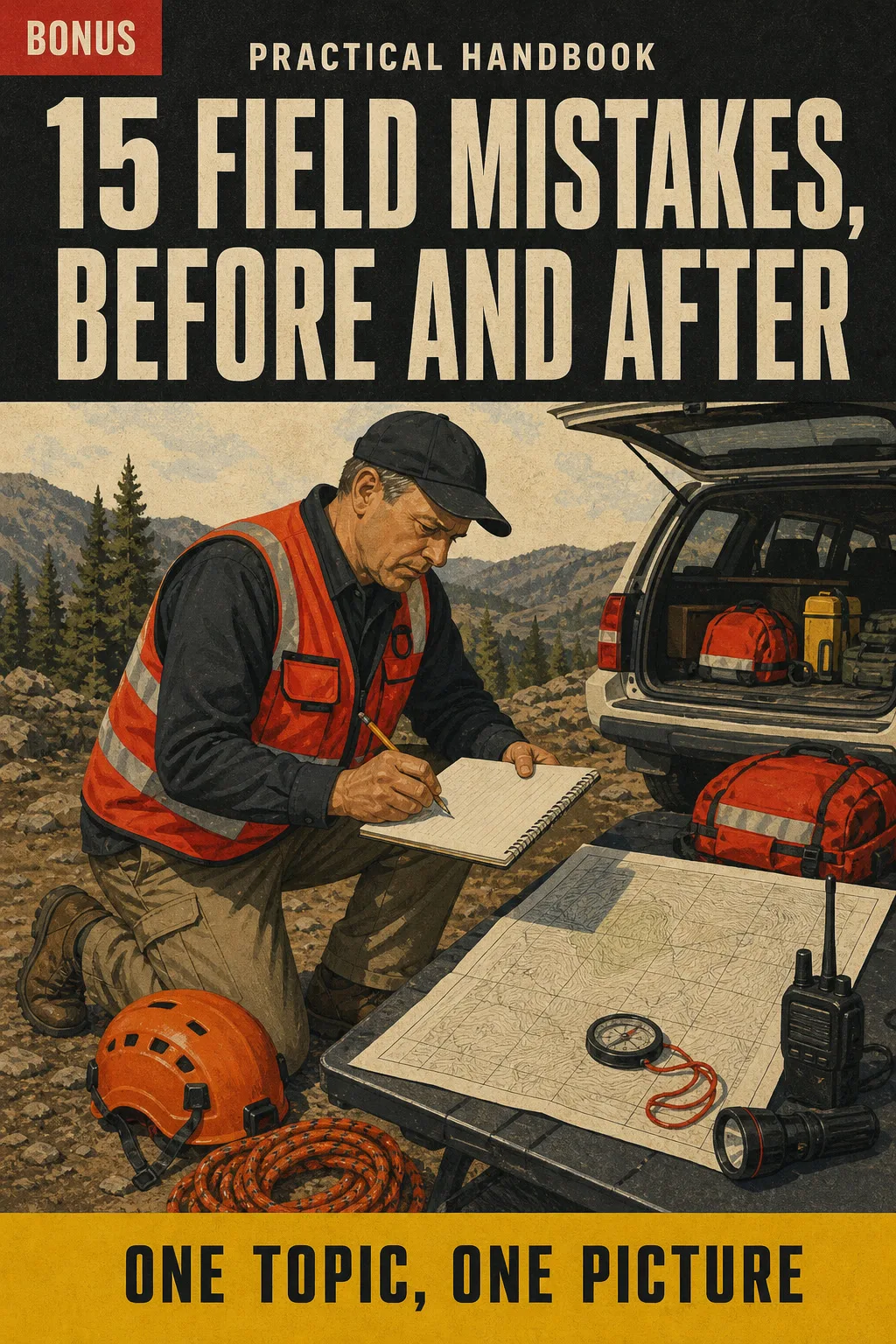
15 Field Mistakes, Before and After
BONUS 2

15 Field Mistakes, Before and After

The frequent errors in navigation, search tactics and clue handling, each drawn wrong and right, for a fast review the night before.

30-Day Guarantee

30-day guarantee: if a file doesn't open, if the content isn't what the product page describes, if you were charged twice or the email never arrived, write to us and we'll refund you in full. You pay once. No subscriptions.

Frequently Asked Questions

Is it for me if I'm preparing for the SARTECH II or already on a county SAR team?

Yes. It's not a general survival book: it follows the SARTECH II field skills, from map and compass to clues. You already have the manual and videos; this puts each skill on one drawn page, always in the same order, so you review it at a glance. It starts from the basics and works as a review if you've already been on searches.

Where does the content come from?

It's checked against the current published SARTECH II study materials, FEMA ICS-100 training materials and USGS topo map standards. Station rules, intervals and local procedures are flagged so you verify them with your own team.

Is this official material?

No. It's an independent study book. It is not published, approved or endorsed by NASAR, FEMA or any agency.

Does it replace the course or team training?

No. It helps you review between trainings. It doesn't give you a certificate or count as training hours. Field skills are learned in the field with your team, and the first aid pages don't replace a certified first aid course or medical care.

Are the practice questions the ones on the exam?

No. They're written for this book, in the style of the written exam, to help you find gaps. They are not official exam questions.

How do I get it?

In PDF by email, at the address you enter at checkout. The 2 bonus books come the same way.

Do I have to pay every month?

No. It's a one-time payment.

Can I have it on paper?

Yes. It's a printable PDF: print the whole book or just the pages you want to carry in your pack.

How does the refund work?

You have 30 days. We refund everything if the file won't open, if the book isn't what you see on this page, if you were charged twice or if the email doesn't arrive: just email us.

US$ 27US$ 63
Get the book · US$ 27

This is a digital PDF book sent to your email: nothing is printed or shipped.

More books on this topic

Vehicle Extrication Illustrated

Vehicle and machinery rescue, one topic per page: scene size-up, hazards, stabilization, glass, hydraulic tools, door…

From US$ 27 US$ 63

Rope Rescue Technician Illustrated

Rope rescue for firefighters and rescue techs, one topic per page with a big drawing: knots step by step, anchors and…

From US$ 27 US$ 63

Confined Space Rescue Illustrated

Confined space rescue, one topic per page, every page drawn: permit-required vs. non-permit spaces, atmospheric…

From US$ 27 US$ 63

Dive Rescue Illustrated

Prepare for your NFPA 1006 Dive Rescue technical rescuer exam with one topic per page, every concept drawn: line-pull…

From US$ 27 US$ 63

Machinery Rescue Illustrated

Machinery rescue for the NFPA 1006 Technician level, one topic per illustrated page: size-up, lockout/tagout and stored…

From US$ 27 US$ 63

Trench Rescue Illustrated

Trench rescue technician, one topic per page: soil types, cave-in forces, size-up, protective systems, hydraulic and…

From US$ 27 US$ 63

Swiftwater Rescue Illustrated

Swiftwater Rescue Technician study book for US firefighters and rescue teams: moving water, hydraulics and strainers…

From US$ 27 US$ 63