Study in Pictures🌐 English (United States)
Machinery Rescue Illustrated

Digital book in PDF · read it on your phone or print it

Machinery Rescue Illustrated

The in-running nip point, lockout/tagout, stored energy, the box crib, stacked air bags, augers, presses, PTO shafts and patient removal. Every topic gets its own page: the drawing first, then what you need to remember.

  • 65 illustrated pages
  • English
  • 30-day guarantee
US$ 27US$ 63
Get the book · US$ 27

Price shown for: United States. In other countries, the checkout shows the price that applies there.

About this book

What it is

The in-running nip point, lockout/tagout, stored energy, the box crib, stacked air bags, augers, presses, PTO shafts and patient removal. Every topic gets its own page: the drawing first, then what you need to remember.

Who This Book Is For
  • You're taking the Machinery Rescue course
  • Your state skills test is coming up
  • You already run rescue calls
What it covers
  1. The Job and the Exam
  2. Size-Up and Machine Hazards
  3. Energy Control: Lockout/Tagout
  4. Stabilization and Cribbing
  5. Lifting and Moving the Load
  6. Disassembly and Disentanglement
  7. Patient Care and Removal
  8. Review and Skills Test
Language
English (United States)
Pages
65
Format
Digital book in PDF · read it on your phone or print it
Price
US$ 27 (United States)
Delivery
This is a digital PDF book sent to your email: nothing is printed or shipped.
30-Day Guarantee
30-day guarantee: if a file doesn't open, if the content isn't what the product page describes, if you were charged twice or the email never arrived, write to us and we'll refund you in full.

Look Inside the Book

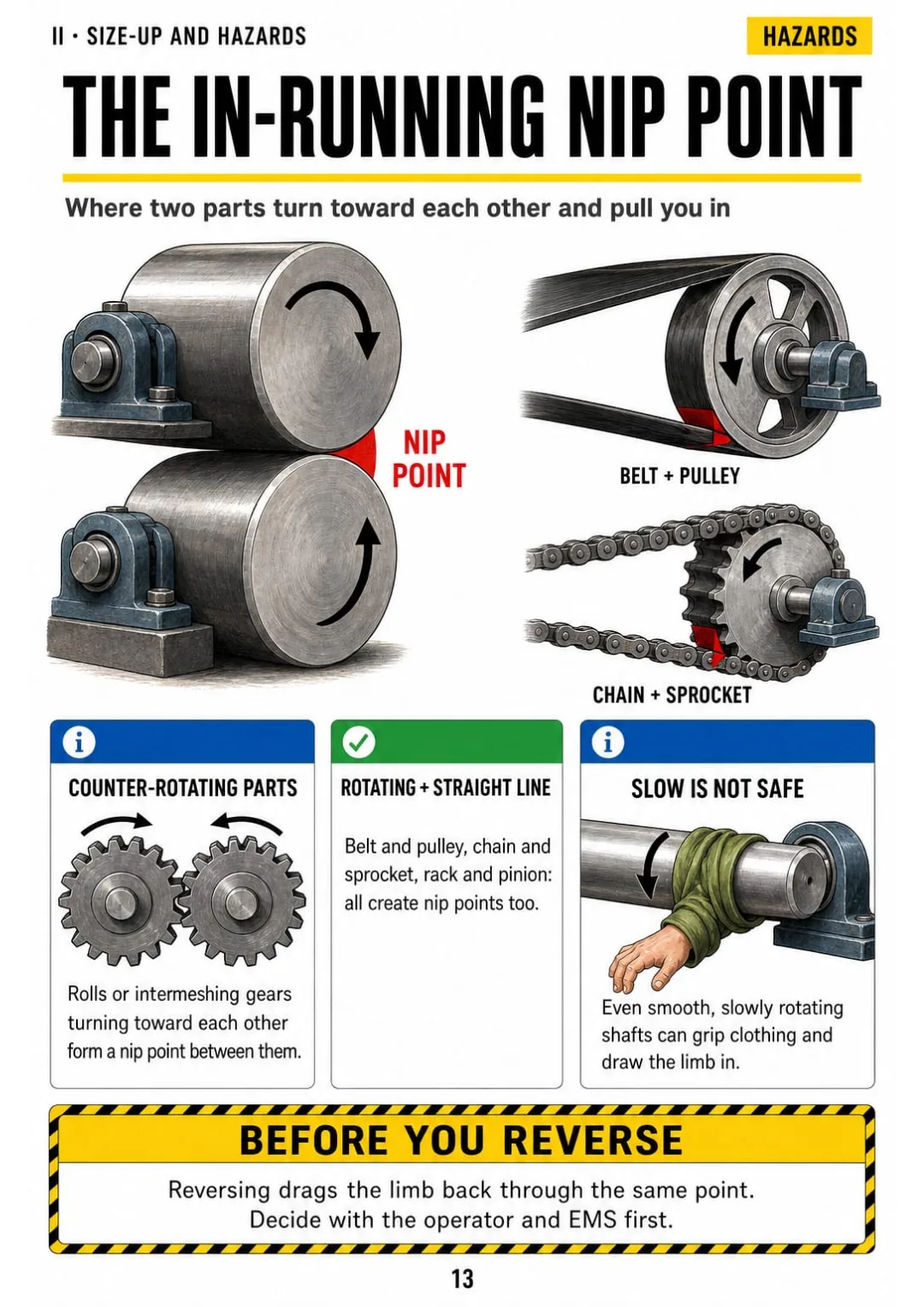
Nip points: rollers, belt + pulley, chain + sprocket, rack + pinion (OSHA eTool).
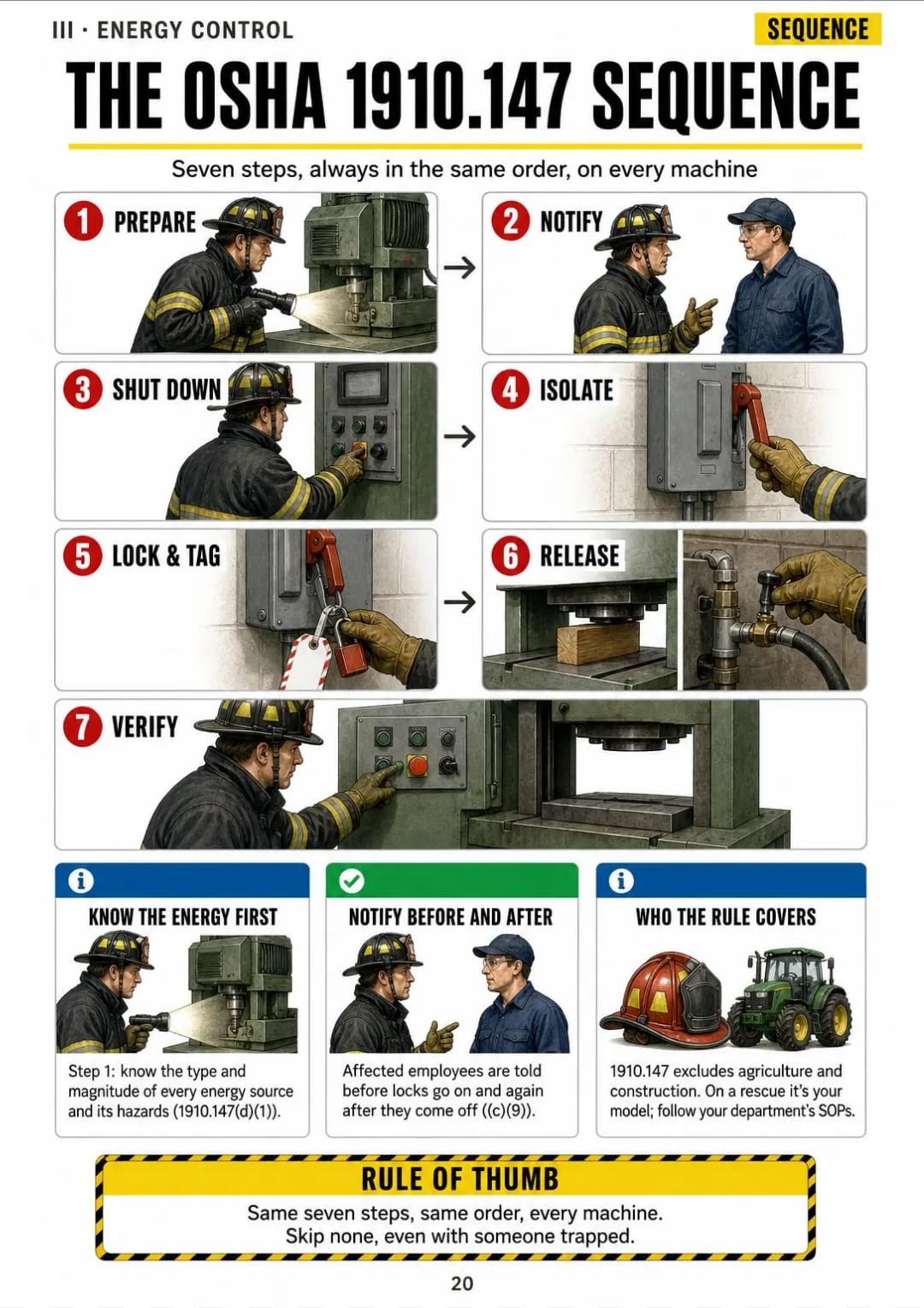
Prepare, notify, shut down, isolate, lock and tag, release, verify: 1910.147(c)(9) and (d) in order.
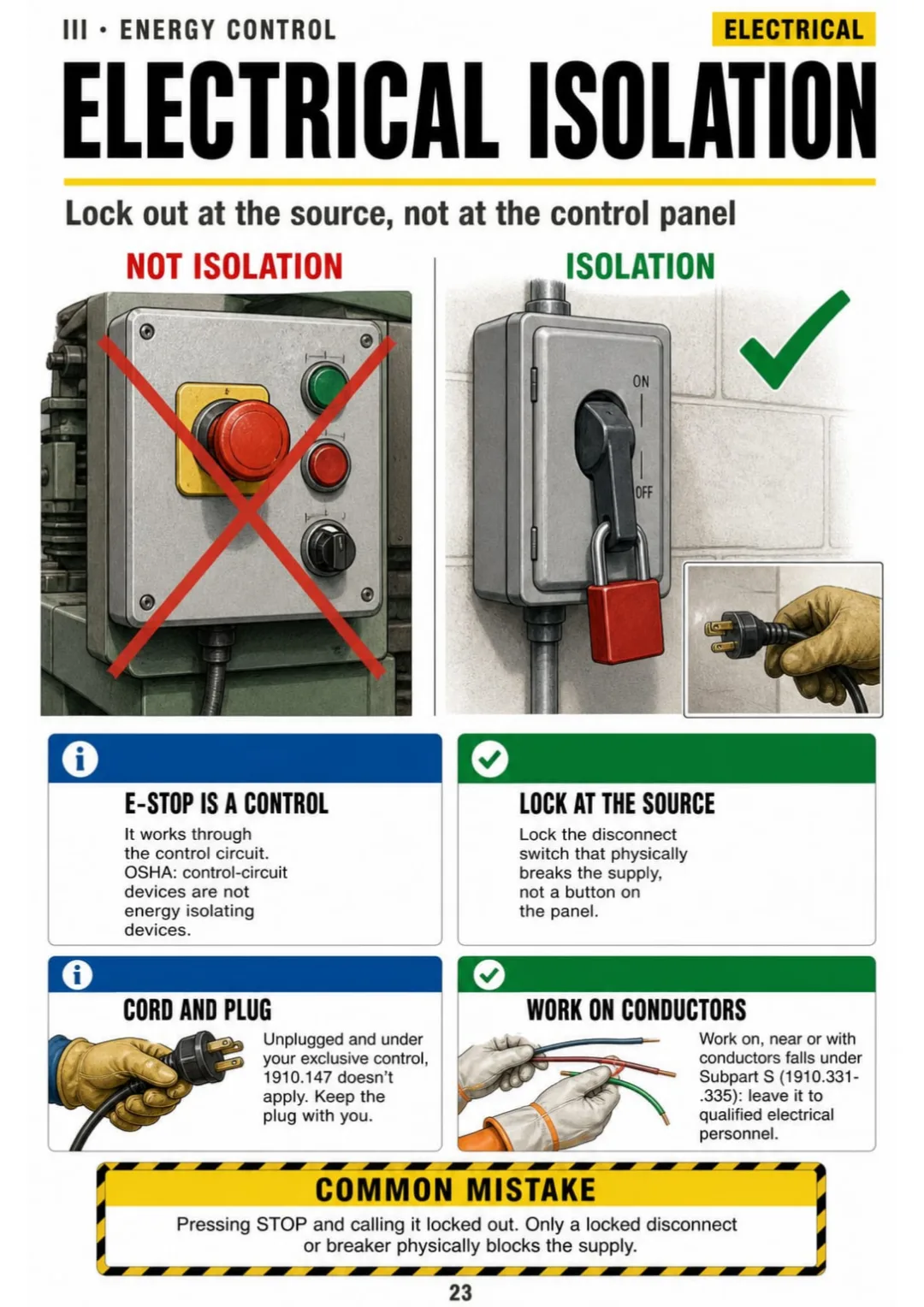
E-stop vs. disconnect: why OSHA says control buttons don't isolate energy.
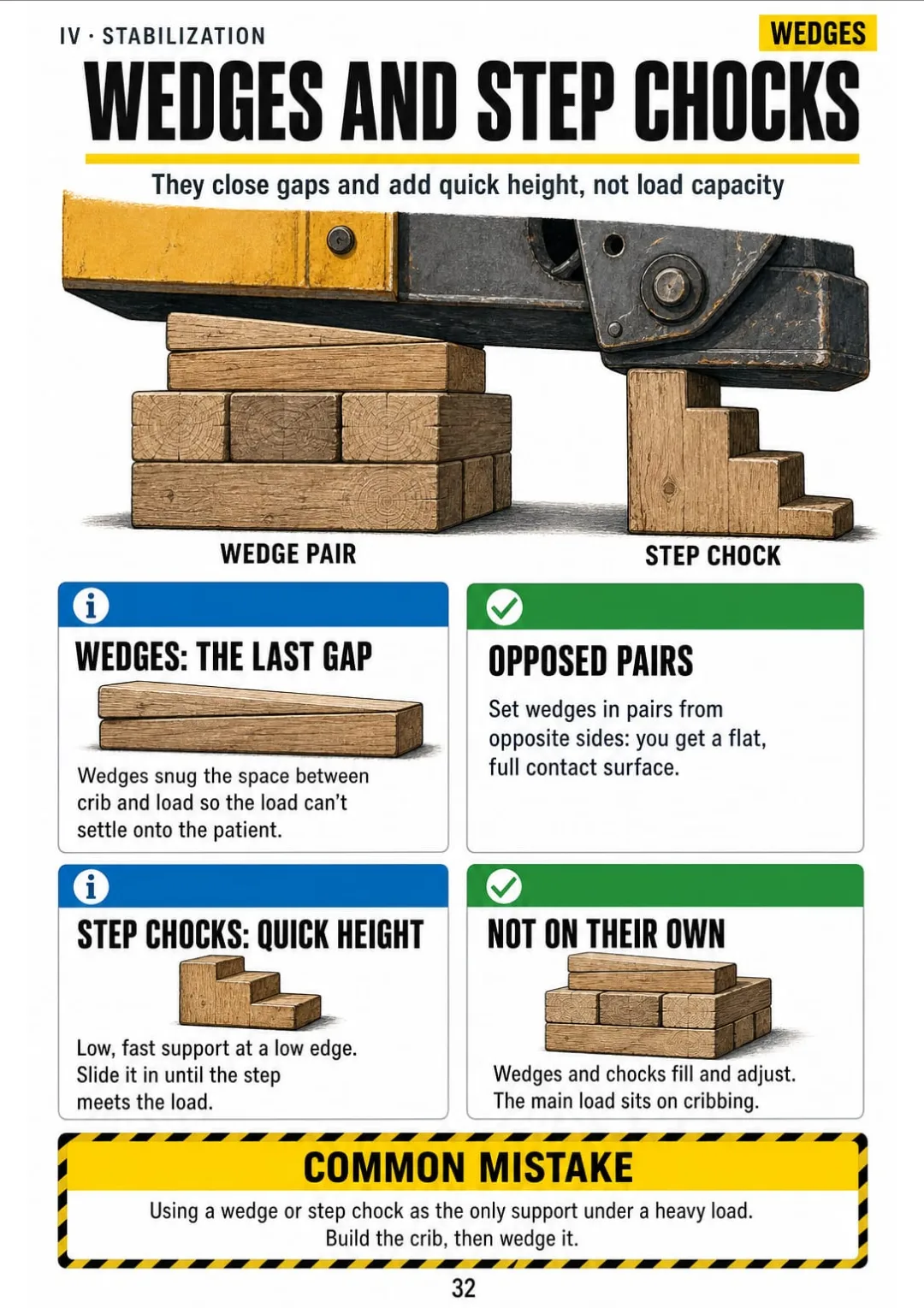
Wedges close the last gap, step chocks add quick height: neither carries the load alone
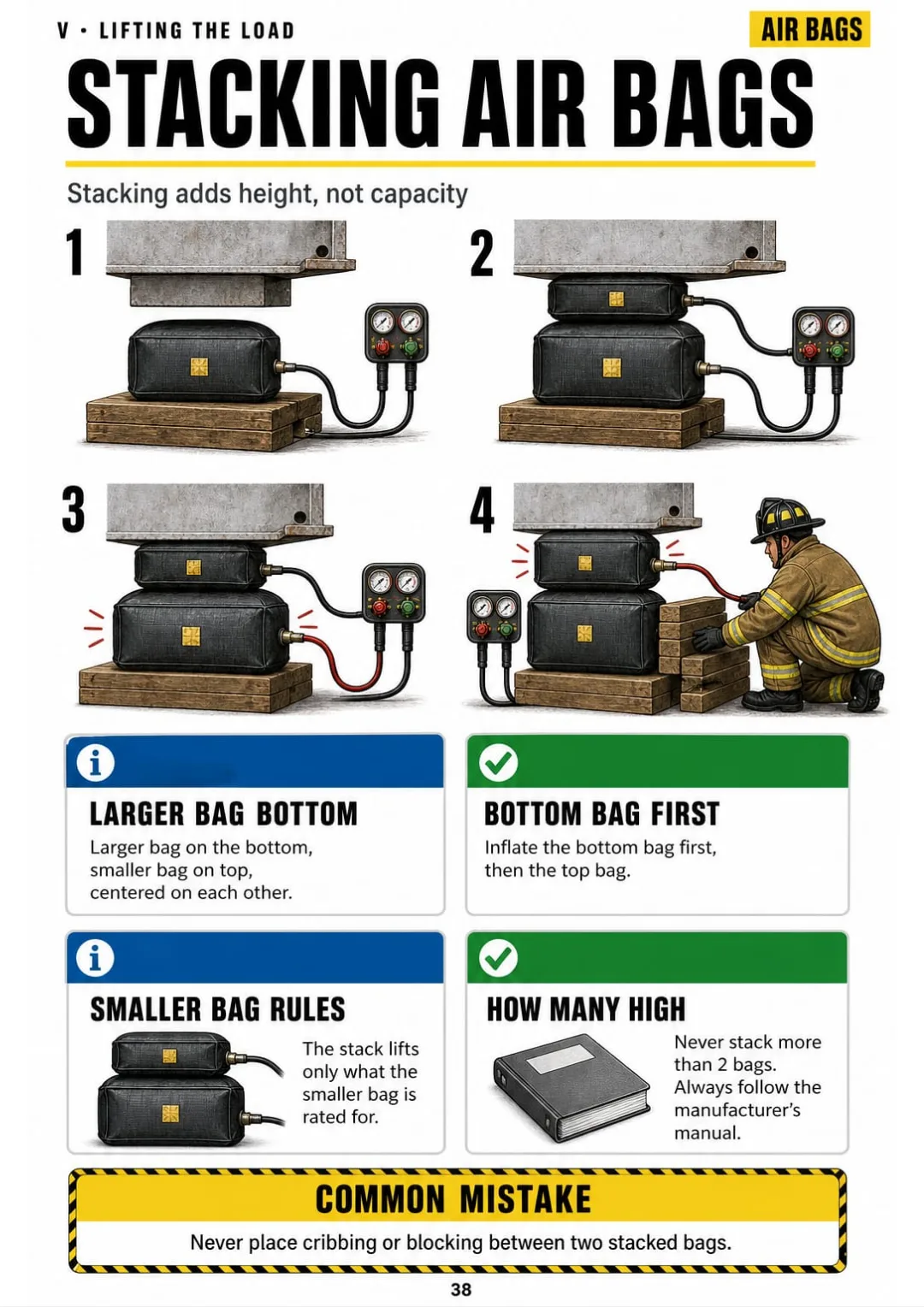
Larger bag bottom, inflate it first, capacity of the smaller bag
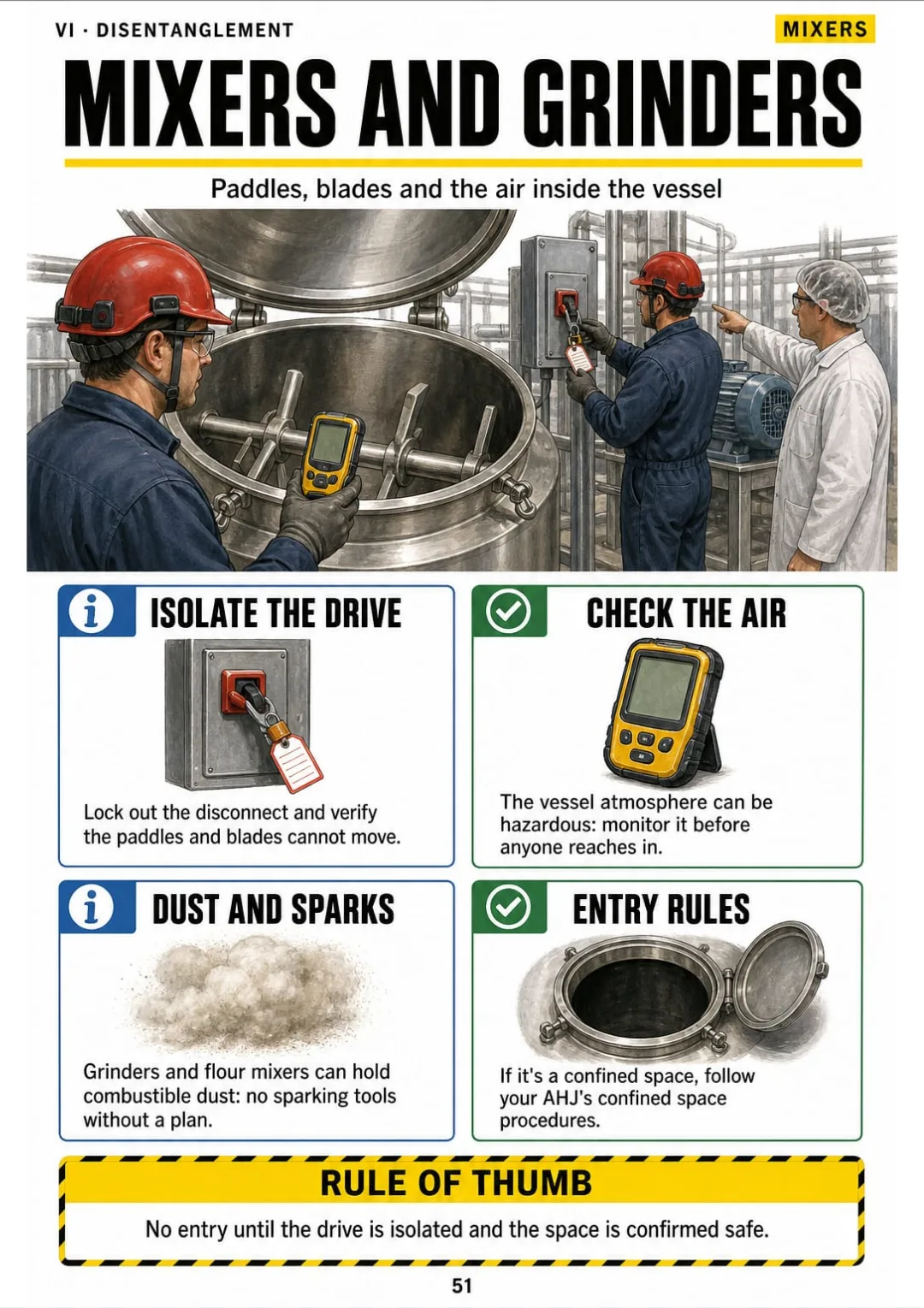
Isolate the drive, check the atmosphere, enter only if the space is confirmed safe.
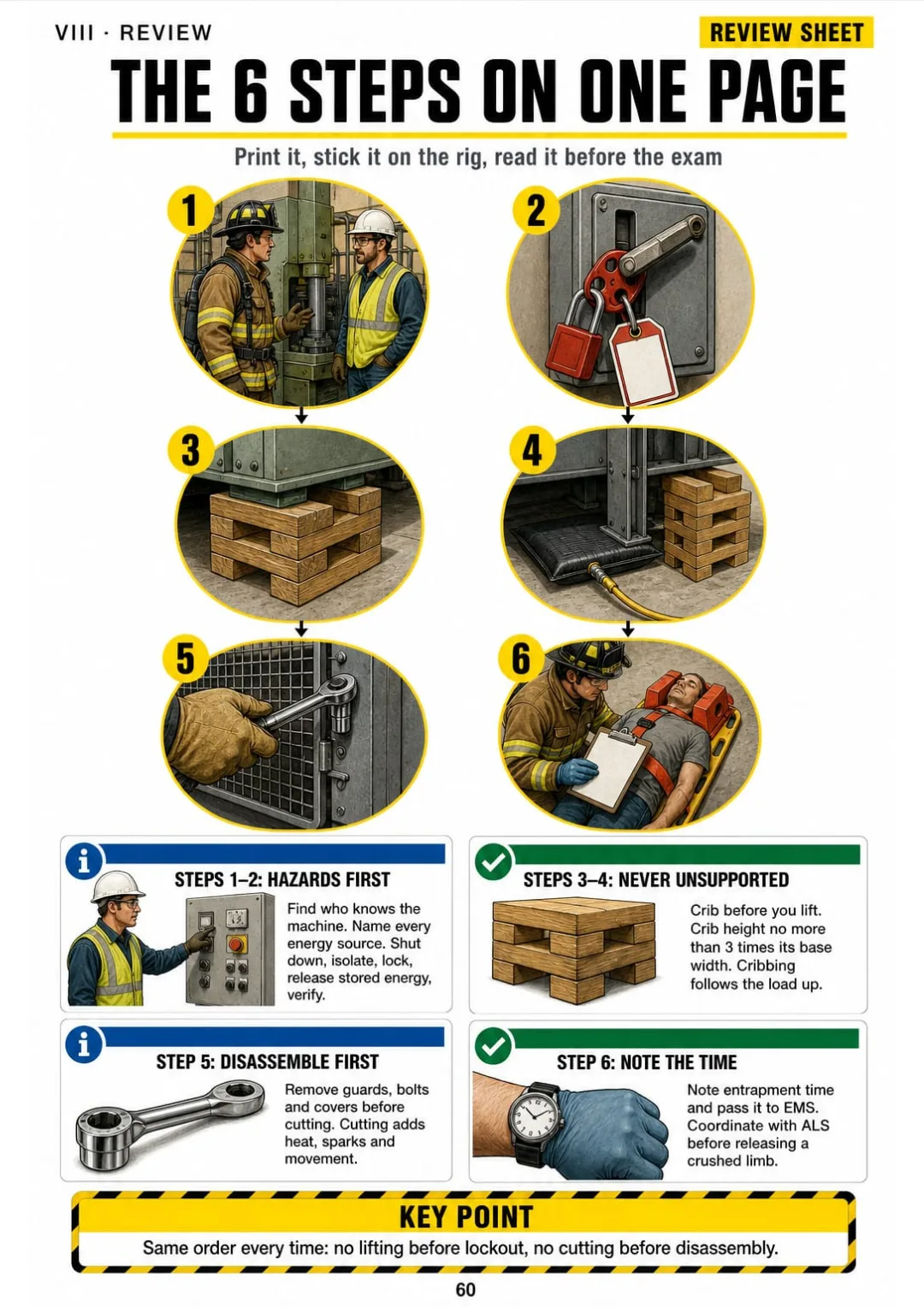
Six steps, one page: size-up, lockout, stabilize, lift, disentangle, remove.
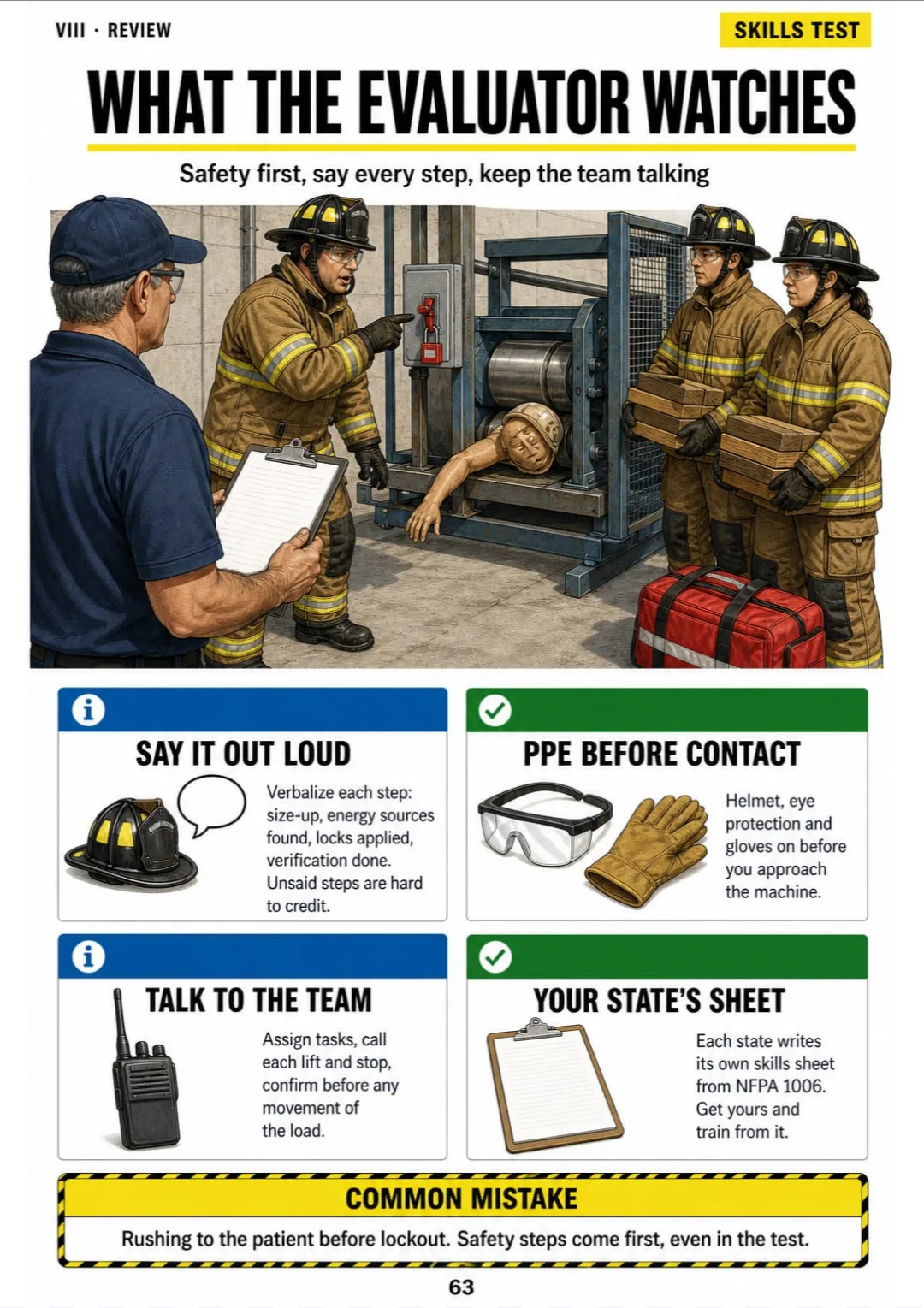
Skills station: PPE, verbalize each step, lockout before patient contact.

Take a Look at the 8 Parts and 61 Topics

The Job and the Exam

pp. 5-10
  1. Machinery Rescue Is Not Vehicle Extrication
  2. NFPA 1006: Level I and Level II
  3. How the State Exam Works
  4. The 6 Steps, Always in the Same Order
  5. The Language of Machines
  6. Who Does What on Scene

Size-Up and Machine Hazards

pp. 11-18
  1. Size-Up in 60 Seconds
  2. Find the Person Who Knows the Machine
  3. The In-Running Nip Point
  4. Shear, Crush and Cutting Points
  5. Rotating and Reciprocating Motion
  6. The Six Energy Sources
  7. Hydraulic Injection Hazard
  8. Scene Zones and Atmosphere

Energy Control: Lockout/Tagout

pp. 19-27
  1. Why Off Is Not Zero
  2. The OSHA 1910.147 Sequence
  3. Lock vs. Tag
  4. Every Rescuer, Their Own Lock
  5. Electrical Isolation
  6. Hydraulic and Pneumatic Bleed-Down
  7. Gravity and Springs: Block It
  8. Flywheels and Coast-Down
  9. Try-Out: Verify Before You Touch

Stabilization and Cribbing

pp. 28-35
  1. Stabilize Before You Lift
  2. Cribbing Wood: Sizes and Species
  3. The Box Crib and Its Contact Points
  4. Crib Height: The 3-to-1 Rule
  5. Wedges and Step Chocks
  6. Struts and Shoring
  7. Lift an Inch, Crib an Inch
  8. Building Under a Machine

Lifting and Moving the Load

pp. 36-43
  1. Center of Gravity and Load Estimation
  2. High-Pressure Air Bags
  3. Stacking Air Bags
  4. Air Bag on Cribbing
  5. Hydraulic Rams and Spreaders as Lifting Tools
  6. Jacks, Come-Alongs and Chain Hoists
  7. Basic Rigging for Machinery
  8. Mechanical Advantage in a Nutshell

Disassembly and Disentanglement

pp. 44-53
  1. Disassemble Before You Cut
  2. Hand Tools That Solve Machines
  3. Cutting Tools and Their Limits
  4. Conveyors and Belts
  5. Augers
  6. Presses and Platens
  7. Rollers and Wringers
  8. Mixers and Grinders
  9. PTO Shafts and Agricultural Machinery
  10. Elevators and Escalators: Call the Mechanic

Patient Care and Removal

pp. 54-59
  1. Patient Care Starts at Contact
  2. Bleeding Control on an Entrapped Limb
  3. Crush Injury and Prolonged Entrapment
  4. Protecting the Patient During Tool Work
  5. Removal: Packaging and Moving Out
  6. Leaving the Machine in Place

Review and Skills Test

pp. 60-65
  1. The 6 Steps on One Page
  2. Lockout Checklist
  3. Cribbing and Lifting Checklist
  4. What the Evaluator Watches in the Skills Station
  5. Most Frequent Mistakes on Scene
  6. Quick Glossary

Who This Book Is For

You're taking the Machinery Rescue course

Every class topic has its own drawn page, so after a shift you review the one you just saw in a few minutes.

Your state skills test is coming up

The 6 steps, the lockout sequence and the cribbing numbers in one place, plus practice questions to find your weak spots before test day.

You already run rescue calls

A printable reference for the station: each machine with its energy sources and entrapment points, to drill with your crew.

Plus: 2 Free Books

Machinery Rescue Practice Questions
BONUS 1

Machinery Rescue Practice Questions

Exam-style questions on every chapter, with the answer explained, so you find your weak spots before test day, not during it.
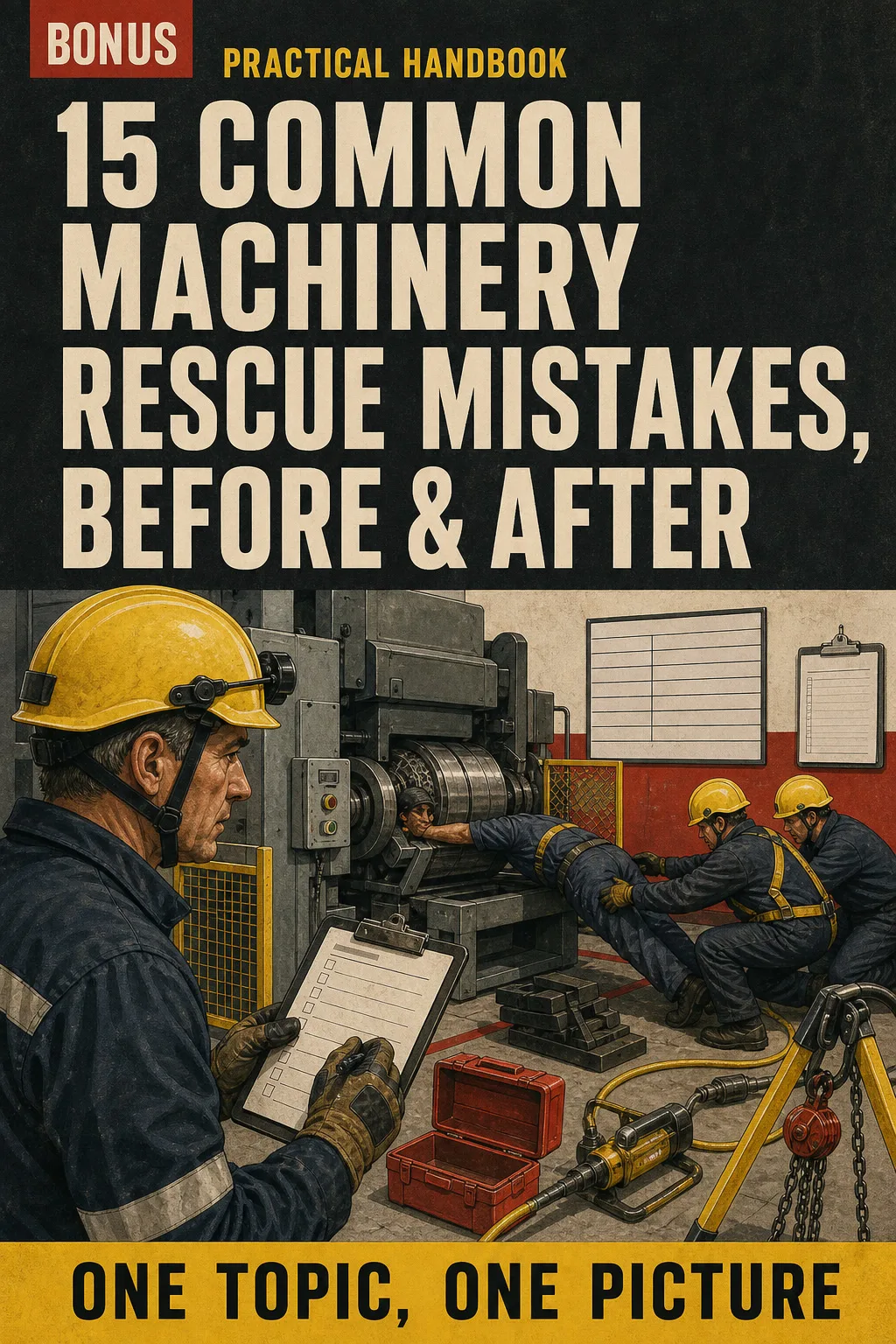
15 Common Machinery Rescue Mistakes, Before & After
BONUS 2

15 Common Machinery Rescue Mistakes, Before & After

The 15 most frequent errors on the scene and in the skills test, each drawn wrong and then right, so you can spot them in seconds.

30-Day Guarantee

30-day guarantee: if a file doesn't open, if the content isn't what the product page describes, if you were charged twice or the email never arrived, write to us and we'll refund you in full. You pay once. No subscriptions.

Frequently Asked Questions

Is it for me if I already do vehicle extrication and now need Machinery Rescue Technician?

Yes. It starts from what changes when the trap is a machine and not a car, and follows the 6 steps from size-up to patient removal. It assumes you already work rescue; it doesn't start from zero.

Where does the content come from?

It's checked against the current edition of NFPA 1006 (Machinery Rescue Level I and II) and OSHA 29 CFR 1910.147 and 1910.212, the standard that Pro Board and IFSAC accredited state programs certify to. Your state's skill sheets and your department's procedures come first: always confirm numbers against your edition and against them.

Is this official material?

No. It's an independent illustrated study guide. It's not published or endorsed by NFPA, OSHA, Pro Board, IFSAC or any state fire training agency, and it doesn't reproduce the text of the standard. It doesn't give you a certificate or CE hours: your certification comes from your state's exam and skills test.

Does it replace my machinery rescue course?

No. It doesn't replace the course, hands-on drills, your department's protocols or medical direction. What it adds to the standard and your course manual: each topic on one drawn page, with its numbers and steps in a box, in the order you work the call, from size-up to removal. Quick to review after a shift and easy to print for the station.

Are the practice questions the ones on the exam?

No. They're written for this book, in exam style, to help you find your weak spots. They're not official questions from any exam.

When and how do I get it?

The book and the 2 bonus books arrive as PDFs by email, at the address you enter at checkout.

Do I have to pay every month?

No. It's a one-time payment. No subscription.

Can I have it on paper?

Yes. The PDF is made to print, at home or at a print shop, so you can keep it at the station.

How does the refund work?

You have 30 days. We refund everything if the file won't open, if the book isn't what you see on this page, if you were charged twice or if the email doesn't arrive: just email us.

US$ 27US$ 63
Get the book · US$ 27

This is a digital PDF book sent to your email: nothing is printed or shipped.

More books on this topic

Vehicle Extrication Illustrated

Vehicle and machinery rescue, one topic per page: scene size-up, hazards, stabilization, glass, hydraulic tools, door…

From US$ 27 US$ 63

Rope Rescue Technician Illustrated

Rope rescue for firefighters and rescue techs, one topic per page with a big drawing: knots step by step, anchors and…

From US$ 27 US$ 63

Confined Space Rescue Illustrated

Confined space rescue, one topic per page, every page drawn: permit-required vs. non-permit spaces, atmospheric…

From US$ 27 US$ 63

Dive Rescue Illustrated

Prepare for your NFPA 1006 Dive Rescue technical rescuer exam with one topic per page, every concept drawn: line-pull…

From US$ 27 US$ 63

Trench Rescue Illustrated

Trench rescue technician, one topic per page: soil types, cave-in forces, size-up, protective systems, hydraulic and…

From US$ 27 US$ 63

Swiftwater Rescue Illustrated

Swiftwater Rescue Technician study book for US firefighters and rescue teams: moving water, hydraulics and strainers…

From US$ 27 US$ 63

Search and Rescue Illustrated

The core search and rescue field skills for the SARTECH II written exam and practical stations, one topic per page and…

From US$ 27 US$ 63