Study in Pictures🌐 English (United States)
Confined Space Rescue Illustrated

Digital book in PDF · read it on your phone or print it

Confined Space Rescue Illustrated

The 3-part test, atmospheric hazards, the 4-gas meter, ventilation, lockout/tagout, entry roles, tripods, the 3:1 Z-rig and patient packaging. Every topic gets its own page: the drawing first, then what you need to remember.

  • 70 illustrated pages
  • English
  • 30-day guarantee
US$ 27US$ 63
Get the book · US$ 27

Price shown for: United States. In other countries, the checkout shows the price that applies there.

About this book

What it is

The 3-part test, atmospheric hazards, the 4-gas meter, ventilation, lockout/tagout, entry roles, tripods, the 3:1 Z-rig and patient packaging. Every topic gets its own page: the drawing first, then what you need to remember.

Who This Book Is For
  • You're taking the confined space rescue class
  • Your technician eval or recert is close
  • You already work entries or sign permits
What it covers
  1. What Makes a Space Confined
  2. The Hazards You Can't See
  3. Air Monitoring Step by Step
  4. Making the Space Safe
  5. The Permit and the Entry Team
  6. Rescue Gear
  7. Rope Systems and Mechanical Advantage
  8. The Rescue, Start to Finish
  9. Review and Practical Evaluation
Language
English (United States)
Pages
70
Format
Digital book in PDF · read it on your phone or print it
Price
US$ 27 (United States)
Delivery
This is a digital PDF book sent to your email: nothing is printed or shipped.
30-Day Guarantee
30-day guarantee: if a file doesn't open, if the content isn't what the product page describes, if you were charged twice or the email never arrived, write to us and we'll refund you in full.

Look Inside the Book

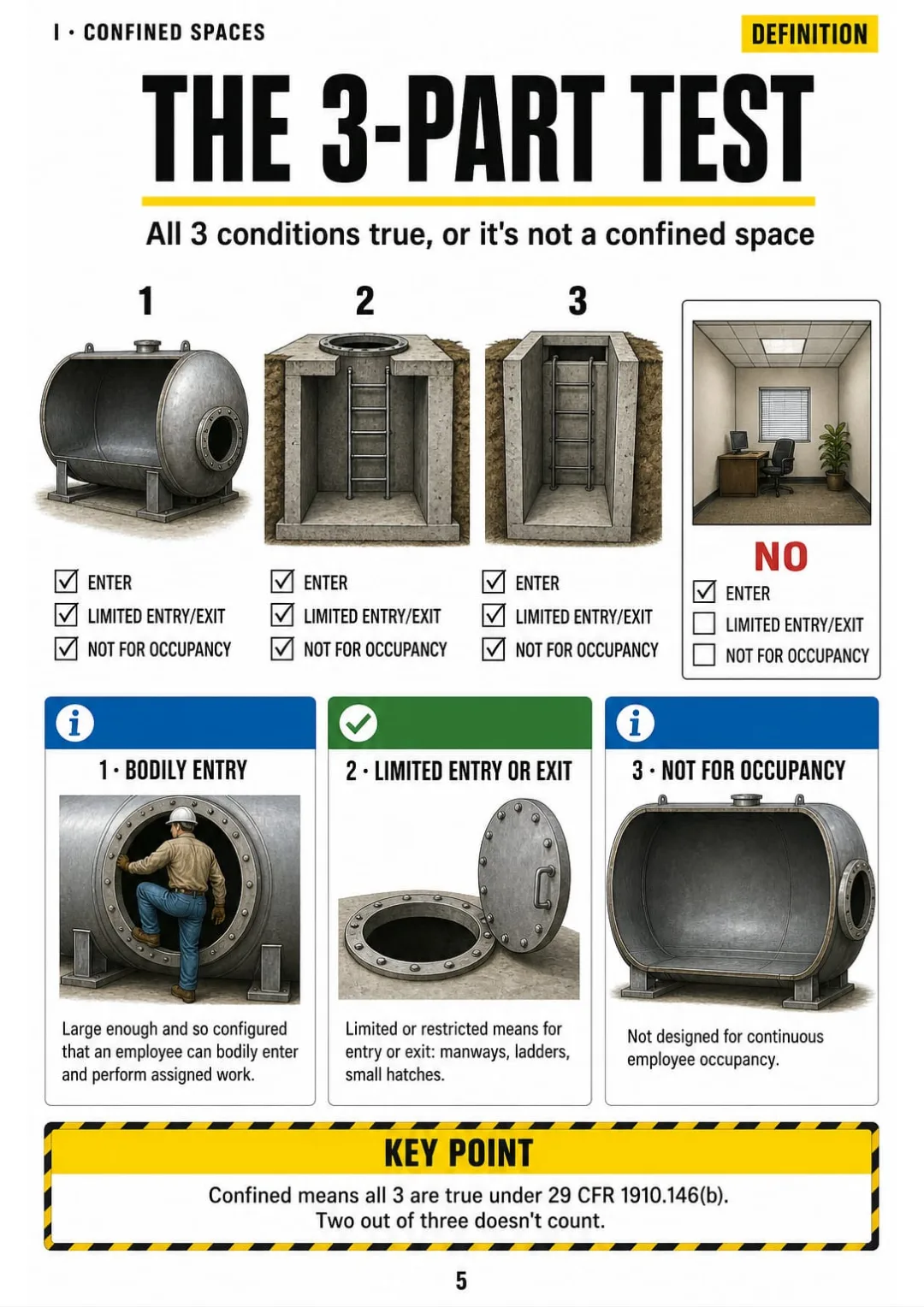
1910.146(b): bodily entry + limited exit + not for continuous occupancy, all 3 at once.
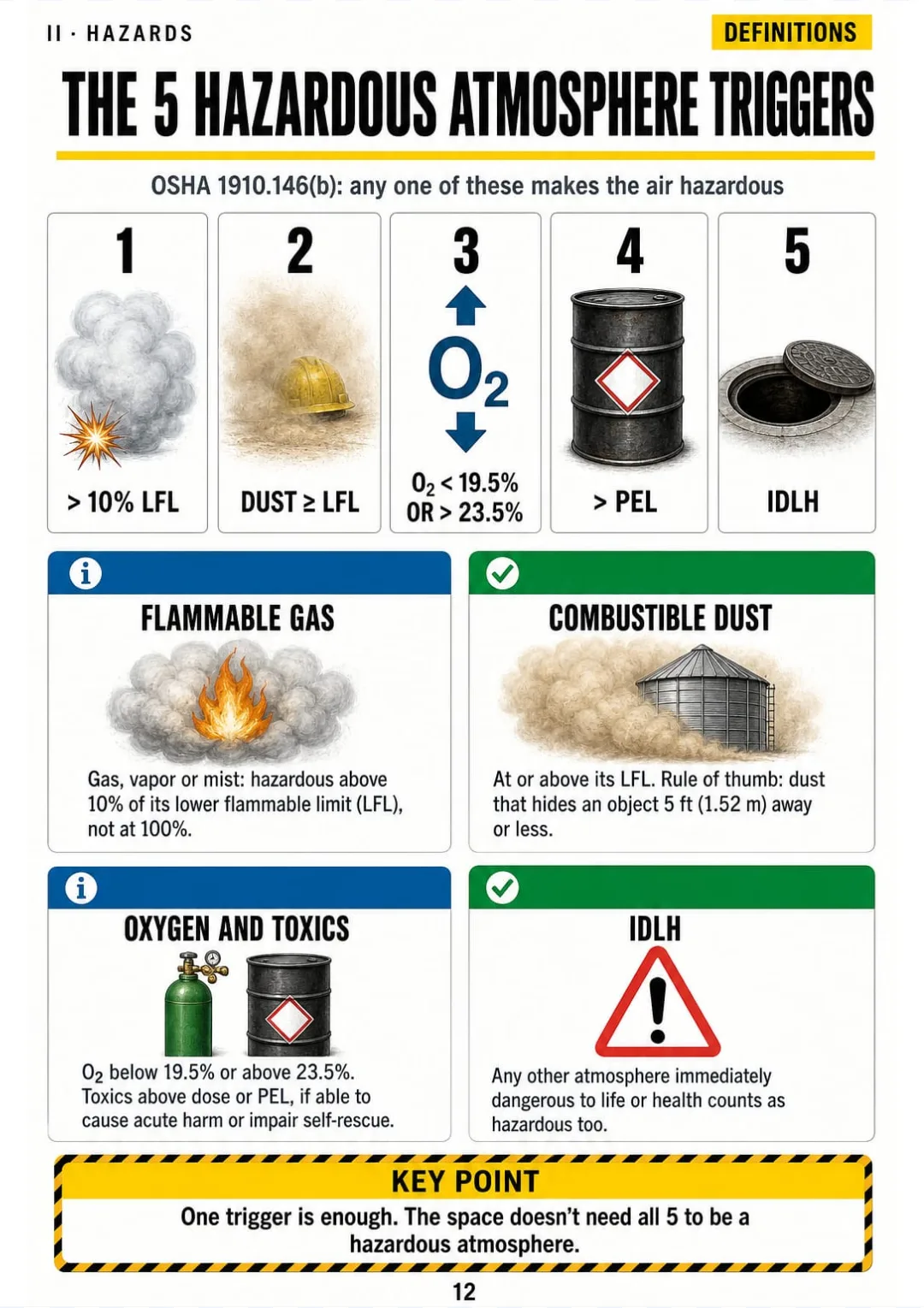
10% LFL · dust at 5 ft · O2 19.5–23.5% · PEL · IDLH
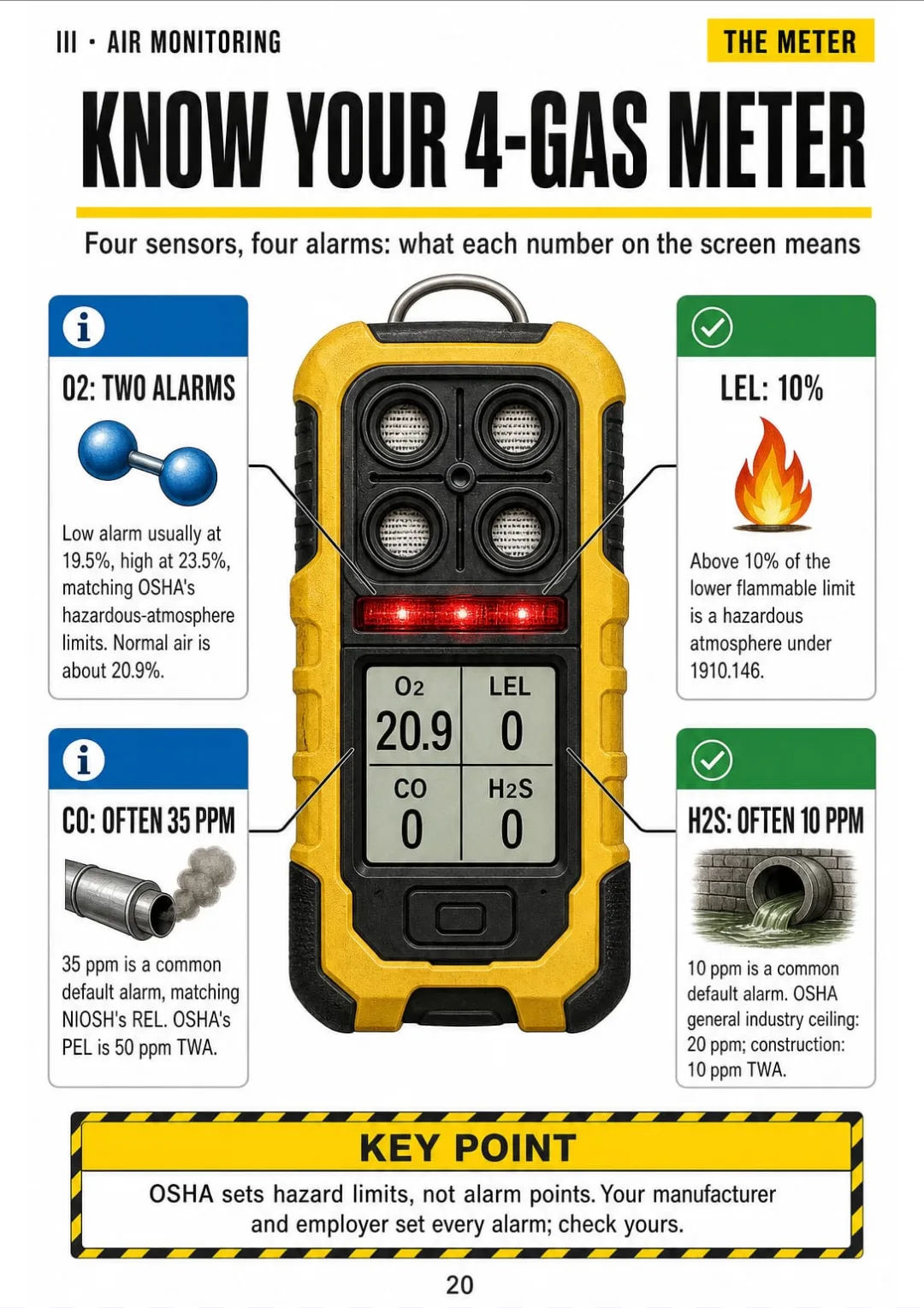
O2 19.5% / 23.5%, LEL 10%, CO and H2S alarms set by your meter and employer
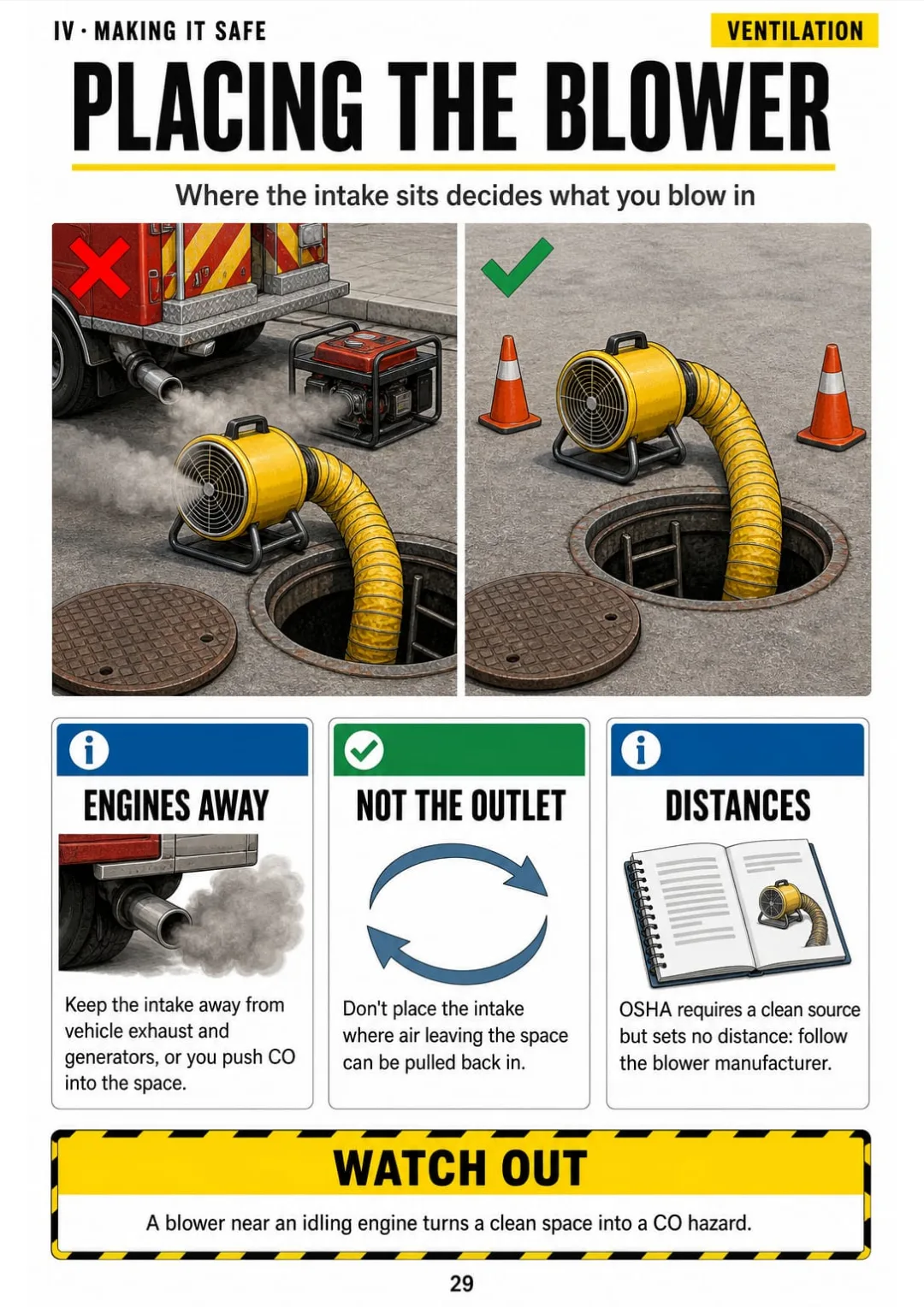
Intake in clean air, away from exhaust, generators and the space's own outlet.
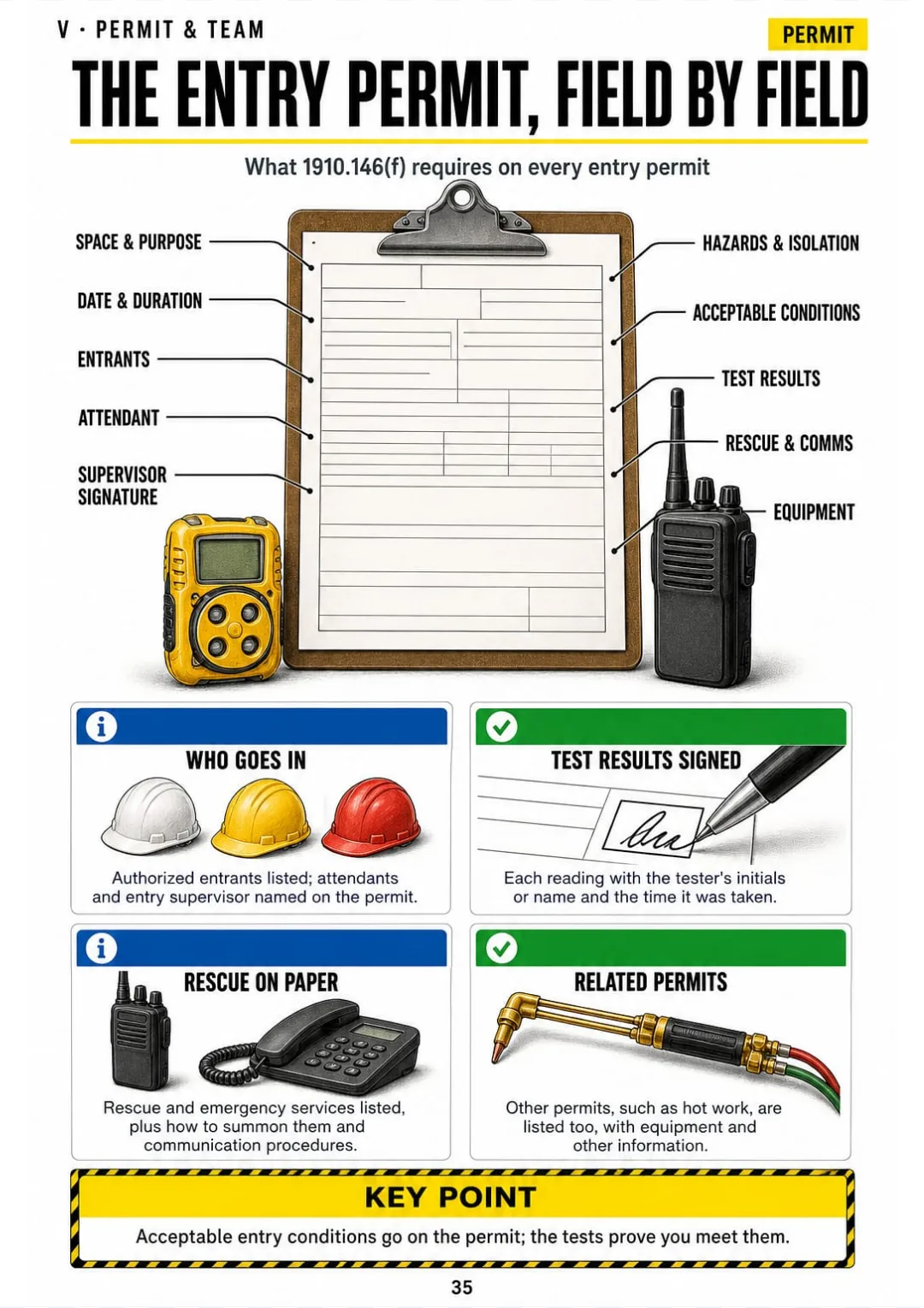
1910.146(f): space, purpose, duration, team, hazards, isolation, tests with initials, rescue.
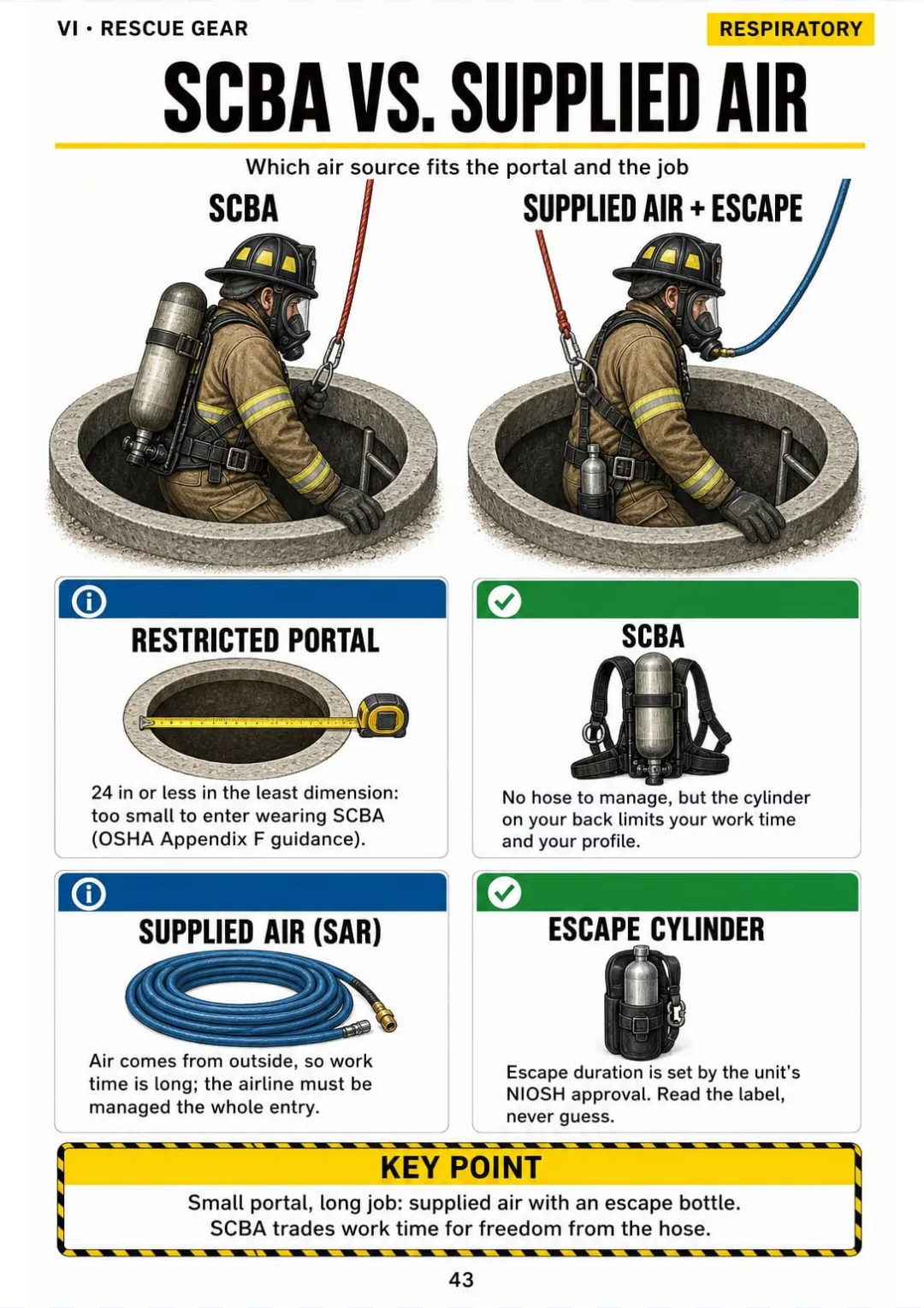
Restricted portal = 24 in or less: too small for SCBA, so supplied air with escape bottle is common.
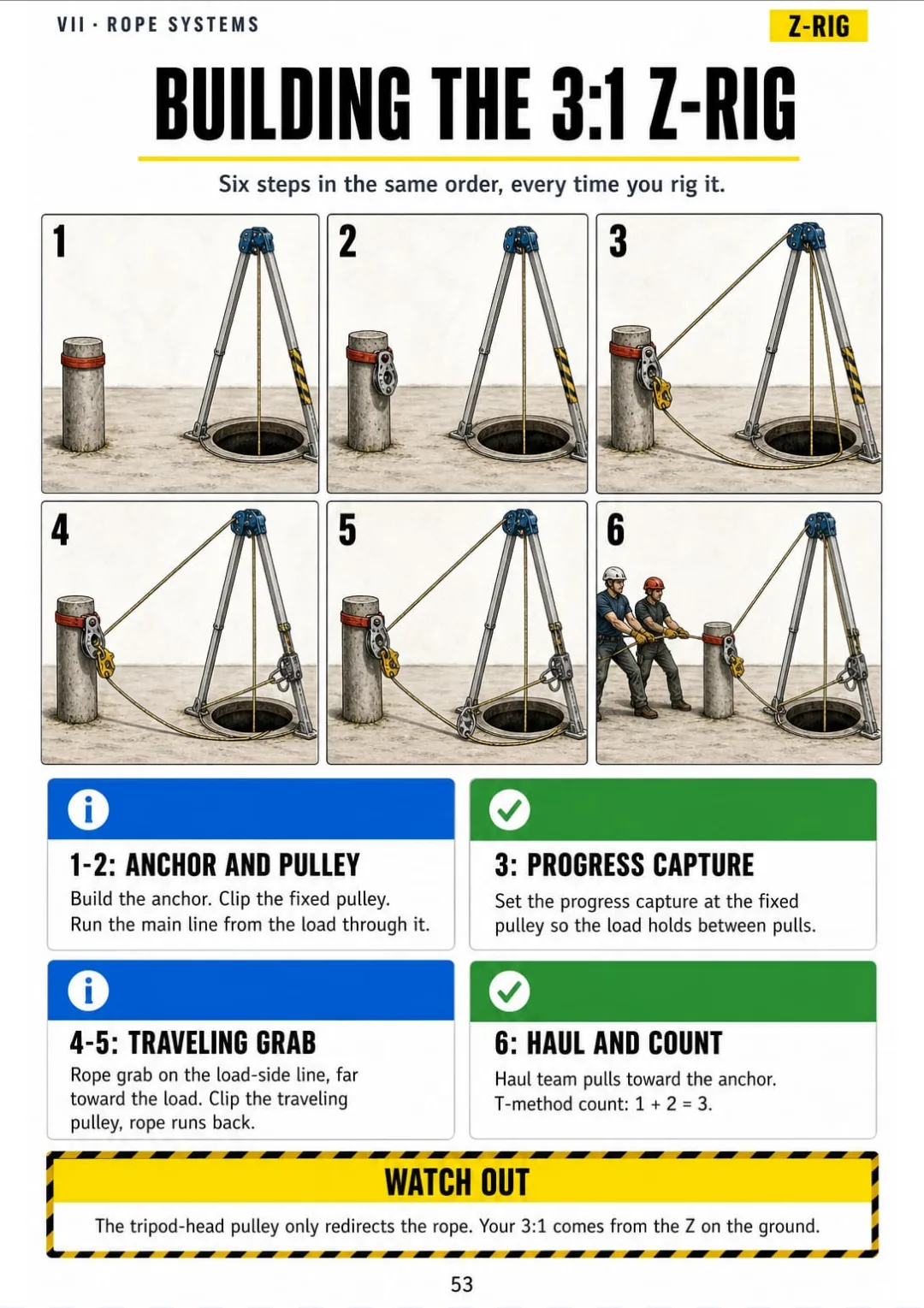
Z-rig in 6 steps: anchor, fixed pulley, capture, grab, traveling pulley, haul = 3:1.
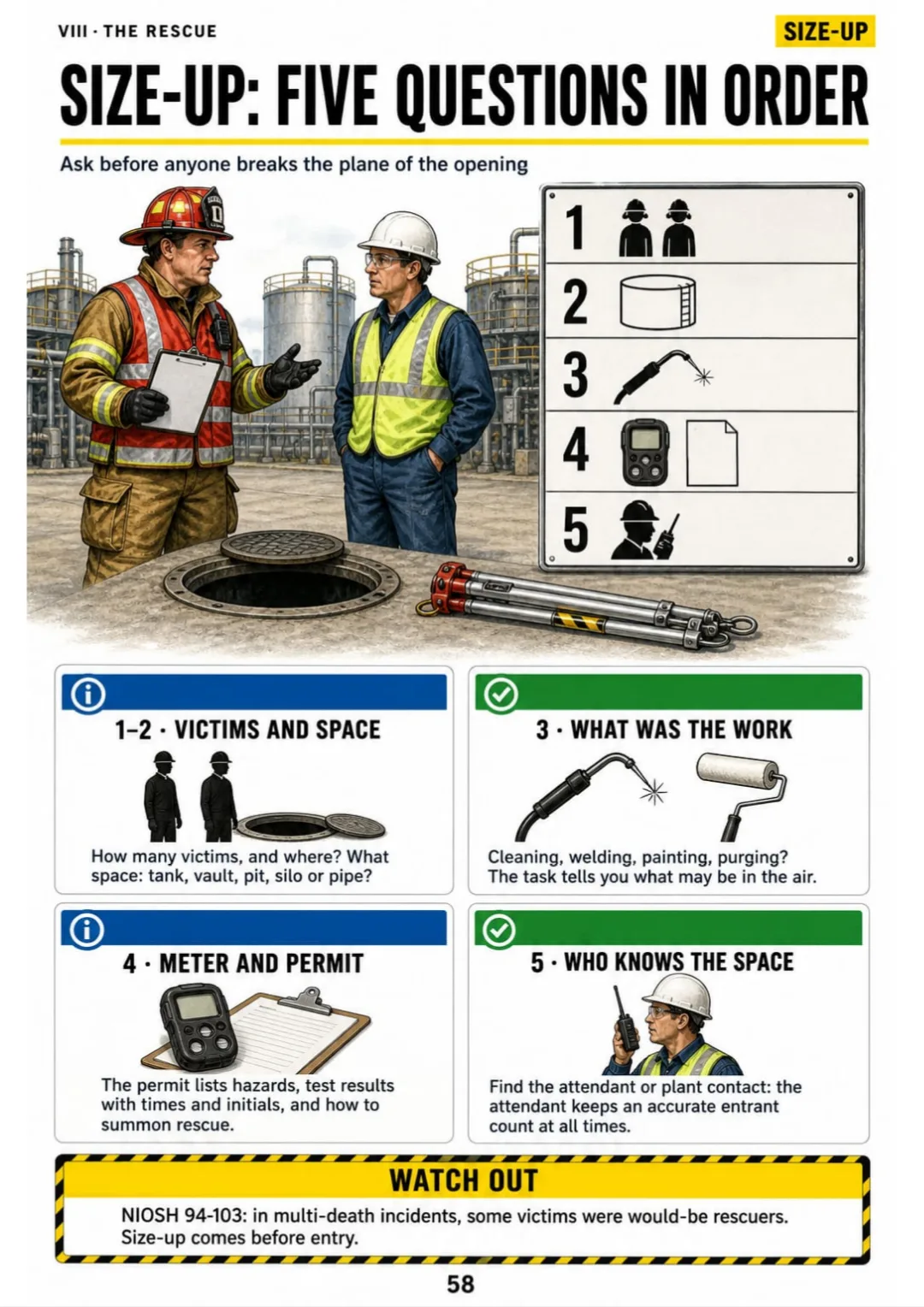
Victims, space, task, meter and permit, attendant: the size-up card in 5 questions.

Take a Look at the 9 Parts and 66 Topics

What Makes a Space Confined

pp. 5-11
  1. The 3-Part Test for a Confined Space
  2. Permit-Required vs. Non-Permit Space
  3. Reclassifying a Space and Alternate Procedures
  4. General Industry vs. Construction: 1910.146 and 1926 Subpart AA
  5. Classifying the Space the NFPA Way
  6. Where You'll Meet Confined Spaces on Calls
  7. Why Would-Be Rescuers Become Victims

The Hazards You Can't See

pp. 12-19
  1. The 5 Hazardous Atmosphere Triggers
  2. Oxygen Deficiency: What Each Percentage Means
  3. Oxygen Enrichment: Above 23.5%
  4. Flammable Atmospheres: LEL, UEL and the 10% Rule
  5. Hydrogen Sulfide (H2S)
  6. Carbon Monoxide (CO)
  7. Inert Gases and Displacement
  8. Physical Hazards: Engulfment, Mechanical, Energy, Heat

Air Monitoring Step by Step

pp. 20-27
  1. Know Your 4-Gas Meter
  2. Bump Test vs. Calibration
  3. Fresh-Air Zero Before You Start
  4. The Testing Order: Oxygen, Flammables, Toxics
  5. Testing in Layers: Top, Middle, Bottom
  6. Sampling Hose and Pump Draw Time
  7. LEL Correction Factors and Sensor Limits
  8. Continuous Monitoring During Entry

Making the Space Safe

pp. 28-34
  1. Forced-Air Ventilation: Positive Pressure
  2. Placing the Blower
  3. Ducting, Bends and Air Changes
  4. Ventilating Flammable Atmospheres
  5. Lockout/Tagout for the Space
  6. Blanking, Blinding and Double Block and Bleed
  7. Controlling the Area Around the Opening

The Permit and the Entry Team

pp. 35-42
  1. The Entry Permit, Field by Field
  2. Permit Duration and Cancellation
  3. The Entrant
  4. The Attendant
  5. The Entry Supervisor
  6. Communication: Radio, Voice and Rope Signals
  7. The Rescue Service Requirement
  8. Non-Entry, Entry, In-House or Off-Site Rescue

Rescue Gear

pp. 43-49
  1. SCBA vs. Supplied Air with Escape Bottle
  2. Airline Management
  3. Harnesses for Retrieval
  4. Mechanical Retrieval Device: the 5-Foot Rule
  5. Setting Up the Tripod
  6. Davits, Quadpods and Offset Anchors
  7. Rope, Hardware and Strength Ratings

Rope Systems and Mechanical Advantage

pp. 50-57
  1. Anchors and Anchor Systems
  2. Counting Mechanical Advantage: the T-Method
  3. The Simple 2:1
  4. Building the 3:1 Z-Rig
  5. Progress Capture and the Ratchet
  6. Compound Systems: 4:1, 6:1, 9:1
  7. Change of Direction Is Not Mechanical Advantage
  8. Main Line and Belay Line

The Rescue, Start to Finish

pp. 58-65
  1. Arrival and Size-Up
  2. Command, Zones and Assignments
  3. Rescue or Recovery: the Risk-Benefit Decision
  4. Entry Rescue: the Sequence
  5. Patient Packaging in Tight Spaces
  6. The Vertical Lift Through the Portal
  7. Horizontal and Side-Portal Extraction
  8. Handoff, Decon and Termination

Review and Practical Evaluation

pp. 66-70
  1. The Whole Rescue on One Page
  2. The Numbers to Know
  3. Pre-Entry Checklist
  4. Practical Evaluation: What the Instructor Watches
  5. Frequent Mistakes on the Drill

Who This Book Is For

You're taking the confined space rescue class

Every topic from the class on its own drawn page, so the meter, the roles and the rigging make sense the night you study them.

Your technician eval or recert is close

You review by looking: procedures in numbered steps, always in the same order, and the numbers to know on one page.

You already work entries or sign permits

A printable reference for the station or the plant office: the permit field by field, the hazards and the rescue options, drawn.

Plus: 2 Free Books

Confined Space Rescue Exam-Style Question Bank
BONUS 1

Confined Space Rescue Exam-Style Question Bank

Practice with exam-style questions on monitoring, roles, retrieval and rigging, each with the answer and the page that explains it, so you find your gaps before the instructor does.
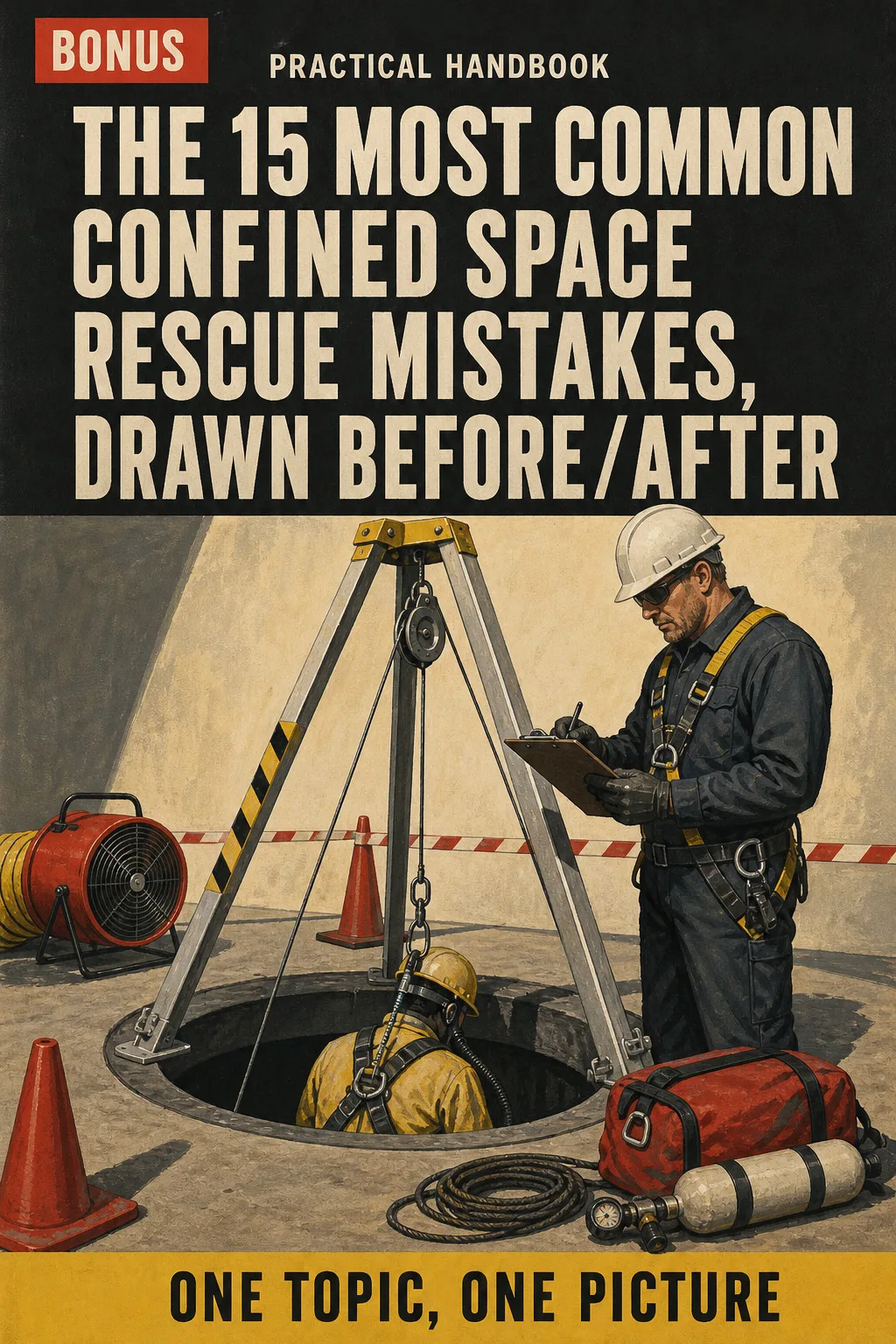
The 15 Most Common Confined Space Rescue Mistakes, Drawn Before/After
BONUS 2

The 15 Most Common Confined Space Rescue Mistakes, Drawn Before/After

See the most frequent errors side by side with the right way, from skipping the bump test to rigging the haul system wrong, so you don't repeat them on the drill or on a real call.

30-Day Guarantee

30-day guarantee: if a file doesn't open, if the content isn't what the product page describes, if you were charged twice or the email never arrived, write to us and we'll refund you in full. You pay once. No subscriptions.

Frequently Asked Questions

Is it for me if I've already taken the class and have years on the job?

Yes. It isn't a beginner's book: it puts what you already know in order and goes into what trips people up on the drill: the testing order and testing in layers, LEL correction factors, who does what between entrant, attendant and entry supervisor, counting mechanical advantage with the T-method and building the 3:1 Z-rig. One drawn page per topic, so you can review fast before an evaluation or a recert.

Where does the content come from?

From OSHA 29 CFR 1910.146, 1926 Subpart AA and 1910.147, and the confined space rescue requirements in NFPA 1006 and NFPA 2500, checked against the current editions. Every value is written as a number with its unit. If your state runs its own OSHA plan, check its specific rules too.

Is it official material?

No. It's an independent illustrated study book. It isn't published or endorsed by OSHA, NFPA or any certifying body, and it doesn't give you a certificate, a certification or CE hours: those come from your class and your evaluation.

Does it replace the class or hands-on training?

No. It's study material to review and organize what you learn. Confined space rescue requires hands-on training, certified instruction and your employer's or department's procedures.

Are the practice questions the ones on the exam?

No. They're exam-style questions written for this book, each with the answer and the page that explains it.

When and how do I get it?

As a PDF by email, sent to the address you enter at checkout. The 2 bonus books come the same way.

Do I have to pay every month?

No. It's a one-time payment.

Can I have it on paper?

Yes. The PDF is printable, so you can print it and keep it at the station, in the rig or in the plant office.

How does the refund work?

You have 30 days. We refund everything if the file won't open, if the book isn't what you see on this page, if you were charged twice or if the email doesn't arrive: just email us.

US$ 27US$ 63
Get the book · US$ 27

This is a digital PDF book sent to your email: nothing is printed or shipped.

More books on this topic

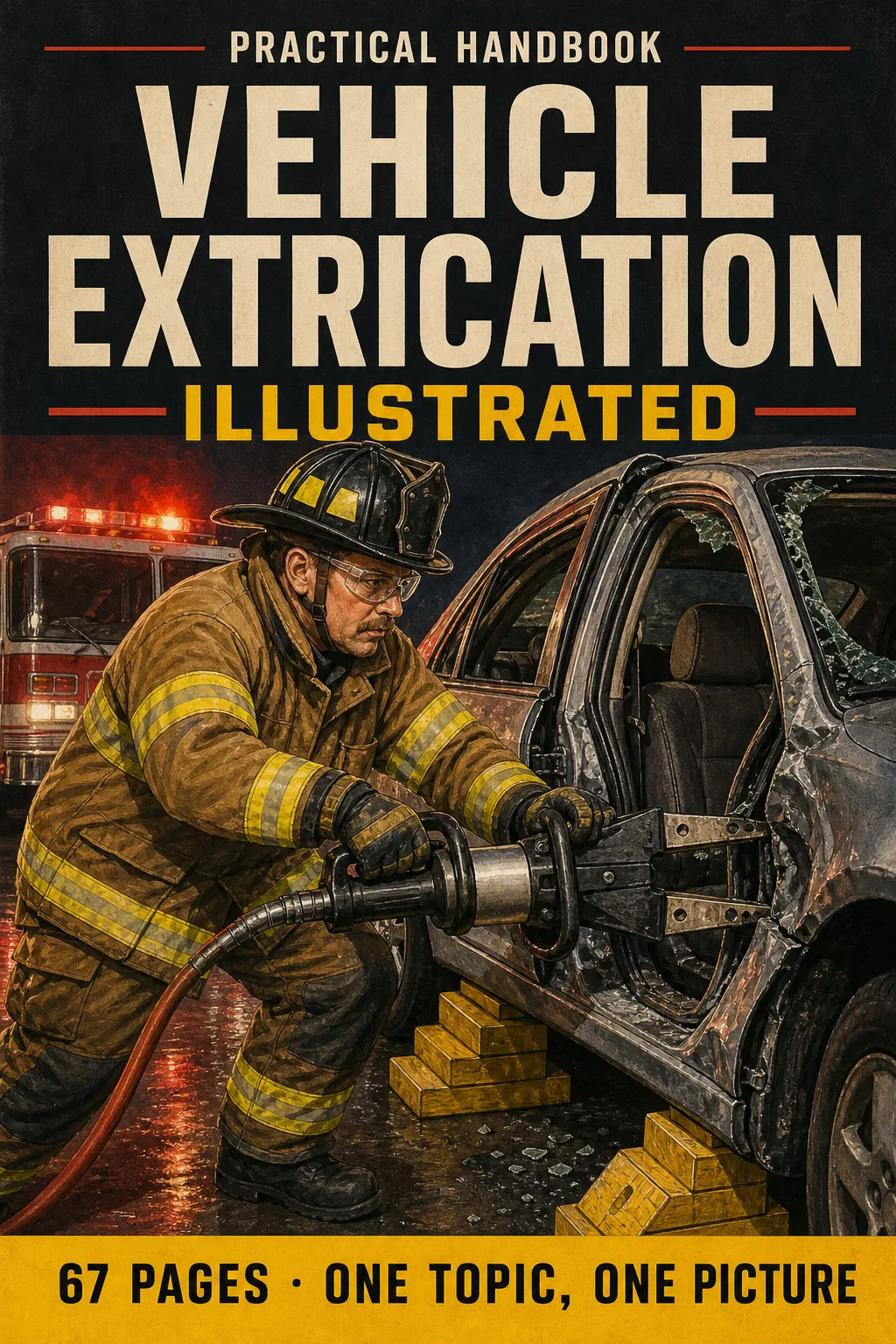
Vehicle Extrication Illustrated

Vehicle and machinery rescue, one topic per page: scene size-up, hazards, stabilization, glass, hydraulic tools, door…

From US$ 27 US$ 63

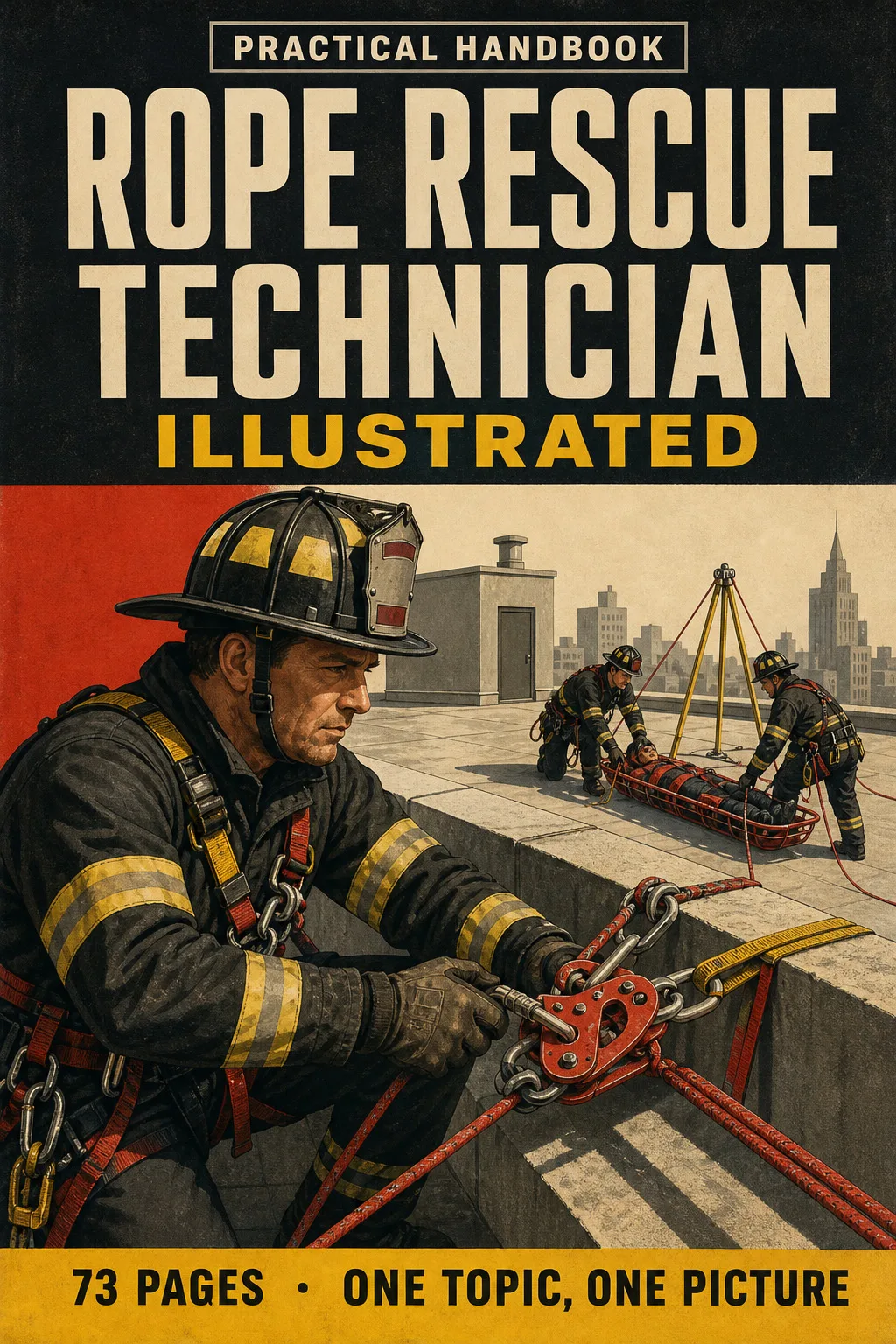
Rope Rescue Technician Illustrated

Rope rescue for firefighters and rescue techs, one topic per page with a big drawing: knots step by step, anchors and…

From US$ 27 US$ 63

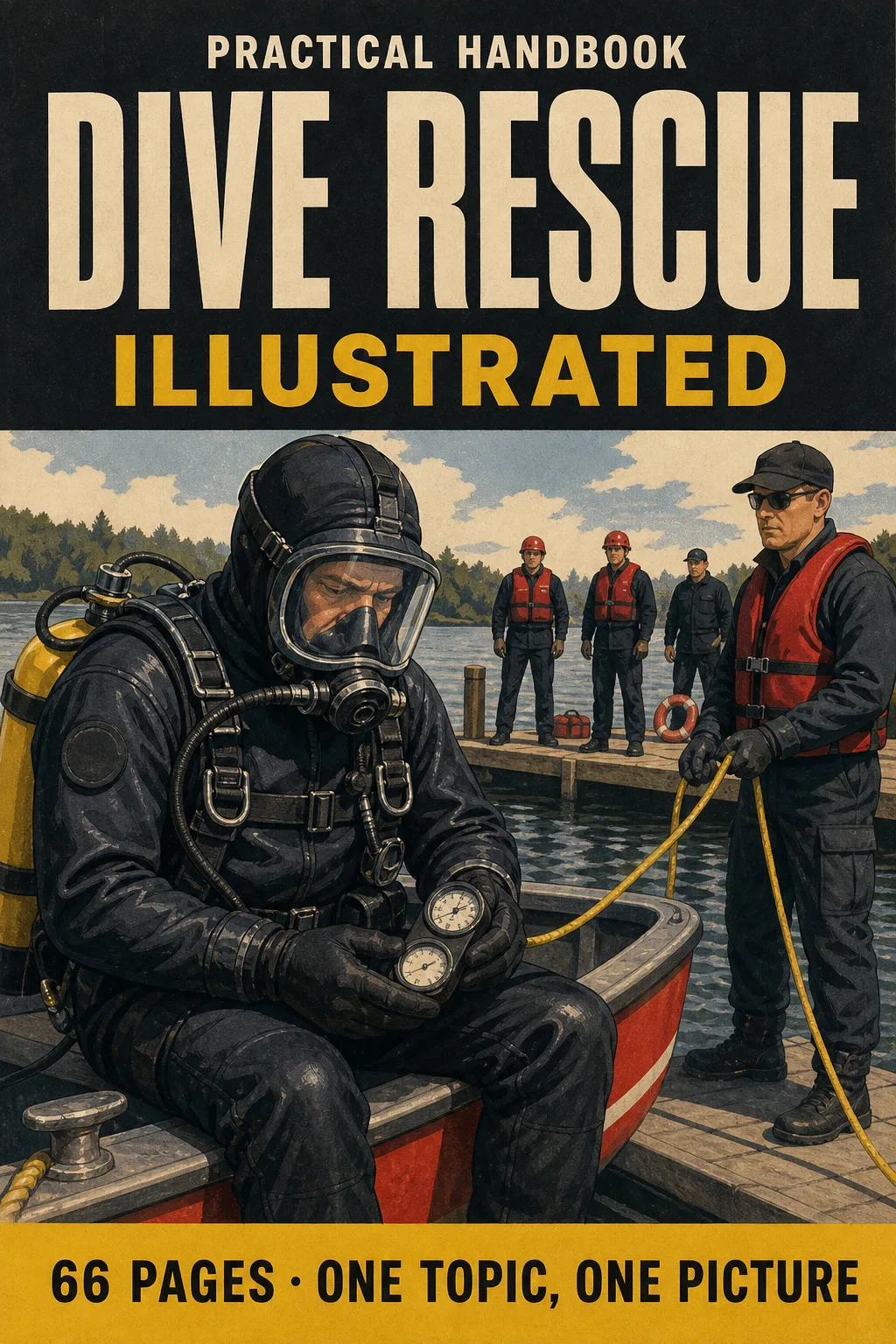
Dive Rescue Illustrated

Prepare for your NFPA 1006 Dive Rescue technical rescuer exam with one topic per page, every concept drawn: line-pull…

From US$ 27 US$ 63

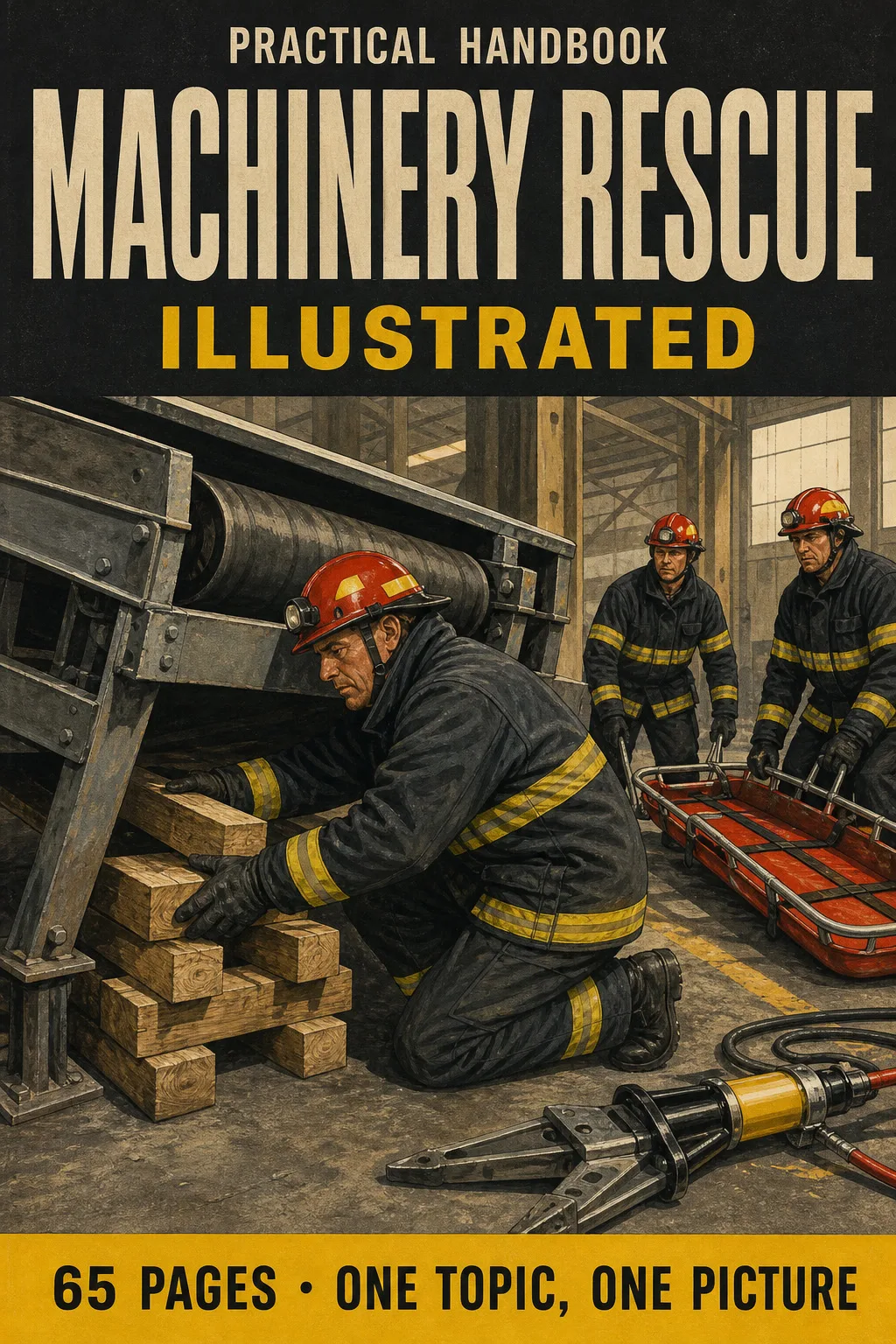
Machinery Rescue Illustrated

Machinery rescue for the NFPA 1006 Technician level, one topic per illustrated page: size-up, lockout/tagout and stored…

From US$ 27 US$ 63

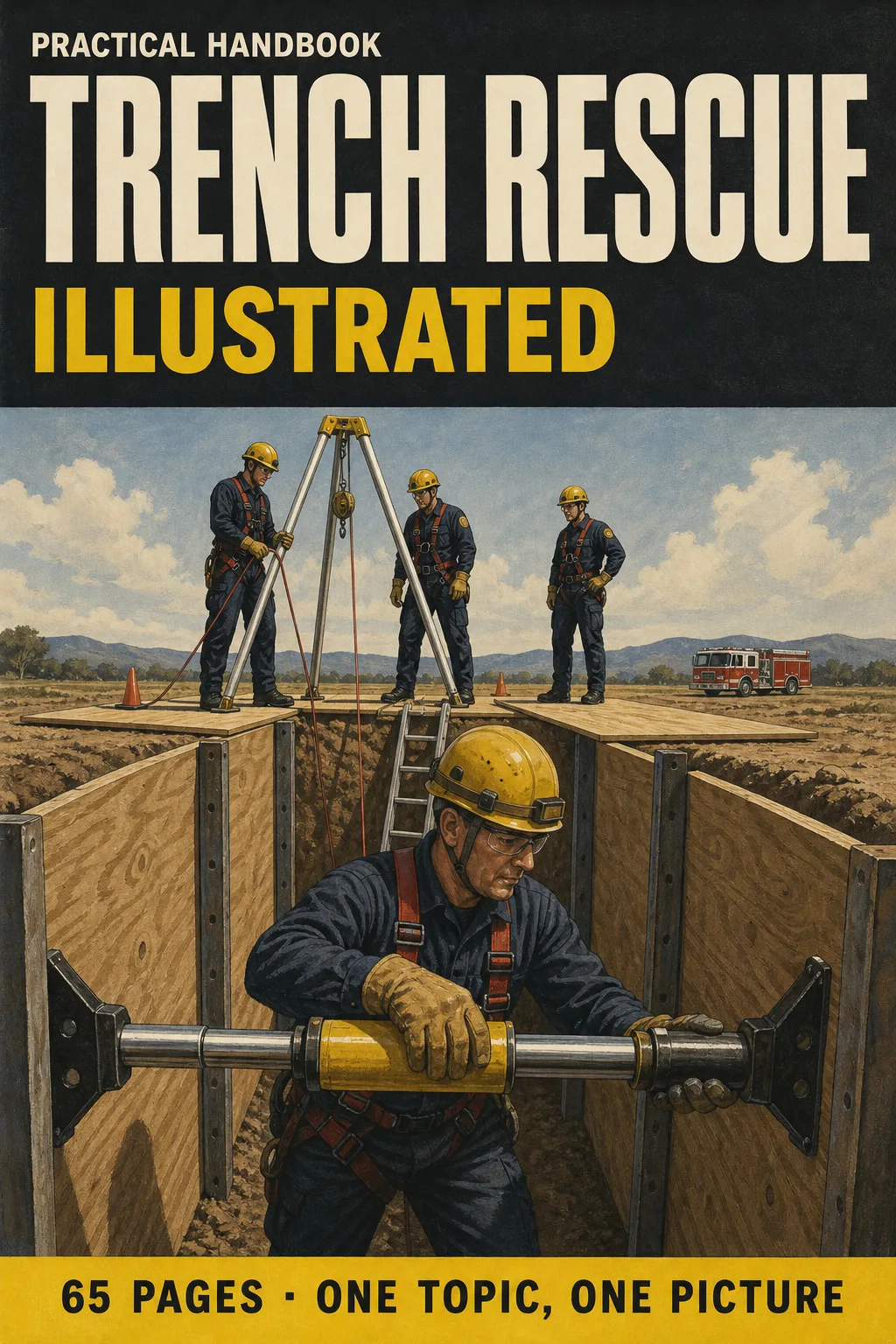
Trench Rescue Illustrated

Trench rescue technician, one topic per page: soil types, cave-in forces, size-up, protective systems, hydraulic and…

From US$ 27 US$ 63

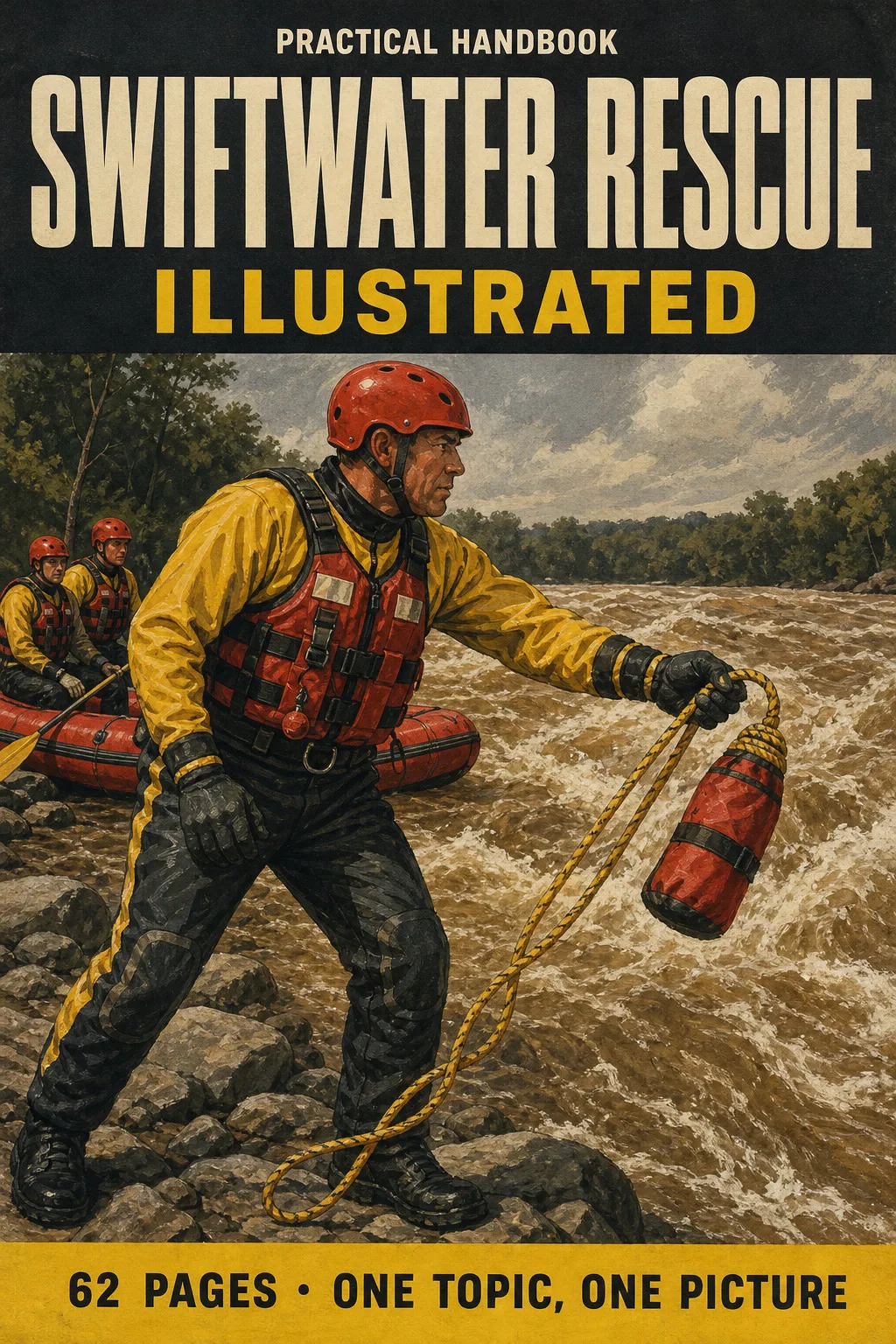
Swiftwater Rescue Illustrated

Swiftwater Rescue Technician study book for US firefighters and rescue teams: moving water, hydraulics and strainers…

From US$ 27 US$ 63

Search and Rescue Illustrated

The core search and rescue field skills for the SARTECH II written exam and practical stations, one topic per page and…

From US$ 27 US$ 63