Study in Pictures🌐 English (United States)
Mechanical Ventilation Illustrated

Digital book in PDF · read it on your phone or print it

Mechanical Ventilation Illustrated

Tidal volume, PEEP, FiO2, A/C, SIMV, pressure support, waveforms, peak vs. plateau, alarms and ABGs. Every topic gets its own page: first the drawing, then what you need to remember.

  • 68 illustrated pages
  • English
  • 30-day guarantee
US$ 27US$ 63
Get the book · US$ 27

Price shown for: United States. In other countries, the checkout shows the price that applies there.

About this book

What it is

Tidal volume, PEEP, FiO2, A/C, SIMV, pressure support, waveforms, peak vs. plateau, alarms and ABGs. Every topic gets its own page: first the drawing, then what you need to remember.

Who This Book Is For
  • You're studying respiratory therapy
  • Your board-style exam is coming
  • You already work ICU, ER or transport
What it covers
  1. The Basics
  2. The Settings
  3. The Modes
  4. Waveforms
  5. Peak vs. Plateau
  6. Alarms and the Screen Method
  7. ABGs on the Vent
  8. Special Situations and Weaning
  9. Review and Practice
Language
English (United States)
Pages
68
Format
Digital book in PDF · read it on your phone or print it
Price
US$ 27 (United States)
Delivery
This is a digital PDF book sent to your email: nothing is printed or shipped.
30-Day Guarantee
30-day guarantee: if a file doesn't open, if the content isn't what the product page describes, if you were charged twice or the email never arrived, write to us and we'll refund you in full.

Look Inside the Book

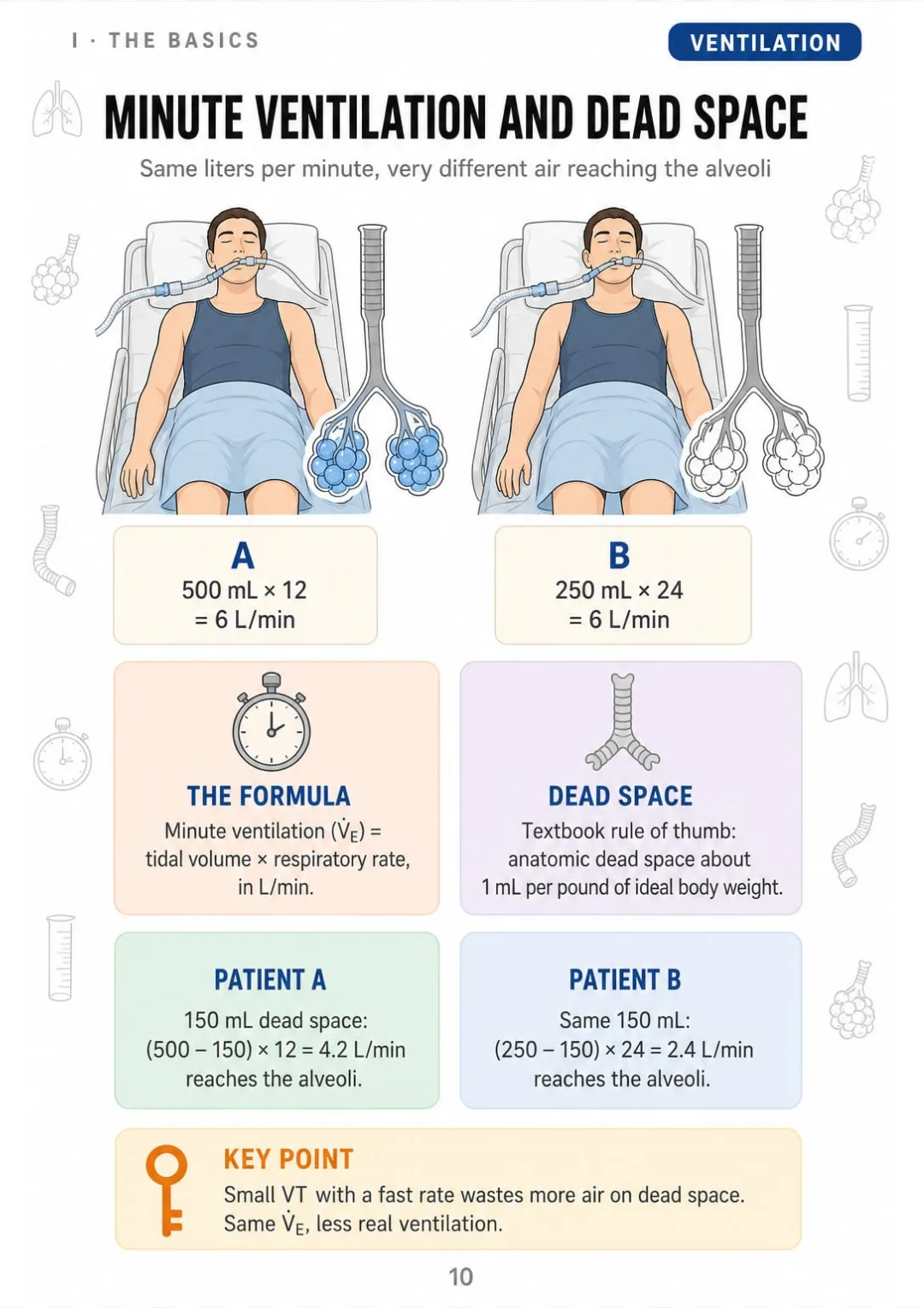
V̇E = VT × rate: 500 × 12 and 250 × 24 both give 6 L/min, not the same alveolar air
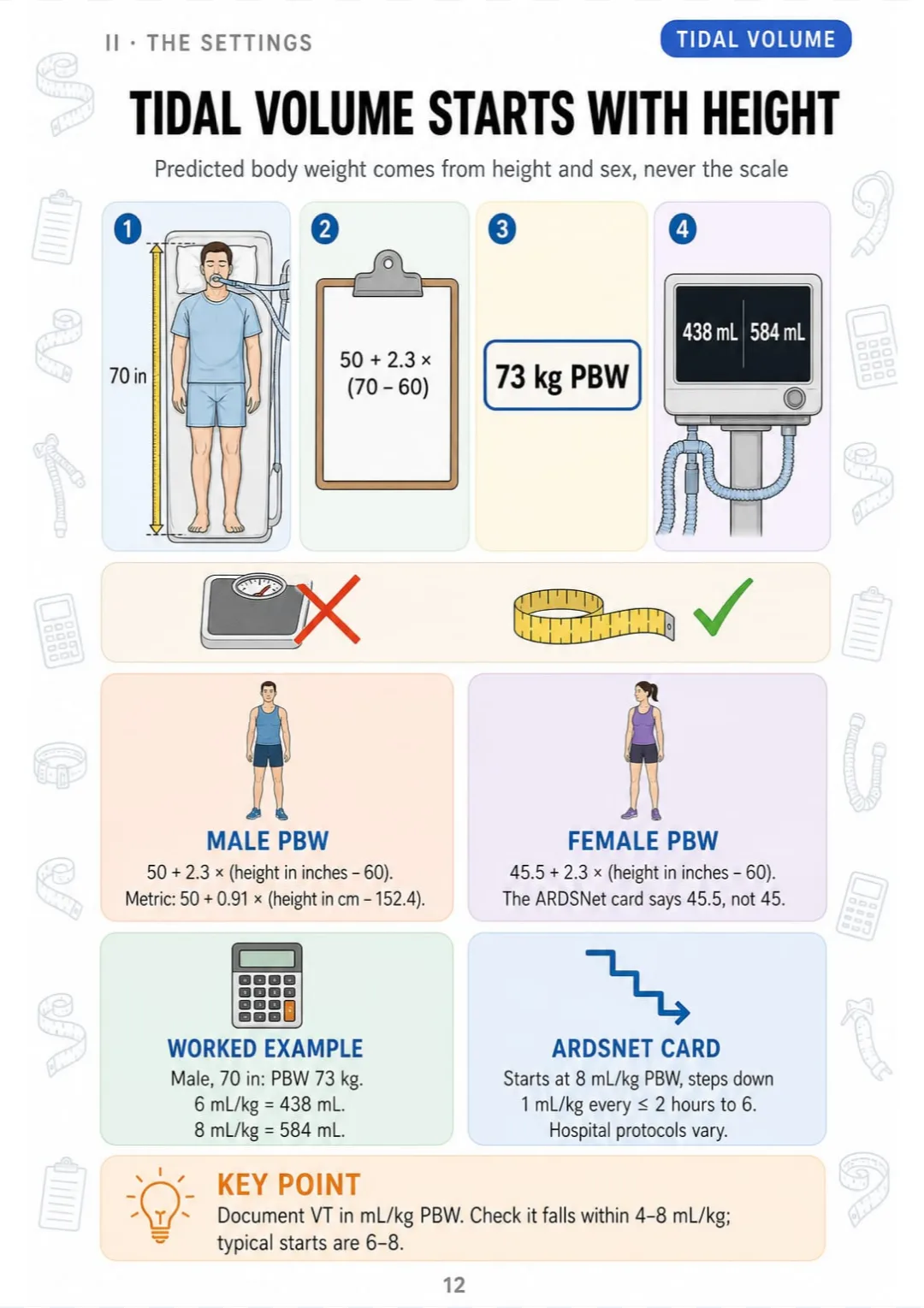
PBW = 50 (men) or 45.5 (women) + 2.3 × (inches − 60), then 6–8 mL/kg
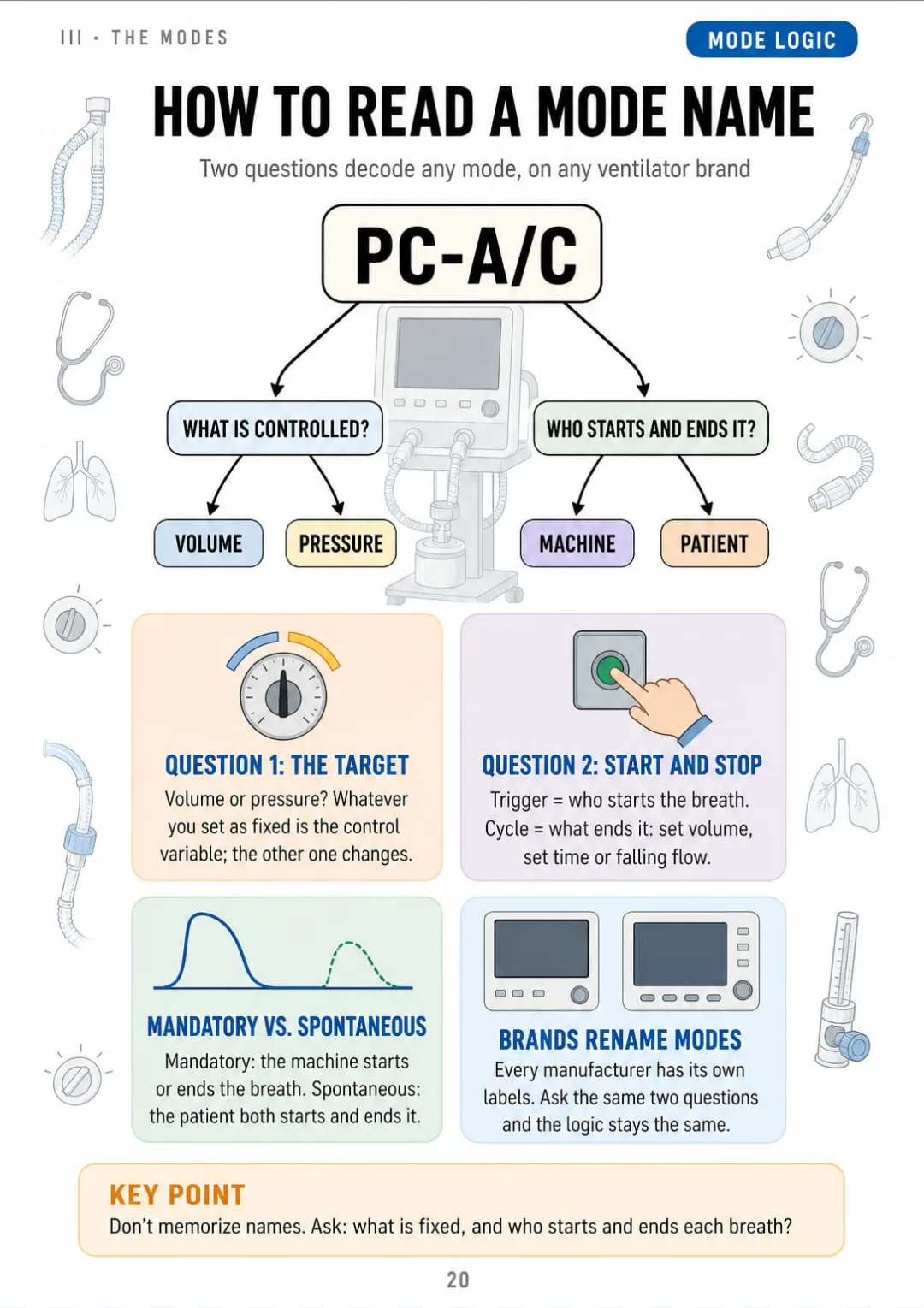
Two questions decode any mode: what's controlled, and who starts and ends the breath.
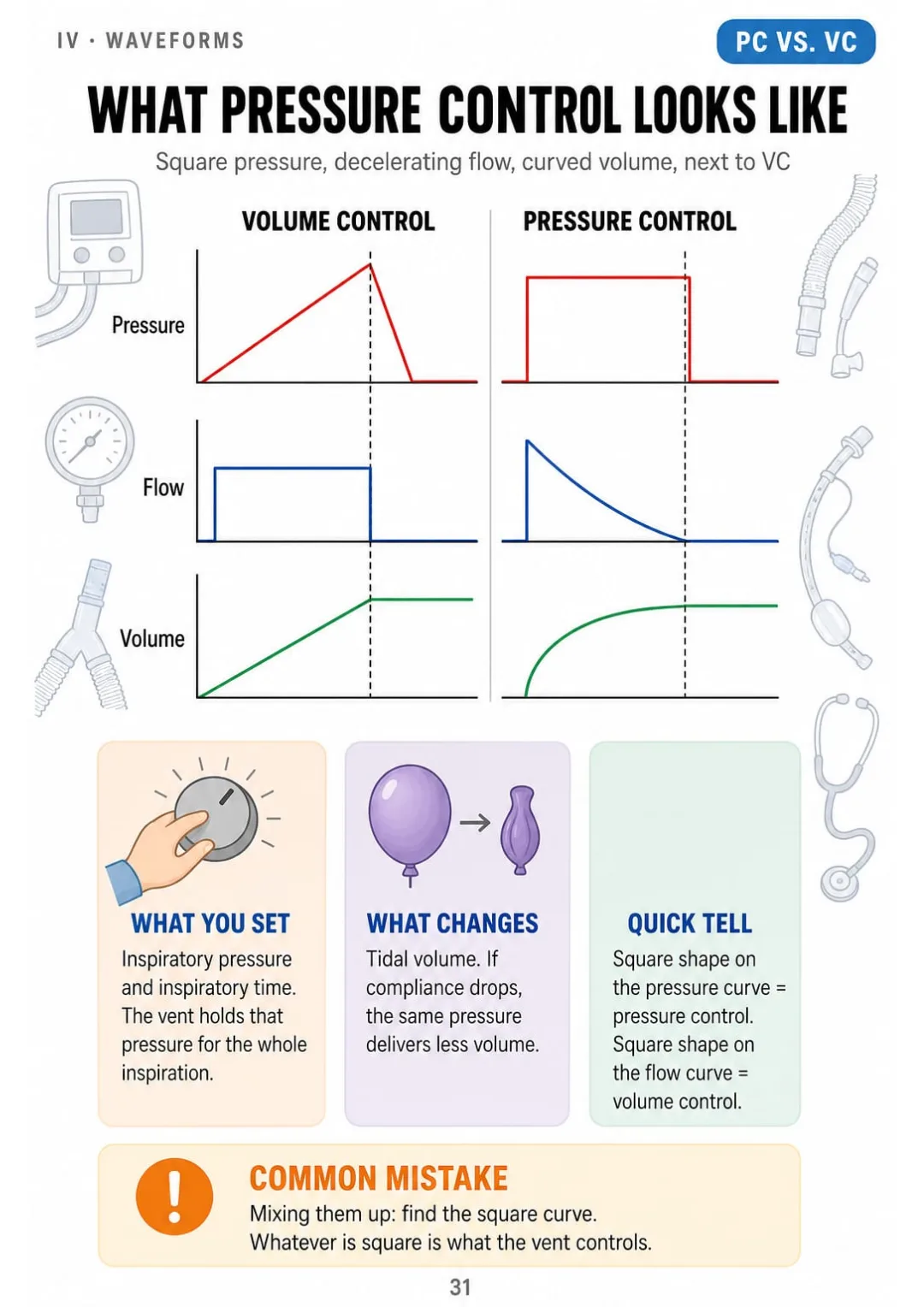
Pressure control: square pressure, decelerating flow, and a volume that changes with compliance.
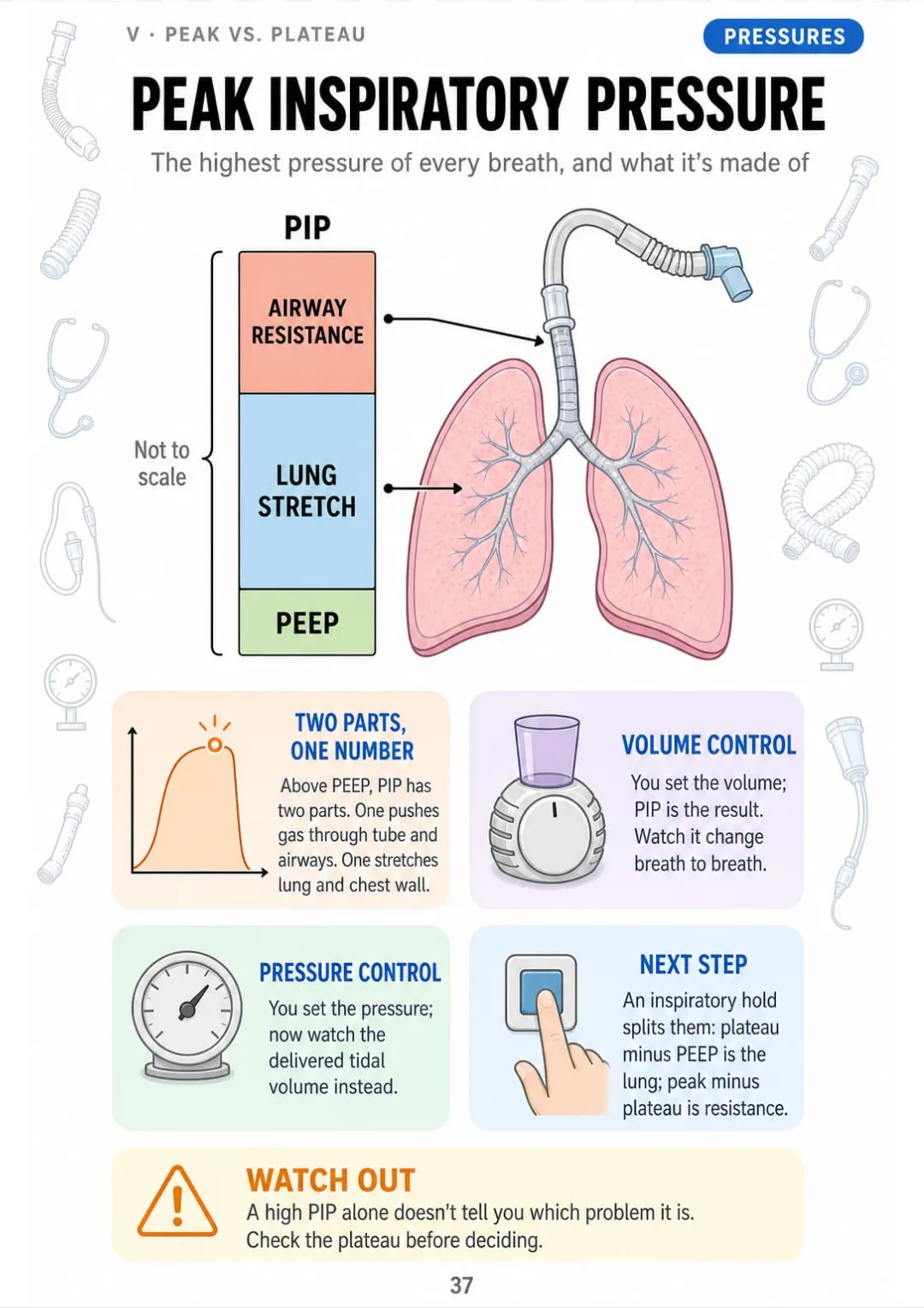
PIP = PEEP + lung stretch + airway resistance, drawn as one stacked column
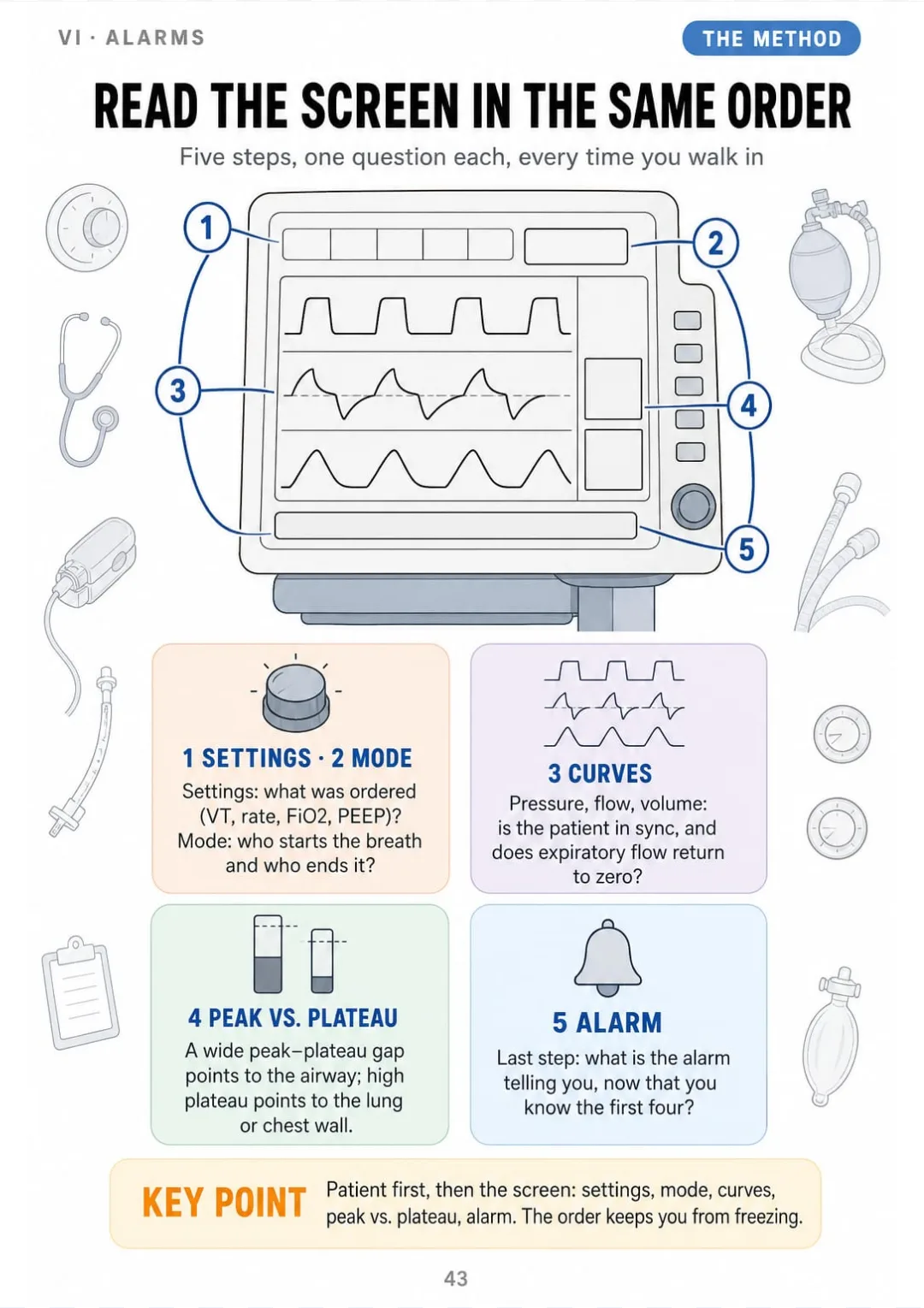
Settings → mode → curves → peak vs. plateau → alarm: one question per step.
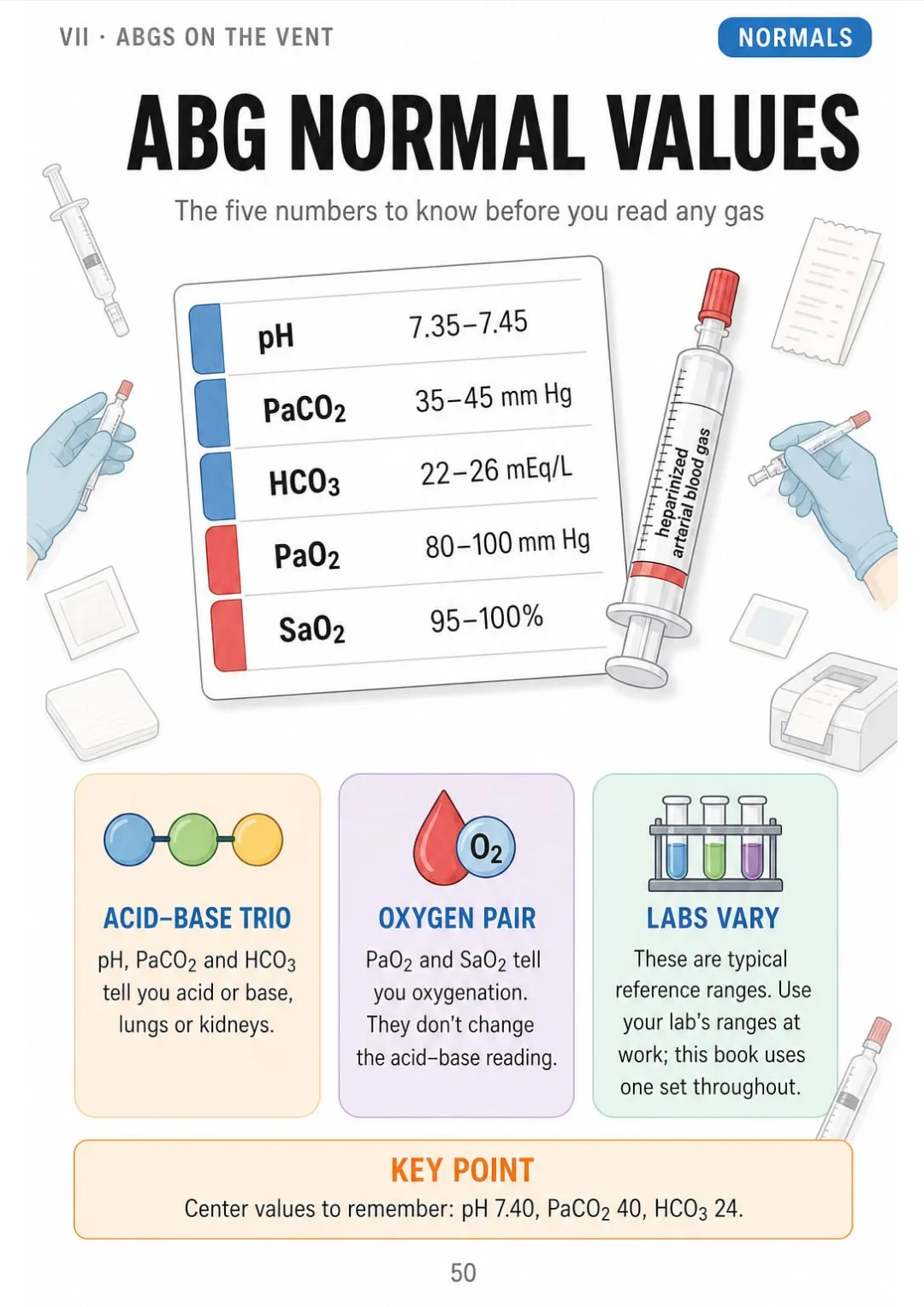
pH 7.35–7.45 · PaCO2 35–45 · HCO3 22–26 · PaO2 80–100 mm Hg · SaO2 95–100%
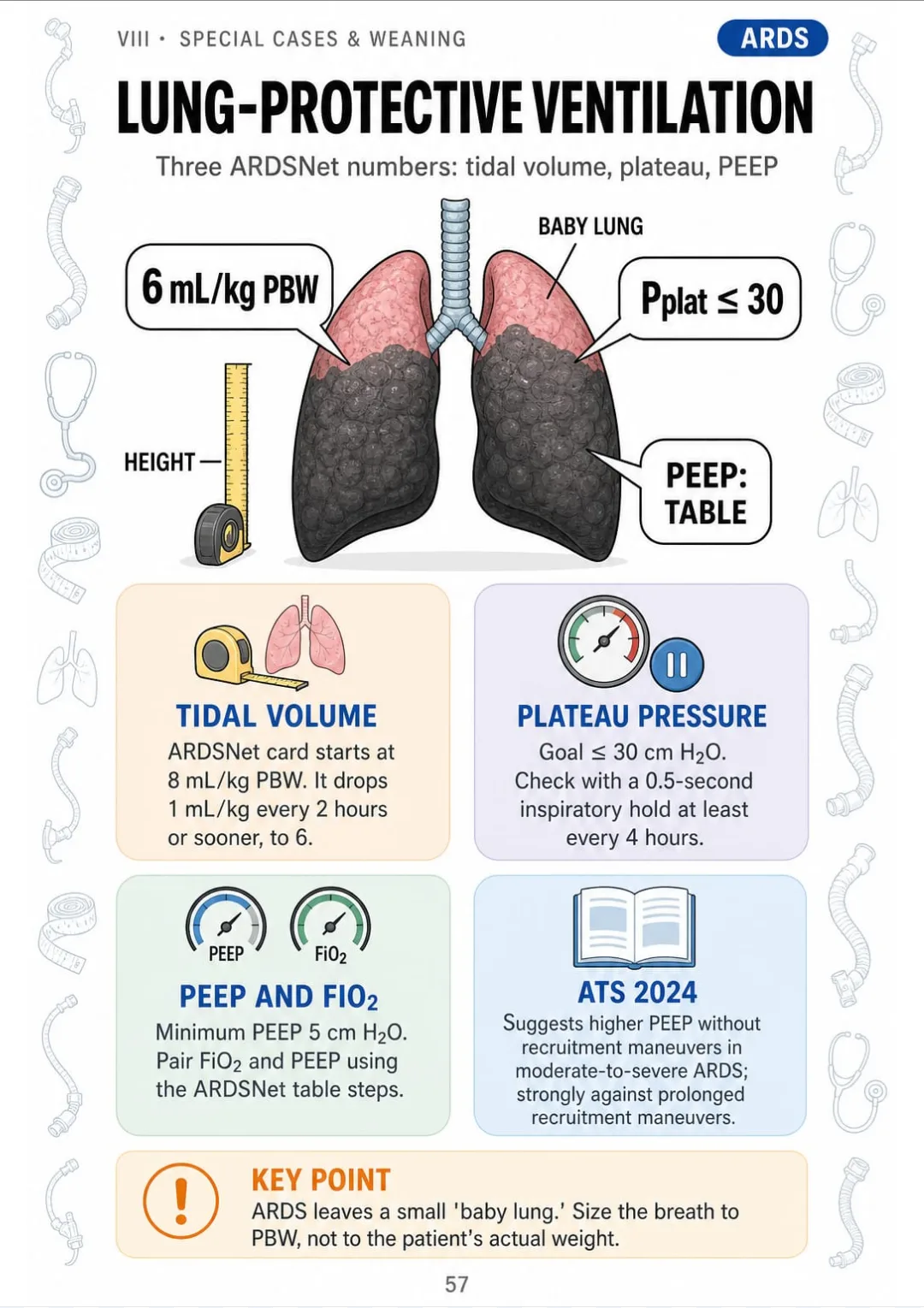
VT 6 mL/kg PBW · Pplat ≤ 30 cm H2O · PEEP from the ARDSNet table

Take a Look at the 9 Parts and 64 Topics

The Basics

pp. 5-11
  1. Why a Patient Ends Up on the Vent
  2. Negative vs. Positive Pressure Breathing
  3. The Circuit, Drawn End to End
  4. The ET Tube and Its Cuff
  5. Compliance and Resistance
  6. Minute Ventilation and Dead Space
  7. Two Jobs, Two Sets of Knobs

The Settings

pp. 12-19
  1. Tidal Volume Starts With Height, Not Weight
  2. Respiratory Rate
  3. FiO2
  4. PEEP
  5. I:E Ratio and Inspiratory Time
  6. Peak Flow and Flow Pattern
  7. Trigger Sensitivity
  8. The Initial Settings Card

The Modes

pp. 20-28
  1. How to Read a Mode Name
  2. Volume Control vs. Pressure Control
  3. Assist/Control (A/C)
  4. Pressure Control (PC-A/C)
  5. SIMV
  6. Pressure Support
  7. CPAP
  8. Adaptive Modes and APRV
  9. A/C vs. SIMV vs. PS vs. CPAP

Waveforms

pp. 29-36
  1. The Three Curves on the Screen
  2. What Volume Control Looks Like
  3. What Pressure Control Looks Like
  4. The Trigger Dip
  5. Expiratory Flow That Doesn't Return to Zero
  6. Patient–Vent Asynchrony
  7. Leaks on the Volume Curve
  8. Pressure–Volume and Flow–Volume Loops

Peak vs. Plateau

pp. 37-42
  1. Peak Inspiratory Pressure
  2. Plateau Pressure and the Inspiratory Hold
  3. Driving Pressure
  4. Peak Up, Plateau the Same
  5. Peak and Plateau Both Up
  6. Auto-PEEP and the Expiratory Hold

Alarms and the Screen Method

pp. 43-49
  1. Read the Screen in the Same Order
  2. Patient First, Screen Second
  3. High Pressure Alarm
  4. Low Pressure and Disconnect Alarm
  5. Low Exhaled Volume and Low Minute Ventilation
  6. High Rate and Apnea Alarms
  7. DOPES When Things Go Wrong

ABGs on the Vent

pp. 50-56
  1. ABG Normal Values
  2. Read an ABG in Four Steps
  3. High CO2: Which Knob Moves It
  4. Low CO2: Over-Breathing on the Vent
  5. The P/F Ratio
  6. Oxygenation: FiO2 and PEEP Together
  7. Permissive Hypercapnia

Special Situations and Weaning

pp. 57-63
  1. Lung-Protective Ventilation
  2. COPD and Asthma on the Vent
  3. Ready to Wean? The Screening Criteria
  4. The Spontaneous Breathing Trial
  5. RSBI: The Rapid Shallow Breathing Index
  6. VAP Prevention Bundle
  7. Transport Ventilators and Bagging

Review and Practice

pp. 64-68
  1. The One-Page Vent Check
  2. Shift Handoff in One Sheet
  3. The Mix-Ups That Come Up Most
  4. Every Formula on One Page
  5. What Board-Style Exams Cover

Who This Book Is For

You're studying respiratory therapy

Modes, curves and numbers stop blurring together: each one is a drawing on its own page, always read in the same order.

Your board-style exam is coming

You review settings, waveforms, peak vs. plateau and ABGs at a glance, then check yourself with the exam-style questions.

You already work ICU, ER or transport

You print the pages you need and read the screen in the same five steps before you call the RT or the doctor.

Plus: 2 Free Books

Ventilation Exam-Style Questions, Answered
BONUS 1

Ventilation Exam-Style Questions, Answered

Board-style practice questions on settings, modes, waveforms and alarms, each with the answer and a short drawn explanation, so you check what you really know before exam day.
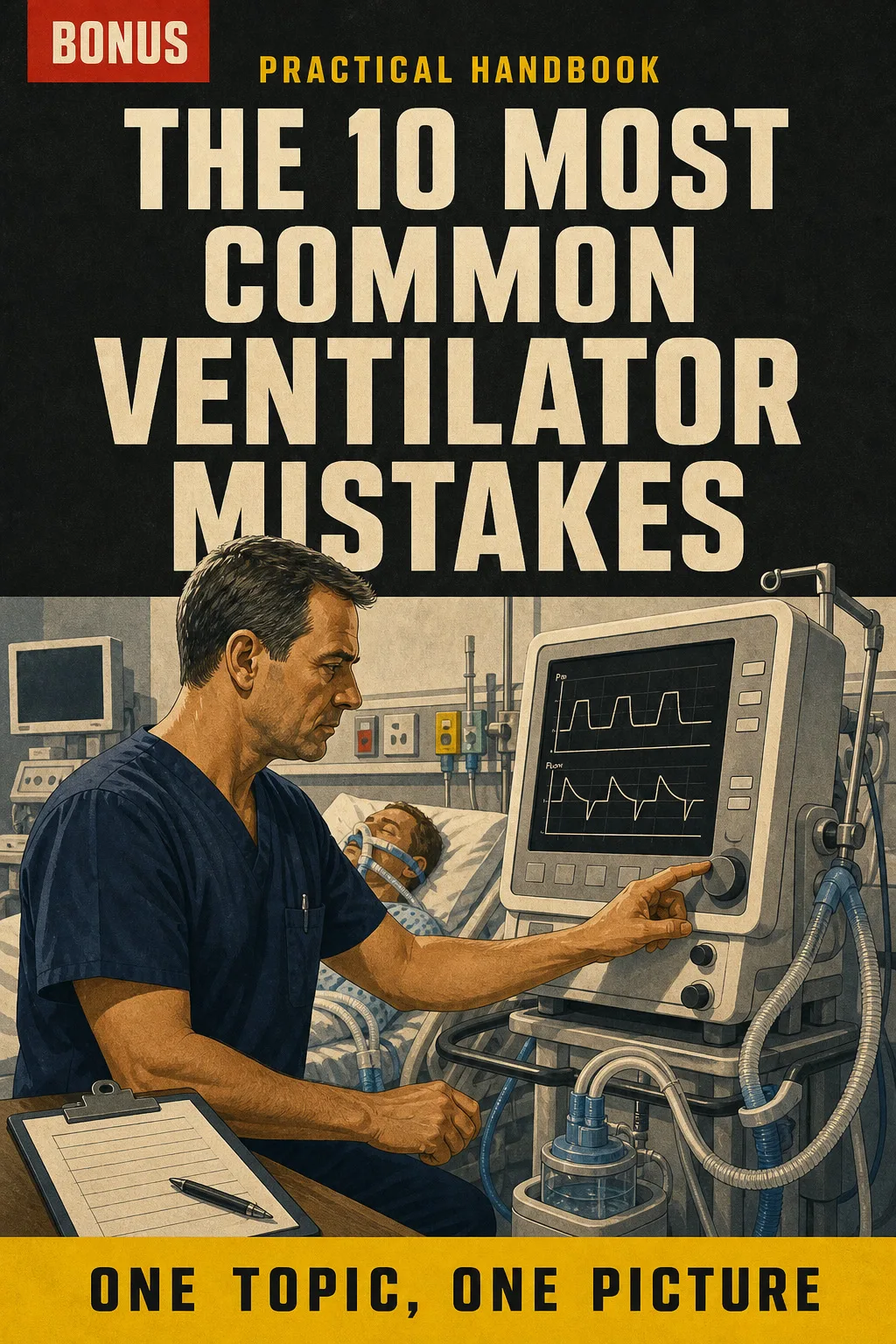
The 10 Most Common Ventilator Mistakes
BONUS 2

The 10 Most Common Ventilator Mistakes

The mistakes that come up most often at the bedside and on practice exams (mixing up peak and plateau, confusing SIMV with pressure support, silencing an alarm before checking the patient), each on one page with the right way to think it through.

30-Day Guarantee

30-day guarantee: if a file doesn't open, if the content isn't what the product page describes, if you were charged twice or the email never arrived, write to us and we'll refund you in full. You pay once. No subscriptions.

Frequently Asked Questions

Is it for me if I already work in the ICU or ER but never had formal vent training?

Yes. It starts from why a patient needs the vent, but most of the book goes further: waveforms and asynchrony, peak vs. plateau and driving pressure, alarms, ABGs on the vent, ARDS, COPD and weaning. If you already did the coursework, jump straight to parts 4 to 8.

Where does the content come from?

It's written for the US. Values and concepts are checked against the AARC Clinical Practice Guidelines and the NIH NHLBI ARDSNet protocol, the topic list follows the NBRC TMC Detailed Content Outline, and everything is in US units: inches, cm H2O and mm Hg.

Is it official material?

No. It's an independent illustrated study guide, not affiliated with any exam board, association or ventilator manufacturer. It doesn't come with a certificate or CE credits.

Does it replace my course or clinical training?

No. It's study material only. It doesn't replace your training, clinical protocols, physician orders or device manuals, and it has no drug doses or settings for a specific patient.

Are the practice questions the ones on the exam?

No. The exam-style questions are written for this book. They're not official questions from any exam.

When and how do I get it?

As a PDF by email, sent to the address you enter at checkout: the book and the 2 bonus books.

Do I have to pay every month?

No. It's a one-time payment.

Can I have it on paper?

Yes. It's a printable PDF: print the whole book or just the pages you want to carry on shift.

How does the refund work?

You have 30 days. We refund everything if the file won't open, if the book isn't what you see on this page, if you were charged twice or if the email doesn't arrive: just email us.

US$ 27US$ 63
Get the book · US$ 27

This is a digital PDF book sent to your email: nothing is printed or shipped.

More books on this topic

HVAC & EPA 608, Illustrated

Review EPA 608 (Core, Type I, II and III) and the refrigeration cycle one page at a time, drawn and checked against the…

From US$ 27 US$ 63

EPA 608 Illustrated

Study for the EPA Section 608 exam (Core, Type I, Type II and Type III) one illustrated topic per page: the…

From US$ 27 US$ 63

HVAC Technician Illustrated

The HVAC system explained one topic per page, every page drawn: the refrigeration cycle and its 4 components, reading a…

From US$ 27 US$ 63

Ammonia Refrigeration Illustrated

See the whole industrial ammonia plant one page at a time: R-717 hazards, screw and reciprocating compressors, liquid…

From US$ 27 US$ 63