Study in Pictures🌐 English (Australia)
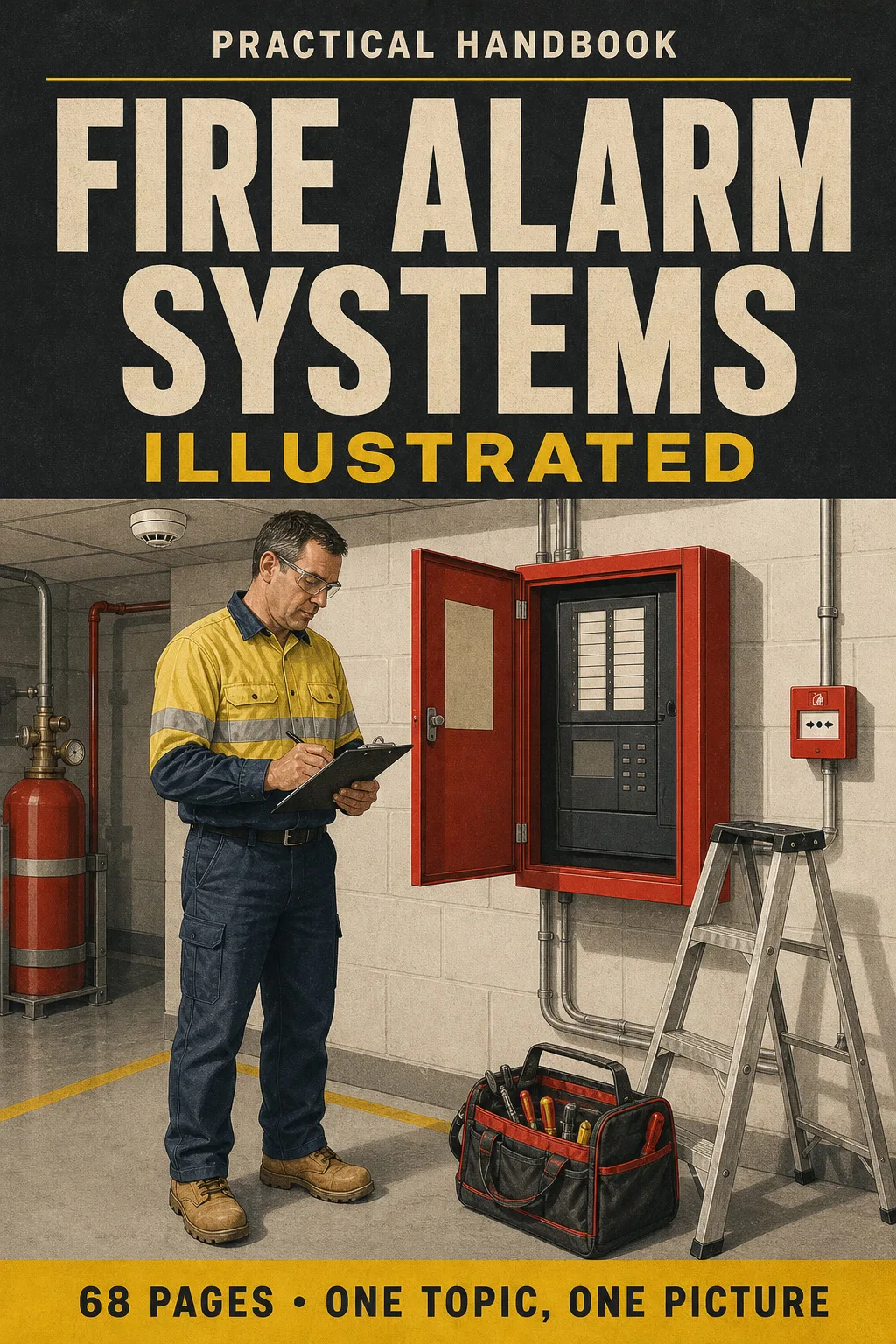
Fire Alarm Systems Illustrated

Digital book in PDF · read it on your phone or print it

Fire Alarm Systems Illustrated

Detector types, spacing and coverage in metres, beams and sloping ceilings, the fire indicator panel, fire-rated cabling, battery standby, commissioning, inspect and test, and fault finding. Every topic has its own page: the drawing first, then what you need to remember.

  • 68 illustrated pages
  • English
  • 30-day guarantee
A$ 39A$ 89
Get the book · A$ 39

Price shown for: Australia. In other countries, the checkout shows the price that applies there.

About this book

What it is

Detector types, spacing and coverage in metres, beams and sloping ceilings, the fire indicator panel, fire-rated cabling, battery standby, commissioning, inspect and test, and fault finding. Every topic has its own page: the drawing first, then what you need to remember.

Who This Book Is For
  • You're learning fire alarm systems
  • Your assessment or licence is close
  • You already work in fire
What it covers
  1. The System on One Page
  2. Detectors: Choose the Right One
  3. Spacing and Coverage in Metres
  4. Panel, Warnings and Brigade
  5. Cabling and Power
  6. Install and Commission
  7. Inspect, Test and Find the Fault
  8. Accreditation, Licensing and Revision
Language
English (Australia)
Pages
68
Format
Digital book in PDF · read it on your phone or print it
Price
A$ 39 (Australia)
Delivery
This is a digital PDF book sent to your email: nothing is printed or shipped.
30-Day Guarantee
30-day guarantee: if a file doesn't open, if the content isn't what the product page describes, if you were charged twice or the email never arrived, write to us and we'll refund you in full.

Look Inside the Book

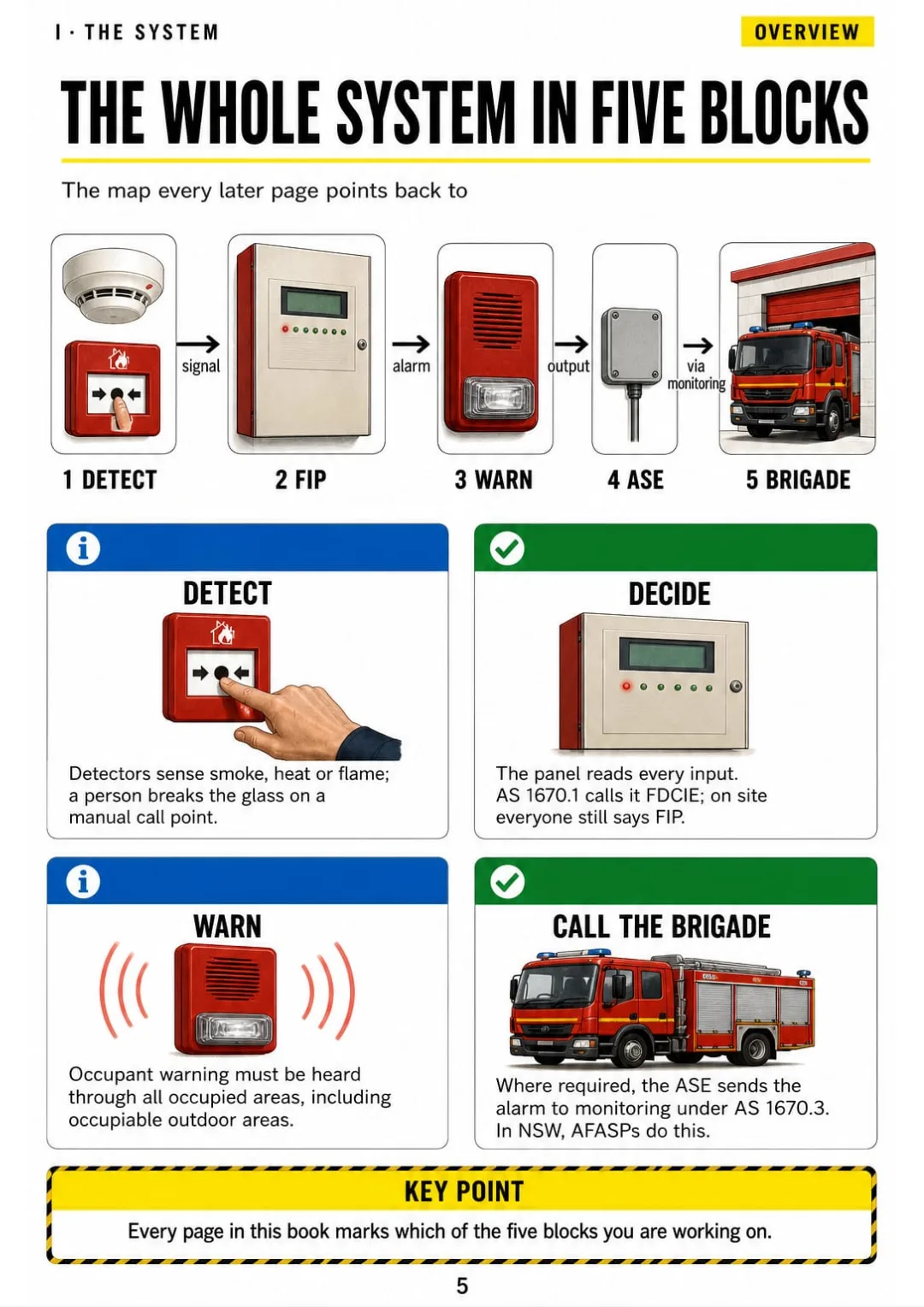
Detect → FIP → warn → ASE → brigade: five blocks, one diagram.
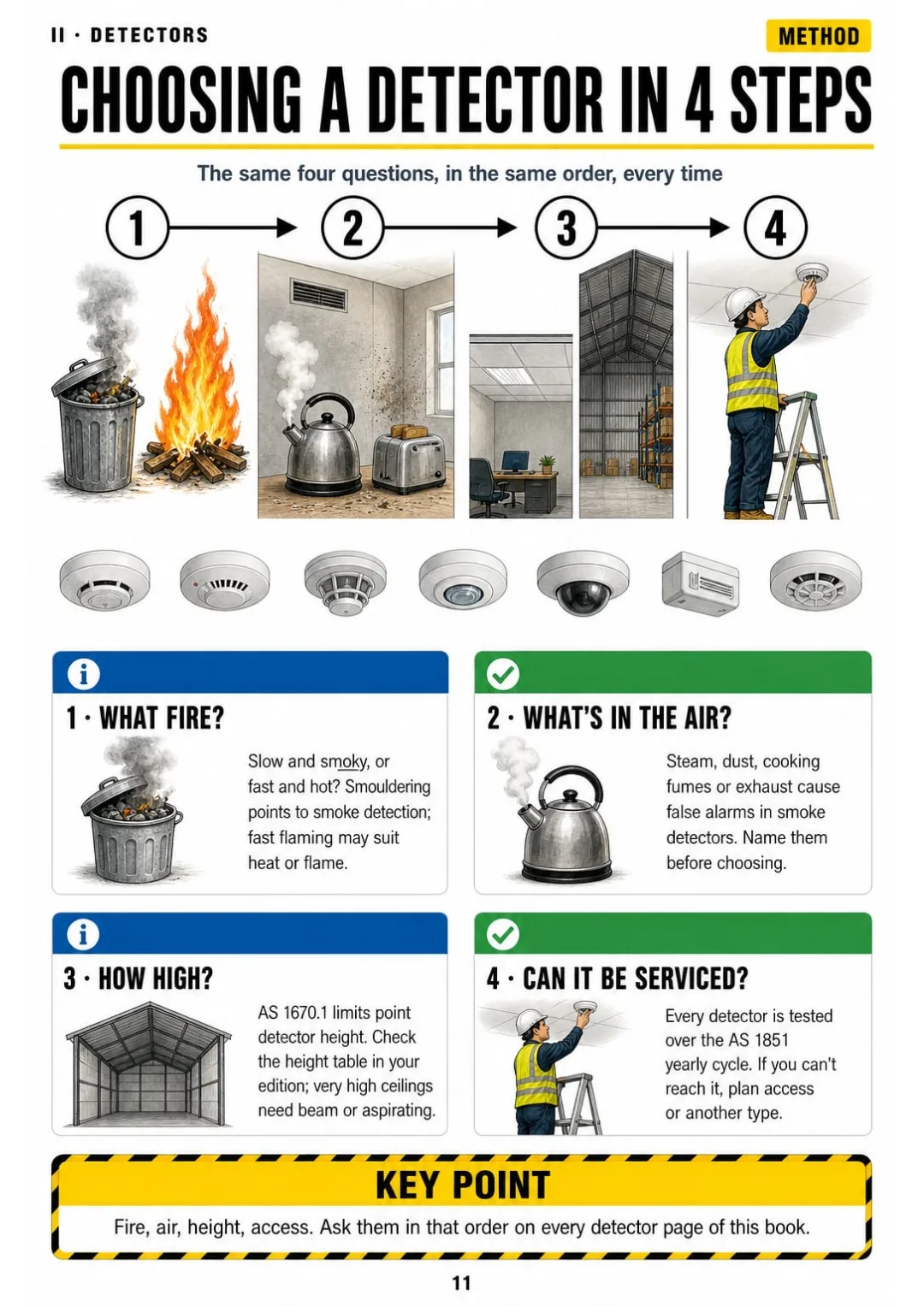
4 steps: expected fire → what's in the air → ceiling height → can it be serviced
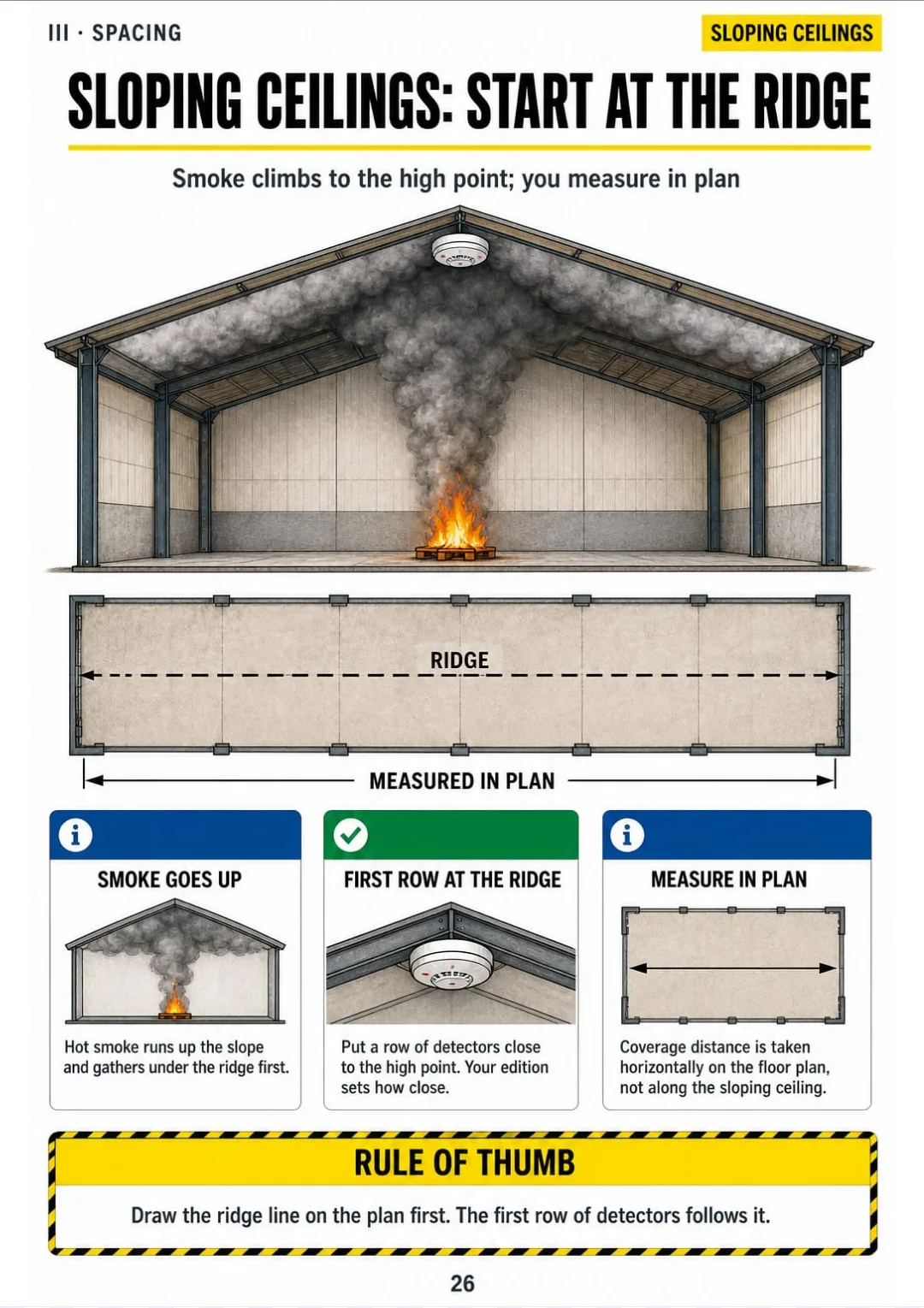
Pitched ceiling: first row near the ridge, coverage measured horizontally on the plan
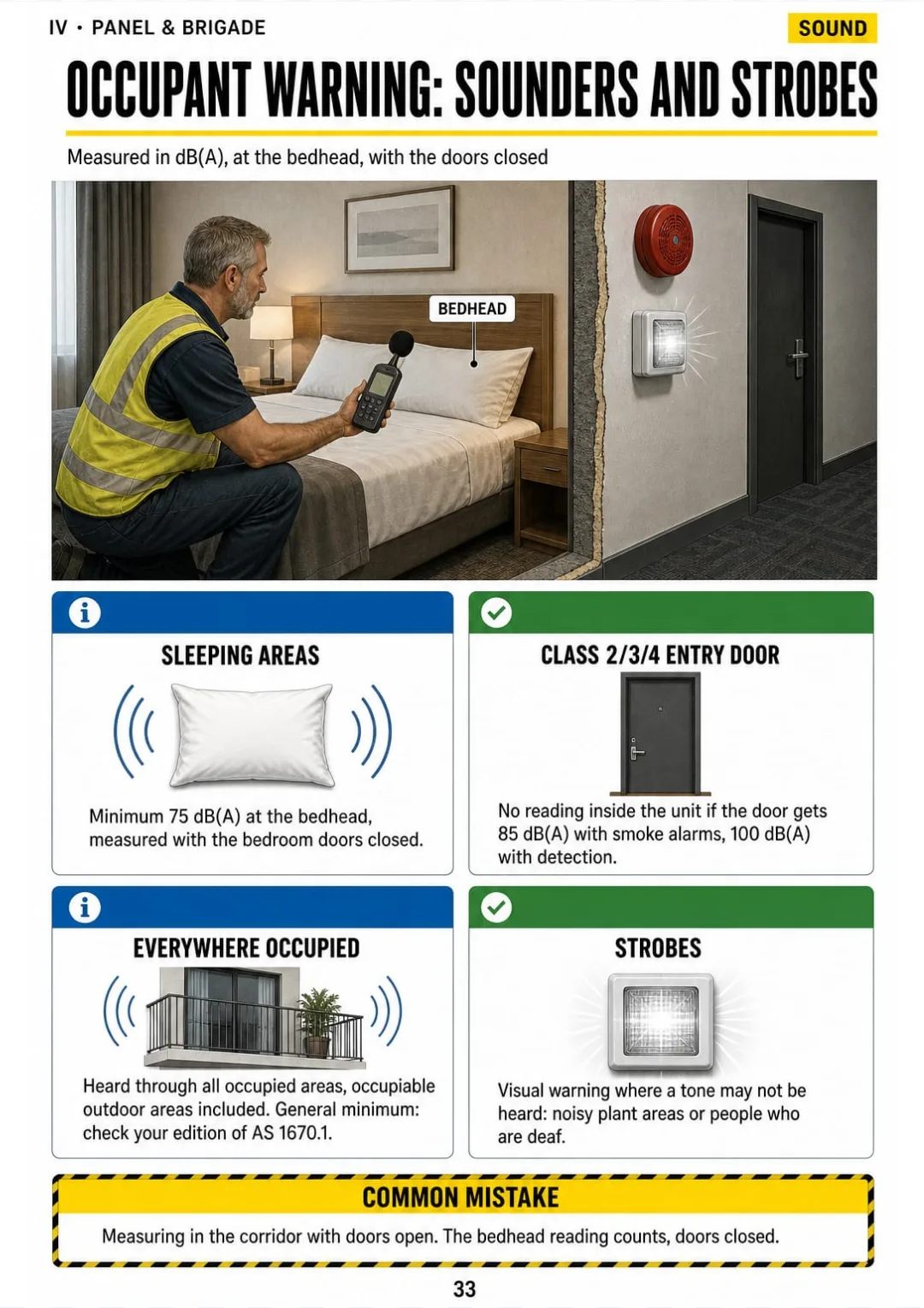
Sound levels: 75 dB(A) at the bedhead, 85 or 100 dB(A) at the entry door, plus strobes
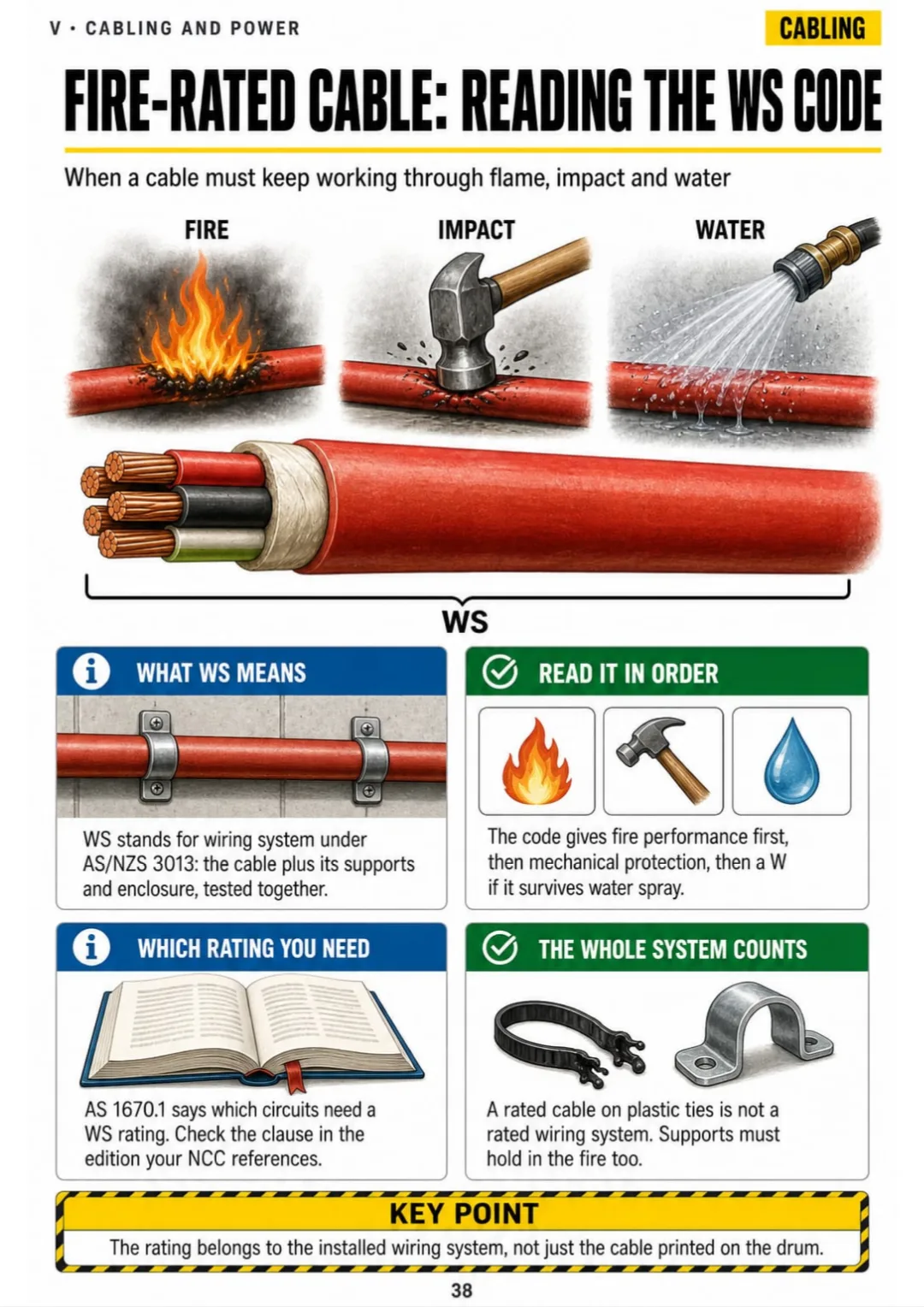
WS rating under AS/NZS 3013: fire, then mechanical, then water — for the whole wiring system
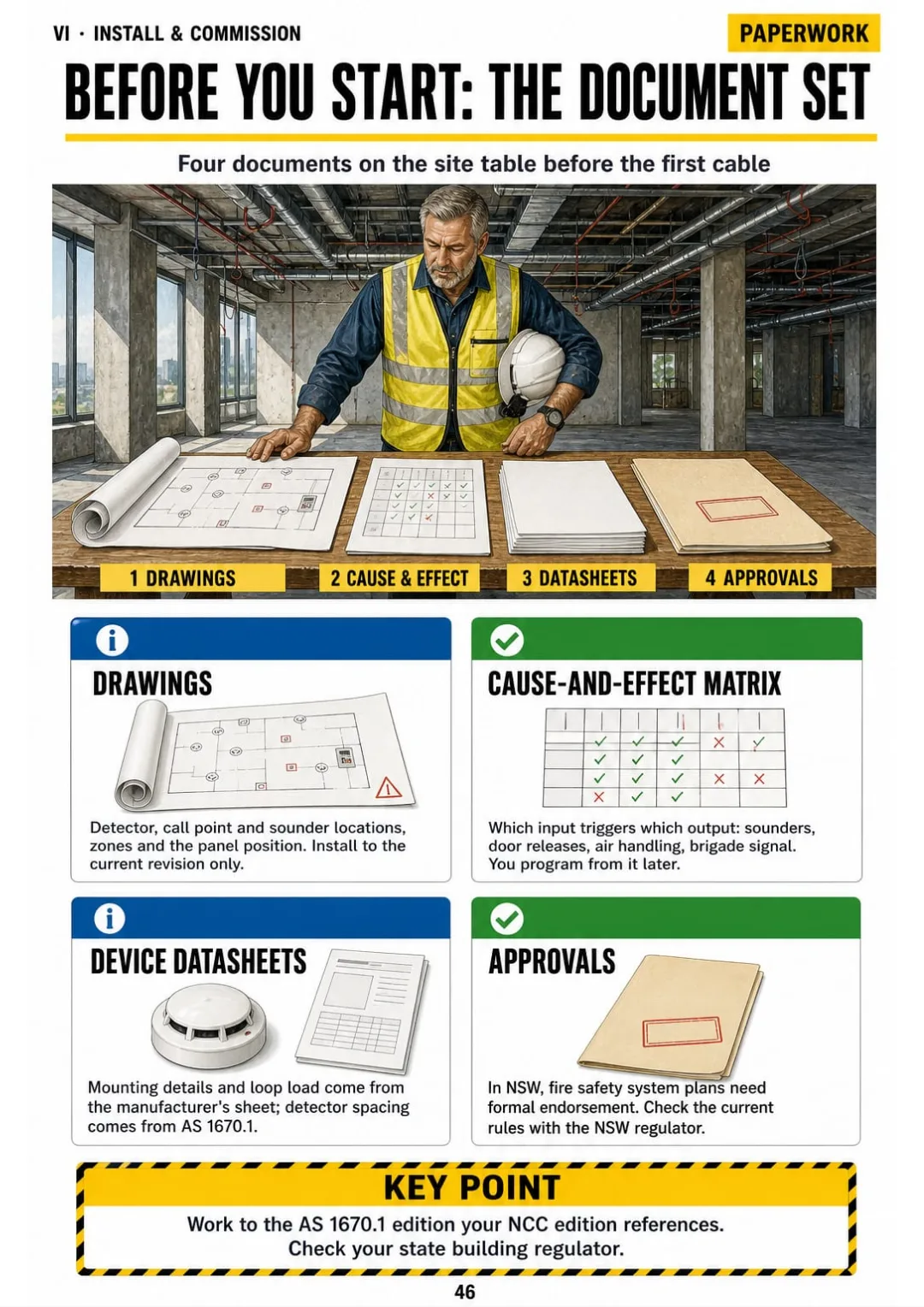
Drawings, cause-and-effect matrix, datasheets and approvals: the set you need before installing.
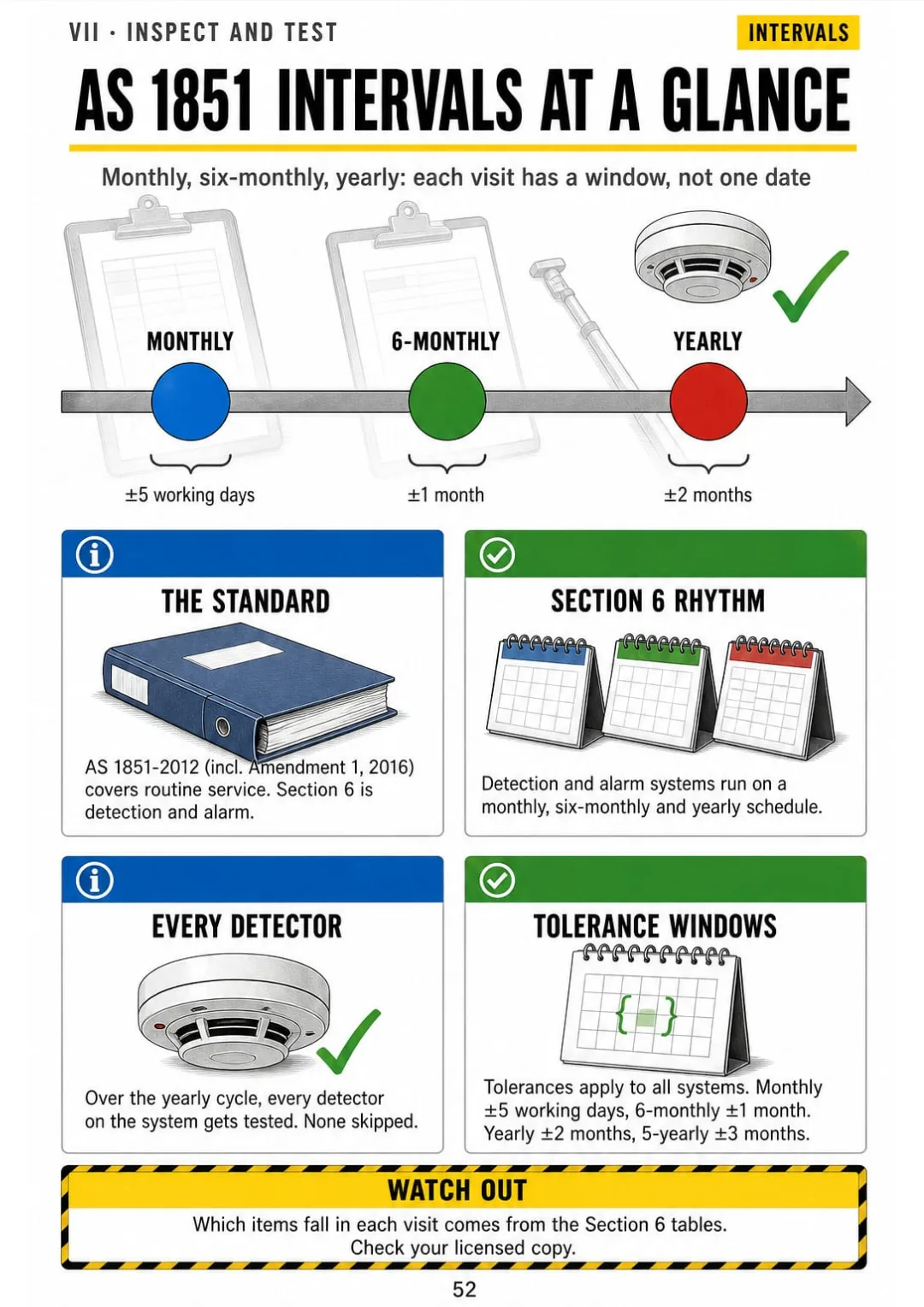
AS 1851 intervals and their windows: ±5 working days monthly to ±2 months yearly.
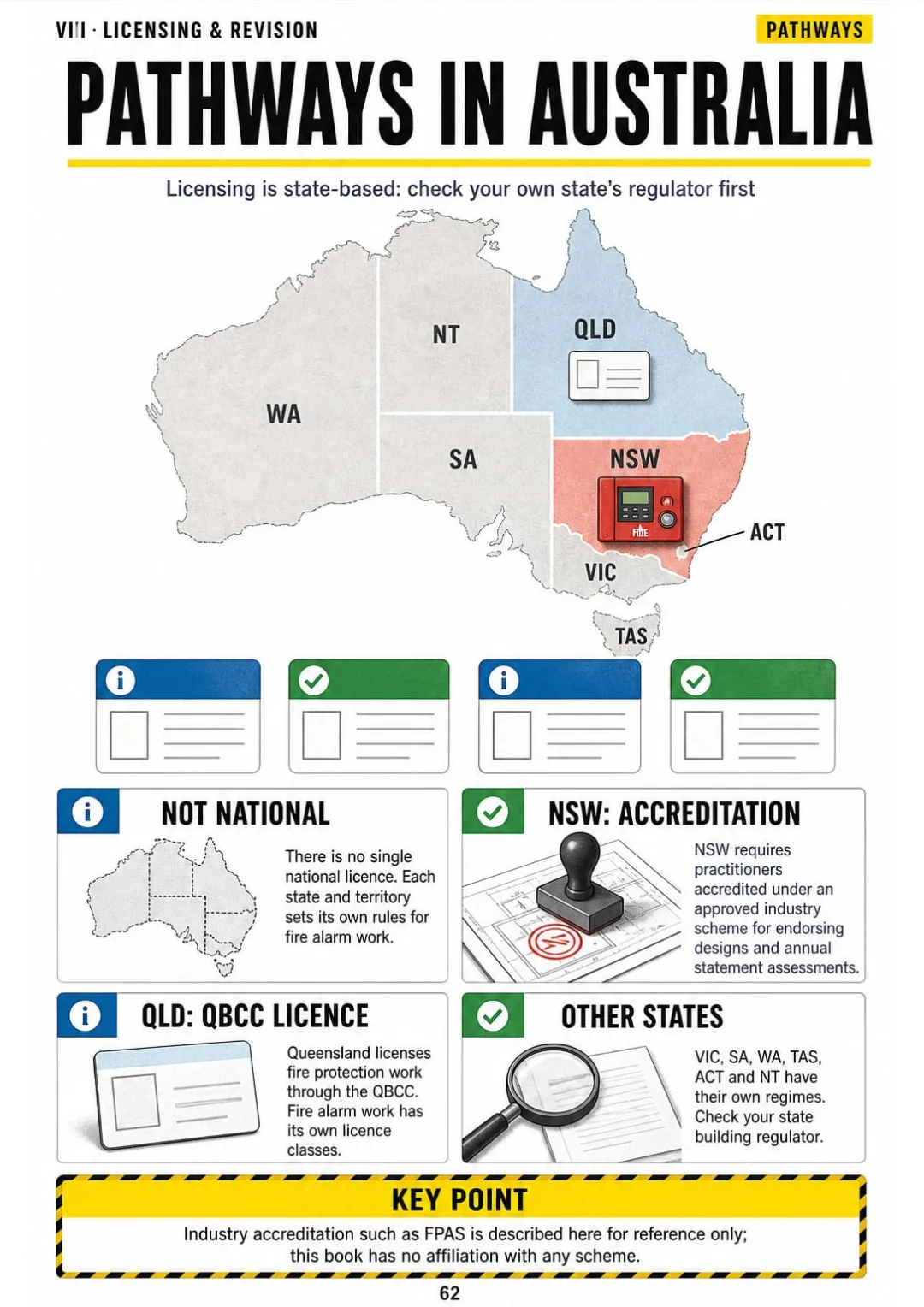
NSW accredits practitioners, QLD licenses through the QBCC, other states: check your regulator

Take a Look at the 8 Parts and 64 Topics

The System on One Page

pp. 5-10
  1. The Whole System as One Block Diagram
  2. Fire Alarm vs Smoke Alarm: Two Different Things
  3. Which Standard Covers What
  4. Fire Behaviour in 4 Stages
  5. Zones, Addresses and Loops
  6. Words You Must Know Cold

Detectors: Choose the Right One

pp. 11-20
  1. Choosing a Detector in 4 Steps
  2. Photoelectric Smoke Detectors
  3. Ionisation Detectors and Why You See Fewer
  4. Heat Detectors: Fixed Temperature vs Rate of Rise
  5. Multi-Criteria Detectors
  6. Beam Detectors for High Ceilings
  7. Aspirating Smoke Detection
  8. Flame Detectors
  9. Manual Call Points
  10. Detector or Not? Spaces That Need Thinking

Spacing and Coverage in Metres

pp. 21-29
  1. The Coverage Rule: Distance to the Nearest Detector
  2. Laying Out a Rectangular Room Step by Step
  3. Walls, Corners and the Dead-Air Space
  4. Corridors and Narrow Spaces
  5. Beams and Coffered Ceilings
  6. Sloping and Peaked Ceilings
  7. High Ceilings and Stratification
  8. Air Movement: Supply Vents and Air Changes
  9. Concealed Spaces: Ceiling Voids and Under Floors

Panel, Warnings and Brigade

pp. 30-37
  1. Inside the Fire Indicator Panel
  2. Panel States: Normal, Alarm, Fault, Isolate
  3. Alarm Verification and Delays
  4. Occupant Warning: Sounders and Strobes
  5. EWIS in Brief
  6. Brigade Connection and Alarm Signalling Equipment
  7. Ancillary Controls
  8. Mimic Panels and Block Plans

Cabling and Power

pp. 38-45
  1. Fire-Rated Cabling and the WS Classification
  2. Conventional Zone Wiring and the End-of-Line Device
  3. Addressable Loops and Short-Circuit Isolators
  4. Segregation From Other Services
  5. Mains Supply to the Panel
  6. Battery Standby: The Method in 5 Steps
  7. Battery Standby: A Worked Example
  8. Voltage Drop on Sounder Circuits

Install and Commission

pp. 46-51
  1. Before You Start: Drawings and Documents
  2. Mounting Detectors Correctly
  3. Commissioning in the Same Order Every Time
  4. Testing Every Device at Commissioning
  5. Sound Level Survey
  6. Handover Documents

Inspect, Test and Find the Fault

pp. 52-61
  1. AS 1851 Intervals at a Glance
  2. The Monthly Visit
  3. The Yearly Test
  4. Detector Testing Tools
  5. Isolating Safely Before a Test
  6. Logbook and Defect Recording
  7. Fault Finding in 5 Steps
  8. Earth Fault: Finding It Fast
  9. Open Circuit and Short Circuit
  10. False Alarms: Cause and Fix

Accreditation, Licensing and Revision

pp. 62-68
  1. Pathways in Australia
  2. NSW: Fire Safety Practitioner and the Annual Statement
  3. Queensland: QBCC Fire Protection Licence
  4. How Assessments Usually Ask Questions
  5. Spacing and Battery: One-Page Revision
  6. Most Frequent Mistakes on Site
  7. Final Checklist Before You Sign Off

Who This Book Is For

You're learning fire alarm systems

Coming from electrical or maintenance, you get the whole system as one diagram first, then each part on its own page.

Your assessment or licence is close

You revise spacing, batteries and intervals in the same order every time, then test yourself topic by topic with the practice book.

You already work in fire

You keep it in the ute for the jobs you don't do every week: a beamed ceiling, a battery calculation, an earth fault.

Plus: 2 Free Books

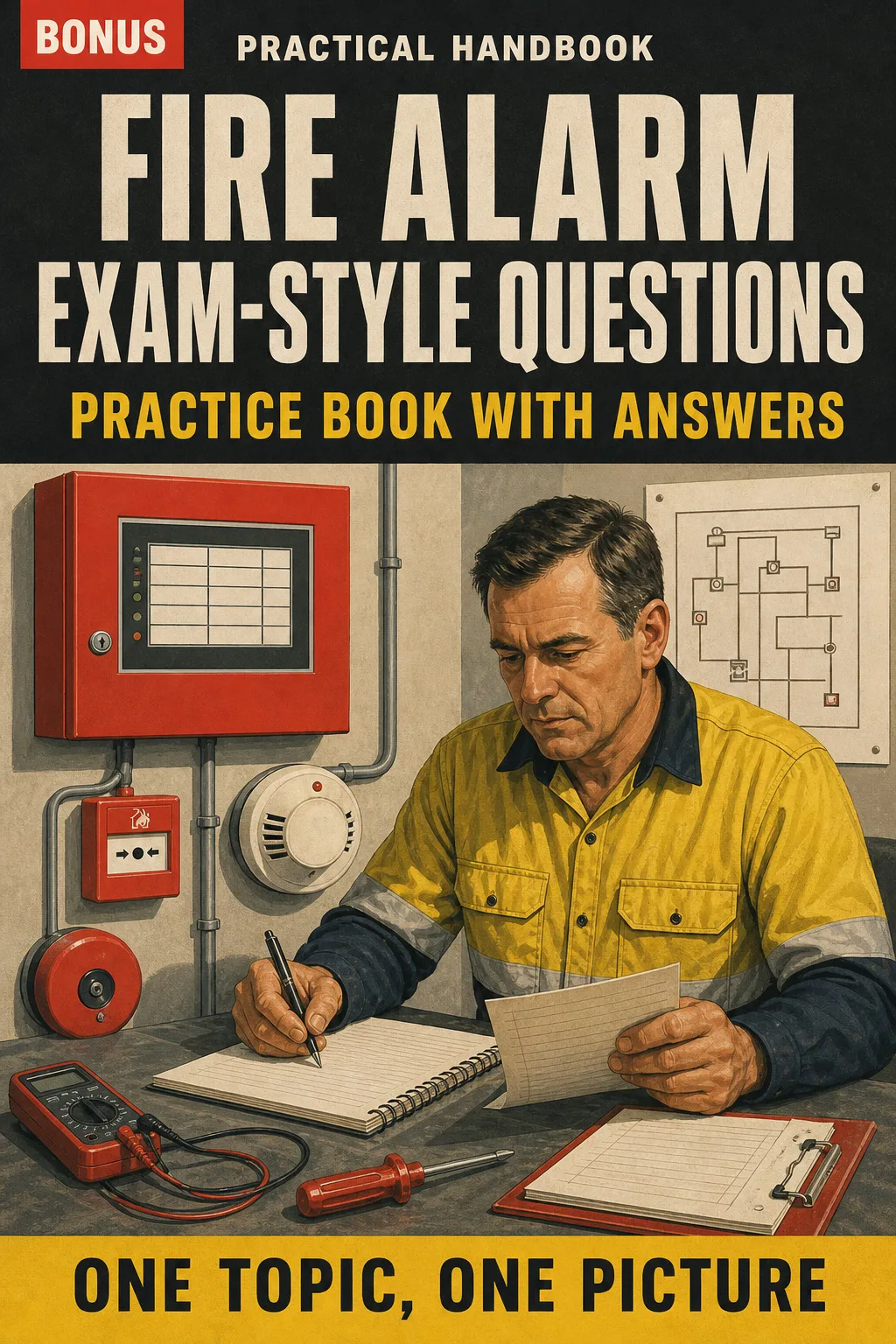
Fire Alarm Exam-Style Questions: Practice Book with Answers
BONUS 1

Fire Alarm Exam-Style Questions: Practice Book with Answers

Test yourself topic by topic on detectors, spacing, panels, batteries and inspect and test, with every answer explained, so you find the gaps before the assessment does.
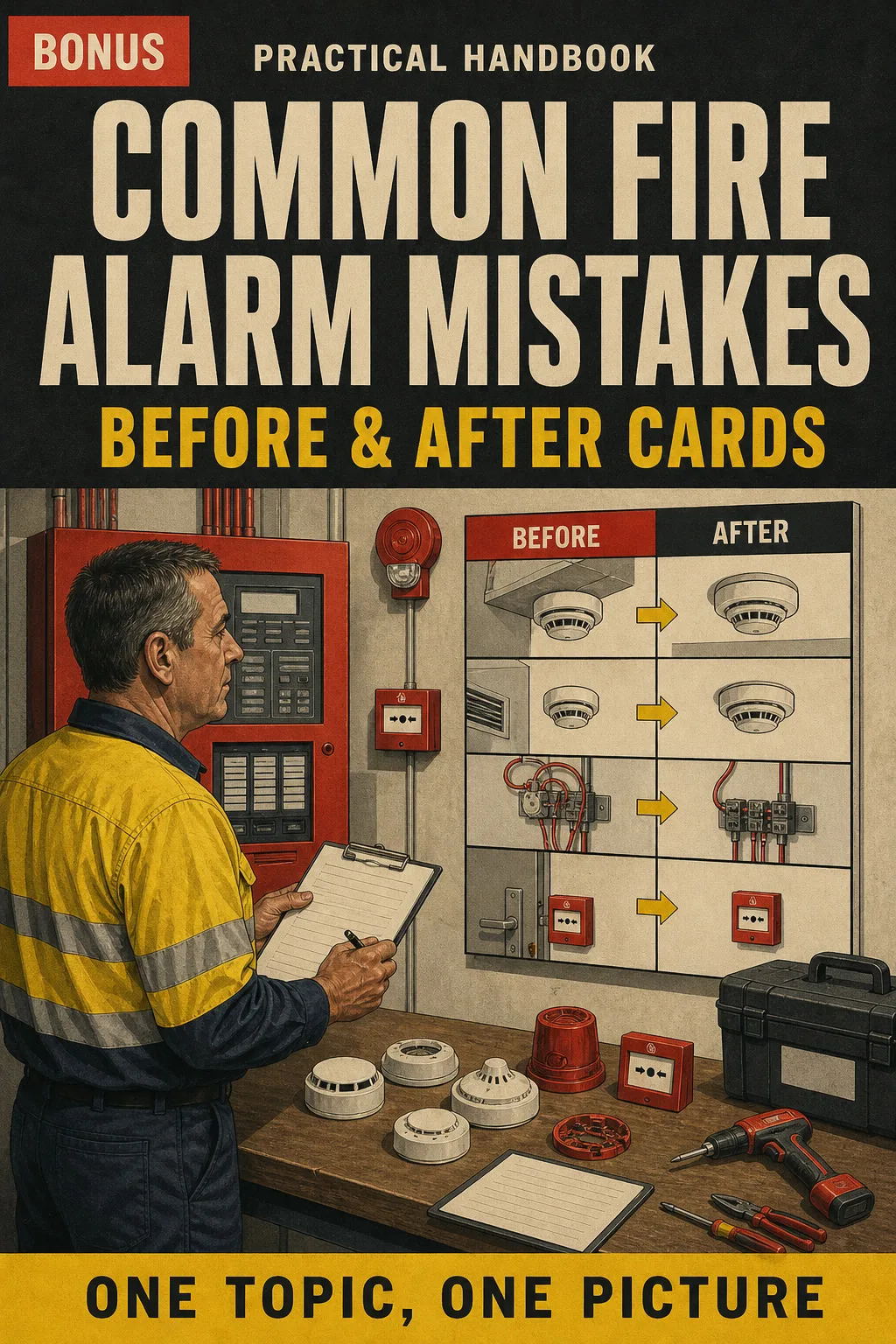
Common Fire Alarm Mistakes: Before & After Cards
BONUS 2

Common Fire Alarm Mistakes: Before & After Cards

The most frequent install and maintenance mistakes, each drawn wrong and then right on one card, so you can revise them in minutes before an assessment or a job.

30-Day Guarantee

30-day guarantee: if a file doesn't open, if the content isn't what the product page describes, if you were charged twice or the email never arrived, write to us and we'll refund you in full. You pay once. No subscriptions.

Frequently Asked Questions

I've been doing inspect and test for years, and I'm going for the QBCC licence or NSW accreditation. Is it for me?

Yes. It isn't a beginner's course, and it's written for Australia, not adapted from another country. It puts the whole system in order, from detector to brigade, so the monthly jobs connect with the ones you rarely see: beamed ceilings, battery standby, commissioning. Part 8 covers the pathways: NSW fire safety practitioner accreditation and the QBCC licence in Queensland, and how their assessments usually ask questions.

Where does the content come from?

It's checked against the editions in force when the book was prepared: AS 1670.1:2018, AS 1851:2012, AS/NZS 3013 and the current National Construction Code, plus the requirements published by NSW and the QBCC. The edition behind each topic is named in the book. Everything is explained with our own drawings and examples, without reproducing the text or tables of the Standards.

Is this official material?

No. It's an independent illustrated study book. It isn't published or endorsed by Standards Australia, FPA Australia, the QBCC, NSW Fair Trading or any other body.

Does it replace my course or training?

No. It doesn't replace accredited training, supervised work on site or the Standards themselves, and it doesn't give you a certificate, a licence or CPD points. It's what you revise with, at night or in the ute.

Are the practice questions the ones in the assessment?

No. They're written for this book, topic by topic, to help you find your gaps. They aren't official questions from any assessment.

When and how does it arrive?

The book and the 2 bonus books arrive as PDFs by email, to the address you enter at checkout.

Do I have to pay every month?

No. It's a one-off payment, with no subscription.

Can I have it on paper?

Yes. The PDF is ready to print at home or at a print shop, so you can keep it in the ute.

How does the refund work?

You have 30 days. We refund everything if the file won't open, if the book isn't what you see on this page, if you were charged twice or if the email doesn't arrive: just email us.

A$ 39A$ 89
Get the book · A$ 39

This is a digital PDF book sent to your email: nothing is printed or shipped.

More books on this topic