Study in Pictures🌐 English (United States)
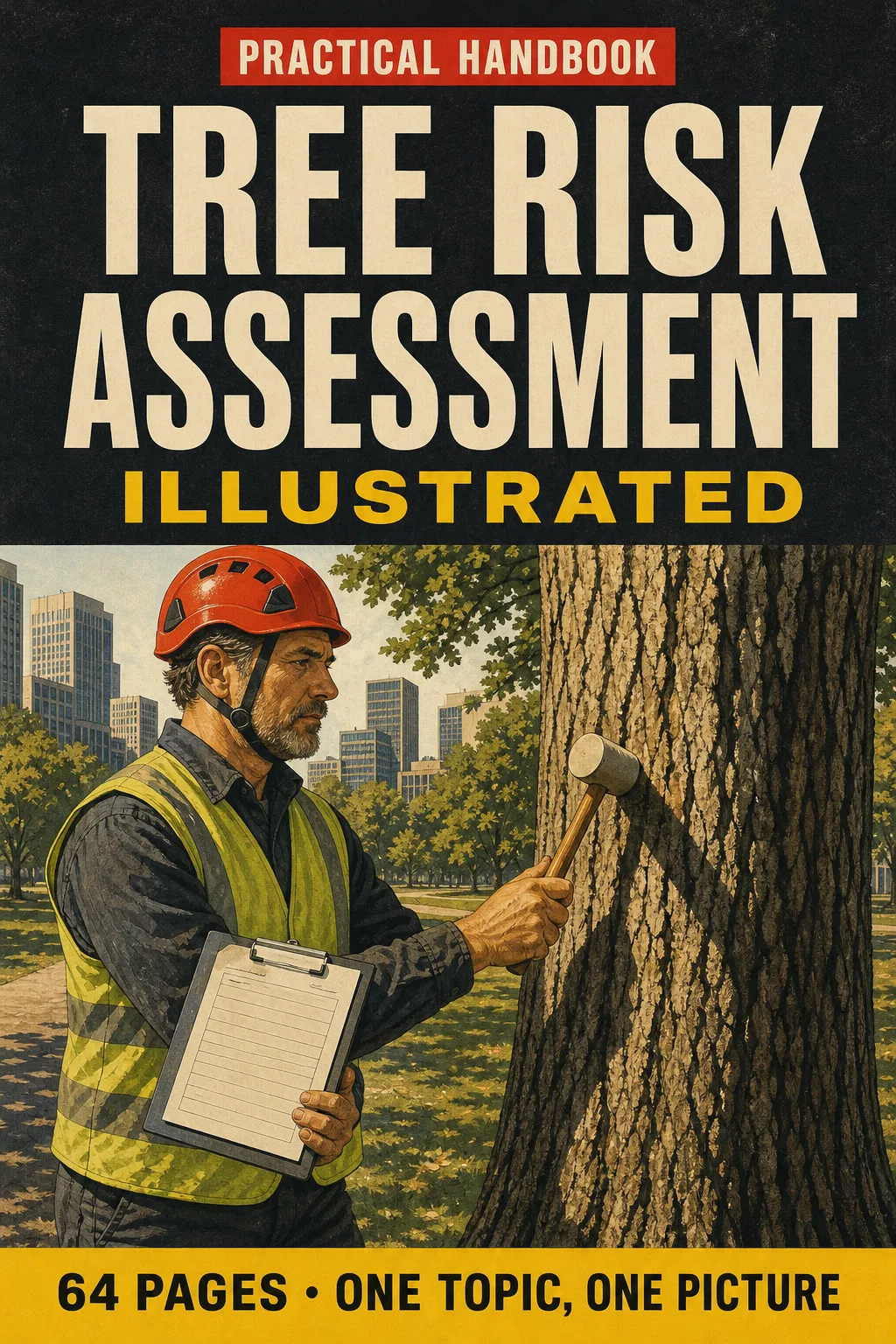
Tree Risk Assessment Illustrated

Digital book in PDF · read it on your phone or print it

Tree Risk Assessment Illustrated

Targets and occupancy, tree health, codominant stems, cracks and decay, lean, likelihood of failure and impact, the two matrices, mitigation. Each topic gets its own page: the drawing first, then what you need to remember.

  • 64 illustrated pages
  • English
  • 30-day guarantee
US$ 27US$ 63
Get the book · US$ 27

Price shown for: United States. In other countries, the checkout shows the price that applies there.

About this book

What it is

Targets and occupancy, tree health, codominant stems, cracks and decay, lean, likelihood of failure and impact, the two matrices, mitigation. Each topic gets its own page: the drawing first, then what you need to remember.

Who This Book Is For
  • You're taking the tree risk assessment course
  • Your exam or renewal is coming up
  • You already sign assessments
What it covers
  1. The Method Before the Tree
  2. Targets and the Site
  3. The Tree: Load and Defects
  4. Likelihood of Failure
  5. Impact and Consequences
  6. The Matrix, Walked with Arrows
  7. Mitigation and the Report
  8. Review and Field Checklist
Language
English (United States)
Pages
64
Format
Digital book in PDF · read it on your phone or print it
Price
US$ 27 (United States)
Delivery
This is a digital PDF book sent to your email: nothing is printed or shipped.
30-Day Guarantee
30-day guarantee: if a file doesn't open, if the content isn't what the product page describes, if you were charged twice or the email never arrived, write to us and we'll refund you in full.

Look Inside the Book

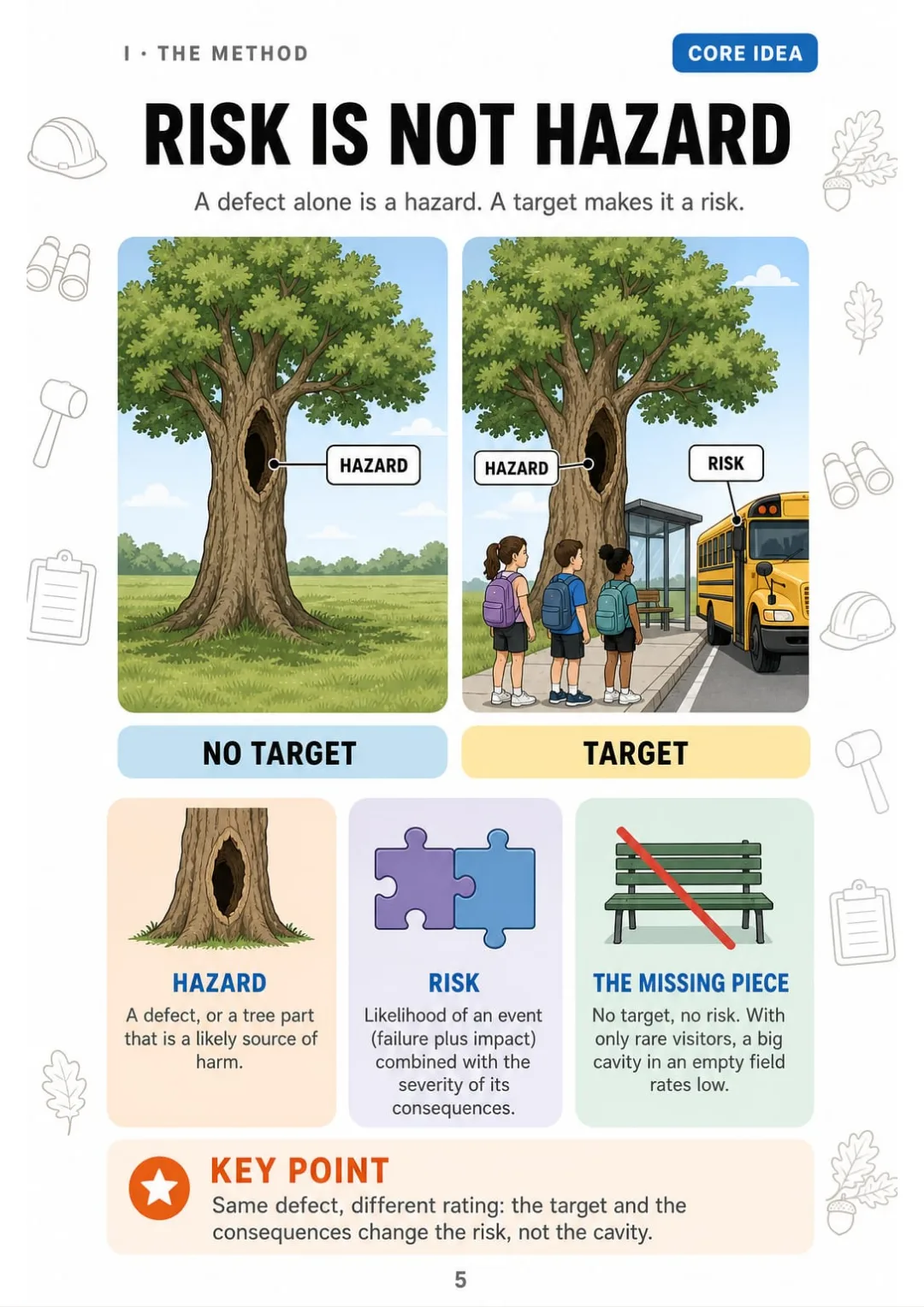
Hazard = the defect. Risk = failure + impact + consequences.
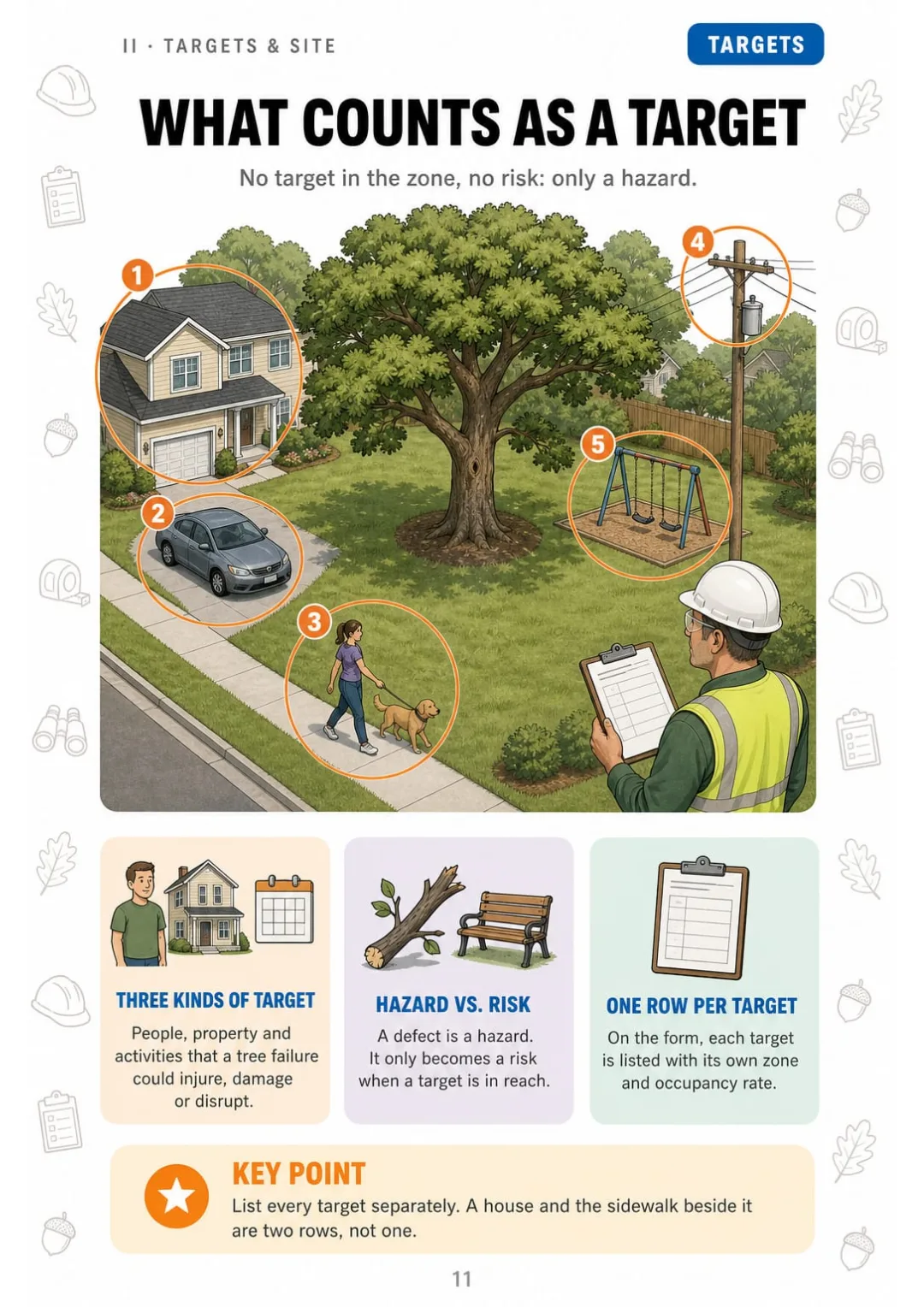
Targets = people, property and activities a failure could hit, each with its zone and occupancy.
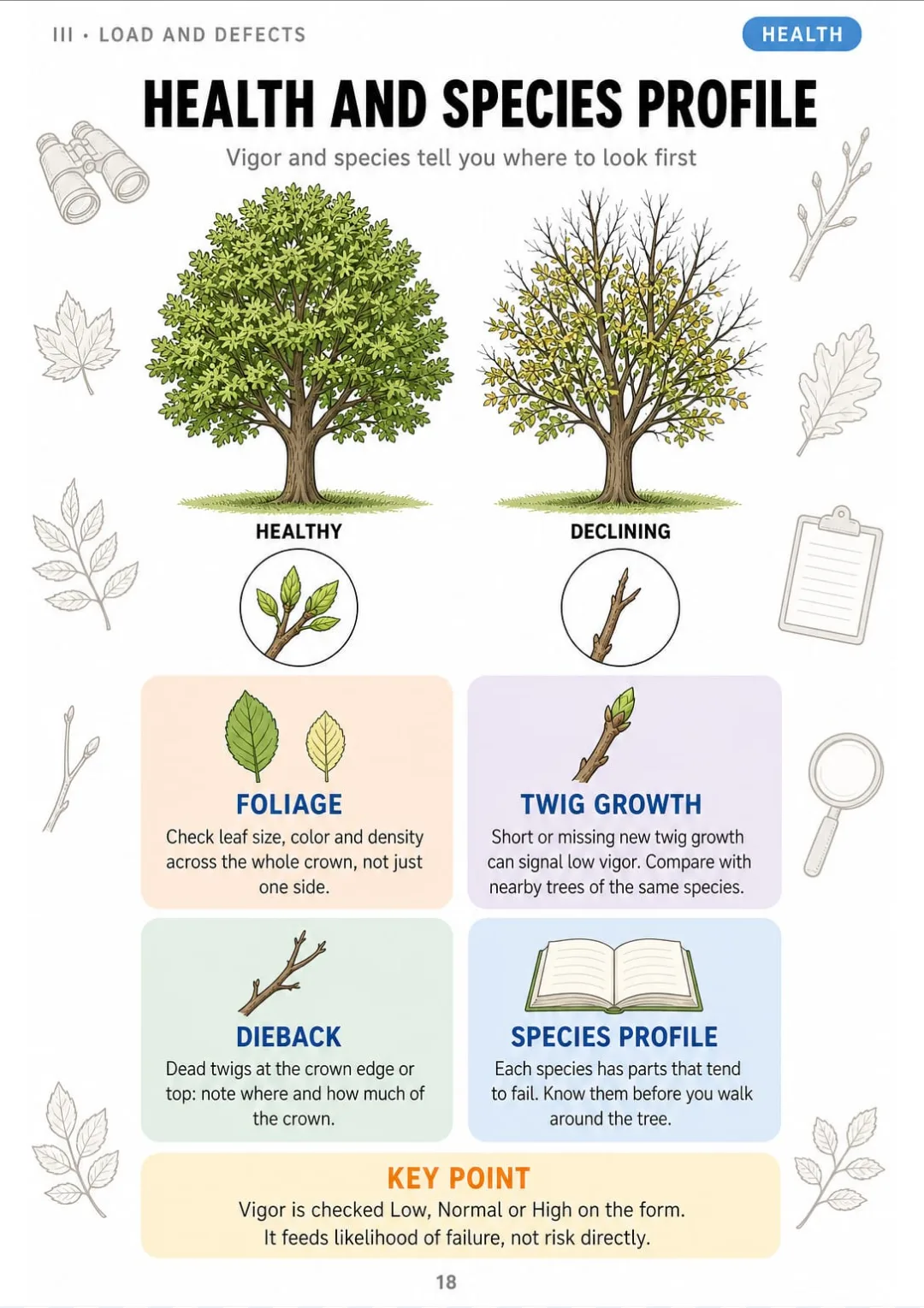
Healthy vs. declining crown: foliage, twig growth, dieback and the species failure profile.
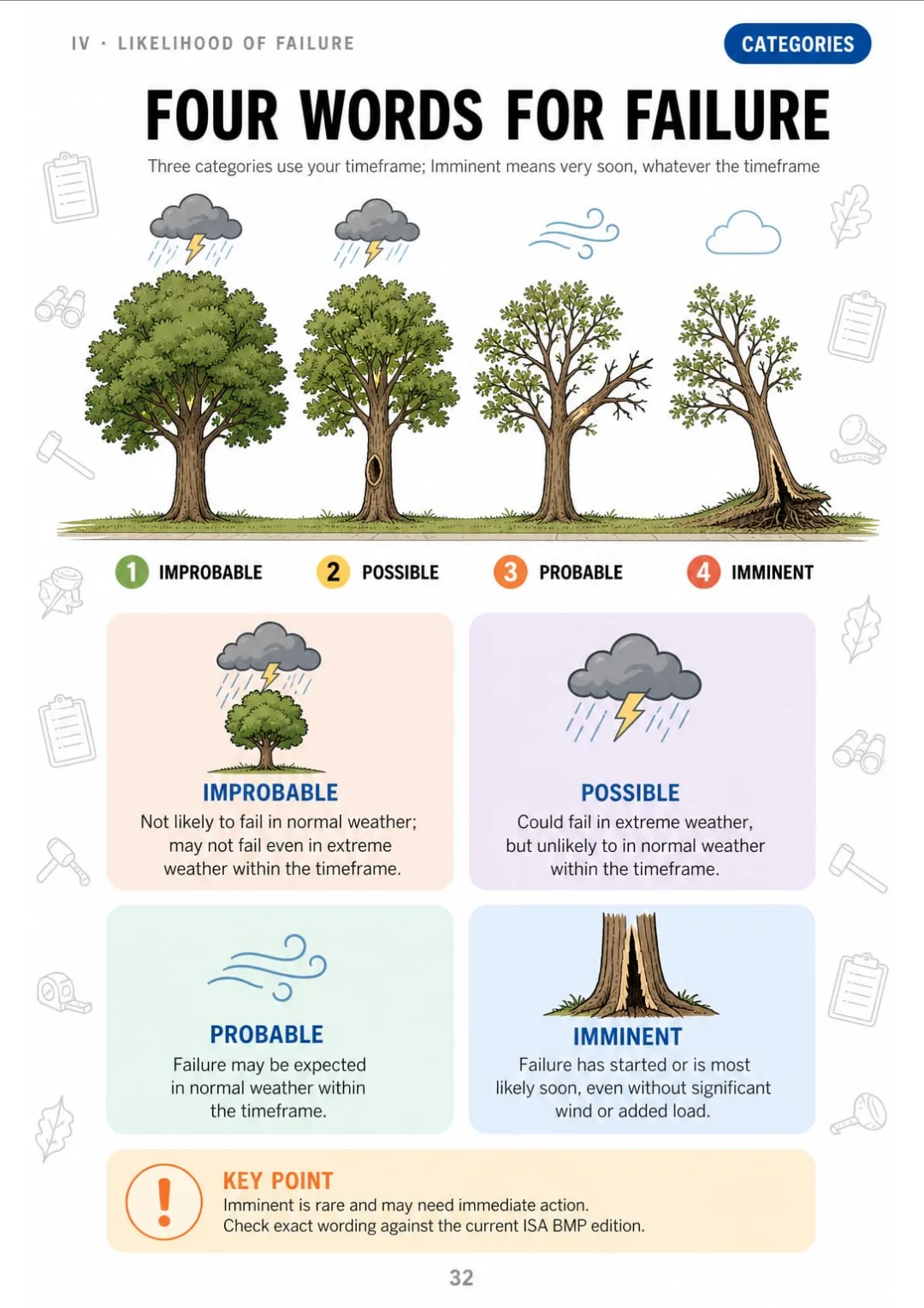
Improbable, Possible, Probable: weather and timeframe. Imminent: failure started or very soon, even without wind.
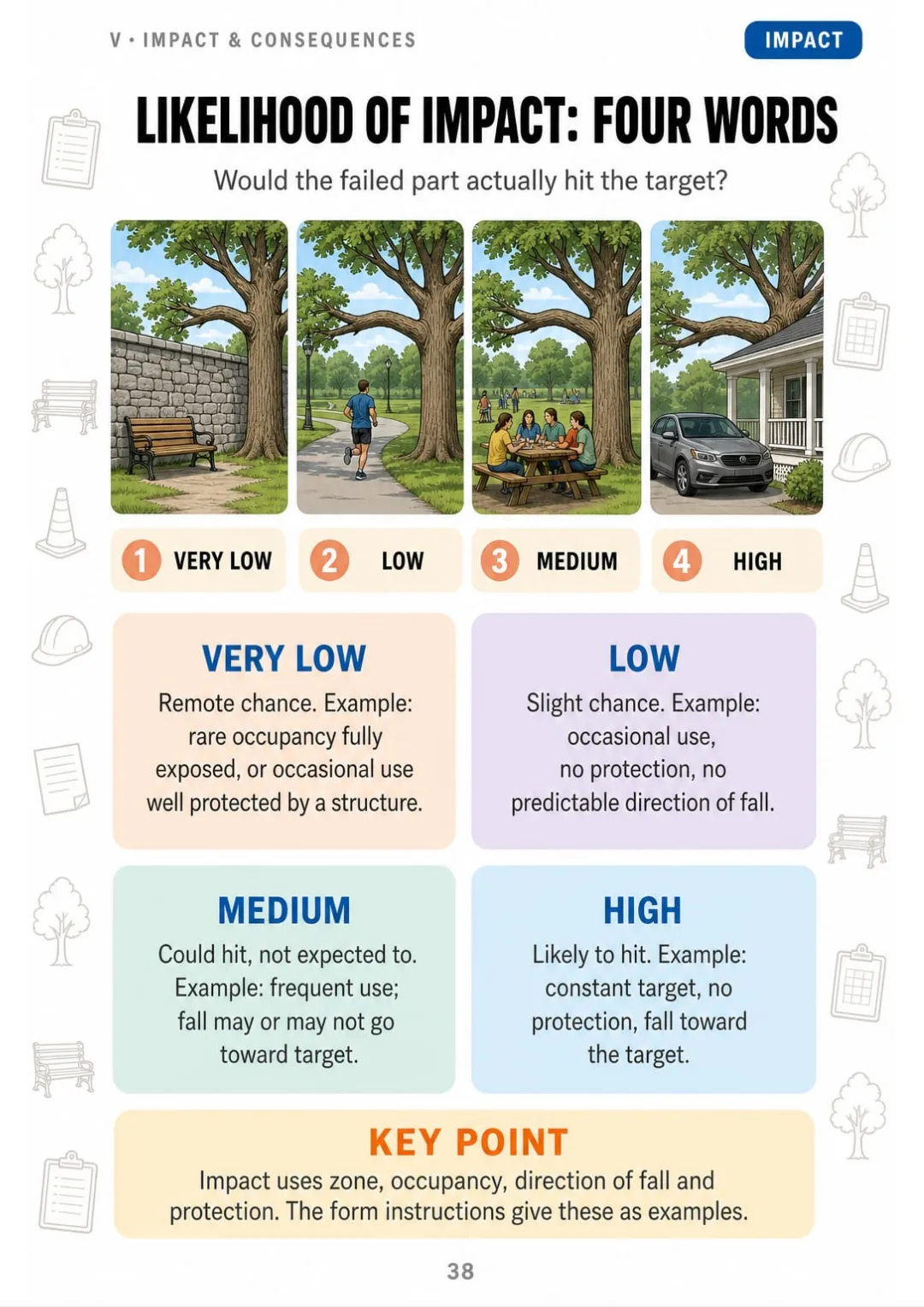
Very low, low, medium, high: one target scene per category. Check examples against the current ISA BMP edition.
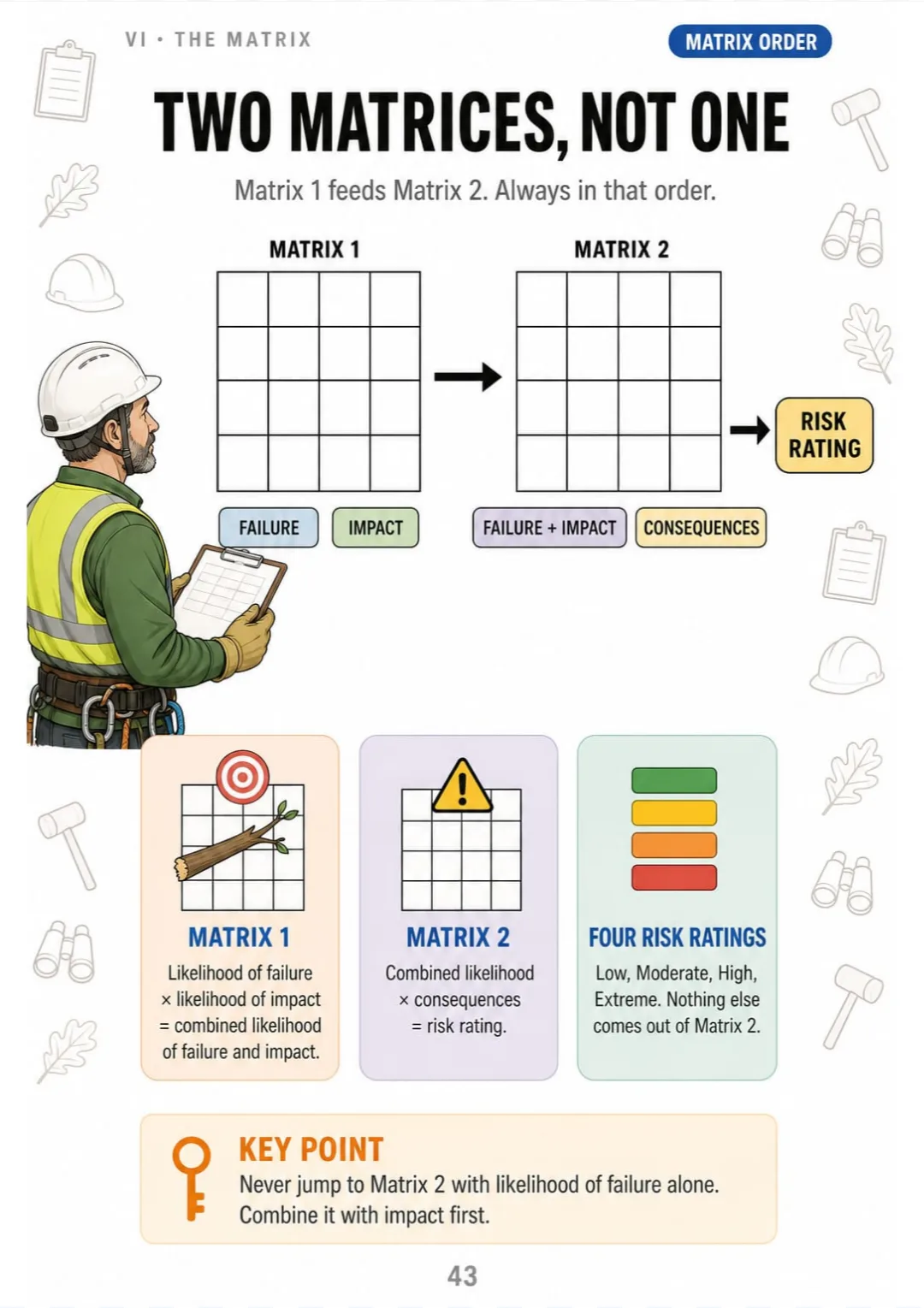
Matrix 1 (failure × impact) feeds Matrix 2 (× consequences) → Low, Moderate, High or Extreme.
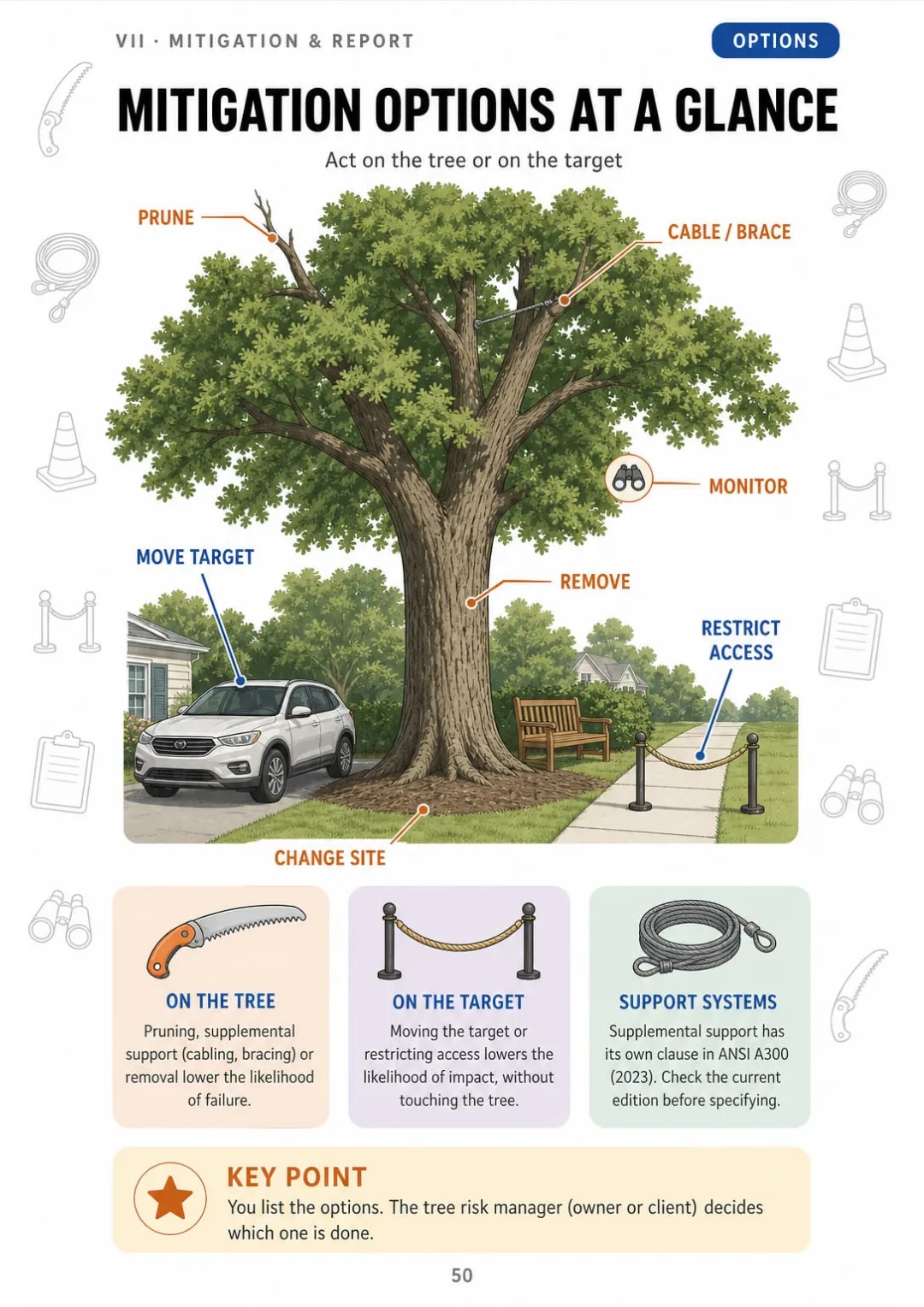
Prune, cable, move the target, restrict access, change the site, monitor or remove: one tree, every option labeled.
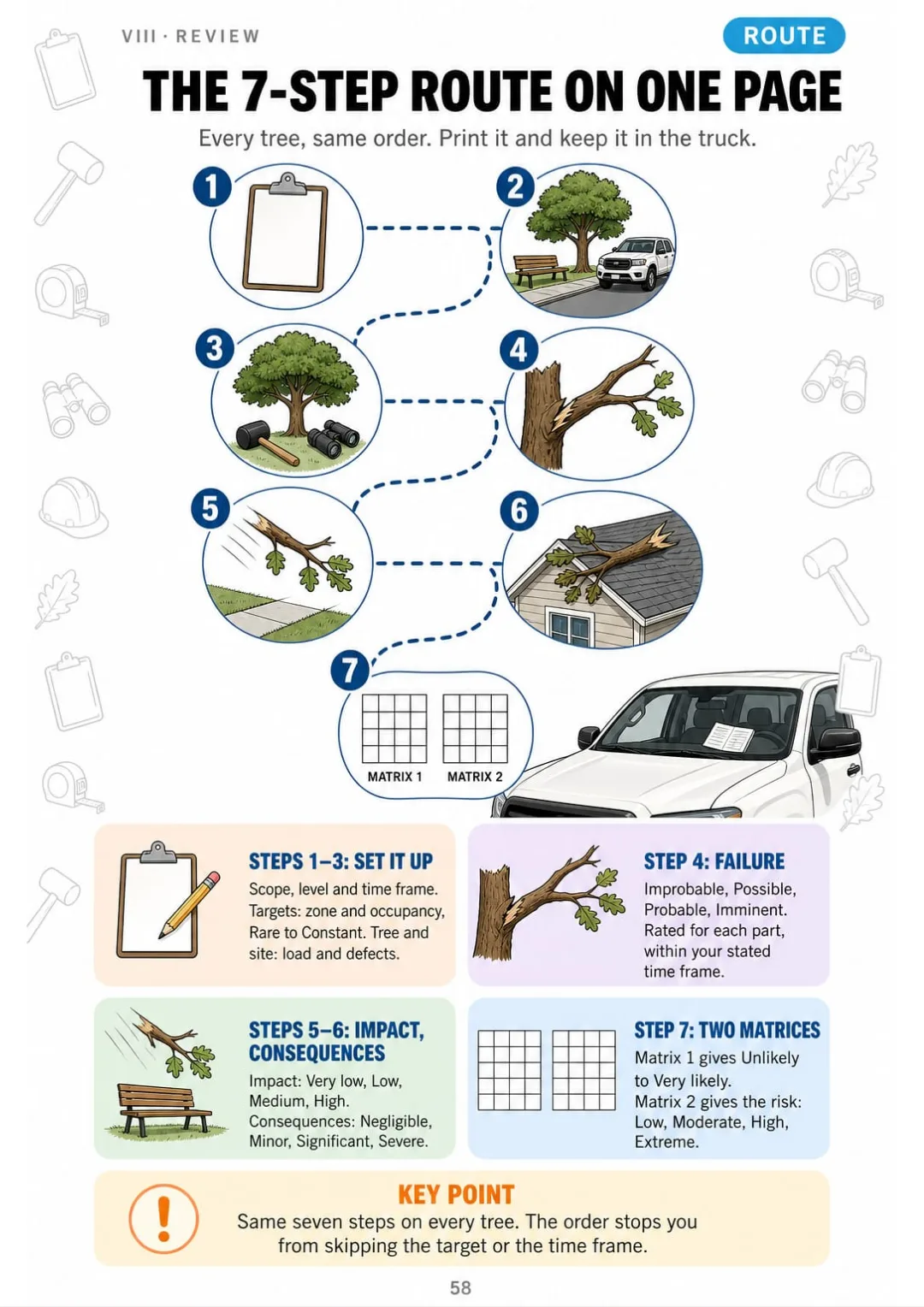
The full route on one sheet: scope → targets → tree → failure → impact → consequences → two matrices.

Take a Look at the 8 Parts and 60 Topics

The Method Before the Tree

pp. 5-10
  1. Risk Is Not Hazard
  2. The 7-Step Route You'll Use on Every Tree
  3. Three Assessment Levels: Limited Visual, Basic, Advanced
  4. Scope, Timeframe, and Who Sets Them
  5. The Basic Assessment Form, Box by Box
  6. What the Standard Says and What the BMP Explains

Targets and the Site

pp. 11-17
  1. What Counts as a Target
  2. The Target Zone: 1 to 1.5 Times Tree Height
  3. Occupancy Rate: Rare, Occasional, Frequent, Constant
  4. Moving Targets vs. Static Targets
  5. Can the Target Be Moved?
  6. Site Factors: Soil, Grade, Wind Exposure
  7. Site History and Construction Damage

The Tree: Load and Defects

pp. 18-31
  1. Tree Health and Species Profile
  2. Load Factors: Wind Exposure, Crown Size, Crown Density
  3. Dead Branches and Hangers
  4. Codominant Stems and Included Bark
  5. Weak Branch Attachments and Overextended Limbs
  6. Cracks: Where They Are and What They Mean
  7. Decay and Cavities
  8. Shell Thickness: The t/R Ratio and Its Limits
  9. Cankers and Bark Damage
  10. Lean: Corrected vs. Uncorrected
  11. Root Defects and Root Plate Heave
  12. Response Growth: When the Tree Is Compensating
  13. Topping, Old Cuts, and Utility Pruning History
  14. The Defect Question Card

Likelihood of Failure

pp. 32-37
  1. Four Words: Improbable, Possible, Probable, Imminent
  2. Possible vs. Probable: The Line People Blur
  3. When Is It Imminent?
  4. Defect + Load + Response: Putting It Together
  5. Rate the Part, Not the Whole Tree
  6. Timeframe Changes the Rating

Impact and Consequences

pp. 38-42
  1. Likelihood of Impact: Very Low, Low, Medium, High
  2. Direction of Fall and Protection Factors
  3. Consequences: Negligible, Minor, Significant, Severe
  4. Sizing the Part: Diameter, Height, Fall Distance
  5. Power Lines as a Target

The Matrix, Walked with Arrows

pp. 43-49
  1. Two Matrices, Not One
  2. Matrix 1 Step by Step
  3. Matrix 2 Step by Step
  4. Worked Example: Codominant Oak over a Driveway
  5. Worked Example: Hollow Maple in a Park
  6. Worked Example: Leaning Pine over a Distribution Line
  7. Overall Tree Risk Rating

Mitigation and the Report

pp. 50-57
  1. Mitigation Options at a Glance
  2. Residual Risk: Rate It Again After Mitigation
  3. Specific Mitigation, Not 'Prune as Needed'
  4. Priority and Reinspection Interval
  5. Advanced Assessment: When to Recommend Level 3
  6. The Written Report: Required Parts
  7. Limitations and Assumptions
  8. Communicating Risk to the Client

Review and Field Checklist

pp. 58-64
  1. The 7-Step Route on One Page
  2. Rating Vocabulary Side by Side
  3. Defect Checklist: Crown, Trunk, Roots
  4. Frequent Mix-Ups on the Form
  5. Self-Check: Rate These 4 Trees
  6. Field Safety Before You Assess
  7. Before the Qualification Course or Renewal

Who This Book Is For

You're taking the tree risk assessment course

You study in the same 7 steps you'll use in the field: scope, targets, site, tree and defects, likelihood of failure, impact and consequences, matrices and mitigation. One drawing per page.

Your exam or renewal is coming up

You review the rating words and both matrices on a few pages, and check the frequent mix-ups on the form before test day.

You already sign assessments

You keep the 7-step route and the defect checklist printed in the truck, so every rating and report follows the same logic.

Plus: 2 Free Books

Tree Risk Practice Questions: Exam-Style, Answers Explained
BONUS 1

Tree Risk Practice Questions: Exam-Style, Answers Explained

Test yourself with exam-style questions on targets, defects, likelihood and the matrix, and see why each answer is right, so you find your weak spots before the exam does.
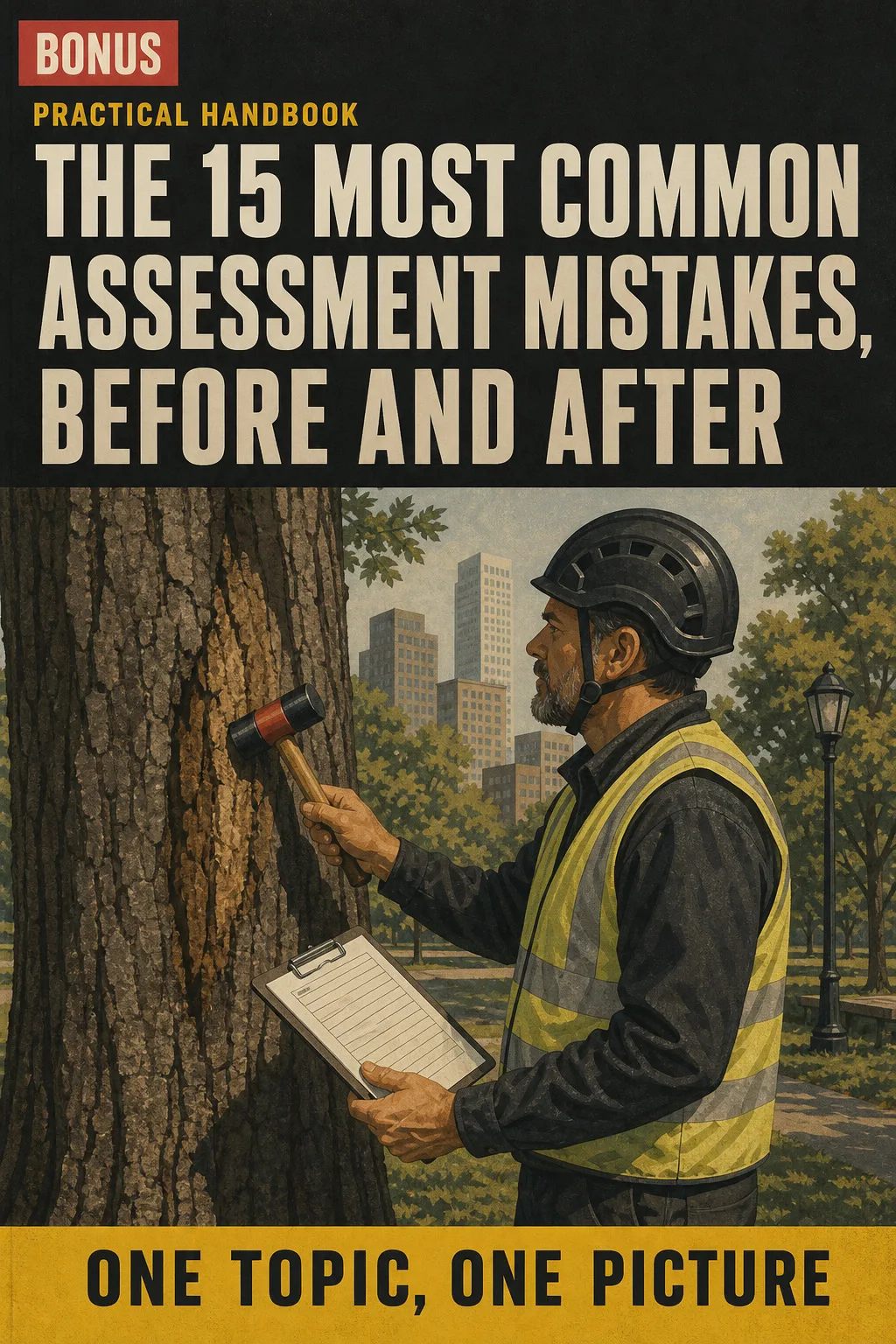
The 15 Most Common Assessment Mistakes, Before and After
BONUS 2

The 15 Most Common Assessment Mistakes, Before and After

See the errors that show up most often on assessment forms (wrong likelihood, missed target, vague mitigation) drawn side by side with the corrected version, so you don't repeat them.

30-Day Guarantee

30-day guarantee: if a file doesn't open, if the content isn't what the product page describes, if you were charged twice or the email never arrived, write to us and we'll refund you in full. You pay once. No subscriptions.

Frequently Asked Questions

Is it for me if I've been in the trade for 20 years?

Yes. It doesn't teach you trees: it puts the assessment method in a fixed order, with the rating words, the matrices and the report drawn page by page.

Where does the content come from?

From the tree risk assessment part of ANSI A300 and the Tree Risk Assessment Best Management Practices, 2nd edition. Every reference shows its source, so you can check it against the current edition your course uses.

Is this official material?

No. It's an independent study guide, not affiliated with or endorsed by ISA, ANSI or any certifying organization.

Does it replace the course or the training?

No. It's study material to go with the course. It doesn't give you a qualification, a certificate or CEUs, and it doesn't replace hands-on training, your professional judgment or an on-site assessment.

Are the practice questions the ones on the exam?

No. They're written for this book, in exam style, to help you find your weak spots. They are not official exam questions.

When and how do I get it?

The book and the 2 bonus books arrive as PDFs by email, at the address you enter at checkout.

Do I have to pay every month?

No. It's a one-time payment.

Can I have it on paper?

Yes. It's a printable PDF: print the whole book or just the pages you want to keep in the truck.

How does the refund work?

You have 30 days. We refund everything if the file won't open, if the book isn't what you see on this page, if you were charged twice or if the email doesn't arrive: just email us.

US$ 27US$ 63
Get the book · US$ 27

This is a digital PDF book sent to your email: nothing is printed or shipped.

More books on this topic

Fruit Tree Pruning Illustrated

Prune and graft your backyard fruit trees knowing exactly where each cut goes: every cut drawn step by step, one topic…

From US$ 27 US$ 63

Arborist Exam Illustrated

Get ready for the arborist certification exam with one illustrated topic per page: tree biology, CODIT, soil and…

From US$ 27 US$ 63

Arborist Illustrated: Master Level

Advanced arboriculture, one topic per page and every concept drawn: CODIT, wood and roots, soil science, step-by-step…

From US$ 27 US$ 63

Utility Arborist Illustrated

Utility Arborist Illustrated explains tree work near power lines one topic per page, with a big drawing for each: how…

From US$ 27 US$ 63

Tree Care Safety Illustrated

Tree crew safety, one topic per page and every page a drawing: job briefing, PPE, work zones, electrical hazards…

From US$ 27 US$ 63

Tree Climber Illustrated

Tree climbing for the Certified Tree Climber exam, one topic per page: PPE, climbing gear, 7 knots and hitches, tie-in…

From US$ 27 US$ 63

Aerial Lift Arborist Illustrated

Aerial Lift Arborist Illustrated explains bucket truck tree work one topic per page, with a big drawing for each…

From US$ 27 US$ 63