Study in Pictures🌐 English (United States)
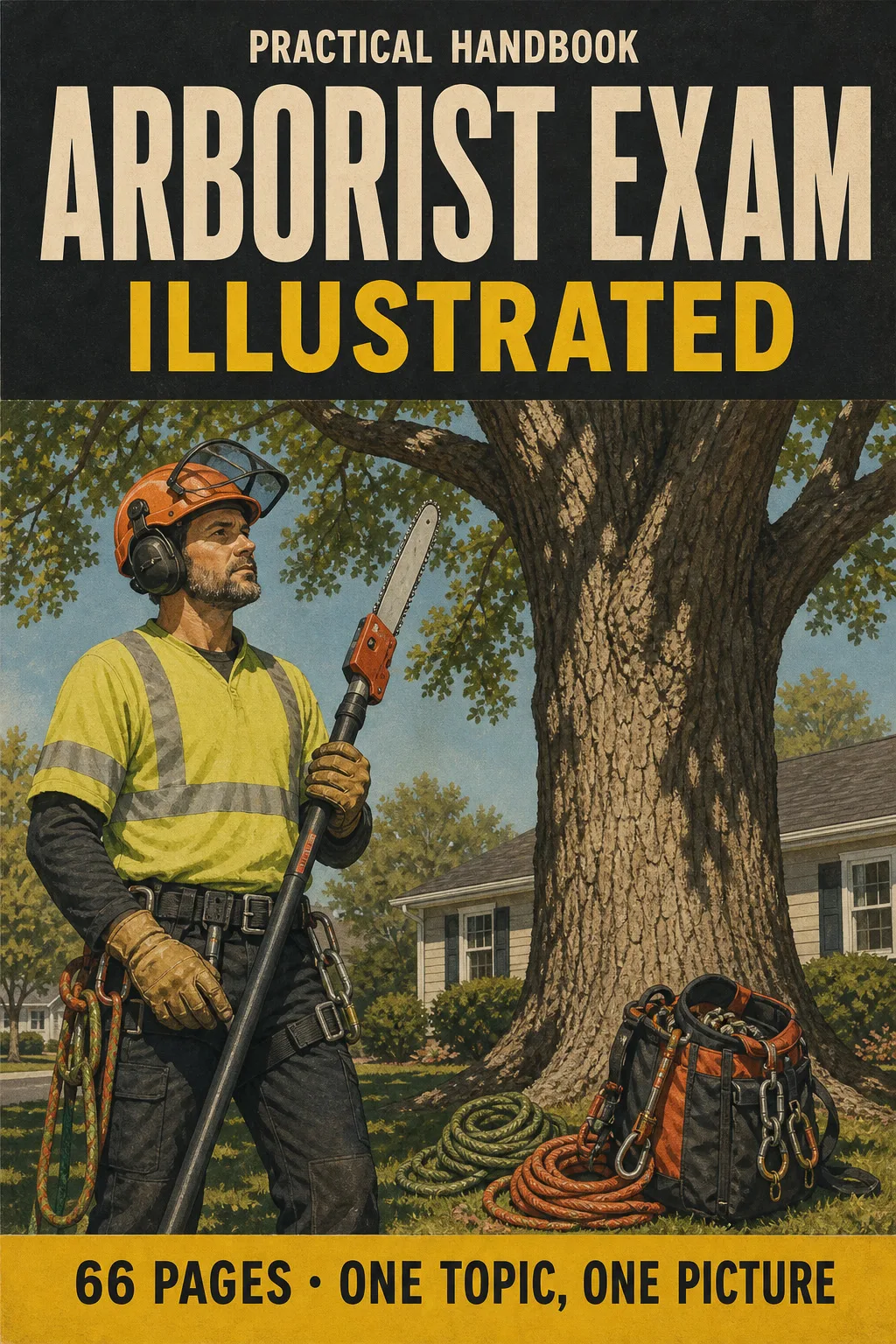
Arborist Exam Illustrated

Digital book in PDF · read it on your phone or print it

Arborist Exam Illustrated

Inside the trunk, tree ID, soil texture, the planting hole, A300 pruning cuts, CODIT, tree risk and Z133 safe work. Every topic gets its own page: the drawing first, then what you need to remember.

  • 66 illustrated pages
  • English
  • 30-day guarantee
US$ 27US$ 63
Get the book · US$ 27

Price shown for: United States. In other countries, the checkout shows the price that applies there.

About this book

What it is

Inside the trunk, tree ID, soil texture, the planting hole, A300 pruning cuts, CODIT, tree risk and Z133 safe work. Every topic gets its own page: the drawing first, then what you need to remember.

Who This Book Is For
  • You're studying for the certification
  • Your exam date is set
  • You already work in trees
What it covers
  1. Tree Biology
  2. Tree ID and Selection
  3. Soil, Water and Nutrition
  4. Planting and Establishment
  5. Pruning by ANSI A300
  6. Diagnosis and Plant Health
  7. Tree Risk, Support and Protection
  8. Safe Work by ANSI Z133
  9. Exam Review
Language
English (United States)
Pages
66
Format
Digital book in PDF · read it on your phone or print it
Price
US$ 27 (United States)
Delivery
This is a digital PDF book sent to your email: nothing is printed or shipped.
30-Day Guarantee
30-day guarantee: if a file doesn't open, if the content isn't what the product page describes, if you were charged twice or the email never arrived, write to us and we'll refund you in full.

Look Inside the Book

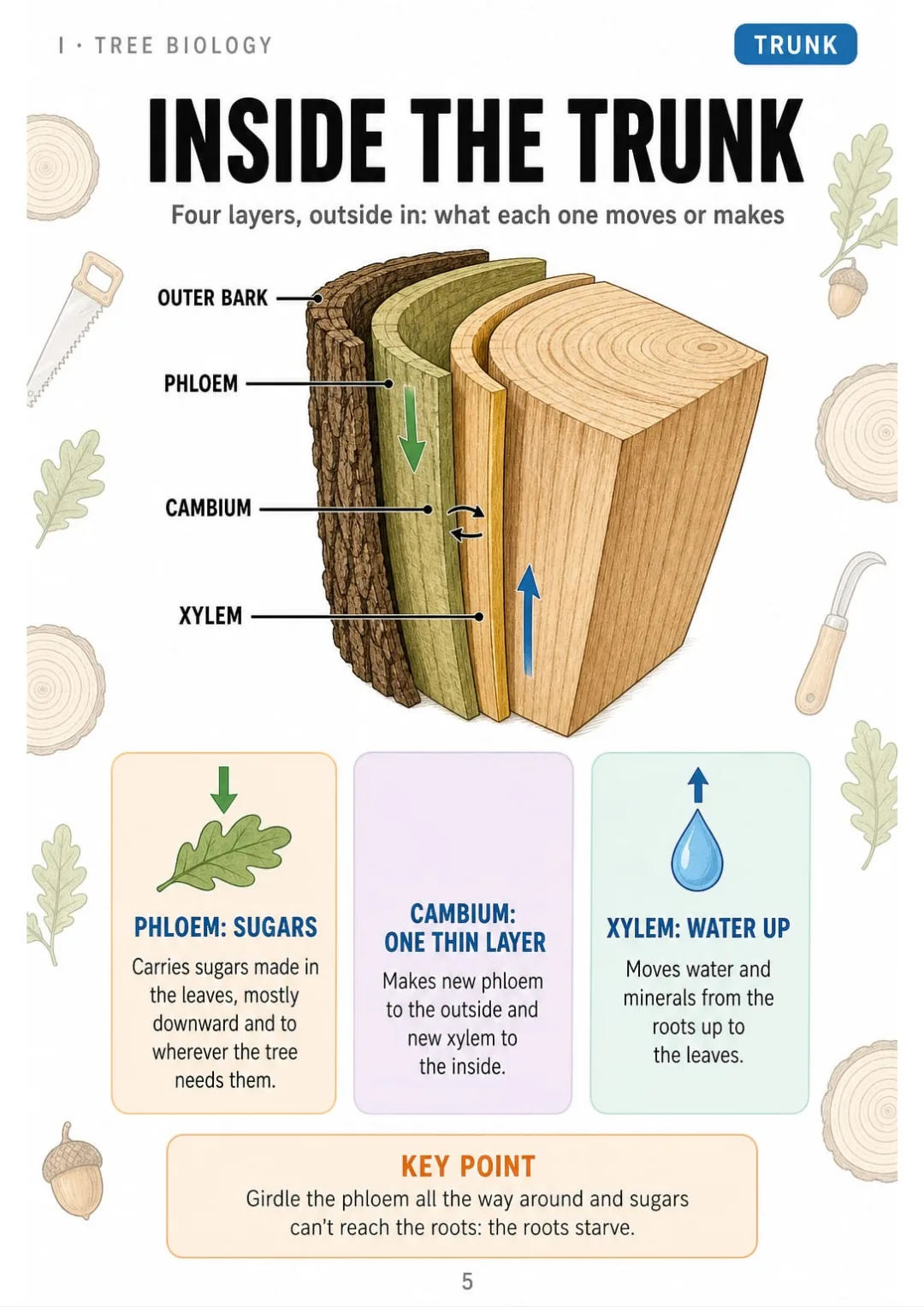
Phloem carries sugars down, xylem carries water up, and the cambium makes both.
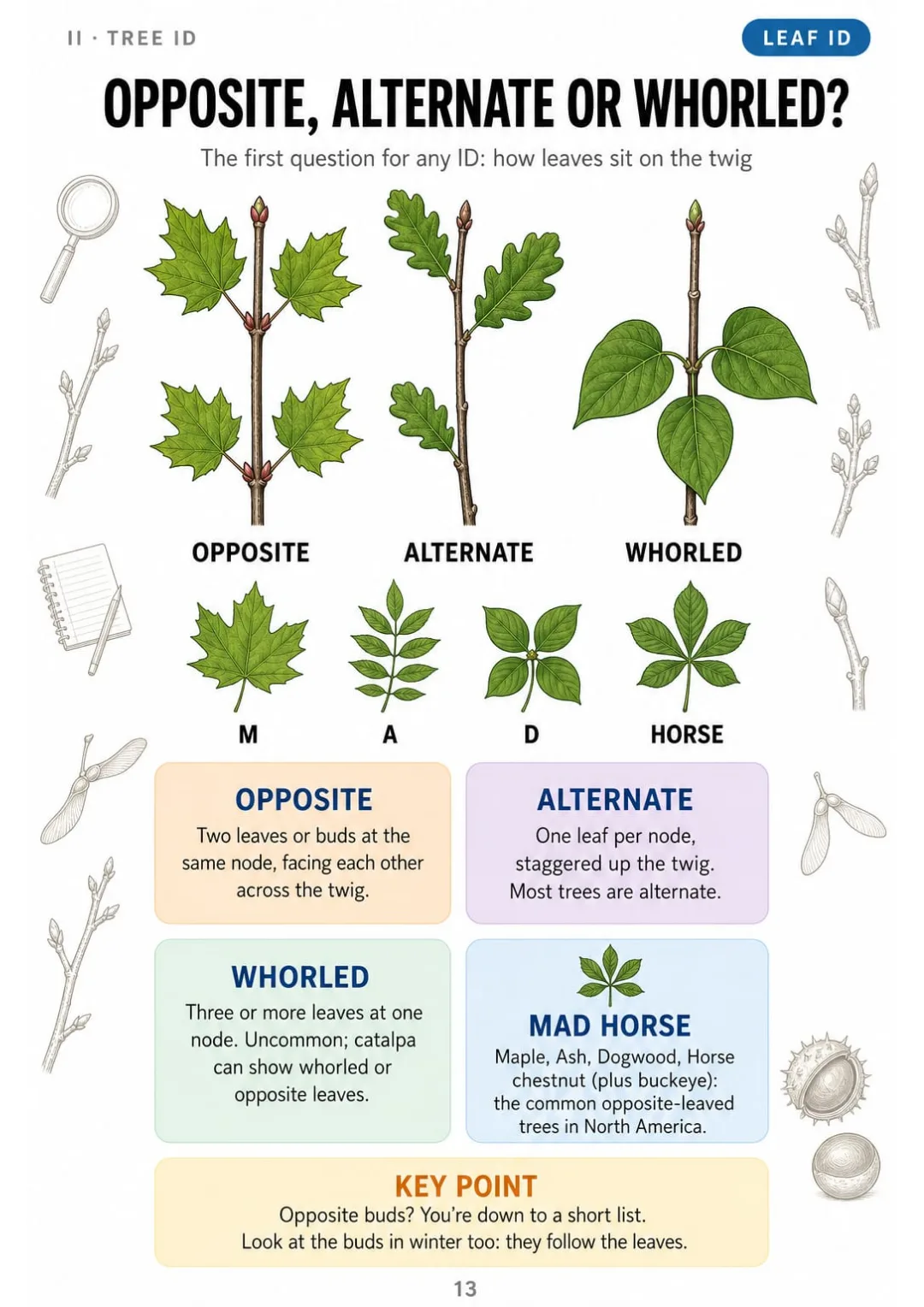
Opposite-leaved trees are few: MAD Horse (maple, ash, dogwood, horse chestnut and buckeye).
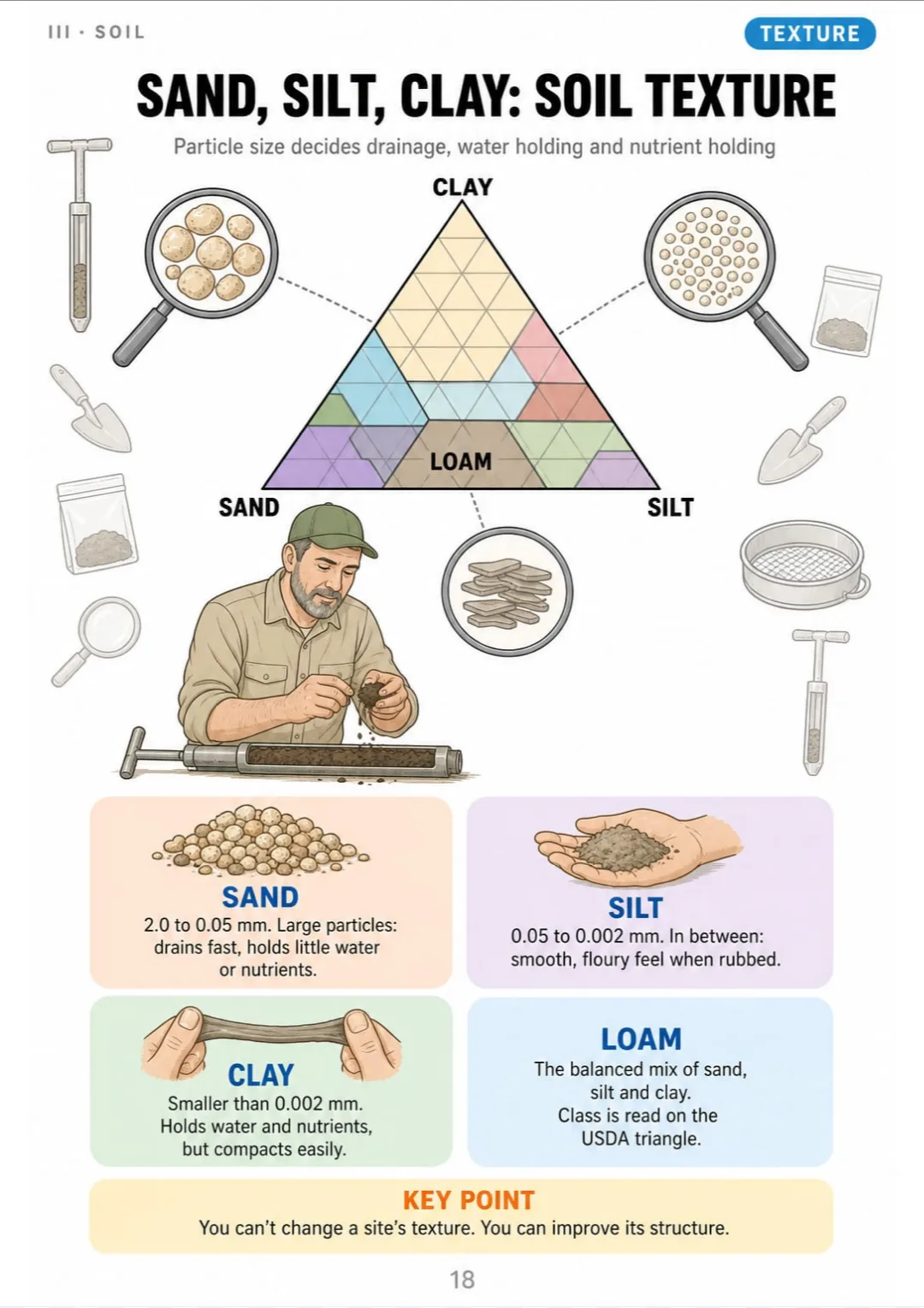
Sand 2.0–0.05 mm · silt 0.05–0.002 mm · clay under 0.002 mm (USDA)
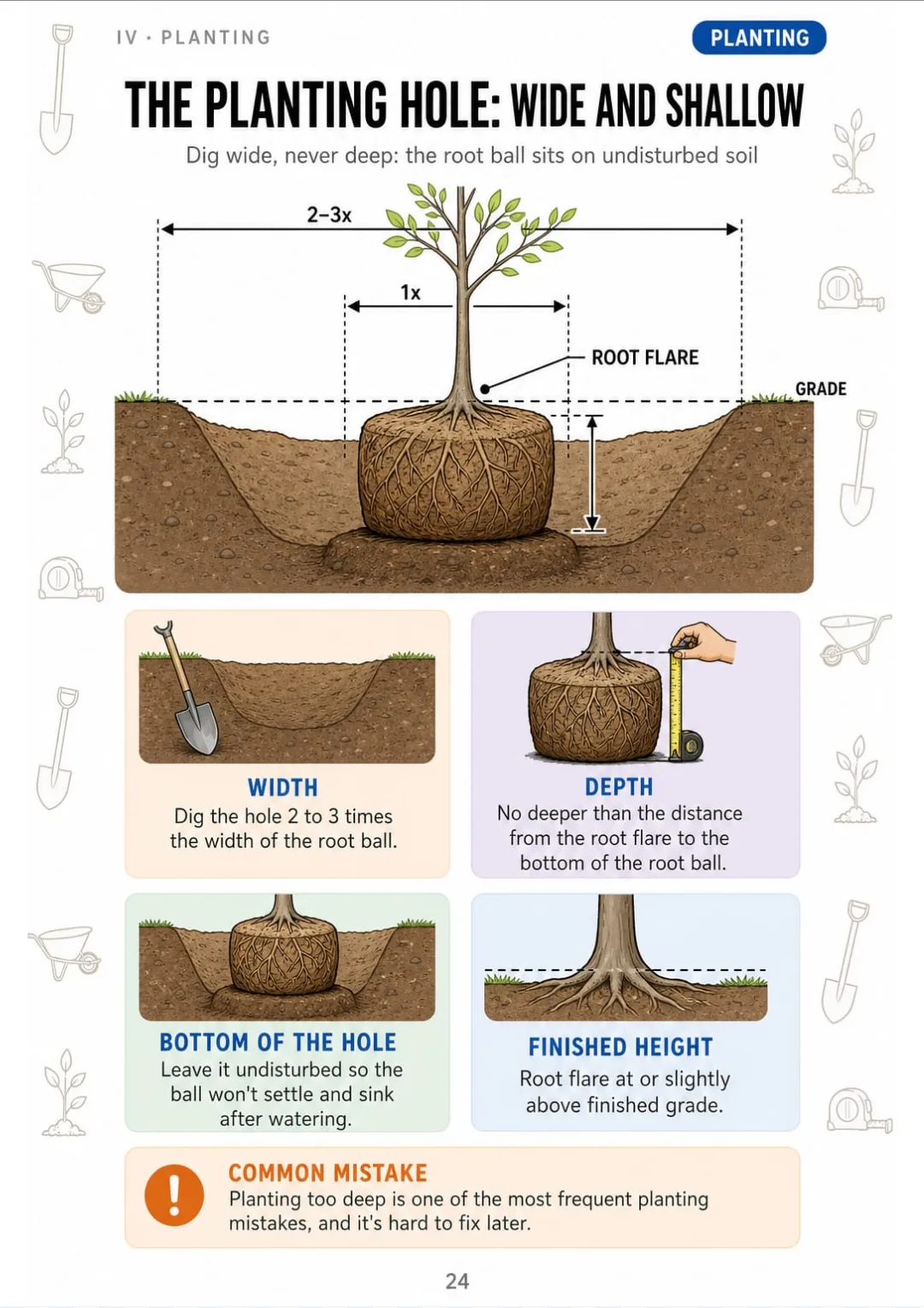
Planting hole: 2–3x the root ball width, no deeper than flare to ball bottom.
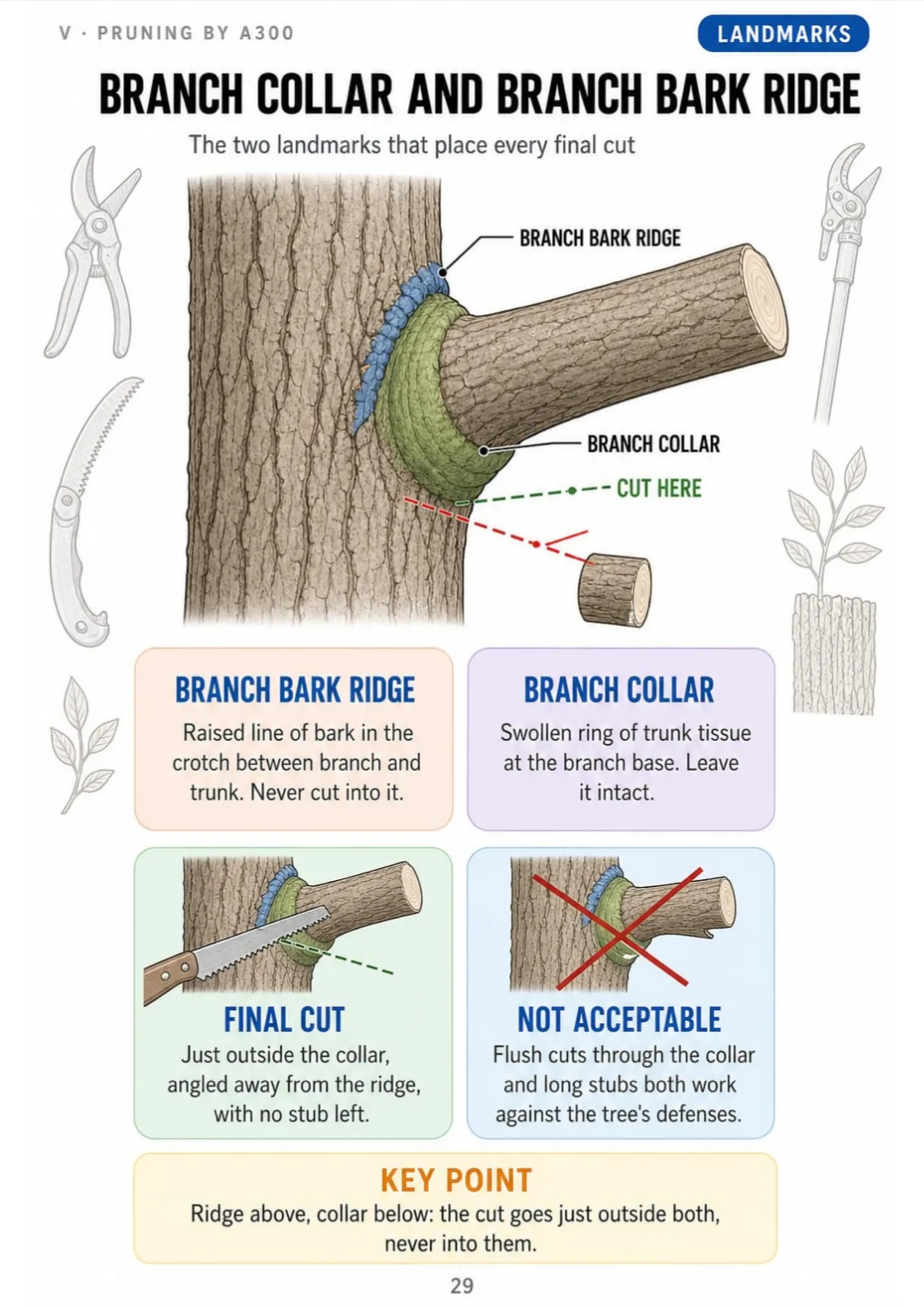
Final cut just outside the branch collar: no stub, no flush cut
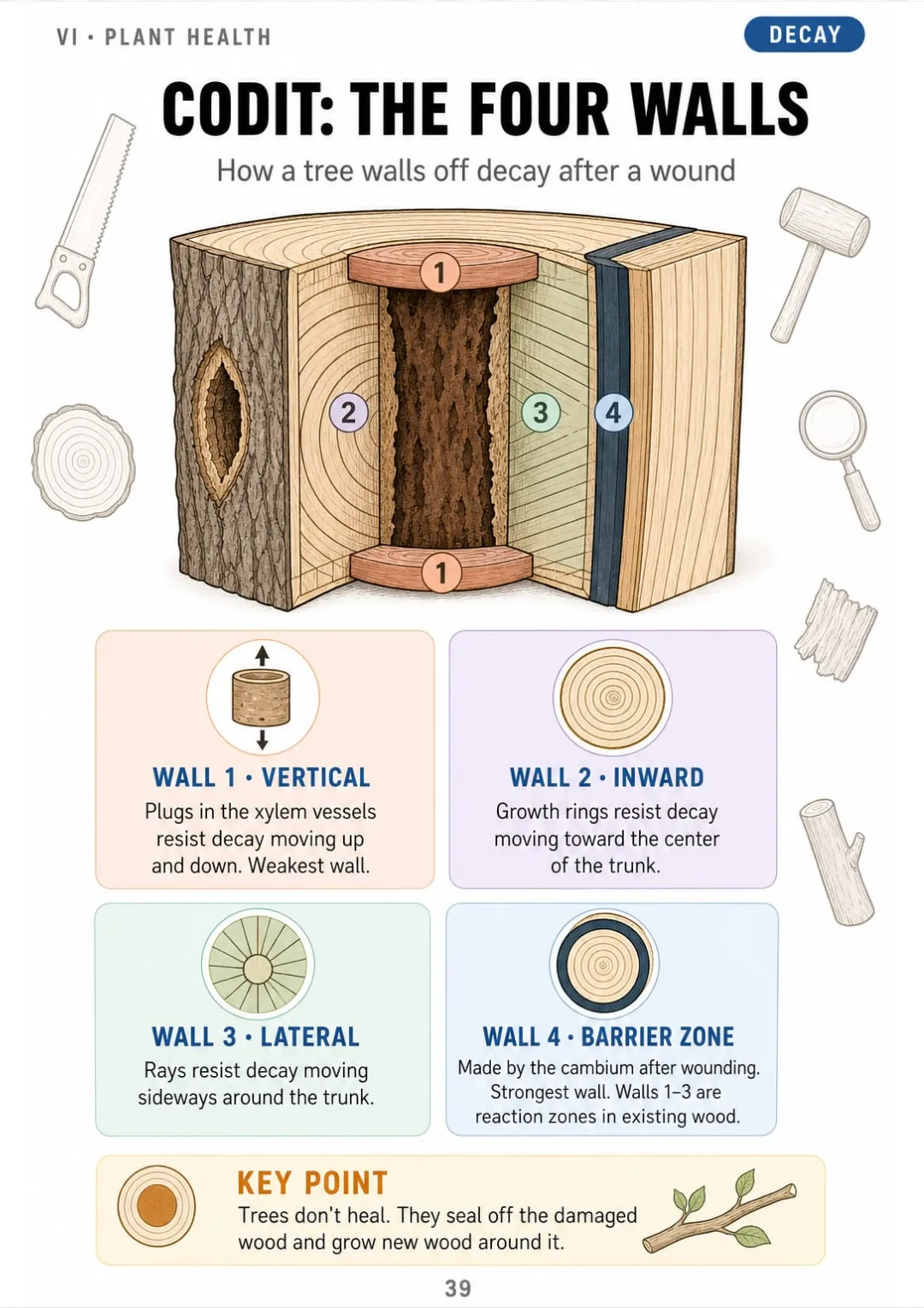
CODIT: Wall 1 is the weakest, Wall 4 (the barrier zone) the strongest.
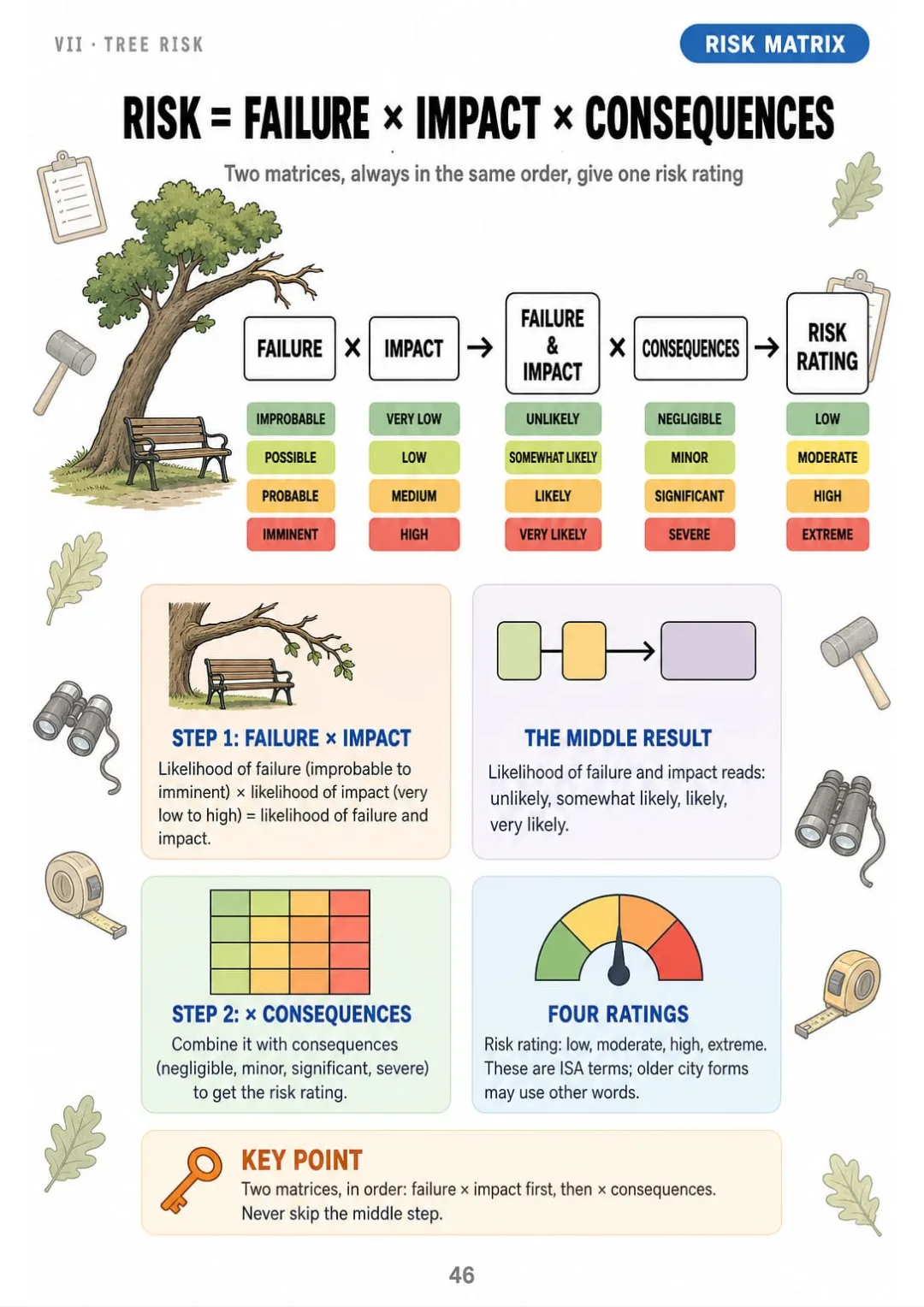
Failure × impact, then × consequences: low, moderate, high or extreme risk.
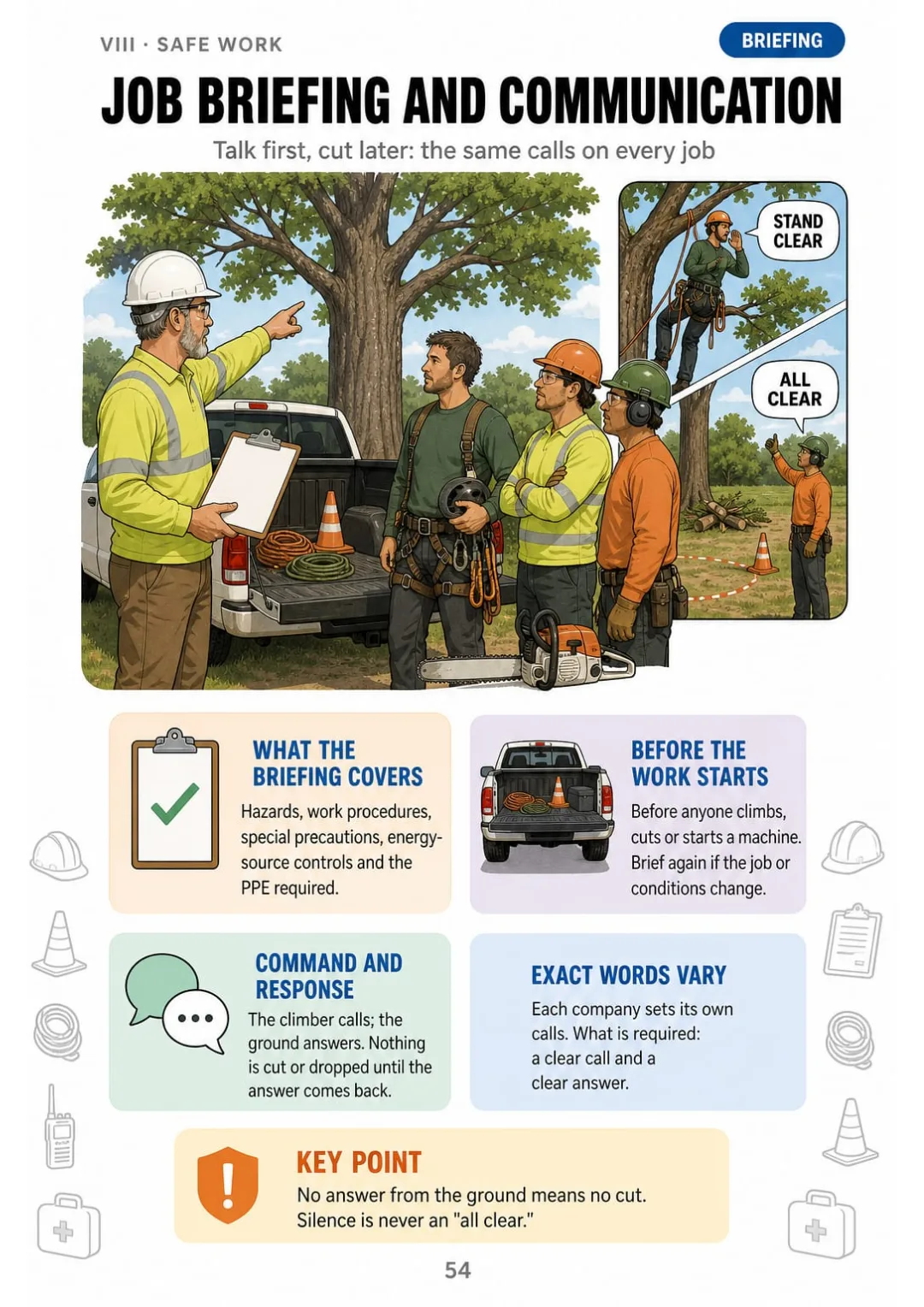
Job briefing + command-and-response: nothing drops until the ground answers "All clear."

Take a Look at the 9 Parts and 62 Topics

Tree Biology

pp. 5-12
  1. Inside the Trunk: Bark, Phloem, Cambium, Xylem
  2. Sapwood vs. Heartwood
  3. Growth Rings and How a Tree Adds Wood
  4. Meristems and Apical Dominance
  5. Photosynthesis, Respiration, Transpiration
  6. Stored Energy: Why Timing Matters
  7. Roots: Where They Really Are
  8. Mycorrhizae and Root Hairs

Tree ID and Selection

pp. 13-17
  1. Leaf Arrangement: Opposite, Alternate, Whorled
  2. Leaf Types: Simple vs. Compound
  3. Buds, Bark and Form in Winter
  4. Right Tree, Right Place
  5. Picking Good Nursery Stock

Soil, Water and Nutrition

pp. 18-23
  1. Soil Texture: Sand, Silt, Clay
  2. Pore Space and Compaction
  3. Soil pH and Nutrient Availability
  4. Cation Exchange Capacity Made Simple
  5. Macro and Micronutrients, N-P-K
  6. Water: Too Little, Too Much

Planting and Establishment

pp. 24-28
  1. The Planting Hole
  2. Finding the Root Flare
  3. Mulch: How Much and Where
  4. Staking and Watering After Planting
  5. Transplant Shock and Establishment

Pruning by ANSI A300

pp. 29-38
  1. Branch Collar and Branch Bark Ridge
  2. The Three-Cut Method
  3. Removal (Thinning) Cut
  4. Reduction Cut vs. Heading Cut
  5. Pruning Objectives in A300
  6. How Much to Remove
  7. Why Topping Is Not Acceptable
  8. Lion-Tailing and Over-Raising
  9. Structural Pruning of Young Trees
  10. Codominant Stems and Included Bark

Diagnosis and Plant Health

pp. 39-45
  1. CODIT: The Four Walls
  2. Wounds, Wound Dressing and Decay
  3. Biotic vs. Abiotic Problems
  4. The Diagnostic Process Step by Step
  5. The Disease Triangle
  6. Insects by How They Feed
  7. Integrated Pest Management

Tree Risk, Support and Protection

pp. 46-53
  1. Risk = Failure x Impact x Consequences
  2. Three Levels of Risk Assessment
  3. Defects That Count
  4. Targets and Mitigation Options
  5. Cabling and Bracing
  6. Lightning Protection
  7. Trees and Construction
  8. Urban Forestry Basics

Safe Work by ANSI Z133

pp. 54-62
  1. Job Briefing and Communication
  2. PPE Head to Toe
  3. Electrical Hazards and Minimum Approach Distance
  4. Chainsaw Safety
  5. Felling: Notch, Hinge and Back Cut
  6. Climbing Gear and Strength Numbers
  7. Two Points of Attachment Aloft
  8. Rigging Basics: Loads and Friction
  9. Chippers, Aerial Lifts and Traffic

Exam Review

pp. 63-66
  1. Arborist Knots at a Glance
  2. The Most Frequent Mix-Ups
  3. Numbers to Know
  4. Exam-Day Checklist

Who This Book Is For

You're studying for the certification

An hour a night is enough to go page by page: one topic, one drawing, one thing to remember. The botany finally has a picture.

Your exam date is set

Flip through the drawings you already know and stop on the ones that still feel shaky. The review part puts the mix-ups and the numbers in one place.

You already work in trees

You get the why behind what your hands already do: where the cut goes, why topping isn't acceptable, how a tree walls off decay. Print it and keep it in the truck.

Plus: 2 Free Books

Arborist Exam Practice Questions
BONUS 1

Arborist Exam Practice Questions

Exam-style questions for every domain, each with a short explanation of why the right answer is right, so you can find your weak spots before test day.
Common Mistakes & Quick-Review Cards
BONUS 2

Common Mistakes & Quick-Review Cards

The mix-ups that come up most often (reduction vs. heading cut, thinning vs. lion-tailing, root flare vs. planting depth) on printable cards you can review on a lunch break.

30-Day Guarantee

30-day guarantee: if a file doesn't open, if the content isn't what the product page describes, if you were charged twice or the email never arrived, write to us and we'll refund you in full. You pay once. No subscriptions.

Frequently Asked Questions

Is it for me if I've worked in trees for years but haven't studied since school?

Yes. That's who it was made for. Every topic is one page and one drawing, written the way a crew lead would explain it on the job, not like a botany textbook.

Where does the content come from?

It follows the domains of the ISA Certified Arborist exam as ISA lists them publicly, and those domains are re-checked on the ISA website before publishing. The content is checked against ANSI A300 (tree care operations) and ANSI Z133 (arboricultural safety). It isn't built as prep for the Utility Specialist or TRAQ exams.

Is this official material?

No. It's independent study material, organized around the public exam domains of the ISA Certified Arborist exam. It isn't the ISA study guide, it isn't built for state tree-expert licenses, and it isn't affiliated with or endorsed by ISA or ANSI.

Does it replace a course or hands-on training?

No. It's a visual study aid. It doesn't replace a certification course, field training or your employer's safety program.

Are the practice questions the ones on the exam?

No. They're written for this book in the style of the exam, each with a short explanation. They are not official exam questions.

When and how do I get it?

As a PDF by email, to the address you enter at checkout. The 2 bonus books come the same way.

Do I have to pay every month?

No. It's a one-time payment.

Can I have it on paper?

Yes. The PDF is printable, so you can print the whole book or just the pages you want to keep in the truck.

How does the refund work?

You have 30 days. We refund everything if the file won't open, if the book isn't what you see on this page, if you were charged twice or if the email doesn't arrive: just email us.

US$ 27US$ 63
Get the book · US$ 27

This is a digital PDF book sent to your email: nothing is printed or shipped.

More books on this topic

Fruit Tree Pruning Illustrated

Prune and graft your backyard fruit trees knowing exactly where each cut goes: every cut drawn step by step, one topic…

From US$ 27 US$ 63

Tree Risk Assessment Illustrated

Tree risk assessment, one drawing per page: assessment levels, targets and occupancy, site factors, every major defect…

From US$ 27 US$ 63

Arborist Illustrated: Master Level

Advanced arboriculture, one topic per page and every concept drawn: CODIT, wood and roots, soil science, step-by-step…

From US$ 27 US$ 63

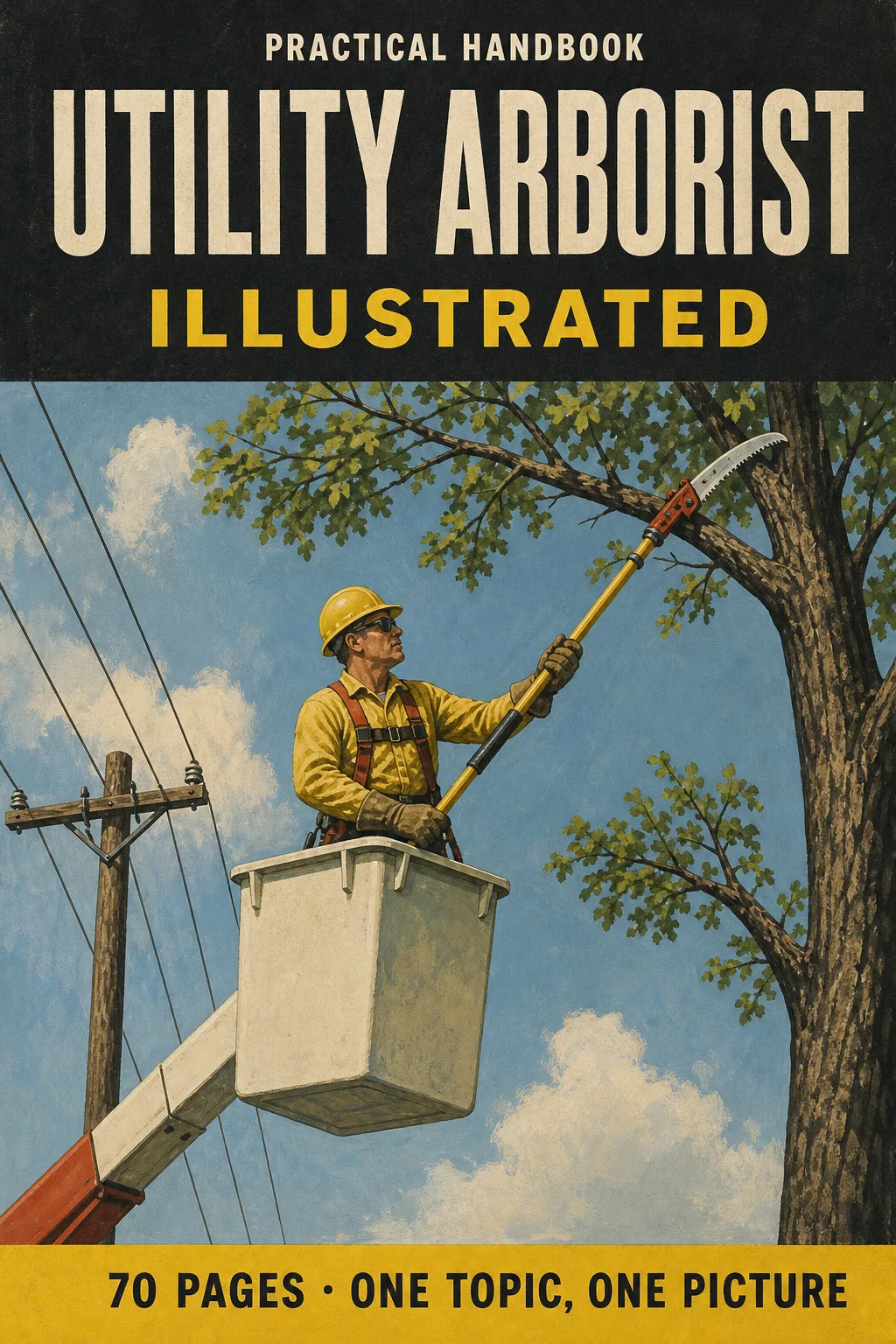
Utility Arborist Illustrated

Utility Arborist Illustrated explains tree work near power lines one topic per page, with a big drawing for each: how…

From US$ 27 US$ 63

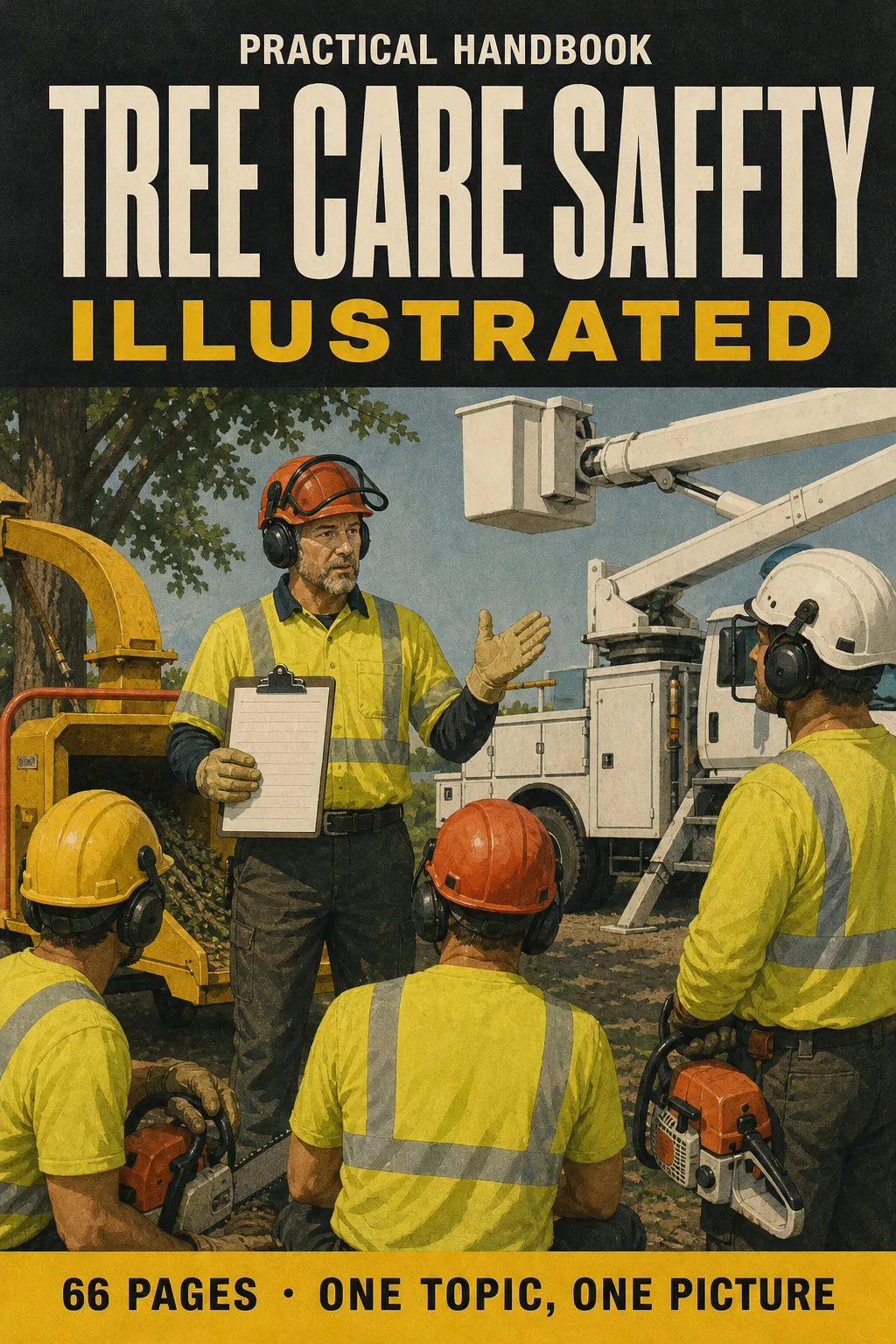
Tree Care Safety Illustrated

Tree crew safety, one topic per page and every page a drawing: job briefing, PPE, work zones, electrical hazards…

From US$ 27 US$ 63

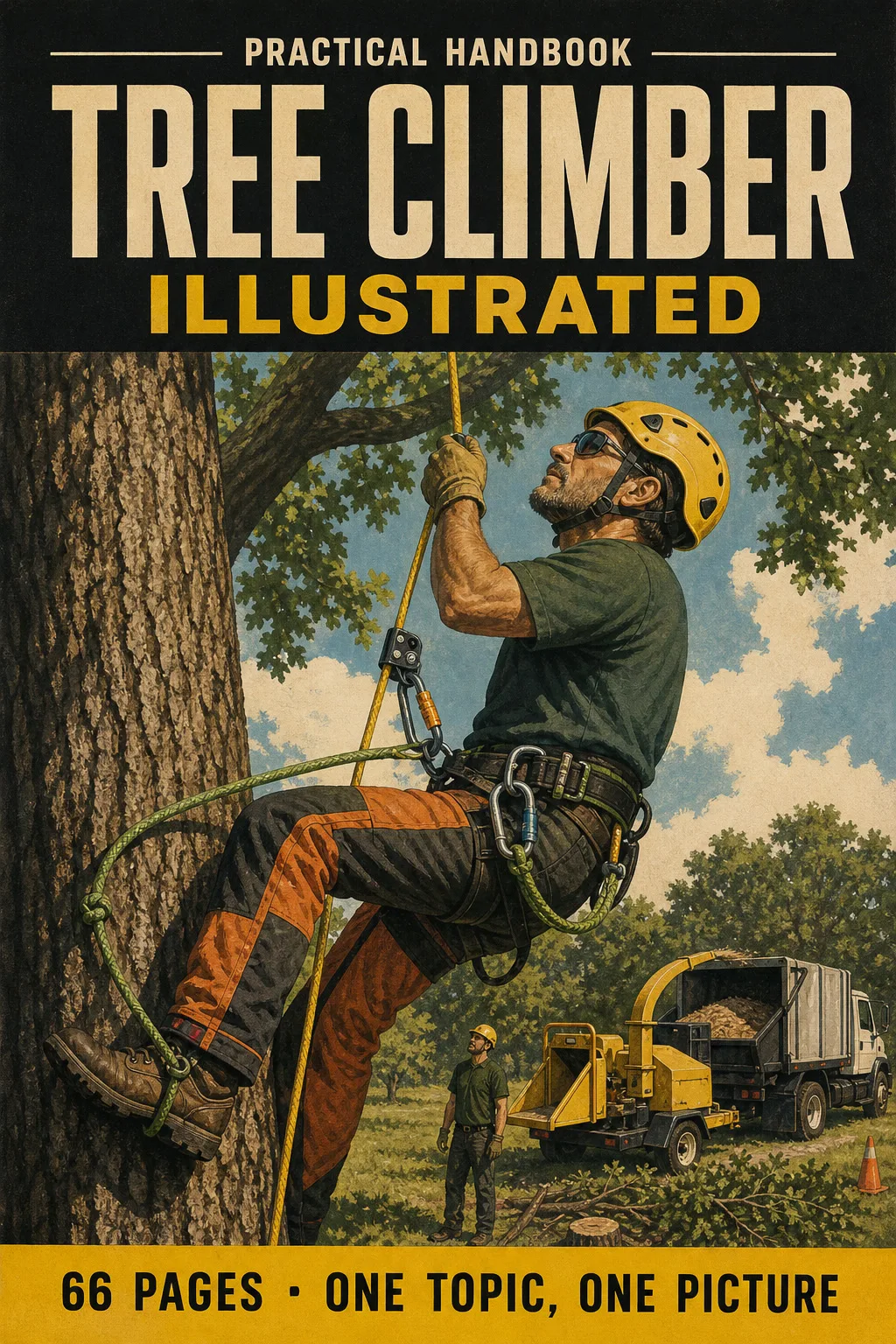
Tree Climber Illustrated

Tree climbing for the Certified Tree Climber exam, one topic per page: PPE, climbing gear, 7 knots and hitches, tie-in…

From US$ 27 US$ 63

Aerial Lift Arborist Illustrated

Aerial Lift Arborist Illustrated explains bucket truck tree work one topic per page, with a big drawing for each…

From US$ 27 US$ 63