Study in Pictures🌐 English (United States)
Special Hazards Suppression Illustrated

Digital book in PDF · read it on your phone or print it

Special Hazards Suppression Illustrated

For fire protection techs moving from sprinklers or fire alarm into suppression. Clean agent, CO2, wet chemical and releasing panels: one topic per page, the drawing first, then the numbers to remember.

  • 64 illustrated pages
  • English
  • 30-day guarantee
US$ 27US$ 63
Get the book · US$ 27

Price shown for: United States. In other countries, the checkout shows the price that applies there.

About this book

What it is

For fire protection techs moving from sprinklers or fire alarm into suppression. Clean agent, CO2, wet chemical and releasing panels: one topic per page, the drawing first, then the numbers to remember.

Who This Book Is For
  • You're moving into suppression
  • Your NICET Special Hazards exam is coming up
  • You already service these systems
What it covers
  1. The Special Hazards Map
  2. Detection and Releasing Panels
  3. Clean Agent Systems (NFPA 2001)
  4. Carbon Dioxide Systems (NFPA 12)
  5. Kitchen and Dry Chemical Systems (NFPA 17A, 17, 96)
  6. Foam and Other Systems
  7. Inspection, Testing and Maintenance
  8. Review and Field Checklists
Language
English (United States)
Pages
64
Format
Digital book in PDF · read it on your phone or print it
Price
US$ 27 (United States)
Delivery
This is a digital PDF book sent to your email: nothing is printed or shipped.
30-Day Guarantee
30-day guarantee: if a file doesn't open, if the content isn't what the product page describes, if you were charged twice or the email never arrived, write to us and we'll refund you in full.

Look Inside the Book

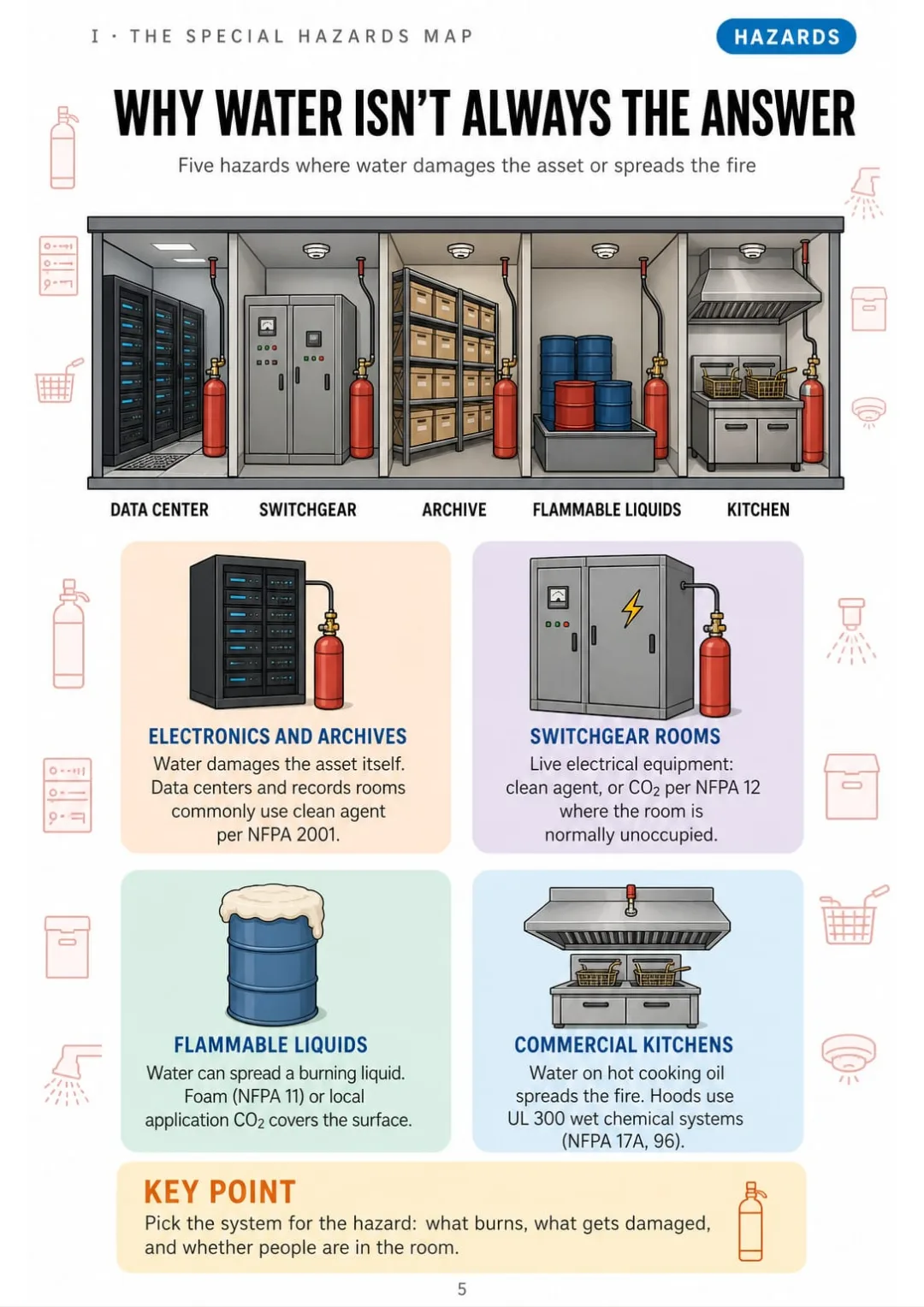
Data center, switchgear, archive, flammable liquids and kitchen: which system each hazard calls for
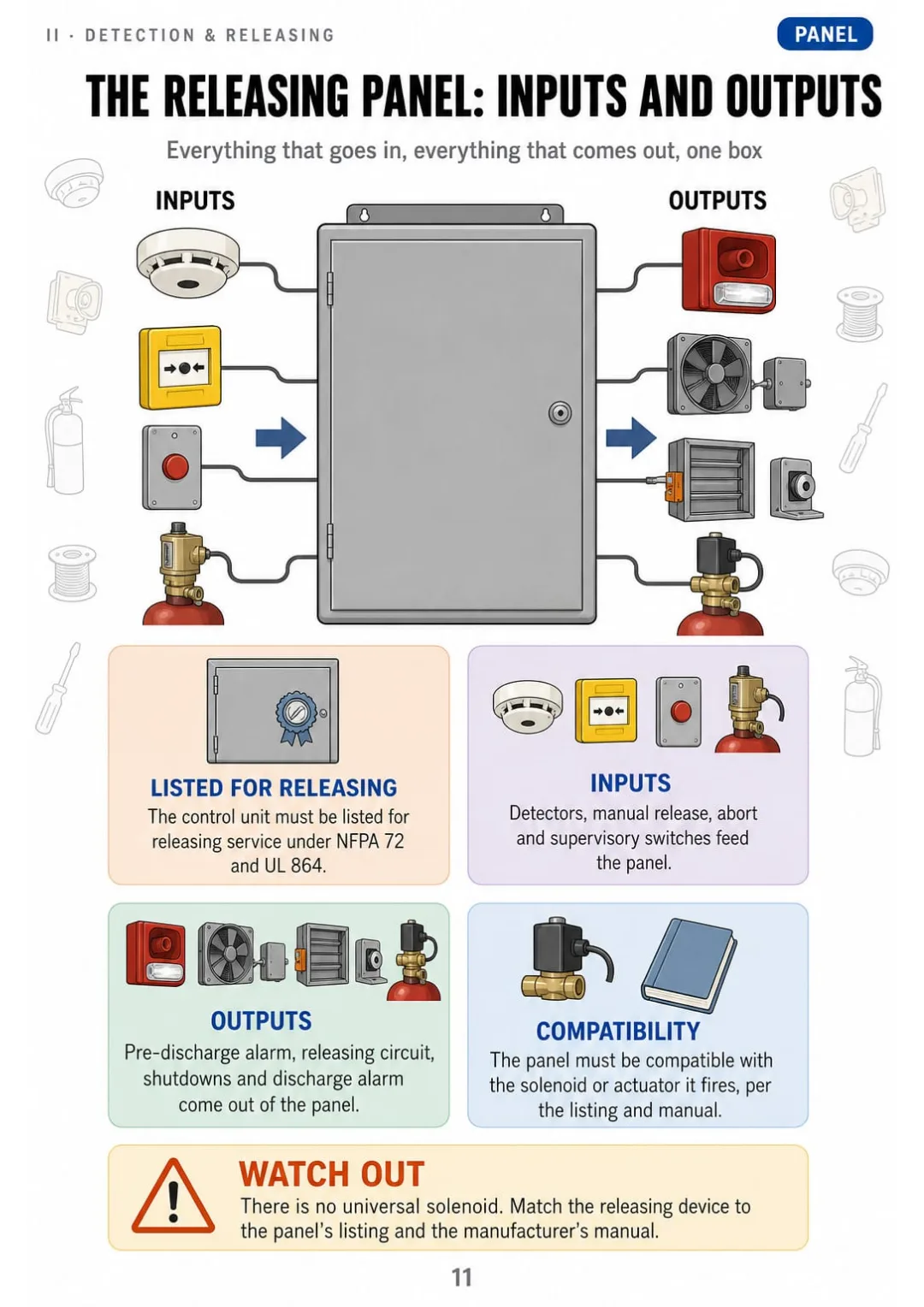
Inputs: detectors, manual release, abort, supervisory. Outputs: alarms, shutdowns, release.
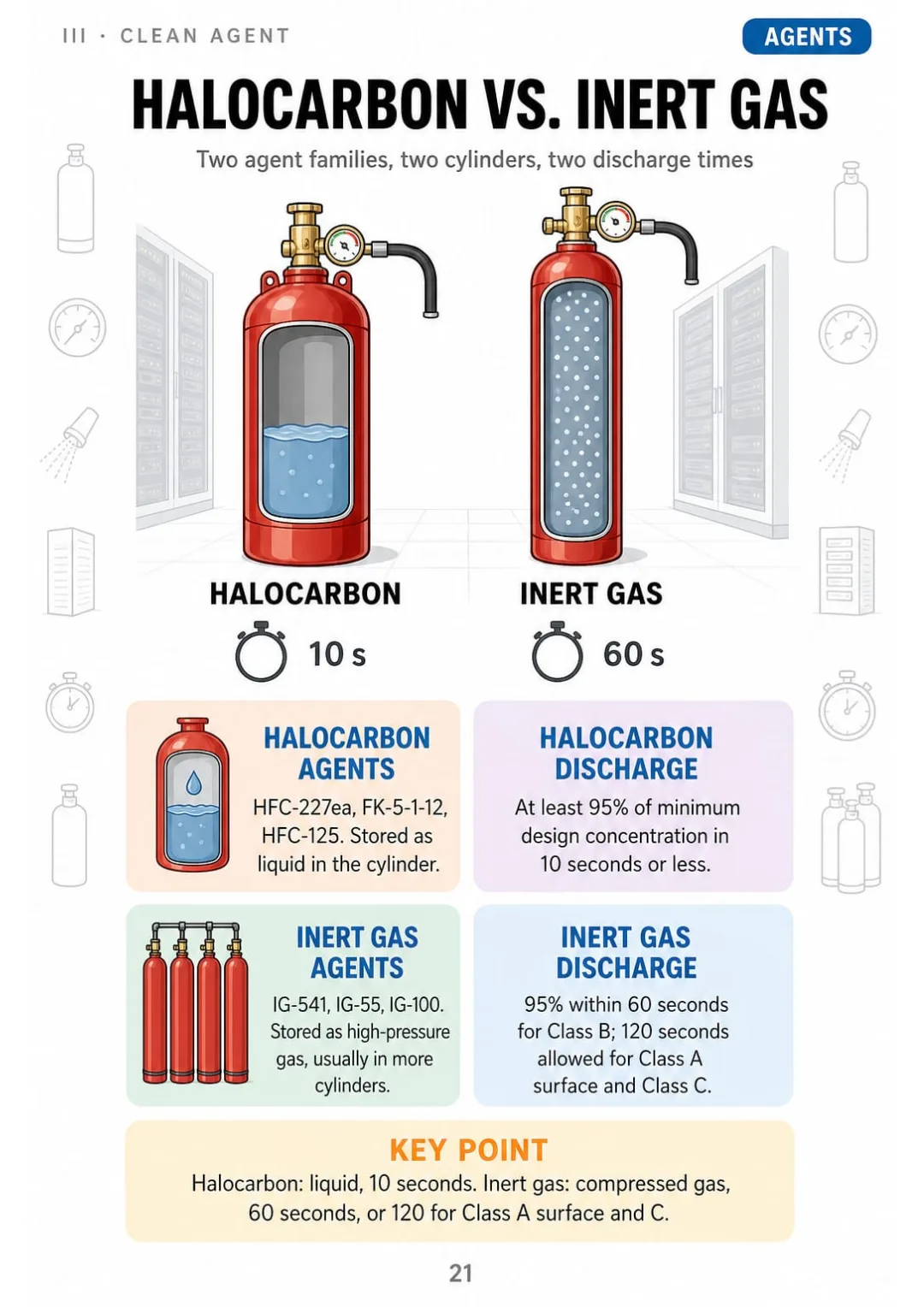
Halocarbons discharge in 10 s; inert gases in 60 s (120 s for Class A surface/C).
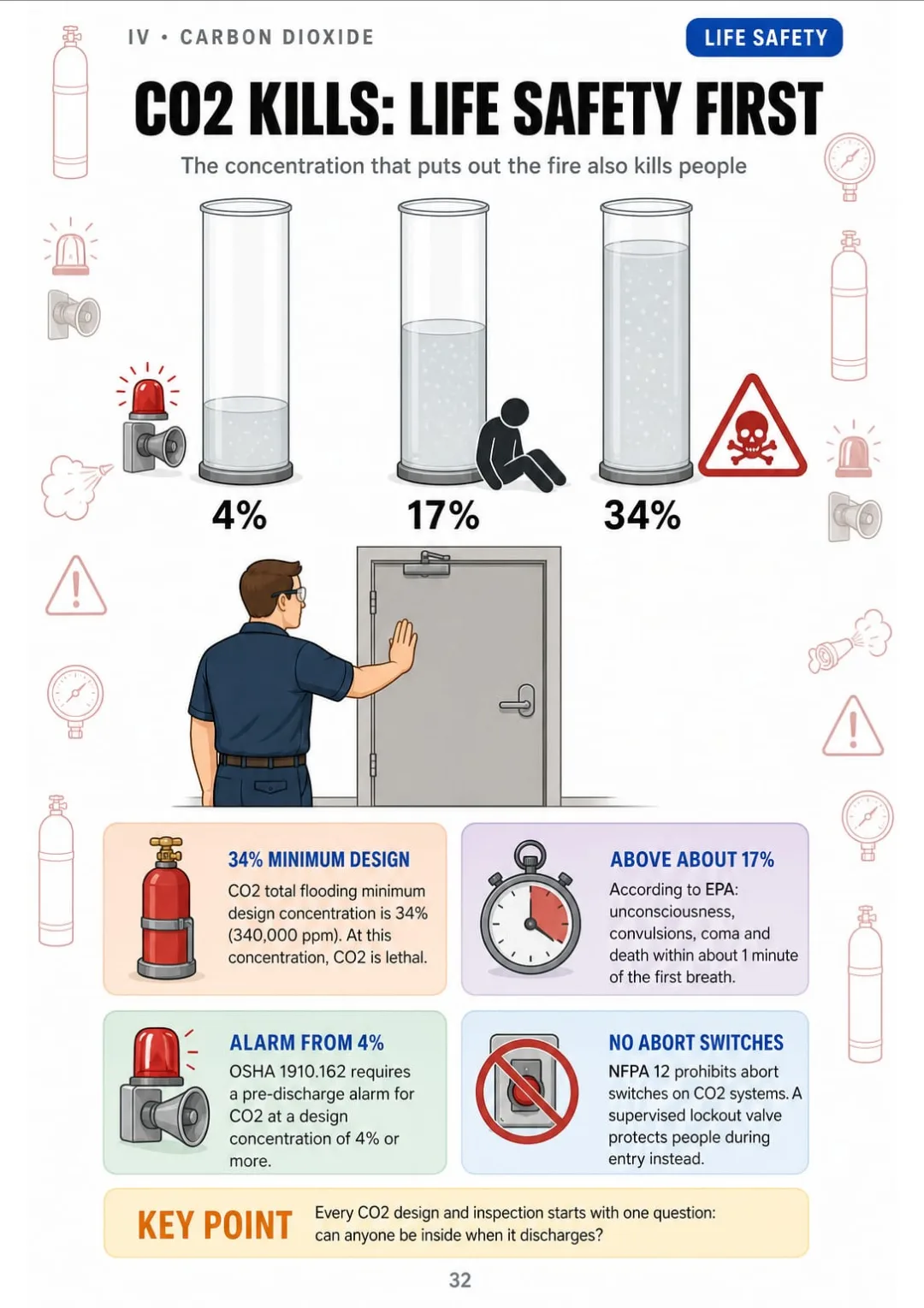
34% CO2 is the minimum design concentration, and it is lethal (EPA, NFPA 12).
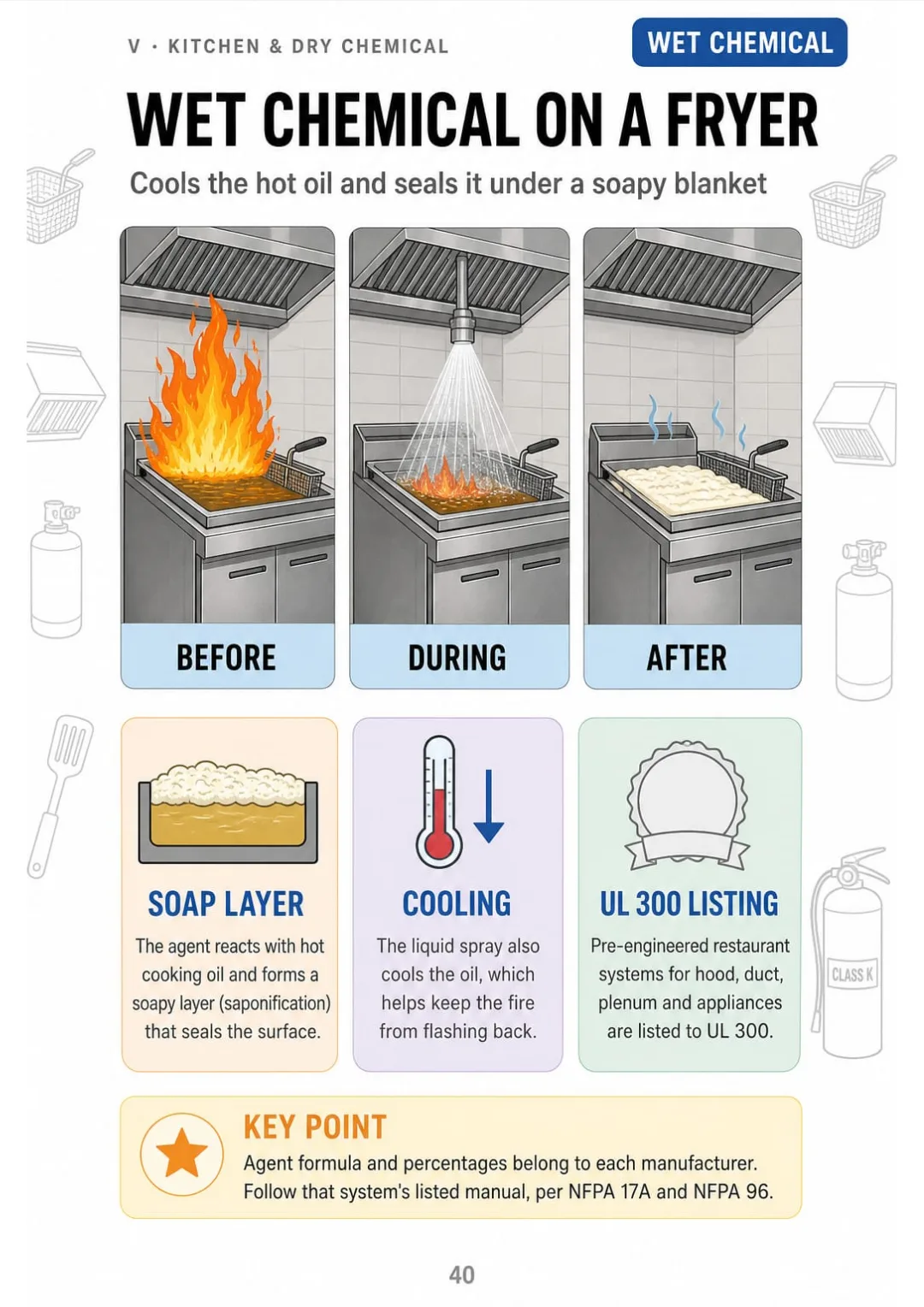
Fryer before, during and after discharge: saponification plus cooling, UL 300 listed systems.
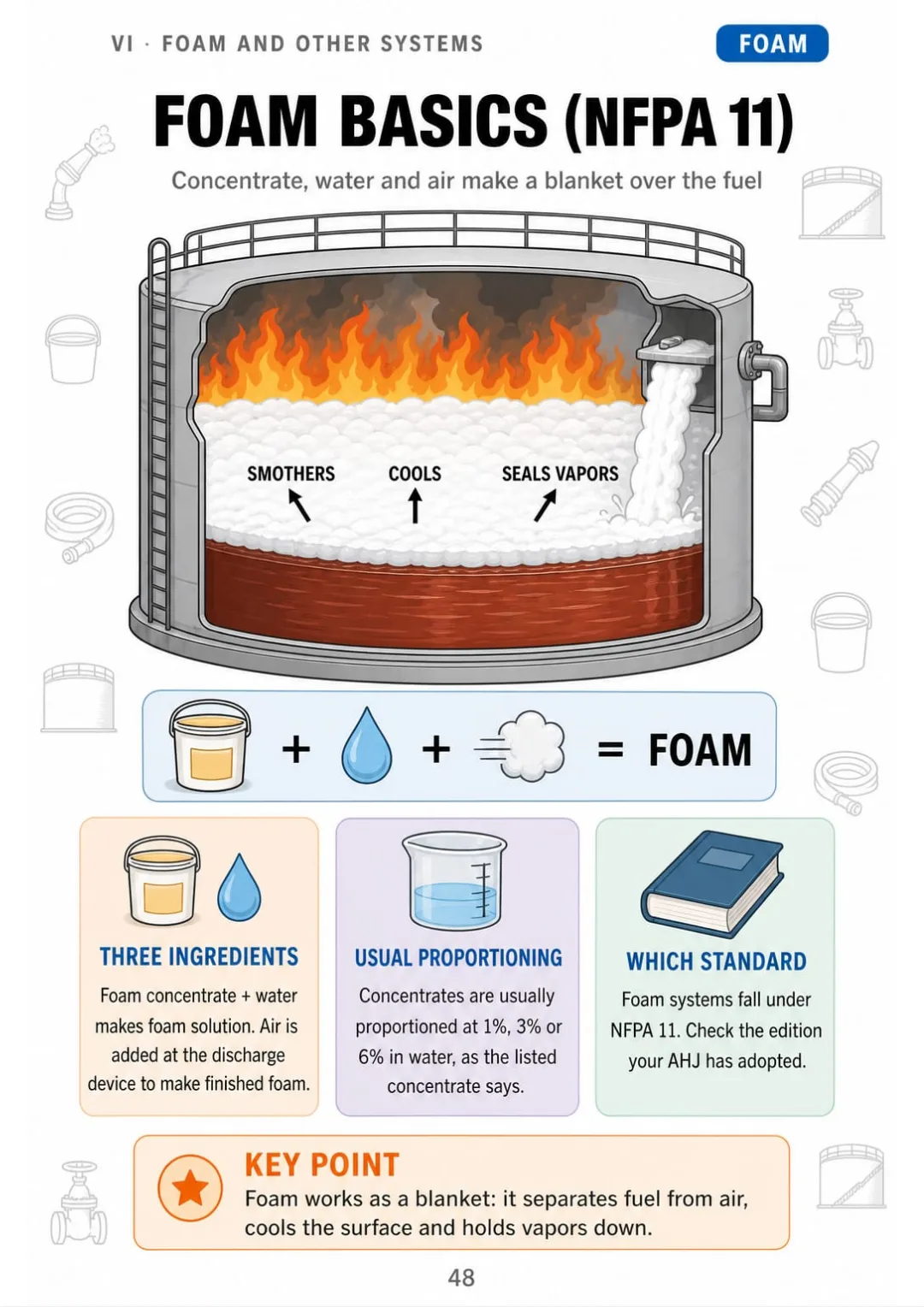
Foam = concentrate + water + air, usually proportioned at 1%, 3% or 6% (NFPA 11).
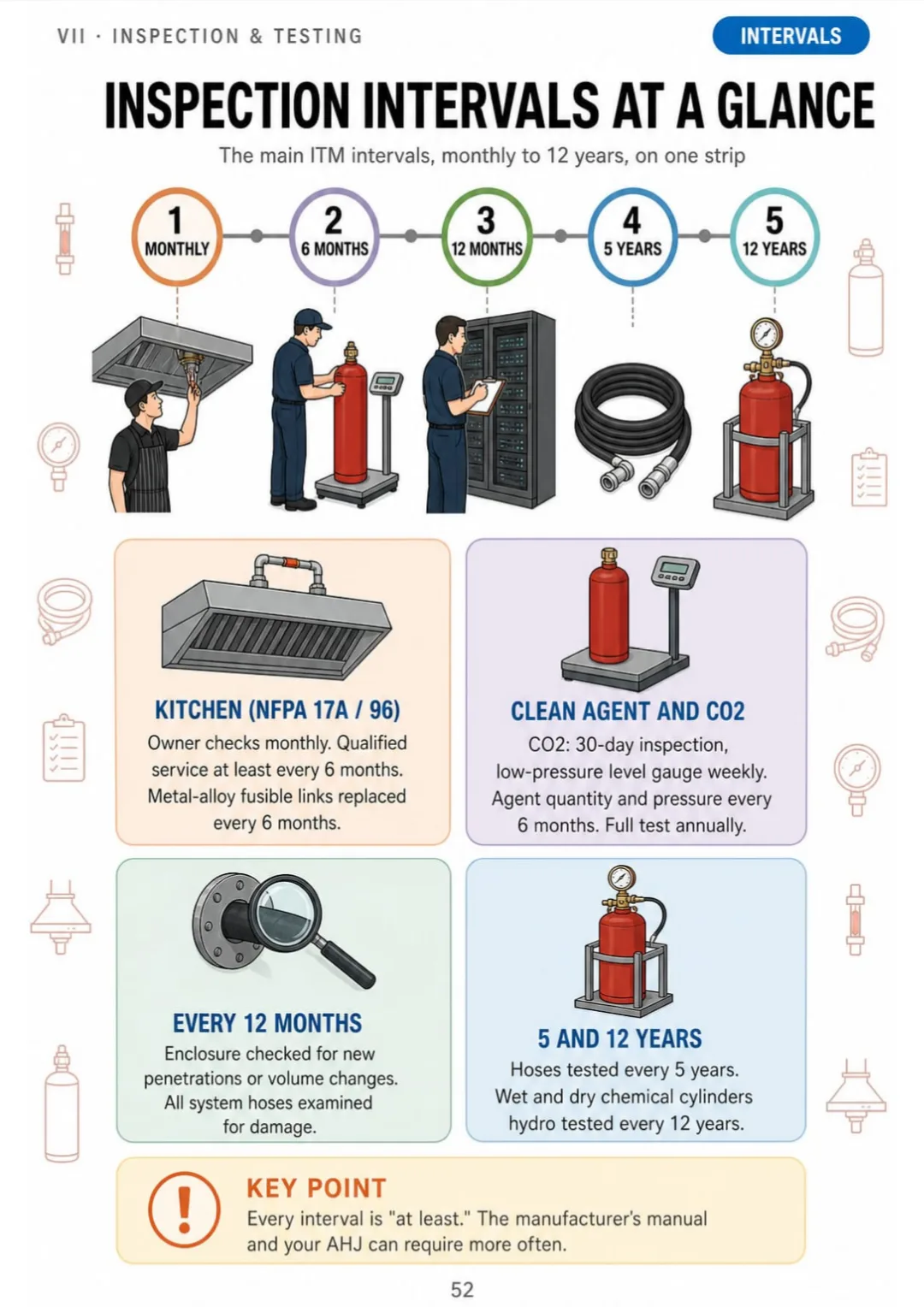
Monthly, 6 months, 12 months, 5 years, 12 years: the whole ITM calendar on one strip.
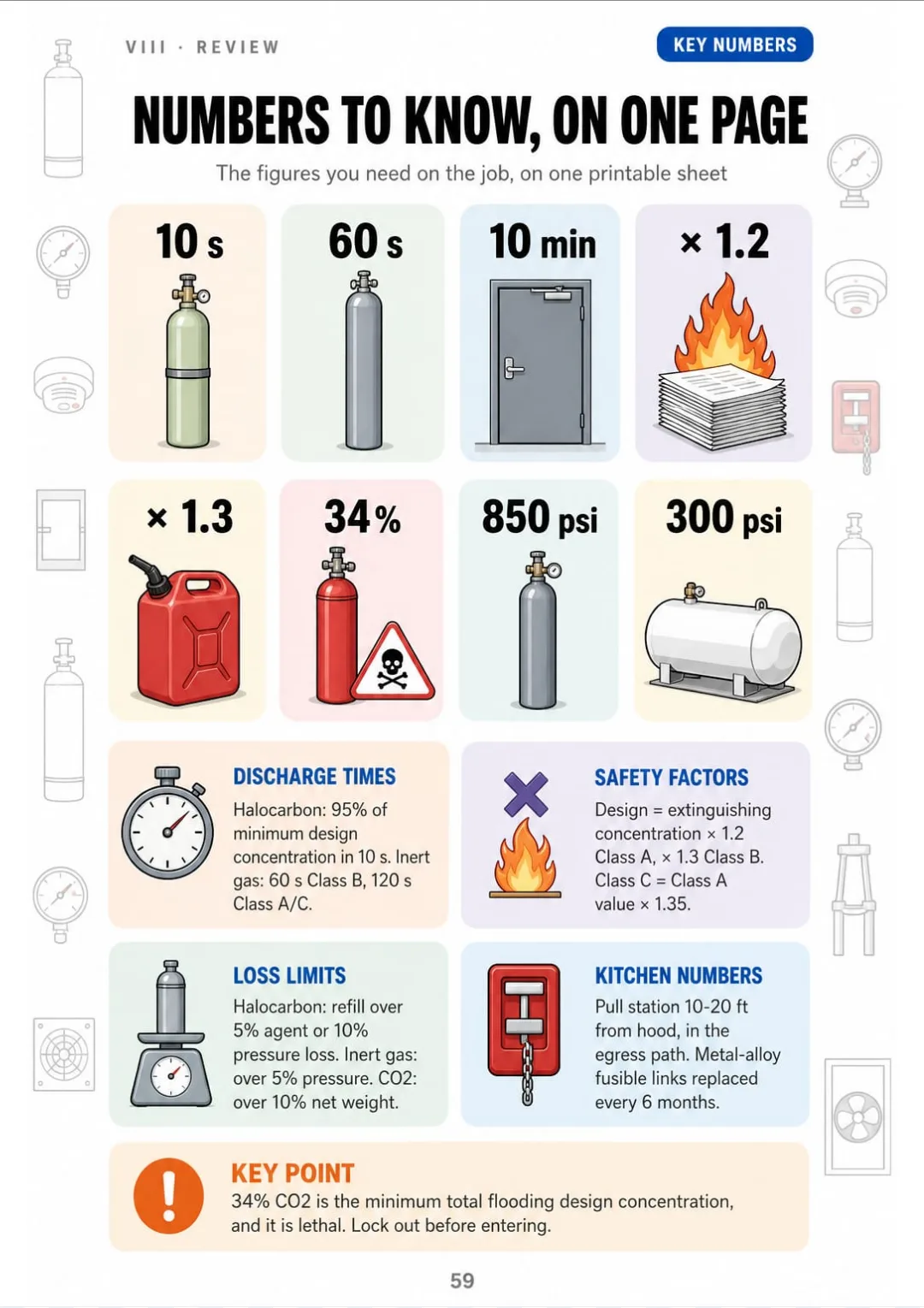
10 s, 60 s, 10 min, × 1.2, × 1.3, 34%, 850 psi, 300 psi: one sheet to print.

Take a Look at the 8 Parts and 60 Topics

The Special Hazards Map

pp. 5-10
  1. Why Water Isn't Always the Answer
  2. One System, Always the Same Order
  3. Which NFPA Standard Covers What
  4. How Agents Put Out Fire
  5. Total Flooding vs. Local Application
  6. Engineered vs. Pre-Engineered Systems

Detection and Releasing Panels

pp. 11-20
  1. The Releasing Panel, Drawn as a Box with Inputs and Outputs
  2. Detectors for Special Hazards
  3. High Airflow Rooms Need More Detectors
  4. Cross-Zoning: Two Detectors Before Discharge
  5. The Releasing Sequence, Step by Step
  6. Abort Switches: UL, IRI, NYC
  7. Manual Release and Where It Goes
  8. Solenoids, Actuators and Supervised Circuits
  9. Disabling the Release Before You Test
  10. Interlocks: HVAC, Dampers, Power, Doors

Clean Agent Systems (NFPA 2001)

pp. 21-31
  1. Halocarbon vs. Inert Gas Agents
  2. Design Concentration and Safety Factors
  3. Occupied Spaces: NOAEL and LOAEL
  4. Discharge Time: 10 Seconds and 60 Seconds
  5. Hold Time: Keeping the Agent in the Room
  6. Room Integrity and the Door Fan Test
  7. Pressure Venting the Enclosure
  8. Cylinders, Valves and Manifolds
  9. Pipe, Nozzles and Coverage
  10. Worked Example: Agent Quantity in One Room
  11. Altitude and Temperature Corrections

Carbon Dioxide Systems (NFPA 12)

pp. 32-39
  1. CO2 Kills: Life Safety First
  2. High Pressure vs. Low Pressure Storage
  3. Surface Fires vs. Deep-Seated Fires
  4. Local Application CO2
  5. Lockout Valve, Time Delay and Odorizer
  6. Warning Signs and Self-Contained Breathing Apparatus
  7. Weighing CO2 Cylinders
  8. Halon 1301 Systems Still in the Field

Kitchen and Dry Chemical Systems (NFPA 17A, 17, 96)

pp. 40-47
  1. Wet Chemical: How It Works on a Fryer
  2. The Hood System from Link to Nozzle
  3. Nozzle Placement by Appliance
  4. Fuel and Power Shutoff
  5. Manual Pull Station and Class K Extinguisher
  6. Fusible Links and Detection Lines
  7. Dry Chemical Systems (NFPA 17)
  8. Kitchen System Semiannual Service

Foam and Other Systems

pp. 48-51
  1. Foam Basics (NFPA 11)
  2. Low, Medium and High Expansion
  3. Proportioners and Foam Concentrates
  4. Water Mist and Hybrid Systems

Inspection, Testing and Maintenance

pp. 52-58
  1. Inspection Intervals at a Glance
  2. Clean Agent: Semiannual Agent and Pressure Check
  3. The Annual Clean Agent Inspection
  4. Cylinders: Visual Inspection and Hydrostatic Testing
  5. Hoses and Flexible Connectors
  6. Testing the Releasing Panel Safely
  7. Paperwork: Tags, Reports and Impairments

Review and Field Checklists

pp. 59-64
  1. Numbers to Know, on One Page
  2. Five Systems, One Route
  3. Common Mix-Ups
  4. Field Checklist: Clean Agent Room
  5. Field Checklist: Kitchen Hood System
  6. How the NICET Special Hazards Exam Is Organized

Who This Book Is For

You're moving into suppression

Years in sprinklers or fire alarm, and now the company sends you to clean agent and CO2 rooms. Every system is laid out in the same order, so you see where each piece fits.

Your NICET Special Hazards exam is coming up

You study at night after a day in the truck. One topic per page, the numbers on one sheet, and a bonus book of exam-style questions to check yourself.

You already service these systems

Print the pages you need and keep them in the truck: the releasing sequence, the inspection calendar and the field checklists, ready before you walk into the room.

Plus: 2 Free Books

Special Hazards Practice Questions: Exam-Style, With Answers Explained
BONUS 1

Special Hazards Practice Questions: Exam-Style, With Answers Explained

Test yourself on clean agents, CO2, releasing panels and inspection with exam-style questions, and see in one line why each answer is right.
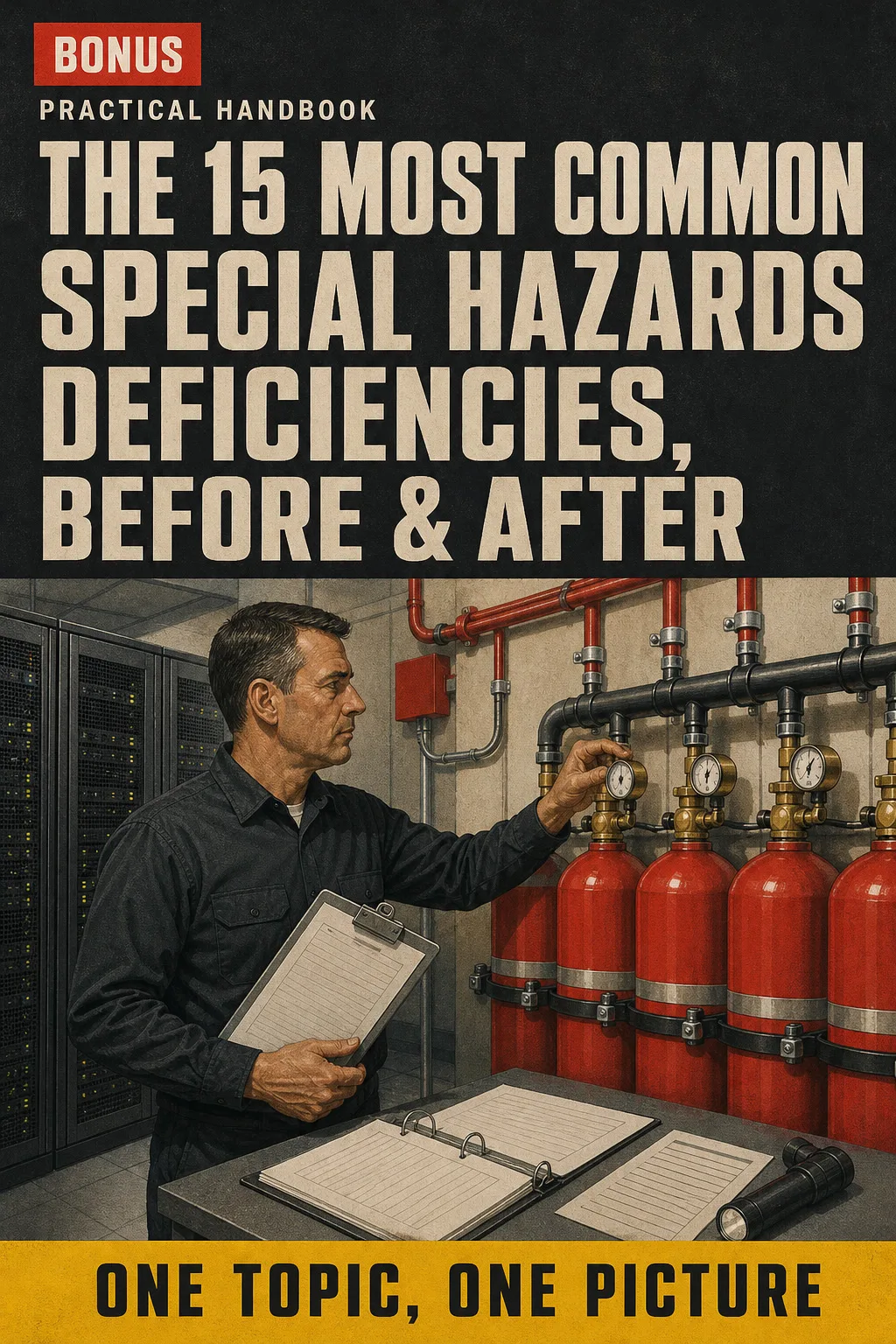
The 15 Most Common Special Hazards Deficiencies, Before & After
BONUS 2

The 15 Most Common Special Hazards Deficiencies, Before & After

See the deficiencies techs find most often in the field, each one drawn wrong and then right, so you can spot them on your next inspection.

30-Day Guarantee

30-day guarantee: if a file doesn't open, if the content isn't what the product page describes, if you were charged twice or the email never arrived, write to us and we'll refund you in full. You pay once. No subscriptions.

Frequently Asked Questions

Is it for me if I've worked in sprinklers or fire alarm for years?

Yes. It assumes you know the trade and starts where suppression is different: agents, releasing panels, room integrity and CO2 safety. If you're preparing for NICET Special Hazards Systems Level I or II, the last part explains how that exam is organized and the bonus book gives you exam-style questions. Every system follows the same order, so your years in the field help.

Where does the content come from?

From the current editions of NFPA 2001, 12, 12A, 17, 17A, 11, 72 and 96, explained in our own words and drawings. The values are checked against the current editions.

Is it official material?

No. It's an independent study book, not published or endorsed by NFPA, NICET, UL or any AHJ. It doesn't give you a certificate or continuing education credits: it's for studying and reviewing.

Does it replace manufacturer training or a course?

No. It's for studying and reviewing. Manufacturer training, the system manual and your AHJ always come first.

Are the practice questions the ones on the exam?

No. They're exam-style questions written for this book, each with a one-line explanation. They aren't official exam questions.

When and how does it arrive?

The book and the 2 bonus books arrive as a PDF by email, at the address you enter at checkout.

Do I have to pay every month?

No. It's a one-time payment.

Can I have it on paper?

Yes. It's a PDF you can print at home or at a print shop and keep in the truck.

How does the refund work?

You have 30 days. We refund everything if the file won't open, if the book isn't what you see on this page, if you were charged twice or if the email doesn't arrive: just email us.

US$ 27US$ 63
Get the book · US$ 27

This is a digital PDF book sent to your email: nothing is printed or shipped.

More books on this topic

Fire Alarm Systems Illustrated

A 58-page illustrated guide for the NICET Fire Alarm Systems Level I and II exams. Every device, circuit and…

From US$ 27 US$ 63

Fire Inspector Exam Illustrated

The Fire Inspector I material, one topic per illustrated page: occupancy groups, means of egress, fire protection…

From US$ 27 US$ 63

Fire Sprinkler Systems Illustrated

Fire sprinkler systems explained one topic per page, every part drawn: how a head operates, wet, dry, pre-action and…

From US$ 27 US$ 63

Fire Extinguisher Tech Illustrated

Portable fire extinguisher service, drawn one topic per page: fire classes A, B, C, D and K, extinguisher types, parts…

From US$ 27 US$ 63

Fire Plans Examiner Illustrated

Fire plans examiner prep, drawn one topic per page: occupancy classification, construction types, occupant load with…

From US$ 27 US$ 63