Study in Pictures🌐 English (United States)
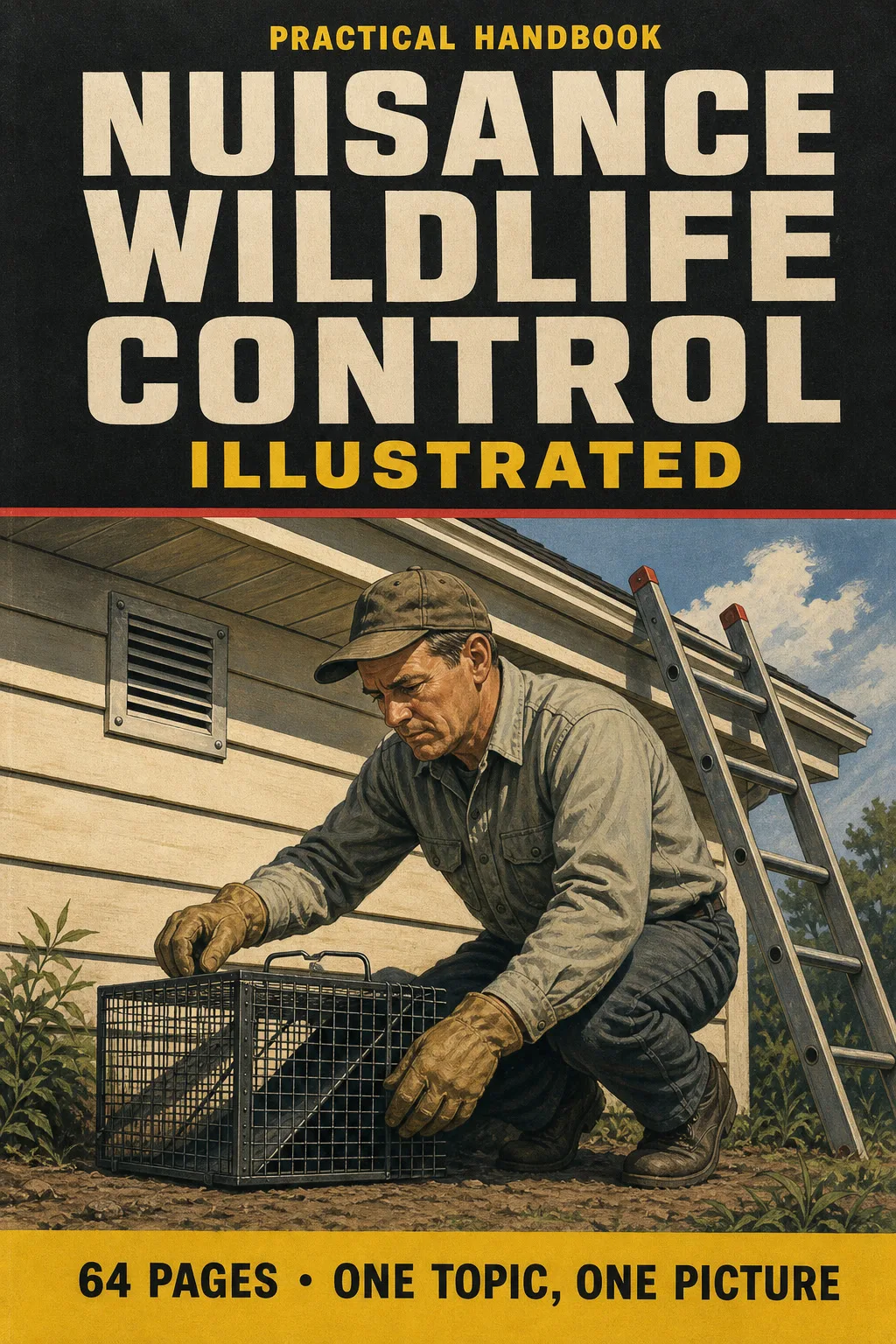
Nuisance Wildlife Control Illustrated

Digital book in PDF · read it on your phone or print it

Nuisance Wildlife Control Illustrated

Raccoons and bats, tracks and damage, cage and body-gripping traps, trap check intervals, the L-shaped footer, bat exclusion, rabies safety and the annual report. Every topic gets its own page: the drawing first, then what you need to remember.

  • 64 illustrated pages
  • English
  • 30-day guarantee
US$ 27US$ 63
Get the book · US$ 27

Price shown for: United States. In other countries, the checkout shows the price that applies there.

About this book

What it is

Raccoons and bats, tracks and damage, cage and body-gripping traps, trap check intervals, the L-shaped footer, bat exclusion, rabies safety and the annual report. Every topic gets its own page: the drawing first, then what you need to remember.

Who This Book Is For
  • You're studying for the NWCO license
  • Your exam date is close
  • You already take wildlife calls
What it covers
  1. The License and the Law
  2. The Species You'll Meet Most
  3. Reading the Signs
  4. Traps and Sets
  5. Exclusion and Bats
  6. Handling, Release and Safety
  7. Records and the Client
  8. Review and Exam Prep
Language
English (United States)
Pages
64
Format
Digital book in PDF · read it on your phone or print it
Price
US$ 27 (United States)
Delivery
This is a digital PDF book sent to your email: nothing is printed or shipped.
30-Day Guarantee
30-day guarantee: if a file doesn't open, if the content isn't what the product page describes, if you were charged twice or the email never arrived, write to us and we'll refund you in full.

Look Inside the Book

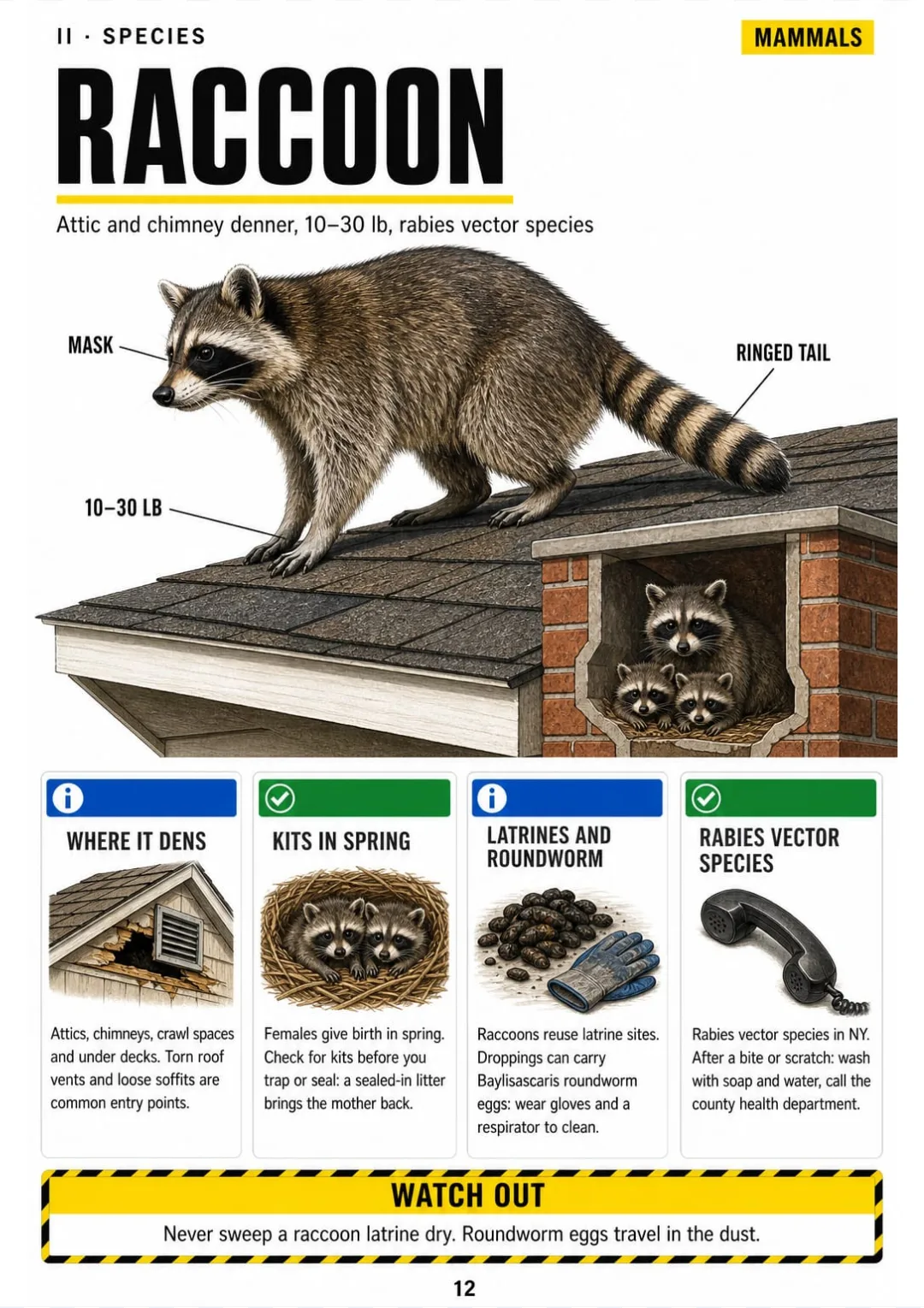
Raccoon: 10–30 lb, kits in spring, latrines with Baylisascaris risk, rabies vector species in NY.
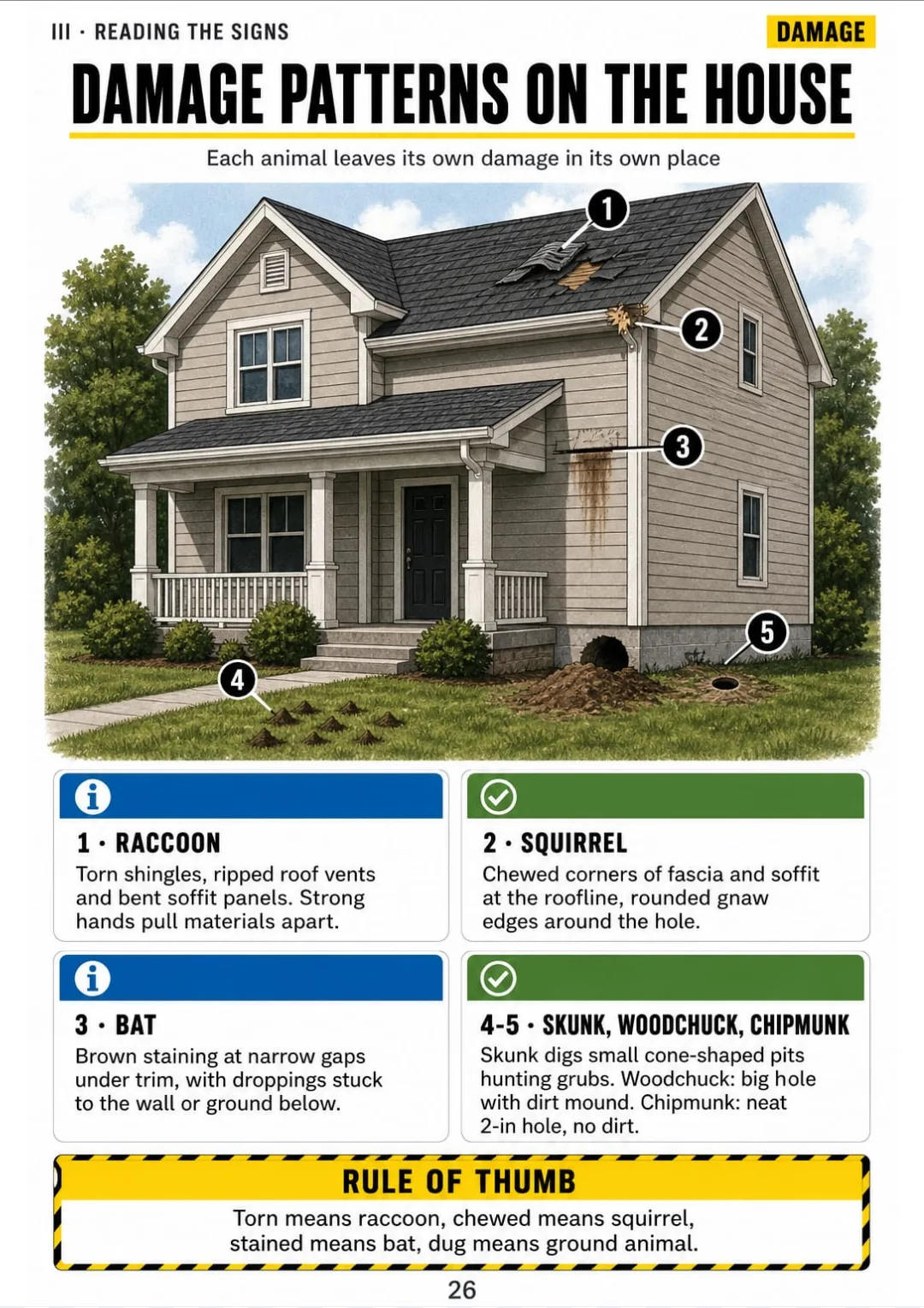
One house, five damage marks, five different animals
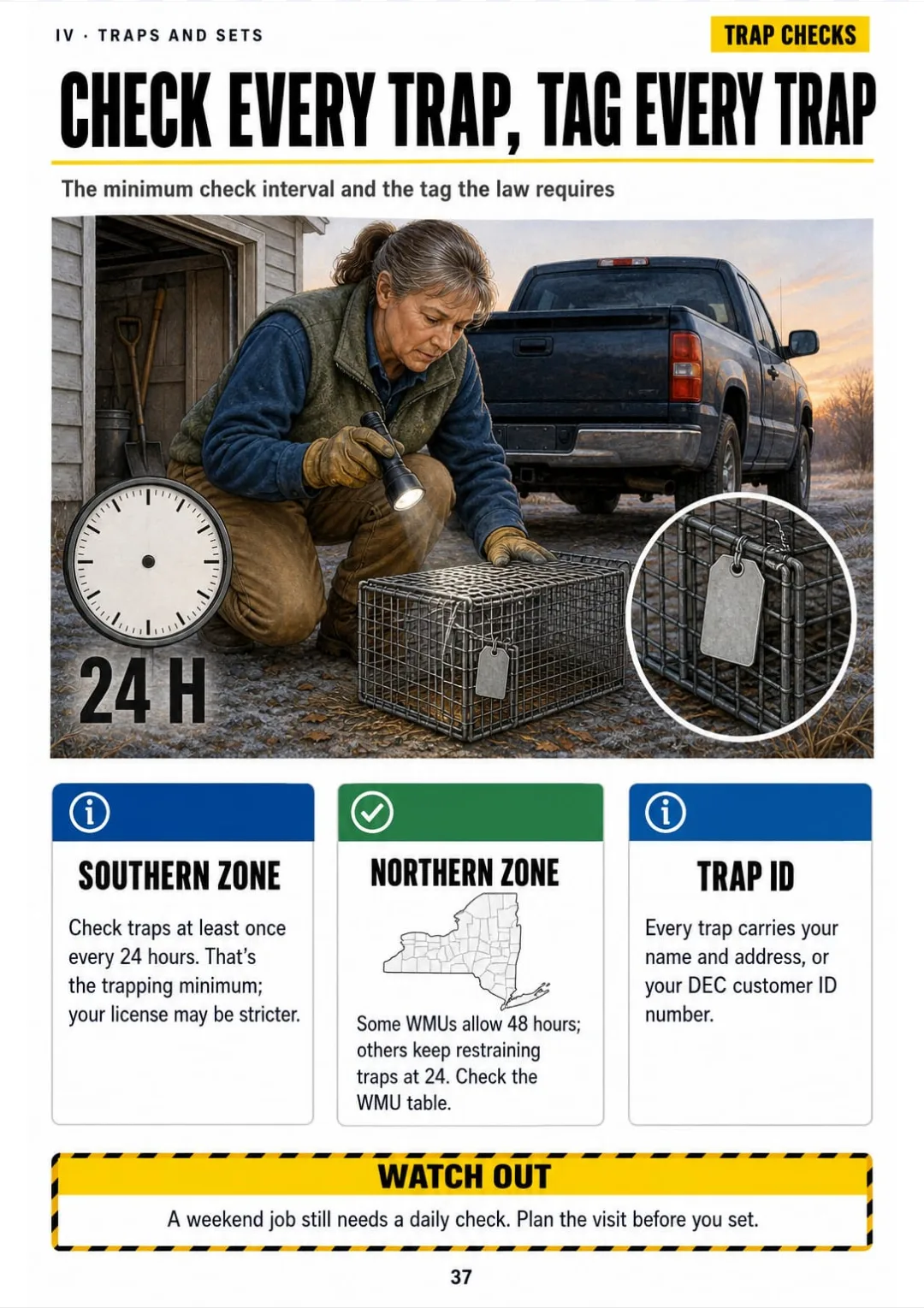
Southern Zone: check at least every 24 h · name and address or DEC ID on each trap
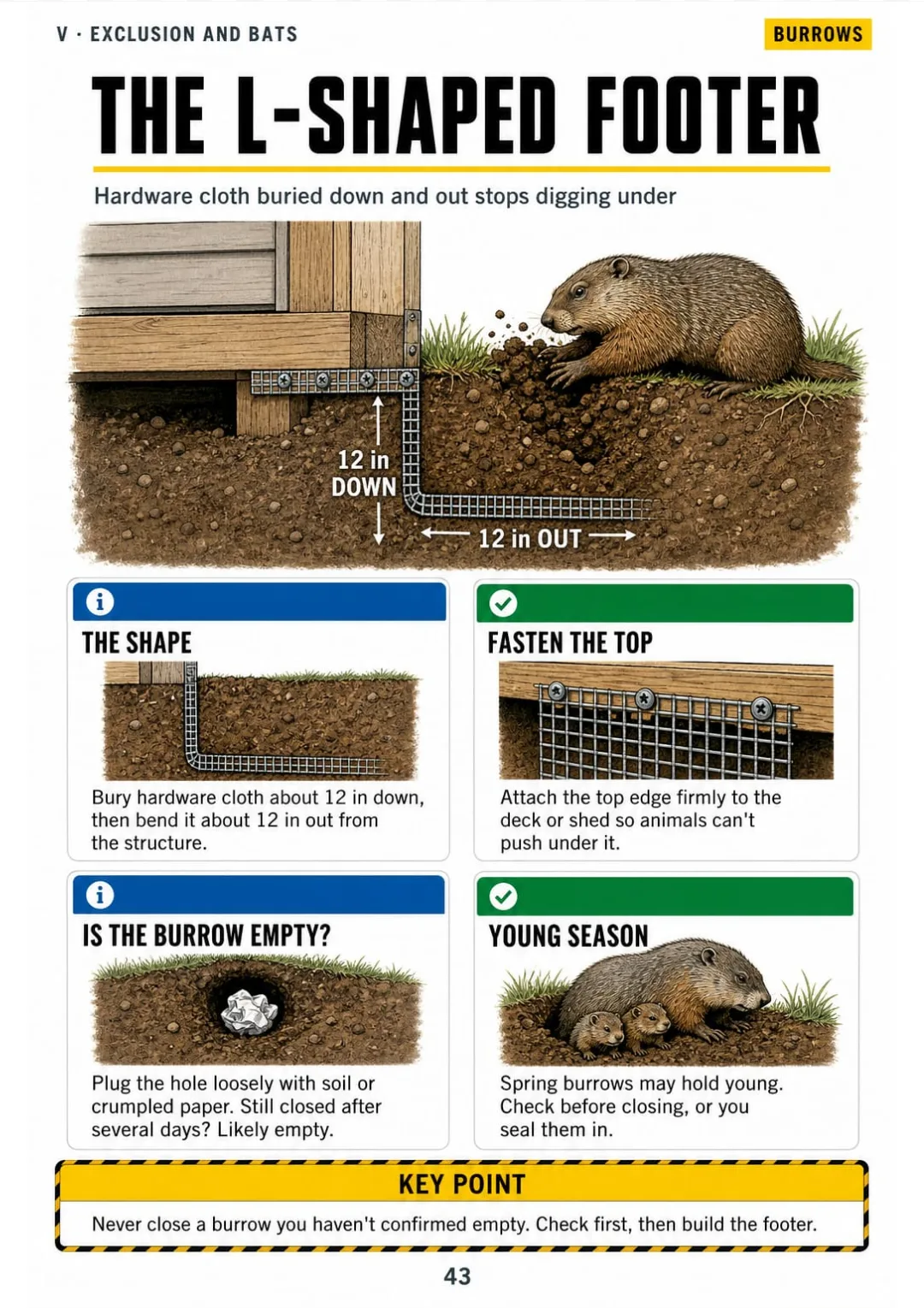
L-shaped footer: hardware cloth about 12 in down and 12 in out.
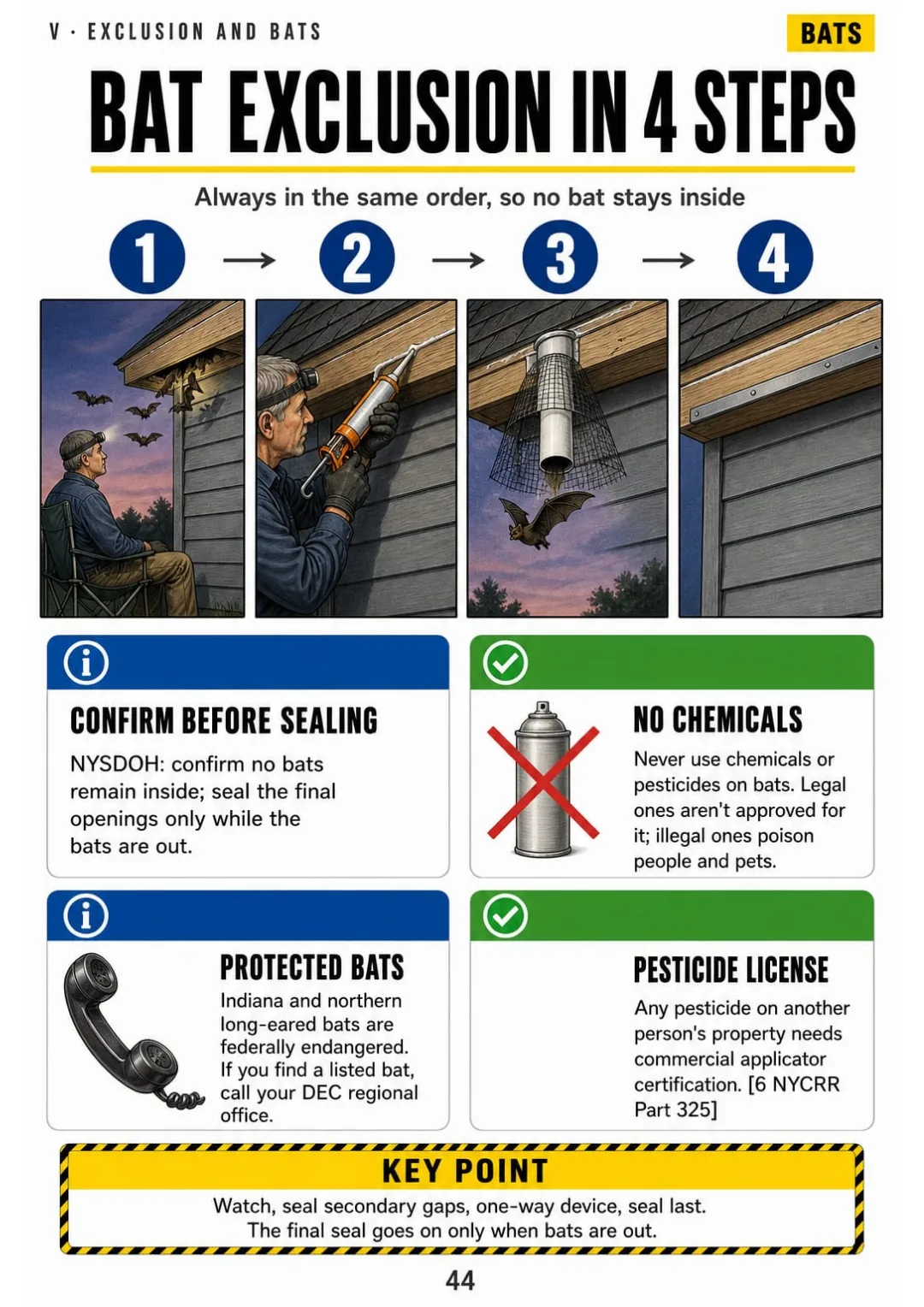
Watch at dusk, seal secondary gaps, one-way device, then seal the exits.
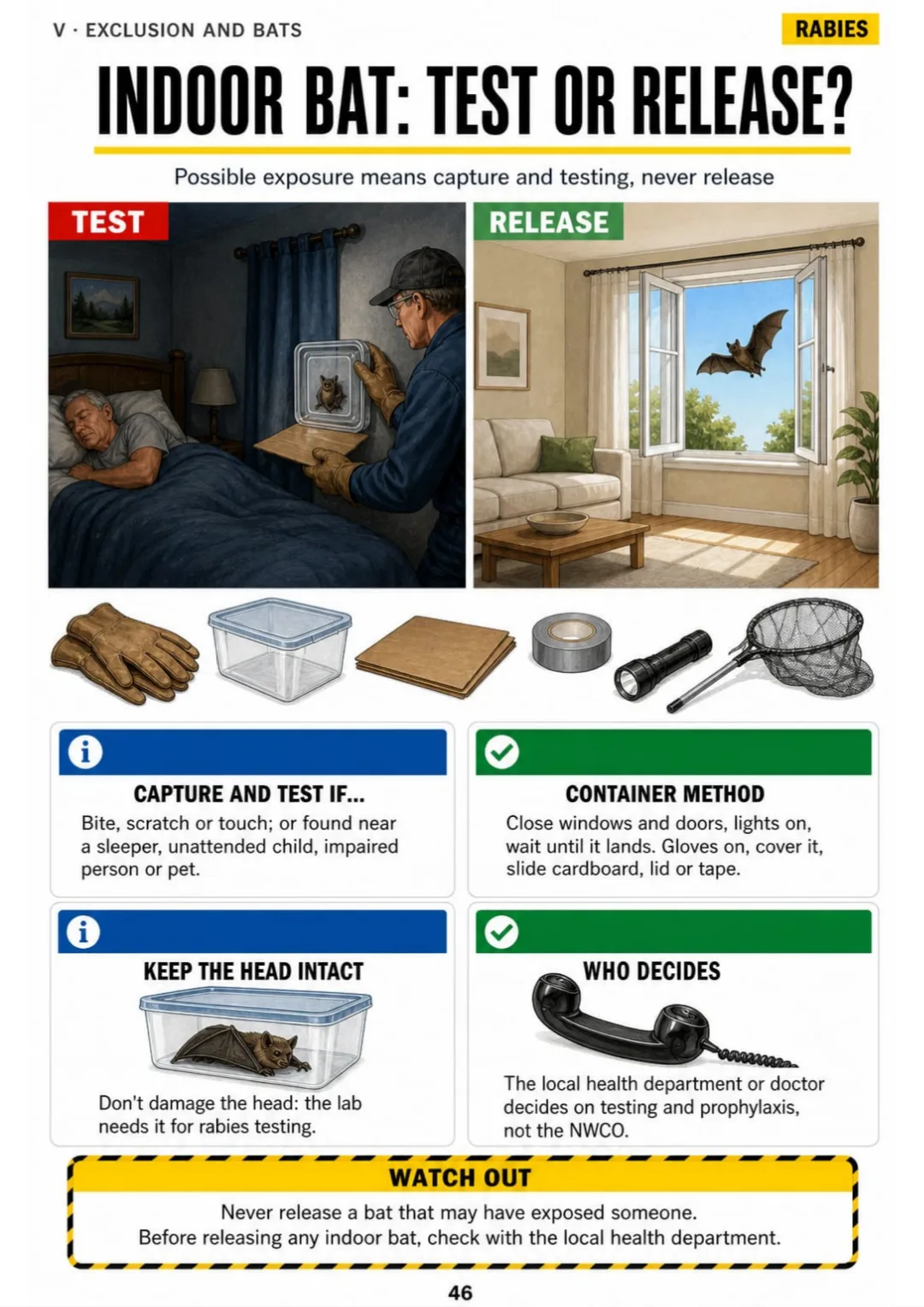
Possible exposure: capture the bat, keep the head intact, call the local health department.
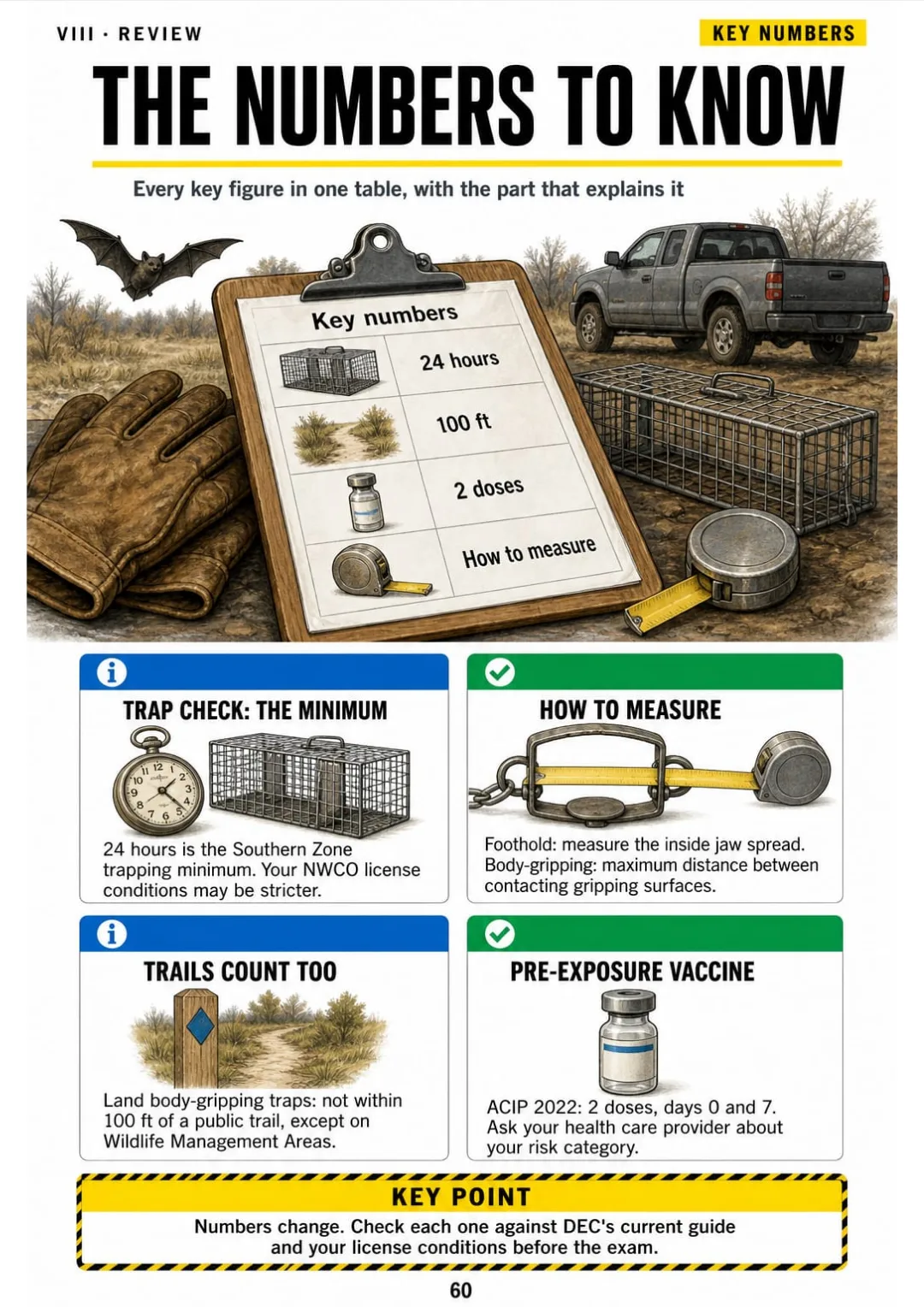
$50 a year · expires Sept 30 · 100 ft · 24 h · 5¾ in · 7½ in · 5 days
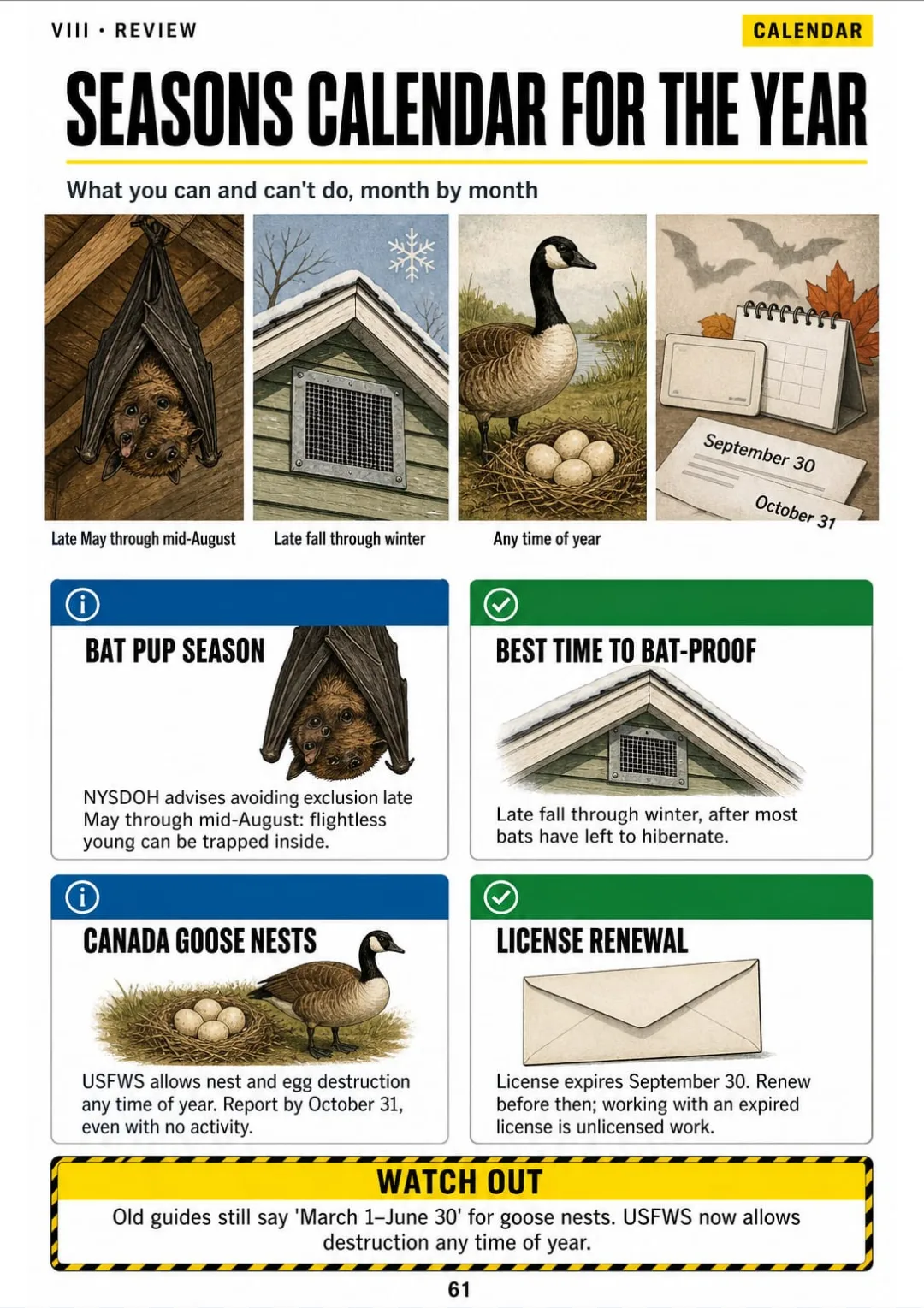
Avoid bat exclusion late May–mid-August · bat-proof late fall–winter · goose report by Oct 31

Take a Look at the 8 Parts and 60 Topics

The License and the Law

pp. 5-11
  1. What an NWCO License Lets You Do
  2. Getting Licensed: Exam, Application, Renewal
  3. Who Owns the Animal: Wildlife Belongs to the State
  4. Game, Furbearer, Unprotected: The Three Boxes
  5. Federal Layer: Migratory Birds and Endangered Bats
  6. Local Rules on Top of State Rules
  7. The Landowner's Permission, in Writing

The Species You'll Meet Most

pp. 12-23
  1. Raccoon
  2. Striped Skunk
  3. Virginia Opossum
  4. Woodchuck (Groundhog)
  5. Eastern Gray Squirrel
  6. Red Squirrel and Flying Squirrel
  7. Eastern Chipmunk
  8. Bats: Big Brown and Little Brown
  9. Red Fox, Gray Fox and Coyote
  10. Beaver and Muskrat
  11. Nuisance Birds: Pigeons, Starlings, Sparrows, Geese
  12. Snakes and Other Occasional Calls

Reading the Signs

pp. 24-29
  1. Tracks Side by Side: Front and Hind Feet
  2. Droppings and Latrines
  3. Damage Patterns on the House
  4. Sounds and Timing in the Attic
  5. Rub Marks, Hair and Entry Holes
  6. The Inspection Walk: Ground, Walls, Roof, Attic

Traps and Sets

pp. 30-38
  1. Choosing the Method: Exclude, Trap or Both
  2. Cage Traps: Sizes for Each Species
  3. Placing a Live Trap: Where and How
  4. Baits and Lures by Species
  5. Repeating Traps and One-Way Trap Doors on Holes
  6. Body-Gripping Traps: How They Work and Where They're Allowed
  7. Foothold Traps and Cable Devices: The Rules
  8. Trap Check Interval and Trap ID
  9. Non-Target Captures: Cat, Dog, Protected Species

Exclusion and Bats

pp. 39-47
  1. Exclusion Basics: Find Every Opening First
  2. Materials: Hardware Cloth, Flashing, Sealant
  3. One-Way Doors for Squirrels and Raccoons
  4. Chimneys, Vents and Soffits
  5. Burrow Exclusion: L-Shaped Footer
  6. Bat Exclusion Step by Step
  7. When NOT to Exclude Bats: The Pup Season
  8. A Bat in the Living Space
  9. Bird Exclusion: Netting, Spikes, Vents

Handling, Release and Safety

pp. 48-54
  1. Rabies Vector Species in New York
  2. Release: Where You May and May Not Let an Animal Go
  3. Euthanasia: Acceptable Methods
  4. Carcass Disposal
  5. PPE and Zoonoses
  6. Handling a Trapped Animal Safely
  7. Orphaned Young and Wildlife Rehabilitators

Records and the Client

pp. 55-59
  1. The Job Log: What to Write Each Time
  2. The Annual Report to NYSDEC
  3. The Client Contract
  4. Explaining the Job to the Homeowner
  5. Vehicle Kit: What to Carry

Review and Exam Prep

pp. 60-64
  1. The Numbers to Know on One Page
  2. Seasons Calendar for the Whole Year
  3. Who to Call: DEC, Health Department, USFWS, Animal Control
  4. The Most Common Mistakes, Before and After
  5. Final Checklist Before the Exam

Who This Book Is For

You're studying for the NWCO license

Every rule and every species has its own page, so you study at night or on the weekend and it's still there the next day.

Your exam date is close

The numbers to know, the seasons calendar and the practice questions let you review the whole book in one sitting and find your weak spots.

You already take wildlife calls

Print it and keep it in the truck: tracks, trap sets, bat seasons and release rules, ready to check before you start the job.

Plus: 2 Free Books

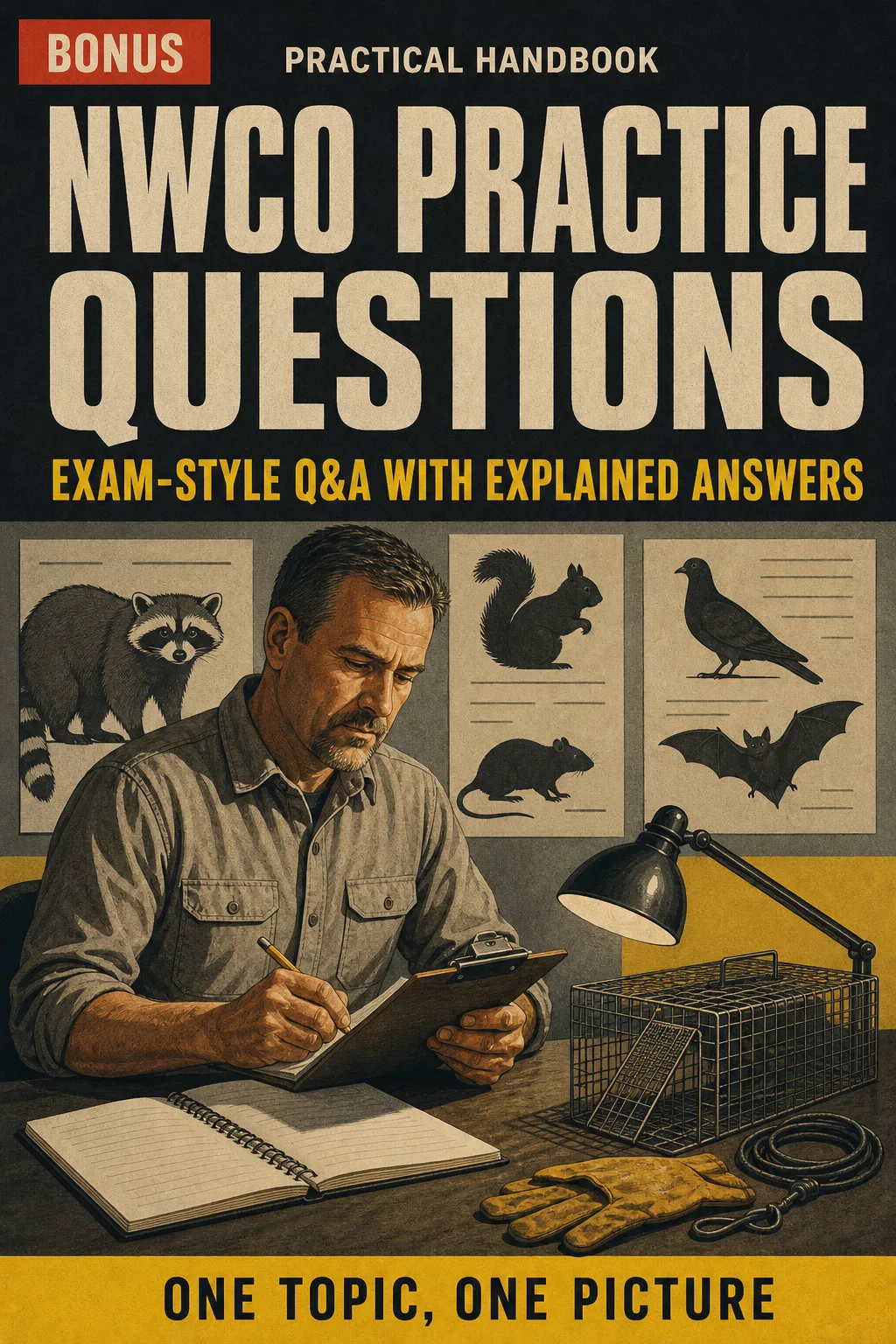
NWCO Practice Questions: Exam-Style Q&A with Explained Answers
BONUS 1

NWCO Practice Questions: Exam-Style Q&A with Explained Answers

Test yourself topic by topic and see right away why each answer is right, so you find your weak spots before exam day.
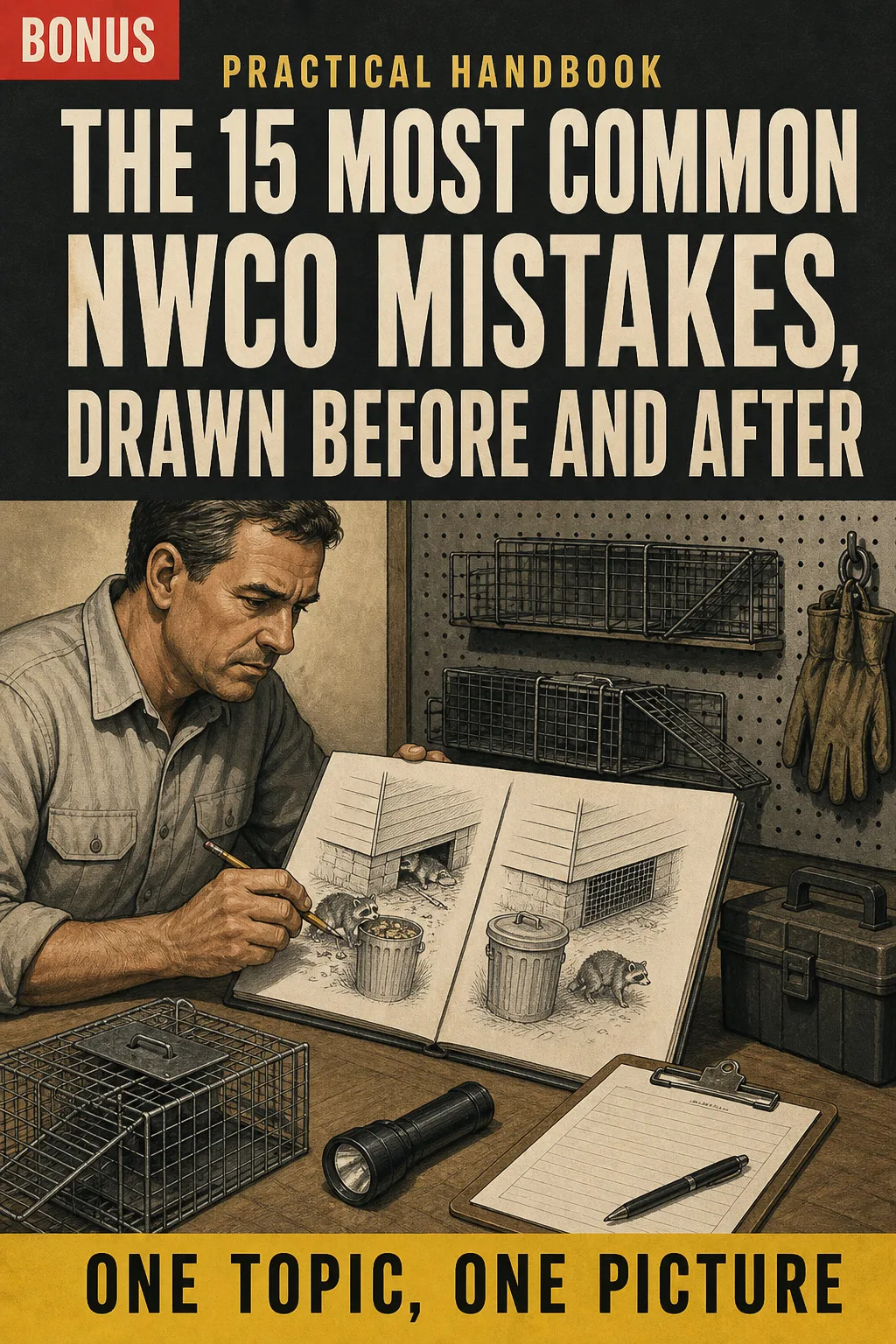
The 15 Most Common NWCO Mistakes, Drawn Before and After
BONUS 2

The 15 Most Common NWCO Mistakes, Drawn Before and After

Review the mistakes that cost the most on the job and on the exam, from wrong trap placement to sealing a bat in, one drawing each.

30-Day Guarantee

30-day guarantee: if a file doesn't open, if the content isn't what the product page describes, if you were charged twice or the email never arrived, write to us and we'll refund you in full. You pay once. No subscriptions.

Frequently Asked Questions

Does it work in my state? And what if I already do pest control or home repair?

It's built on New York rules: 6 NYCRR Part 184 and NYSDEC licensing. In another state, the species, signs and exclusion pages still apply, but trap sizes, seasons and license rules change, so check your state's regs. If you already work on houses, it puts the NWCO rules in order, one topic per page.

Where does the content come from?

From 6 NYCRR Part 184, the New York Environmental Conservation Law, NYSDEC's NWCO licensing and training materials, NYS Department of Health rabies guidance and the AVMA euthanasia guidelines. Every rule is marked so you can check it against the version in force.

Is this official NYSDEC material?

No. It's independent study material, checked against the official sources. It is not issued or endorsed by NYSDEC or any agency, it doesn't give you a certificate and it doesn't count toward the license: you still take the NYSDEC exam.

Does it replace the official training or study materials?

No. It helps you study and review them. It also doesn't replace medical advice: after a bite, scratch or bat exposure, call a doctor and your local health department.

Are the practice questions the ones on the exam?

No. They're written for this book, in exam style, to test yourself topic by topic. They are not official exam questions.

When and how do I get it?

As a PDF by email, sent to the address you enter at checkout. The 2 bonus books come the same way.

Do I have to pay every month?

No. It's a one-time payment.

Can I print it?

Yes. It's a PDF, and it prints well at home or at a print shop, so you can keep a copy in the truck.

How does the refund work?

You have 30 days. We refund everything if the file won't open, if the book isn't what you see on this page, if you were charged twice or if the email doesn't arrive: just email us.

US$ 27US$ 63
Get the book · US$ 27

This is a digital PDF book sent to your email: nothing is printed or shipped.

More books on this topic

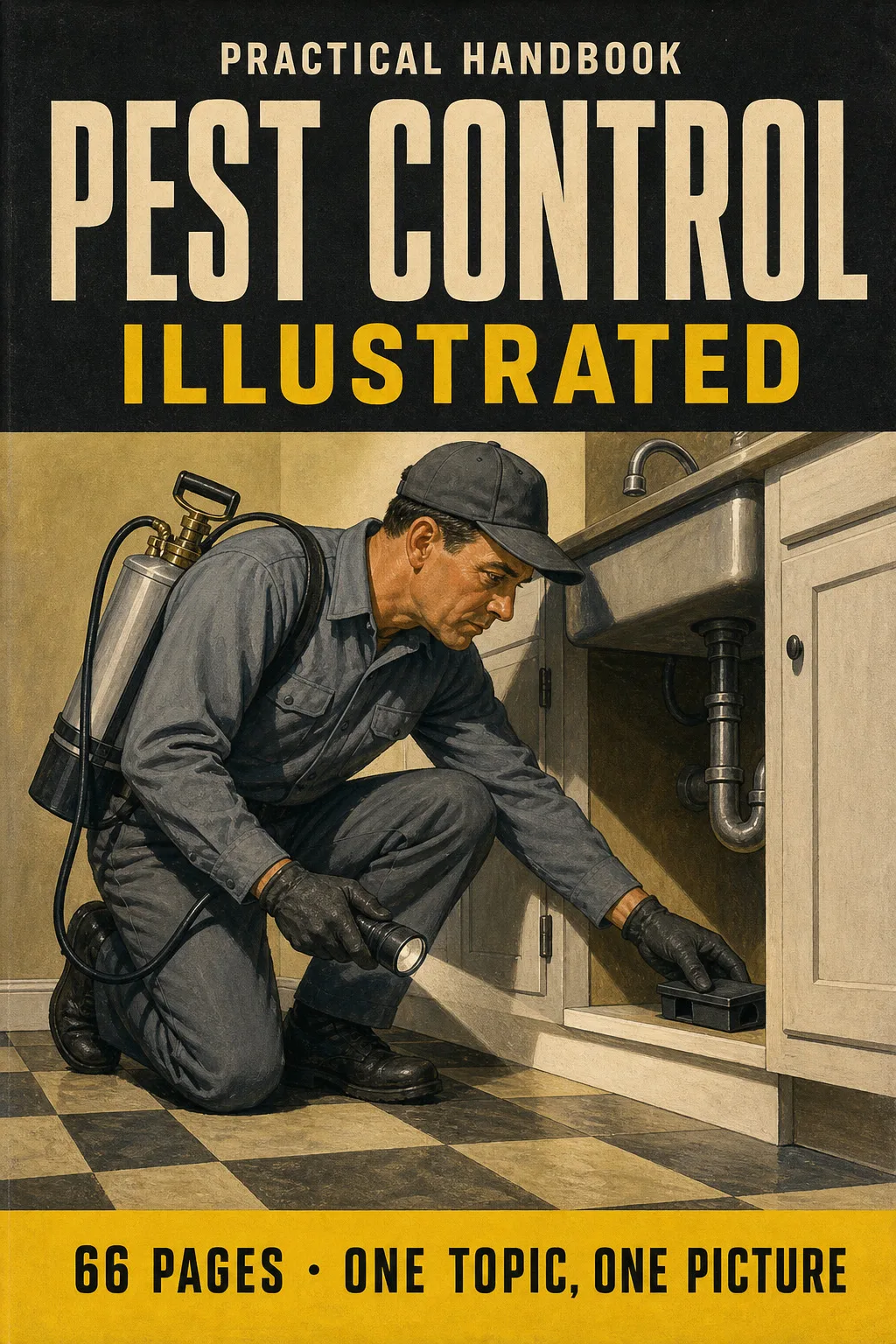
Pest Control Illustrated

Structural pest control, one topic per page: tell German, American, Oriental and brown-banded roaches apart at a…

From US$ 27 US$ 63

Termite Inspection Illustrated

Termite and WDO inspection explained one topic per page, every page a drawing: tell subterranean, drywood and dampwood…

From US$ 27 US$ 63

Aquatic Pest Control Illustrated

Aquatic weed and algae control, drawn one topic per page: identify the plant group and the main invasive weeds…

From US$ 27 US$ 63

California QAL & QAC Illustrated

Study for the California QAL and QAC exams one topic per page: pesticide laws, restricted materials and permits, label…

From US$ 27 US$ 63