Study in Pictures🌐 English (United States)
Right-of-Way Pest Control Illustrated

Digital book in PDF · read it on your phone or print it

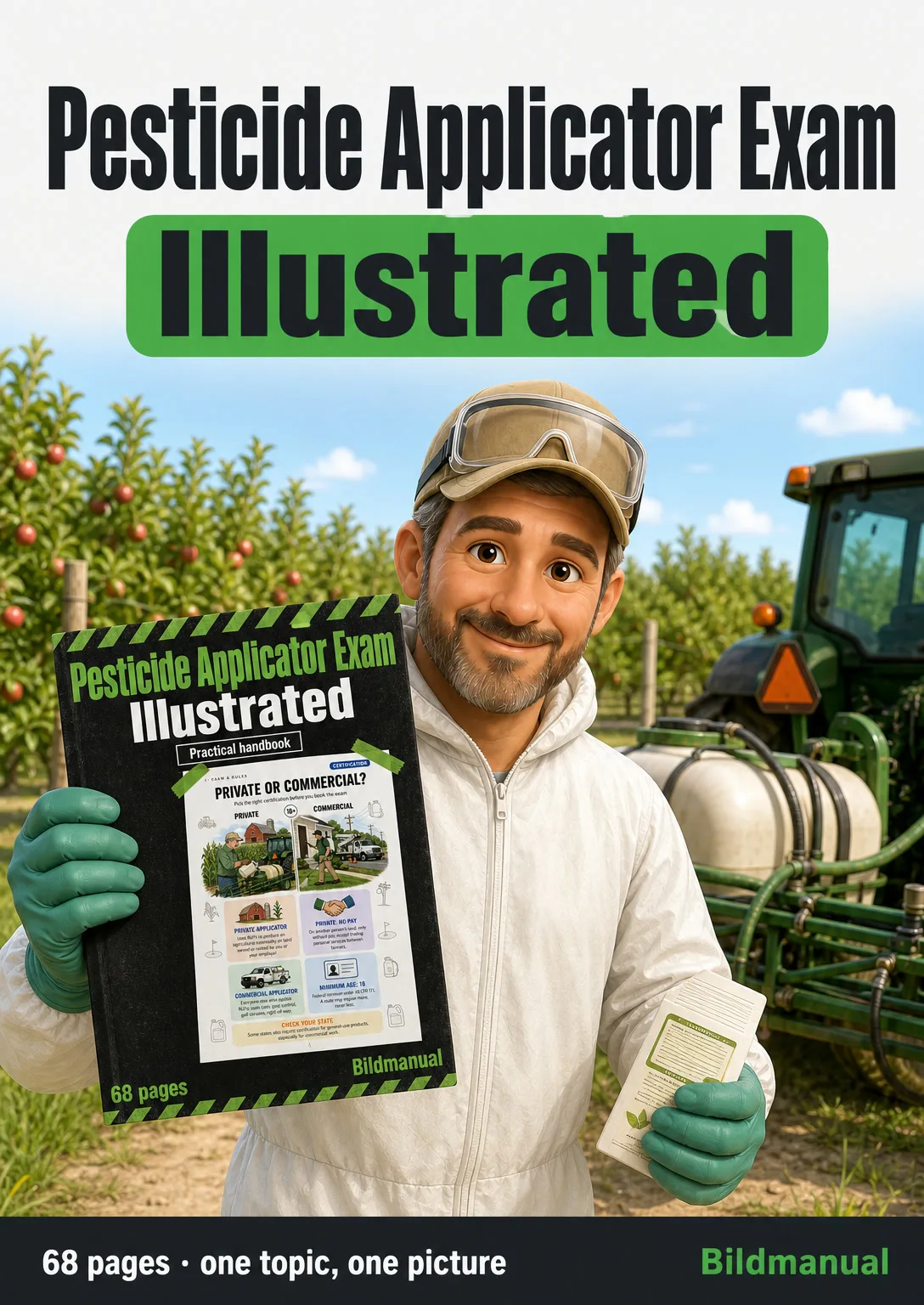
Right-of-Way Pest Control Illustrated

Target weeds and brush, IVM, herbicide group numbers, boom and backpack calibration, basal bark, hack and squirt, drift, the label and PPE. Each topic has its own page: the drawing first, then what you need to remember.

  • 66 illustrated pages
  • English
  • 30-day guarantee
US$ 27US$ 63
Get the book · US$ 27

Price shown for: United States. In other countries, the checkout shows the price that applies there.

About this book

What it is

Target weeds and brush, IVM, herbicide group numbers, boom and backpack calibration, basal bark, hack and squirt, drift, the label and PPE. Each topic has its own page: the drawing first, then what you need to remember.

Who This Book Is For
  • You're studying for the category
  • Your exam date is set
  • You already work the corridor
What it covers
  1. The Exam and the Law
  2. Know Your Target
  3. Integrated Vegetation Management
  4. Herbicides: How They Work
  5. Application Methods
  6. Calibration and Mixing Math
  7. Drift, Water and Wildlife
  8. Safety, Label and Records
  9. Exam Review
Language
English (United States)
Pages
66
Format
Digital book in PDF · read it on your phone or print it
Price
US$ 27 (United States)
Delivery
This is a digital PDF book sent to your email: nothing is printed or shipped.
30-Day Guarantee
30-day guarantee: if a file doesn't open, if the content isn't what the product page describes, if you were charged twice or the email never arrived, write to us and we'll refund you in full.

Look Inside the Book

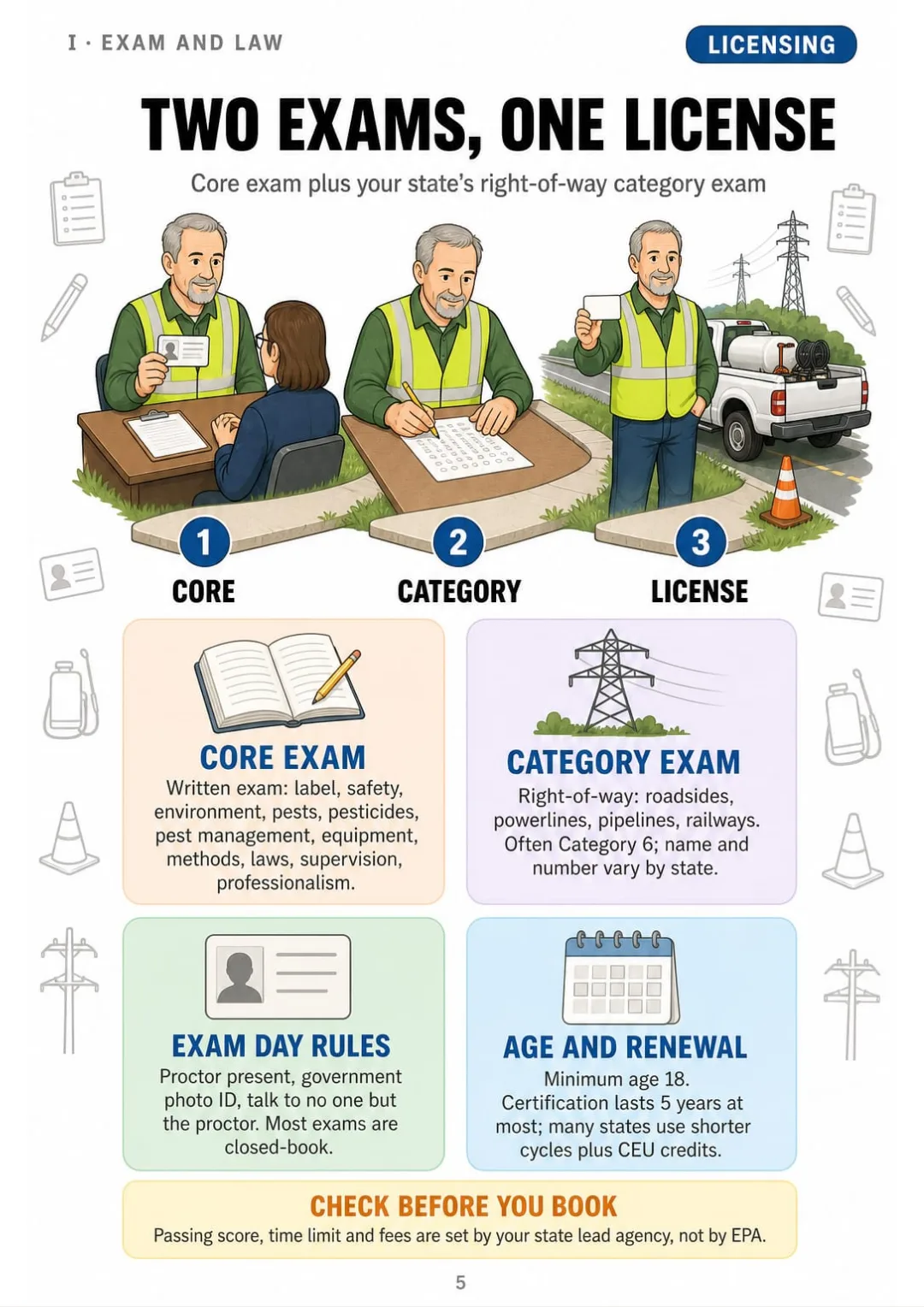
Core (10 competency areas) + right-of-way category exam · minimum age 18 · max 5 years
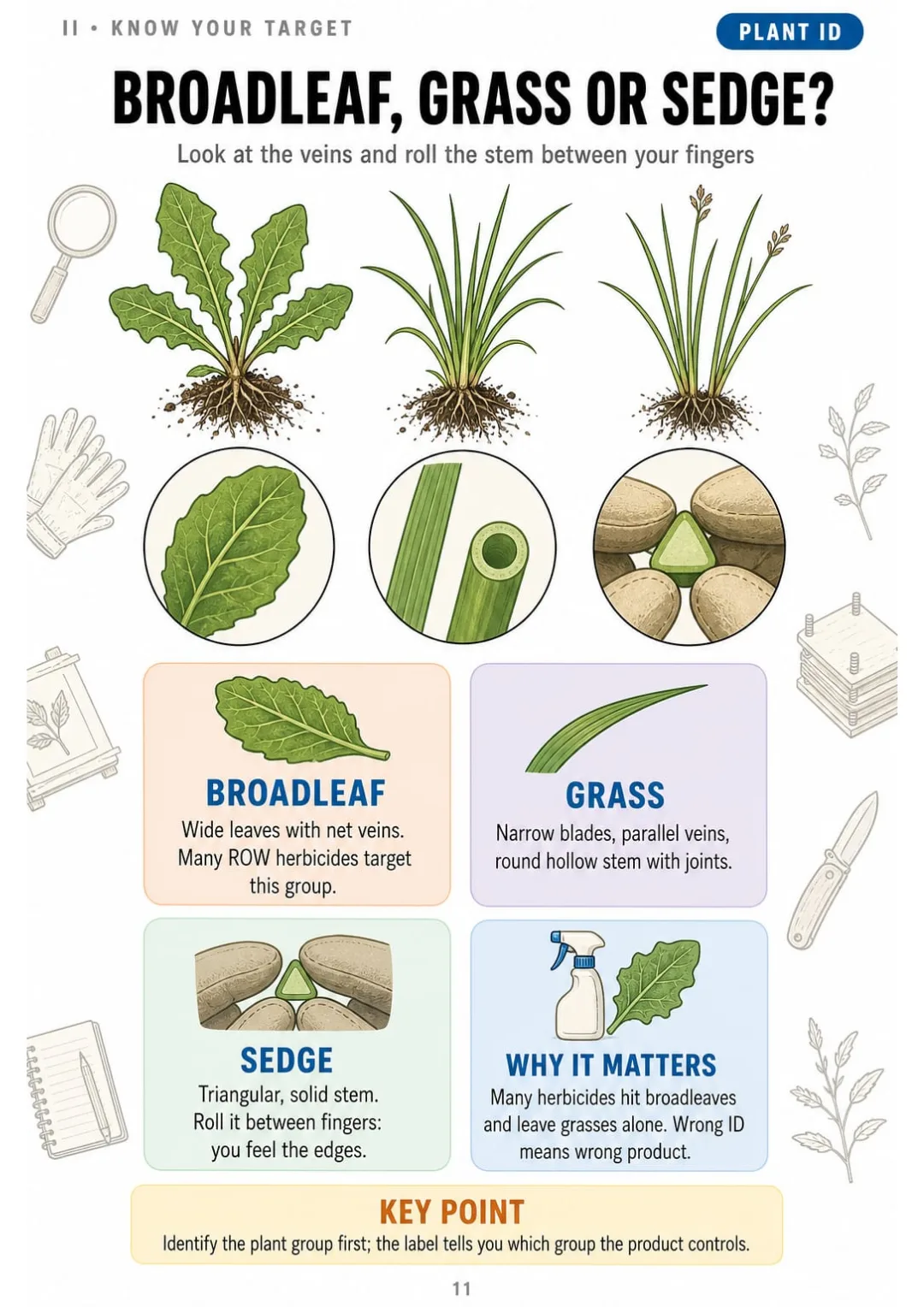
Net veins, parallel veins, triangular stem: ID before you choose the herbicide
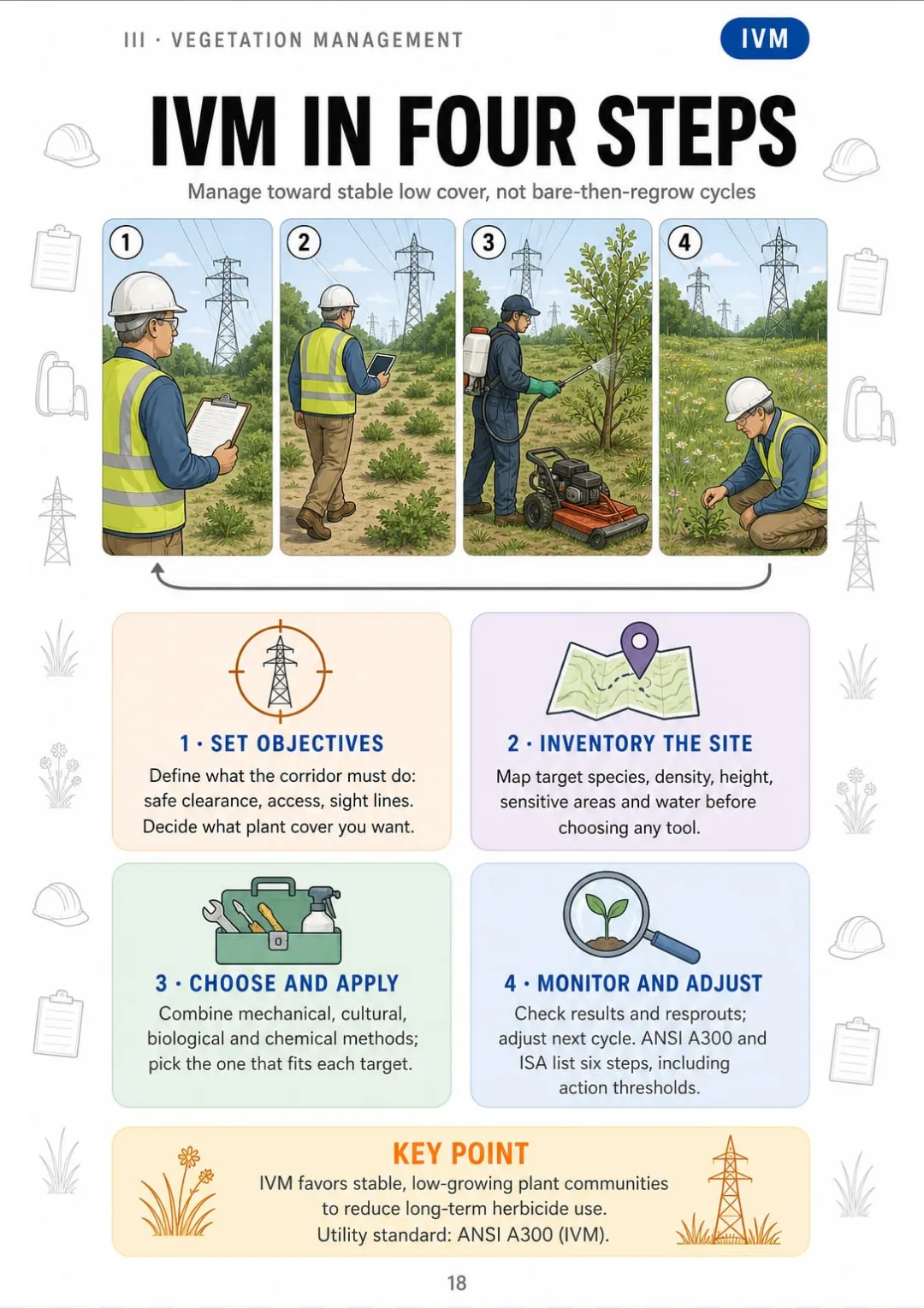
The 4 IVM steps drawn as a loop: objectives, inventory, apply, monitor
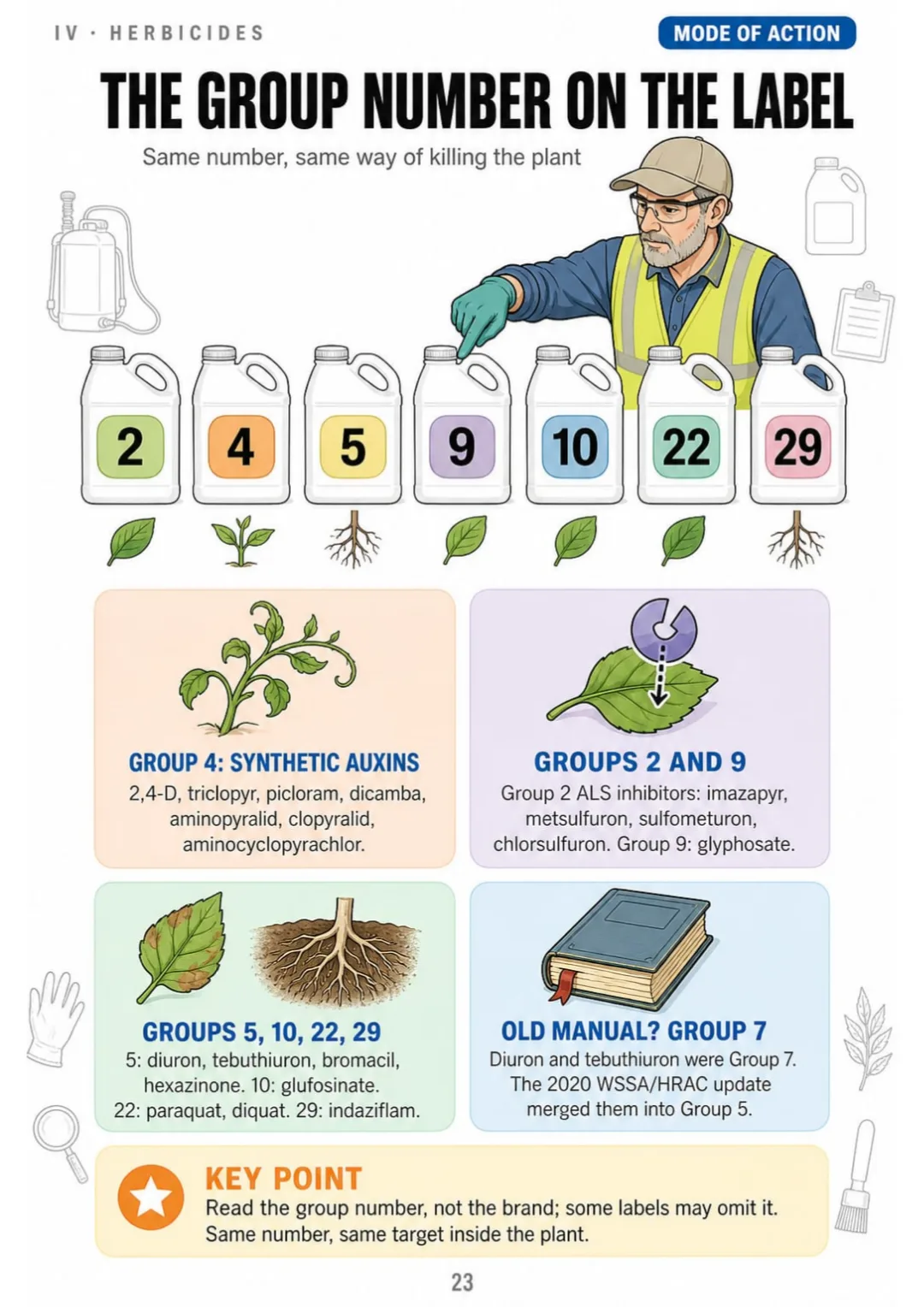
WSSA group numbers: 2, 4, 5, 9, 10, 22, 29 and the active ingredients in each.
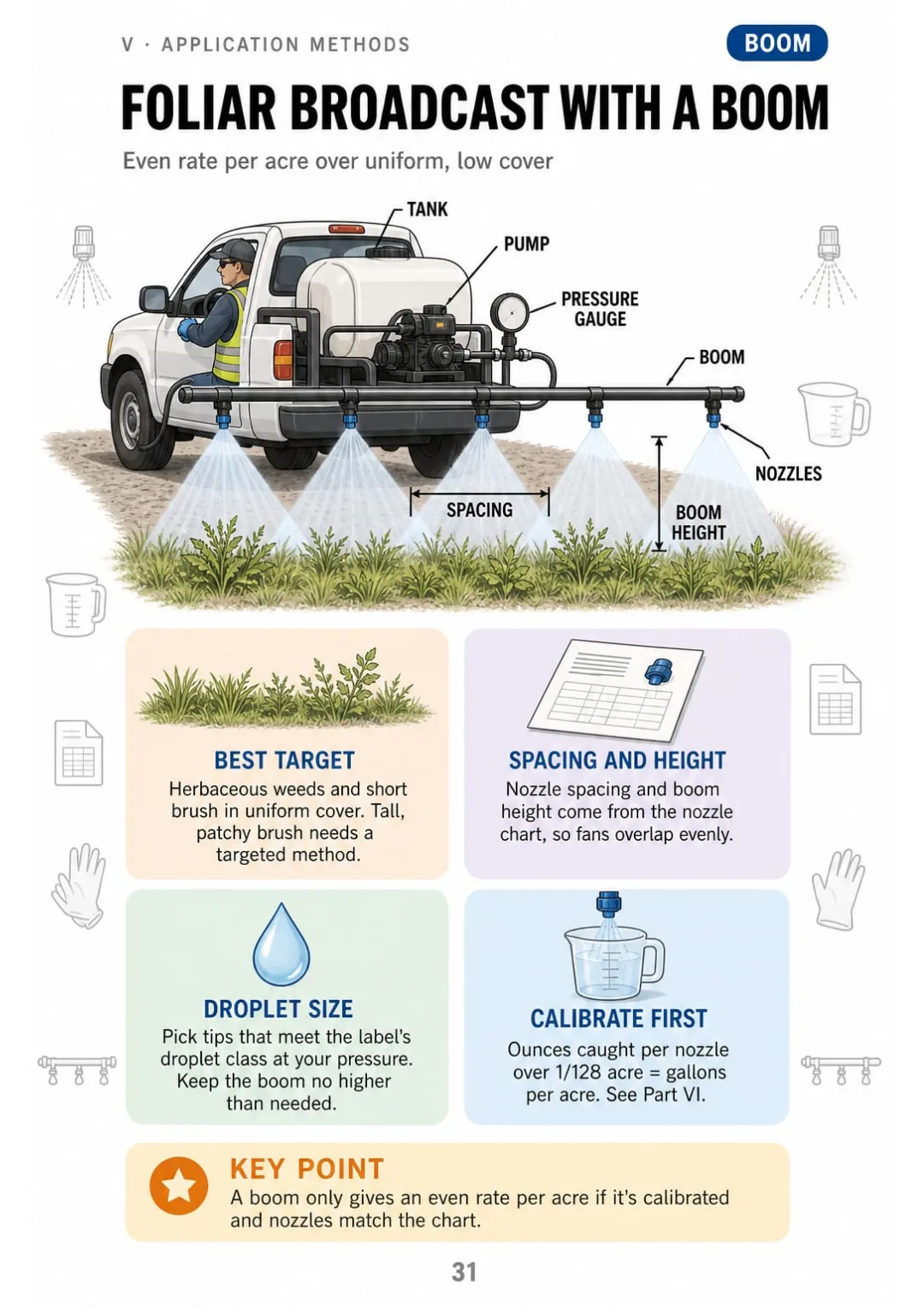
Boom broadcast: nozzle spacing and height from the chart, droplets 'medium or coarser' when the label says so.
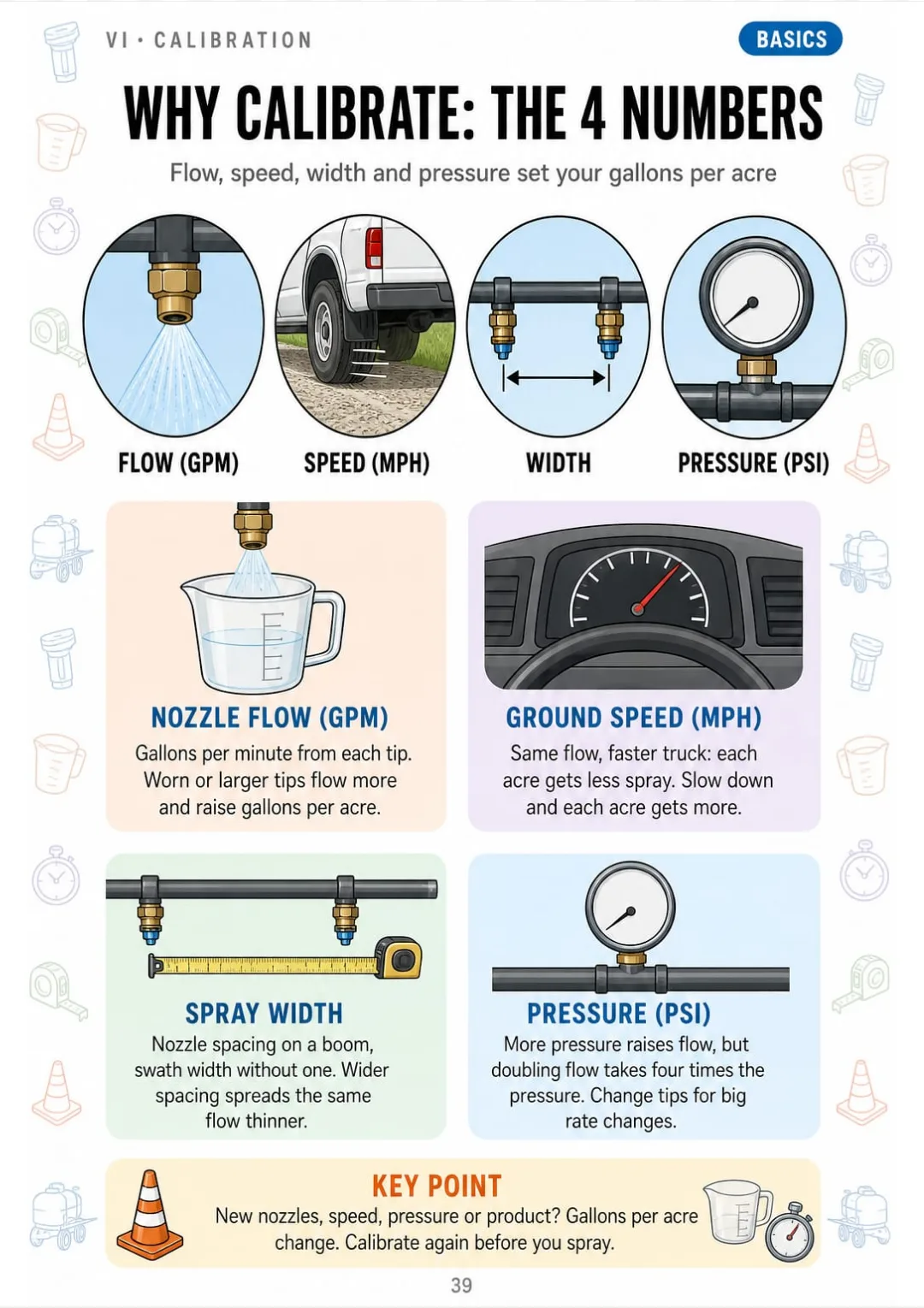
Nozzle flow (gpm) · ground speed (mph) · spray width · pressure (psi): change one, recalibrate
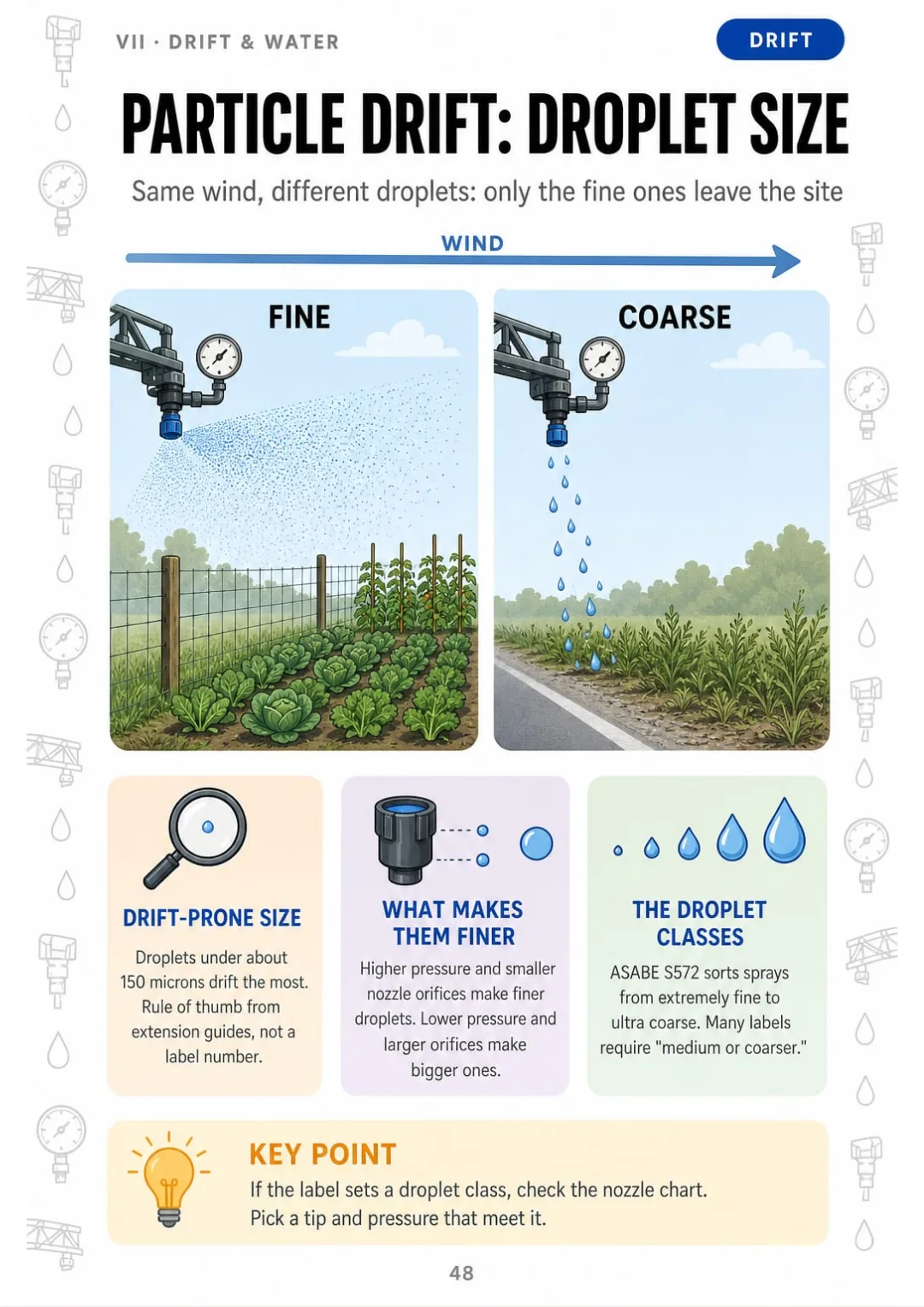
Under ~150 microns drifts most; labels often require medium or coarser
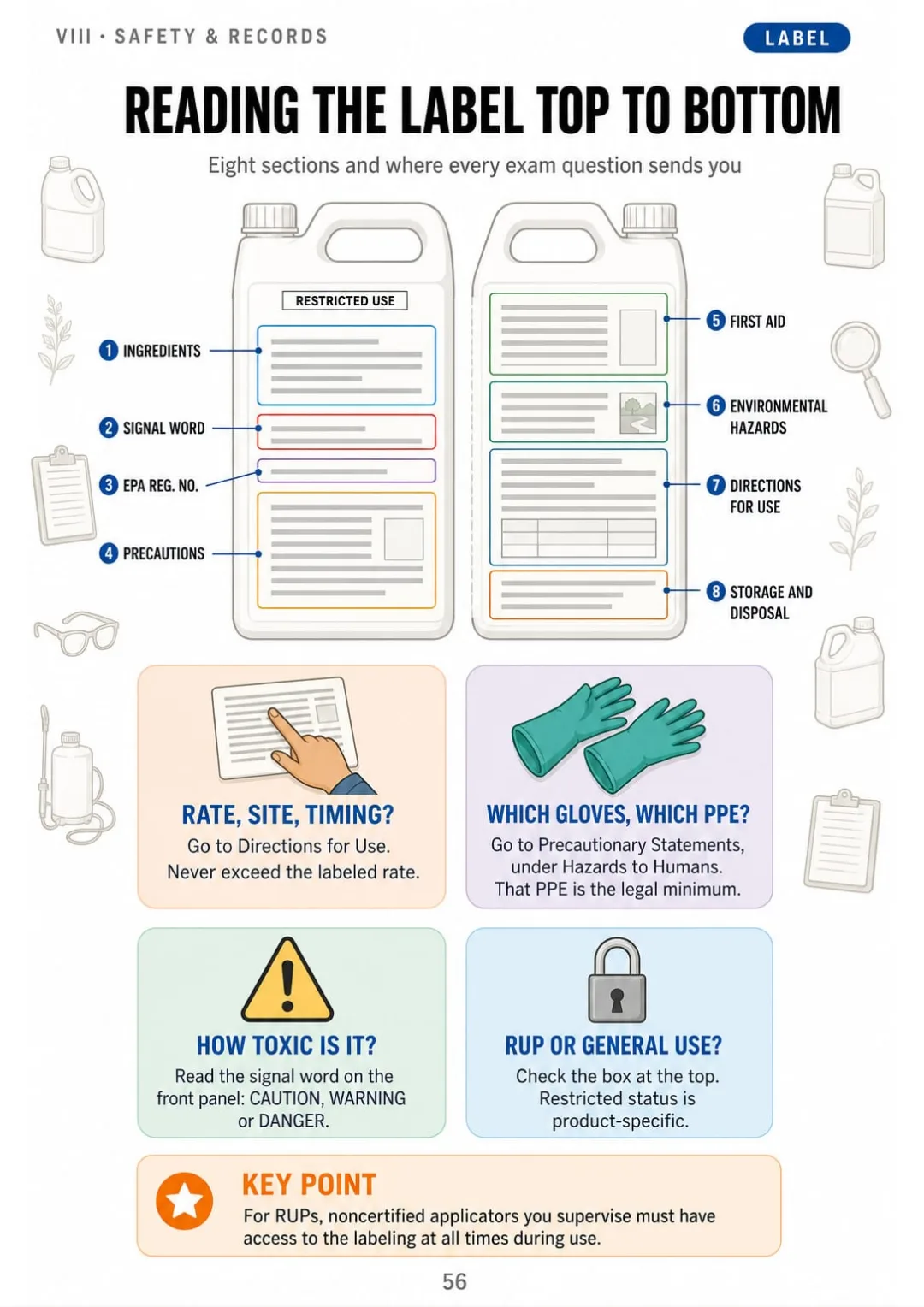
8 label sections, top to bottom, and which one answers each exam question

Take a Look at the 9 Parts and 62 Topics

The Exam and the Law

pp. 5-10
  1. Core plus category: two exams, one license
  2. FIFRA and the EPA in one drawing
  3. The label is the law
  4. What the label lets you do differently
  5. Restricted Use Pesticides
  6. Why right-of-way sites are different

Know Your Target

pp. 11-17
  1. Broadleaf, grass, sedge: tell them apart
  2. Annual, biennial, perennial
  3. Woody brush: why cutting makes it worse
  4. Tree-of-heaven: the classic exam trap
  5. Invasive vines and shrubs on the corridor
  6. Perennial invaders: knotweed, phragmites, Johnsongrass
  7. Noxious weeds and the law

Integrated Vegetation Management

pp. 18-22
  1. IVM in four steps
  2. Wire zone and border zone
  3. Thresholds: when to act
  4. Mechanical, cultural, biological, chemical
  5. Selective vs non-selective control

Herbicides: How They Work

pp. 23-30
  1. Mode of action and group numbers
  2. Group 4: synthetic auxins
  3. Group 9: glyphosate
  4. Group 2: ALS inhibitors
  5. Soil-active and bareground herbicides
  6. Contact vs systemic
  7. Esters vs amine salts
  8. Resistance: rotate the group, not the brand

Application Methods

pp. 31-38
  1. Foliar broadcast with a boom
  2. Boomless nozzles on the roadside
  3. High-volume and low-volume spot spraying
  4. Basal bark
  5. Hack and squirt
  6. Cut stump treatment
  7. Soil-applied herbicides
  8. Choosing the method

Calibration and Mixing Math

pp. 39-47
  1. Why calibrate: the 4 numbers
  2. Step 1: measure the course
  3. Step 2: time the run
  4. Step 3: catch the nozzle output
  5. Step 4: ounces = gallons per acre
  6. The GPA formula
  7. Backpack calibration
  8. How much product in the tank
  9. Percent solutions and mixing order

Drift, Water and Wildlife

pp. 48-55
  1. Particle drift: droplet size
  2. Wind: too much and too little
  3. Temperature inversions
  4. Vapor drift and volatility
  5. Reducing drift: 6 settings
  6. Groundwater and surface water
  7. Endangered species and Bulletins Live! Two
  8. Pollinators and off-site plants

Safety, Label and Records

pp. 56-61
  1. Reading the label from top to bottom
  2. Signal words and LD50
  3. PPE: the label's minimum
  4. Spills: control, contain, clean up
  5. Storage, transport and triple rinse
  6. Records you must keep

Exam Review

pp. 62-66
  1. The calibration problem, solved again
  2. Most frequent mistakes in the field and on the test
  3. Method by target: one-page table
  4. Numbers to have at hand
  5. Checklist before exam day

Who This Book Is For

You're studying for the category

Every topic of the right-of-way category in its own drawn page, so the manual's paragraphs finally have an order.

Your exam date is set

The calibration math in 4 steps, the numbers to have at hand and a checklist to go over the week before.

You already work the corridor

The why behind what you do in the field: why cutting brush makes it resprout, why fine droplets drift, why the label rules.

Plus: 2 Free Books

Right-of-Way Practice Exam: Questions with Explained Answers
BONUS 1

Right-of-Way Practice Exam: Questions with Explained Answers

Practice with exam-style questions on every chapter. Each answer explains why, so you know your weak spots before test day.
Quick Review Cards: Calibration, Drift & Label
BONUS 2

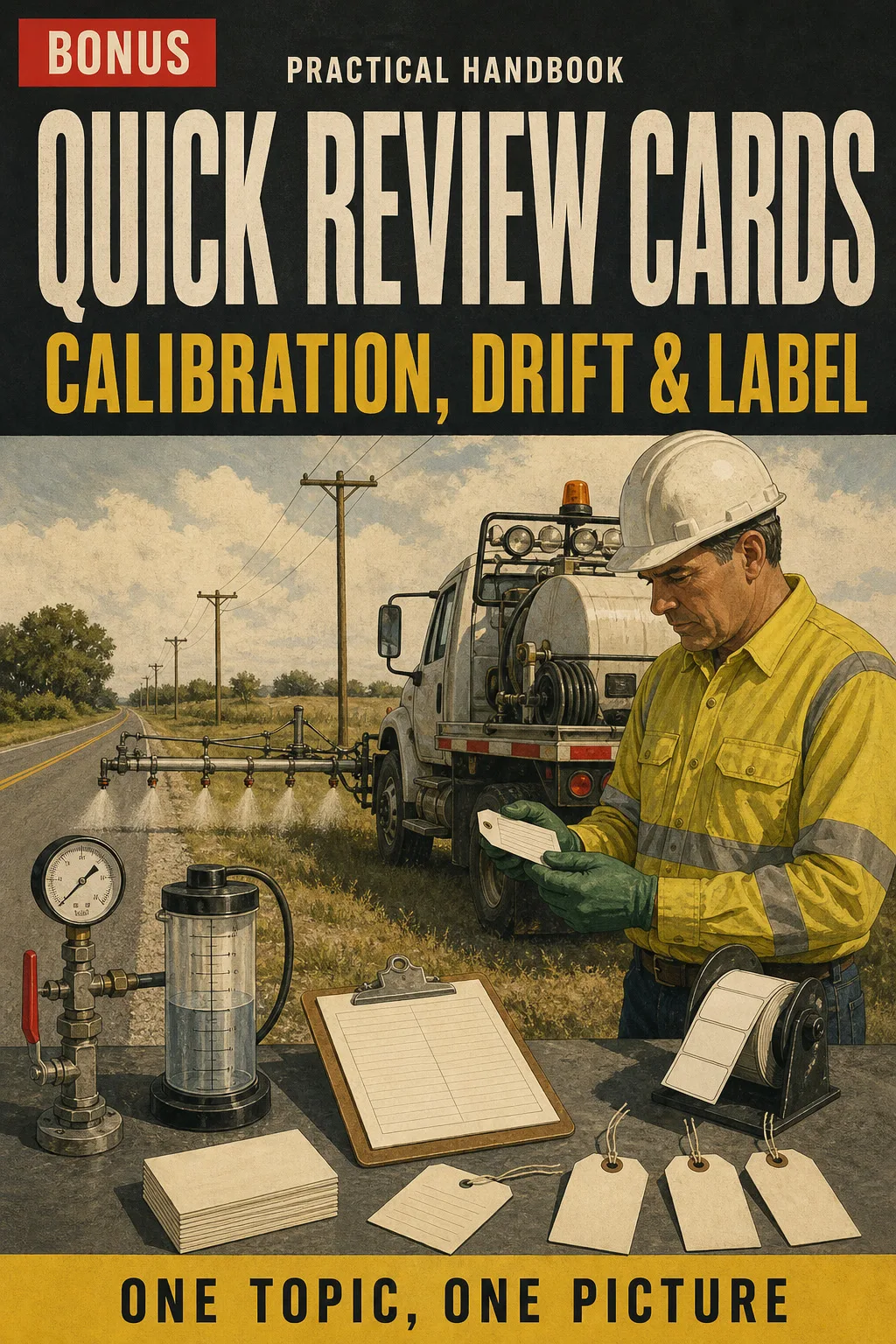
Quick Review Cards: Calibration, Drift & Label

The formulas, drift rules and label sections on printable cards you can go over in the truck the week before the exam.

30-Day Guarantee

30-day guarantee: if a file doesn't open, if the content isn't what the product page describes, if you were charged twice or the email never arrived, write to us and we'll refund you in full. You pay once. No subscriptions.

Frequently Asked Questions

Is it for me if I've been spraying for years under someone else's license?

Yes. It isn't a beginner's book: it takes what you already do in the field and puts it in the order and the words of the exam.

Does it work for my state's exam?

It's built on the national rules every state follows (EPA 40 CFR Part 171 and FIFRA) and on state Core and Right-of-Way study manuals. Category names and numbers, buffer distances and some rules change by state, so every value that can vary is marked to check against your state's current manual and the product label.

Is this official material?

No. It's an independent study book. It isn't issued or endorsed by the EPA or by any state agency.

Does it replace the required training or course?

No. It helps you study and review, and it doesn't come with a certificate, a license or recertification credits. Your state's manual, any required training and the product label still come first.

Are the practice questions the ones on the exam?

No. They're written for this book, in exam style, to show you your weak spots. They aren't official exam questions.

When and how do I get it?

The book and the 2 bonus books come as a PDF by email, to the address you enter at checkout. One-time payment, no subscription.

Is the calibration math really explained, or skipped?

Explained step by step. The 4 numbers, calibration in 4 steps, the GPA formula, backpack calibration, product per tank and percent solutions each get their own page, and the last part solves a full calibration problem again with every number in view.

Can I have it on paper?

Yes. The PDF is printable, so you can print it at home or at a print shop and keep it in the truck.

How does the refund work?

You have 30 days. We refund everything if the file won't open, if the book isn't what you see on this page, if you were charged twice or if the email doesn't arrive: just email us.

US$ 27US$ 63
Get the book · US$ 27

This is a digital PDF book sent to your email: nothing is printed or shipped.

More books on this topic

Pest Control Illustrated

Structural pest control, one topic per page: tell German, American, Oriental and brown-banded roaches apart at a…

From US$ 27 US$ 63

Termite Inspection Illustrated

Termite and WDO inspection explained one topic per page, every page a drawing: tell subterranean, drywood and dampwood…

From US$ 27 US$ 63

Aquatic Pest Control Illustrated

Aquatic weed and algae control, drawn one topic per page: identify the plant group and the main invasive weeds…

From US$ 27 US$ 63

California QAL & QAC Illustrated

Study for the California QAL and QAC exams one topic per page: pesticide laws, restricted materials and permits, label…

From US$ 27 US$ 63

Mosquito Control Illustrated

Mosquito and public health pest control explained one topic per page, each with a big clear drawing: the life cycle…

From US$ 27 US$ 63