Study in Pictures🌐 English (United States)
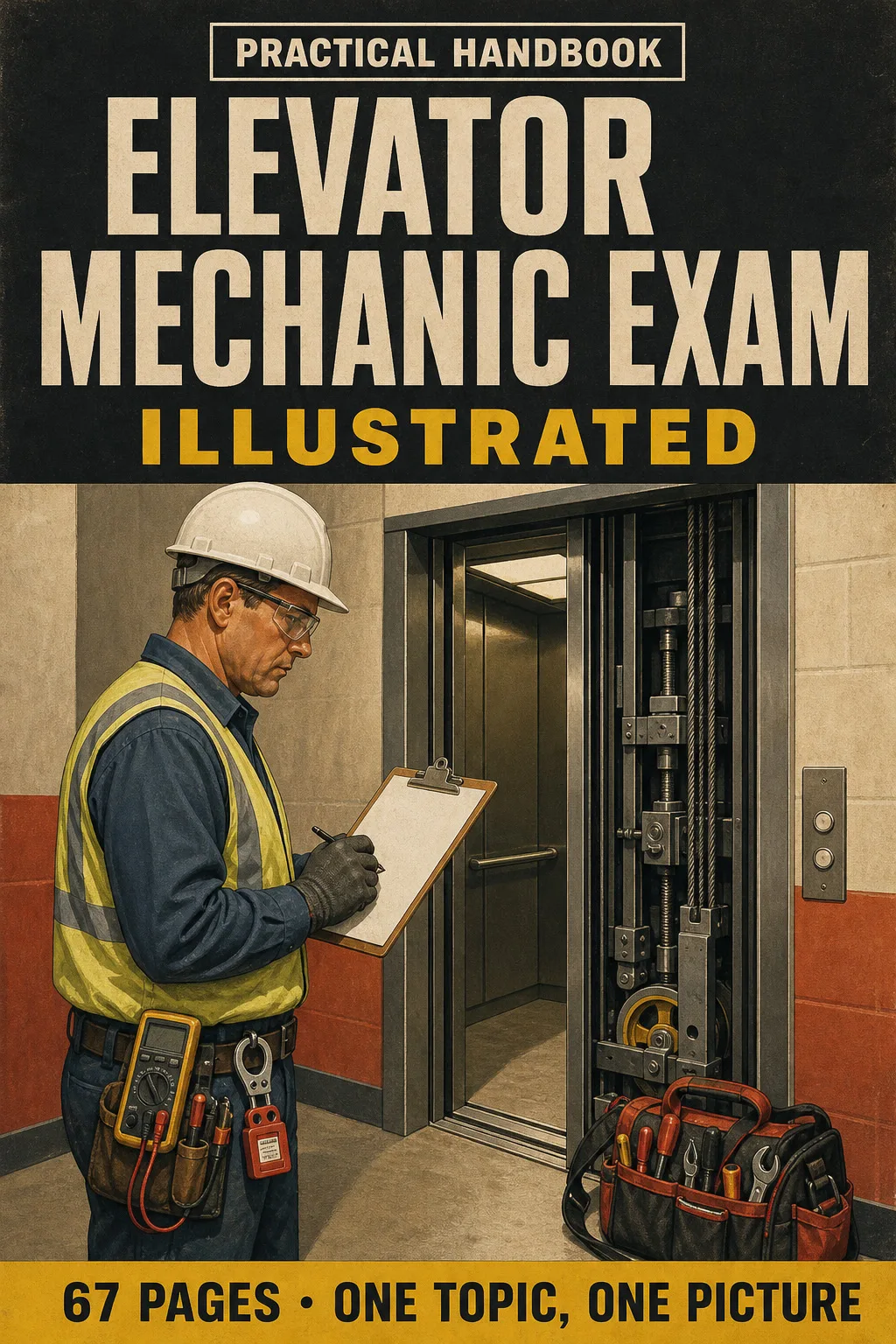
Elevator Mechanic Exam Illustrated

Digital book in PDF · read it on your phone or print it

Elevator Mechanic Exam Illustrated

Ohm's law, schematics, traction, hydraulics, safeties and governors, door interlocks, the safety circuit and fire service. Each topic has its own page: the drawing first, then what you need to remember.

  • 67 illustrated pages
  • English
  • 30-day guarantee
US$ 27US$ 63
Get the book · US$ 27

Price shown for: United States. In other countries, the checkout shows the price that applies there.

About this book

What it is

Ohm's law, schematics, traction, hydraulics, safeties and governors, door interlocks, the safety circuit and fire service. Each topic has its own page: the drawing first, then what you need to remember.

Who This Book Is For
  • You're a helper studying at night
  • Your exam date is set
  • You've been a mechanic for years
What it covers
  1. The Exam and the Hoistway
  2. Electrical Theory for the Elevator
  3. Reading Schematics
  4. Traction Elevators
  5. Hydraulic Elevators
  6. Safeties, Governors and Buffers
  7. Doors, Interlocks and the Safety Circuit
  8. Fire Service, Inspection and Your Safety
  9. Troubleshooting and Final Review
Language
English (United States)
Pages
67
Format
Digital book in PDF · read it on your phone or print it
Price
US$ 27 (United States)
Delivery
This is a digital PDF book sent to your email: nothing is printed or shipped.
30-Day Guarantee
30-day guarantee: if a file doesn't open, if the content isn't what the product page describes, if you were charged twice or the email never arrived, write to us and we'll refund you in full.

Look Inside the Book

License = permission to work from your state; CET = private certification. Washington example: 160 questions, 80% to pass.
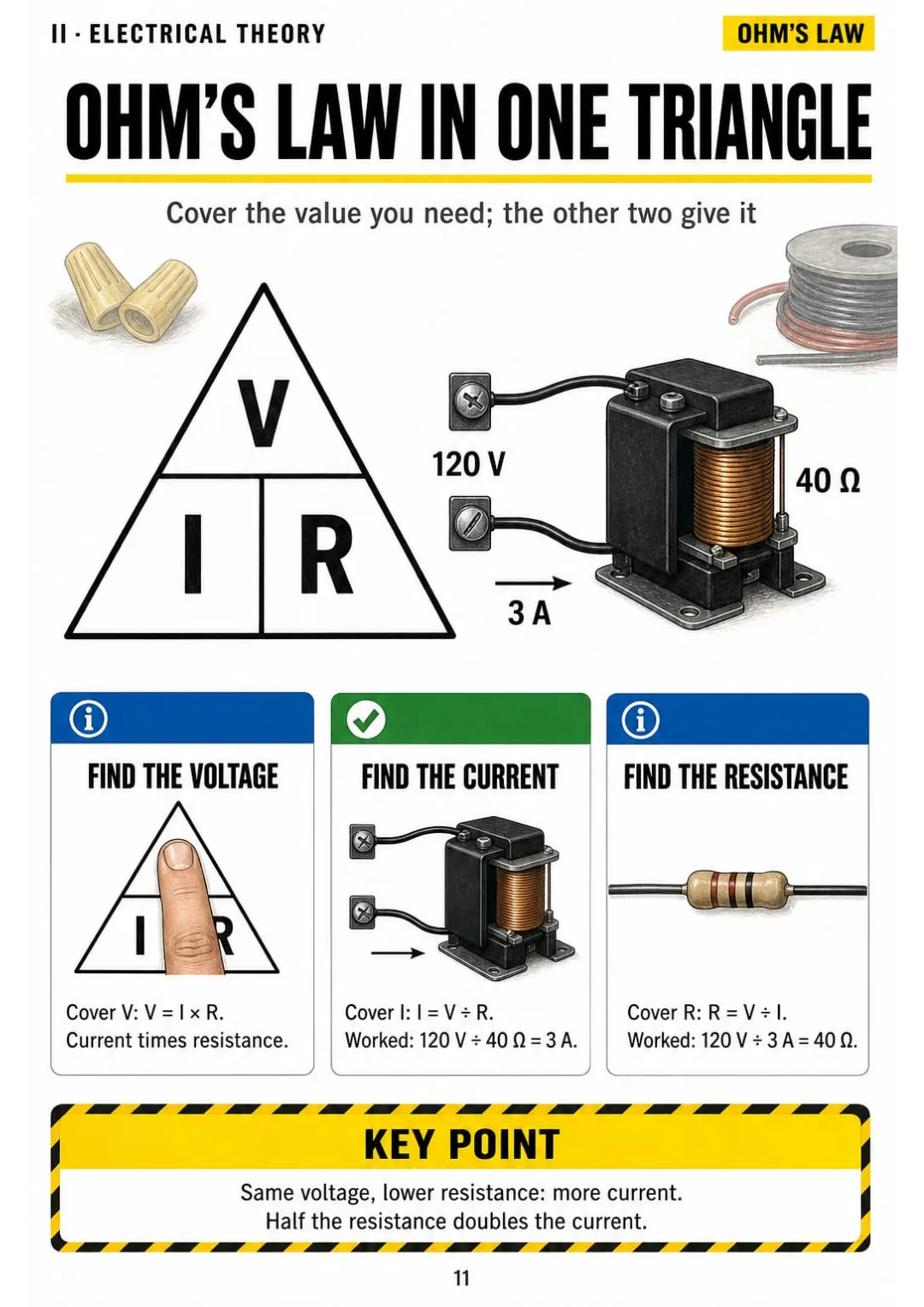
V = I × R in one triangle: 120 V across a 40 Ω coil = 3 A
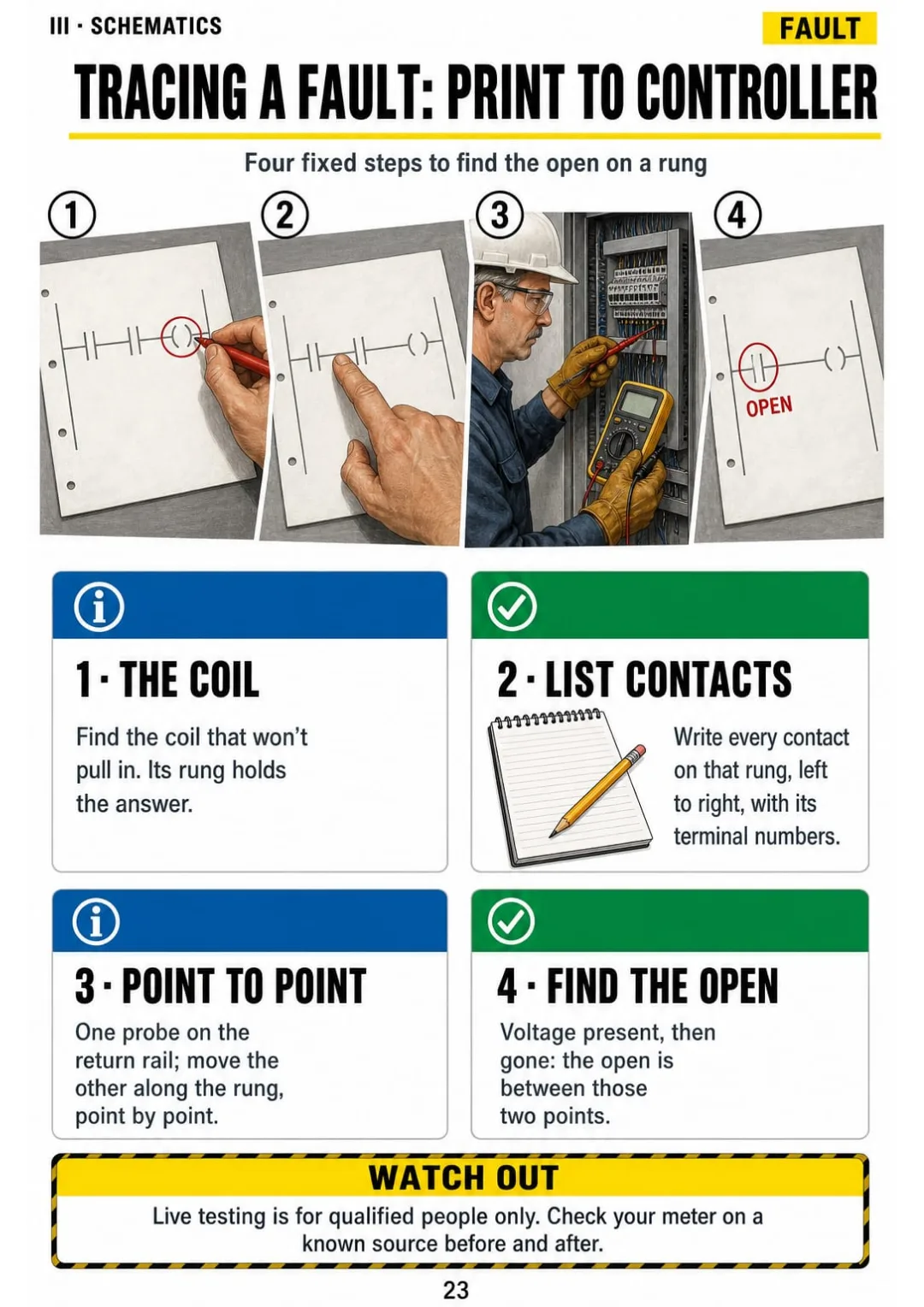
Four steps: coil, list contacts, measure point to point, the open is where voltage disappears.
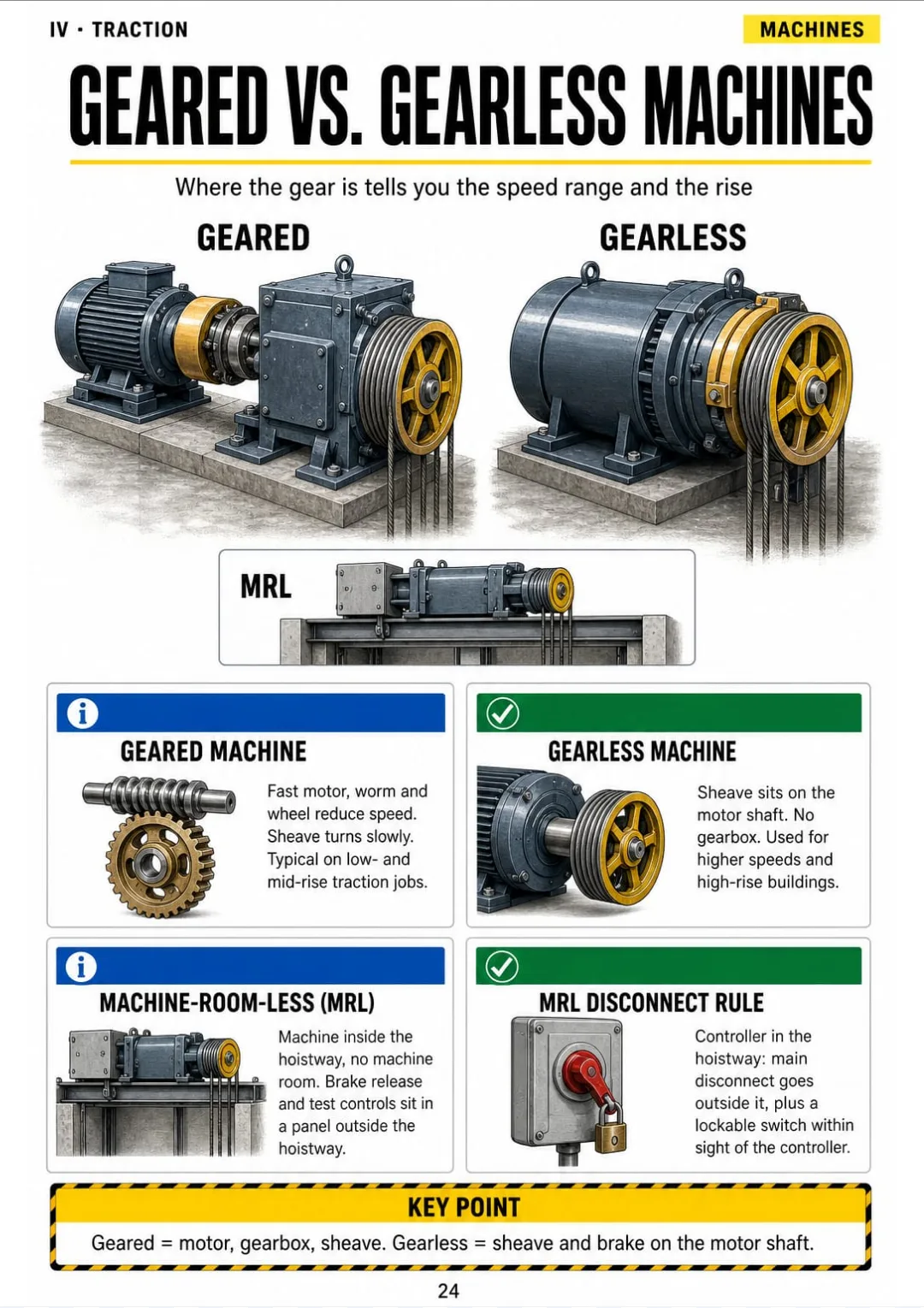
Geared uses a worm gear; gearless puts the sheave on the motor shaft; MRL lives in the hoistway.
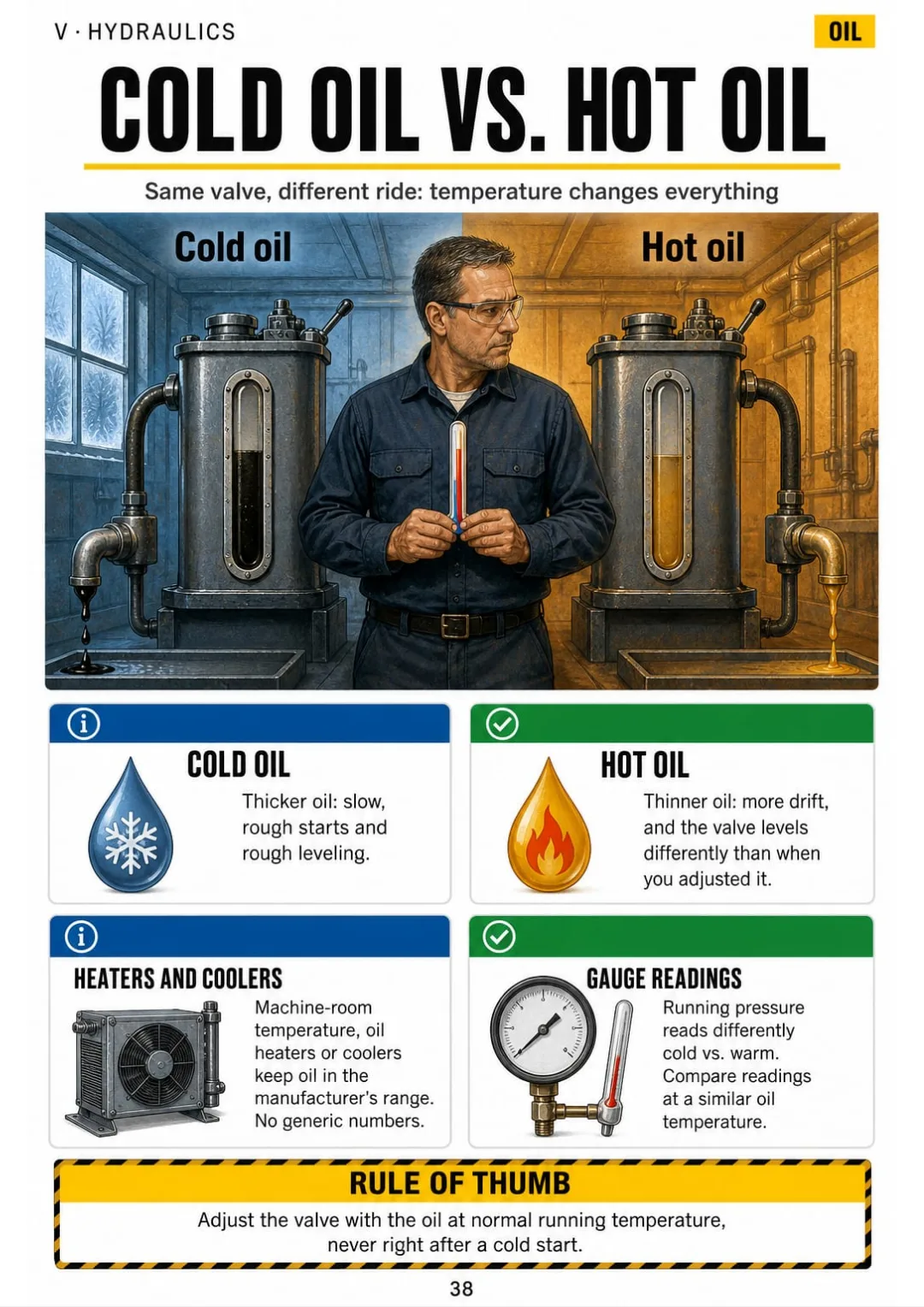
Cold oil = slow, rough starts; hot oil = drift. Heaters and coolers keep the range.
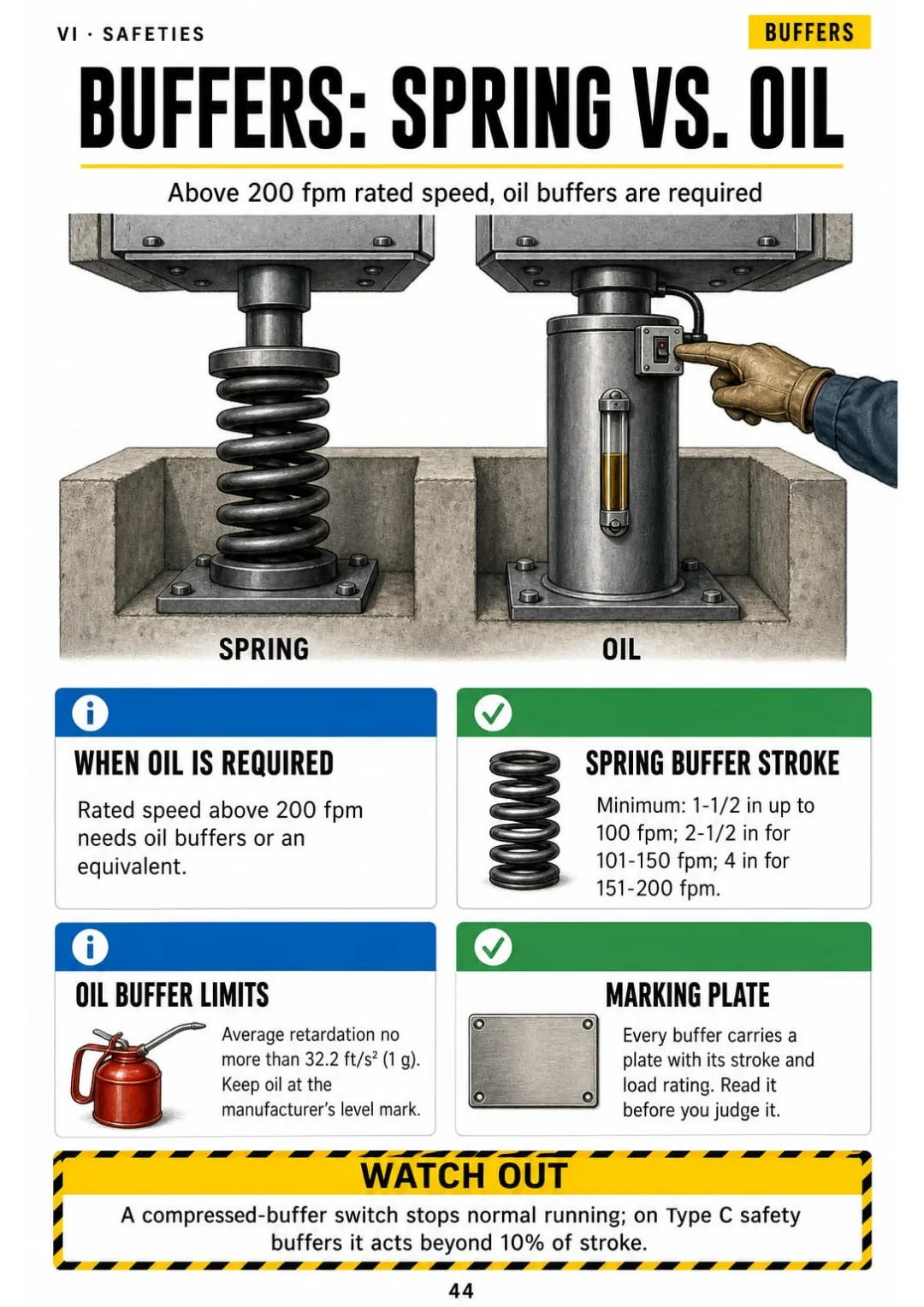
Spring buffers up to 200 fpm (strokes 1-1/2, 2-1/2, 4 in); oil buffers above, max 1 g.
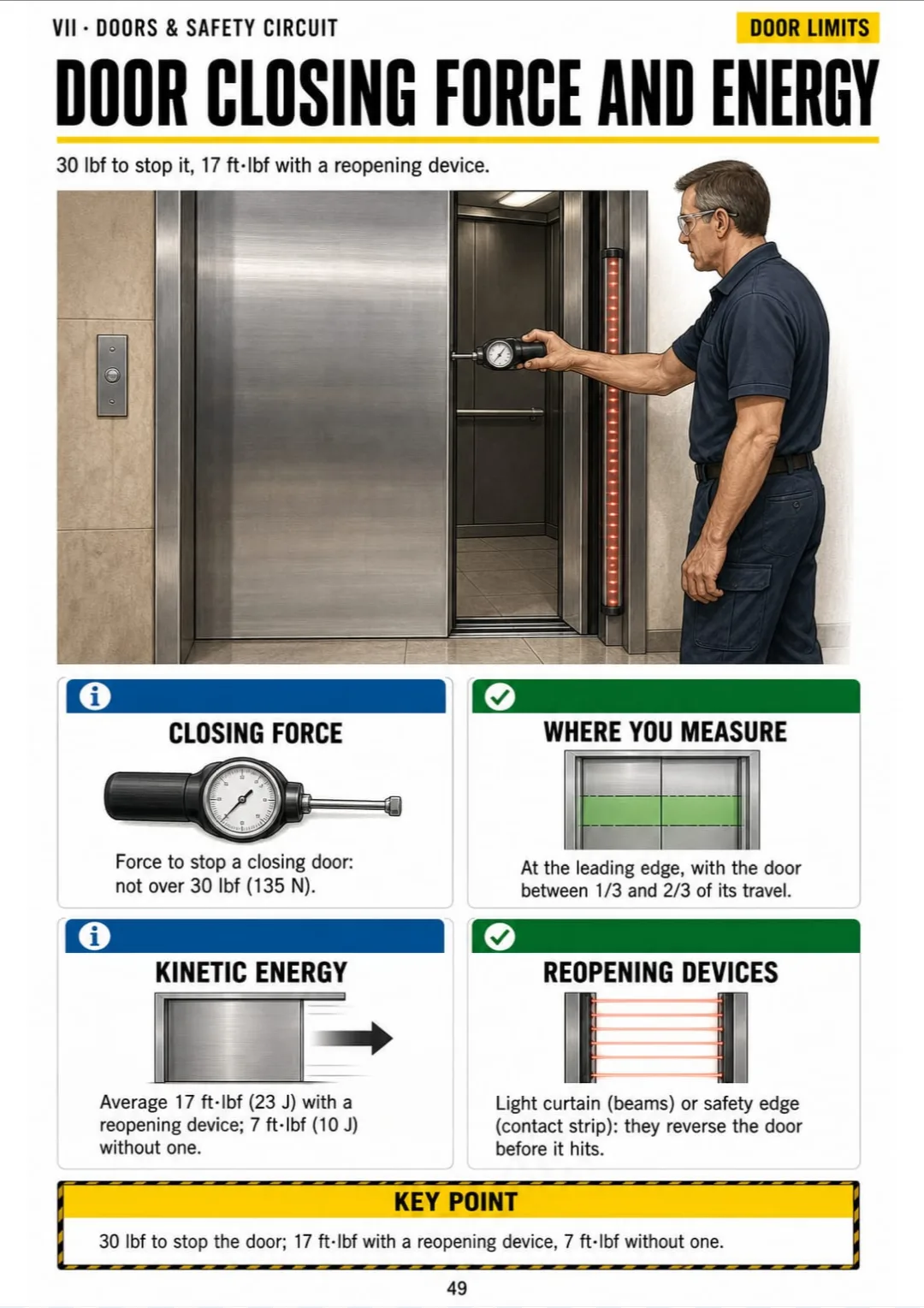
30 lbf (135 N) at the leading edge; 7 ft·lbf with a reopening device, 2.5 without.
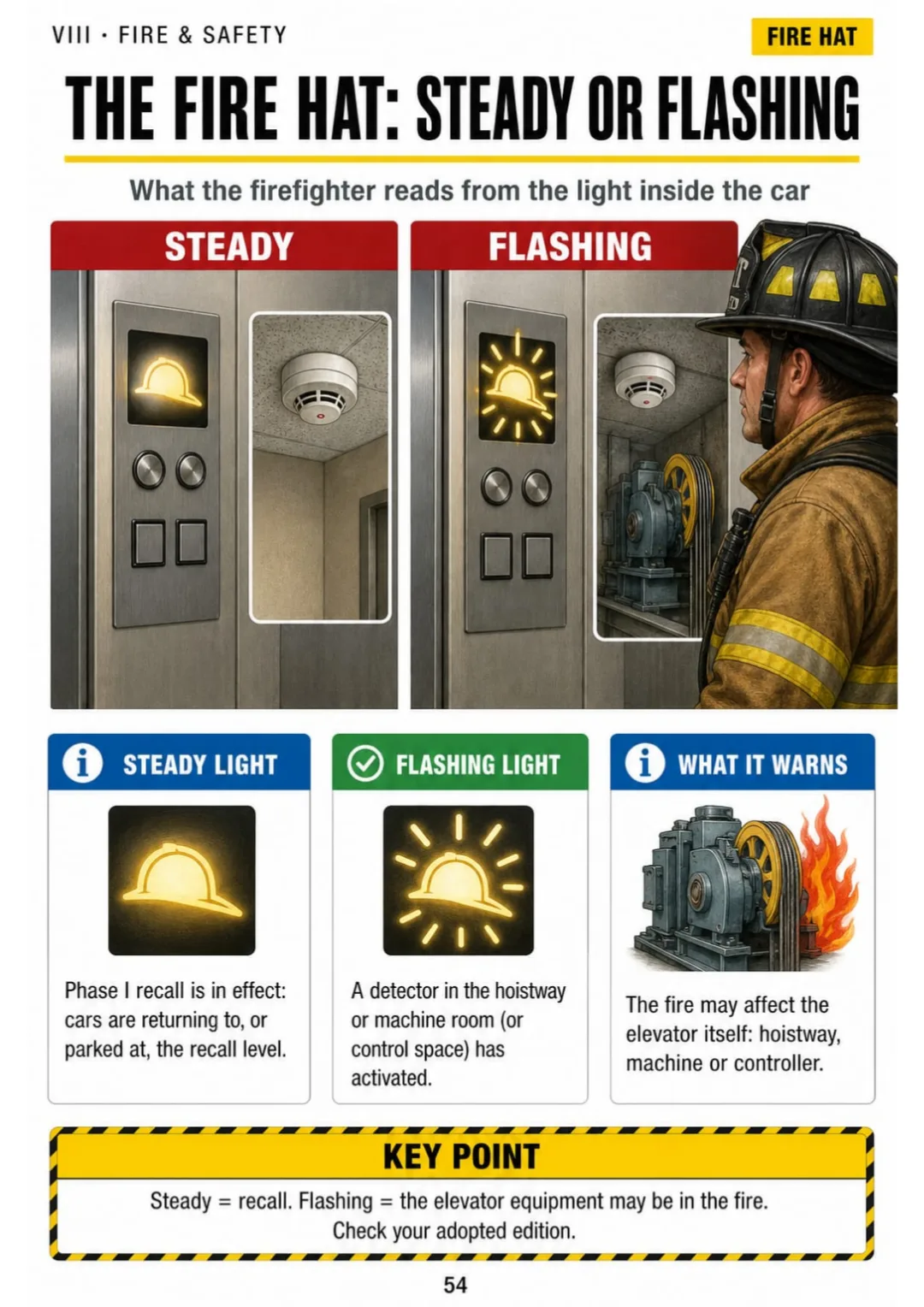
Fire hat steady on Phase I; flashing when a hoistway or machine room detector trips.

Take a Look at the 9 Parts and 63 Topics

The Exam and the Hoistway

pp. 5-10
  1. License vs. certification: what each exam asks
  2. How to use this book: one system, same order
  3. The hoistway in cross-section
  4. Car and counterweight: the balance
  5. Units you need on the exam
  6. Code families: who rules what

Electrical Theory for the Elevator

pp. 11-17
  1. Ohm's law in one triangle
  2. Power: watts, volts, amps
  3. Series vs. parallel
  4. AC vs. DC on the job
  5. Using the meter safely
  6. Transformers and rectifiers
  7. NEC Article 620 at a glance

Reading Schematics

pp. 18-23
  1. Symbols you must recognize
  2. Ladder diagrams: read left to right
  3. Relay logic: one coil, many contacts
  4. Seal-in (holding) circuit
  5. Interlocking direction relays
  6. From print to controller: tracing a fault

Traction Elevators

pp. 24-31
  1. Geared vs. gearless machines
  2. Traction: why the rope doesn't slip
  3. Roping 1:1 and 2:1
  4. Hoist ropes: build and inspection
  5. The brake
  6. Motors and drives
  7. Guide rails and roller guides
  8. Compensation and traveling cable

Hydraulic Elevators

pp. 32-38
  1. The hydraulic circuit as a flow
  2. Pressure = force ÷ area
  3. Direct-acting, holed and holeless, roped
  4. The control valve: up, down, leveling
  5. Relief valve and rupture valve
  6. Anti-creep and low oil protection
  7. Oil temperature and viscosity

Safeties, Governors and Buffers

pp. 39-45
  1. The overspeed chain in order
  2. Governor tripping speed
  3. Type A, B and C safeties
  4. Safety test: what happens on the rails
  5. Ascending car overspeed and unintended movement
  6. Buffers: spring vs. oil
  7. Terminal stopping devices

Doors, Interlocks and the Safety Circuit

pp. 46-52
  1. Hoistway door interlock vs. car door contact
  2. How an interlock locks before it makes
  3. Door operator and clutch
  4. Door closing force and energy
  5. The safety circuit as a chain
  6. Finding the open in the safety string
  7. Leveling and releveling zones

Fire Service, Inspection and Your Safety

pp. 53-59
  1. Fire service Phase I: recall
  2. The fire hat visual signal
  3. Fire service Phase II: in-car operation
  4. Inspection operation from the car top
  5. Entering the pit and the car top
  6. Lockout/tagout on the mainline disconnect
  7. Fall protection and hoistway hazards

Troubleshooting and Final Review

pp. 60-67
  1. Troubleshooting in 5 fixed steps
  2. Car won't move: the first 4 checks
  3. Hydraulic car drifts or won't go up
  4. Traction car misleveling or rough ride
  5. Exam day formulas on one page
  6. Numbers to know by heart
  7. Most frequent mix-ups
  8. Your last-week review checklist

Who This Book Is For

You're a helper studying at night

Each system fits on one page, so a short session after your shift actually sticks.

Your exam date is set

Formulas, numbers to know and the most frequent mix-ups in a few pages, plus practice questions to find your weak spots before the test.

You've been a mechanic for years

The theory behind what you already do with your hands, drawn so you can explain the why to an inspector or a new helper.

Plus: 2 Free Books

Elevator Exam Practice Questions
BONUS 1

Elevator Exam Practice Questions

Exam-style questions on every chapter with the answer explained, so you find your weak spots before the real test, not during it.
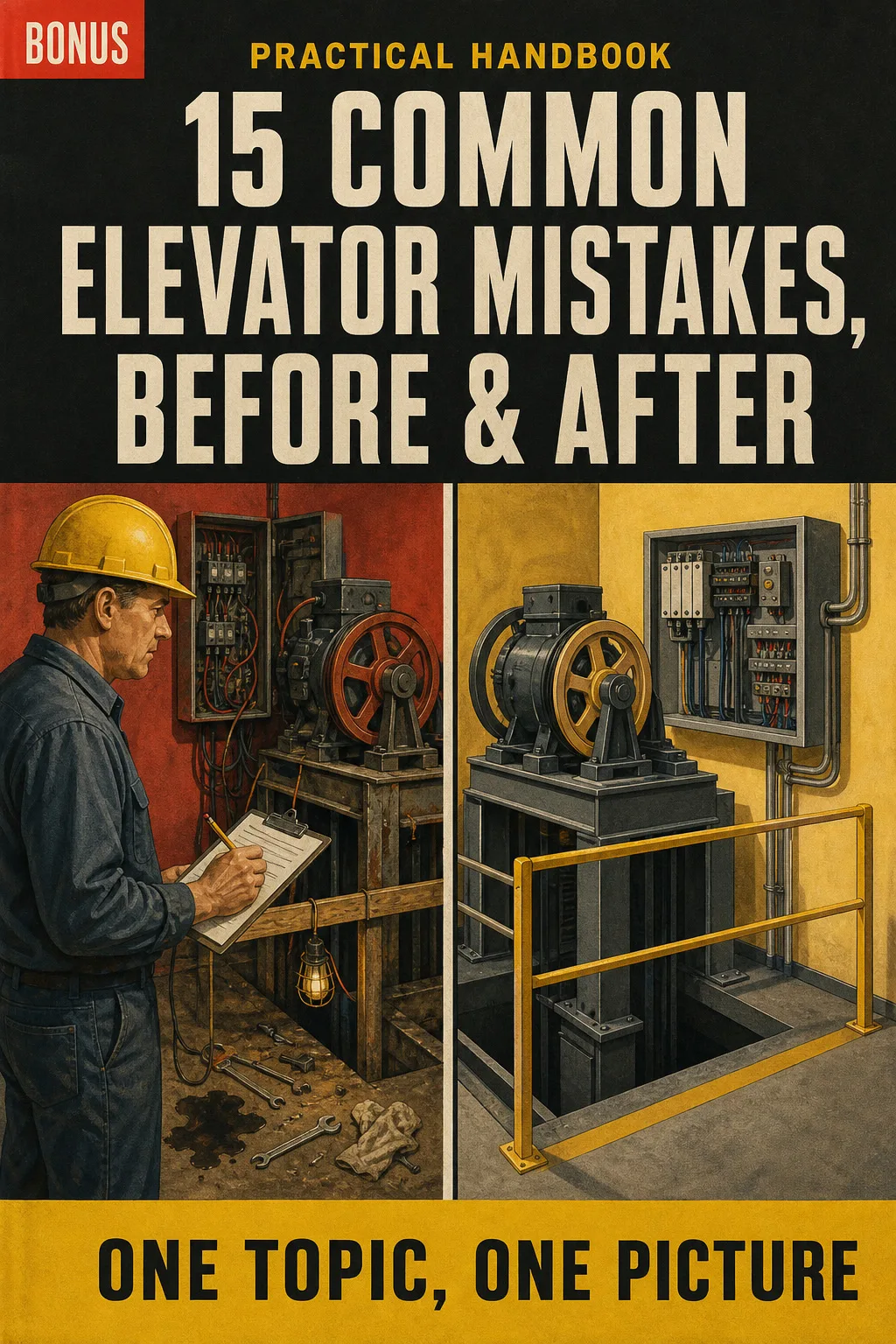
15 Common Elevator Mistakes, Before & After
BONUS 2

15 Common Elevator Mistakes, Before & After

The mistakes that come up most often on safeties, interlocks, wiring and fire service, each drawn wrong and then right, for a quick review the night before.

30-Day Guarantee

30-day guarantee: if a file doesn't open, if the content isn't what the product page describes, if you were charged twice or the email never arrived, write to us and we'll refund you in full. You pay once. No subscriptions.

Frequently Asked Questions

Is it for me if I've worked in the trade for years and just need to pass the written part?

Yes. It doesn't teach you to hold a wrench: it lays out the theory written exams ask about (electrical, schematics, safeties, code, fire service), one topic per page, so you can review what you don't use every day.

Where does the content come from?

It's checked against the current ASME A17.1/CSA B44 edition, NEC Article 620 and OSHA 29 CFR 1910 and 1926. The theory, the systems and the order you work through them are the same in NY, NJ, FL, DE, IN, UT and WA. What changes is which code edition your state enforces and the paperwork, so check both with your licensing board (in New York, Labor Law § 954).

Is this official material?

No. It's an independent study book. It isn't affiliated with or endorsed by ASME, NFPA, OSHA, NAEC or any state agency, and it doesn't reproduce code text or tables. It doesn't give you a license, a certification or continuing education hours: it helps you study for the exam that does.

Does it replace my training or apprenticeship?

No. It's study material. It doesn't replace hands-on training, your company's procedures or the code books themselves.

Are the practice questions the ones on the exam?

No. They're written for this book, in exam style, to help you find weak spots. They aren't official questions from any exam.

When and how do I get it?

The book and the 2 bonus books arrive as PDFs by email, at the address you enter at checkout.

Do I have to pay every month?

No. It's a one-time payment.

Can I have it on paper?

Yes. It's a printable PDF: print the whole book or just the pages you want to keep in the truck.

How does the refund work?

You have 30 days. We refund everything if the file won't open, if the book isn't what you see on this page, if you were charged twice or if the email doesn't arrive: just email us.

US$ 27US$ 63
Get the book · US$ 27

This is a digital PDF book sent to your email: nothing is printed or shipped.

More books on this topic

Mobile Crane Operator Illustrated

Mobile crane operator prep in plain English: read a load chart in the same 6 steps, work out sling loads, and know the…

From US$ 27 US$ 63

MA Hoisting License Illustrated

An illustrated study book for the Massachusetts hoisting license exam: load charts, rigging and sling angles, hand…

From US$ 27 US$ 63

Compact Tractor Illustrated

Know every lever, hitch and implement on your compact tractor at a glance: one topic per page, every concept a drawing…

From US$ 27 US$ 63