Study in Pictures🌐 English (United States)
Mobile Crane Operator Illustrated

Digital book in PDF · read it on your phone or print it

Mobile Crane Operator Illustrated

Load charts, radius and boom length, rigging, sling angles, hand signals, power lines, inspections and safety devices. Every topic gets its own page: the drawing first, then what you need to remember.

  • 66 illustrated pages
  • English
  • 30-day guarantee
US$ 27US$ 63
Get the book · US$ 27

Price shown for: United States. In other countries, the checkout shows the price that applies there.

About this book

What it is

Load charts, radius and boom length, rigging, sling angles, hand signals, power lines, inspections and safety devices. Every topic gets its own page: the drawing first, then what you need to remember.

Who This Book Is For
  • First written exam, or taking it again
  • Recertification coming up
  • Rigger or signalperson moving to the seat
What it covers
  1. The Rules and the Exam
  2. Know the Machine and the Set-Up
  3. The Load Chart in 6 Steps
  4. Load Weights and Rigging
  5. Hand Signals and Communication
  6. Power Lines and Site Hazards
  7. Inspections and Safety Devices
  8. Exam-Day Review
Language
English (United States)
Pages
66
Format
Digital book in PDF · read it on your phone or print it
Price
US$ 27 (United States)
Delivery
This is a digital PDF book sent to your email: nothing is printed or shipped.
30-Day Guarantee
30-day guarantee: if a file doesn't open, if the content isn't what the product page describes, if you were charged twice or the email never arrived, write to us and we'll refund you in full.

Look Inside the Book

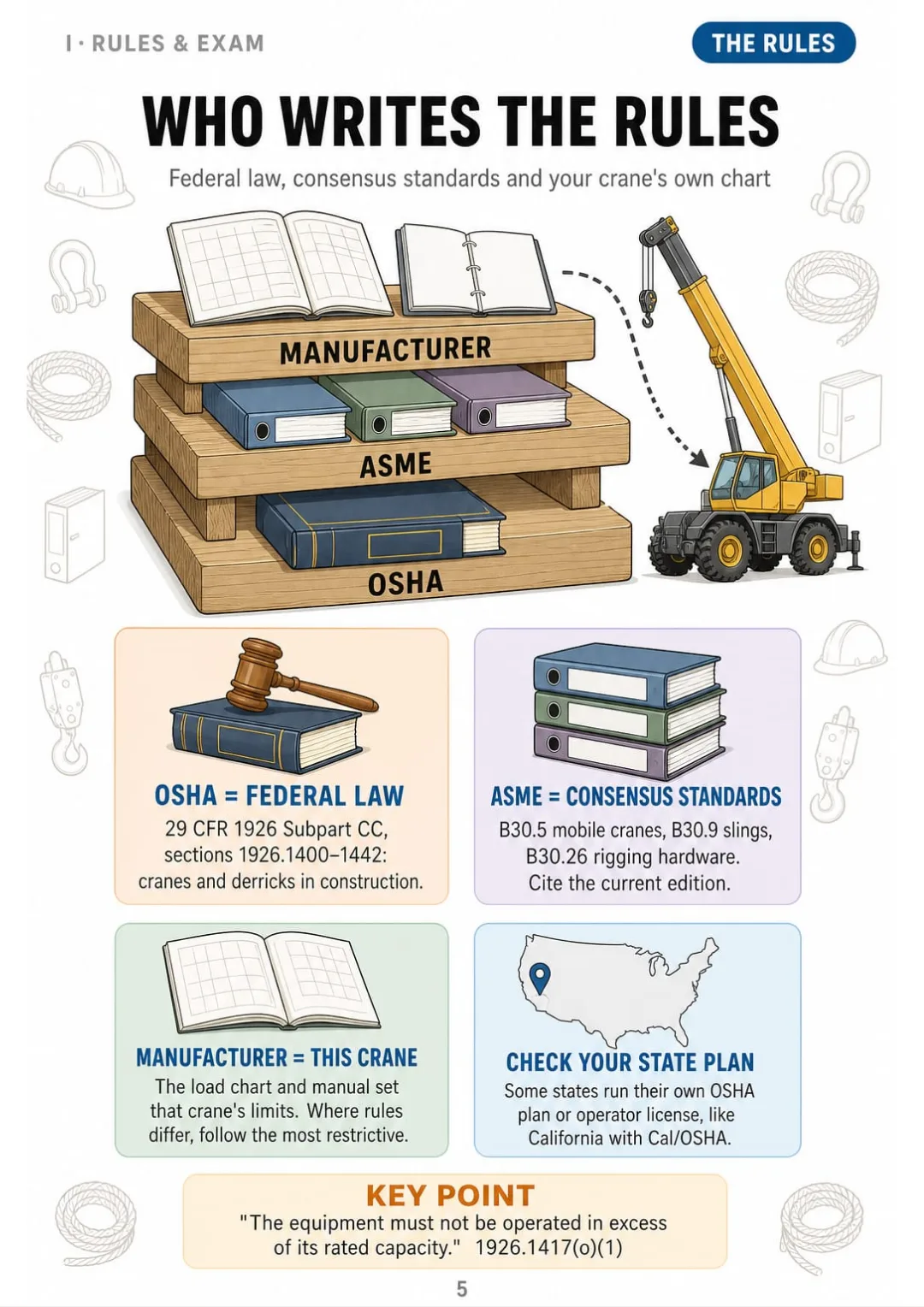
OSHA Subpart CC, ASME B30 and the manufacturer's load chart: who says what.
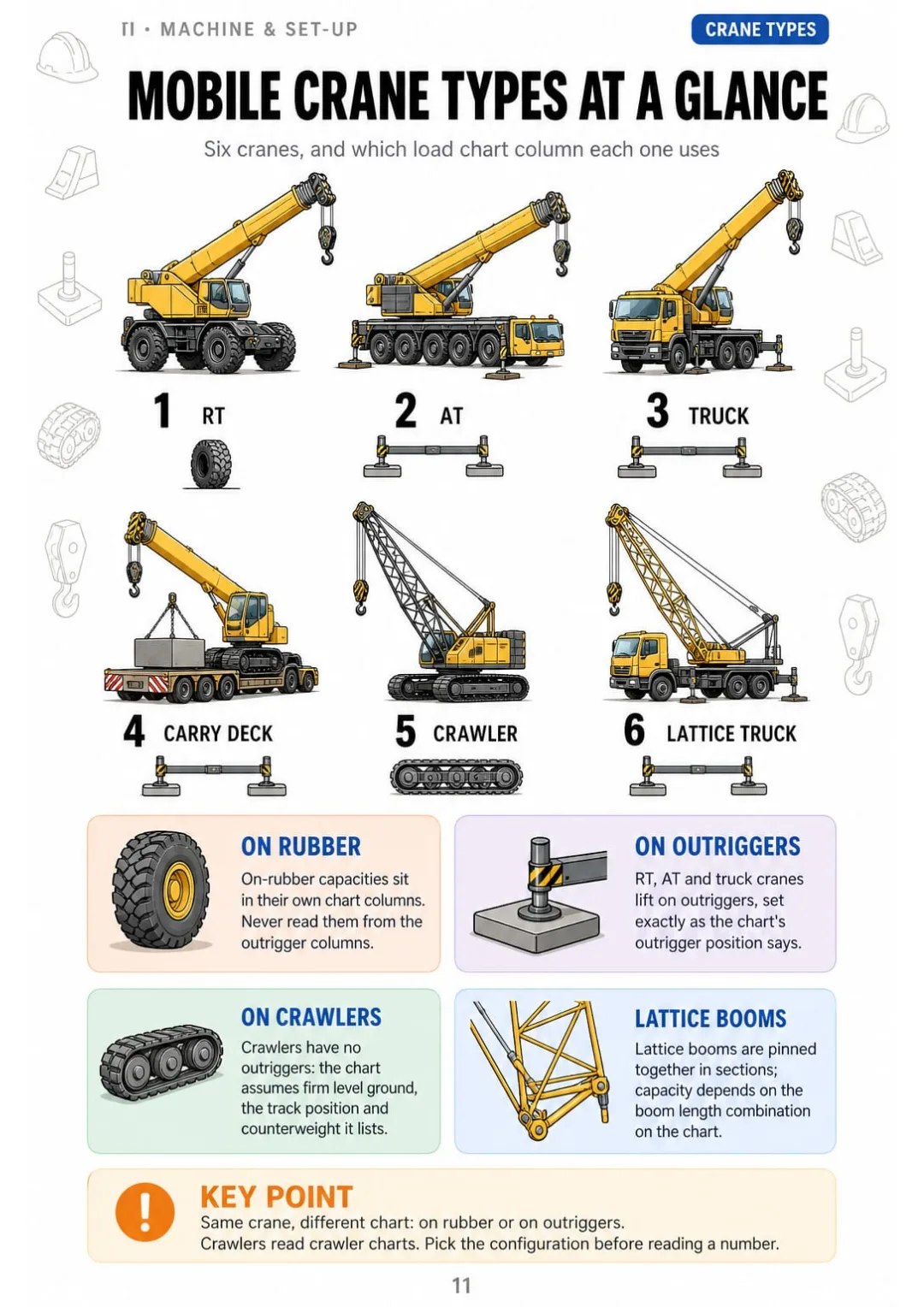
RT, AT, truck, carry deck, crawler, lattice truck: what changes on the chart
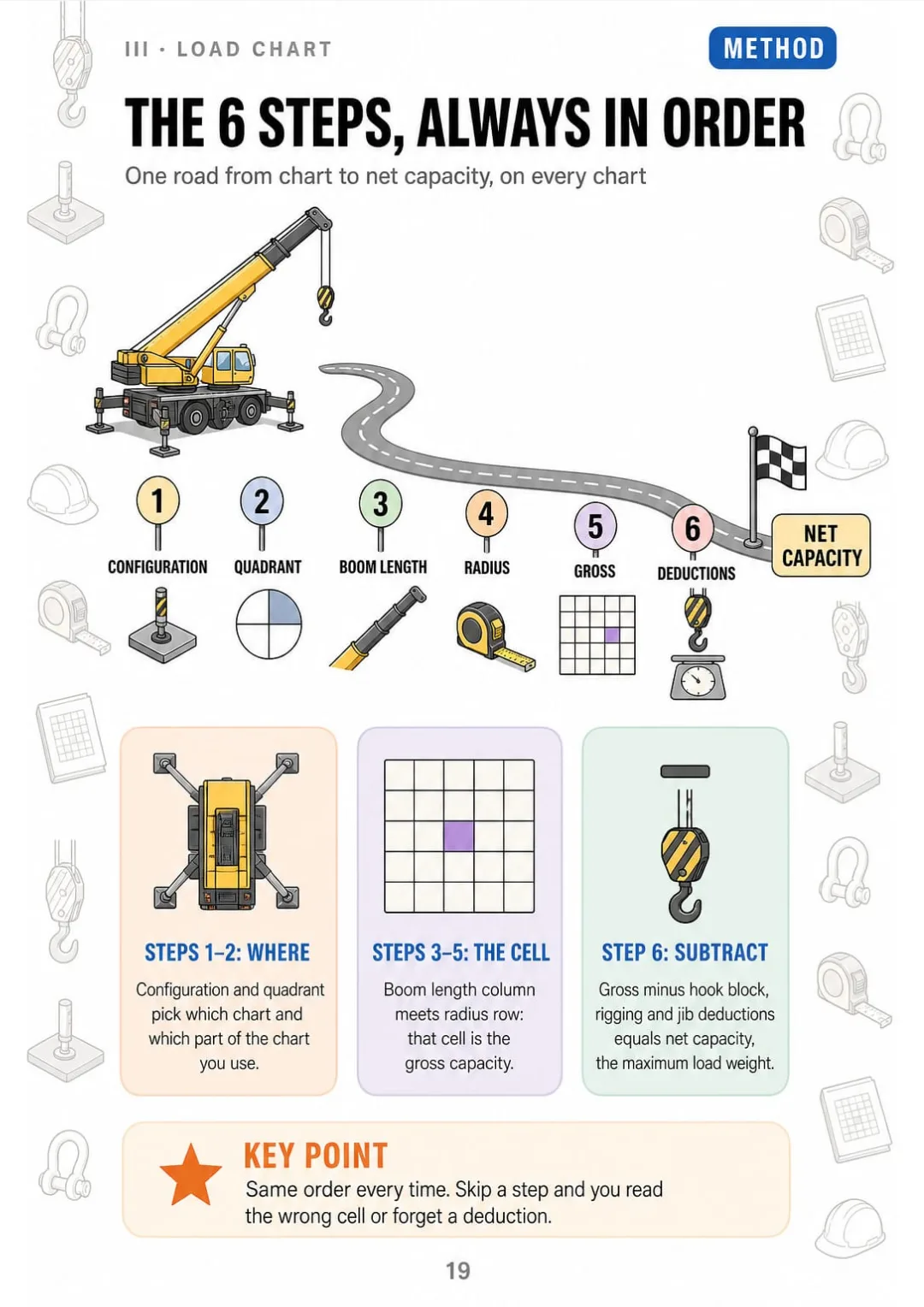
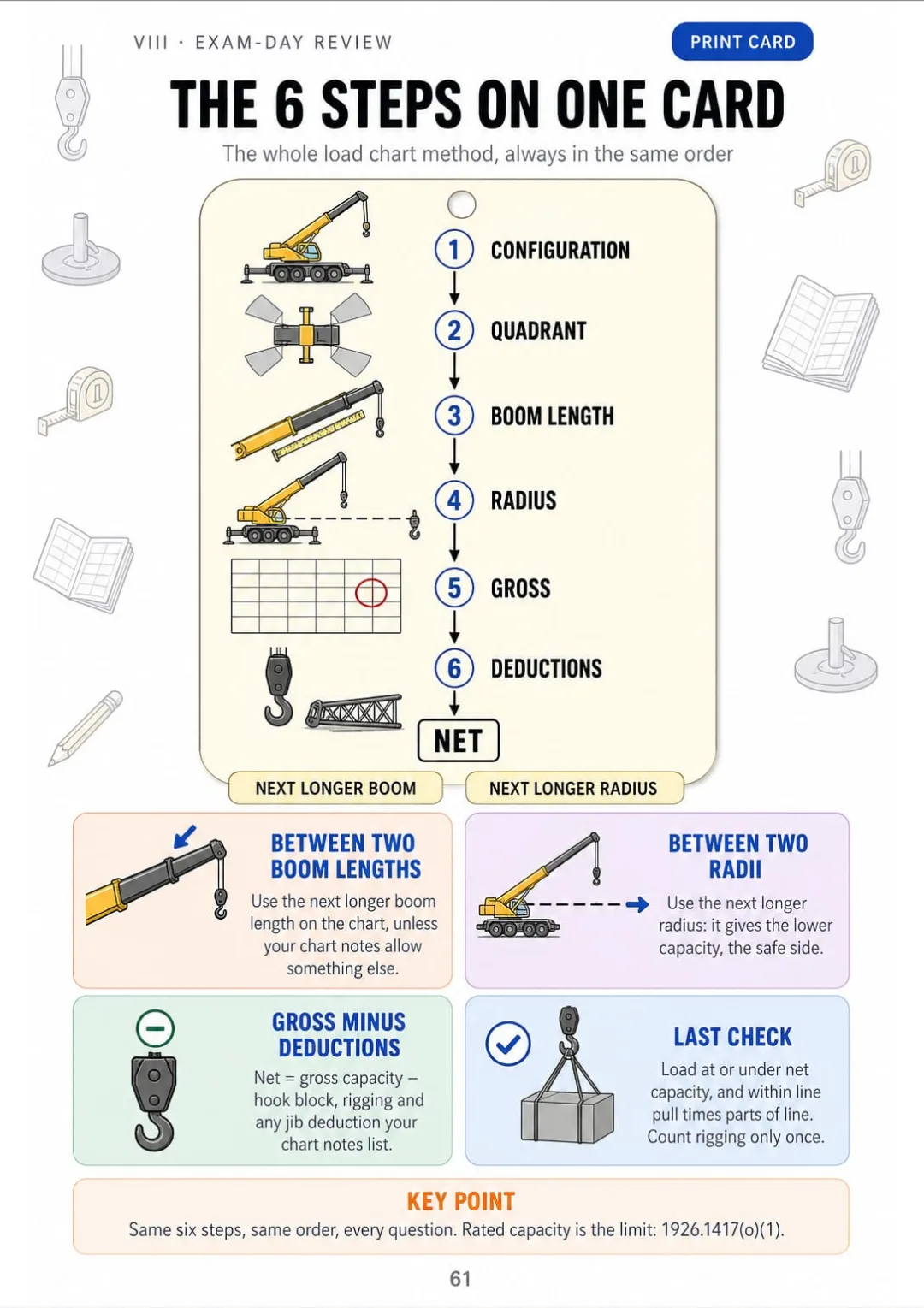
Configuration → Quadrant → Boom length → Radius → Gross → Deductions = Net capacity
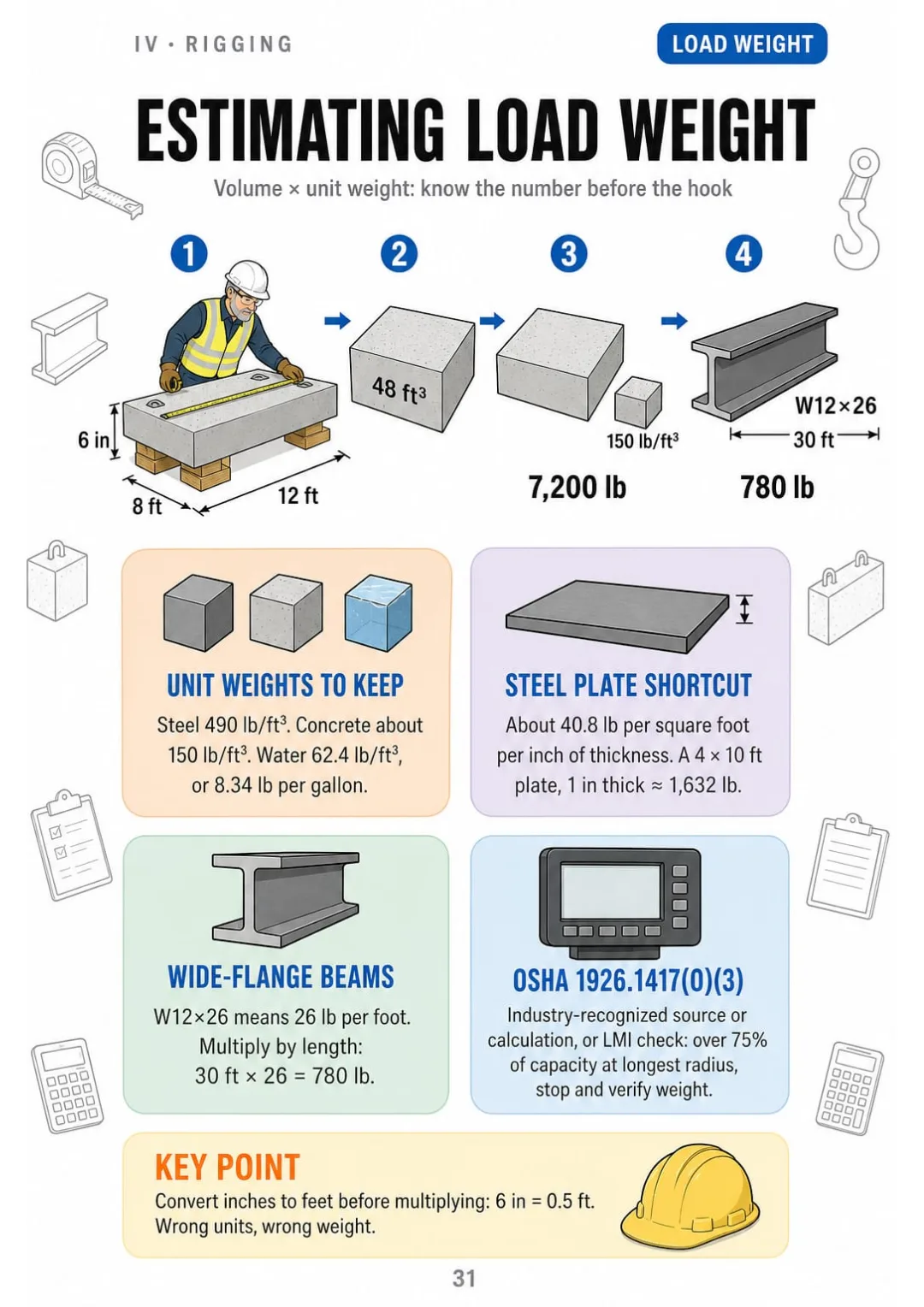
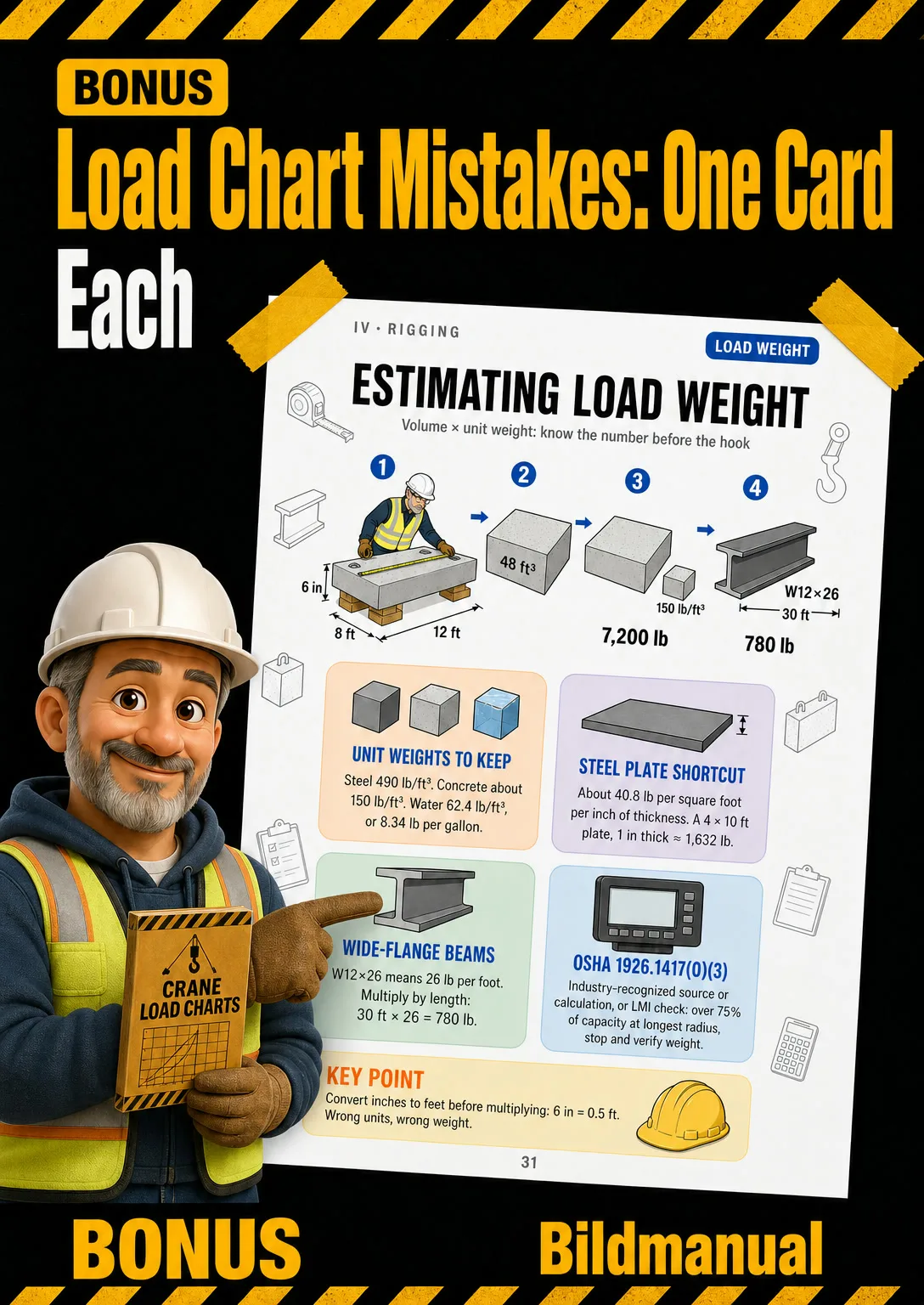
Steel 490 lb/ft³, concrete 150 lb/ft³: a 12 × 8 ft slab, 6 in thick, weighs 7,200 lb
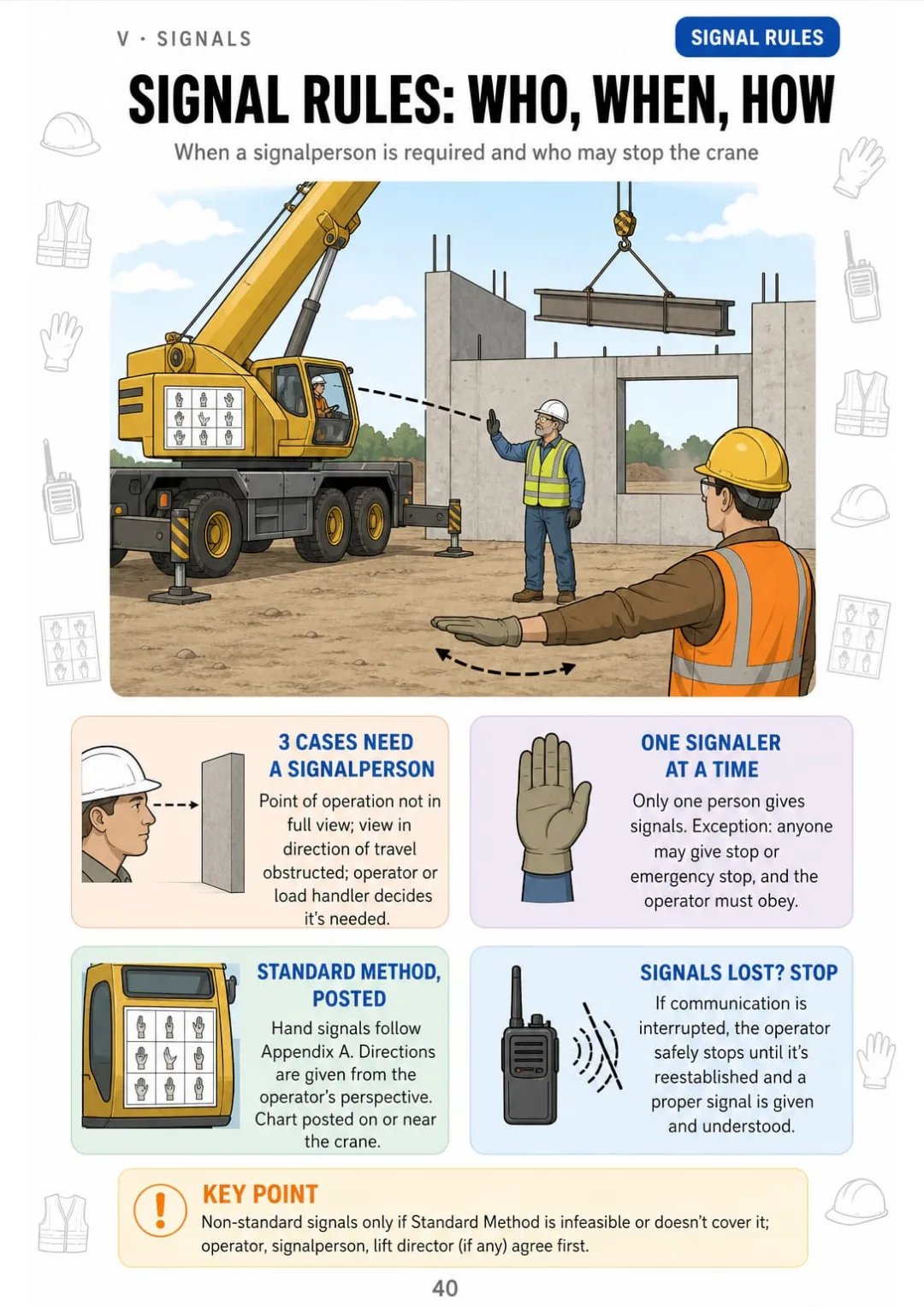
1926.1419: three cases require a signalperson; anyone can give the stop signal.
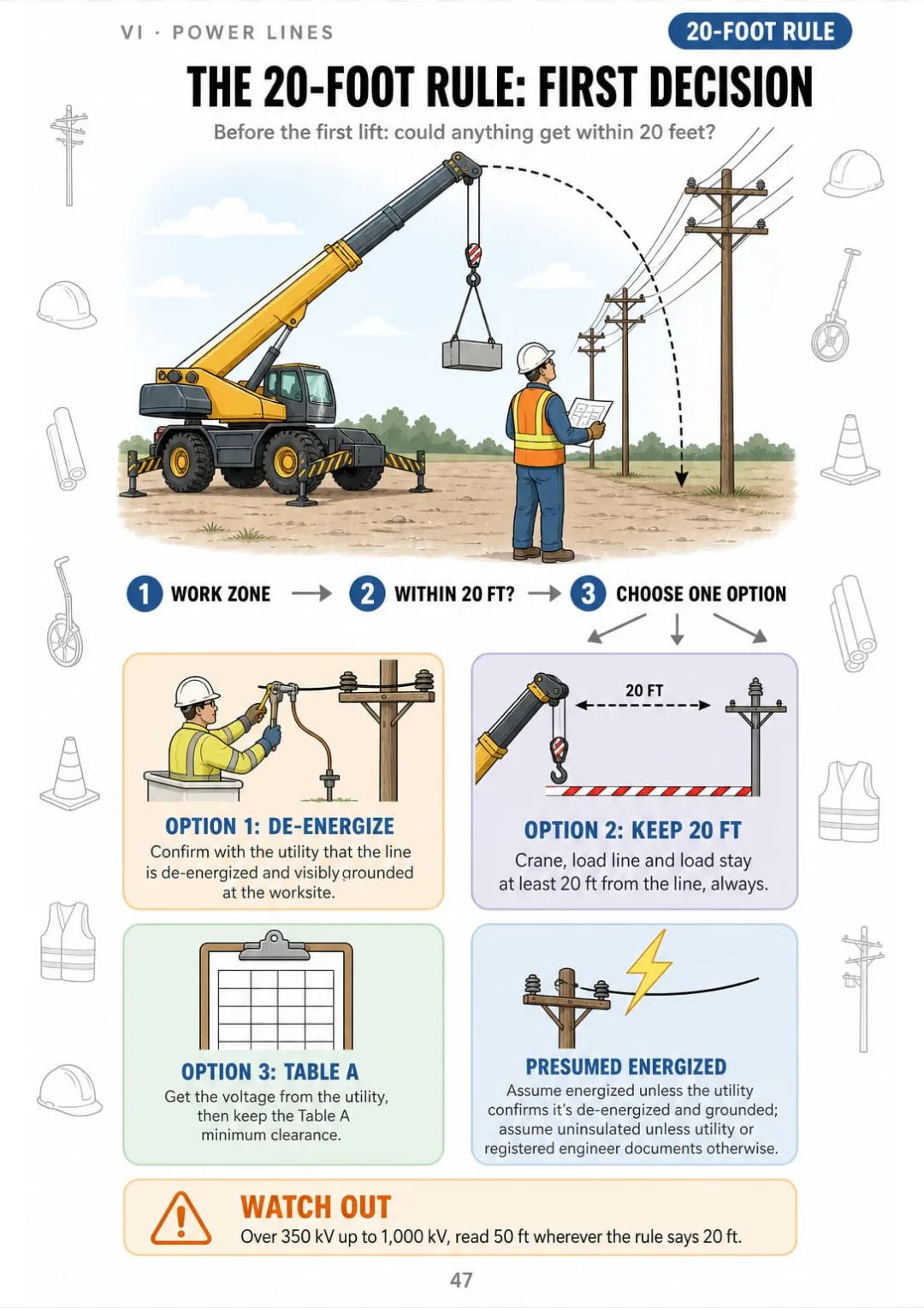
Within 20 ft at max radius? Choose: de-energize, keep 20 ft, or use Table A.
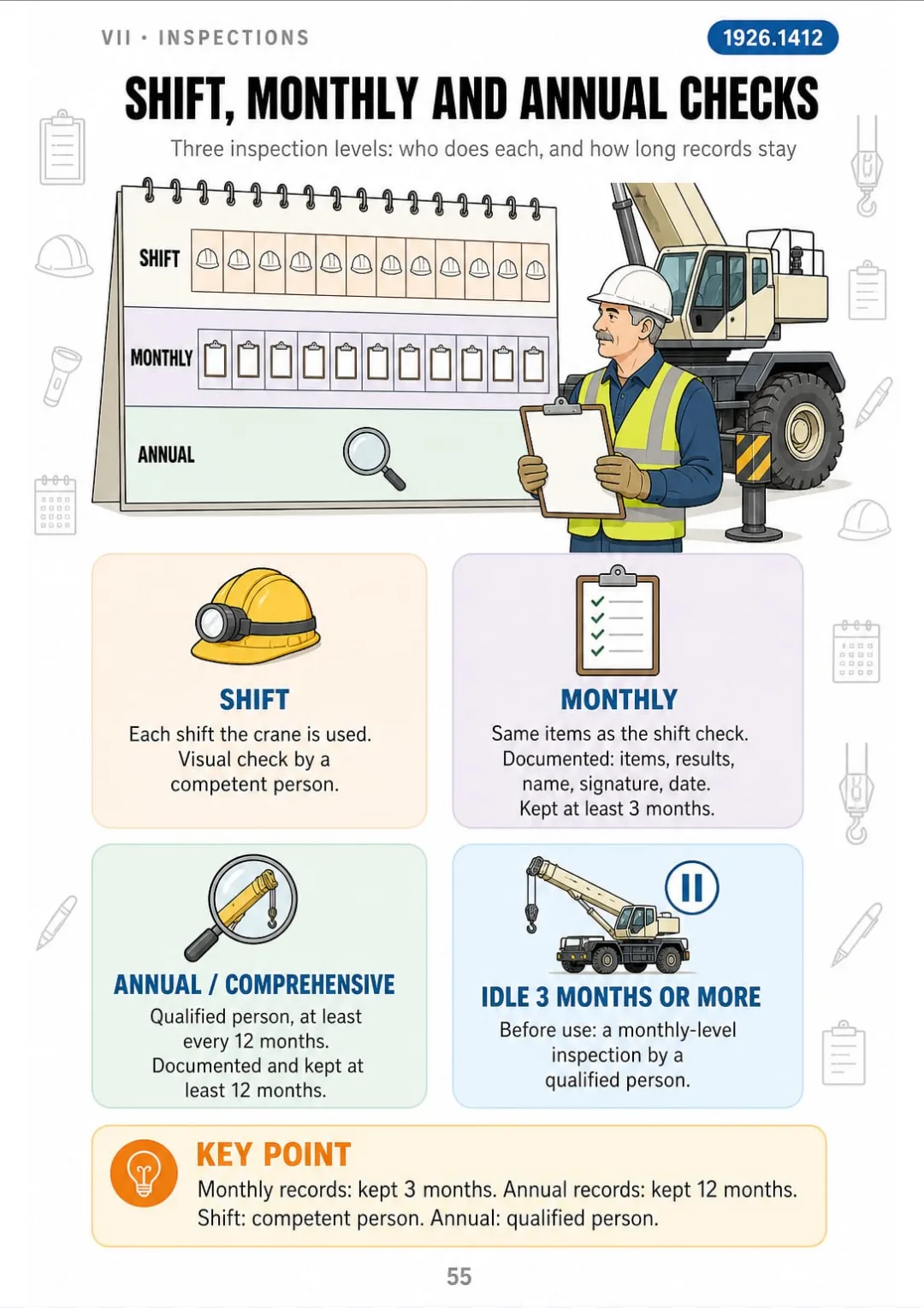
Shift by a competent person, monthly records kept 3 months, annual by a qualified person kept 12.
Configuration → quadrant → boom → radius → gross → deductions = net, on one printable card

Take a Look at the 8 Parts and 62 Topics

The Rules and the Exam

pp. 5-10
  1. Who Writes the Rules: OSHA vs. ASME vs. the Manufacturer
  2. Operator Certification: What 1926.1427 Actually Requires
  3. How the Written Exam Is Built
  4. Operator, Rigger, Signalperson, Lift Director: Who Decides What
  5. Sizes, Units and Symbols You Will See on Paper
  6. How to Use This Book

Know the Machine and the Set-Up

pp. 11-18
  1. Mobile Crane Types at a Glance
  2. Parts of a Telescopic Boom Crane
  3. Radius, Boom Length and Boom Angle: The Triangle
  4. Why Radius Grows When the Load Comes Off the Ground
  5. Ground Conditions: 1926.1402
  6. Outrigger Pads and Ground Bearing Pressure
  7. Leveling the Crane
  8. Counterweight and Configuration

The Load Chart in 6 Steps

pp. 19-30
  1. The 6 Steps, Always in the Same Order
  2. Step 1: Configuration
  3. Step 2: Quadrant
  4. Step 3: Boom Length
  5. Step 4: Radius
  6. Step 5: Gross Capacity
  7. Structural vs. Stability: The Bold Line
  8. Step 6: Deductions
  9. Stowed Jib vs. Erected Jib
  10. Parts of Line: The Hoist Can Be the Limit
  11. The Chart Notes You Must Read
  12. Full Worked Example on the Fictitious Chart

Load Weights and Rigging

pp. 31-39
  1. Estimating Load Weight
  2. Center of Gravity
  3. Sling Angle: Why the Load Gets Heavier
  4. Load per Leg, Worked Out
  5. Vertical, Choker and Basket Hitches
  6. Wire Rope Slings: Inspection and Removal
  7. Synthetic and Chain Slings
  8. Shackles, Hooks and Hardware (ASME B30.26)
  9. Tag Lines and Keeping Clear of the Load (1926.1425)

Hand Signals and Communication

pp. 40-46
  1. Signal Rules: Who, When, How (1926.1419–1422)
  2. Hoist, Lower, Stop, Emergency Stop
  3. Main Hoist vs. Whipline
  4. Boom Signals: Raise, Lower, Extend, Retract
  5. Combined Signals: Raise Boom and Lower Load
  6. Swing, Travel, Move Slowly, Dog Everything
  7. Voice and Radio Signals

Power Lines and Site Hazards

pp. 47-54
  1. The 20-Foot Rule and the First Decision (1926.1408)
  2. Table A Clearances by Voltage
  3. Encroachment Prevention Measures
  4. If the Crane Contacts a Power Line
  5. Swing Radius and Work Area Control (1926.1424)
  6. Wind and Weather
  7. Assembly and Disassembly (1926.1404)
  8. Hoisting Personnel and Multiple-Crane Lifts

Inspections and Safety Devices

pp. 55-60
  1. Shift, Monthly and Annual Inspections (1926.1412)
  2. Shift Inspection Walkaround
  3. Wire Rope on the Crane (1926.1413)
  4. Required Safety Devices (1926.1415)
  5. Operational Aids: Category I and II (1926.1416)
  6. The LMI Is Not the Load Chart

Exam-Day Review

pp. 61-66
  1. The 6 Steps on One Page
  2. Most Common Load Chart Mistakes
  3. Numbers to Know Cold
  4. Signals Self-Test
  5. Pre-Lift Checklist
  6. The Night Before and Test Day

Who This Book Is For

First written exam, or taking it again

If the written didn't go your way the first time, it's rarely the machine. Here the load chart is 6 steps, always in the same order, with the rule behind every number.

Recertification coming up

Your hands know the machine. The book puts the paper side back in order: deductions, sling angles, Table A, inspections.

Rigger or signalperson moving to the seat

You already know the lift from the ground. Here you see how it reads from the cab, with every step drawn.

Plus: 2 Free Books

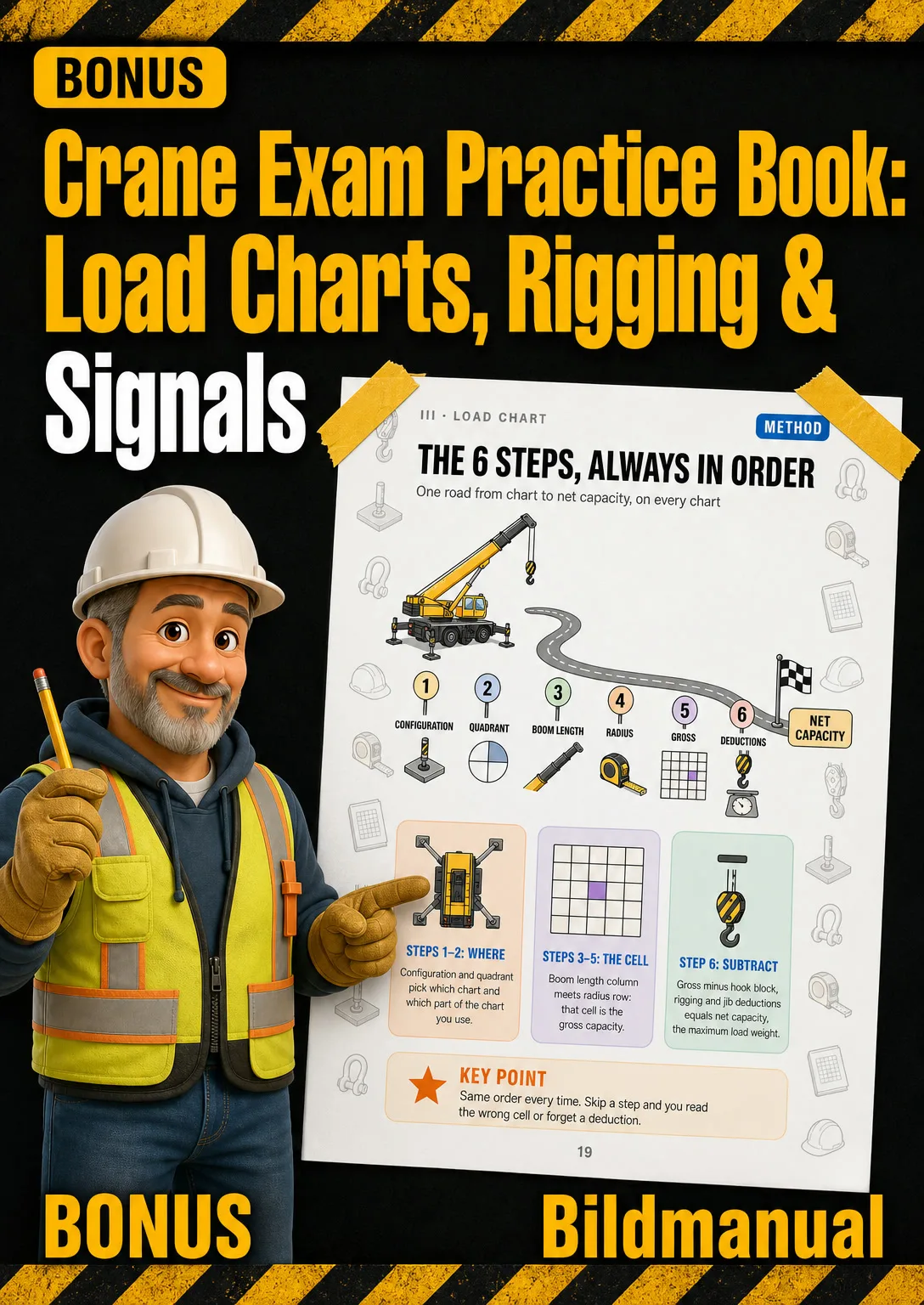
Crane Exam Practice Book: Load Charts, Rigging & Signals
BONUS 1

Crane Exam Practice Book: Load Charts, Rigging & Signals

Exam-style questions with answers explained, so you find out what you really know before test day, not during it.

Load Chart Mistakes: One Card Each
BONUS 2

Load Chart Mistakes: One Card Each

The most common load chart and rigging errors (wrong radius, wrong quadrant, forgotten deductions), each drawn on one card so you can review them in minutes.

30-Day Guarantee

30-day guarantee: if a file doesn't open, if the content isn't what the product page describes, if you were charged twice or the email never arrived, write to us and we'll refund you in full. You pay once. No subscriptions.

Frequently Asked Questions

Is it for me if I've run cranes for years and just need to recertify?

Yes. It doesn't teach you to run the machine; you already do that. It puts the paper side in order: load charts, rigging math, signals and the rules, one topic per page, every number with its OSHA or ASME citation. Your manufacturer's manual covers your crane, and free videos each show a different method. This gives you one order you run on paper, the same way every time. It also works if you're a rigger or signalperson moving into the seat.

Where does the content come from?

From OSHA 29 CFR 1926 Subpart CC (including the Appendix A hand signals) and ASME B30.5, B30.9 and B30.26. Every number comes with its citation. The load chart in the book is fictitious and made for practice.

Is it official material?

No. It's independent study material, written for mobile crane operators in the United States and checked against OSHA 29 CFR 1926 Subpart CC and ASME B30. It isn't published, endorsed or approved by OSHA, ASME, NCCCO, any certifying body or any crane manufacturer, and it doesn't reproduce exam questions.

Does it replace a training course?

No. It doesn't give you a certificate or a card, and it doesn't replace training, certification by an accredited body, your employer's evaluation, or your crane's load chart and operator's manual. It's for studying and reviewing the paper side.

Are the practice questions the ones on the exam?

No. They're written for this book, in exam style, with the answers explained. They aren't official questions from any exam.

When and how do I get it?

The book and the 2 bonus books come as PDFs by email, to the address you enter at checkout.

Do I have to pay every month?

No. It's a one-time payment.

Can I have it on paper?

Yes. It's a printable PDF: print the whole book, or just the pages you want, like the 6-step card for your truck.

How does the refund work?

You have 30 days. We refund everything if the file won't open, if the book isn't what you see on this page, if you were charged twice or if the email doesn't arrive: just email us.

US$ 27US$ 63
Get the book · US$ 27

This is a digital PDF book sent to your email: nothing is printed or shipped.

More books on this topic

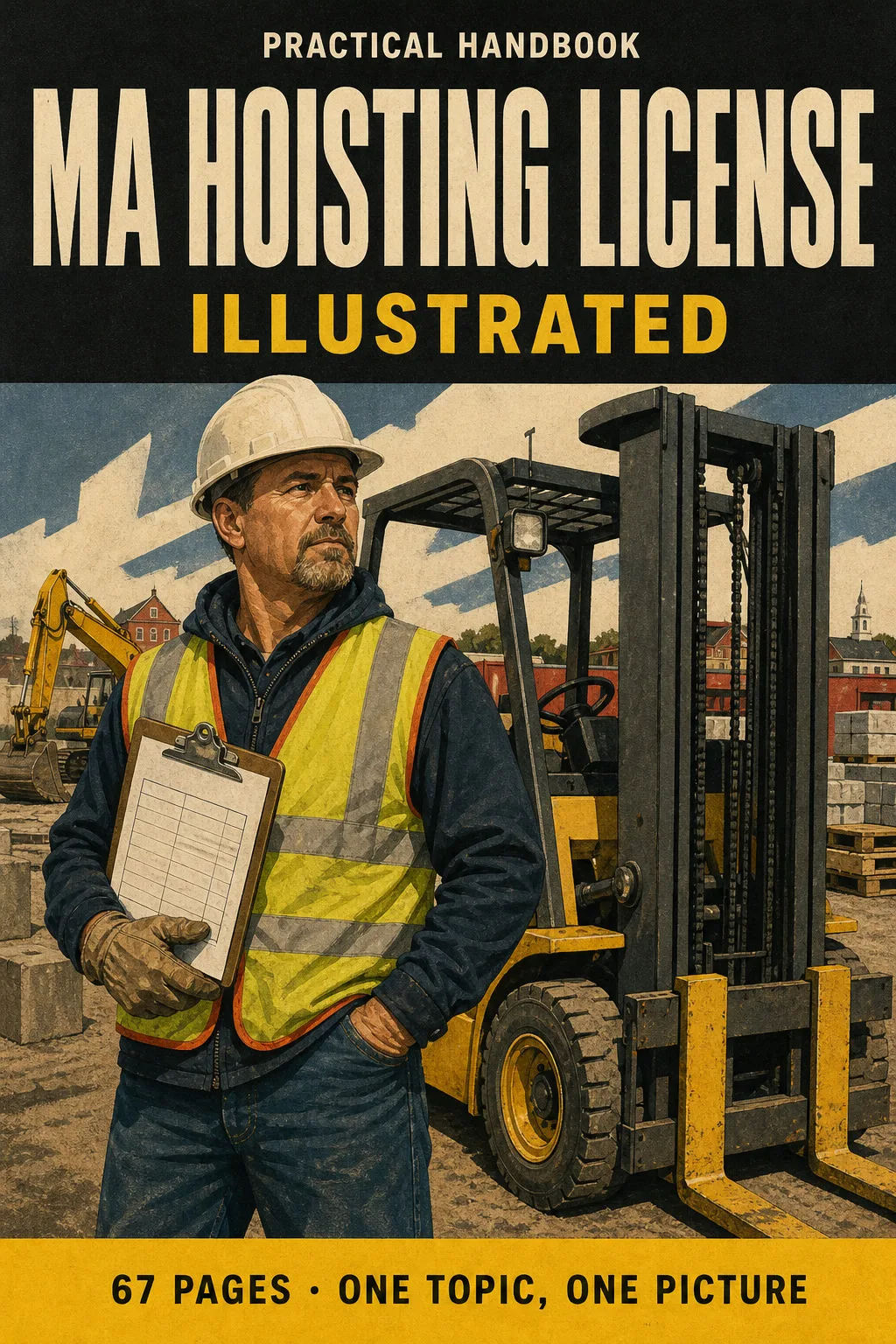
MA Hoisting License Illustrated

An illustrated study book for the Massachusetts hoisting license exam: load charts, rigging and sling angles, hand…

From US$ 27 US$ 63

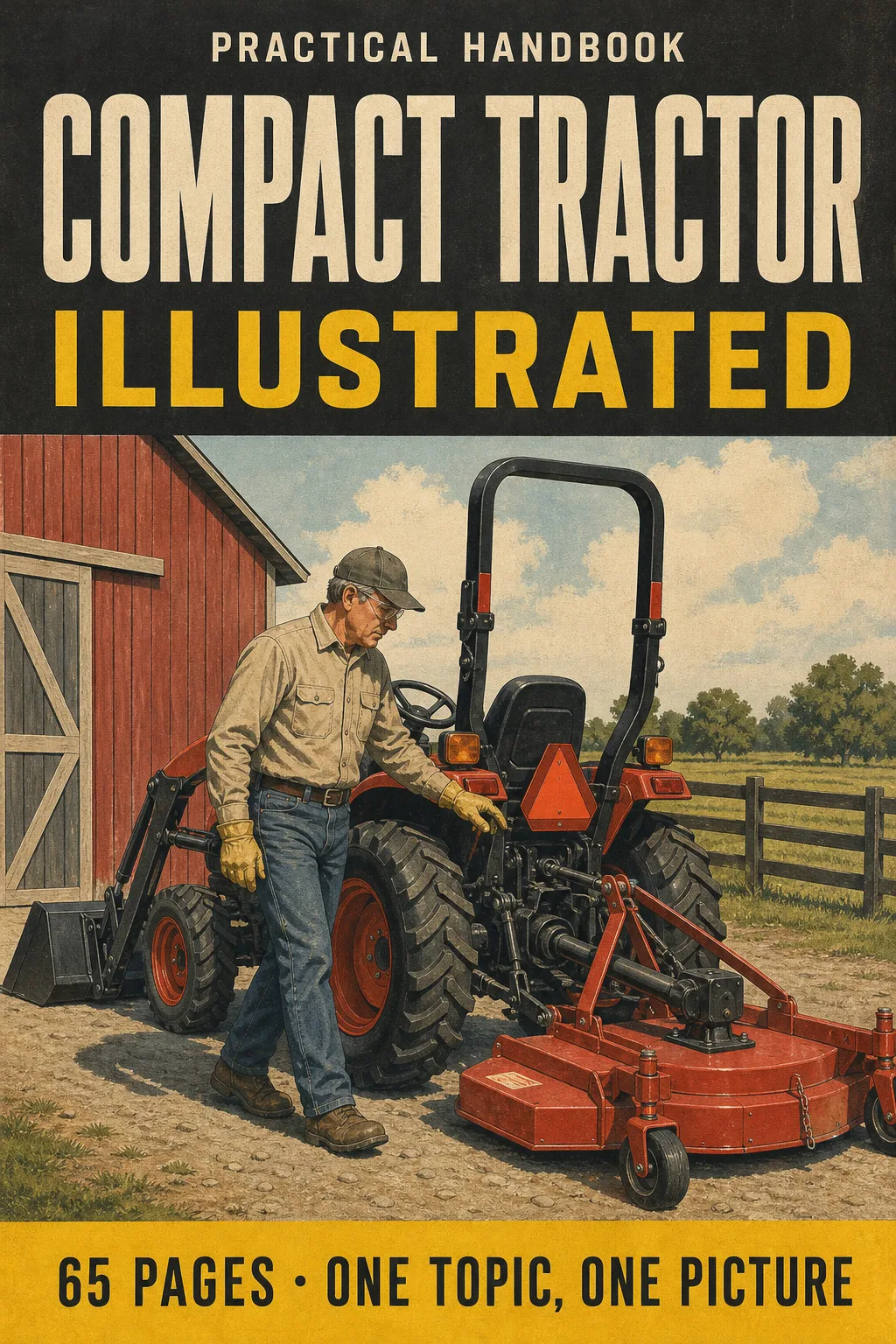
Compact Tractor Illustrated

Know every lever, hitch and implement on your compact tractor at a glance: one topic per page, every concept a drawing…

From US$ 27 US$ 63

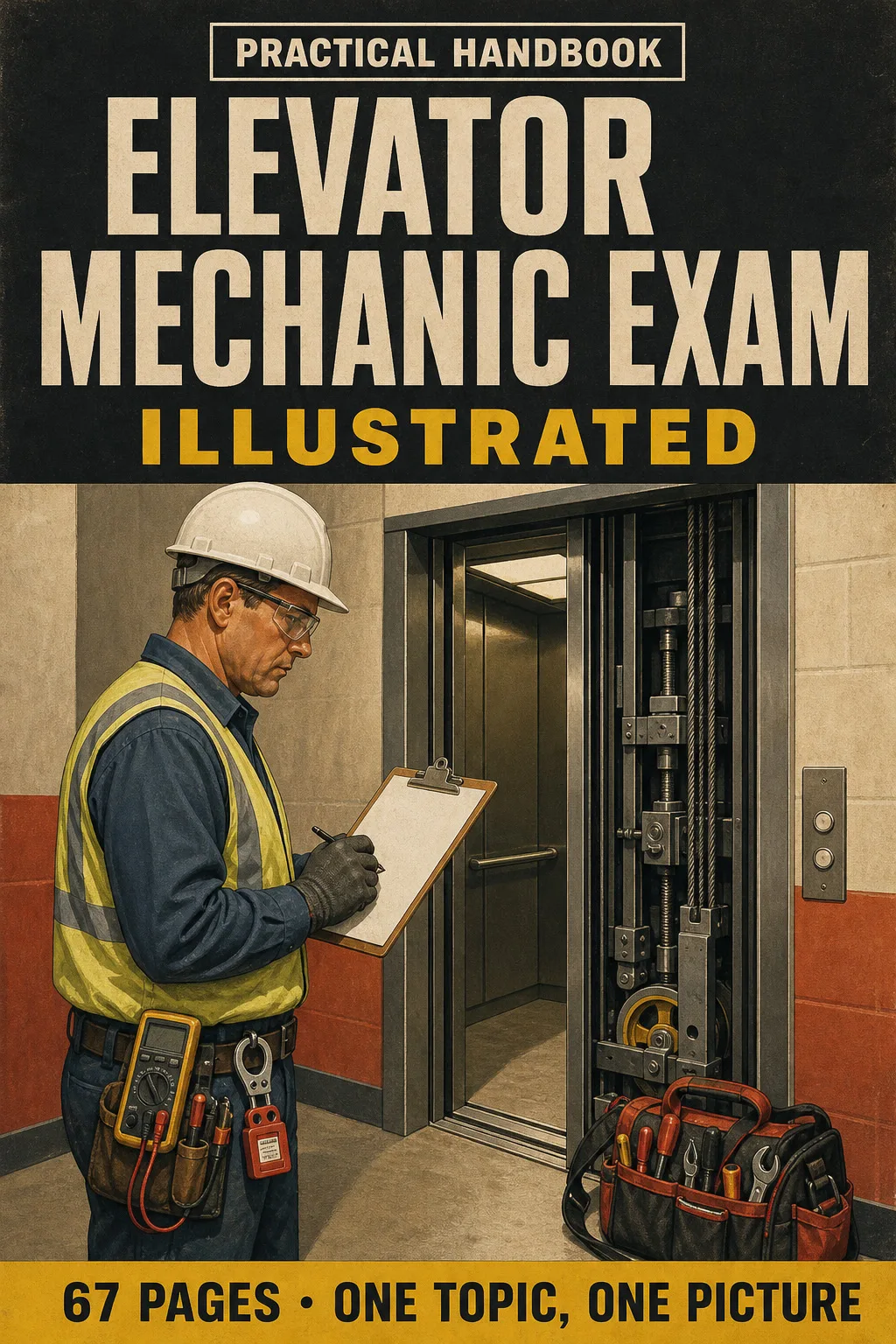
Elevator Mechanic Exam Illustrated

An illustrated study book for the elevator mechanic license and certification exams: traction and hydraulic systems…

From US$ 27 US$ 63