Study in Pictures🌐 English (United Kingdom)
Tree Inspection Illustrated

Digital book in PDF · read it on your phone or print it

Tree Inspection Illustrated

For the Professional Tree Inspection assessment and for anyone who inspects trees in the UK: duty of care, root plates, included bark, cavities, decay fungi with their hosts, ash dieback, tree risk and the written report. Each topic has its own page: first the drawing, then what you need to remember.

  • 67 illustrated pages
  • English
  • 30-day guarantee
£19.99£57.99
Get the book · £19.99

Price shown for: United Kingdom. In other countries, the checkout shows the price that applies there.

About this book

What it is

For the Professional Tree Inspection assessment and for anyone who inspects trees in the UK: duty of care, root plates, included bark, cavities, decay fungi with their hosts, ash dieback, tree risk and the written report. Each topic has its own page: first the drawing, then what you need to remember.

Who This Book Is For
  • You're on the tree inspection course
  • Your assessment date is close
  • You already inspect trees for a living
What it covers
  1. Duty of care and the law
  2. How a tree stands up
  3. The inspection route
  4. Roots, base and stem defects
  5. Crown and branch defects
  6. Decay fungi with their host trees
  7. Pests and pathogens
  8. Risk, recommendations and report
  9. Assessment day revision
Language
English (United Kingdom)
Pages
67
Format
Digital book in PDF · read it on your phone or print it
Price
£19.99 (United Kingdom)
Delivery
This is a digital PDF book sent to your email: nothing is printed or shipped.
30-Day Guarantee
30-day guarantee: if a file doesn't open, if the content isn't what the product page describes, if you were charged twice or the email never arrived, write to us and we'll refund you in full.

Look Inside the Book

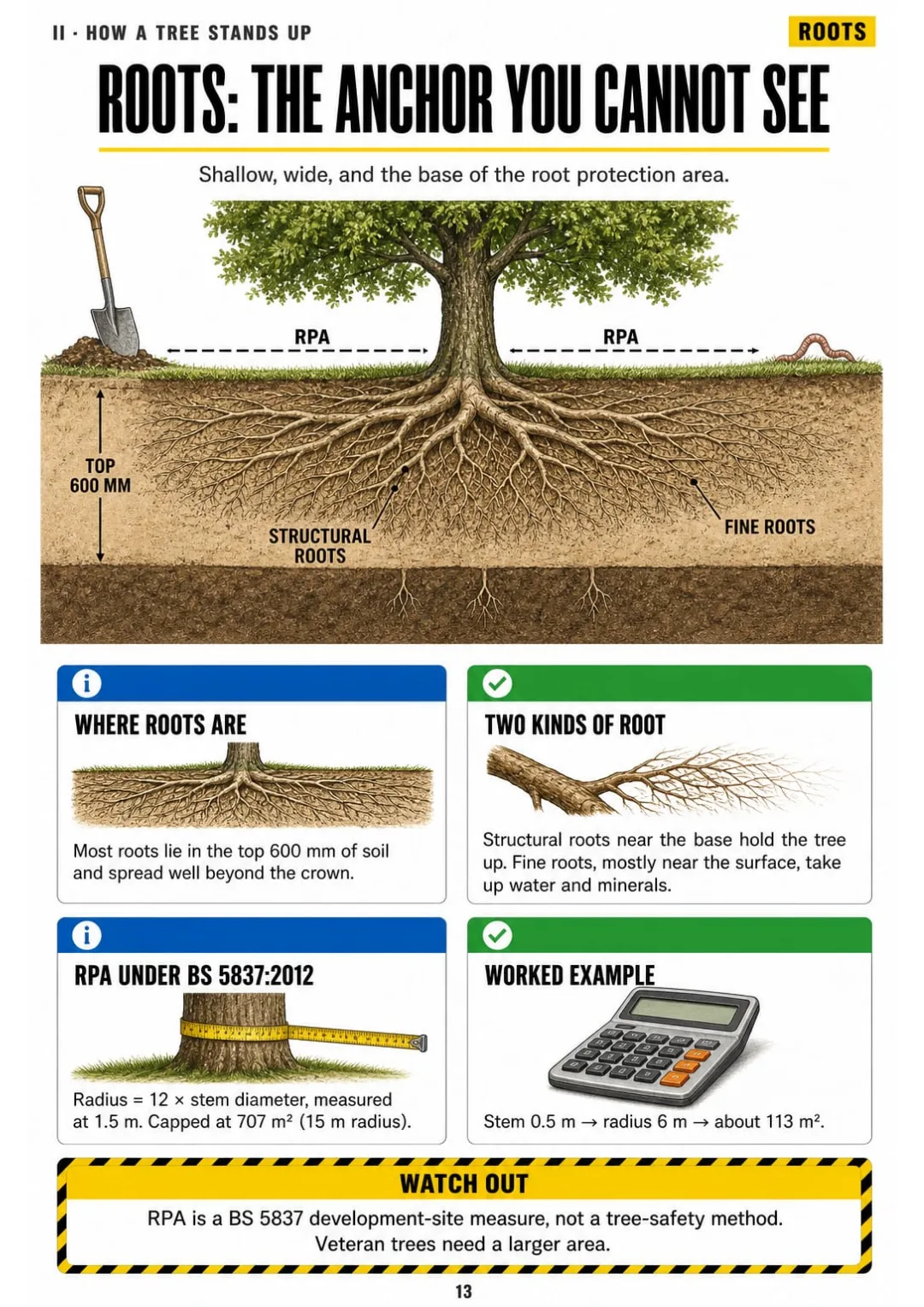
RPA radius = 12 × stem diameter at 1.5 m: a 0.5 m stem gives 6 m and about 113 m².
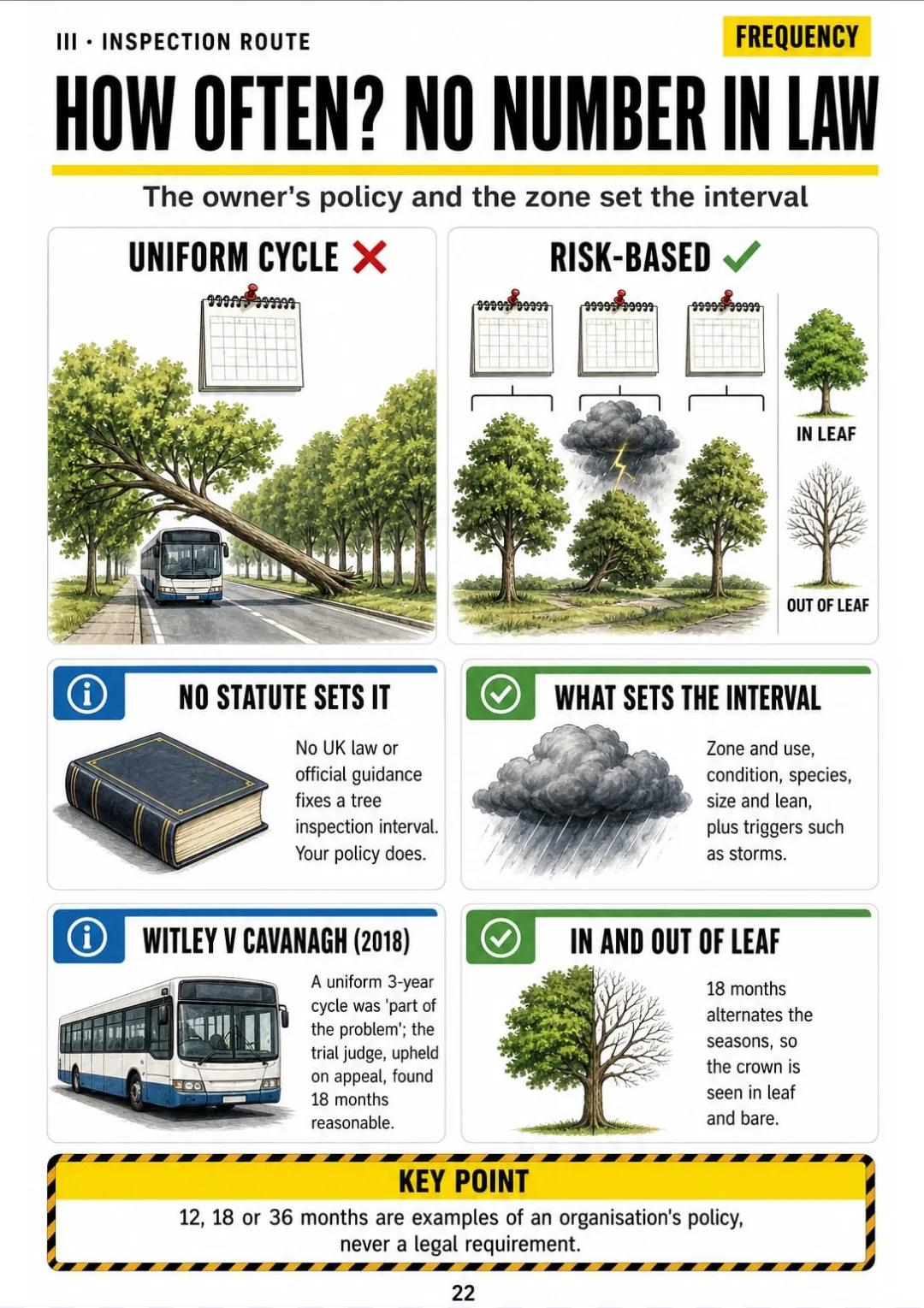
No fixed interval in UK law: Witley v Cavanagh (2018) criticised a uniform 3-year cycle
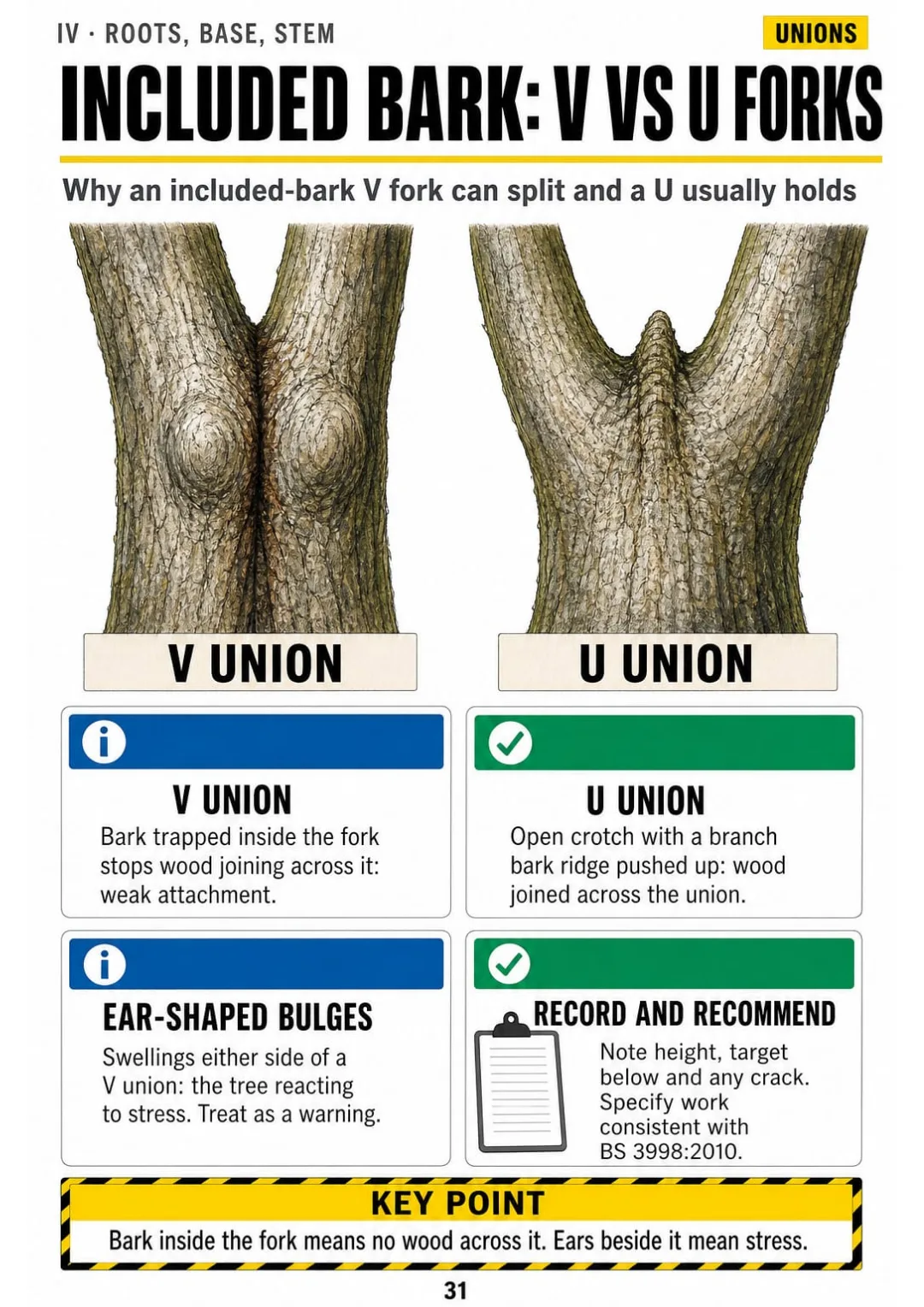
V union with included bark vs U union with branch bark ridge.
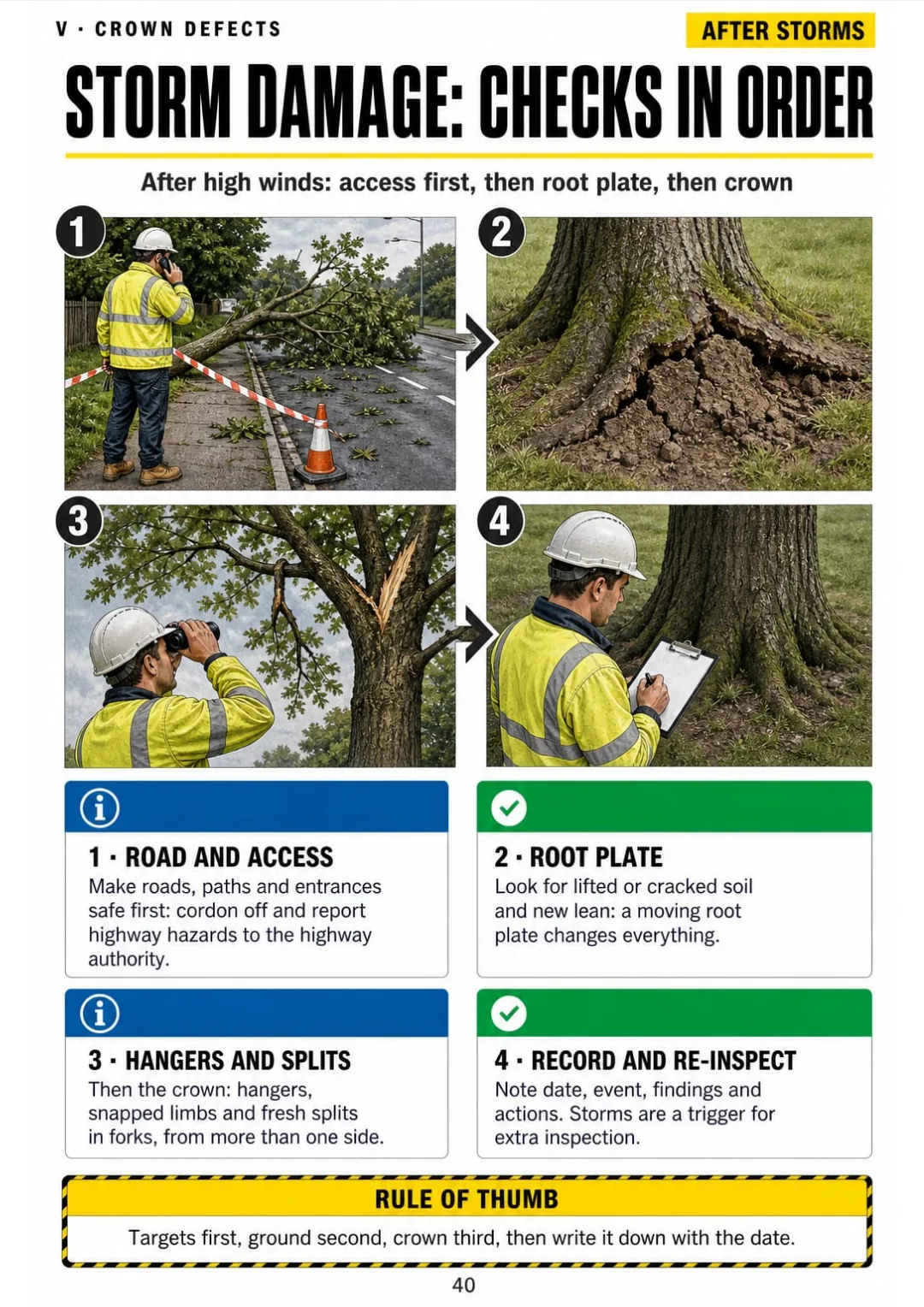
Four after-storm checks, always in the same order
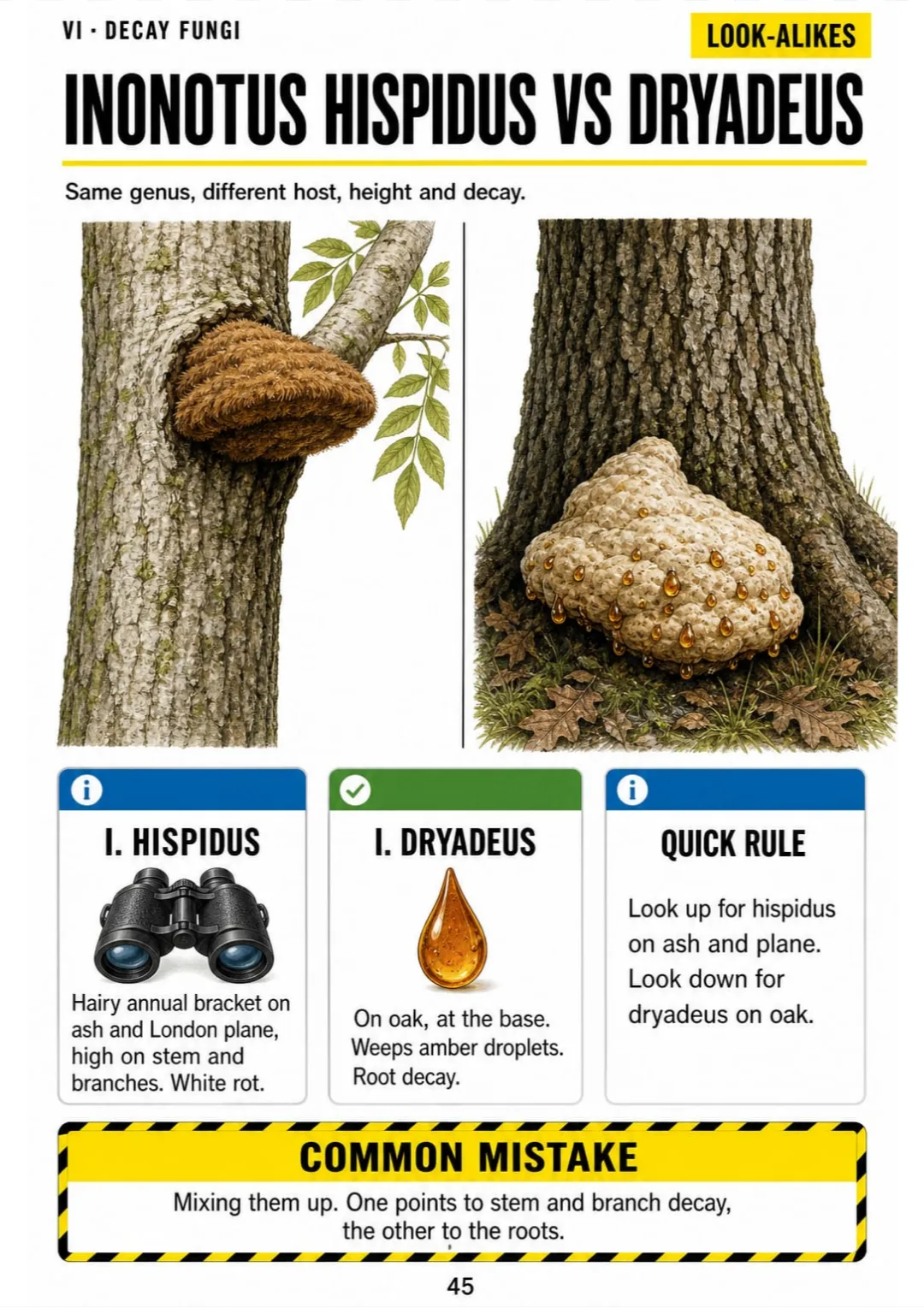
Inonotus hispidus: hairy, high, ash and plane. I. dryadeus: oak base, amber droplets.
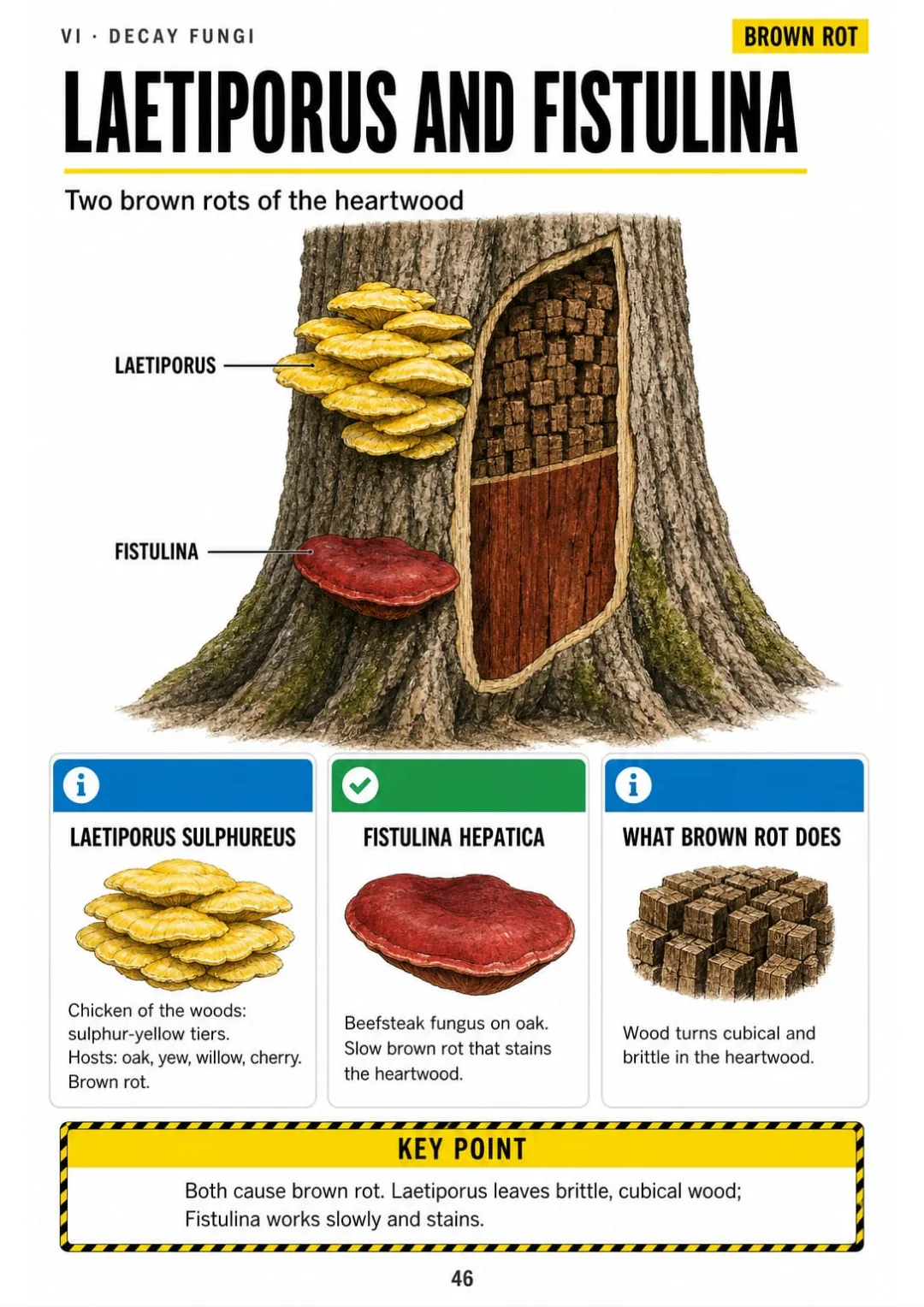
Laetiporus and Fistulina: two brown rots of the heartwood, mainly on oak.
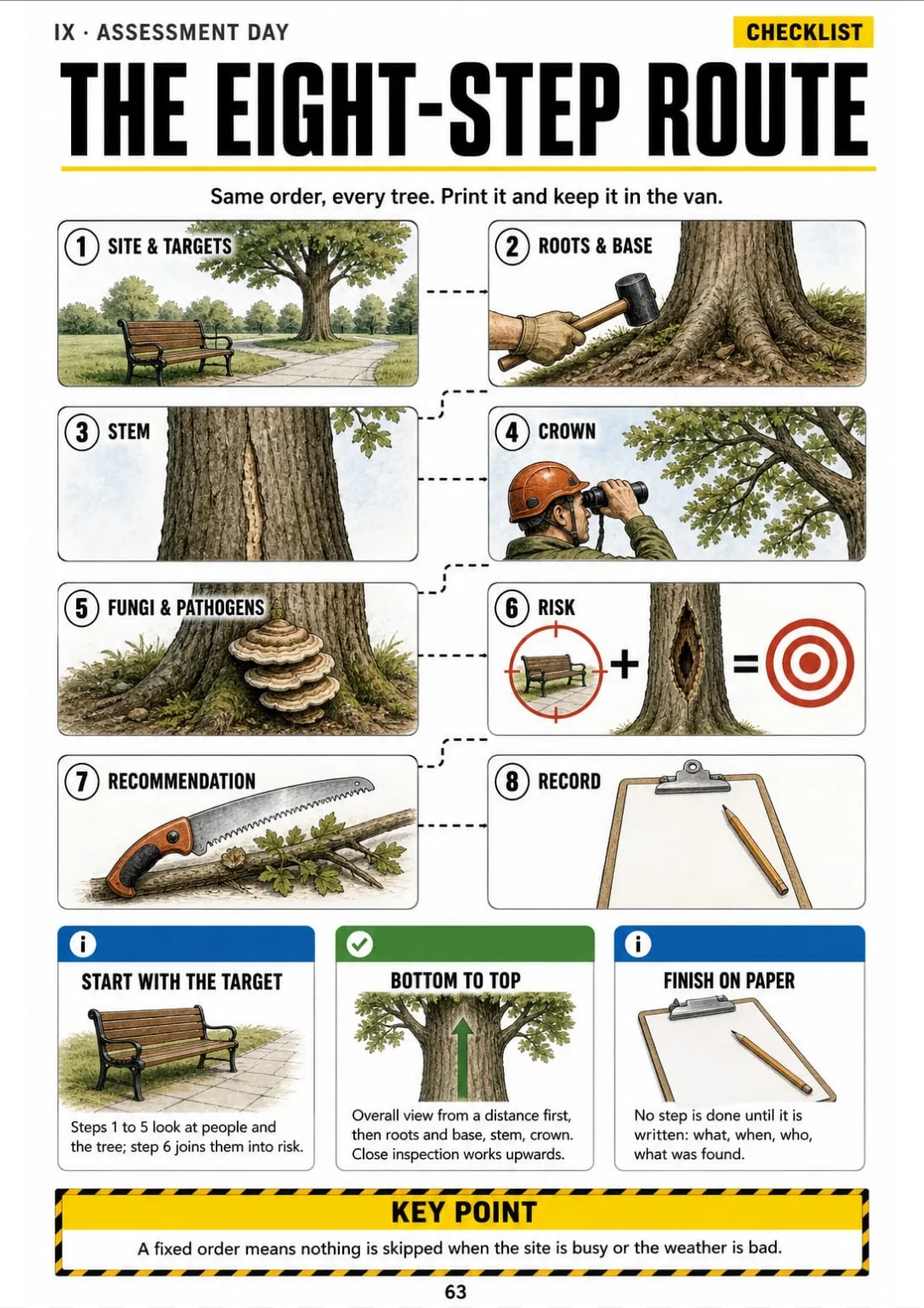
The full inspection route on one printable page: 8 steps, site to record.
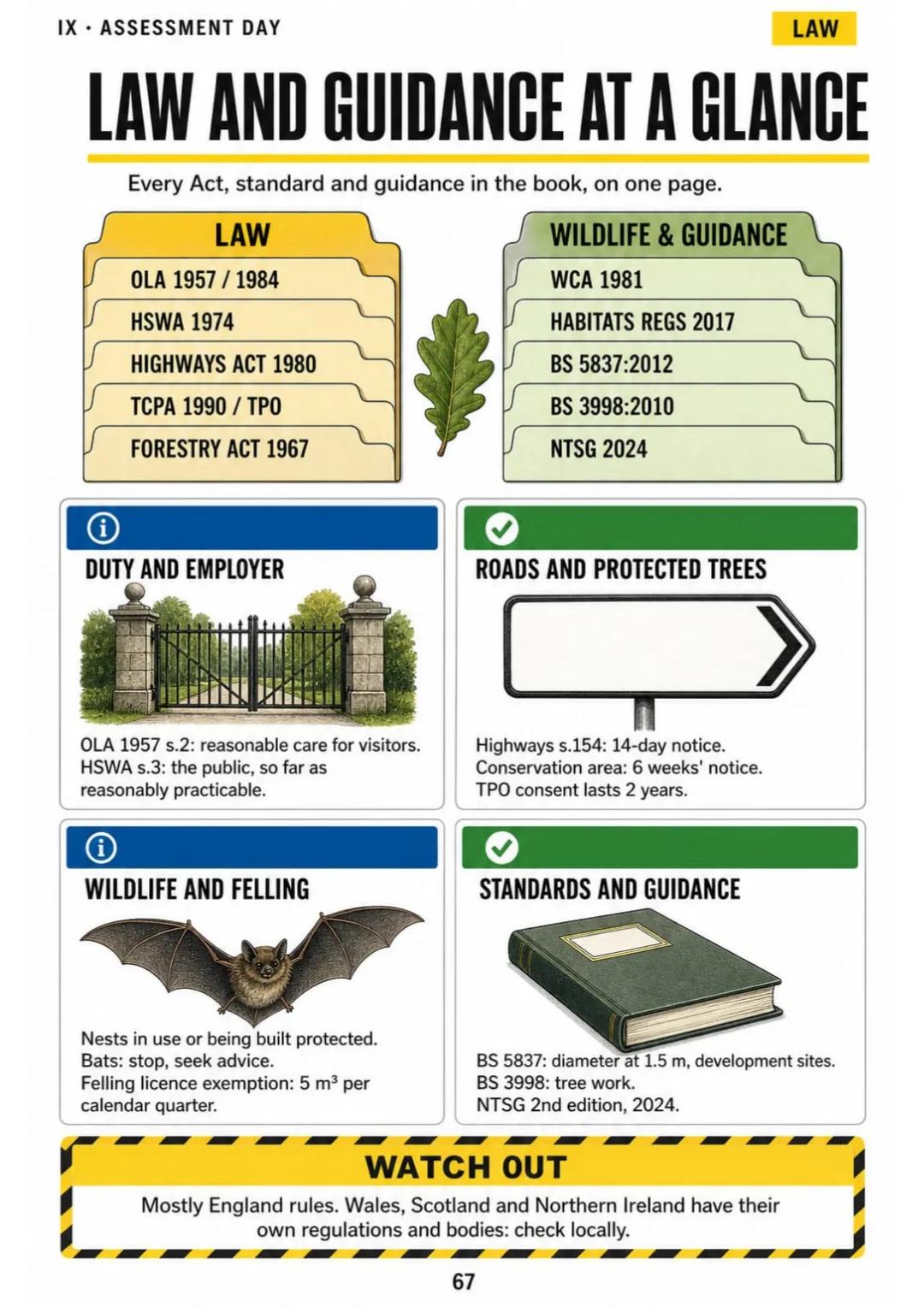
One-page table: OLA, HSWA, Highways Act, TPO, wildlife, felling, BS 5837, BS 3998, NTSG.

Take a Look at the 9 Parts and 63 Topics

Duty of care and the law

pp. 5-11
  1. Why trees are inspected: reasonable, not risk-free
  2. Occupiers' Liability Acts 1957 and 1984
  3. Health and Safety at Work Act 1974 and the employer
  4. Highways, neighbours and roadside trees
  5. Case law the inspector should know
  6. Tree Preservation Orders and conservation areas
  7. Wildlife, bats, nesting birds and felling licences

How a tree stands up

pp. 12-18
  1. Inside the stem: bark, phloem, cambium, xylem
  2. Roots: the anchor you cannot see
  3. Reaction wood and adaptive growth
  4. Body language of trees: reading the shape
  5. CODIT: how a tree walls off decay
  6. Vitality vs structure: two different questions
  7. Age classes and species profiles

The inspection route

pp. 19-24
  1. The fixed route: eight steps, every tree
  2. Zoning the site by target and use
  3. Levels of inspection: informal, basic, detailed
  4. Inspection frequency: no fixed number in law
  5. The kit for ground-based inspection
  6. Measuring and recording the basics

Roots, base and stem defects

pp. 25-33
  1. Root plate movement and soil heave
  2. Root damage, severance and soil compaction
  3. Buried root collar and girdling roots
  4. Lean: corrected vs uncorrected
  5. Cavities, hollows and the t/R ratio
  6. Cracks, seams, ribs and bulges
  7. Included bark and co-dominant stems
  8. Wounds, cankers and bark damage
  9. Stem decay: signs you can see from the ground

Crown and branch defects

pp. 34-40
  1. Deadwood: size, position and target
  2. Hangers and broken branches
  3. Weak branch attachments and over-extended limbs
  4. Regrowth after lopping, topping and pollarding
  5. Crown dieback and thinning
  6. Inspecting in leaf and out of leaf
  7. Storm damage and after-event checks

Decay fungi with their host trees

pp. 41-50
  1. How to read a decay fungus: three questions
  2. Ganoderma at the base
  3. Meripilus giganteus on beech
  4. Kretzschmaria deusta: the black crust
  5. Inonotus hispidus and Inonotus dryadeus
  6. Laetiporus and Fistulina: brown rot in the heartwood
  7. Polyporus squamosus and Rigidoporus ulmarius
  8. Armillaria: honey fungus
  9. Birch, conifer and ash specialists
  10. Fungi map: host, position, rot type

Pests and pathogens

pp. 51-56
  1. Ash dieback
  2. Oak processionary moth and oak health
  3. Horse chestnut and London plane problems
  4. Phytophthora and root pathogens
  5. Dutch elm disease, sooty bark and bark beetles
  6. Notifiable pests: what to do when you find one

Risk, recommendations and report

pp. 57-62
  1. The three parts of tree risk
  2. Reasoning likelihood of failure
  3. Risk assessment methods used in the UK
  4. Recommending the work
  5. Priority and re-inspection dates
  6. Writing a report that stands up

Assessment day revision

pp. 63-67
  1. The eight-step route on one page
  2. Fungi and pathogen identification checklist
  3. Practical inspection: what to do on the day
  4. Most frequent mistakes in inspection records
  5. Legal and guidance quick reference

Who This Book Is For

You're on the tree inspection course

Each topic of the course on its own page, drawn, so the theory finally has the same order as the tree in front of you.

Your assessment date is close

The eight-step route, the fungi map and the law table to revise for a written paper with no notes, plus practice questions with explained answers.

You already inspect trees for a living

A visual reference to print and keep in the van: defects, fungi with their hosts and re-inspection reasoning, one page each.

Plus: 2 Free Books

Tree Inspection Practice Questions
BONUS 1

Tree Inspection Practice Questions

Written and scenario-style questions with explained answers, so you find the gaps before assessment day, not during it.
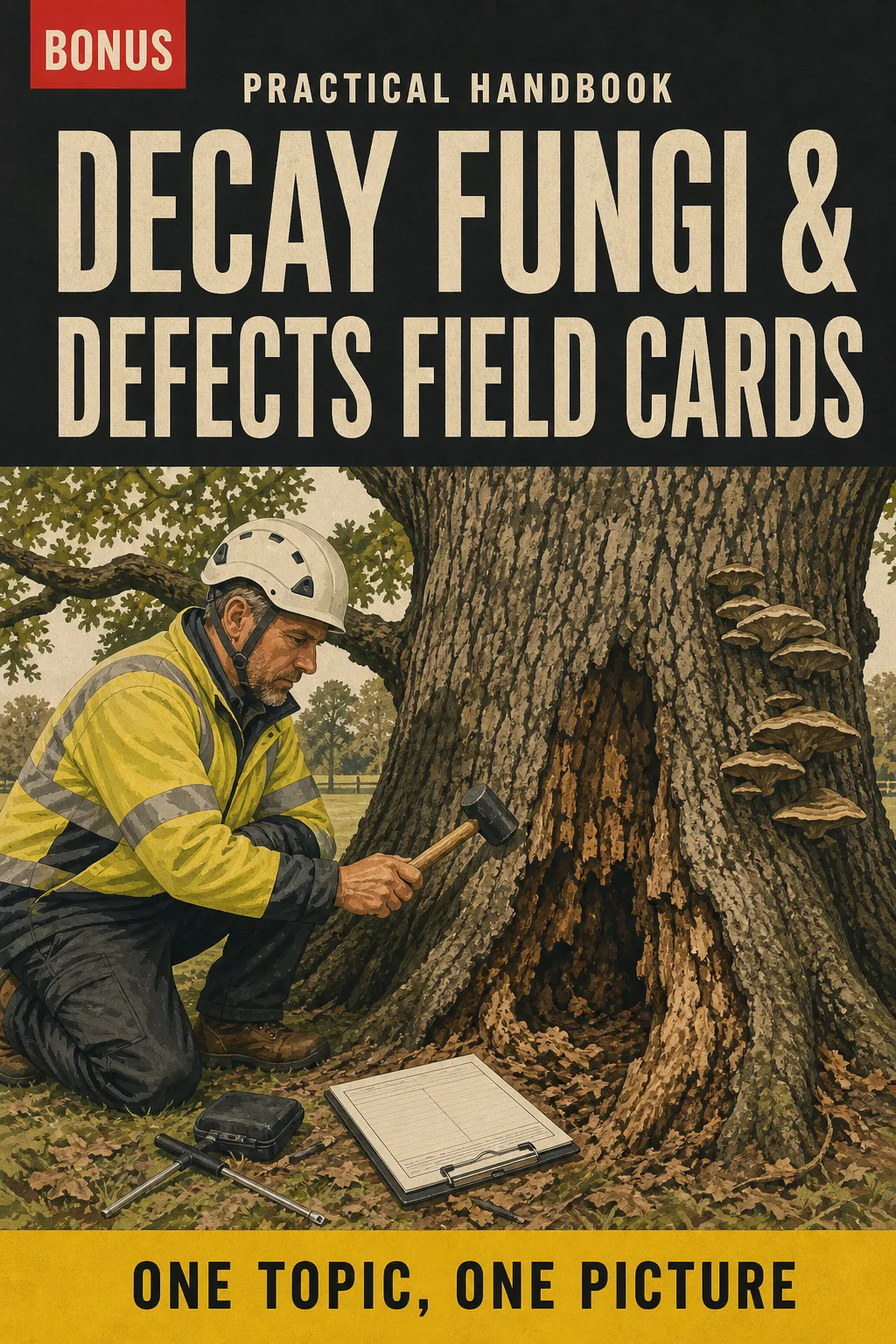
Decay Fungi & Defects Field Cards
BONUS 2

Decay Fungi & Defects Field Cards

Every key fungus and defect on a printable card with host tree, decay type and what it means, ready for the van or your pocket.

30-Day Guarantee

30-day guarantee: if a file doesn't open, if the content isn't what the product page describes, if you were charged twice or the email never arrived, write to us and we'll refund you in full. You pay once. No subscriptions.

Frequently Asked Questions

Is it for me if I've worked with trees for 20 years?

Yes. It isn't a beginner's book: it puts what you already know into one fixed inspection order and in the shape a written assessment and a report need.

Where does the content come from?

From current UK legislation and guidance: the Occupiers' Liability Acts, HSWA 1974, Highways Act 1980, TPO regulations, wildlife law, NTSG guidance, BS 5837:2012, BS 3998:2010 and Forest Research / Defra plant health guidance. It's UK material, not a US system.

Is it official, and does it fit the Professional Tree Inspection assessment?

No. It's an independent illustrated study book, not affiliated with or endorsed by any awarding organisation, and it doesn't give you a certificate: that comes from your accredited course and assessment. What it does is cover the ground a professional tree inspection assessment asks for: the law and duty of care for the written paper, the inspection route for the practical, fungi, pests and pathogens for identification, and tree risk and the report for the scenarios.

Does it replace the course?

No. It's for studying and revising alongside your training. It doesn't replace accredited training, practice in the field or professional judgement.

Are the practice questions the ones in the assessment?

No. They're written for this book, in the style of written and scenario questions, so you can check what you know.

When and how does it arrive?

As a PDF by email, to the address you enter at checkout: the book and the 2 bonuses.

Do I have to pay every month?

No. It's a one-off payment.

Can I have it on paper?

Yes. It's a PDF you can print at home or at a print shop, whole or just the pages you want in the van.

How does the refund work?

You have 30 days. We refund everything if the file won't open, if the book isn't what you see on this page, if you were charged twice or if the email doesn't arrive: just email us.

£19.99£57.99
Get the book · £19.99

This is a digital PDF book sent to your email: nothing is printed or shipped.

More books on this topic

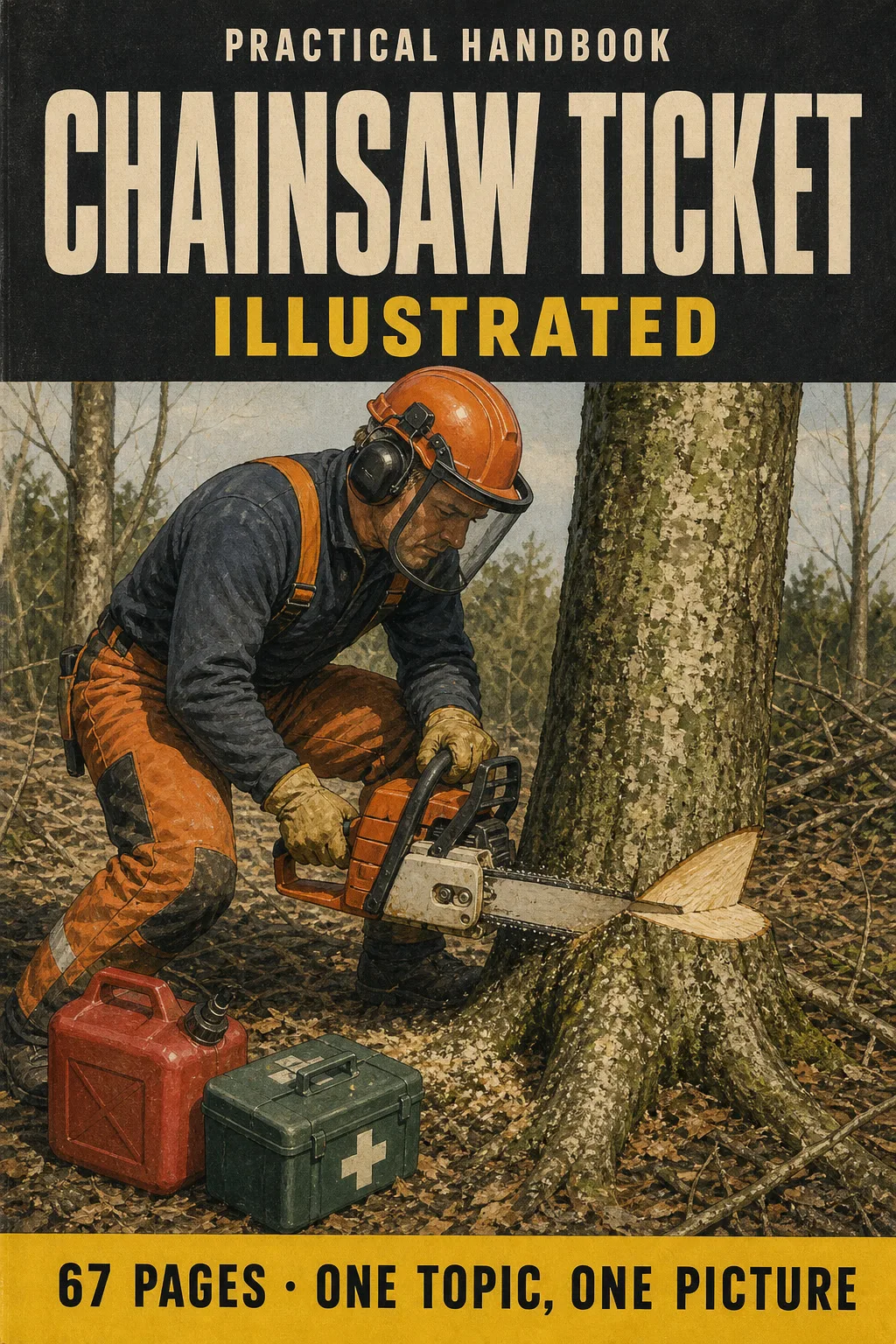
Chainsaw Ticket Illustrated

Chainsaw maintenance, cross-cutting and felling small trees up to 380mm, one topic per page with a clear drawing…

From £19.99 £57.99

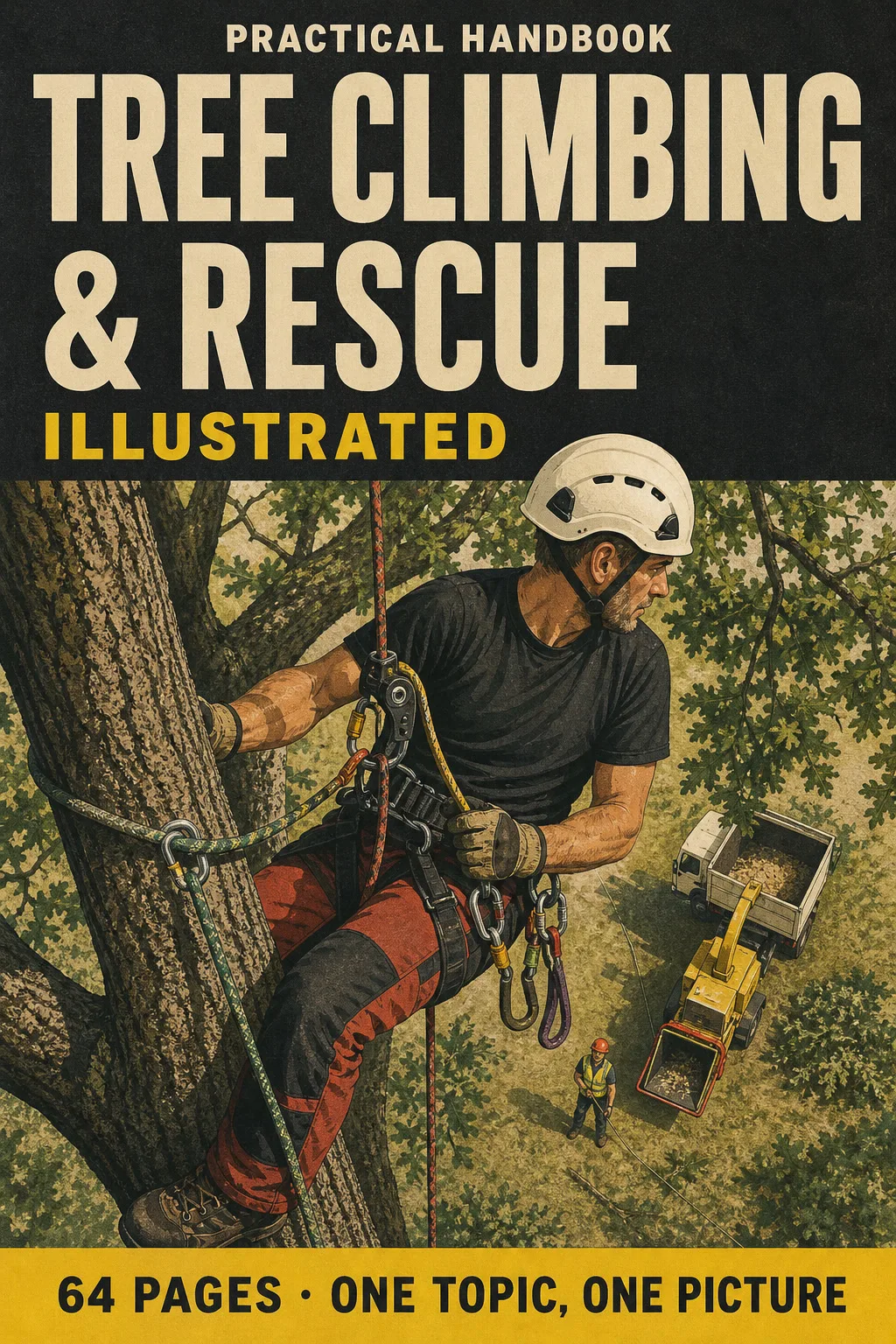
Tree Climbing & Rescue Illustrated

Tree climbing, aerial rescue and aerial chainsaw work, one topic per illustrated page: the kit and pre-use checks, the…

From £19.99 £57.99

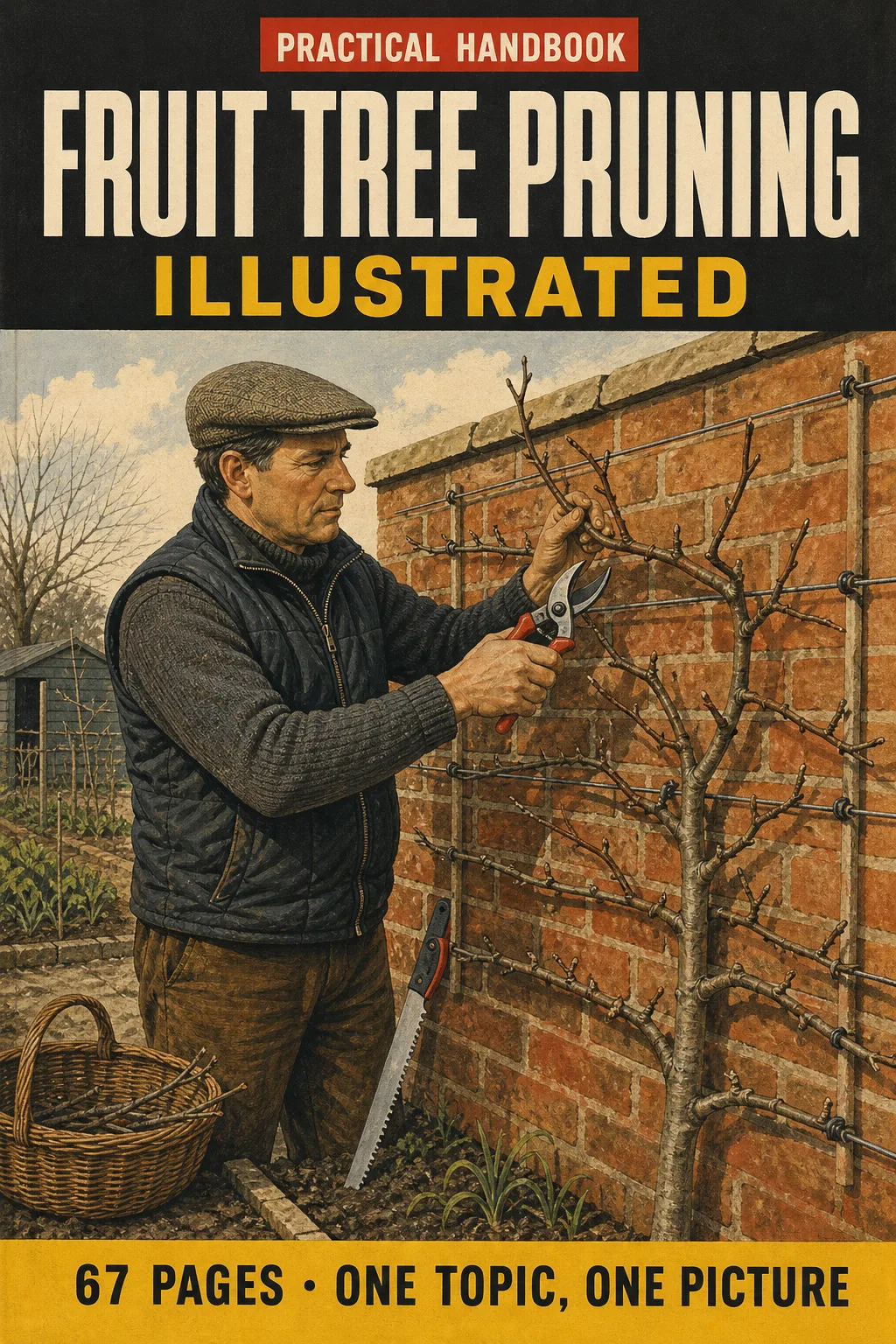
Fruit Tree Pruning Illustrated

Fruit Tree Pruning Illustrated shows you, one topic per page, where to cut on apples, pears, plums and cherries: fruit…

From £19.99 £57.99

Tree Surgery Illustrated

An illustrated PDF book for tree surgery training in the UK: chainsaw maintenance and cross-cutting, felling small…

From £19.99 £57.99