Study in Pictures🌐 English (United Kingdom)
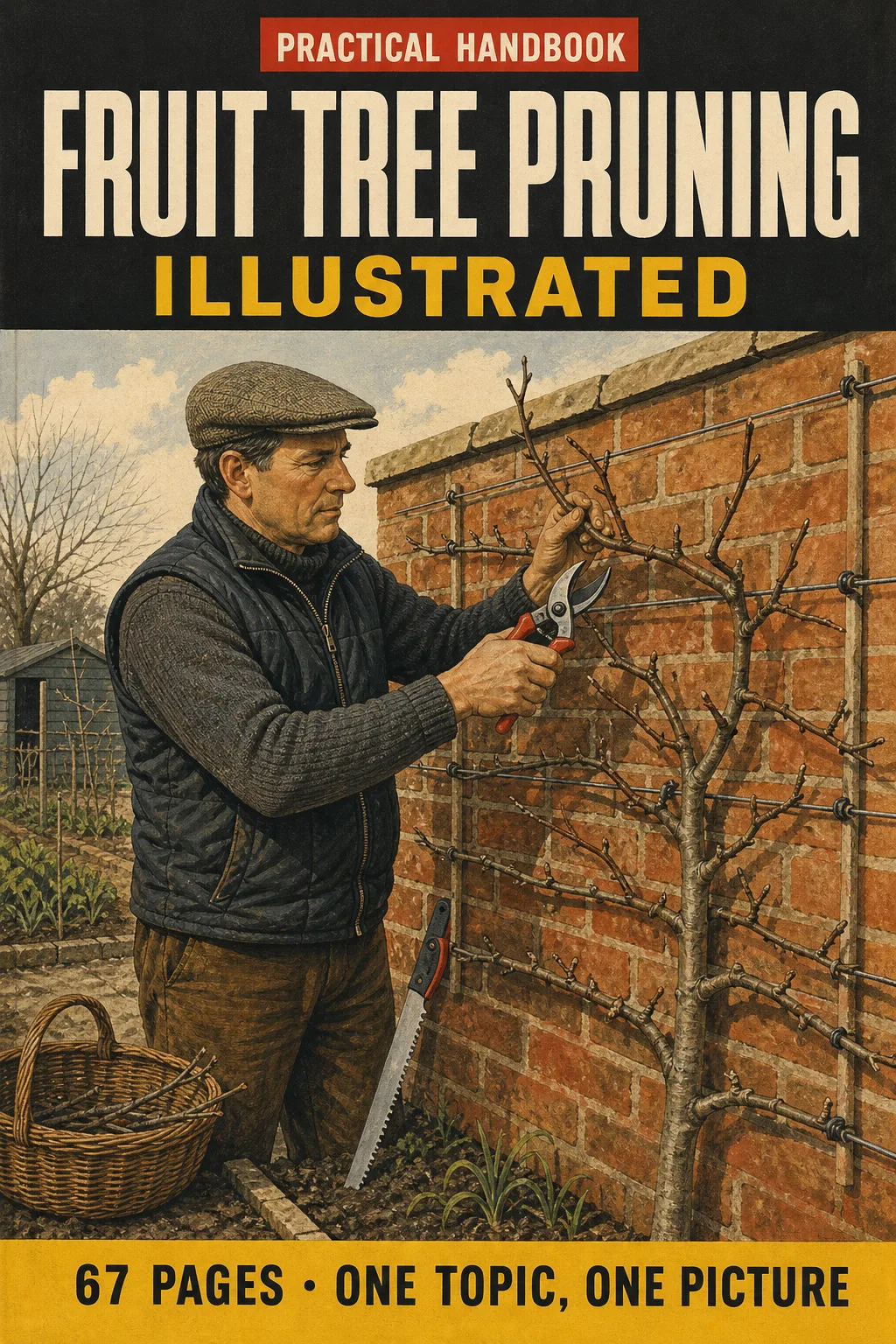
Fruit Tree Pruning Illustrated

Digital book in PDF · read it on your phone or print it

Fruit Tree Pruning Illustrated

Fruit buds and leaf buds, the right cut above a bud, the UK winter window, plums and cherries, summer pruning, cordons and espaliers, and old neglected trees. Each topic has its own page: the drawing first, then what you need to remember.

  • 67 illustrated pages
  • English
  • 30-day guarantee
£19.99£57.99
Get the book · £19.99

Price shown for: United Kingdom. In other countries, the checkout shows the price that applies there.

About this book

What it is

Fruit buds and leaf buds, the right cut above a bud, the UK winter window, plums and cherries, summer pruning, cordons and espaliers, and old neglected trees. Each topic has its own page: the drawing first, then what you need to remember.

Who This Book Is For
  • Your first fruit tree
  • Winter pruning is coming up
  • You already prune every year
What it covers
  1. Read the tree before you cut
  2. The cut itself
  3. Apples and pears in winter
  4. Plums and cherries
  5. Summer pruning
  6. Cordons, espaliers and fans
  7. Bringing back an old, neglected tree
  8. After pruning: crop and care
  9. Quick review and frequent mistakes
Language
English (United Kingdom)
Pages
67
Format
Digital book in PDF · read it on your phone or print it
Price
£19.99 (United Kingdom)
Delivery
This is a digital PDF book sent to your email: nothing is printed or shipped.
30-Day Guarantee
30-day guarantee: if a file doesn't open, if the content isn't what the product page describes, if you were charged twice or the email never arrived, write to us and we'll refund you in full.

Look Inside the Book

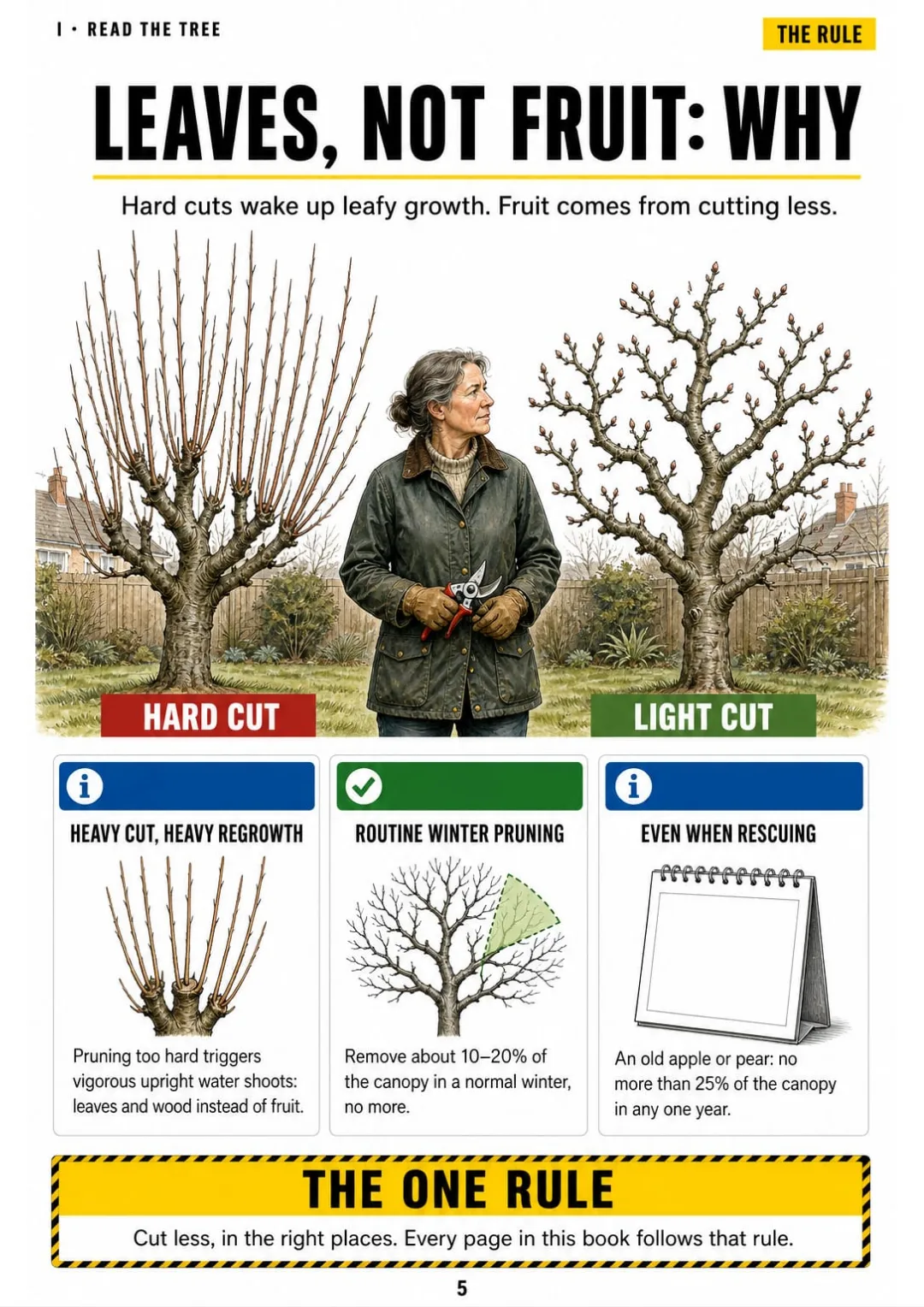
Routine winter pruning removes about 10–20% of the canopy, not more
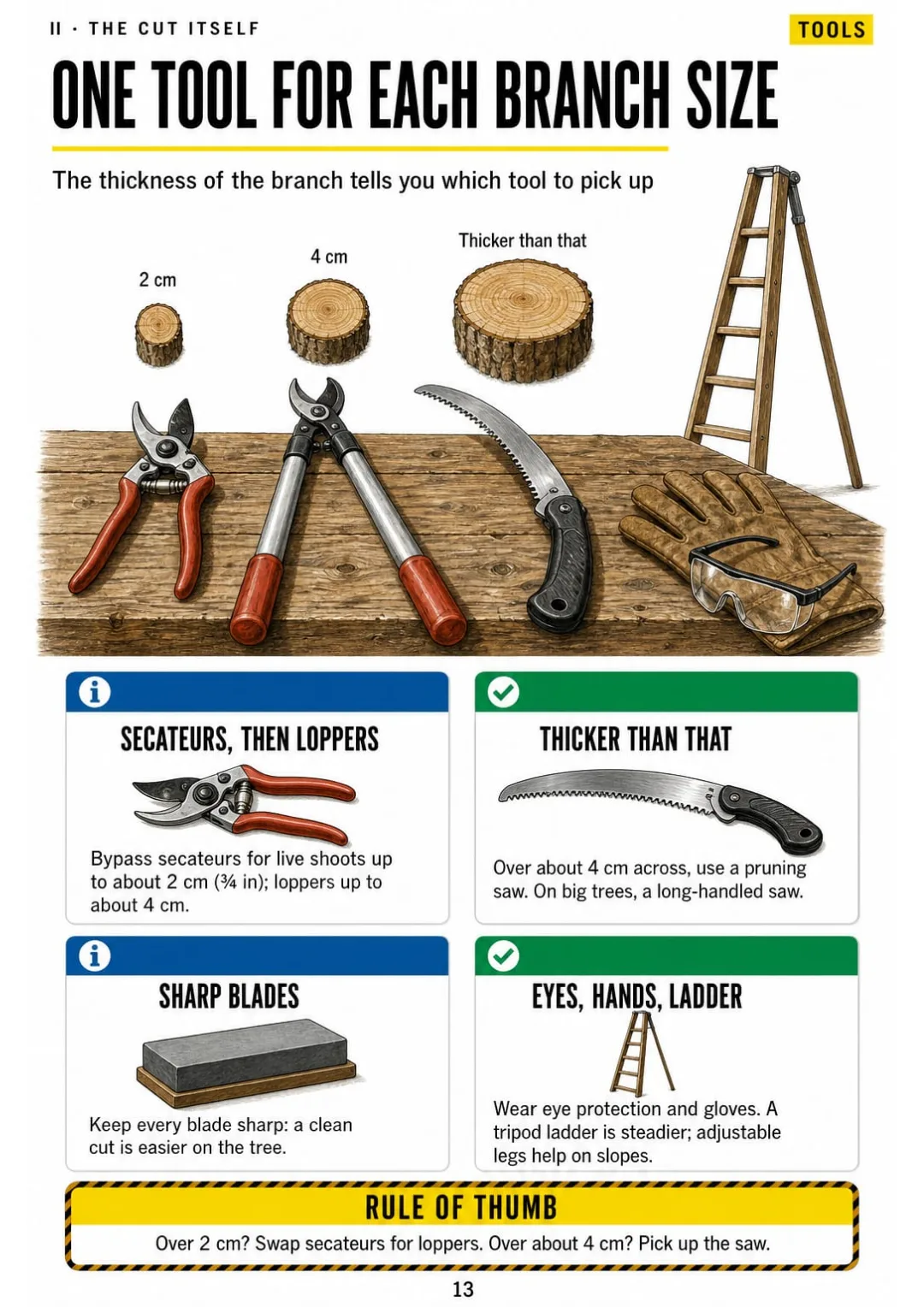
Up to 2 cm: bypass secateurs · up to 4 cm: loppers · thicker: pruning saw · eye protection, gloves, tripod ladder
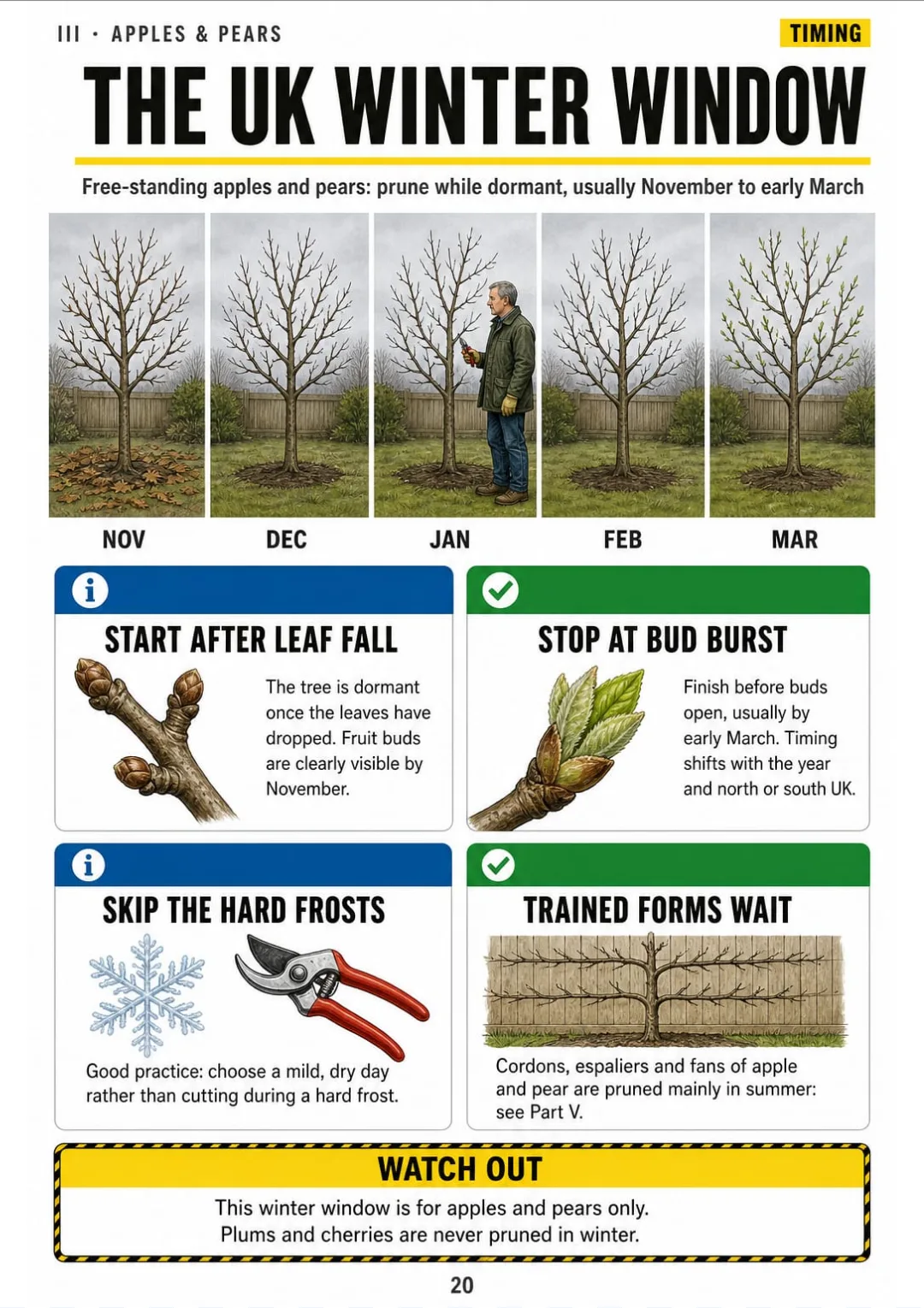
Winter-prune free-standing apples and pears while dormant: usually November to early March.
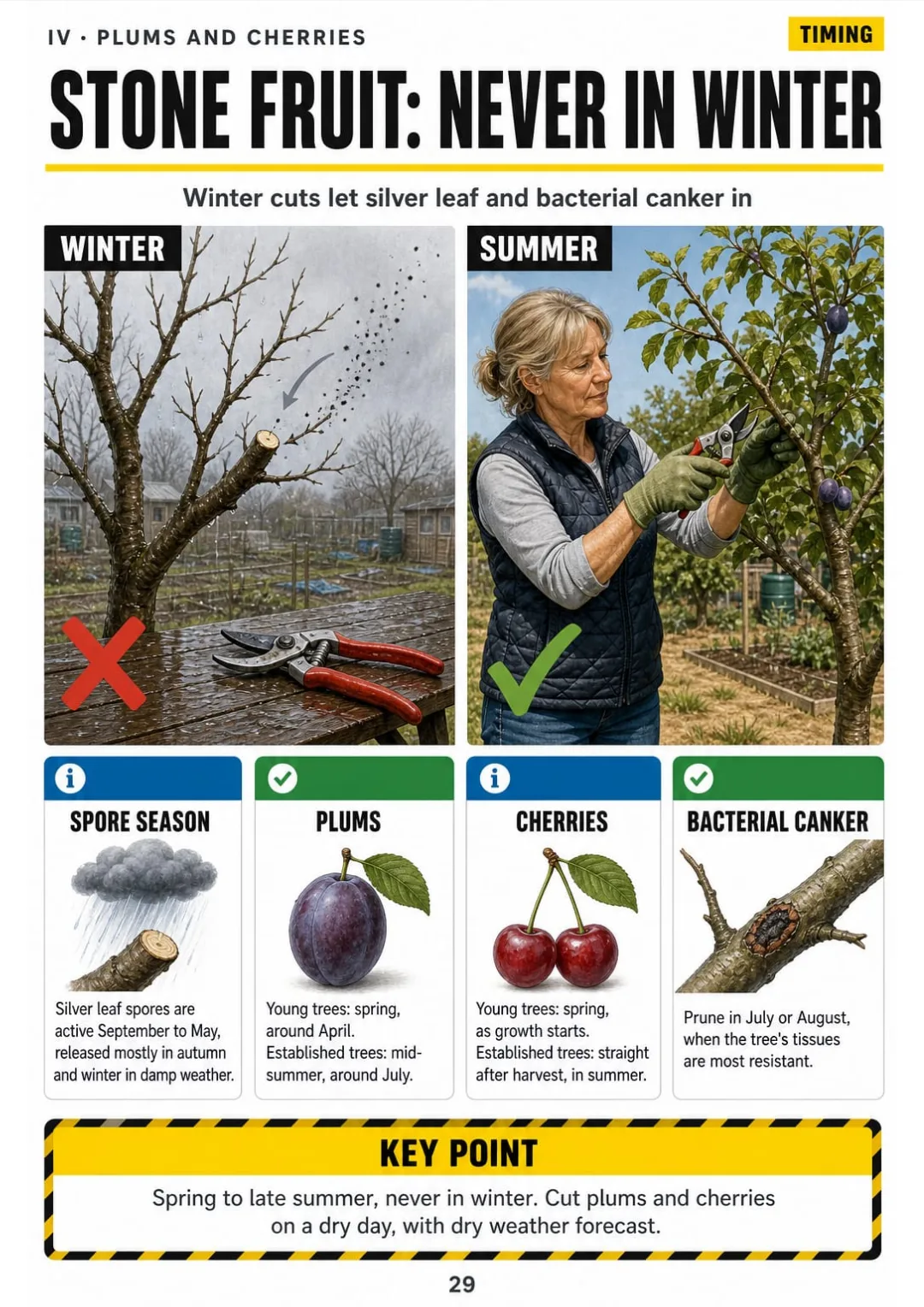
Silver leaf spores fly September to May: prune plums and cherries in spring or summer.
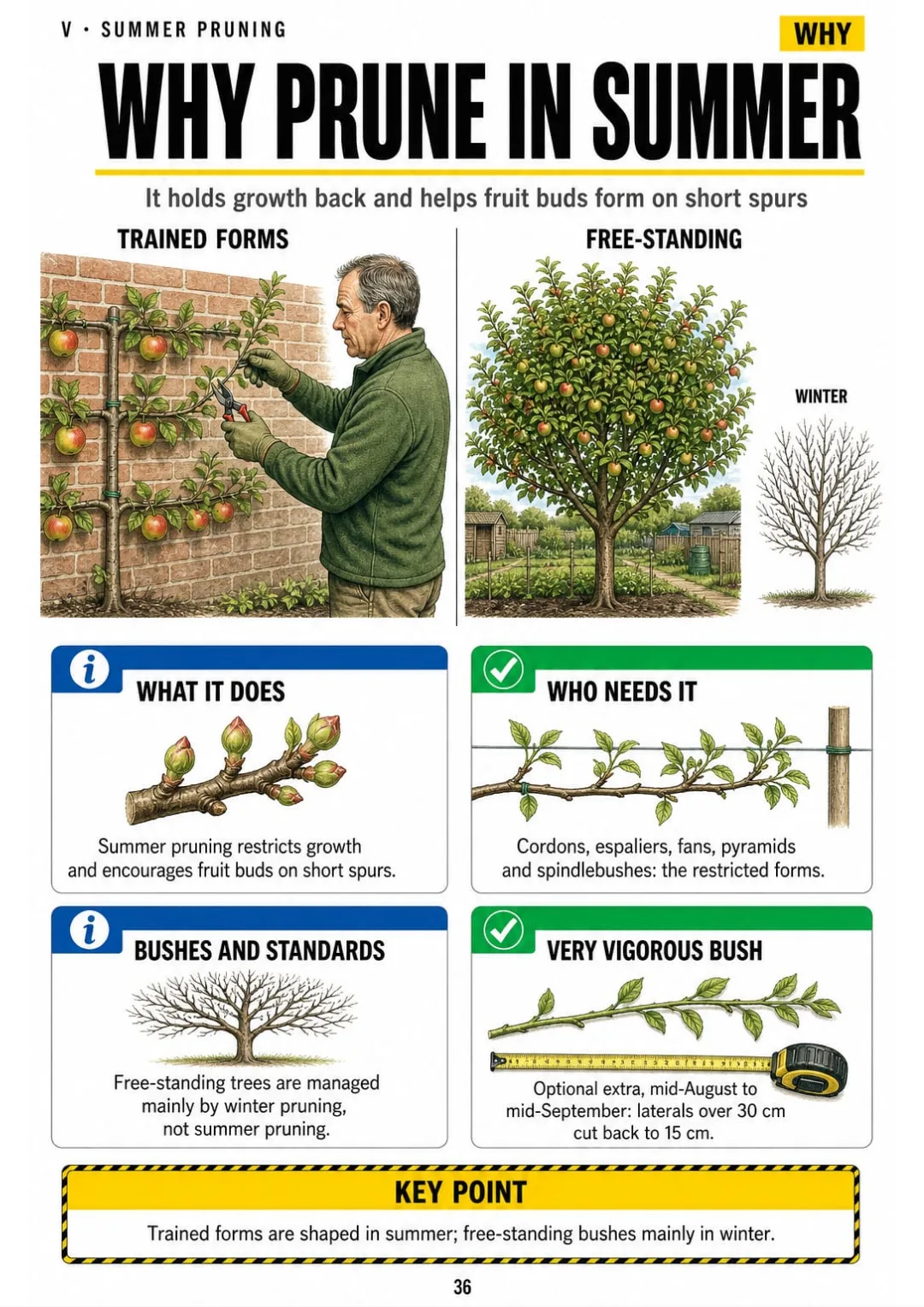
Summer pruning is mainly for cordons, espaliers and fans; bushes are pruned mostly in winter.
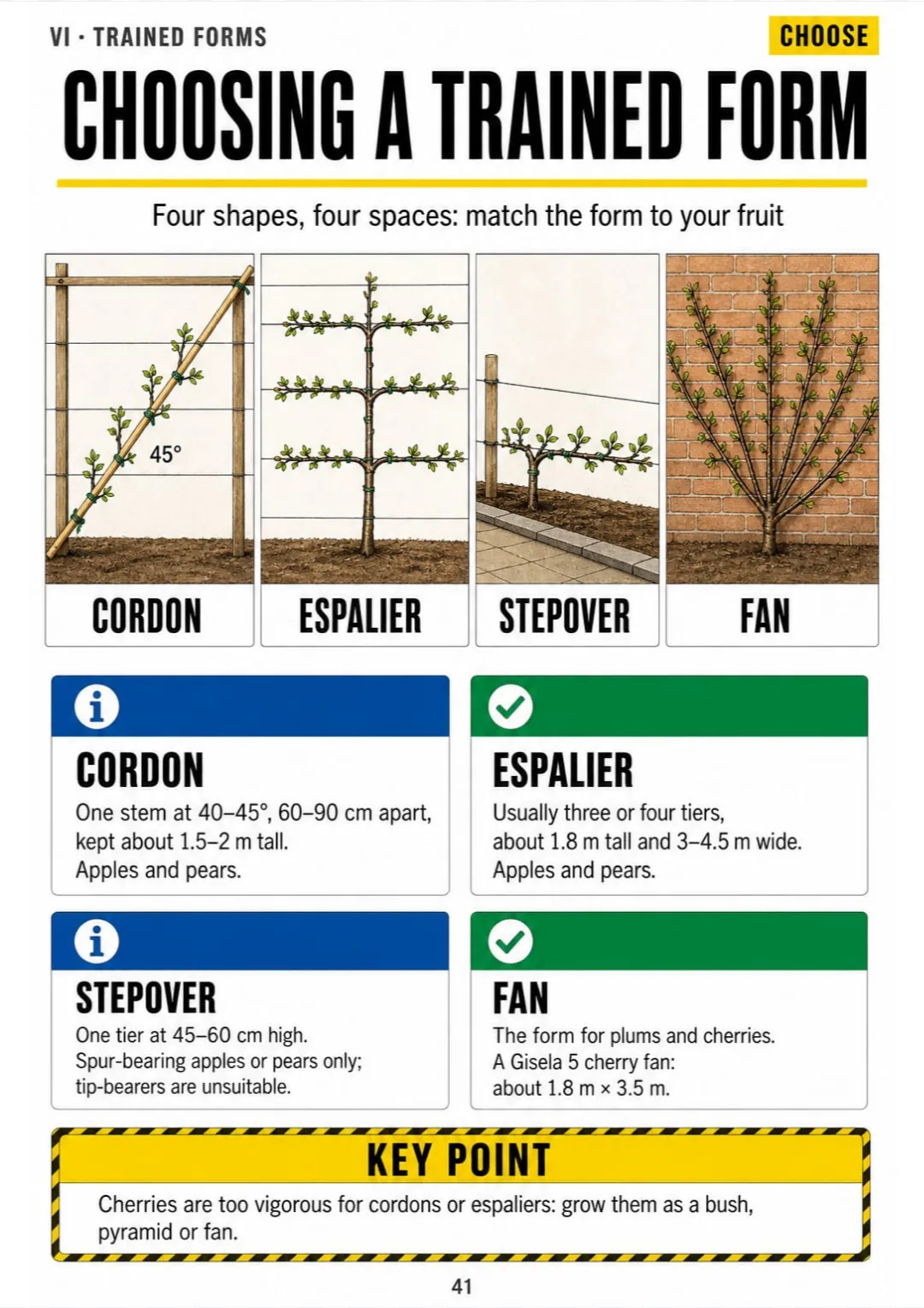
Four trained forms with real sizes: cordon 60–90 cm apart, espalier up to 4.5 m wide, stepover at 45–60 cm.
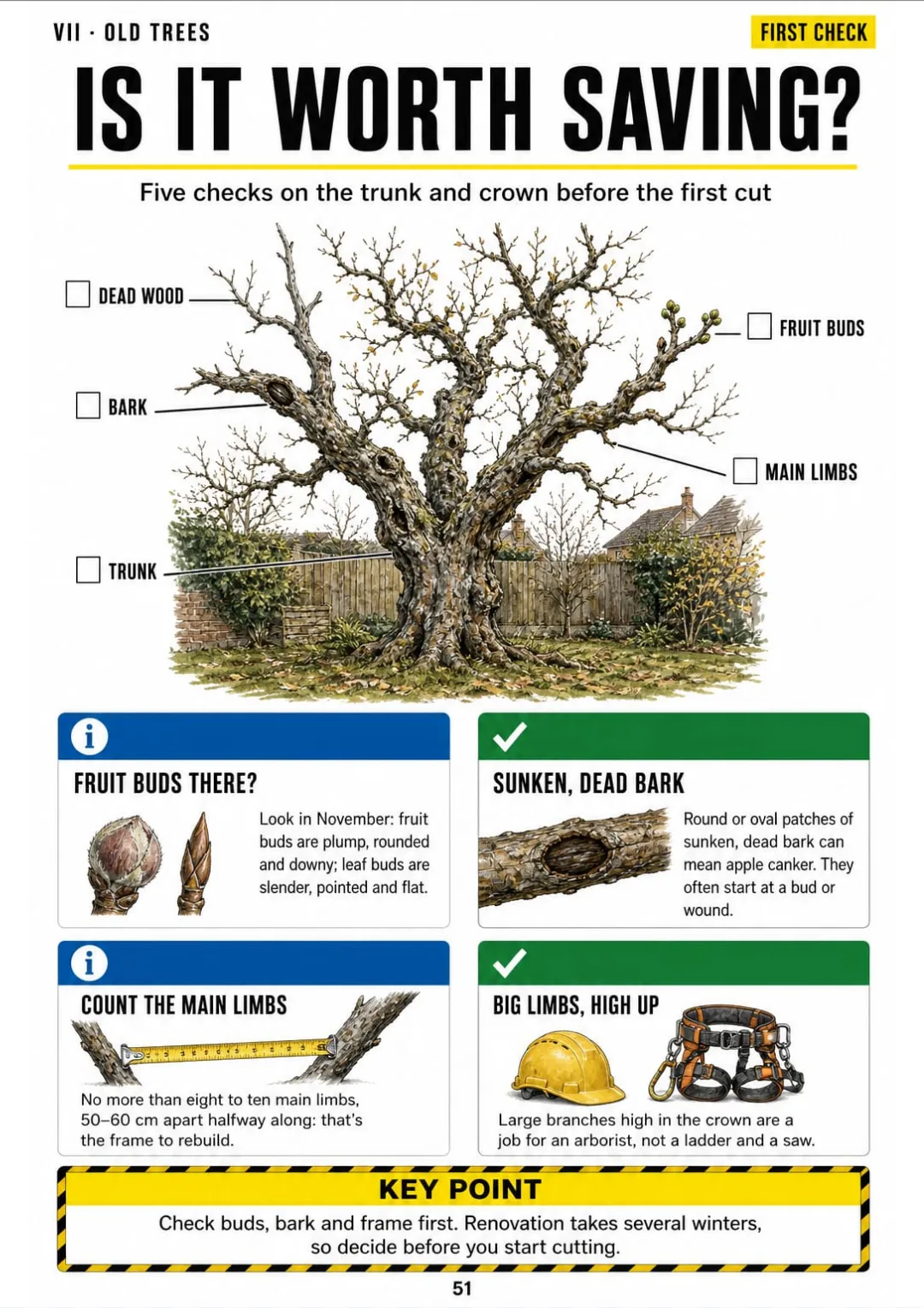
Fruit buds are plump and downy; keep no more than 8–10 main limbs, 50–60 cm apart.
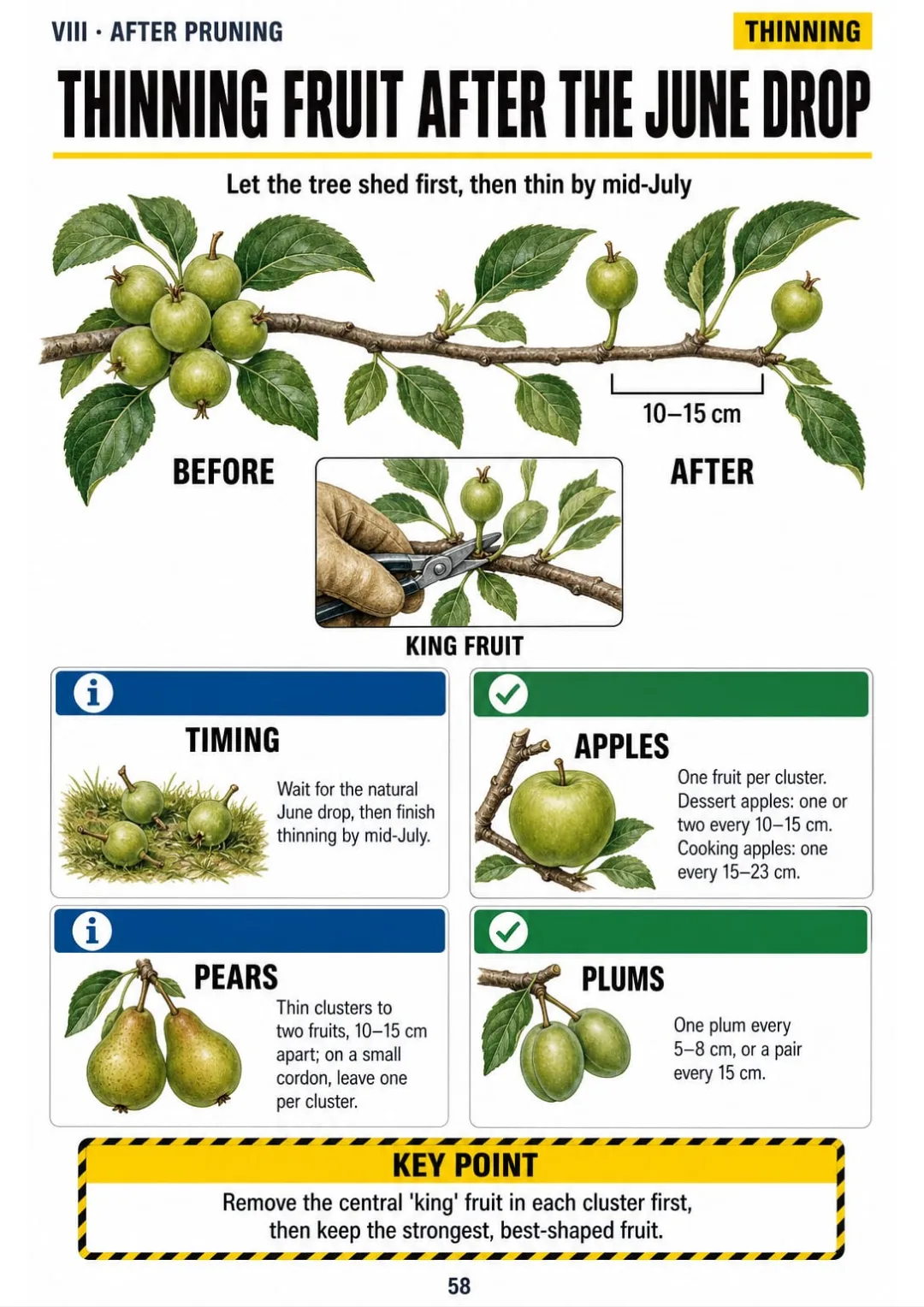
Dessert apples one or two every 10–15 cm, plums every 5–8 cm, done by mid-July.

Take a Look at the 9 Parts and 63 Topics

Read the tree before you cut

pp. 5-12
  1. Why your tree gives leaves, not fruit
  2. The five-step reading order
  3. Fruit bud or leaf bud?
  4. Wood age: one-year, two-year, older
  5. Spurs: the fruiting knuckles
  6. Spur-bearer or tip-bearer?
  7. Leader, laterals, water shoots, suckers
  8. Your rootstock decides the size

The cut itself

pp. 13-19
  1. Tools for each size of branch
  2. Clean blades between trees
  3. The right cut above a bud
  4. Choosing which way the bud faces
  5. The branch collar: where the saw goes
  6. The three-cut method for big branches
  7. Wound paint: usually not

Apples and pears in winter

pp. 20-28
  1. When: the UK winter window
  2. First: dead, diseased, damaged
  3. Open centre or central leader?
  4. Year one: the formative cut
  5. Years two and three: building the frame
  6. Established tree: the leader and the laterals
  7. Renewal pruning on laterals
  8. Thinning crowded spurs
  9. Pears: what's different

Plums and cherries

pp. 29-35
  1. Never in winter: silver leaf and canker
  2. Telling silver leaf apart
  3. Plums: prune little, prune light
  4. Plums: shaping a young tree
  5. Sweet cherries
  6. Sour cherries such as Morello
  7. Gumming, and when to worry

Summer pruning

pp. 36-40
  1. Why prune in summer
  2. When: mid-July to September
  3. The three-leaf rule
  4. The one-leaf rule
  5. Secondary growth in September

Cordons, espaliers and fans

pp. 41-50
  1. Choosing a trained form
  2. Wires and posts
  3. Planting a cordon at 45°
  4. Cordon: the yearly routine
  5. Espalier: forming the first tier
  6. Espalier: adding tiers
  7. Espalier: keeping it tidy
  8. Stepover for the allotment edge
  9. Fan-training a plum or cherry
  10. Fan: maintaining the ribs

Bringing back an old, neglected tree

pp. 51-57
  1. Is it worth saving?
  2. The quarter rule
  3. Year one: dead wood and the big crossers
  4. Year two: opening the centre
  5. Year three: spurs and shape
  6. Dealing with water shoots
  7. Old plums and cherries: a gentler rescue

After pruning: crop and care

pp. 58-61
  1. Thinning fruit after the June drop
  2. Biennial bearing: a heavy year, then nothing
  3. Tidy up after you cut
  4. Worked example: one apple tree, before and after

Quick review and frequent mistakes

pp. 62-67
  1. The pruning calendar on one page
  2. Frequent mistakes 1: cutting every tip
  3. Frequent mistakes 2: winter cuts on stone fruit
  4. Frequent mistakes 3: snags and flush cuts
  5. Frequent mistakes 4: too much in one go
  6. Before-you-cut checklist

Who This Book Is For

Your first fruit tree

You've planted a young apple or pear, or just moved in with one. You see how to read it and make the formative cuts in the right order from year one.

Winter pruning is coming up

November to early March is your window. You open the page, check which tree is cut now and which waits, and go out with a plan.

You already prune every year

You've pruned by eye for years. Now you can see why there were leaves and no fruit, and you can take on a cordon, an espalier or an old tree.

Plus: 2 Free Books

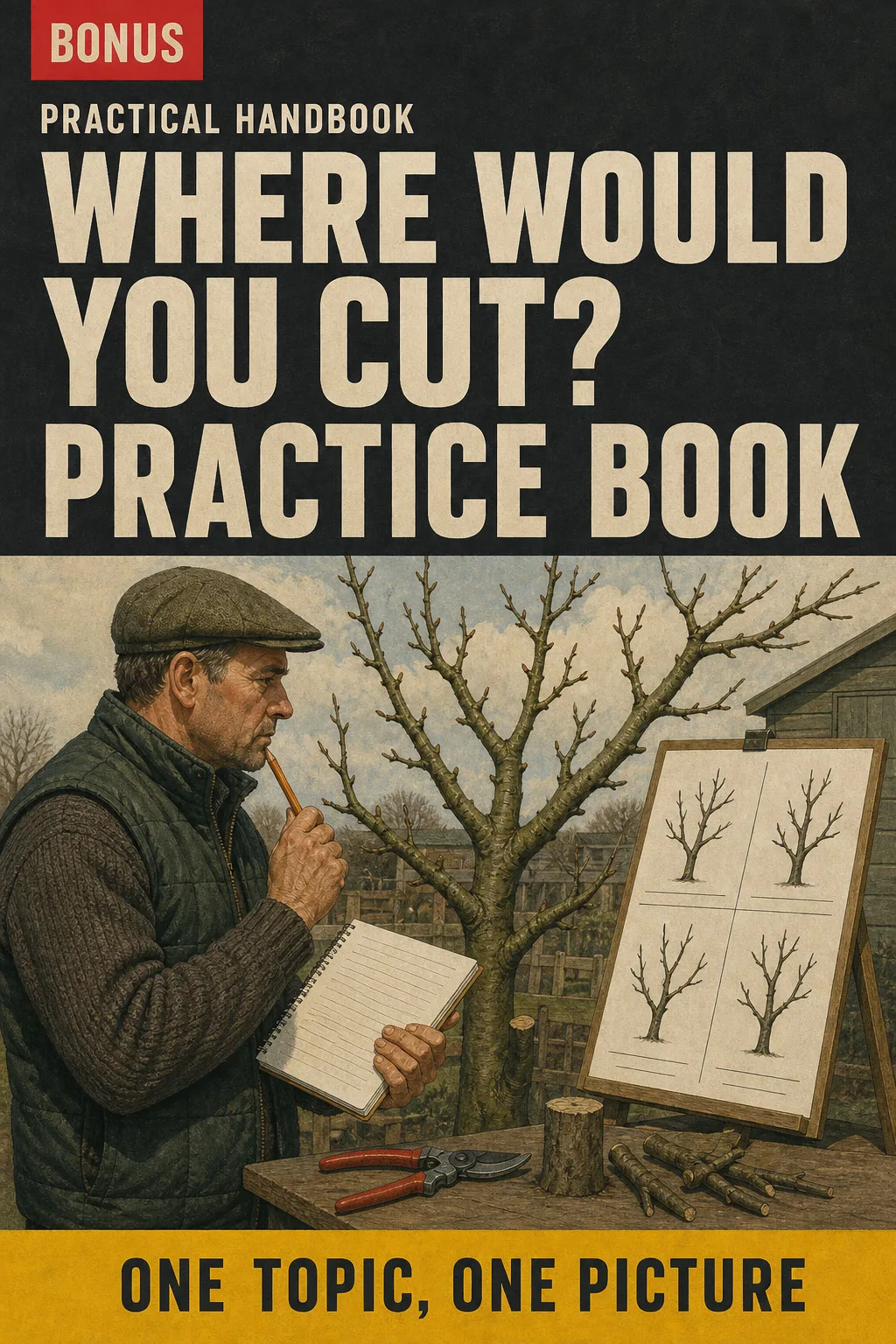
Where Would You Cut? Practice Book
BONUS 1

Where Would You Cut? Practice Book

Drawn branches where you mark your own cuts, with the answer on the next page, so you've practised before you go near the tree.
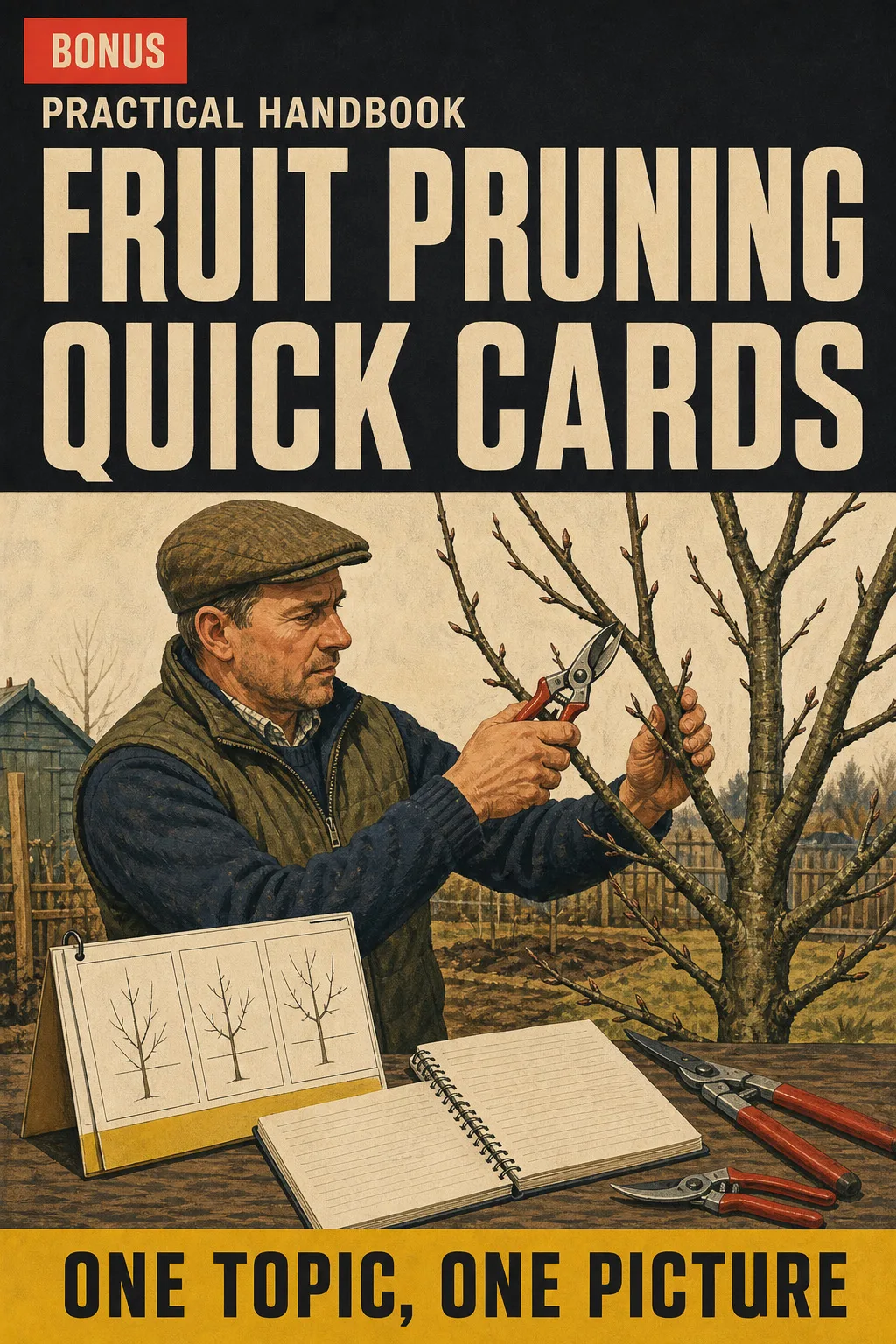
Fruit Pruning Quick Cards
BONUS 2

Fruit Pruning Quick Cards

One card per tree and trained form, covering when to prune, what to cut and what to leave. Print them and keep them in the shed.

30-Day Guarantee

30-day guarantee: if a file doesn't open, if the content isn't what the product page describes, if you were charged twice or the email never arrived, write to us and we'll refund you in full. You pay once. No subscriptions.

Frequently Asked Questions

Is it for me if I've got an old, neglected tree rather than a young one?

Yes. Part VII covers bringing an old tree back over three years, cut by cut. The rest of the book covers young and established trees, plus cordons, espaliers and fans.

Is it written for UK seasons, or is it an American book?

It's written for the UK: months for UK winters and summers, sizes in centimetres and metres. The content follows current UK fruit-pruning guidance, including the advice published by the Royal Horticultural Society, used as a reference.

Is it official material?

No. It's an independent illustrated book. It has no connection to the RHS or any other organisation, and none of them endorse it.

Does it replace a pruning course?

No. It's a reference to read and keep to hand. For very large trees or work at height, it doesn't replace hands-on training or a qualified arborist.

I've watched plenty of free videos. What's different here?

Each video shows one tree and one opinion. Here every topic is one drawn page, always in the same order: read the tree, choose the cut, check the month. Apples, pears, plums and cherries in one place, ready to print and take to the tree. The practice branches in the Where Would You Cut? Practice Book were drawn for this book, with the answers on the next page.

When and how does it arrive?

As a PDF by email, to the address you enter at checkout, together with the 2 free books.

Do I have to pay every month?

No. It's a one-off payment, with no subscription.

Can I have it on paper?

Yes. The PDF is ready to print at home or at a print shop. The Quick Cards are designed to be printed and kept in the shed.

How does the refund work?

You have 30 days. We refund everything if the file won't open, if the book isn't what you see on this page, if you were charged twice or if the email doesn't arrive: just email us.

£19.99£57.99
Get the book · £19.99

This is a digital PDF book sent to your email: nothing is printed or shipped.

More books on this topic

Tree Inspection Illustrated

An illustrated PDF book on UK tree inspection, one topic per page: duty of care, tree biology and mechanics, stem and…

From £19.99 £57.99

Chainsaw Ticket Illustrated

Chainsaw maintenance, cross-cutting and felling small trees up to 380mm, one topic per page with a clear drawing…

From £19.99 £57.99

Tree Climbing & Rescue Illustrated

Tree climbing, aerial rescue and aerial chainsaw work, one topic per illustrated page: the kit and pre-use checks, the…

From £19.99 £57.99

Tree Surgery Illustrated

An illustrated PDF book for tree surgery training in the UK: chainsaw maintenance and cross-cutting, felling small…

From £19.99 £57.99