Study in Pictures🌐 English (South Africa)
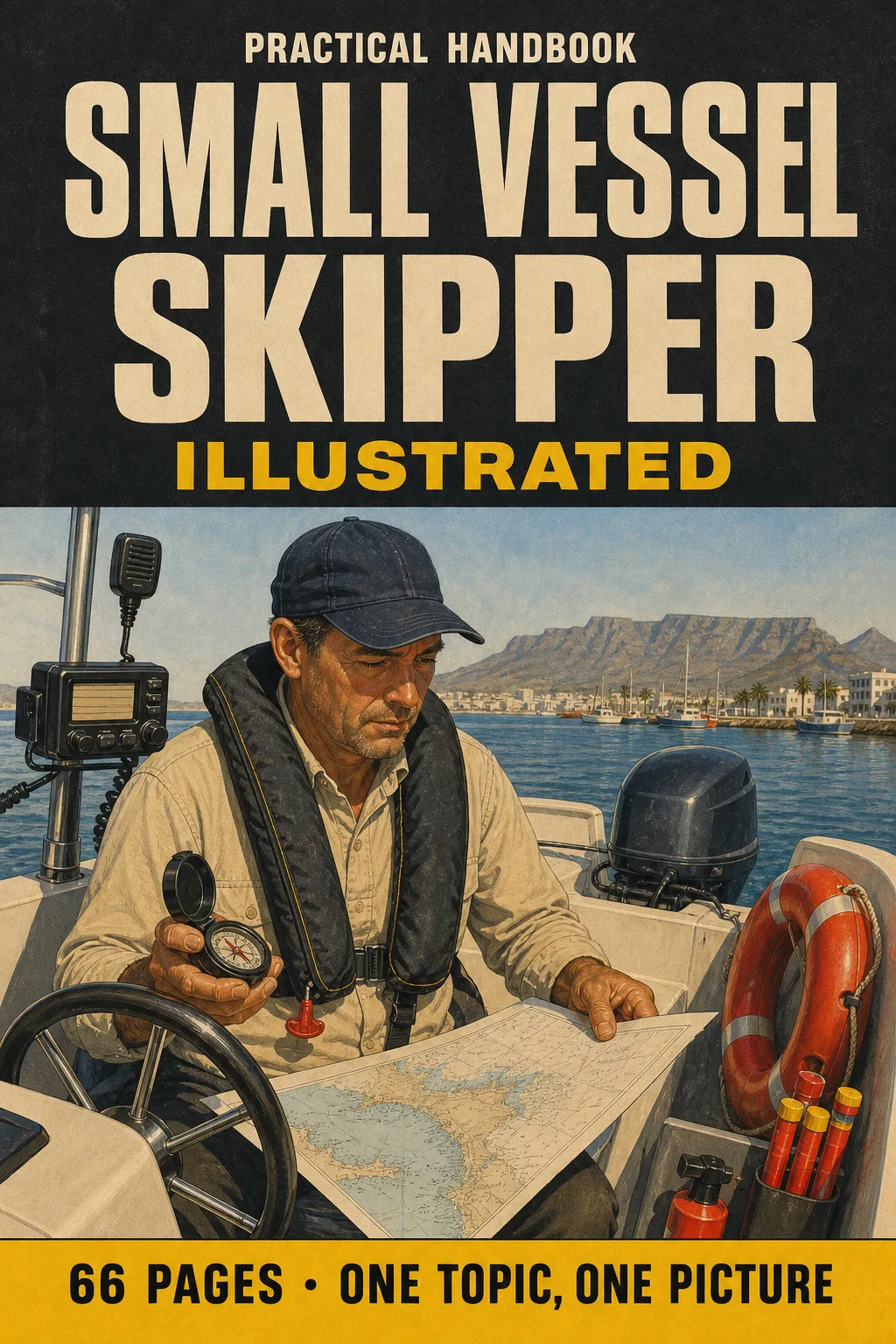
Small Vessel Skipper Illustrated

Digital book in PDF · read it on your phone or print it

Small Vessel Skipper Illustrated

Collision rules, navigation lights, IALA Region A buoyage, chartwork in nautical miles and knots, tides, VHF distress calls, man overboard and anchoring. Every topic has its own page: the drawing first, then what you need to remember.

  • 66 illustrated pages
  • English
  • 30-day guarantee
R399R999
Get the book · R399

Price shown for: South Africa. In other countries, the checkout shows the price that applies there.

About this book

What it is

Collision rules, navigation lights, IALA Region A buoyage, chartwork in nautical miles and knots, tides, VHF distress calls, man overboard and anchoring. Every topic has its own page: the drawing first, then what you need to remember.

Who This Book Is For
  • You're doing the skipper course
  • Your theory exam and oral are close
  • You already skipper a boat
What it covers
  1. Your Certificate and Your Boat
  2. Collision Rules
  3. Lights, Shapes and Sound Signals
  4. Buoyage: IALA Region A
  5. Chartwork and Pilotage
  6. Tides, Weather and the South African Coast
  7. Radio and Emergencies
  8. Seamanship and Exam Revision
Language
English (South Africa)
Pages
66
Format
Digital book in PDF · read it on your phone or print it
Price
R399 (South Africa)
Delivery
This is a digital PDF book sent to your email: nothing is printed or shipped.
30-Day Guarantee
30-day guarantee: if a file doesn't open, if the content isn't what the product page describes, if you were charged twice or the email never arrived, write to us and we'll refund you in full.

Look Inside the Book

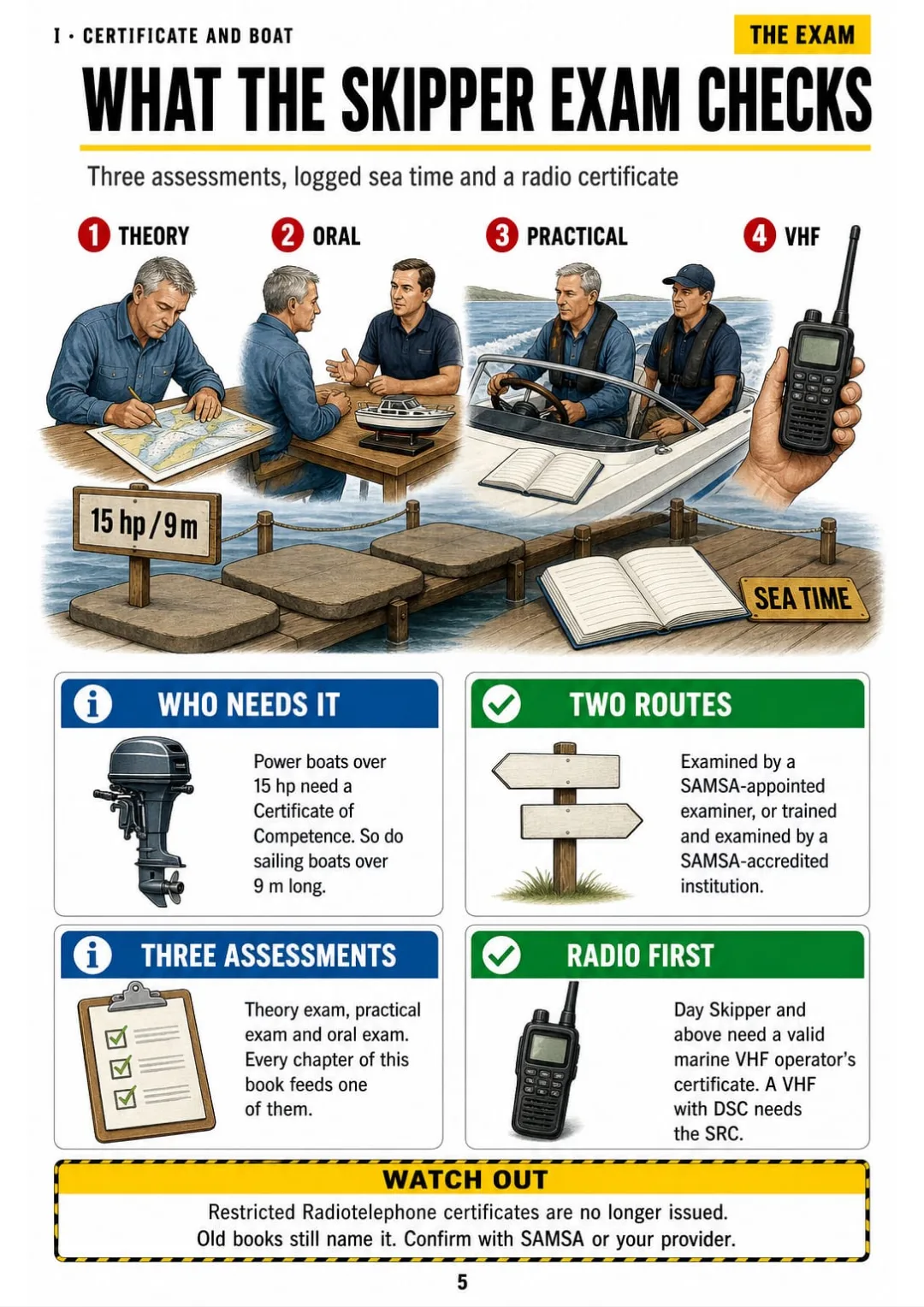
Theory, oral and practical exams plus a VHF operator's certificate: the skipper route in four steps.
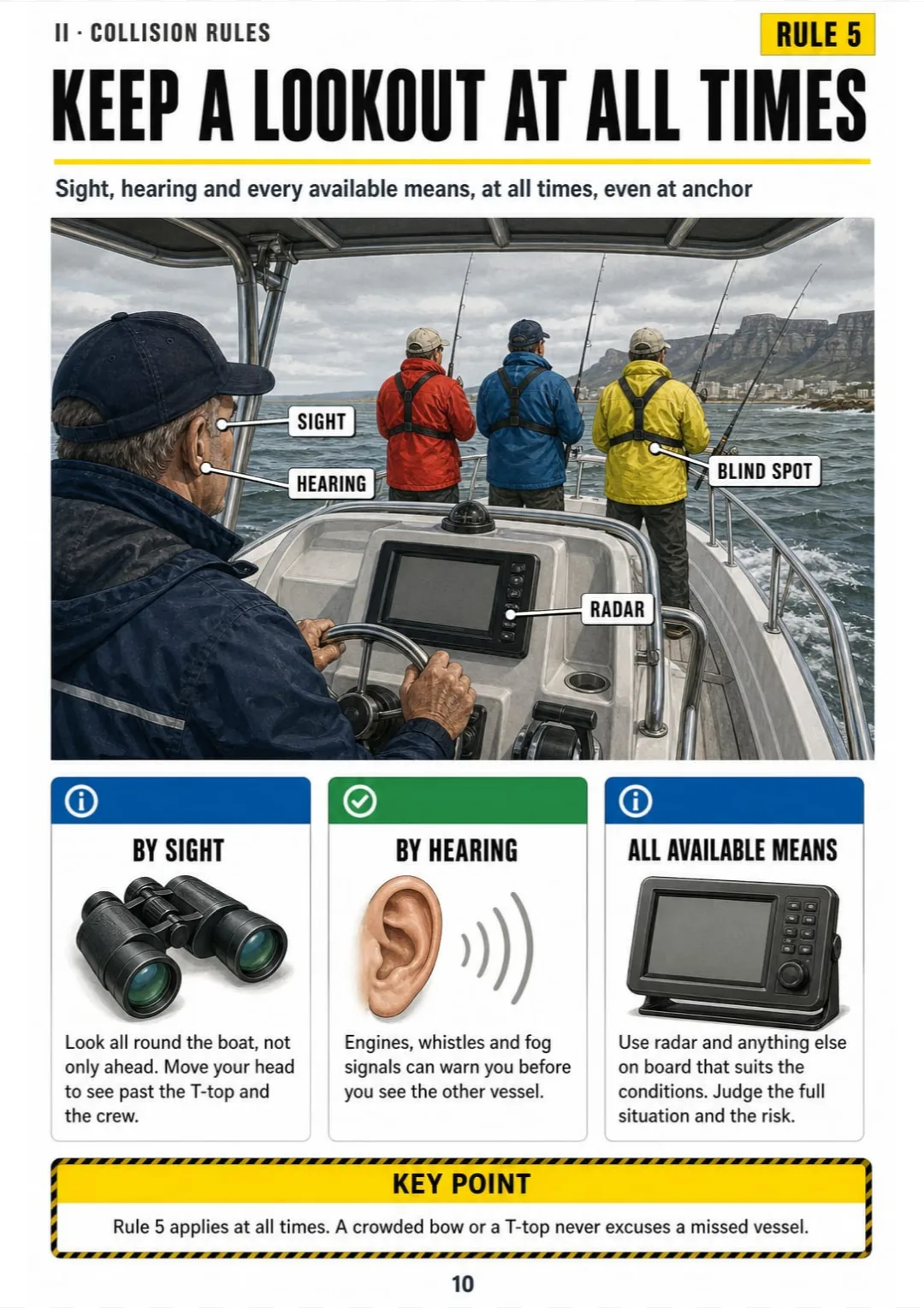
Rule 5: keep a proper lookout by sight, hearing and all available means, at all times.
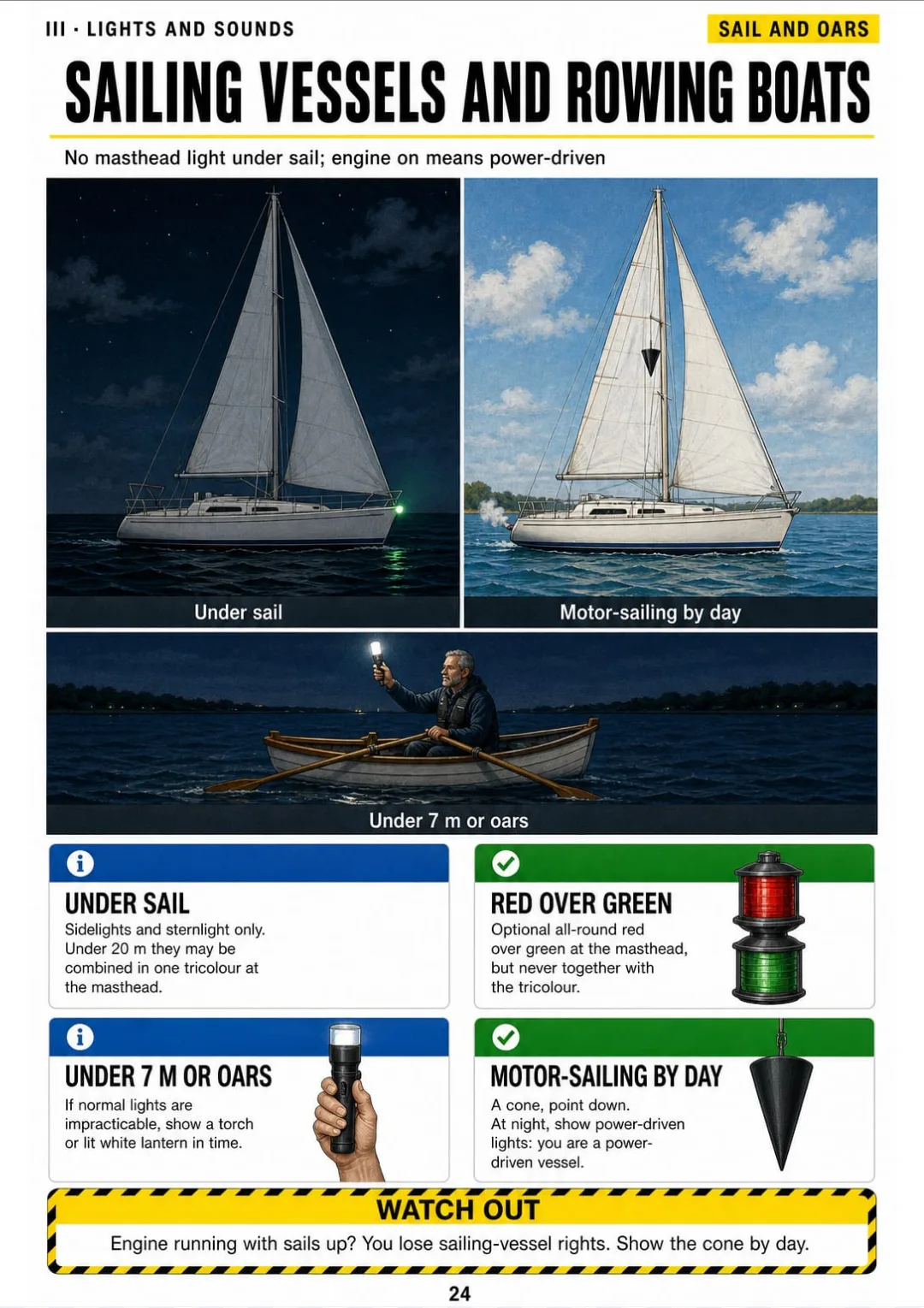
Sailing: sidelights and sternlight, no masthead light; motor-sailing by day, cone point down
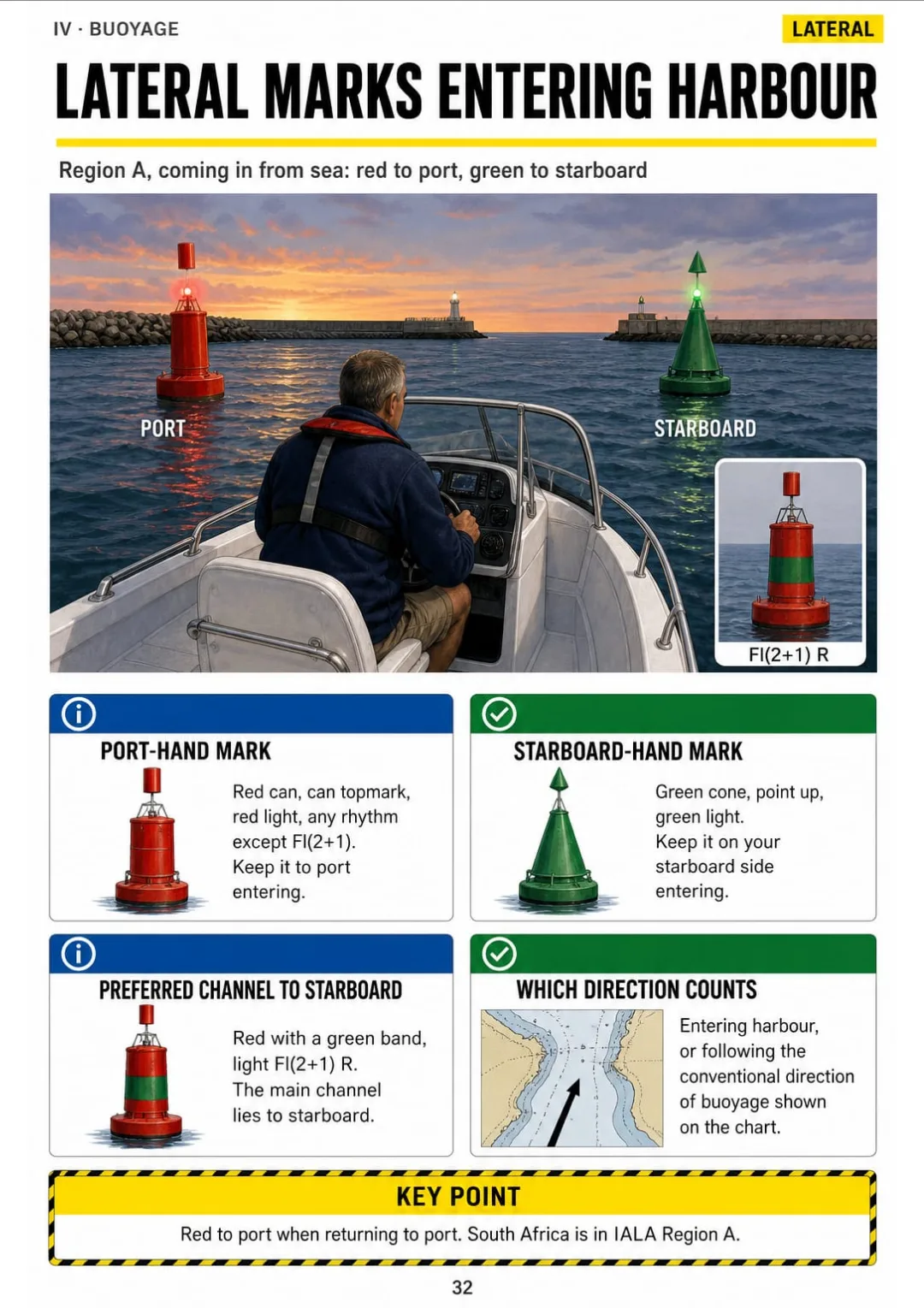
Region A entering harbour: red can to port, green cone to starboard.
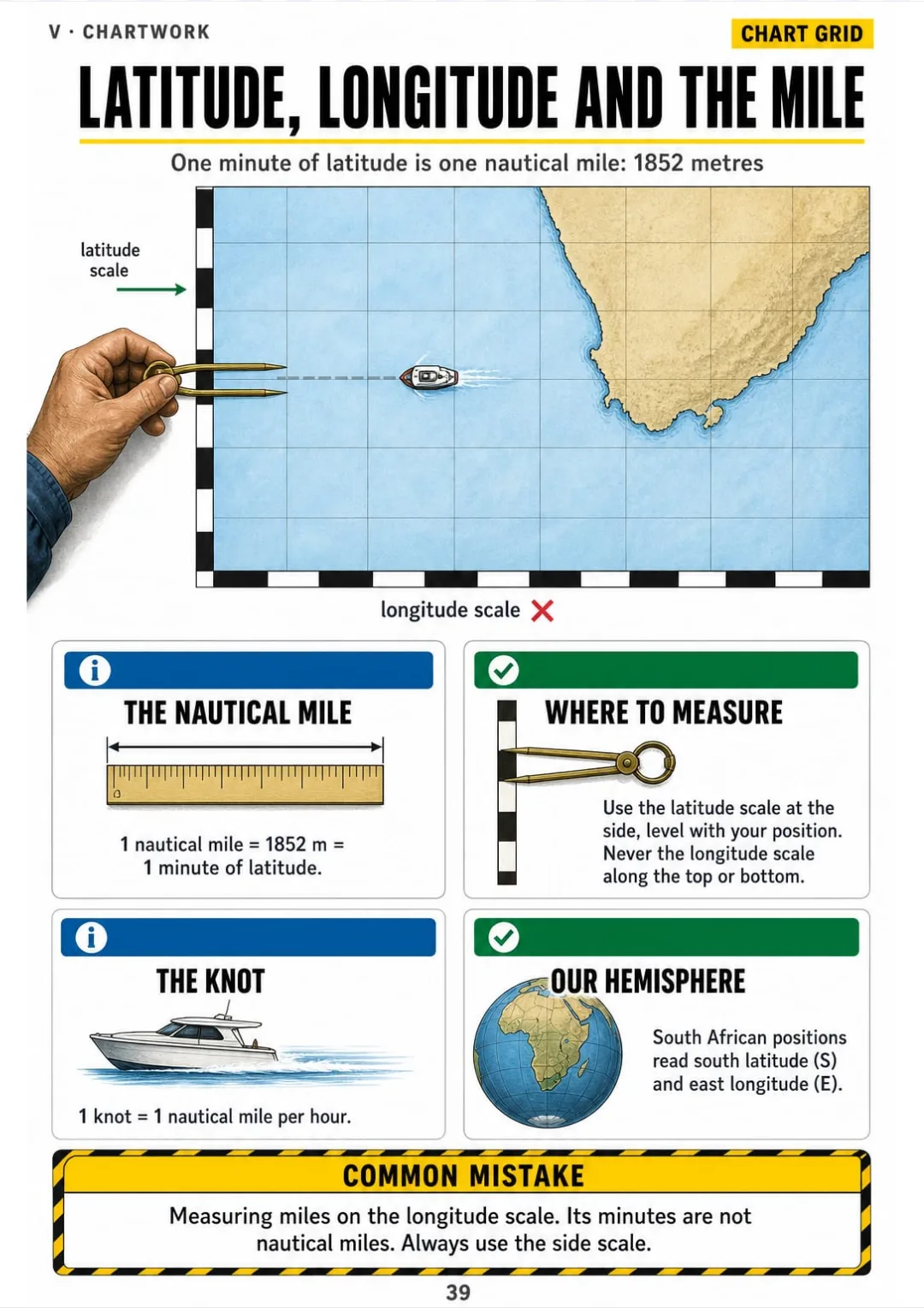
1 minute of latitude = 1 nautical mile = 1852 m, measured on the side scale
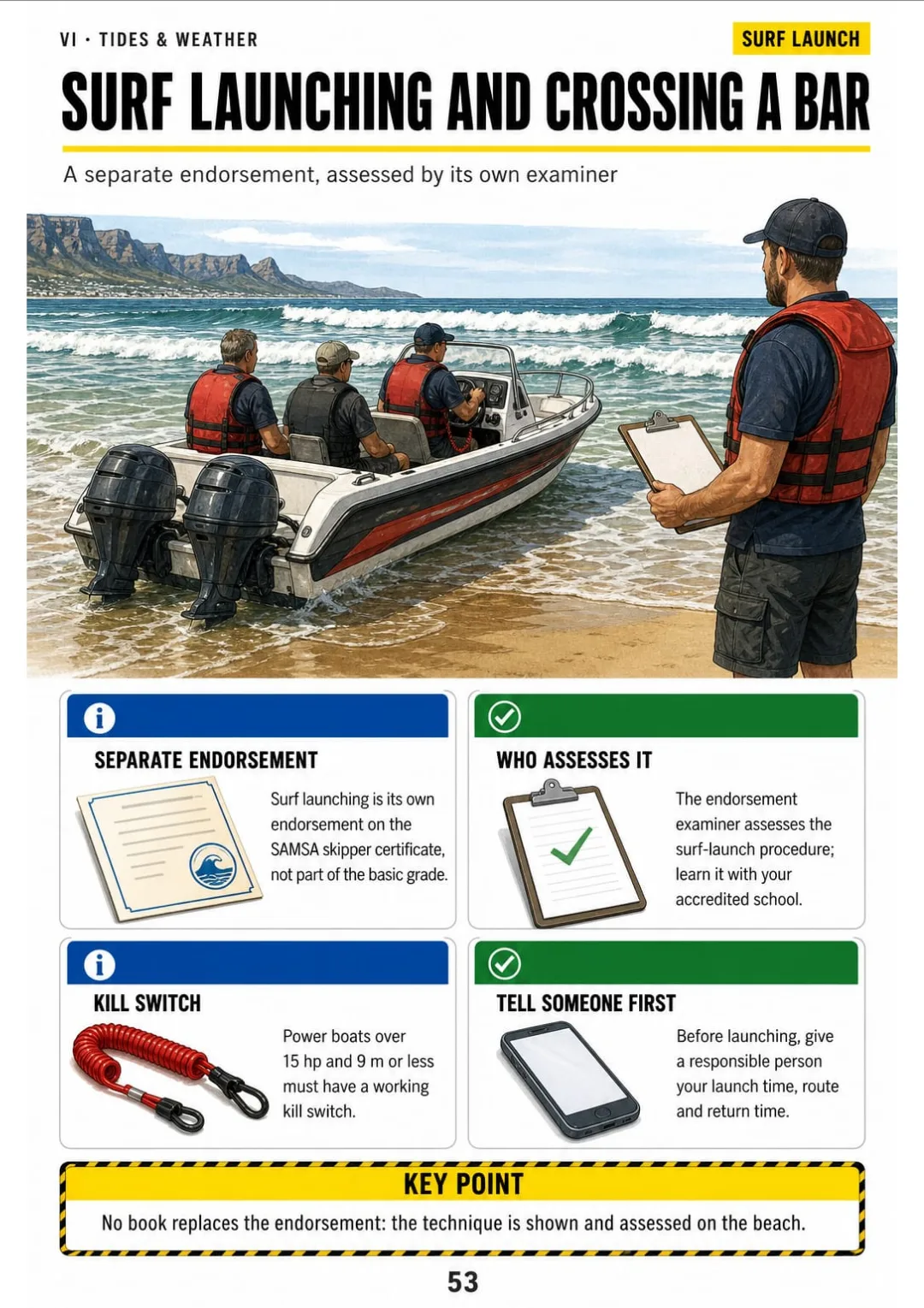
Separate SAMSA endorsement; kill switch required on power boats over 15 hp, 9 m or less.
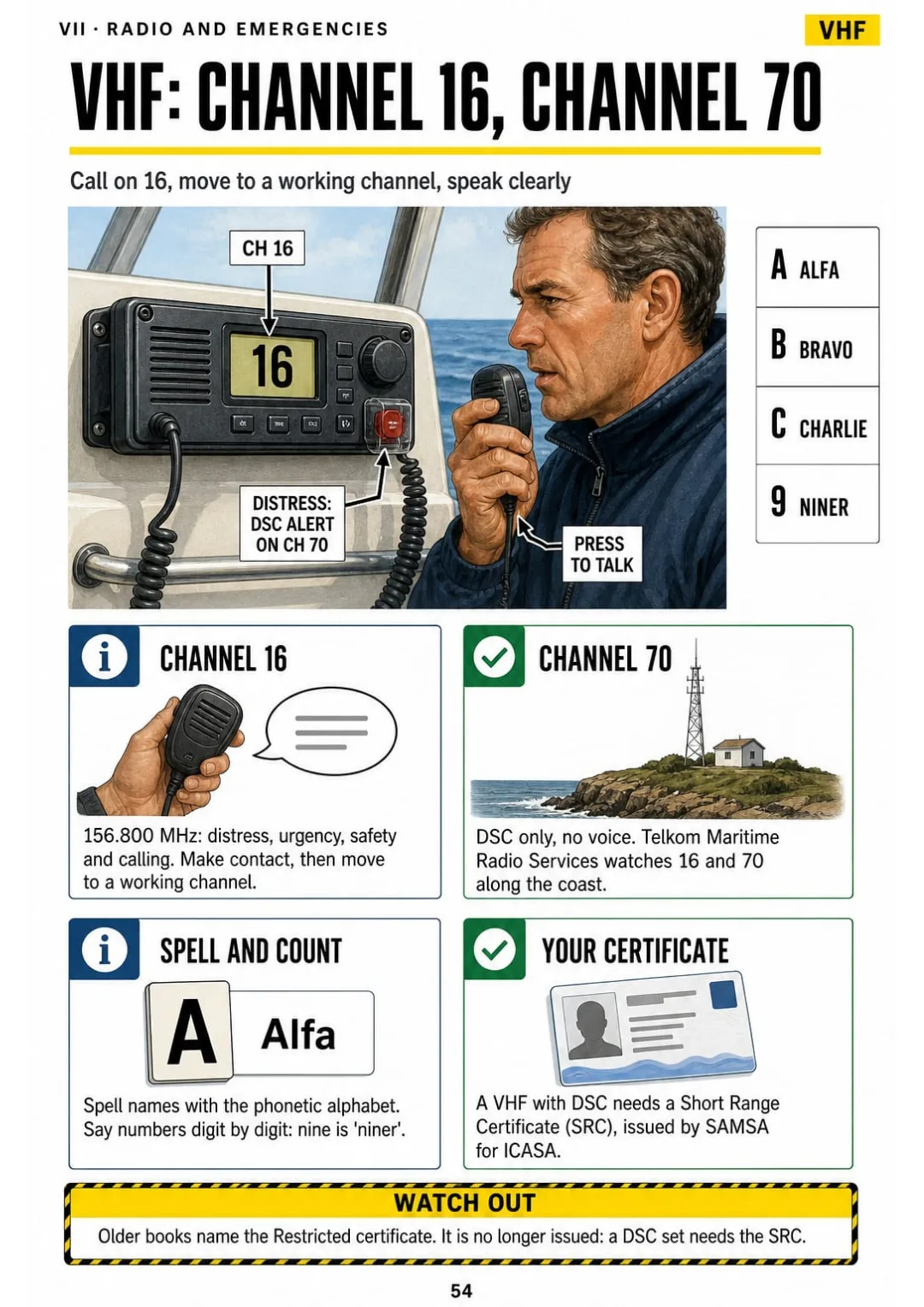
Ch 16 = 156.800 MHz for distress and calling · Ch 70 = DSC only, no voice
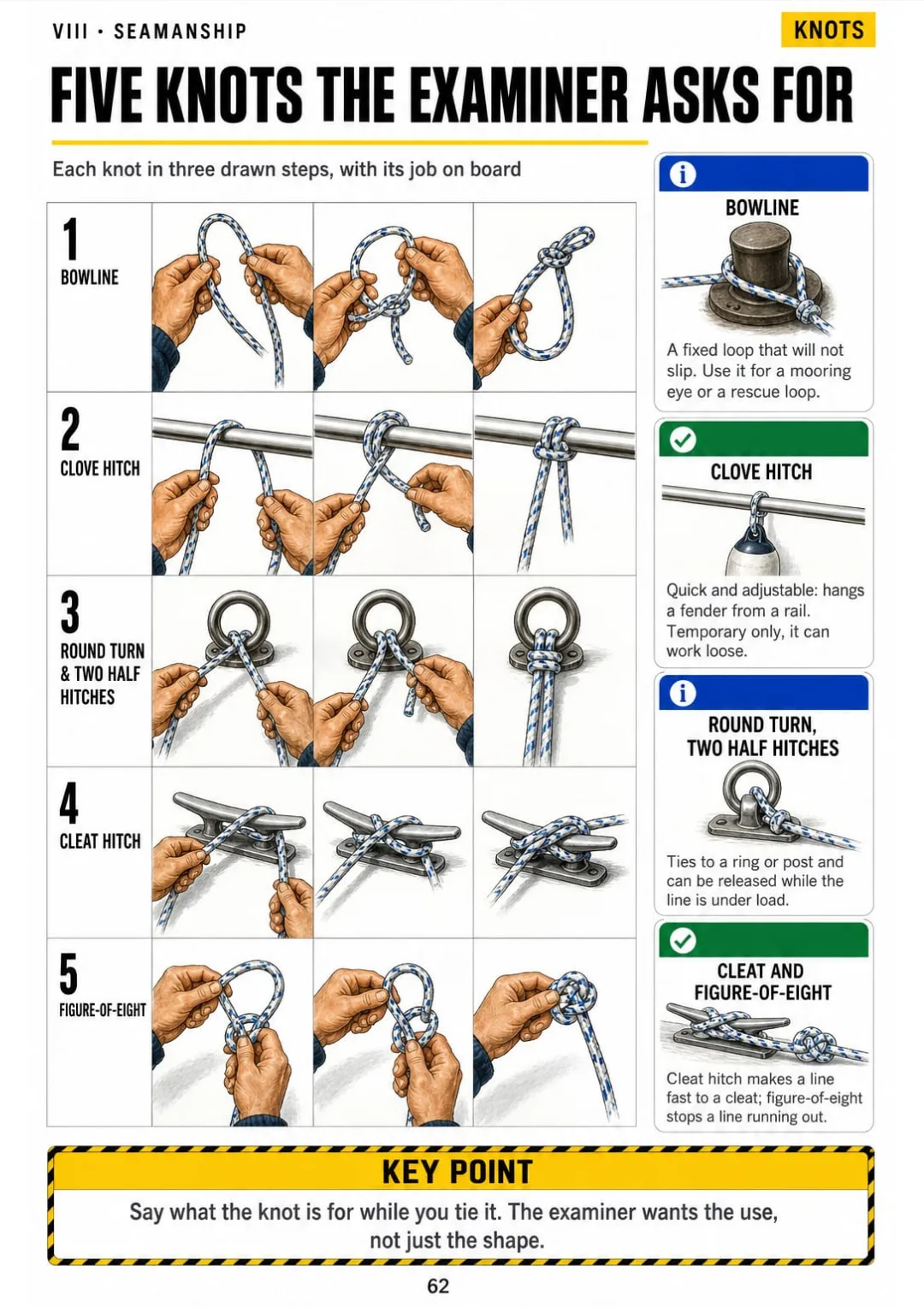
Bowline, clove hitch, round turn, cleat hitch and figure-of-eight: three steps each

Take a Look at the 8 Parts and 62 Topics

Your Certificate and Your Boat

pp. 5-9
  1. What the Skipper Certificate Assesses
  2. Operating Categories at a Glance
  3. Day Skipper or Night Skipper
  4. Parts of the Boat the Examiner Names
  5. Certificate of Fitness and the Gear on Board

Collision Rules

pp. 10-21
  1. Keep a Lookout: Rule 5
  2. Safe Speed: Rule 6
  3. Is There a Risk of Collision? Rule 7
  4. How to Take Action: Rule 8
  5. Head-On: Rule 14
  6. Crossing: Rule 15
  7. Give-Way and Stand-On Duties: Rules 16 and 17
  8. Overtaking: Rule 13
  9. The Pecking Order: Rule 18
  10. Two Sailing Vessels Meeting: Rule 12
  11. Narrow Channels and Separation Schemes: Rules 9 and 10
  12. Restricted Visibility: Rule 19

Lights, Shapes and Sound Signals

pp. 22-31
  1. The Four Light Arcs
  2. Power-Driven Vessel Under Way
  3. Sailing Vessels and Rowing Boats
  4. Fishing Vessels: Trawling and Other Fishing
  5. Not Under Command and Restricted in Ability to Manoeuvre
  6. Towing and Being Towed
  7. At Anchor and Aground
  8. Constrained by Draught and Pilot Vessels
  9. Manoeuvring Sound Signals
  10. Fog Signals

Buoyage: IALA Region A

pp. 32-38
  1. Lateral Marks Entering Harbour
  2. North and South Cardinal Marks
  3. East and West Cardinal Marks
  4. Isolated Danger and Safe Water Marks
  5. Special Marks and the Emergency Wreck Mark
  6. Reading Light Characters on the Chart
  7. Putting the Marks Together

Chartwork and Pilotage

pp. 39-47
  1. Latitude, Longitude and the Nautical Mile
  2. Chart Symbols You Must Recognise
  3. Variation: True to Magnetic
  4. Deviation and the Deviation Card
  5. True to Compass in the Same Order Every Time
  6. Speed, Distance and Time
  7. Plotting a Course and a Dead Reckoning Position
  8. Position Fixing: Three-Bearing Fix and Transits
  9. GPS Waypoints and Their Limits

Tides, Weather and the South African Coast

pp. 48-53
  1. Tides, Springs and Neaps
  2. Chart Datum and Height of Tide
  3. The Rule of Twelfths
  4. Weather Systems on Our Coast
  5. The Beaufort Scale and Reading a Forecast
  6. Surf Launching and Crossing a Bar

Radio and Emergencies

pp. 54-61
  1. VHF Channels and Radio Procedure
  2. The Mayday Call, Word for Word
  3. Pan-Pan, Sécurité and DSC Alerts
  4. Flares and the EPIRB
  5. Man Overboard
  6. Fire on Board
  7. Capsize, Flooding and Abandoning Ship
  8. Cold Water, Hypothermia and Basic First Aid

Seamanship and Exam Revision

pp. 62-66
  1. Five Knots the Examiner Asks For
  2. Anchoring and Scope
  3. Trip Plan and Pre-Departure Checks
  4. Night Situations: Name the Vessel and Decide
  5. The Oral in the Same Order Every Time

Who This Book Is For

You're doing the skipper course

Each topic from class has its own drawn page, so what you heard on Saturday is still clear on Tuesday evening.

Your theory exam and oral are close

You revise rules, lights and marks in the same order every time, and test yourself with the practice questions before the examiner does.

You already skipper a boat

You've handled the boat for years with someone beside you. Now the reason behind each manoeuvre is on one page, printed and kept on board.

Plus: 2 Free Books

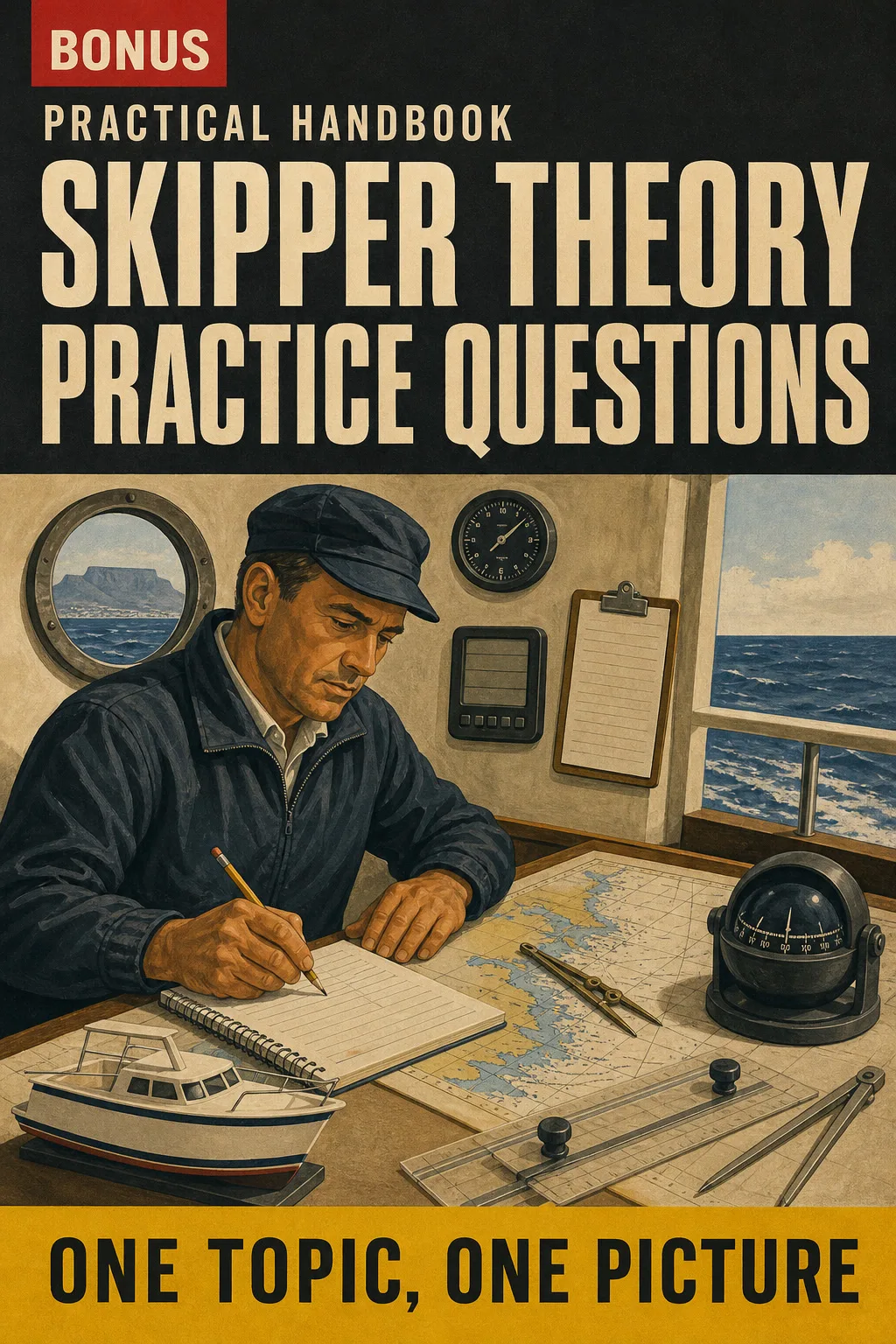
Skipper Theory Practice Questions
BONUS 1

Skipper Theory Practice Questions

Exam-style questions on every topic with worked answers, so you find your gaps before the examiner does.
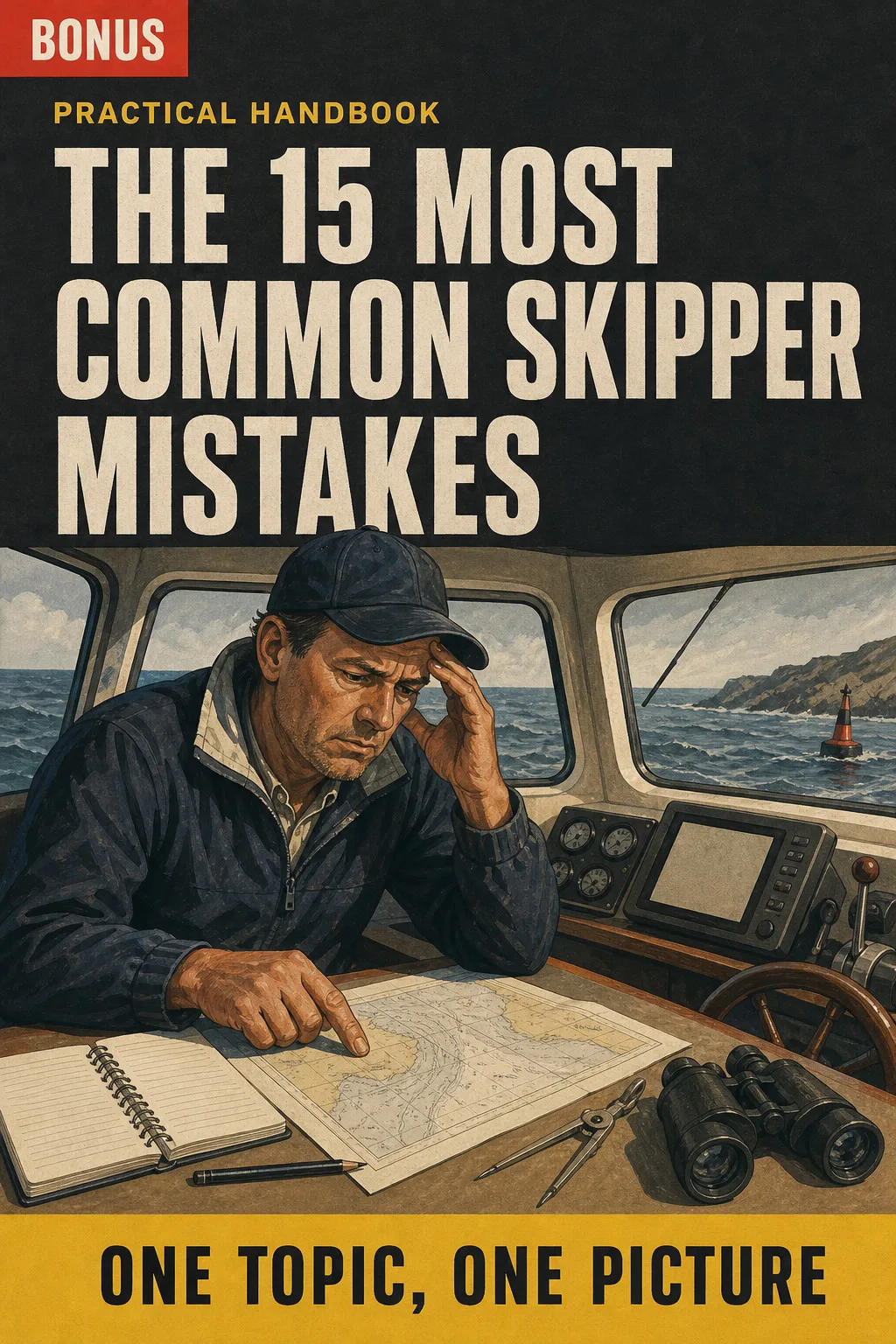
The 15 Most Common Skipper Mistakes
BONUS 2

The 15 Most Common Skipper Mistakes

Each frequent mistake drawn before and after, from misreading a cardinal mark to forgetting the trip plan ashore, so you revise the traps in one sitting.

30-Day Guarantee

30-day guarantee: if a file doesn't open, if the content isn't what the product page describes, if you were charged twice or the email never arrived, write to us and we'll refund you in full. You pay once. No subscriptions.

Frequently Asked Questions

Is it for me if I've been on boats for years but never got my own certificate?

Yes. It doesn't teach you to drive the boat: it puts the rules, lights, marks and chartwork you're assessed on in order, one drawn page each, for South African waters, with distances in nautical miles and knots as on the chart.

Where does the content come from?

It's checked against the current published requirements: the Merchant Shipping (Small Vessel) Regulations, 2007 as amended, the small vessel requirements published by SAMSA, the COLREGs as applied in South Africa and the IALA buoyage system, Region A. No text or tables are copied from them.

Is it official material?

No. It's an independent illustrated study book. It isn't issued, approved or endorsed by SAMSA or any other body.

Does it replace the skipper course?

No. It doesn't replace accredited training, the practical assessment, your logged sea time or the VHF operator's course. It helps you revise what you learn there.

Are the practice questions the ones from the exam?

No. They're written for this book, in exam style, with worked answers. They aren't official questions from any exam.

When and how does it arrive?

As a PDF by email, to the address you enter at checkout: the 66-page illustrated book plus the 2 bonus books, «Skipper Theory Practice Questions» and «The 15 Most Common Skipper Mistakes». It's a study book: it doesn't issue any certificate.

Do I have to pay every month?

No. It's a one-off payment, with no subscription.

Can I have it on paper?

Yes. The PDF is ready to print at home or at a print shop, so you can keep the pages you need on board.

How does the refund work?

You have 30 days. We refund everything if the file won't open, if the book isn't what you see on this page, if you were charged twice or if the email doesn't arrive: just email us.

R399R999
Get the book · R399

This is a digital PDF book sent to your email: nothing is printed or shipped.

More books on this topic

Day Skipper Theory Illustrated

Day Skipper theory, one topic per page: chartwork, compass, tides, tidal streams, buoyage, lights and shapes, collision…

From R399 R999

Marine VHF Radio Illustrated

Marine VHF and DSC for the Short Range Certificate in South Africa, one topic per page and every topic drawn: the set…

From R399 R999