Study in Pictures🌐 English (South Africa)
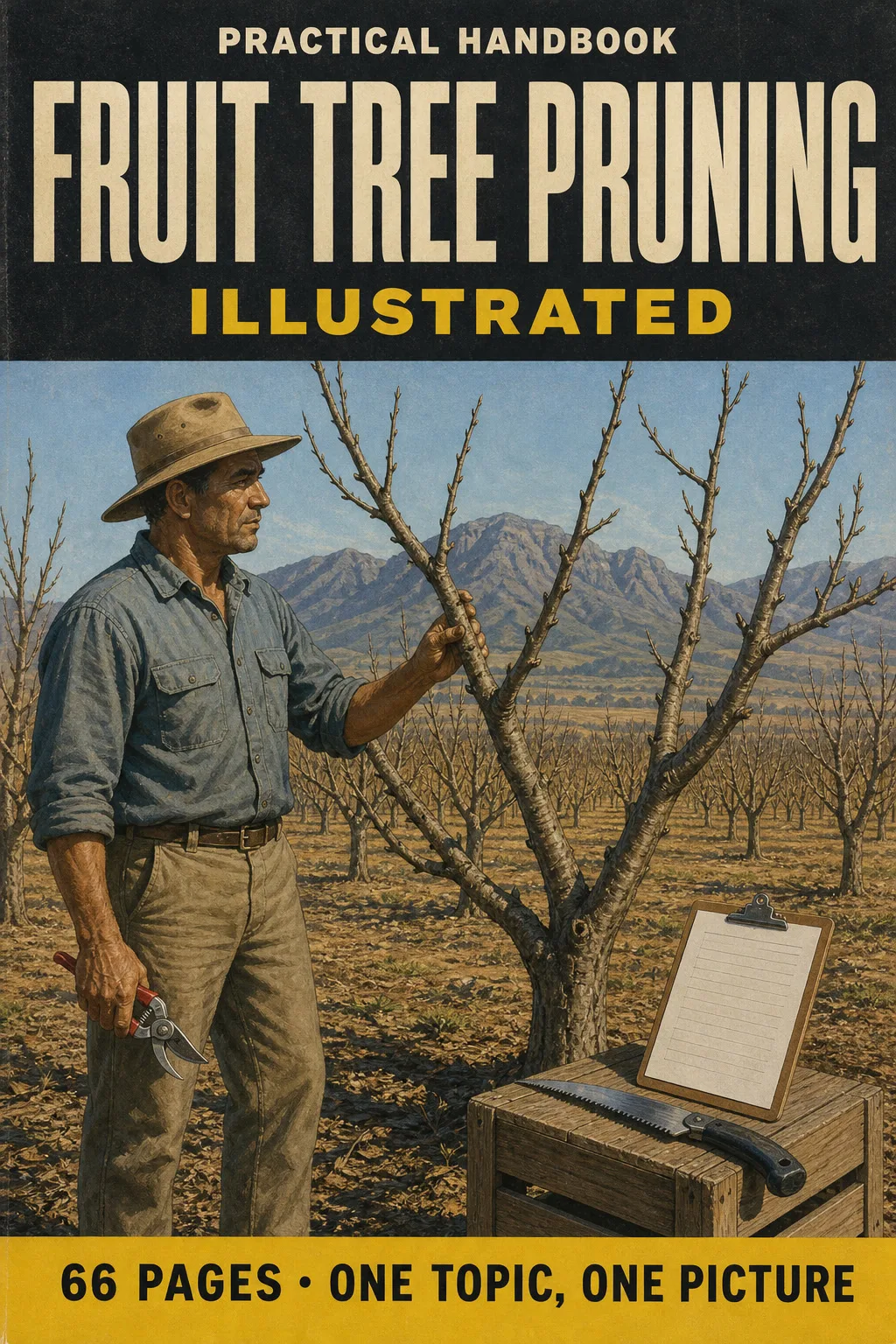
Fruit Tree Pruning Illustrated

Digital book in PDF · read it on your phone or print it

Fruit Tree Pruning Illustrated

Where each tree bears, where every cut goes and when to prune on the southern-hemisphere calendar: peach, apricot, plum, apple, pear, citrus, fig and avocado. One topic per page: the drawing first, then what to remember.

  • 66 illustrated pages
  • English
  • 30-day guarantee
R399R999
Get the book · R399

Price shown for: South Africa. In other countries, the checkout shows the price that applies there.

About this book

What it is

Where each tree bears, where every cut goes and when to prune on the southern-hemisphere calendar: peach, apricot, plum, apple, pear, citrus, fig and avocado. One topic per page: the drawing first, then what to remember.

Who This Book Is For
  • You're learning to prune
  • Winter pruning is coming up
  • You already prune for a living
What it covers
  1. How a Fruit Tree Grows
  2. Tools and the Cut Itself
  3. The 4 Checks Before Every Cut
  4. The Southern-Hemisphere Calendar
  5. Stone Fruit: Peach, Nectarine, Apricot, Plum
  6. Pome Fruit: Apple and Pear
  7. Citrus, Fig and Avocado
  8. Young, Old and Neglected Trees
  9. Review and Common Mistakes
Language
English (South Africa)
Pages
66
Format
Digital book in PDF · read it on your phone or print it
Price
R399 (South Africa)
Delivery
This is a digital PDF book sent to your email: nothing is printed or shipped.
30-Day Guarantee
30-day guarantee: if a file doesn't open, if the content isn't what the product page describes, if you were charged twice or the email never arrived, write to us and we'll refund you in full.

Look Inside the Book

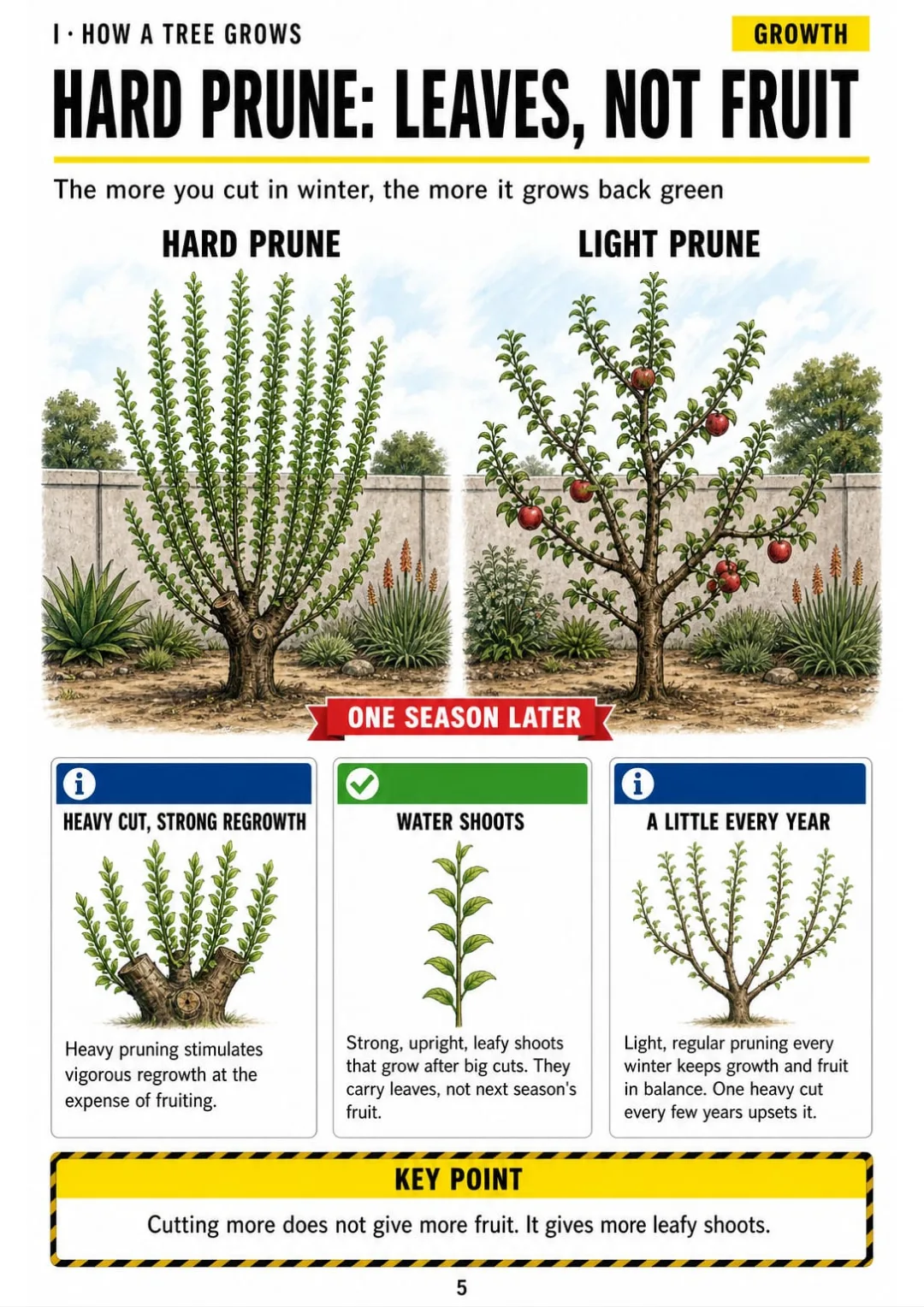
Hard prune vs light prune, one season later: water shoots or fruit
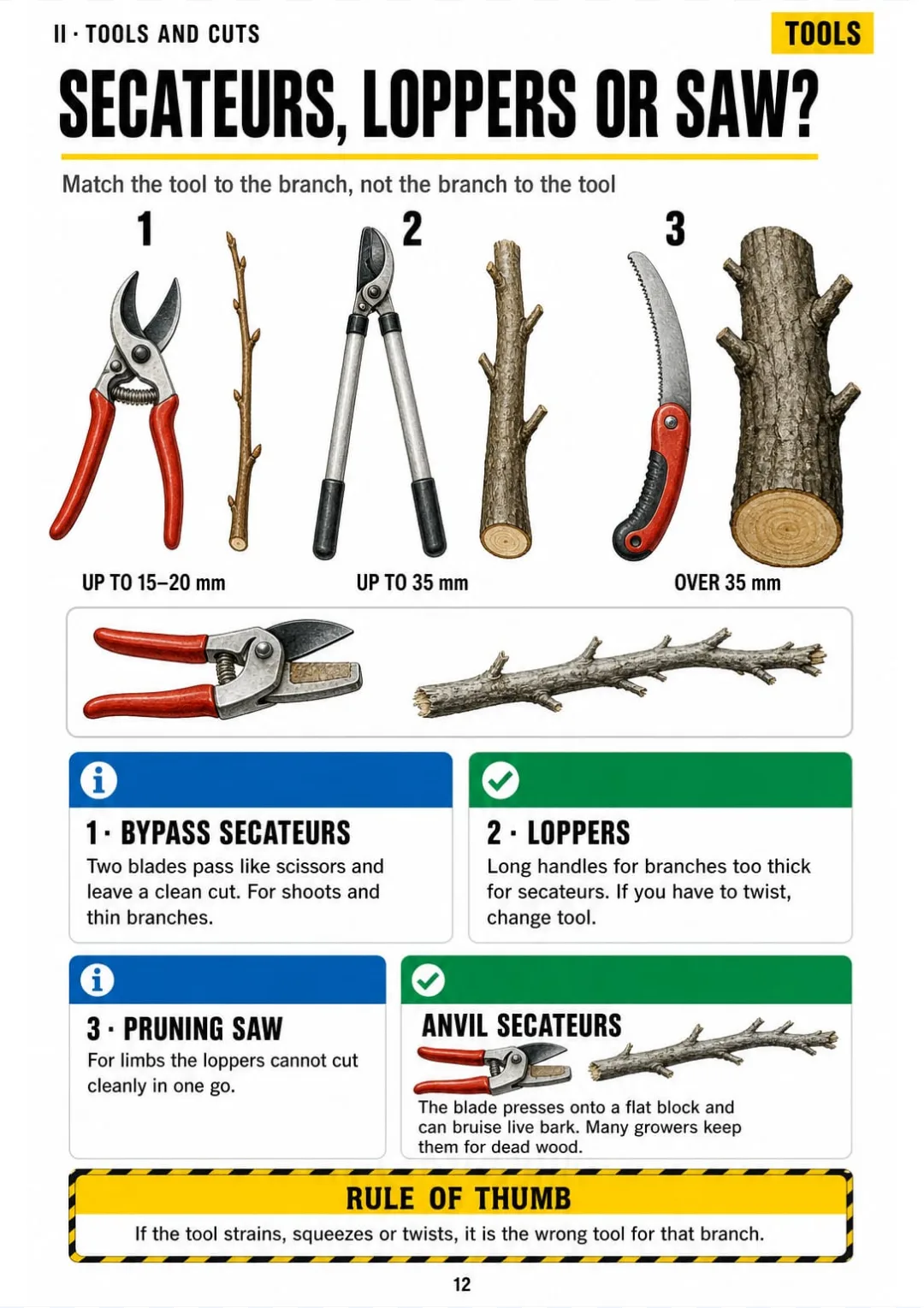
Secateurs for shoots, loppers for thicker branches, a saw for limbs: each drawn beside its branch.
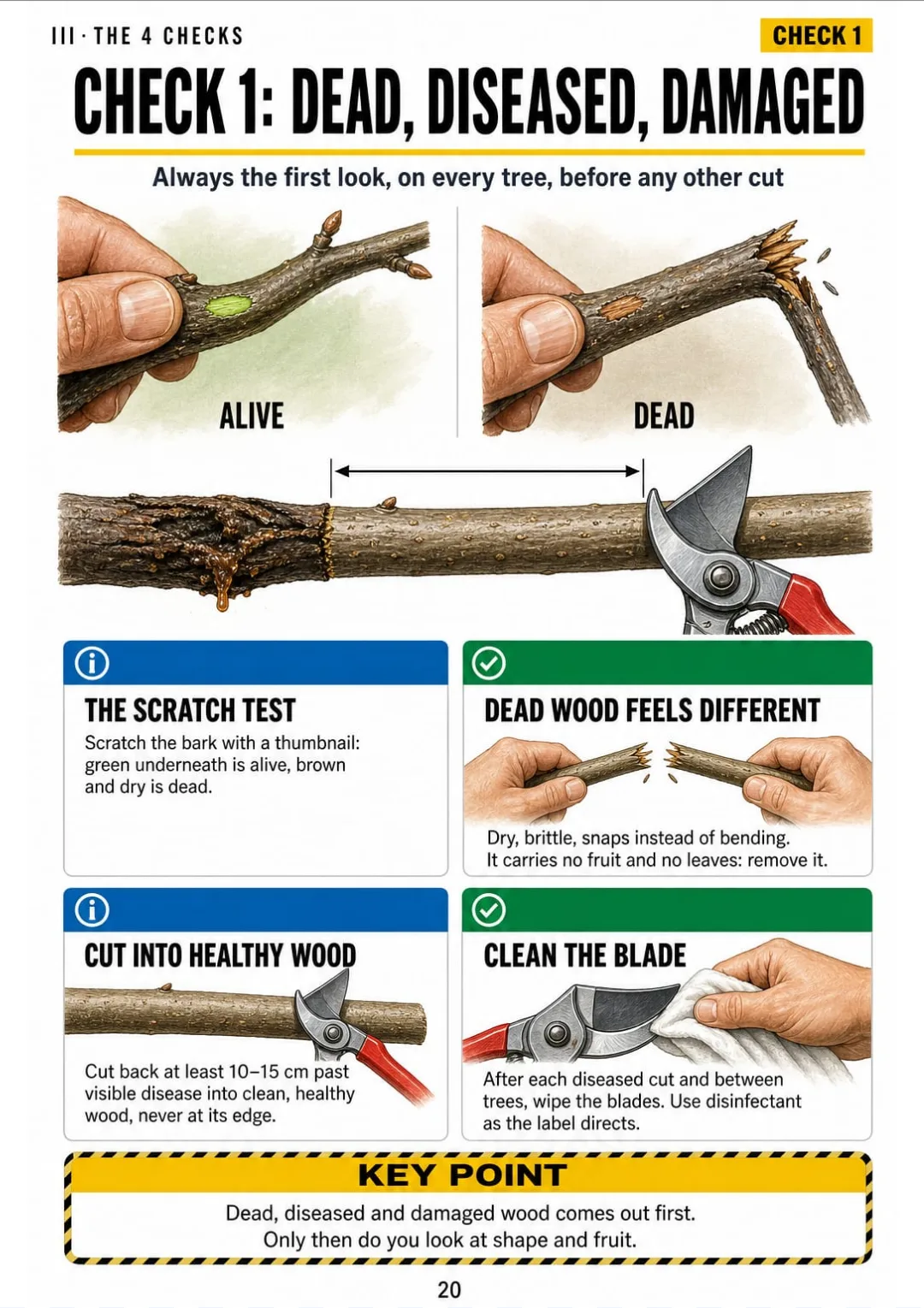
Scratch the bark: green underneath is alive, brown is dead – and dead wood always goes first.
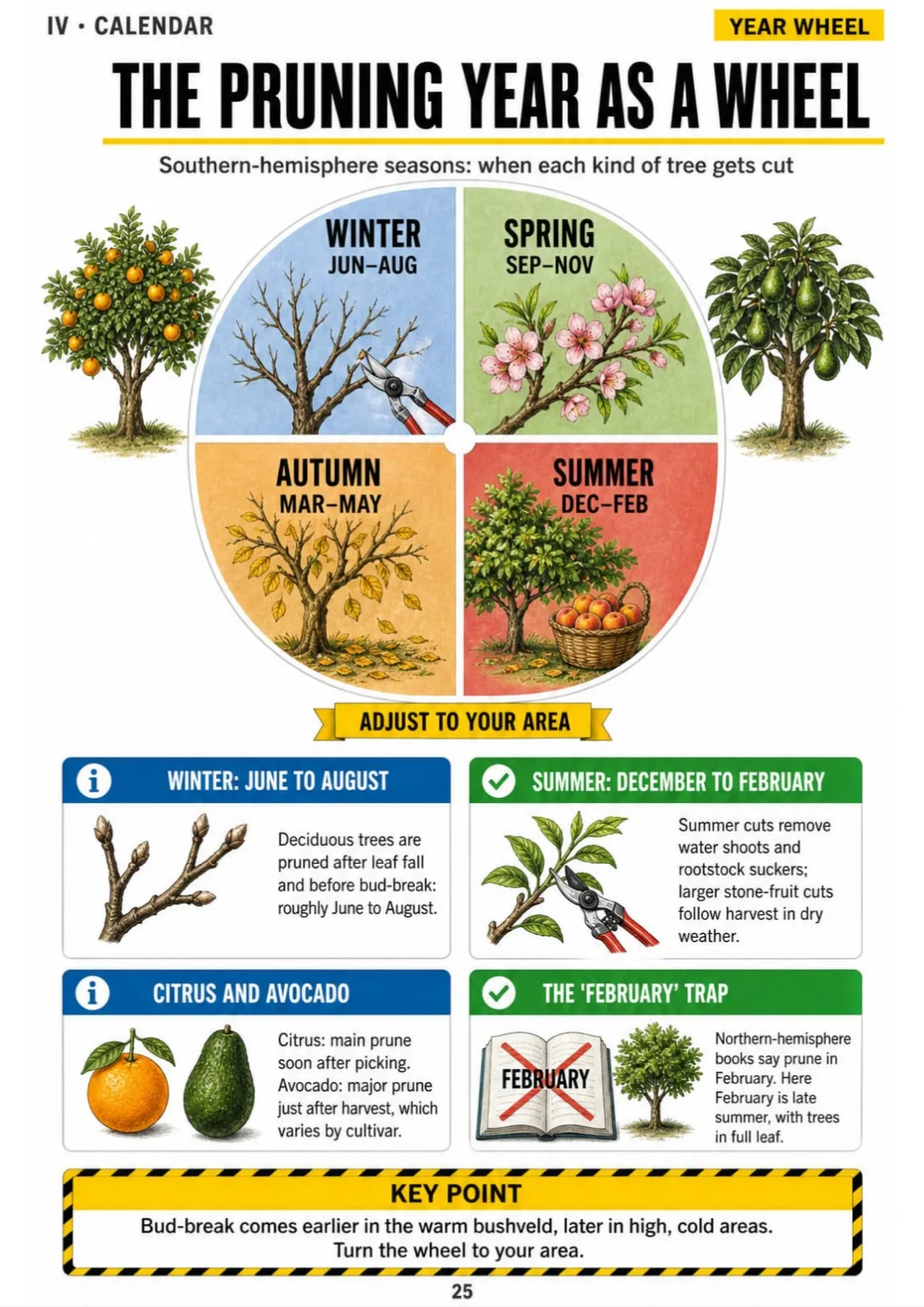
Deciduous trees: prune after leaf fall, before bud-break, roughly June to August in South Africa.
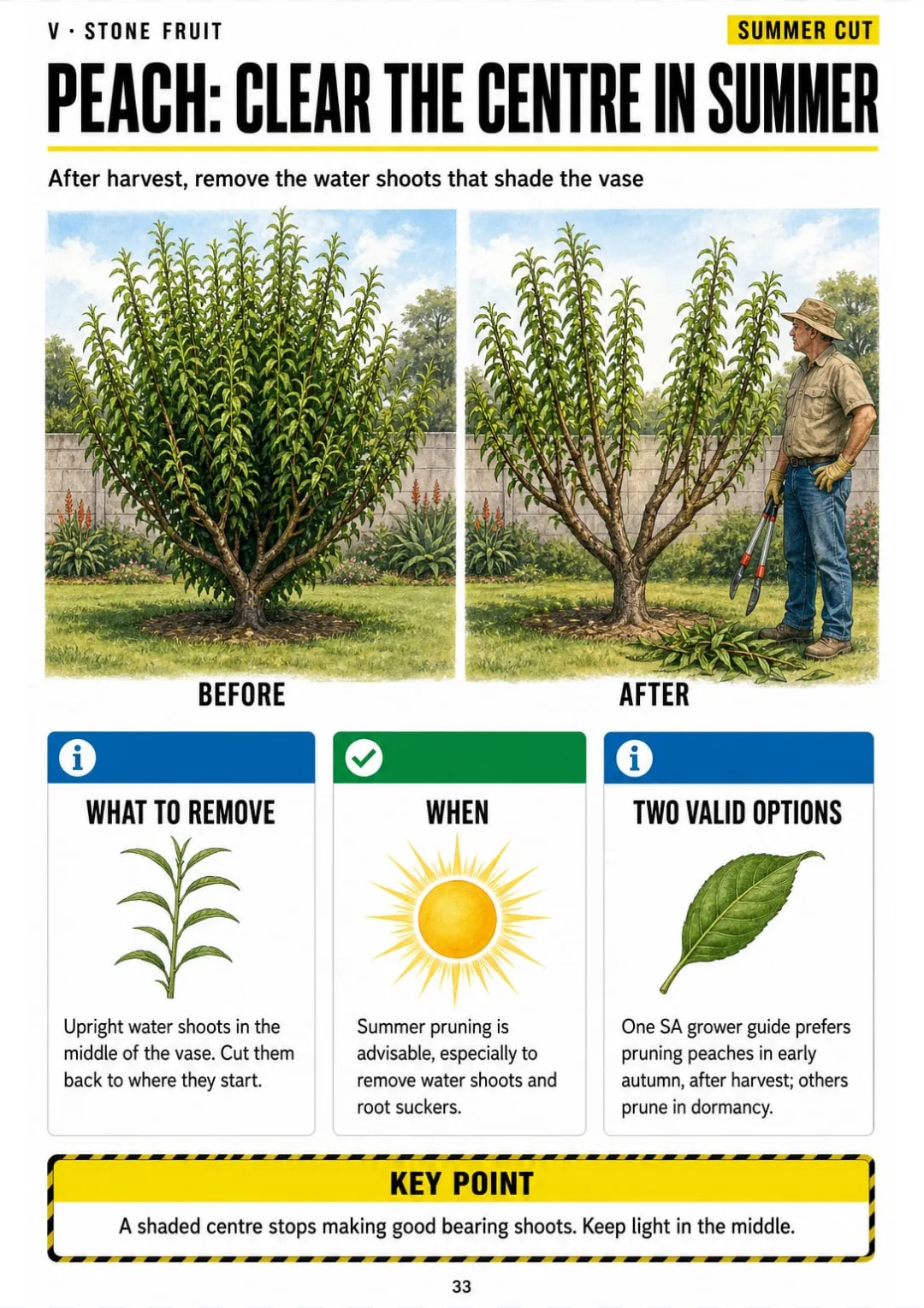
Before and after: summer removal of water shoots from the centre of a peach vase.
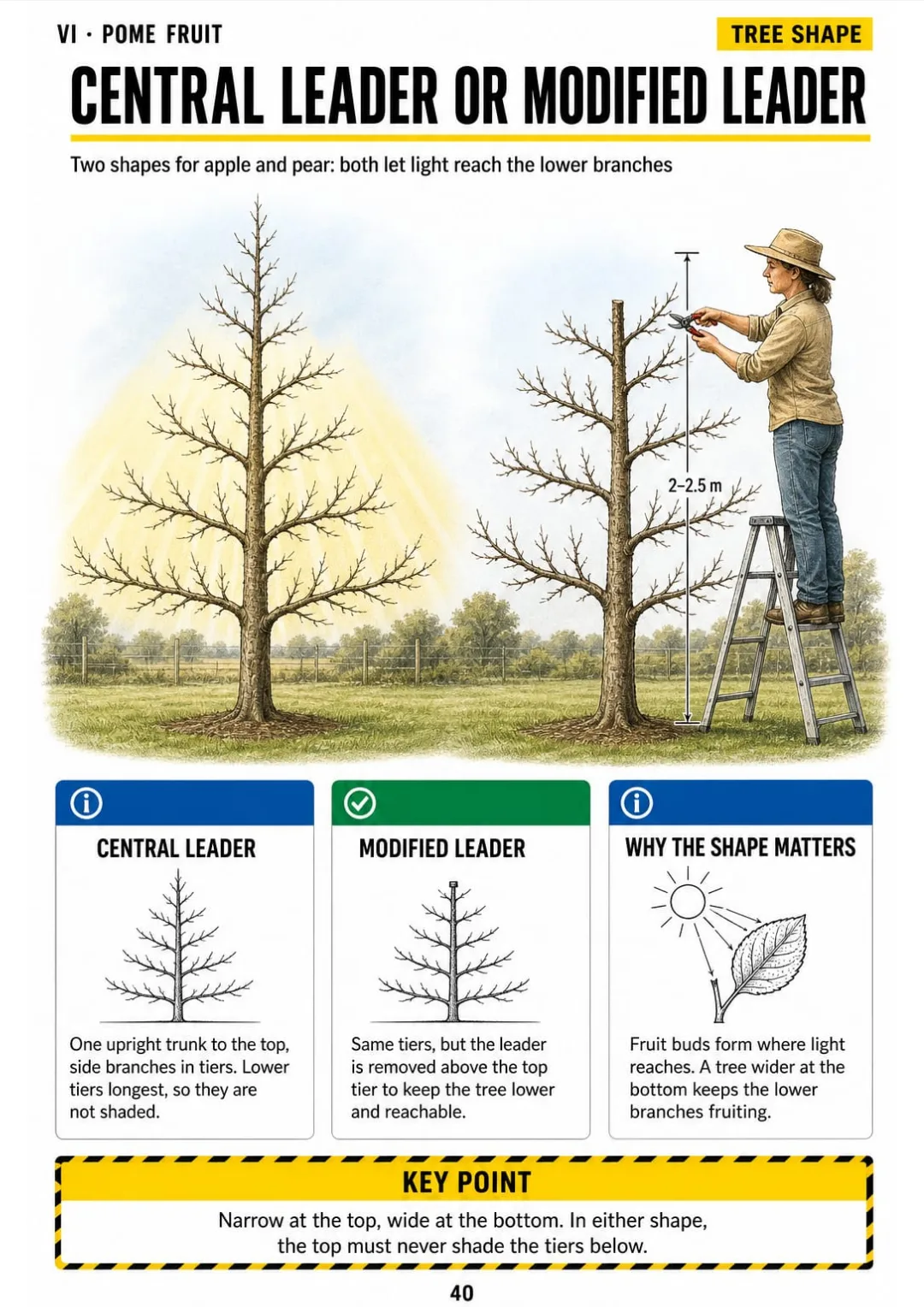
Central leader vs modified leader: tiers like a Christmas tree, top kept reachable
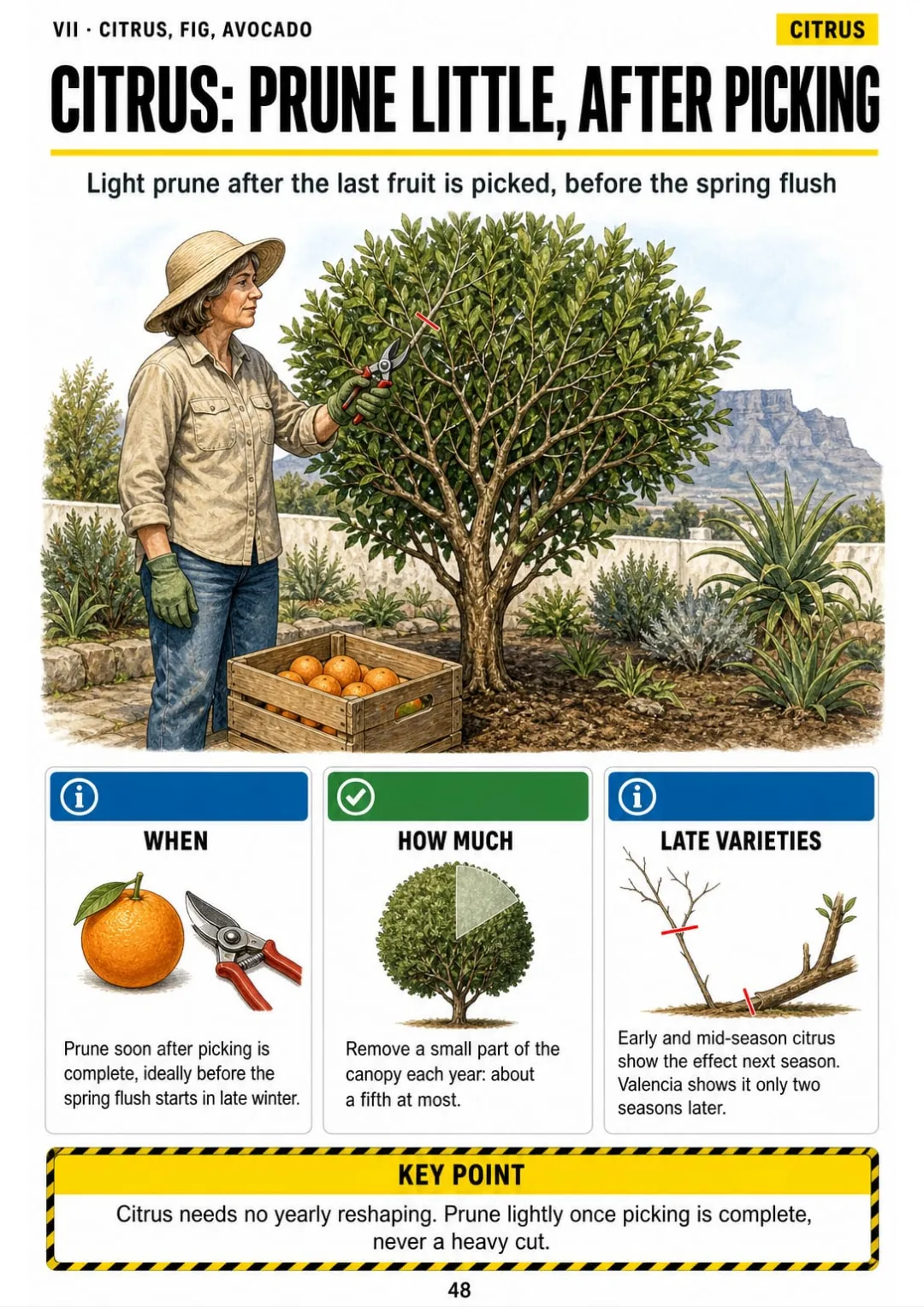
Citrus: a light prune soon after picking, before the spring flush, never a heavy cut
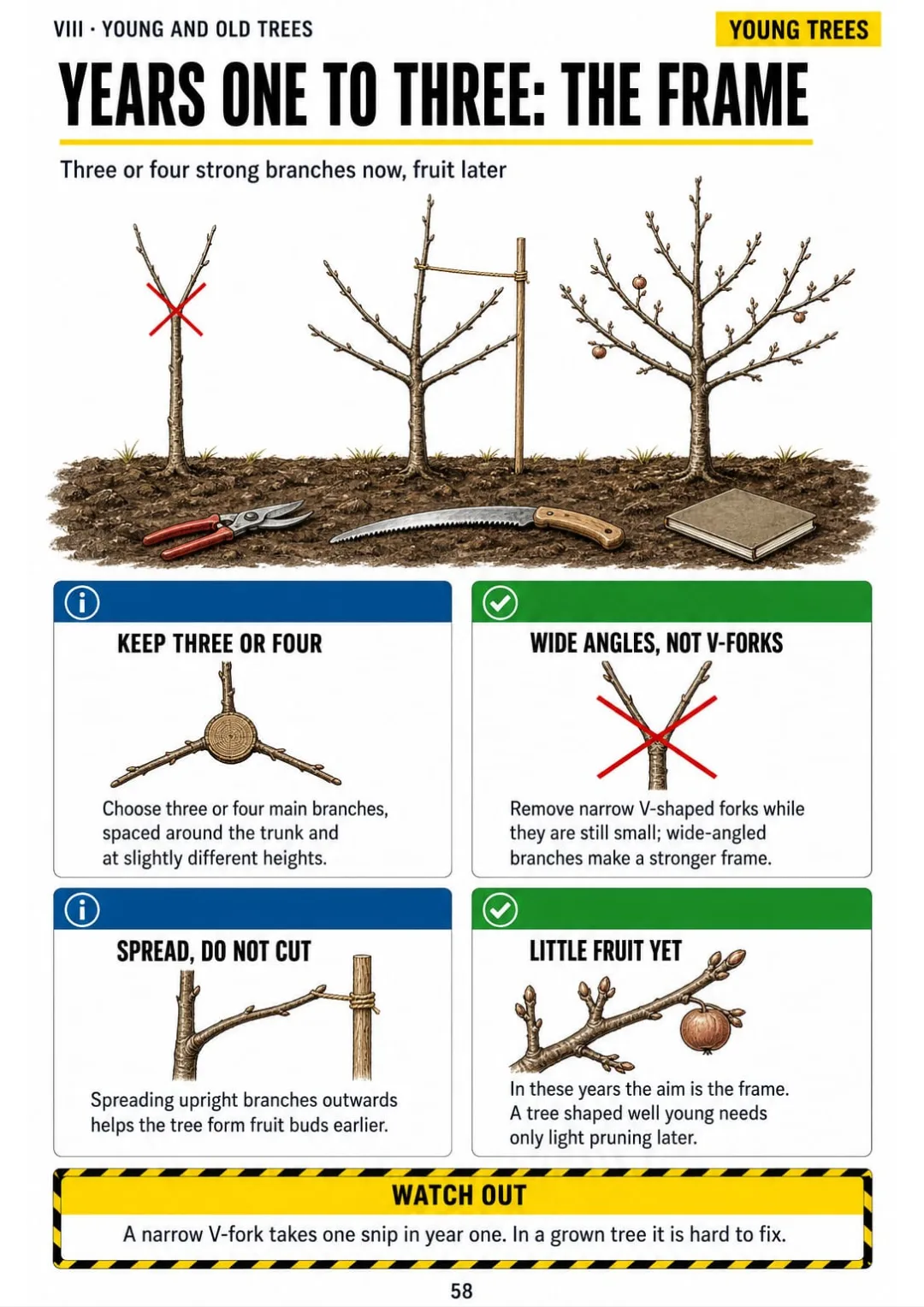
Years one to three: keep three or four wide-angled branches and remove narrow V-forks early.

Take a Look at the 9 Parts and 62 Topics

How a Fruit Tree Grows

pp. 5-11
  1. Why a Hard Winter Prune Gives You Leaves, Not Fruit
  2. Leaf Bud or Fruit Bud: Tell Them Apart
  3. One-Year Wood, Two-Year Wood, Older Wood
  4. Spurs: The Short Stubby Fruiting Shoots
  5. Tip-Bearers and Spur-Bearers
  6. Apical Dominance: Why the Top Bud Wins
  7. The Map: Where Each Tree Bears

Tools and the Cut Itself

pp. 12-19
  1. Bypass Secateurs, Loppers, Saw: Which Branch Gets Which
  2. Sharp and Clean: Tool Care Between Trees
  3. Thinning Cut vs Heading Cut
  4. Cutting to a Bud: Height and Slope
  5. The Branch Collar: Where a Branch Meets the Trunk
  6. The Three-Cut Method for a Heavy Limb
  7. Wound Sealant: When It Matters and When It Does Not
  8. Ladder and Safety on a Big Tree

The 4 Checks Before Every Cut

pp. 20-24
  1. Check 1: Dead, Diseased, Damaged
  2. Check 2: Where Does This Tree Bear?
  3. Check 3: Thin or Shorten?
  4. Check 4: Outward Bud and Collar
  5. The 4 Checks on One Tree, Step by Step

The Southern-Hemisphere Calendar

pp. 25-29
  1. The Pruning Year as a Wheel
  2. Winter Pruning: What It Does
  3. Summer Pruning: What It Does
  4. Winter Rainfall or Summer Rainfall: Adjust the Timing
  5. When Not to Prune

Stone Fruit: Peach, Nectarine, Apricot, Plum

pp. 30-39
  1. The Open Vase Shape
  2. Peach and Nectarine Bear on Last Year's Shoots
  3. Renewal Pruning on Peach
  4. Peach: Cutting Out the Centre in Summer
  5. Apricot: Spurs and One-Year Wood
  6. Japanese Plums: The Most Common Plum in South African Gardens
  7. European Plums and Prunes: Prune Less
  8. Gum on Stone Fruit: When It Is a Warning
  9. Thinning Peaches and Plums by Hand
  10. Stone-Fruit Pruning on One Page

Pome Fruit: Apple and Pear

pp. 40-47
  1. The Central Leader and the Modified Leader
  2. Apple and Pear Spurs: Leave Them Alone
  3. Thinning Old Spur Systems
  4. Tip-Bearing Cultivars: Do Not Shorten Every Shoot
  5. Bending Branches Instead of Cutting Them
  6. Pears Grow Upright: Open Them Out
  7. Thinning Apples and Pears
  8. Pome-Fruit Pruning on One Page

Citrus, Fig and Avocado

pp. 48-56
  1. Citrus: Prune Little, After Picking
  2. Citrus: Water Shoots and Rootstock Suckers
  3. Citrus Sunburn After Heavy Pruning
  4. Lemons Are Different
  5. Fig: Two Crops on Two Kinds of Wood
  6. Fig: Winter Pruning to a Low, Open Tree
  7. Avocado: Why Height Is the Main Problem
  8. Avocado: Where It Bears and How Not to Lose It
  9. Citrus, Fig and Avocado on One Page

Young, Old and Neglected Trees

pp. 57-61
  1. The First Cut on a Newly Planted Tree
  2. Years One to Three: Choosing the Scaffold
  3. The Inherited Overgrown Tree
  4. Water Shoots After a Restoration Cut
  5. Keeping a Tree Small in a Small Garden

Review and Common Mistakes

pp. 62-66
  1. The Most Common Pruning Mistakes
  2. The Tree Shows You Last Year's Mistake
  3. Before You Start: The Checklist
  4. The Year Wheel to Print
  5. Where to Find Local Advice

Who This Book Is For

You're learning to prune

You see where each tree bears before you touch it, and every cut is drawn, so you start right on peach, apple or citrus.

Winter pruning is coming up

June to August is on the wheel: you open the page for each tree, run the 4 checks and go out with a plan.

You already prune for a living

On a smallholding or farm you know the work by hand; the book gives you the reason behind each cut, to explain it to anyone.

Plus: 2 Free Books

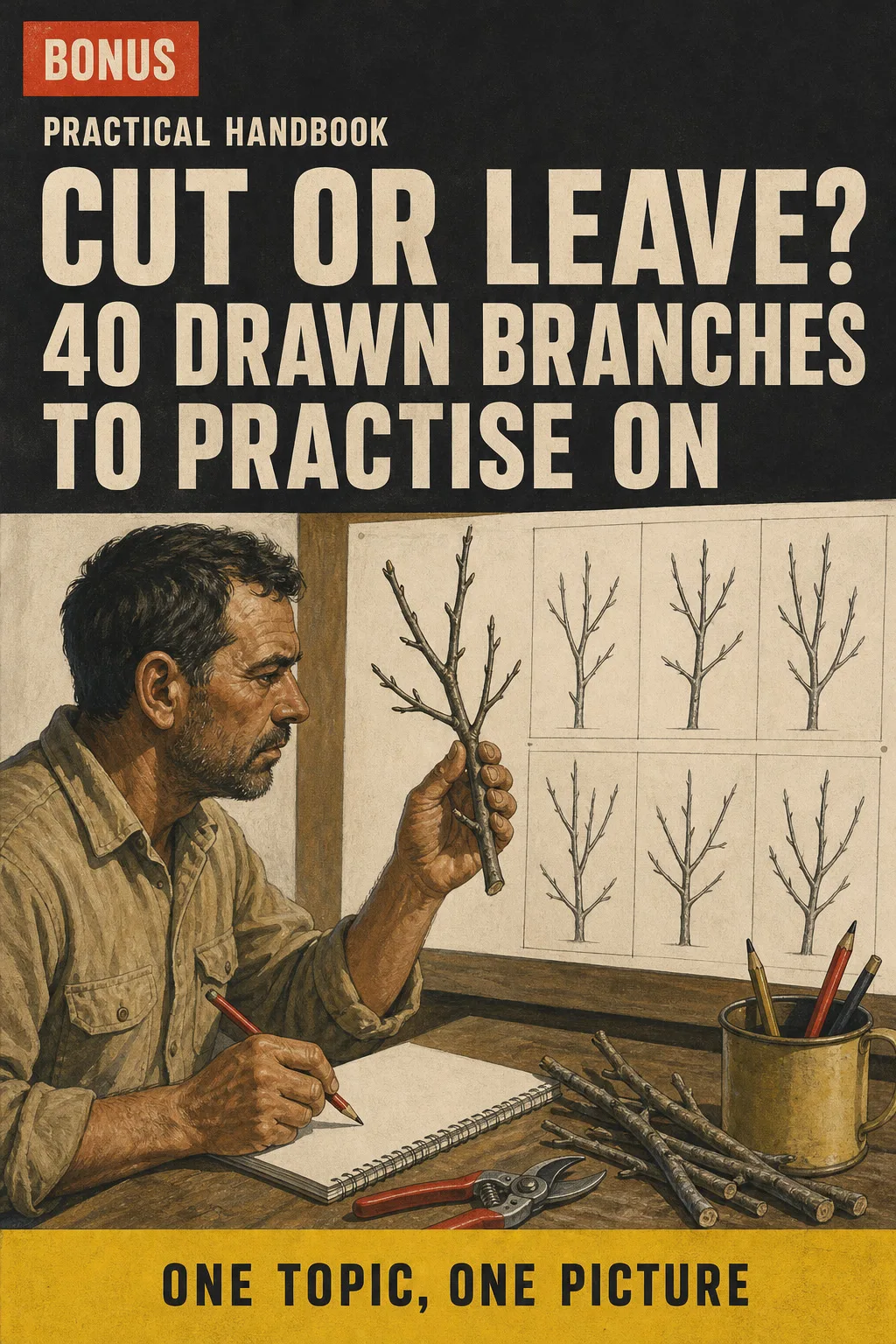
Cut or Leave? 40 Drawn Branches to Practise On
BONUS 1

Cut or Leave? 40 Drawn Branches to Practise On

Practise on paper before you touch the tree: decide which branch goes and where the cut sits, then check your answer on the next page.
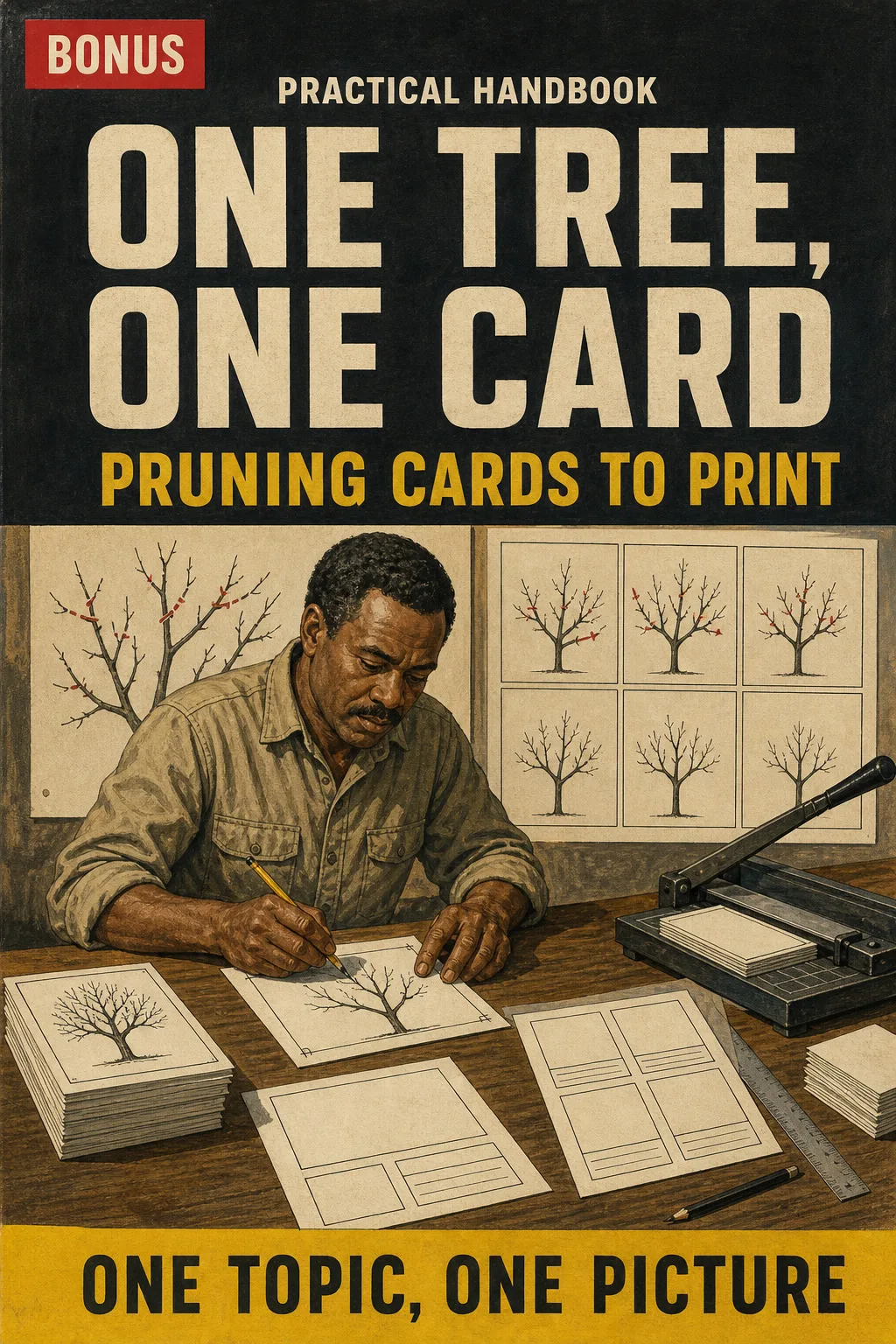
One Tree, One Card: Pruning Cards to Print
BONUS 2

One Tree, One Card: Pruning Cards to Print

A single card per tree with when to prune, where it bears and the mistakes to avoid, to keep in the shed or next to the secateurs.

30-Day Guarantee

30-day guarantee: if a file doesn't open, if the content isn't what the product page describes, if you were charged twice or the email never arrived, write to us and we'll refund you in full. You pay once. No subscriptions.

Frequently Asked Questions

Is it for me if I've never pruned, or I just have a few trees in the garden?

Yes. It starts with how a tree grows and where it bears, then each tree has its own pages: peach, apricot, plum, apple, pear, citrus, fig and avocado.

Is it set for South Africa, or is it a European calendar turned around?

It's written for South Africa. The pruning wheel follows southern-hemisphere months (deciduous trees roughly June to August, citrus after picking) and separates winter and summer rainfall areas. The content is based on published South African guidelines: ARC, Hortgro, Citrus Research International and avocado growers' material.

Is it official material?

No. It is an independent illustrated book. It names those sources only to say what it is based on.

Does it replace a course or local advice?

No. It helps you understand and plan each cut. For a sick tree or a local rule, check with your regional agricultural office or a horticulturist.

Does the calendar work for my area?

Yes. Part IV separates winter rainfall areas from summer rainfall areas, with the months for each, following the southern-hemisphere seasons.

When and how does it arrive?

The book and the 2 gift books arrive as PDFs by email, at the address you enter at checkout.

Do I have to pay every month?

No. It's a one-off payment.

Can I have it on paper?

It comes as a PDF, made to print at home, so you can keep the pages and the tree cards in the shed.

How does the refund work?

You have 30 days. We refund everything if the file won't open, if the book isn't what you see on this page, if you were charged twice or if the email doesn't arrive: just email us.

R399R999
Get the book · R399

This is a digital PDF book sent to your email: nothing is printed or shipped.