Study in Pictures🌐 English (United States)
Wildfire Mitigation Illustrated

Digital book in PDF · read it on your phone or print it

Wildfire Mitigation Illustrated

Fire behavior, embers, the 0–5, 5–30 and 30–100 ft zones, Class A roofs, vents and eaves, decks, tree spacing on a slope, fire apparatus access and the home assessment. Every topic has its own page: the drawing first, then what you need to remember.

  • 65 illustrated pages
  • English
  • 30-day guarantee
US$ 27US$ 63
Get the book · US$ 27

Price shown for: United States. In other countries, the checkout shows the price that applies there.

About this book

What it is

Fire behavior, embers, the 0–5, 5–30 and 30–100 ft zones, Class A roofs, vents and eaves, decks, tree spacing on a slope, fire apparatus access and the home assessment. Every topic has its own page: the drawing first, then what you need to remember.

Who This Book Is For
  • You're studying for the certification
  • Exam day is close
  • You already do home assessments
What it covers
  1. How Wildfire Behaves
  2. How Homes Ignite
  3. The Ignition Zones
  4. Hardening the Structure
  5. Landscape and Vegetation
  6. Access, Water and Community
  7. The Home Assessment, Same Order Every Time
  8. Review and Frequent Mistakes
Language
English (United States)
Pages
65
Format
Digital book in PDF · read it on your phone or print it
Price
US$ 27 (United States)
Delivery
This is a digital PDF book sent to your email: nothing is printed or shipped.
30-Day Guarantee
30-day guarantee: if a file doesn't open, if the content isn't what the product page describes, if you were charged twice or the email never arrived, write to us and we'll refund you in full.

Look Inside the Book

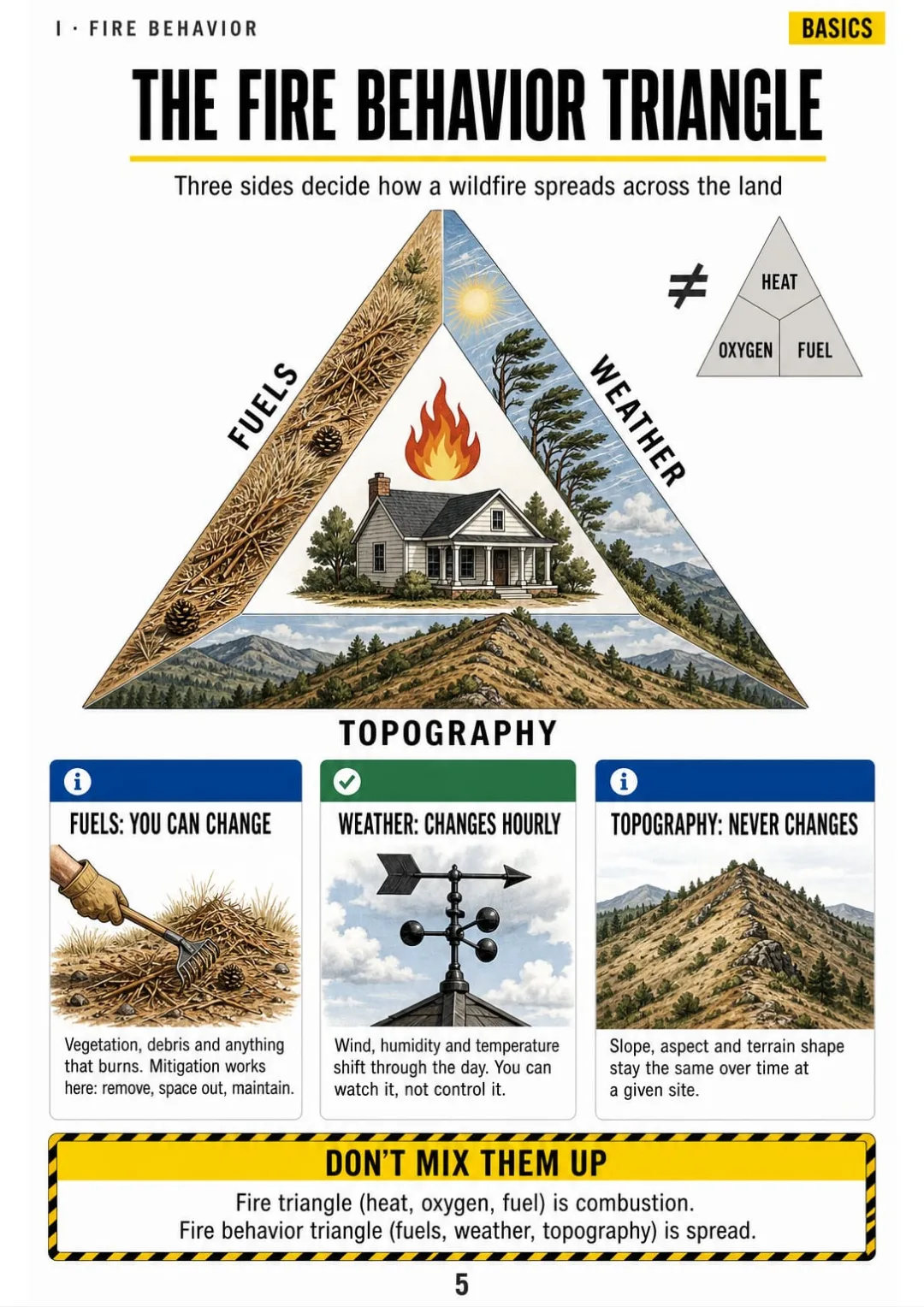
Fuels, weather, topography: topography never changes, fuels are where mitigation works.
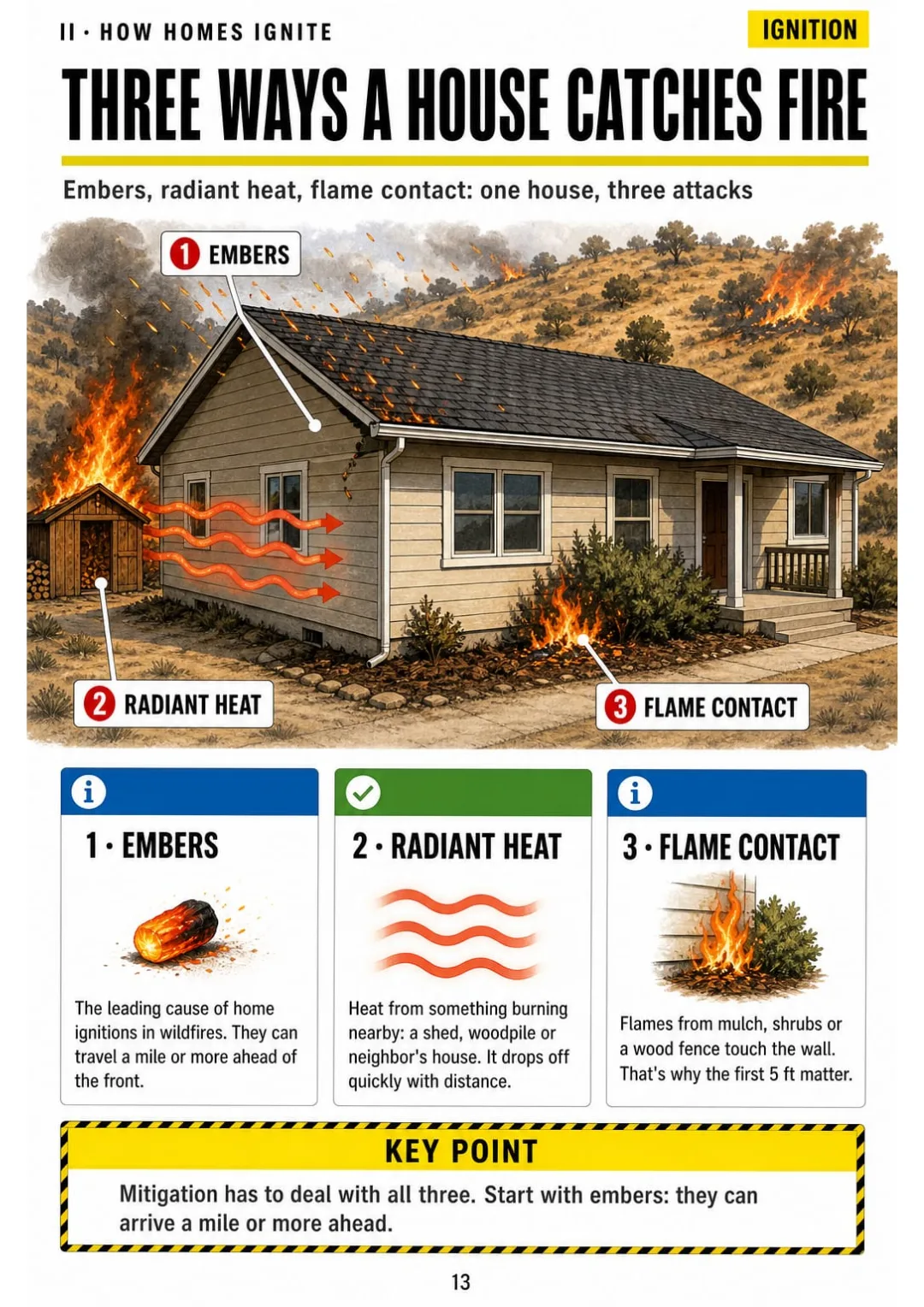
Embers, radiant heat and direct flame: the three ways a home ignites, drawn on one house.
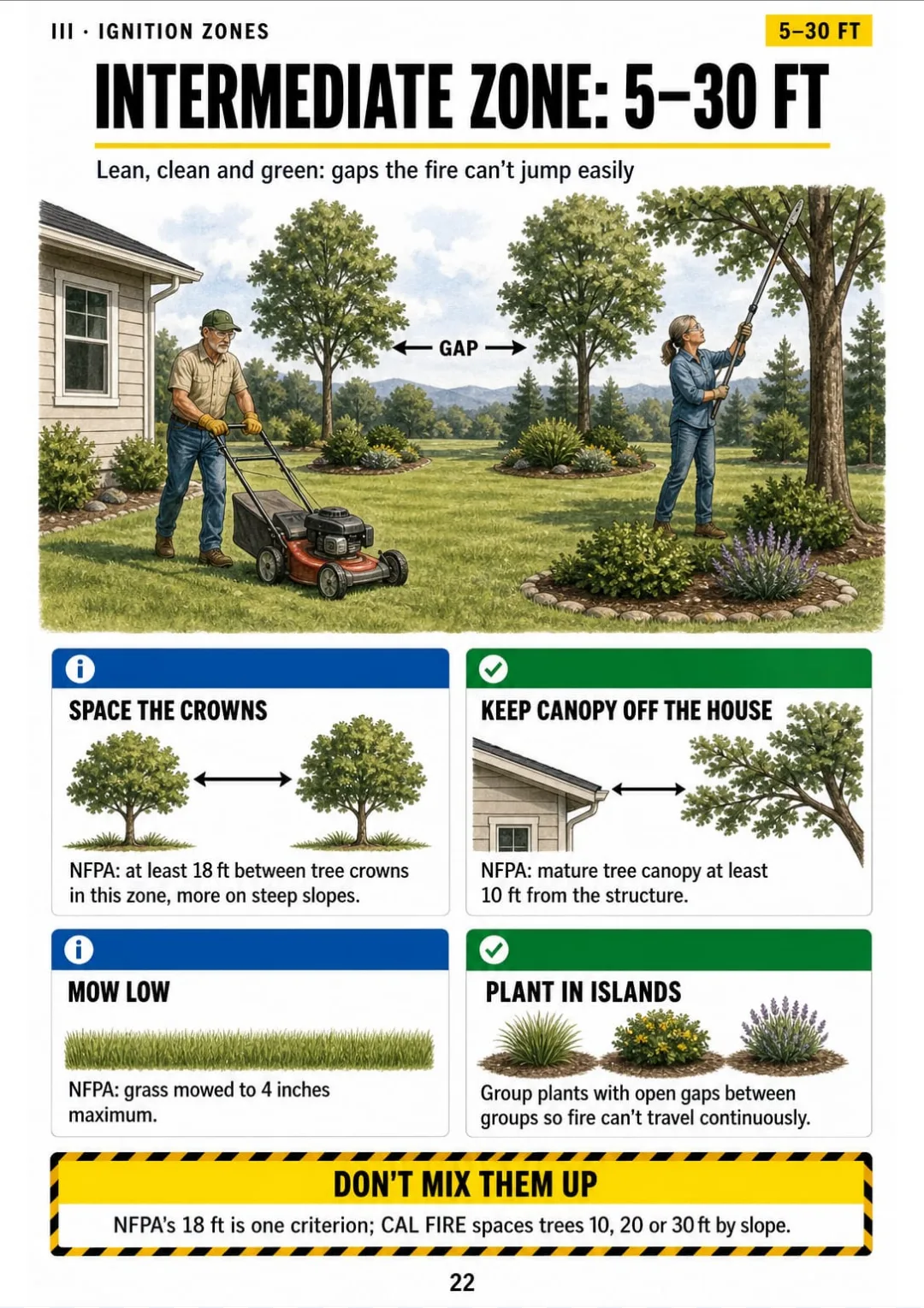
5–30 ft: crowns 18 ft apart, canopy 10 ft off the house, grass 4 in max (NFPA).
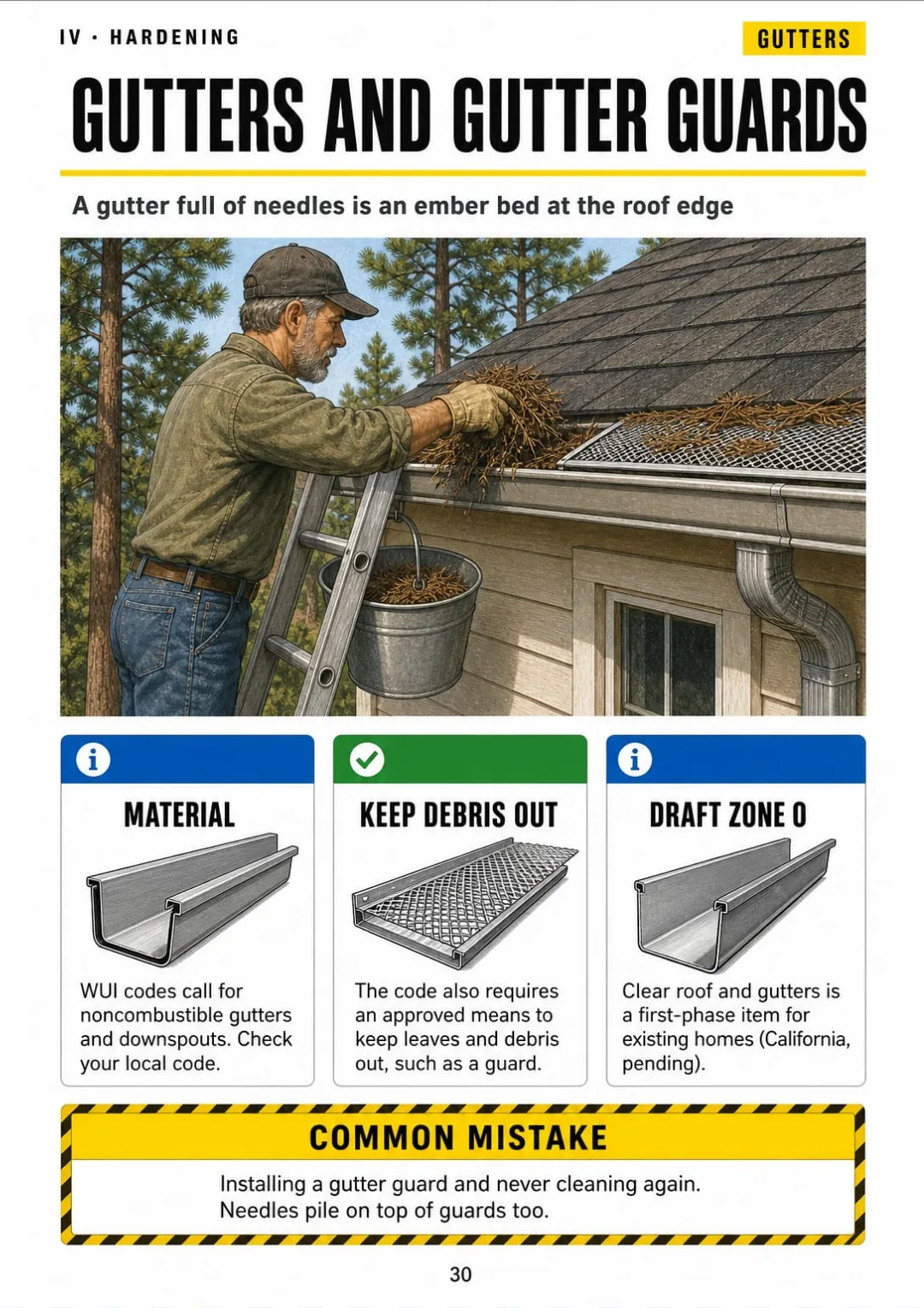
Noncombustible gutters + an approved guard, and still clean them (CWUIC §504.4)
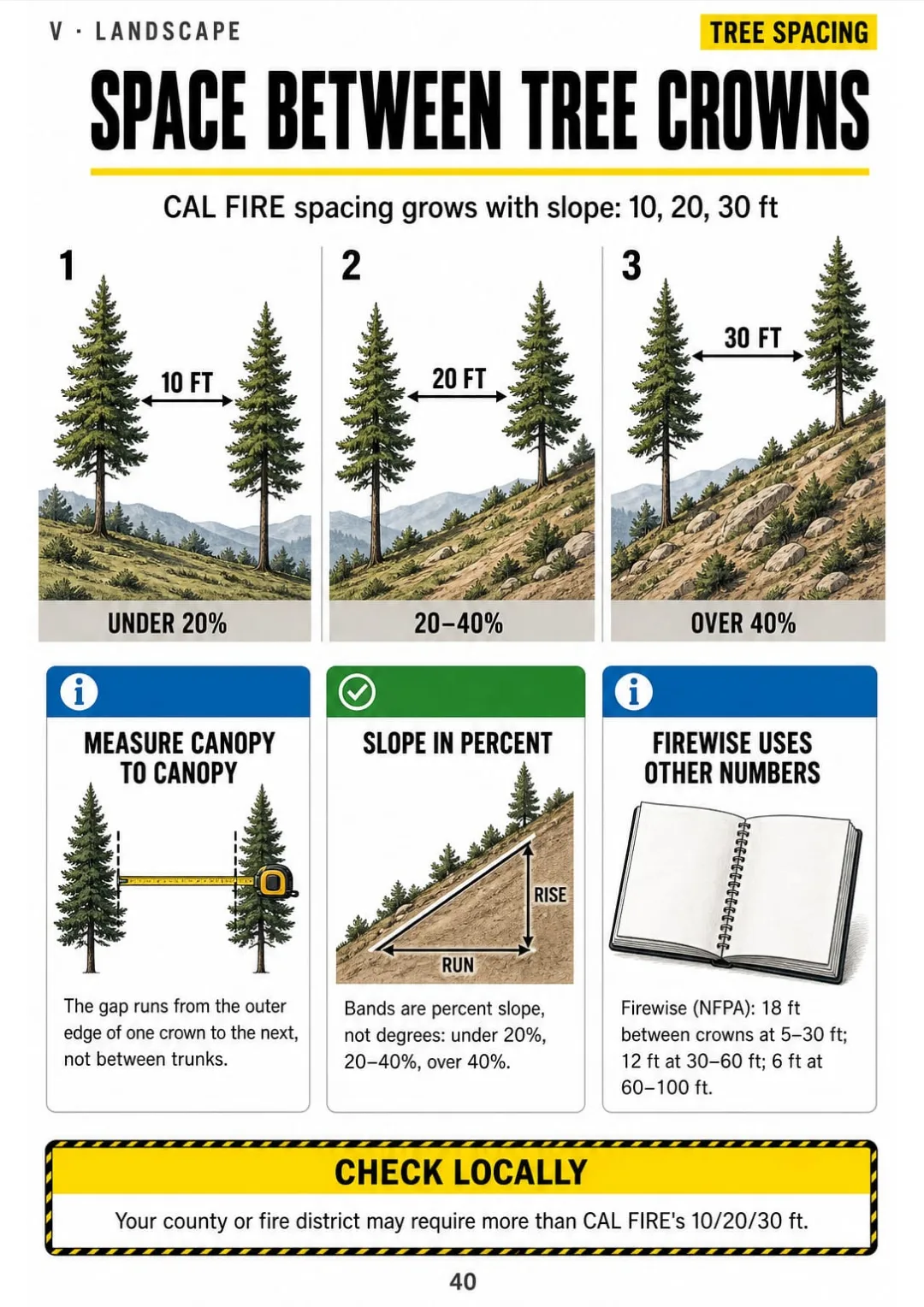
CAL FIRE crown spacing: 10 ft under 20% slope, 20 ft at 20–40%, 30 ft over 40%.
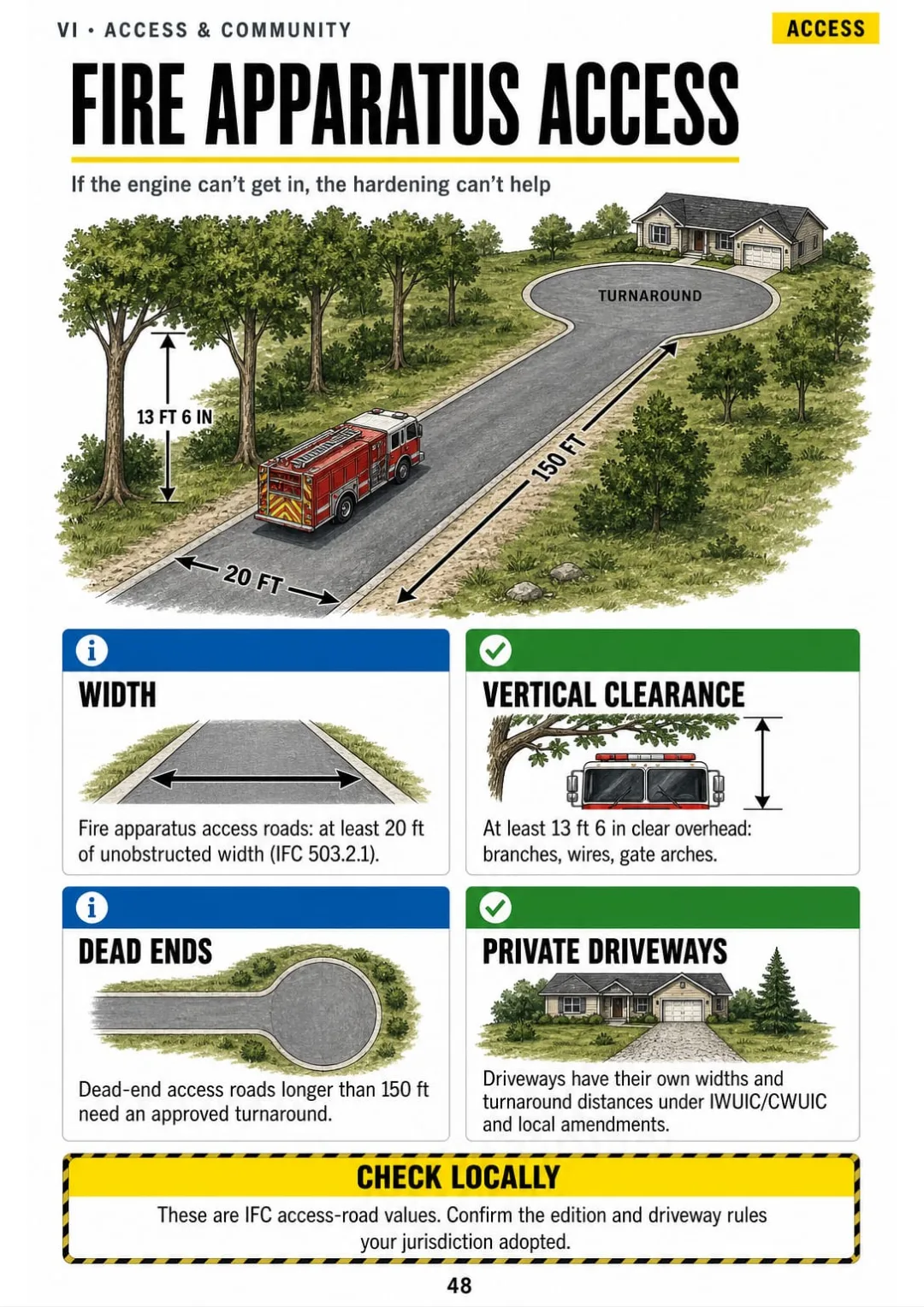
IFC access roads: 20 ft wide, 13 ft 6 in clear, turnaround on dead ends over 150 ft
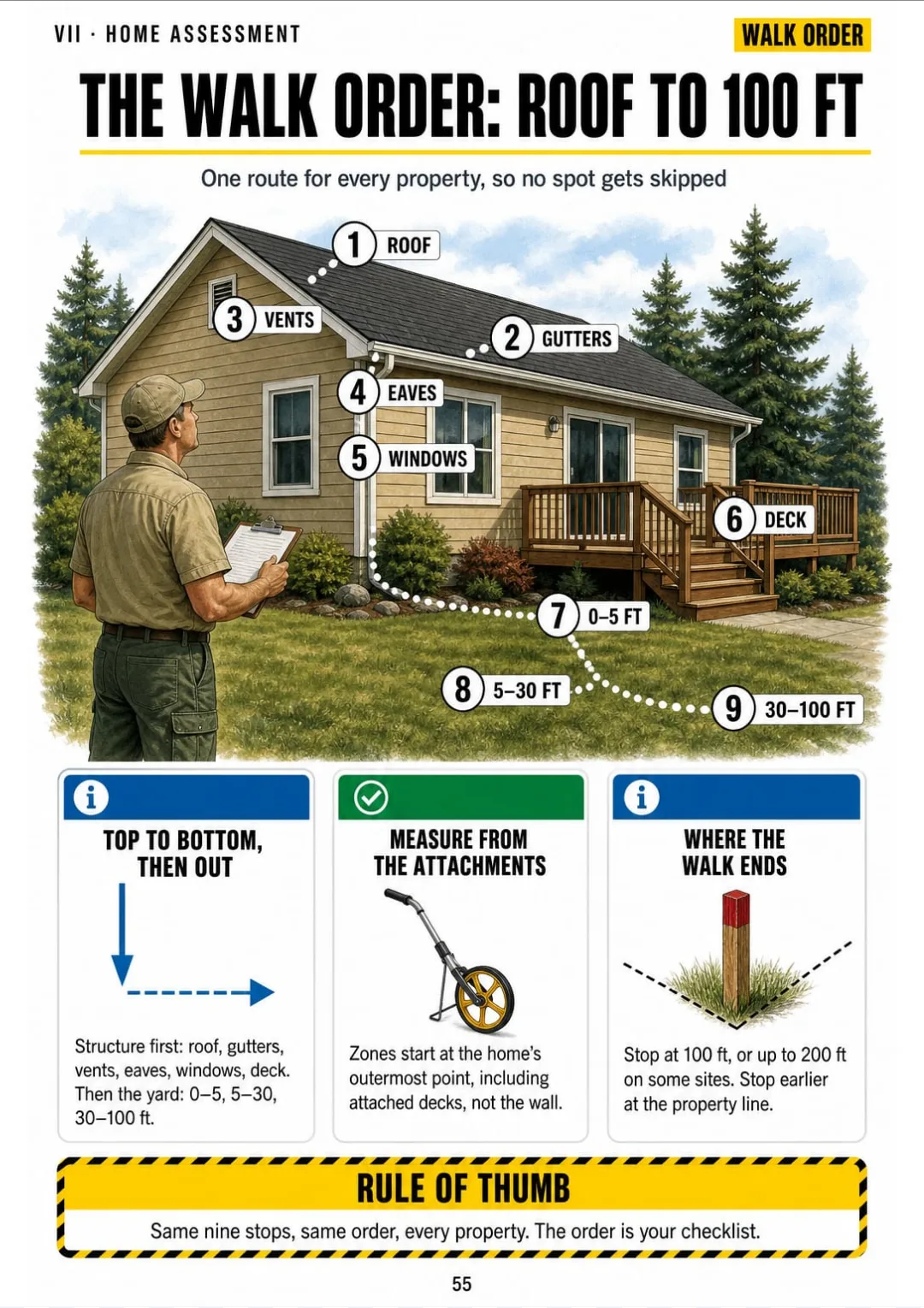
Roof → gutters → vents → eaves → windows → deck → 0–5 → 5–30 → 30–100 ft
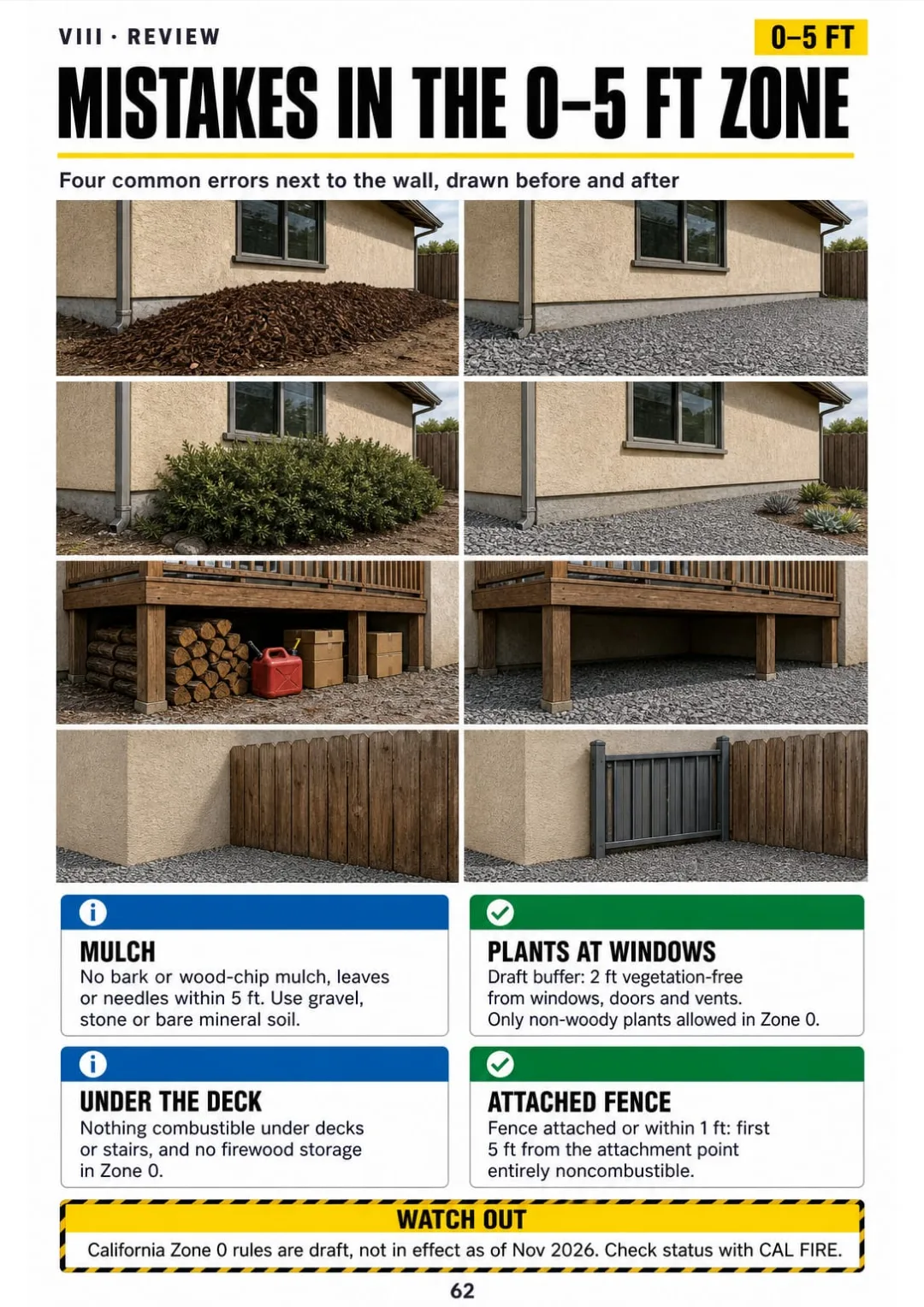
Four 0–5 ft mistakes, each drawn before and after

Take a Look at the 8 Parts and 61 Topics

How Wildfire Behaves

pp. 5-12
  1. The Fire Behavior Triangle: Fuels, Weather, Topography
  2. Fuel Moisture and Timelag Classes
  3. Fuel Types: Grass, Shrub, Timber, Slash
  4. Fuel Arrangement: Ladder Fuels and Continuity
  5. Weather: Wind, Relative Humidity, Temperature
  6. Topography: Slope, Aspect, Chimneys and Saddles
  7. Surface, Crown and Spotting Fire
  8. Plume-Driven vs. Wind-Driven Fire

How Homes Ignite

pp. 13-19
  1. Three Ways a House Catches Fire
  2. Embers: The Main Threat
  3. Where Embers Land and Pile Up
  4. Radiant Heat and Distance
  5. Direct Flame Contact
  6. The Home Ignition Zone Concept
  7. House-to-House Spread in Dense Neighborhoods

The Ignition Zones

pp. 20-27
  1. The Zones at a Glance: 0–5, 5–30, 30–100 ft
  2. Immediate Zone (0–5 ft): Noncombustible
  3. Intermediate Zone (5–30 ft): Break Up the Fuel
  4. Extended Zone (30–100 ft): Slow the Fire Down
  5. Measuring Zones on a Slope
  6. Zone 0 vs. PRC 4291 vs. Local Ordinances
  7. Fire Hazard Severity Zones and WUI Mapping
  8. Accessory Structures Inside the Zones

Hardening the Structure

pp. 28-39
  1. Roof: Class A Assembly
  2. Roof Edges, Valleys and Debris
  3. Gutters and Gutter Guards
  4. Vents: Mesh Size and Ember-Resistant Vents
  5. Eaves and Soffits
  6. Exterior Walls and Siding
  7. The 6-Inch Noncombustible Base
  8. Windows and Glass
  9. Exterior Doors and Garage Doors
  10. Decks: Surface, Underside and Attachment
  11. Fences Attached to the House
  12. Chimneys, Spark Arresters and Utilities

Landscape and Vegetation

pp. 40-47
  1. Horizontal Spacing Between Trees
  2. Spacing Between Shrubs
  3. Vertical Clearance: Limbing Up Trees
  4. Plant Choice: It's Maintenance, Not 'Fireproof' Plants
  5. Mulch: What Goes Where
  6. Firewood, Lumber and Stored Materials
  7. Dead Material and Ongoing Maintenance
  8. Fuel Breaks, Shaded Fuel Breaks and Prescribed Fire

Access, Water and Community

pp. 48-54
  1. Driveways and Fire Apparatus Access
  2. Address Signs and Gates
  3. Water Supply for Firefighting
  4. Community Wildfire Protection Plans (CWPP)
  5. Firewise USA and Fire Adapted Communities
  6. Evacuation and Ready, Set, Go!
  7. Insurance Programs and Mitigation Credits

The Home Assessment, Same Order Every Time

pp. 55-60
  1. The Walk Order: Roof to 100 ft
  2. Before You Arrive: Maps, Slope and History
  3. Reading the Structure from the Outside
  4. Reading the Landscape Around the House
  5. Setting Priorities: What to Fix First
  6. Explaining It to the Homeowner

Review and Frequent Mistakes

pp. 61-65
  1. Key Numbers on One Page
  2. Frequent Mistakes in the 0–5 ft Zone
  3. Frequent Mistakes on the Structure
  4. Terms That Get Mixed Up
  5. Exam Review by Domain

Who This Book Is For

You're studying for the certification

Fire behavior, ignition and zones in the same order the topics connect, so each page builds on the last one.

Exam day is close

The key numbers on one page and the review by domain, to go over everything in one sitting and spot what still needs work.

You already do home assessments

The walk order from roof to 100 ft, printed and in the truck, plus a drawing for every “why” a homeowner asks.

Plus: 2 Free Books

Wildfire Mitigation Exam-Style Practice Questions
BONUS 1

Wildfire Mitigation Exam-Style Practice Questions

Test yourself on fire behavior, ignition zones, home hardening and community planning, with every answer explained so you know why, not just what.
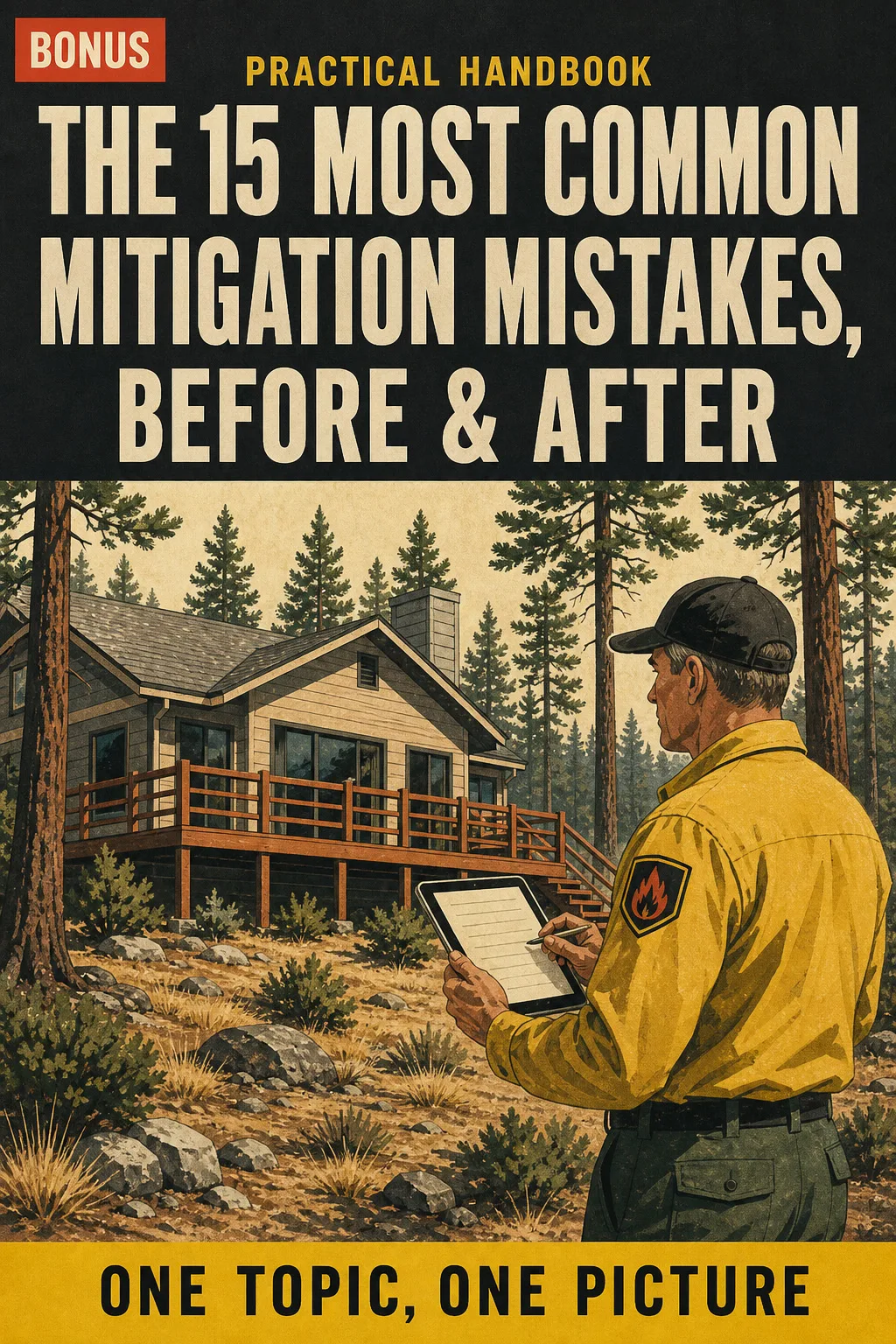
The 15 Most Common Mitigation Mistakes, Before & After
BONUS 2

The 15 Most Common Mitigation Mistakes, Before & After

See the mistakes found most often on real properties, from mulch against the wall to unscreened vents, drawn side by side with the fix.

30-Day Guarantee

30-day guarantee: if a file doesn't open, if the content isn't what the product page describes, if you were charged twice or the email never arrived, write to us and we'll refund you in full. You pay once. No subscriptions.

Frequently Asked Questions

Is it for me if I already work in fire or vegetation management?

Yes. It isn't a beginner's “prevent wildfires” book. It follows NFPA 1140, one of the main references for the NFPA Certified Wildfire Mitigation Specialist (CWMS), and it also fits state and local defensible space inspector programs. It covers fire behavior, ignition, zones, home hardening and the home assessment, for exam prep and field work. It assumes you already know fire or vegetation work.

Where does the content come from?

From NFPA 1140 (2022 edition) and the ICC International Wildland-Urban Interface Code, which are the national baseline, plus California Building Code Chapter 7A, PRC 4291 and CAL FIRE guidance. Every value is tagged with its source, so you can tell a national value from a California rule and check it against the edition your jurisdiction has adopted.

Is it official material?

No. It's independent study material, not affiliated with NFPA, ICC, CAL FIRE or any certifying body. It doesn't grant a certificate or continuing education credits: it's for studying and reviewing for the one you're preparing.

Does it replace the course or training?

No. It's a visual companion to study and review alongside your official training and field experience. Mitigation reduces risk; it doesn't eliminate it.

Are the practice questions the ones on the exam?

No. They're written for this book, in exam style, with every answer explained. They are not official questions from any exam.

When and how does it arrive?

The book and the 2 free books come as a PDF by email, to the address you enter at checkout.

Do I have to pay every month?

No. It's a one-time payment.

Can I have it on paper?

Yes. The PDF prints well at home or at a print shop, so you can keep a copy in the truck.

How does the refund work?

You have 30 days. We refund everything if the file won't open, if the book isn't what you see on this page, if you were charged twice or if the email doesn't arrive: just email us.

US$ 27US$ 63
Get the book · US$ 27

This is a digital PDF book sent to your email: nothing is printed or shipped.

More books on this topic

Driver/Operator Pumper Illustrated

Pump operations, hydraulics, water supply and apparatus driving for the driver/operator pumper written exam and the…

From US$ 27 US$ 63

Fire Officer I Illustrated

Fire Officer I and lieutenant/captain exam prep, one topic per page: incident command, size-up, building construction…

From US$ 27 US$ 63

Fire Investigator Illustrated

Fire origin and cause investigation, one topic per page, with every concept drawn: the scientific method, fire…

From US$ 27 US$ 63

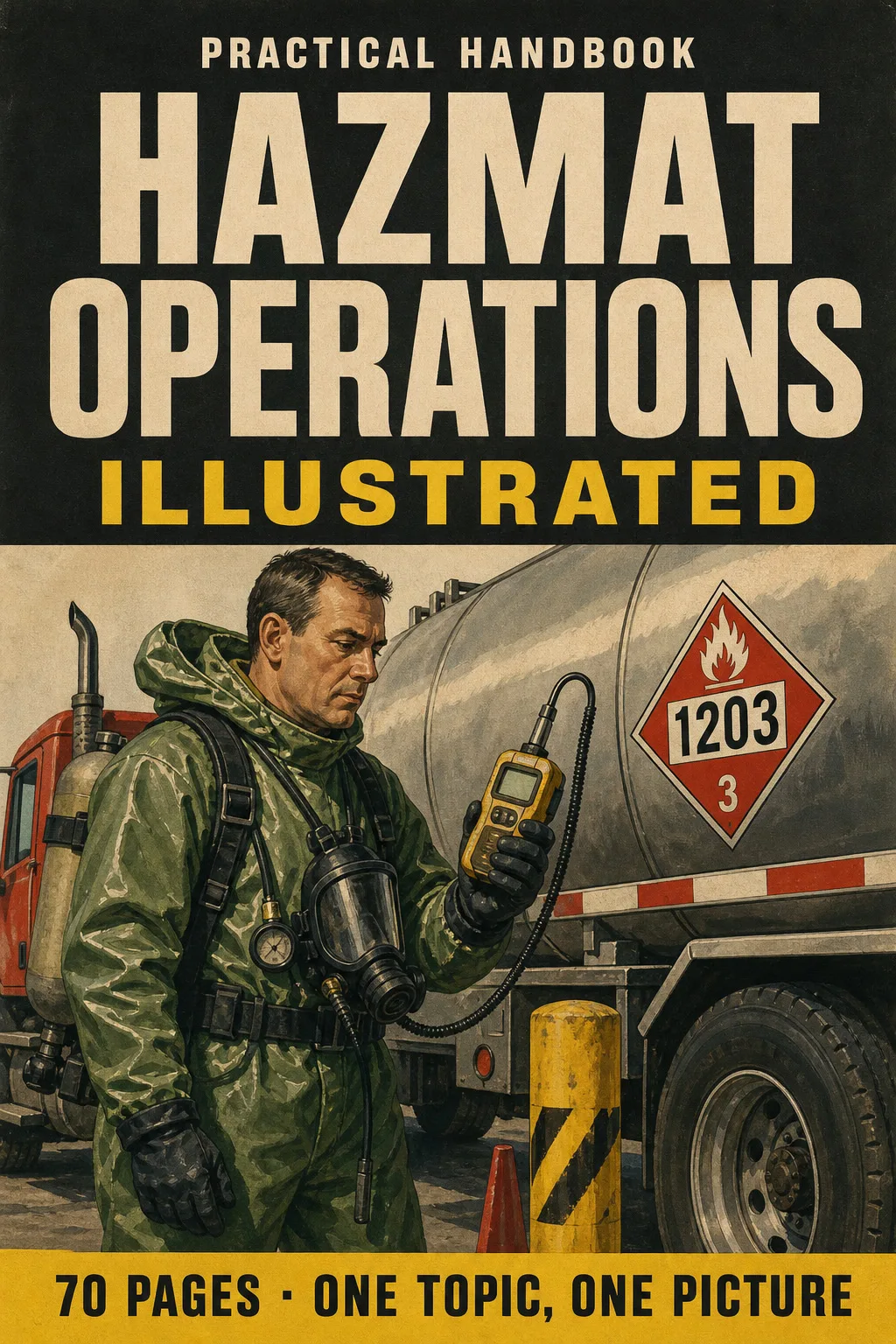
Hazmat Operations Illustrated

Hazmat Operations, one topic per page: hazard classes and placards, drums, cylinders, cargo tanks (MC-306, MC-307…

From US$ 27 US$ 63

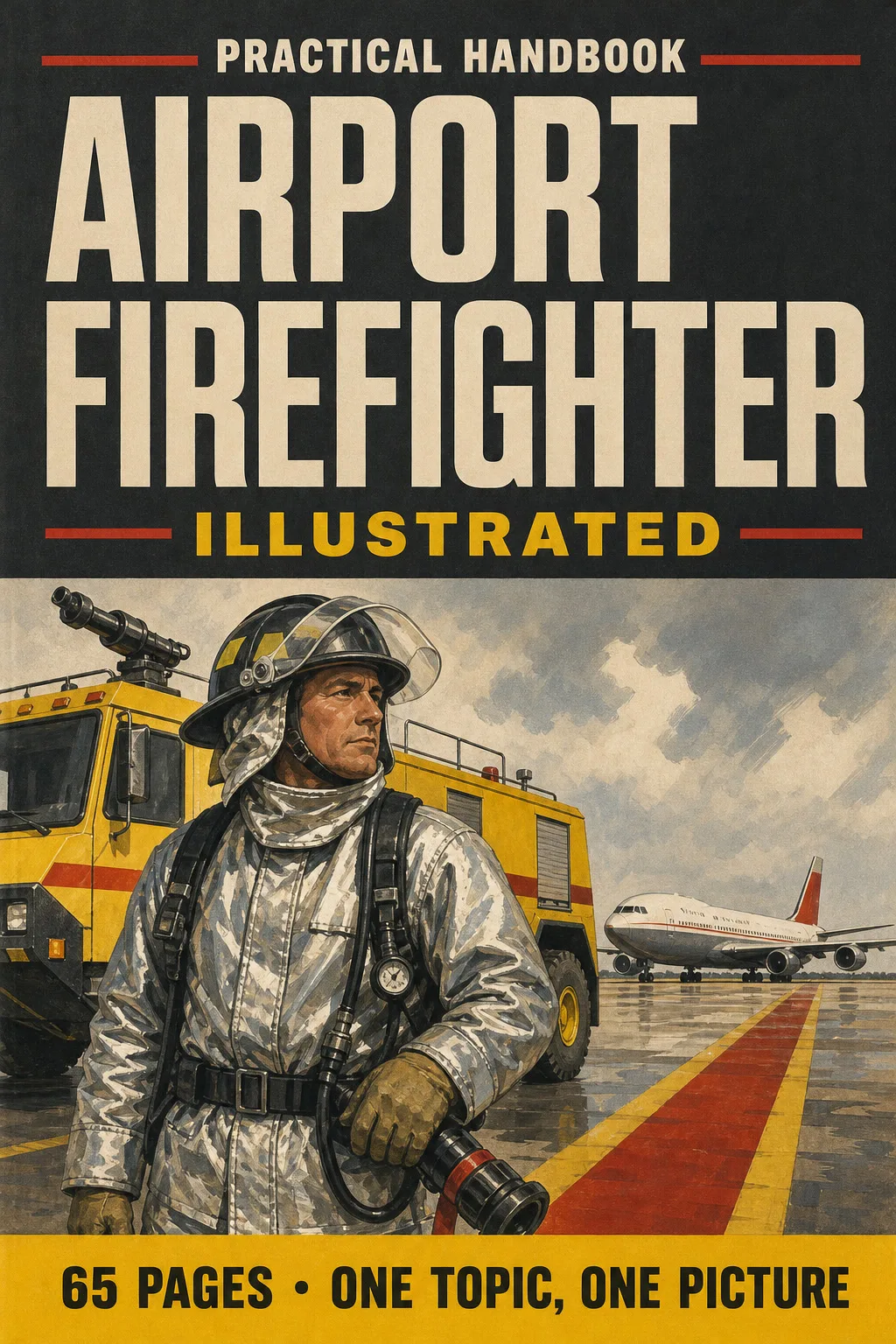
Airport Firefighter Illustrated

Aircraft rescue and firefighting, one topic per page with a big, clear drawing: airfield layout and markings, ARFF…

From US$ 27 US$ 63

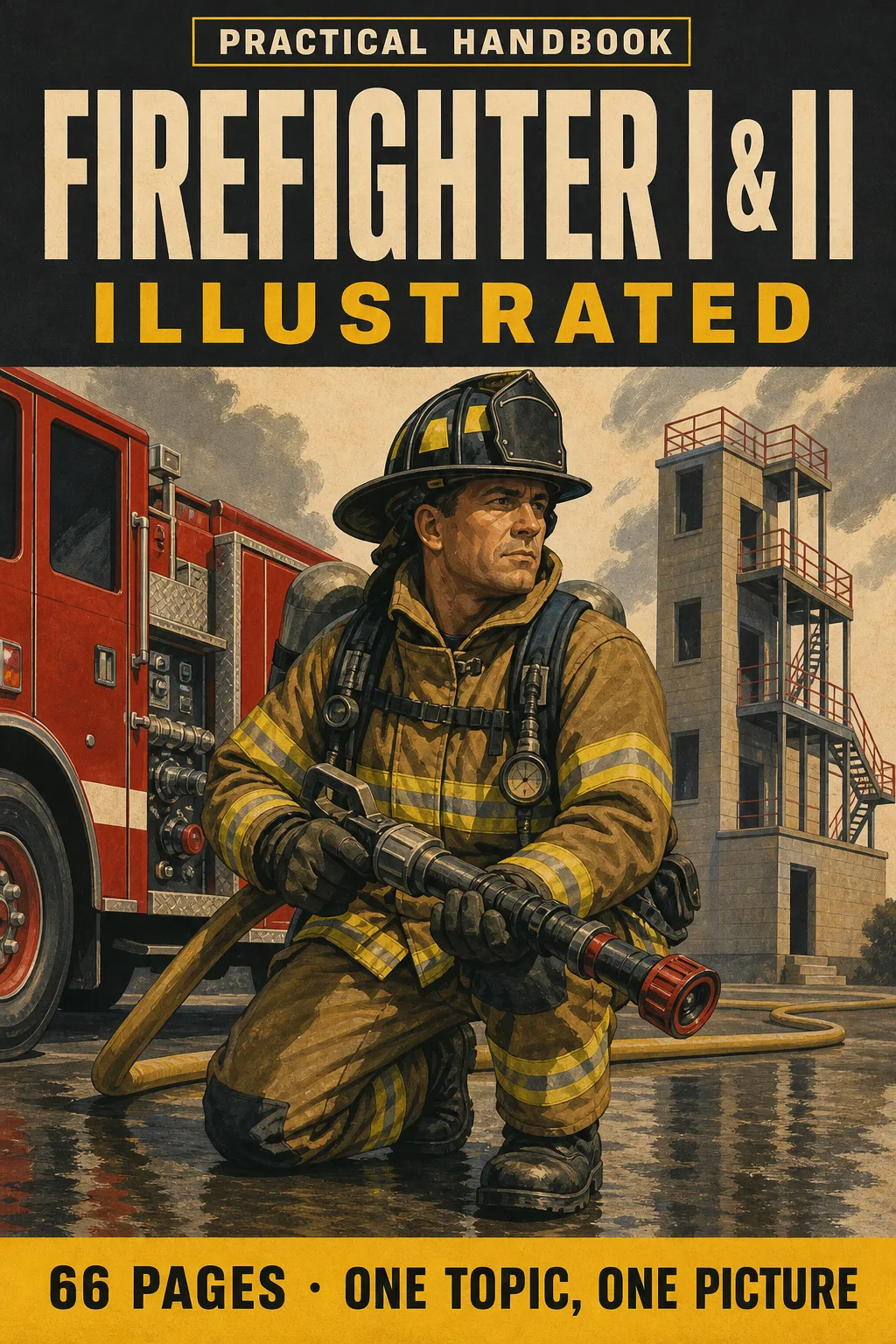
Firefighter I & II Illustrated

Firefighter I and II, one topic per page with a big, clear drawing: fire behavior, building construction, SCBA donning…

From US$ 27 US$ 63