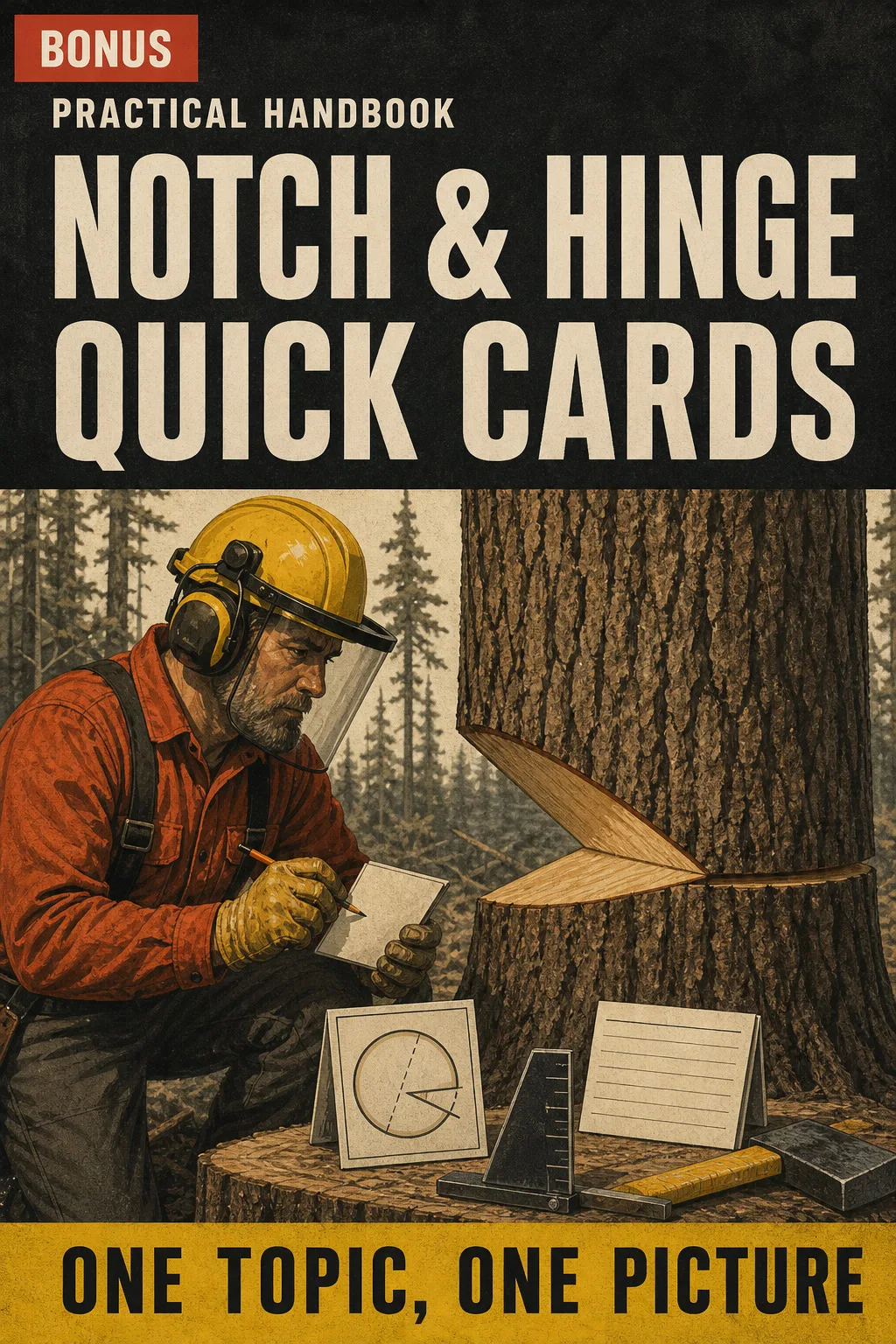
Study in Pictures🌐 English (United States)
Tree Felling Illustrated

Digital book in PDF · read it on your phone or print it

Tree Felling Illustrated

Size-up, lean and crown weight, the drop zone, two escape routes, the notch, the hinge, the back cut, wedges and bucking. Each topic gets its own page: the drawing first, then what you need to remember.

  • 64 illustrated pages
  • English
  • 30-day guarantee
US$ 27US$ 63
Get the book · US$ 27

Price shown for: United States. In other countries, the checkout shows the price that applies there.

About this book

What it is

Size-up, lean and crown weight, the drop zone, two escape routes, the notch, the hinge, the back cut, wedges and bucking. Each topic gets its own page: the drawing first, then what you need to remember.

Who This Book Is For
  • You cut on your own land
  • You just joined a tree crew
  • You run a saw on storm calls
What it covers
  1. Before the Saw Starts
  2. Reading the Tree
  3. Clearing the Work Area
  4. The Notch
  5. The Hinge
  6. Back Cut and Wedges
  7. Trees That Don't Behave
  8. After the Fall: Limbing and Bucking
  9. Review and Field Checklist
Language
English (United States)
Pages
64
Format
Digital book in PDF · read it on your phone or print it
Price
US$ 27 (United States)
Delivery
This is a digital PDF book sent to your email: nothing is printed or shipped.
30-Day Guarantee
30-day guarantee: if a file doesn't open, if the content isn't what the product page describes, if you were charged twice or the email never arrived, write to us and we'll refund you in full.

Look Inside the Book

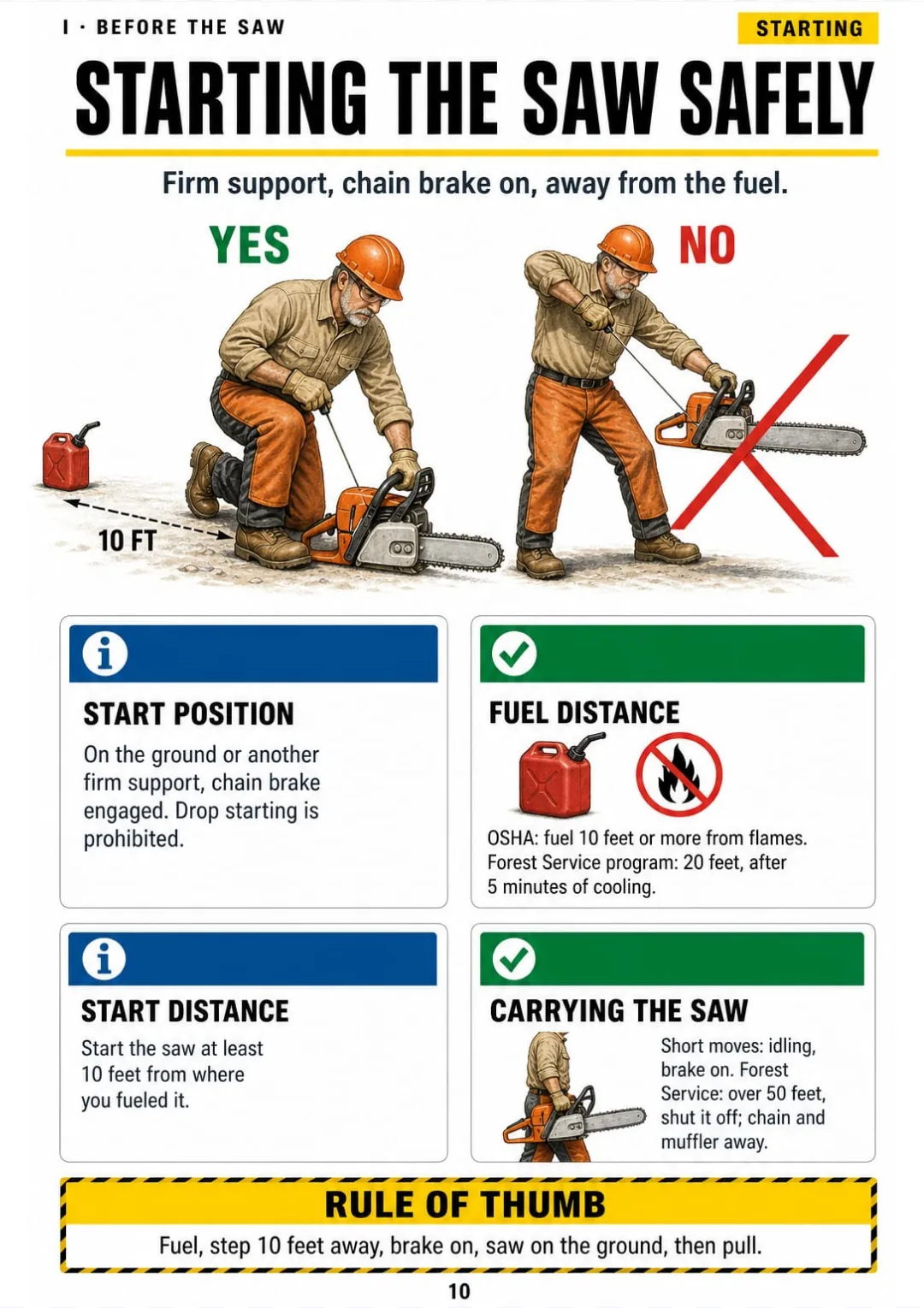
Never drop-start: firm support, chain brake on, 10 ft from the fueling area.
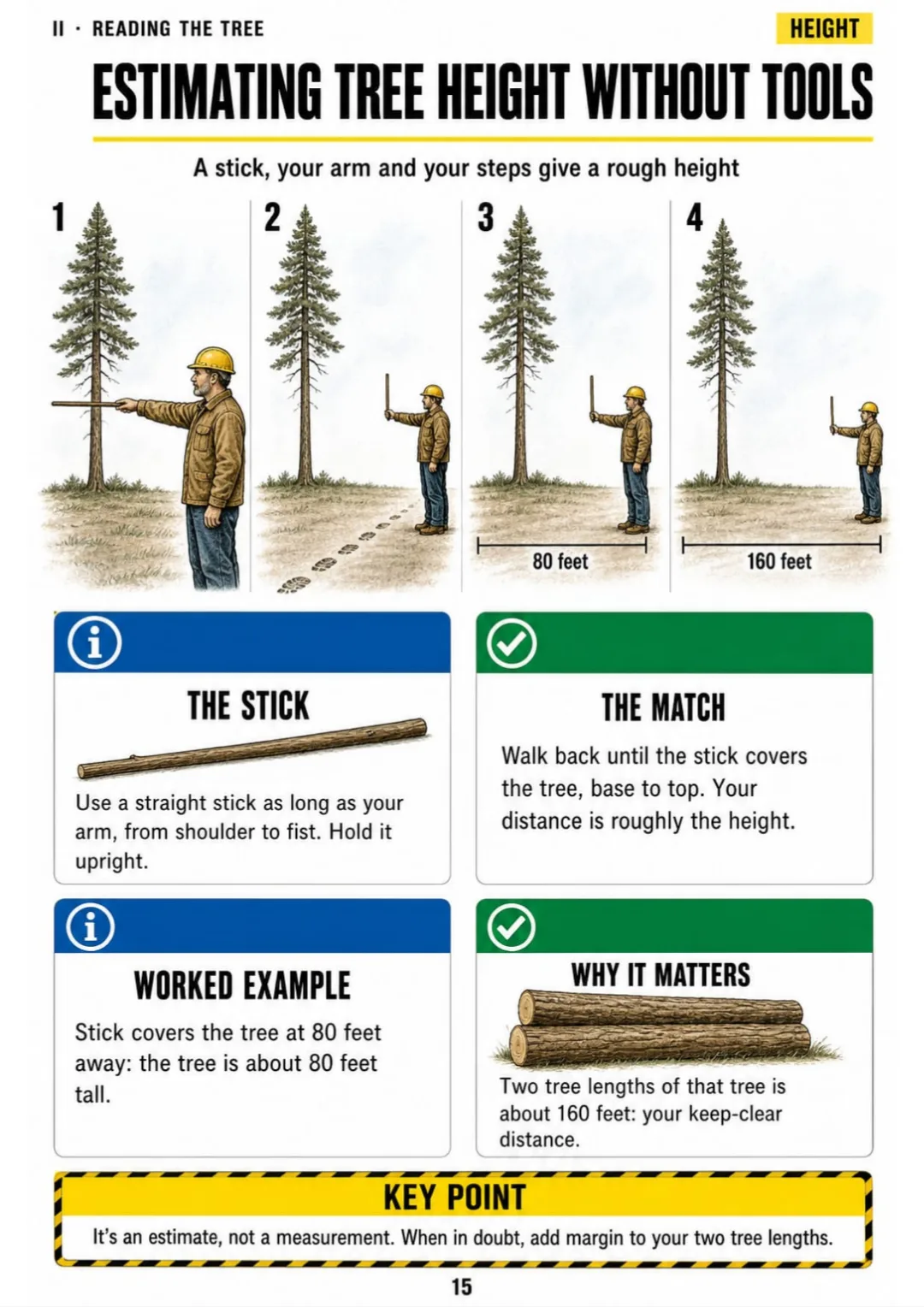
Stick method: 80 feet back when the stick covers it = about 80 feet tall.
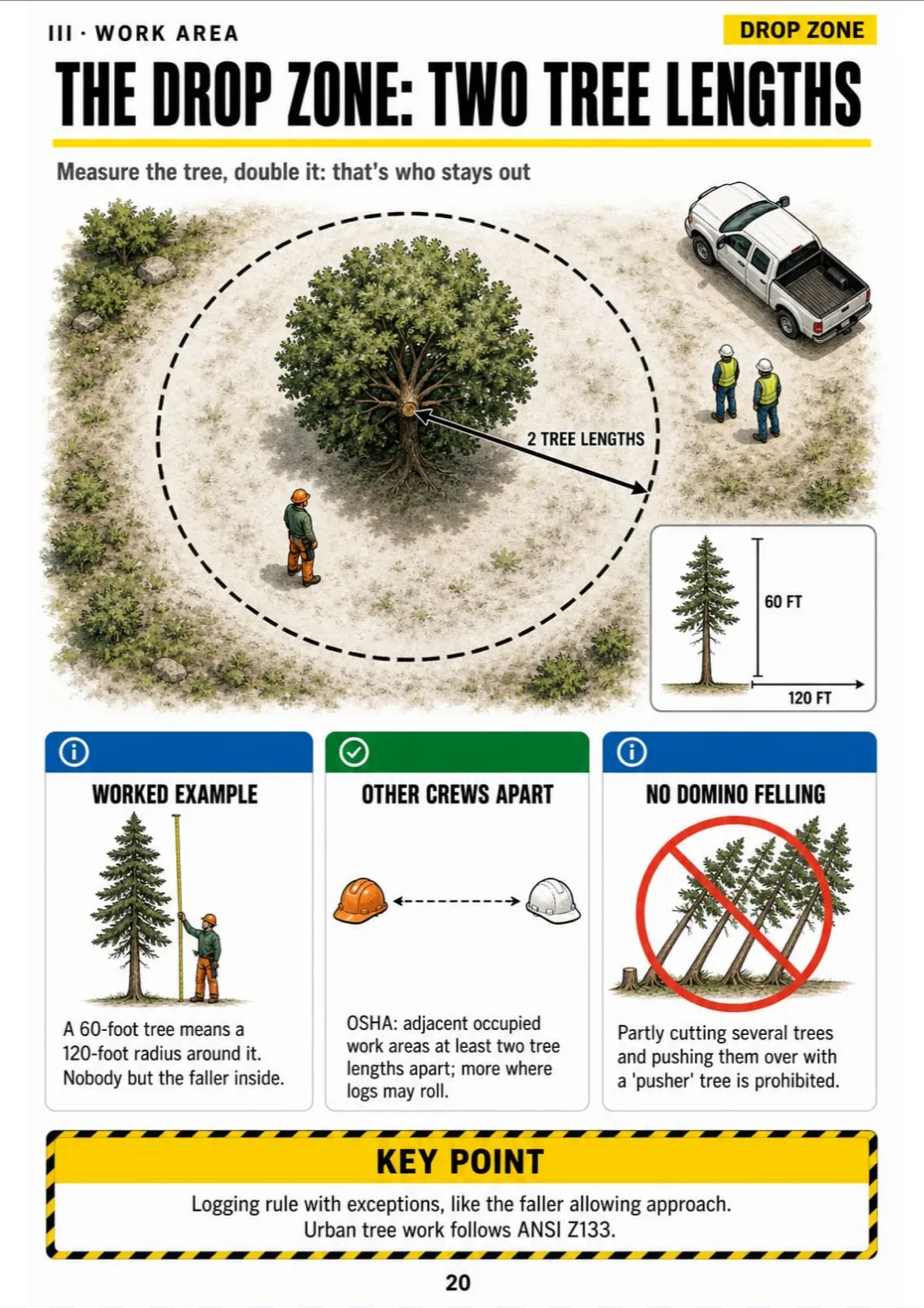
60-foot tree = 120-foot radius drop zone · OSHA 29 CFR 1910.266
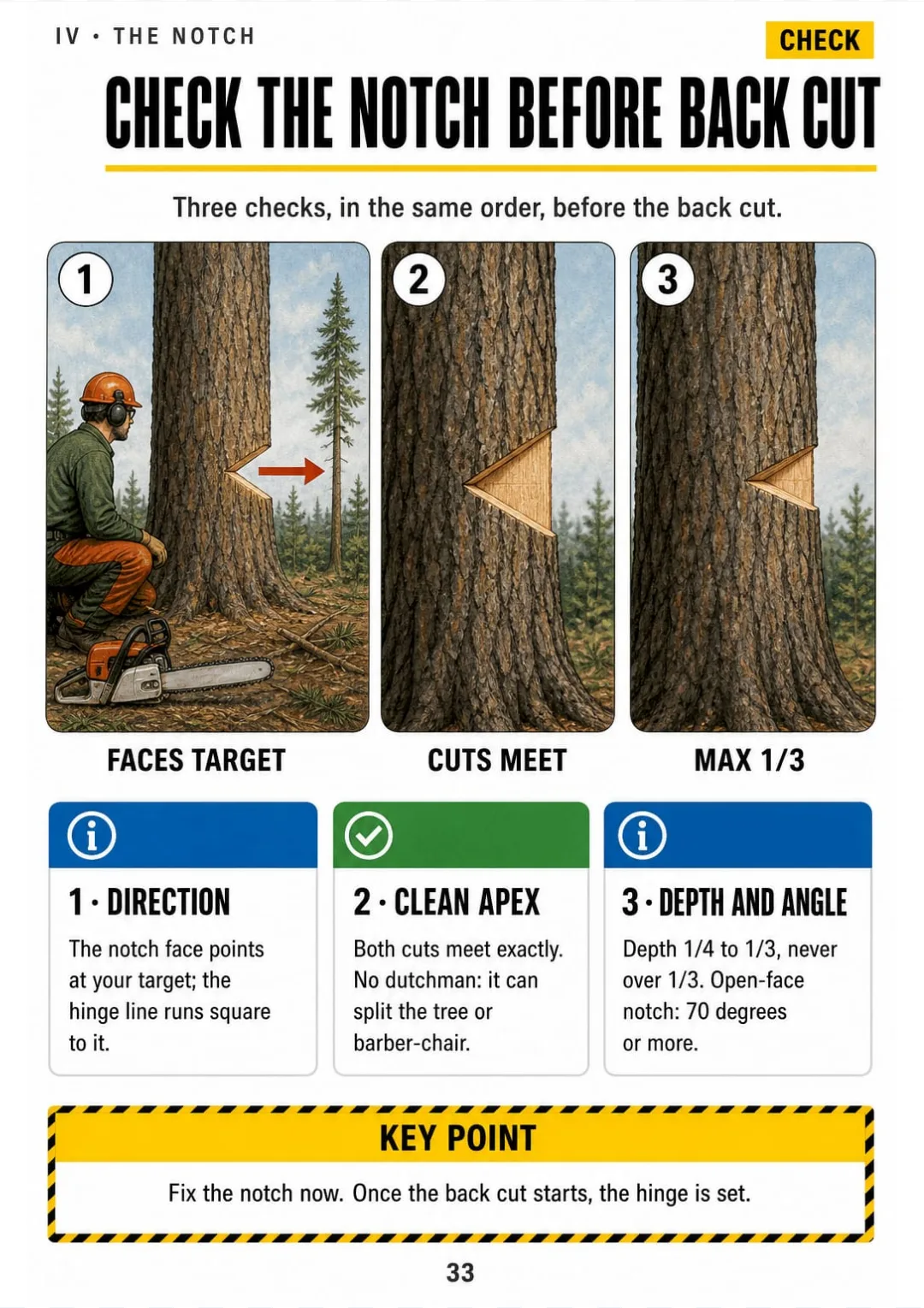
Before the back cut: notch faces the target, cuts meet cleanly, depth no more than 1/3.
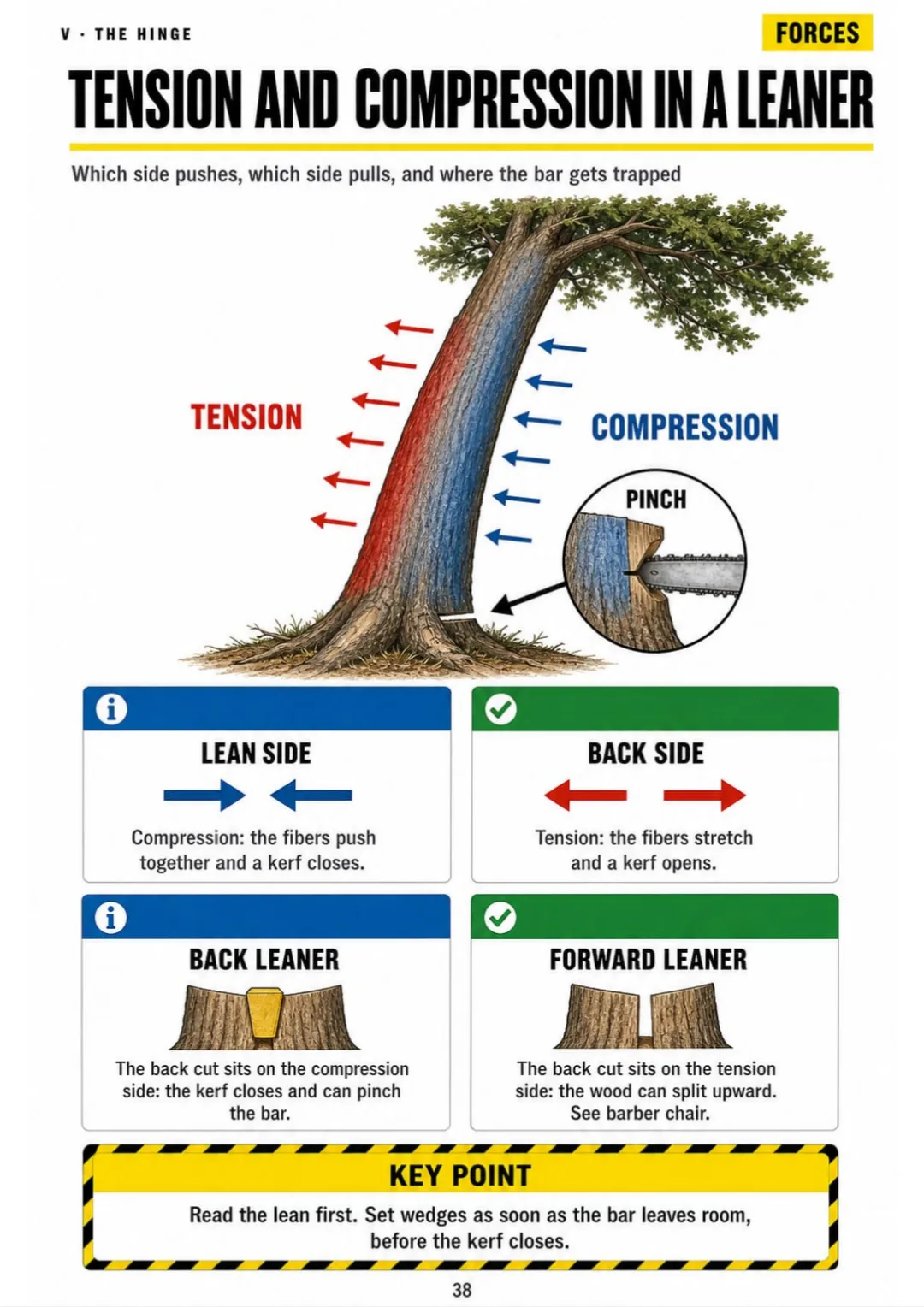
Lean side = compression (kerf closes) · back side = tension (kerf opens).
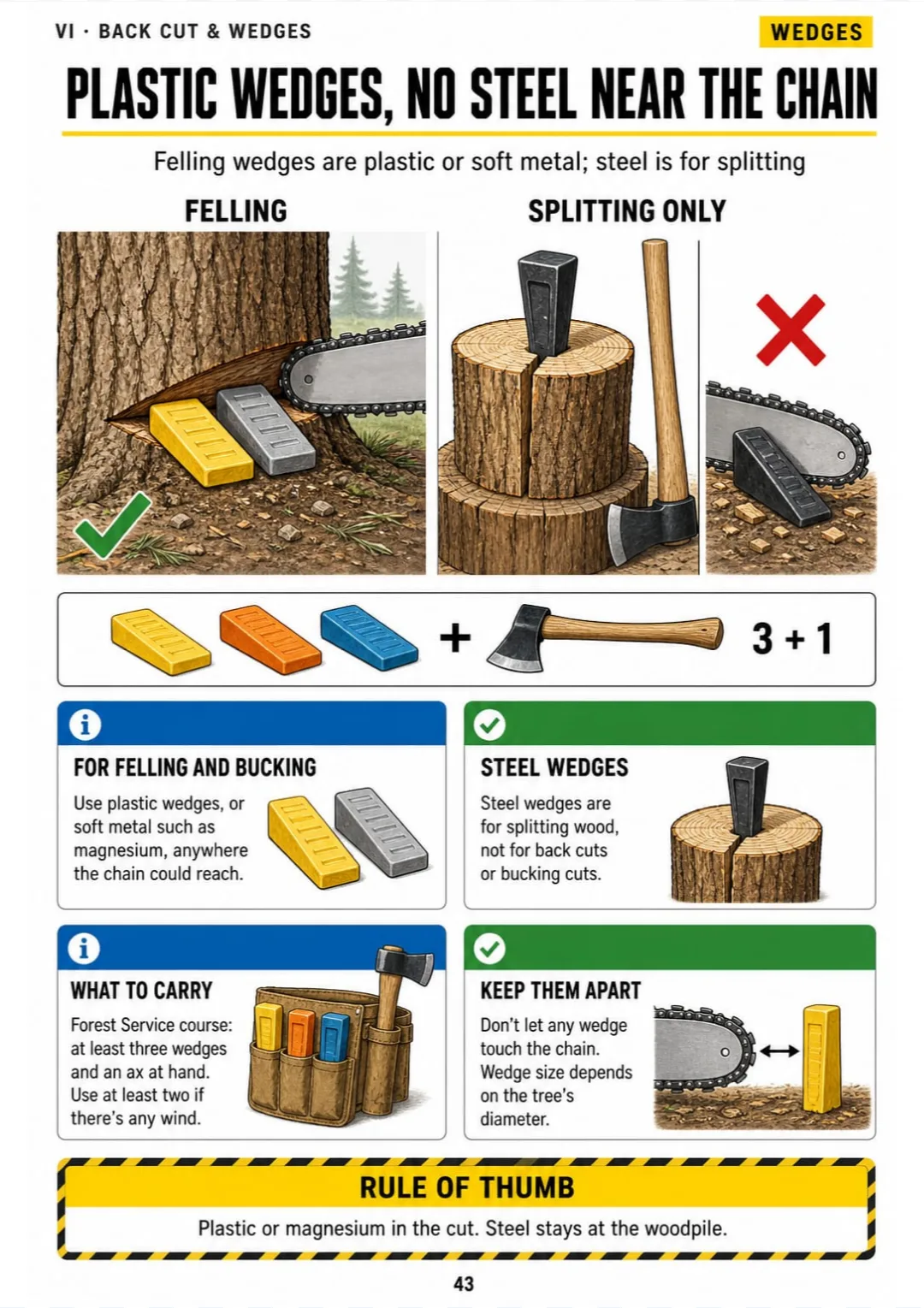
Plastic or magnesium wedges for felling · 3 wedges + an ax · 2 wedges in wind
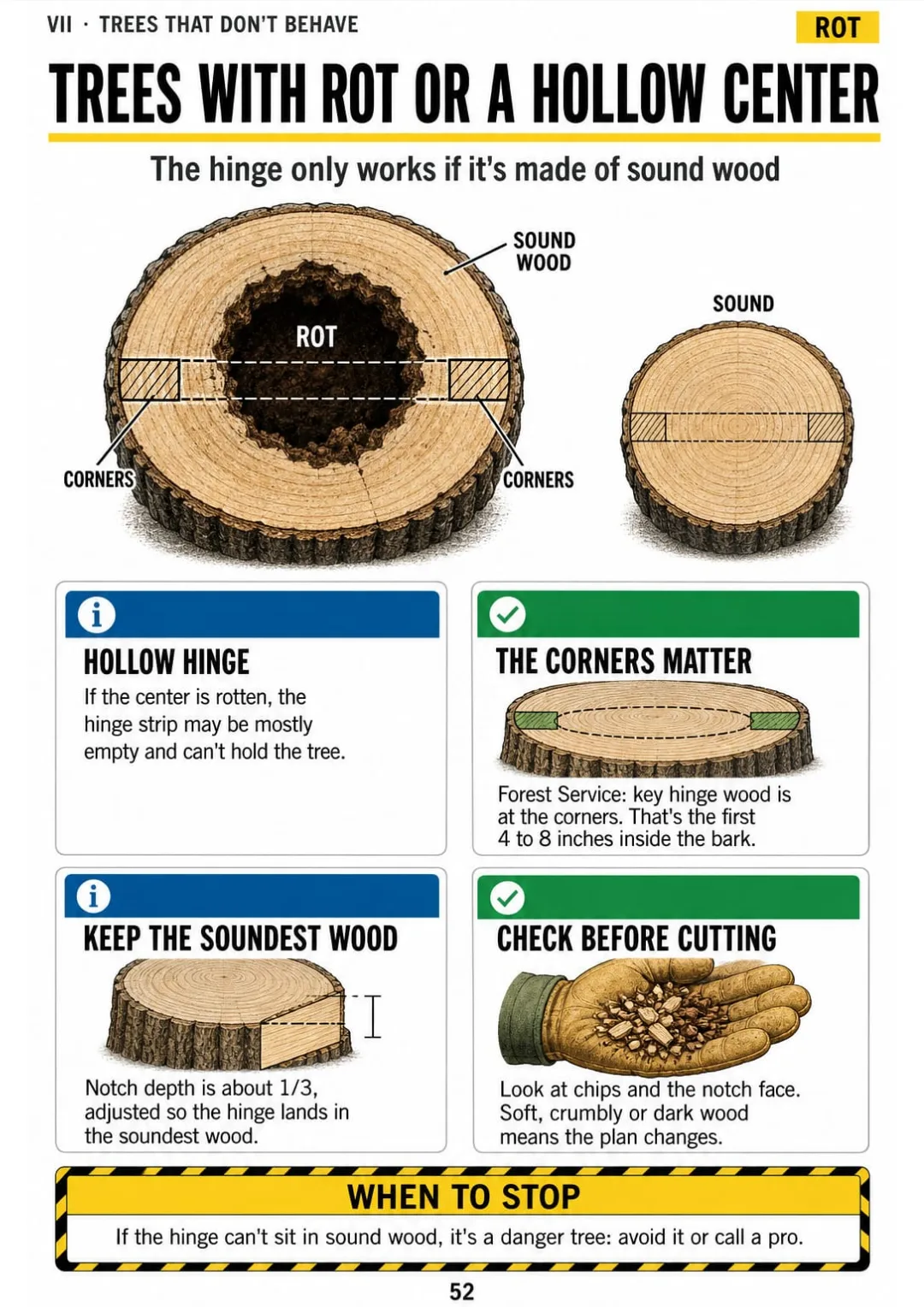
Rot and hollow trunks: hinge in sound wood, corners 4 to 8 inches inside the bark.
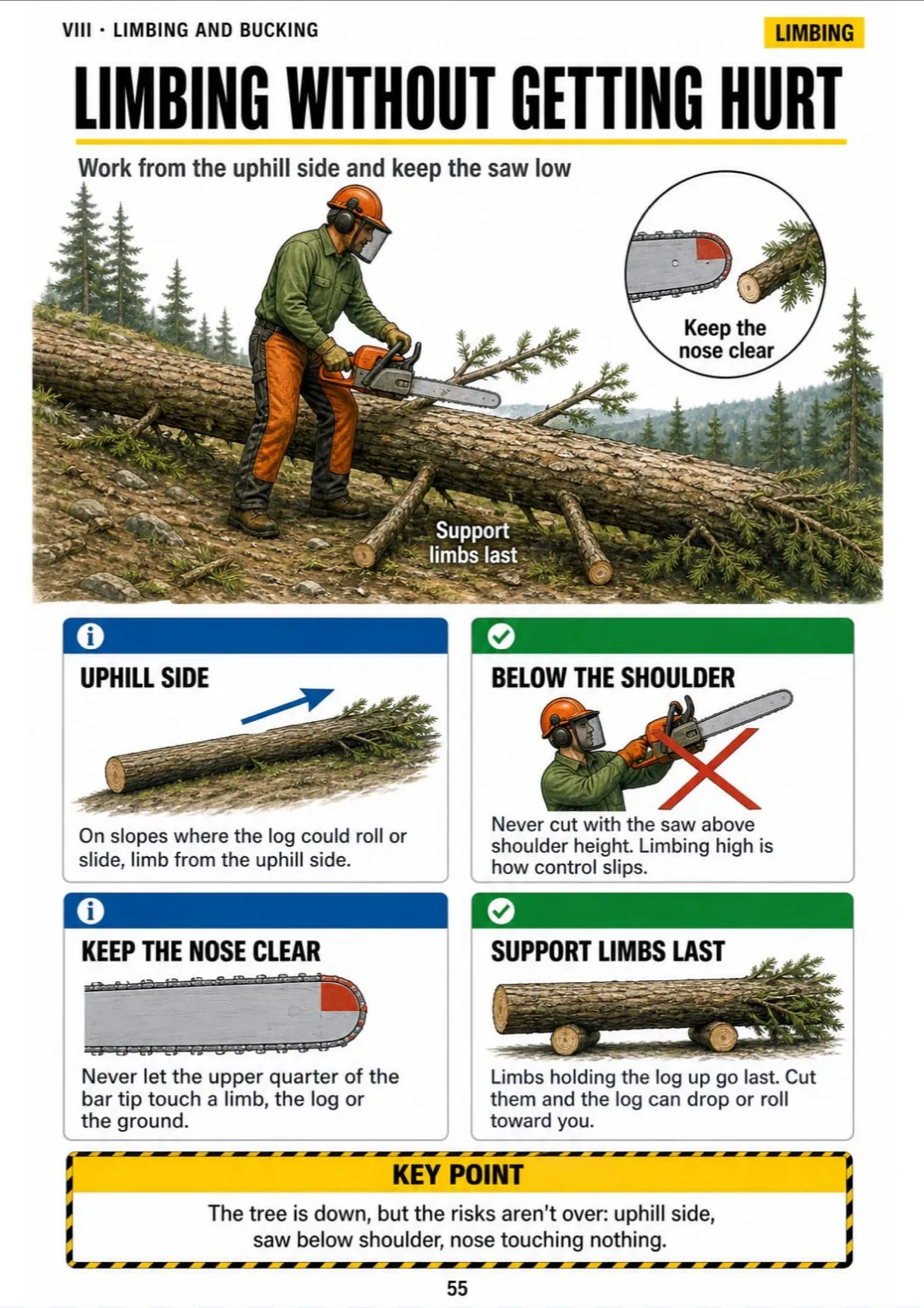
Limbing: stand uphill where the log could roll (OSHA 1910.266) and keep the saw below shoulder height.

Take a Look at the 9 Parts and 60 Topics

Before the Saw Starts

pp. 5-11
  1. The Felling Sequence on One Page
  2. Your Protective Gear, Head to Boots
  3. How Chaps Actually Stop a Chain
  4. The Saw Check Before Every Felling
  5. Kickback: The Upper Quarter of the Bar Tip
  6. Starting the Saw Safely
  7. Pull Chain vs Push Chain

Reading the Tree

pp. 12-19
  1. Size-Up Always in the Same Order
  2. Measuring Lean with a Plumb Line
  3. Crown Weight: Where the Branches Pull
  4. Estimating Tree Height Without Tools
  5. Widowmakers and Overhead Hazards
  6. Defects in the Trunk
  7. Wind and the Fall
  8. Choosing the Lay: Where It Should Land

Clearing the Work Area

pp. 20-25
  1. The Drop Zone: Two Tree Lengths
  2. Clearing the Base of the Tree
  3. Two Escape Routes at About 45 Degrees
  4. Safety Zone: Where You Stand When It Falls
  5. Power Lines, Buildings and Roads
  6. Communication and Hand Signals

The Notch

pp. 26-33
  1. What the Notch Does
  2. Notch Depth: Never More Than 1/3 of the Diameter
  3. The Open-Face Notch: 70 Degrees or More
  4. The Conventional Notch: 45 Degrees
  5. The Humboldt Notch
  6. Aiming the Notch with the Saw's Sight Line
  7. Matching the Two Cuts: No Bypass
  8. Checking the Notch Before Moving On

The Hinge

pp. 34-39
  1. The Hinge Is Your Steering Wheel
  2. Hinge Thickness: About 10% of the Diameter
  3. Hinge Width: About 80% of the Diameter
  4. Even Hinge vs Tapered Hinge
  5. Tension and Compression in a Leaning Tree
  6. Hinge Mistakes Drawn One by One

Back Cut and Wedges

pp. 40-47
  1. Where the Back Cut Goes
  2. Cut the Back Cut Toward the Hinge, Never Through It
  3. When to Set the First Wedge
  4. Plastic Wedges, Never Steel
  5. Driving Wedges to Lift the Tree
  6. Bore Cut and Holding Strap
  7. Walk Away: The First Seconds of the Fall
  8. The Stump Tells the Story

Trees That Don't Behave

pp. 48-54
  1. Barber Chair: Why Forward Leaners Split
  2. Back-Leaning Trees
  3. Side-Leaning Trees
  4. Small-Diameter Trees and Saplings
  5. Trees with Rot or a Hollow Center
  6. Hung-Up Trees: What Not to Do
  7. Spring Poles

After the Fall: Limbing and Bucking

pp. 55-59
  1. Limbing Without Getting Hurt
  2. Bucking: Reading Tension and Compression in a Log
  3. Two-Cut Bucking: First Cut, Second Cut
  4. Bucking on a Slope
  5. Pinched Bar: How to Free It Safely

Review and Field Checklist

pp. 60-64
  1. The Measurements Page
  2. Worked Example: One Tree, Start to Finish
  3. Frequent Mistakes Drawn Side by Side
  4. The Printable Felling Checklist
  5. When Not to Cut: Calling a Pro

Who This Book Is For

You cut on your own land

Firewood, a dead tree by the fence, a storm blowdown: you get the order and the measurements on one page, and you can print it and keep it in the truck.

You just joined a tree crew

Instead of guessing from what the foreman yells, you see why the hinge, the notch and the back cut go where they go, in inches.

You run a saw on storm calls

As a volunteer firefighter you cut when the road is blocked: the size-up, the drop zone and the escape routes are drawn so you can review them before you head out.

Plus: 2 Free Books

Size-Up Practice: 20 Trees to Read
BONUS 1

Size-Up Practice: 20 Trees to Read

Twenty drawn trees with lean, crown weight and wind already marked: you decide the fall direction, the escape routes and the hinge, then check your answer on the next page.
Notch & Hinge Quick Cards
BONUS 2

Notch & Hinge Quick Cards

The notch angles, hinge width and thickness and back-cut height on pocket-size cards you can print and keep in the truck or the saw case.

30-Day Guarantee

30-day guarantee: if a file doesn't open, if the content isn't what the product page describes, if you were charged twice or the email never arrived, write to us and we'll refund you in full. You pay once. No subscriptions.

Frequently Asked Questions

Is it for me if I've been cutting trees for years?

Yes, whether you've cut for years or you only cut firewood on your own land. It doesn't teach you to hold a saw: it puts the size-up, the hinge and the back cut on paper, in feet and inches, so you can review them, check them or explain them to someone else. If you've never run a saw, start with hands-on training.

Where does the content come from?

It's checked against OSHA 29 CFR 1910.266 (logging operations), ANSI Z133 and the USDA Forest Service chain saw training material. Measurements are in feet and inches. Check the current version of each rule for your job.

Is this official material?

No. It's an independent illustrated book. It isn't published, approved or endorsed by OSHA, ANSI, the USDA Forest Service or any saw manufacturer.

Does it replace hands-on chainsaw training?

No. It's reference material for reviewing the order and the measurements before you go out. It doesn't replace hands-on training, your saw's manual or your crew's safety rules.

Do I get a certificate? Are the practice trees from a test?

No certificate. It's a reference book, not a training course, and it doesn't count as chainsaw certification or crew training hours. The 20 practice trees were written for this book and don't come from any exam or certification program.

When and how do I get it?

As a PDF by email, sent to the address you enter at checkout. The 2 bonus books come the same way.

Do I have to pay every month?

No. You pay once and the book and the 2 bonus books are yours.

Can I have it on paper?

We don't ship paper copies. You get a PDF made for printing: print the whole book at home or at a print shop, or just the checklist and the quick cards for the truck or the saw case.

How does the refund work?

You have 30 days. We refund everything if the file won't open, if the book isn't what you see on this page, if you were charged twice or if the email doesn't arrive: just email us.

US$ 27US$ 63
Get the book · US$ 27

This is a digital PDF book sent to your email: nothing is printed or shipped.