Study in Pictures🌐 English (United States)
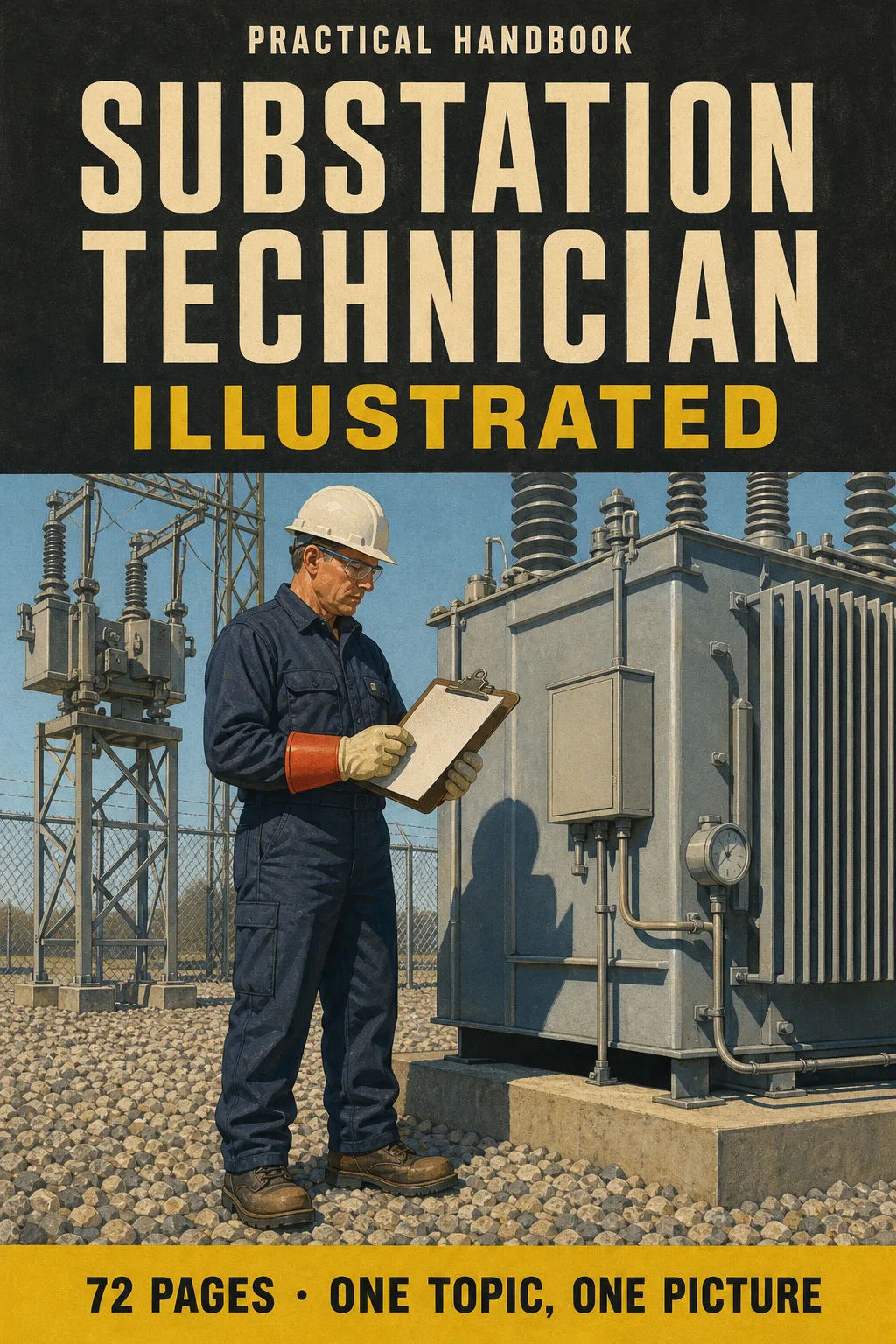
Substation Technician Illustrated

Digital book in PDF · read it on your phone or print it

Substation Technician Illustrated

The yard layout, one-line diagrams, bus configurations, power transformers, tap changers, breakers and disconnects, CTs and relays, switching orders. Every topic gets its own page: the drawing first, then what you need to remember.

  • 72 illustrated pages
  • English
  • 30-day guarantee
US$ 27US$ 63
Get the book · US$ 27

Price shown for: United States. In other countries, the checkout shows the price that applies there.

About this book

What it is

The yard layout, one-line diagrams, bus configurations, power transformers, tap changers, breakers and disconnects, CTs and relays, switching orders. Every topic gets its own page: the drawing first, then what you need to remember.

Who This Book Is For
  • You're a substation apprentice
  • Your step-up or journeyman test is coming
  • You already work for a utility
What it covers
  1. Safety Before Anything Else
  2. The Substation Yard
  3. Reading the One-Line
  4. Power Transformers
  5. Tap Changers and Voltage Control
  6. Breakers and Switches
  7. Instrument Transformers and Relays
  8. Switching Orders
  9. Inspection, Review and Test Day
Language
English (United States)
Pages
72
Format
Digital book in PDF · read it on your phone or print it
Price
US$ 27 (United States)
Delivery
This is a digital PDF book sent to your email: nothing is printed or shipped.
30-Day Guarantee
30-day guarantee: if a file doesn't open, if the content isn't what the product page describes, if you were charged twice or the email never arrived, write to us and we'll refund you in full.

Look Inside the Book

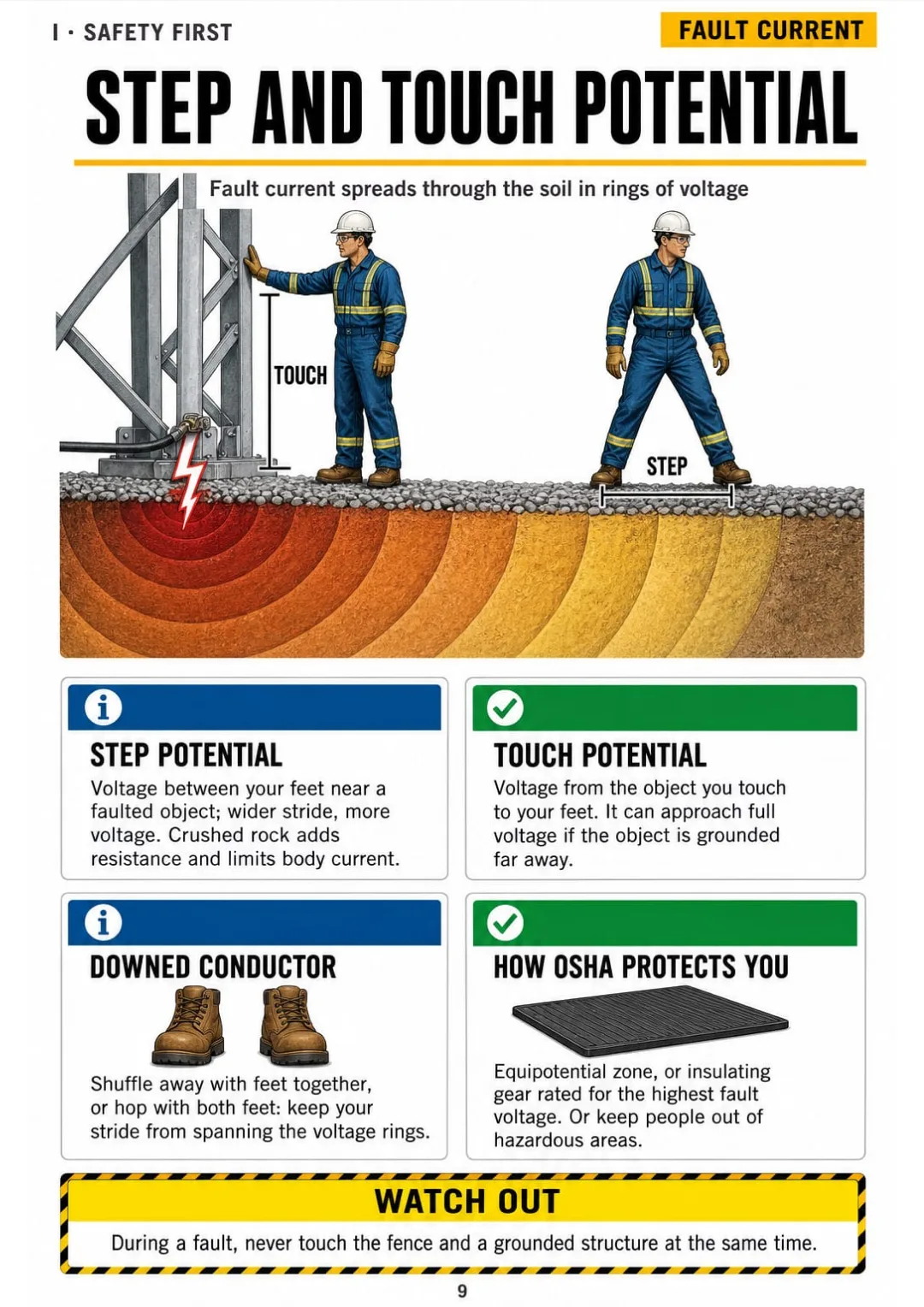
Step potential: between your feet. Touch potential: between your hand and your feet.
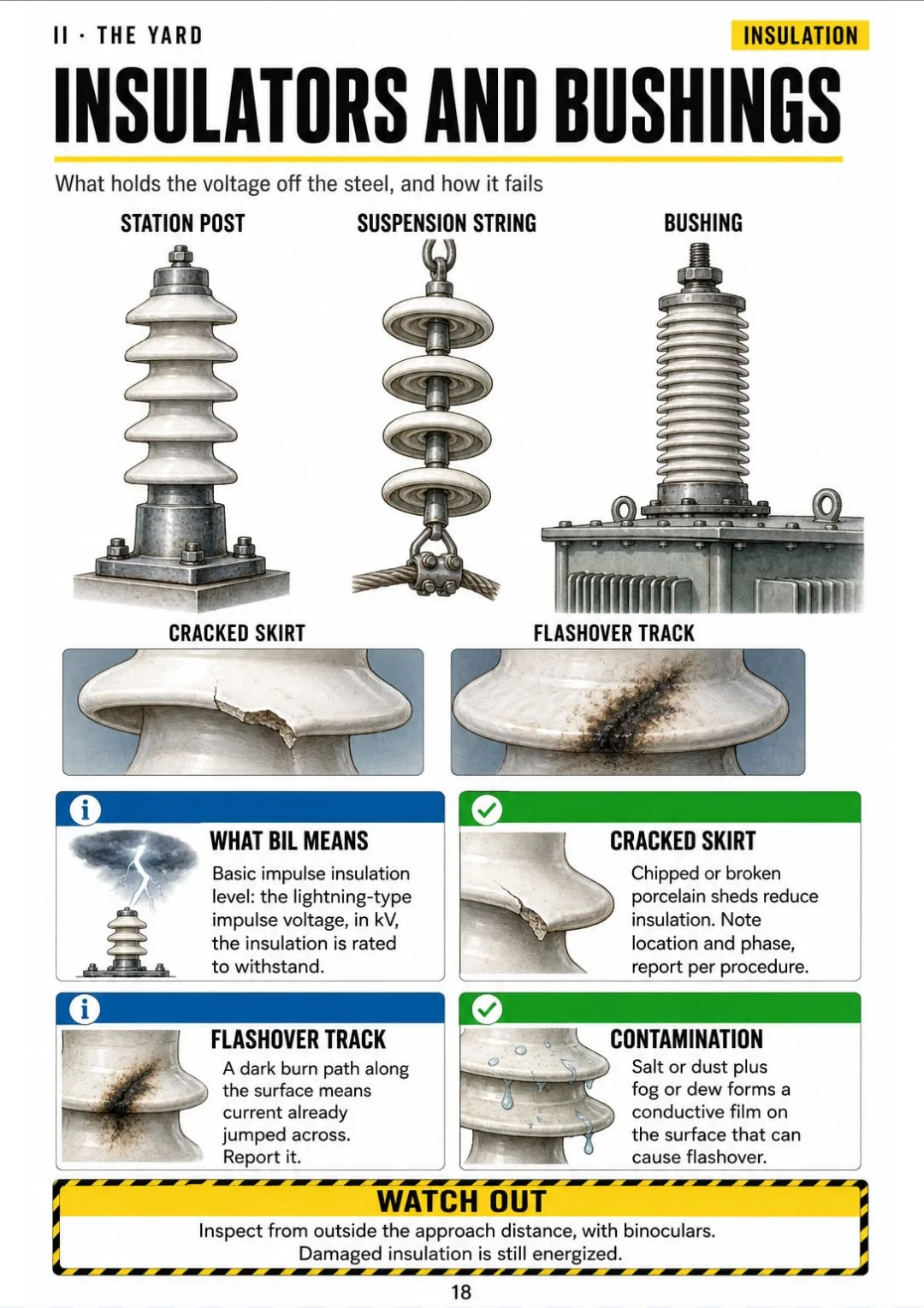
Station post, suspension string and bushing: BIL, cracked skirts, flashover tracks and contamination.
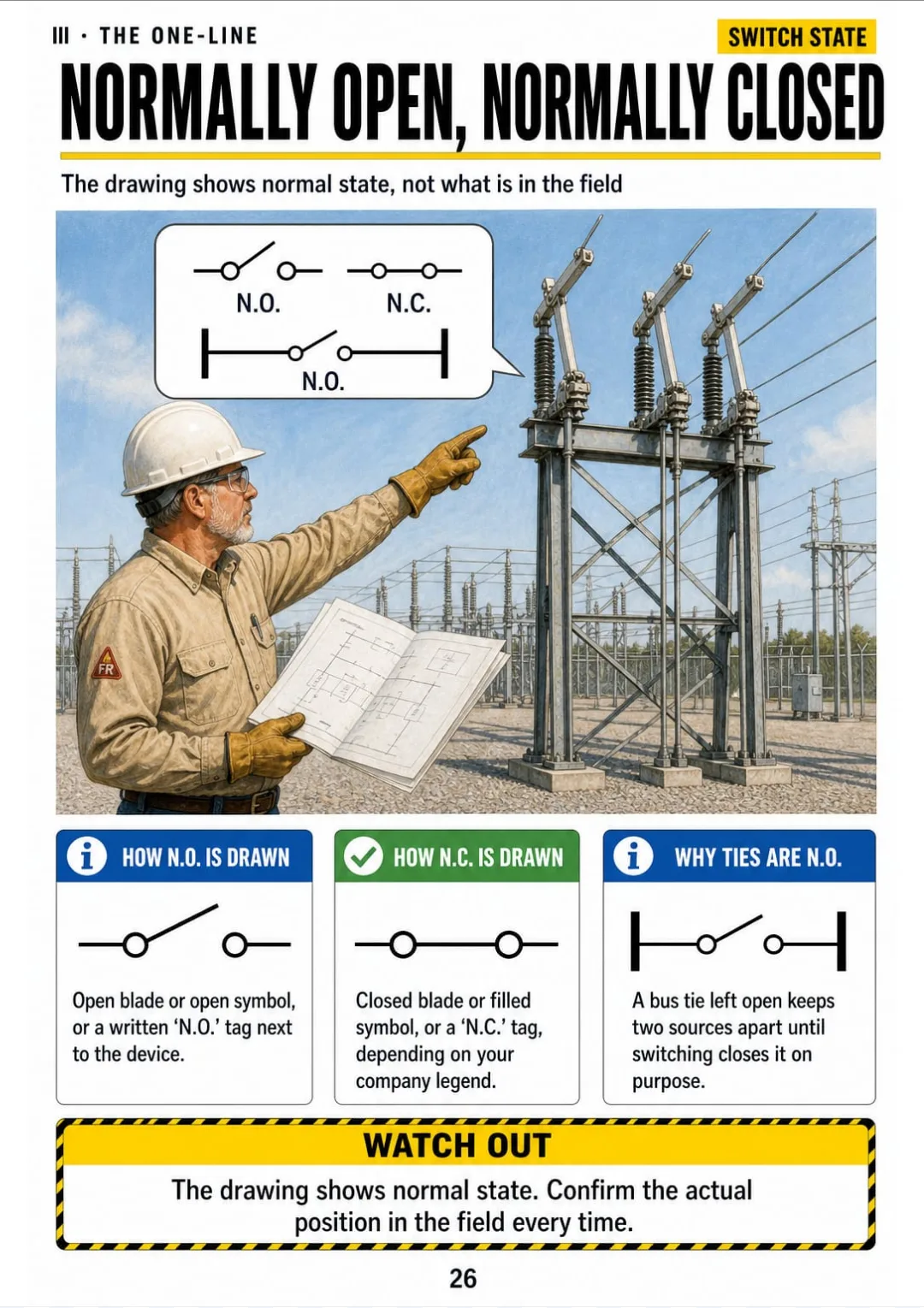
N.O. and N.C. on the one-line show normal state; tie switches stay open to keep sources apart.
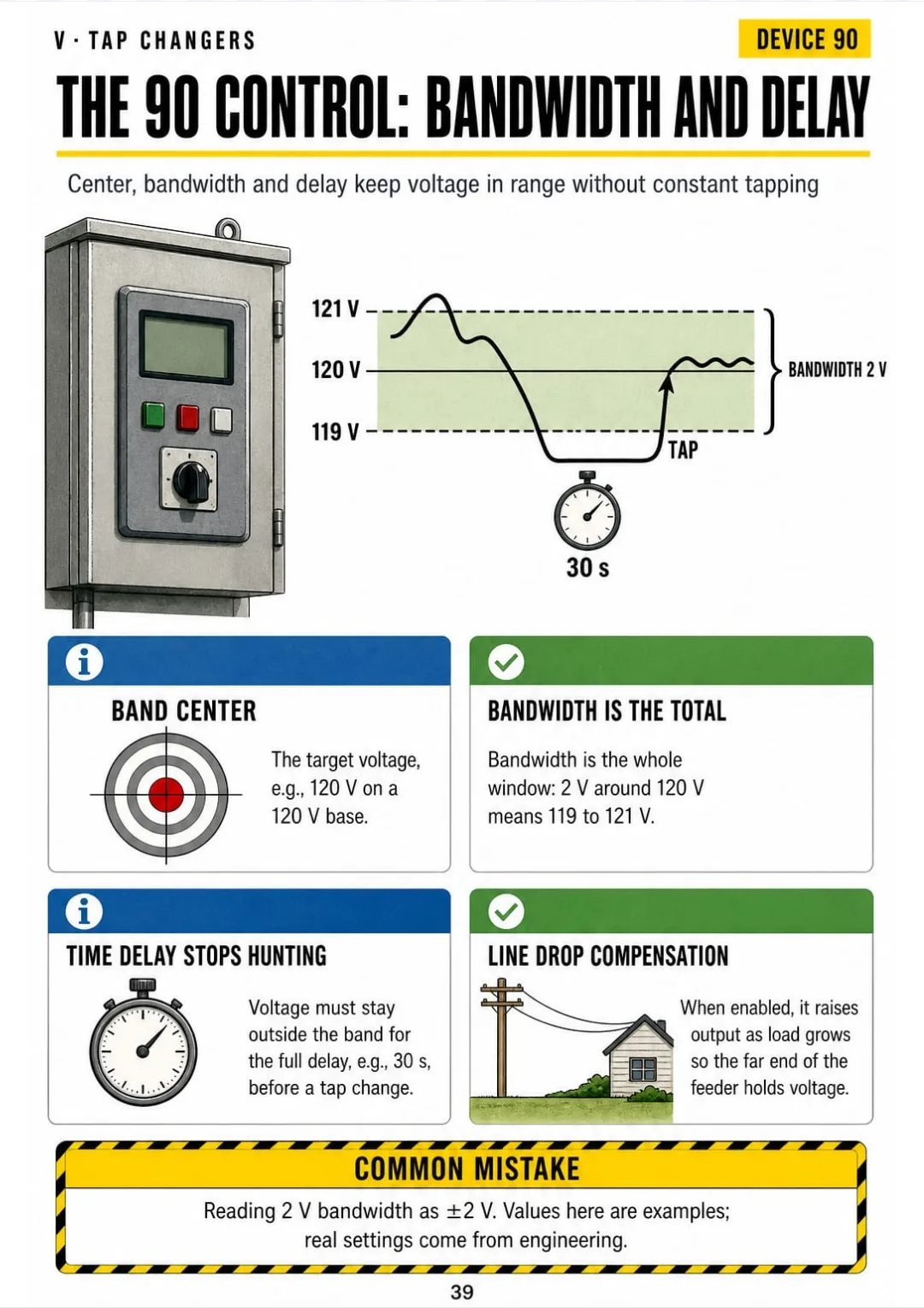
Device 90: band center, bandwidth (total window) and time delay so the tap changer doesn't hunt.
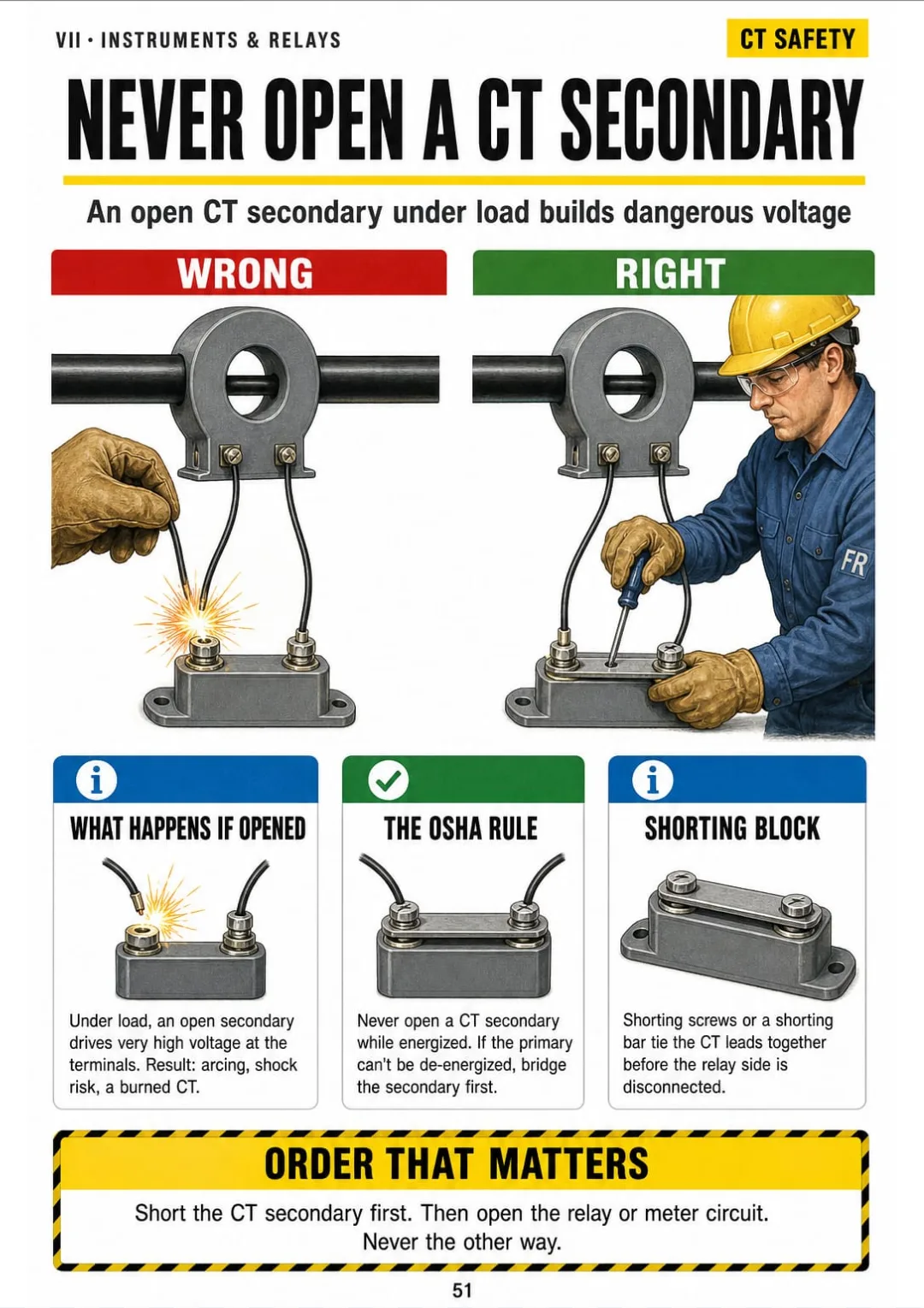
Open CT secondary under load = very high voltage: short it first (OSHA 1910.269(w)(2)).
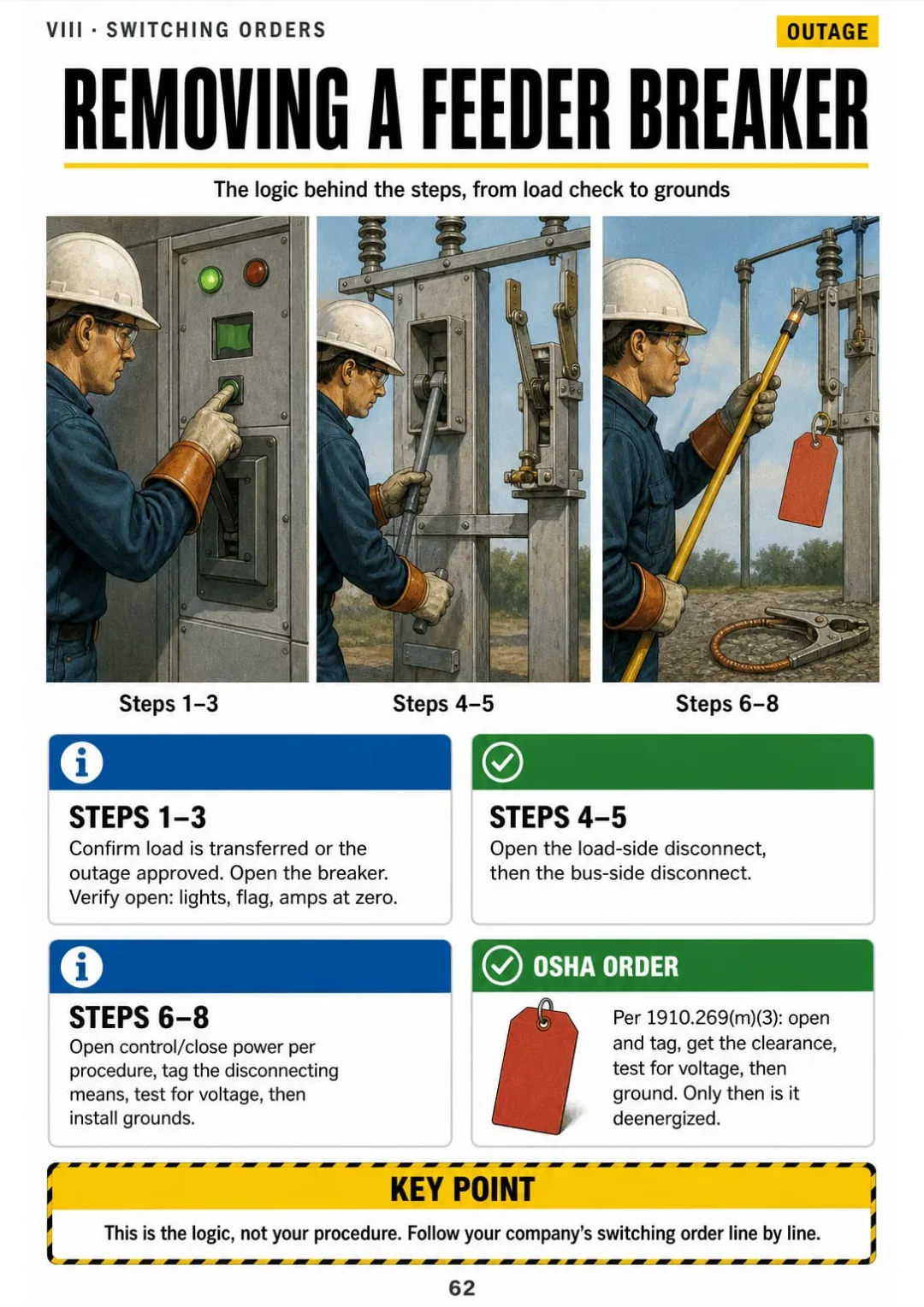
Eight steps to take a feeder breaker out: open, verify, disconnects, control power, tag, test, ground.
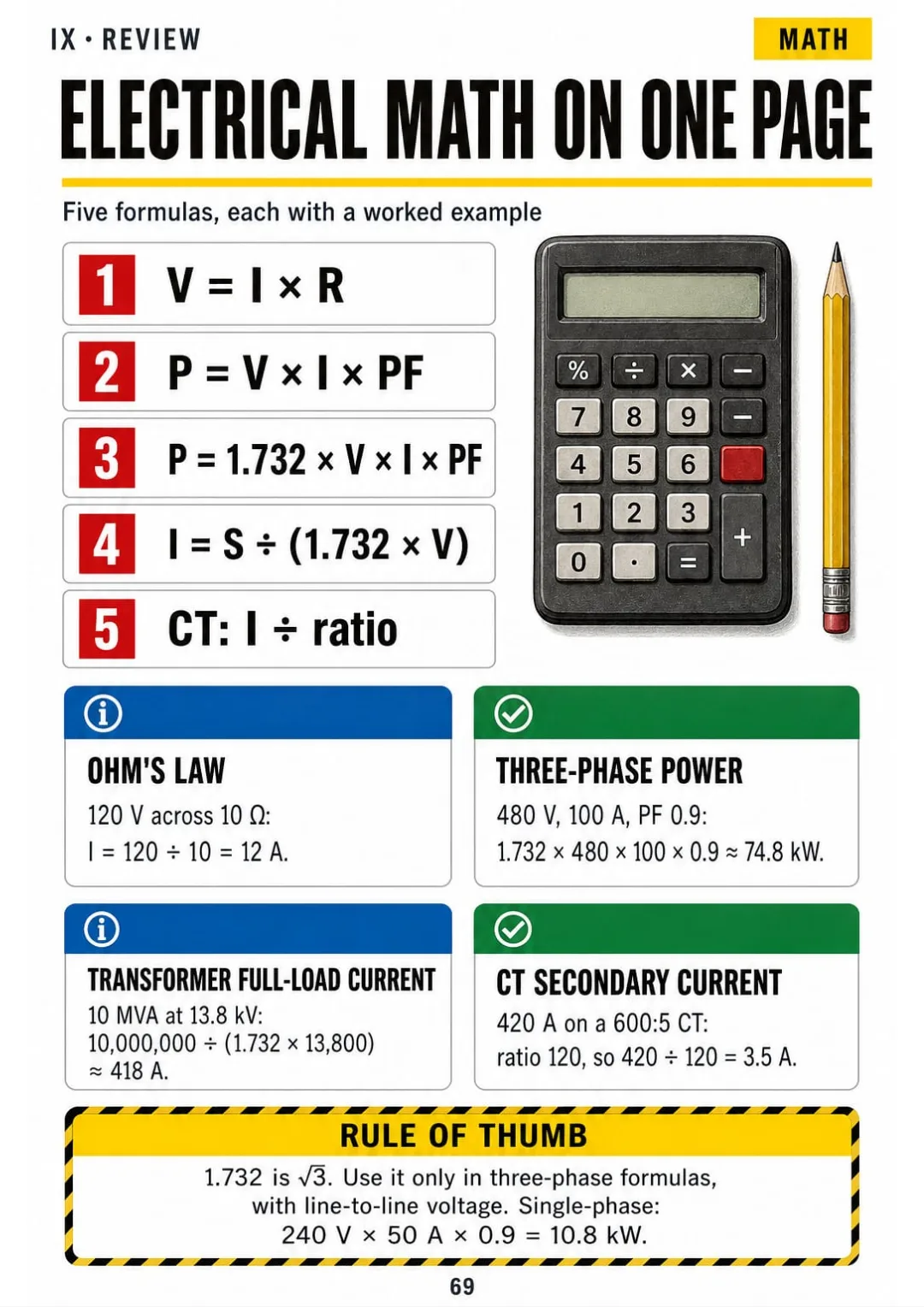
10 MVA at 13.8 kV ≈ 418 A · 420 A on a 600:5 CT = 3.5 A.
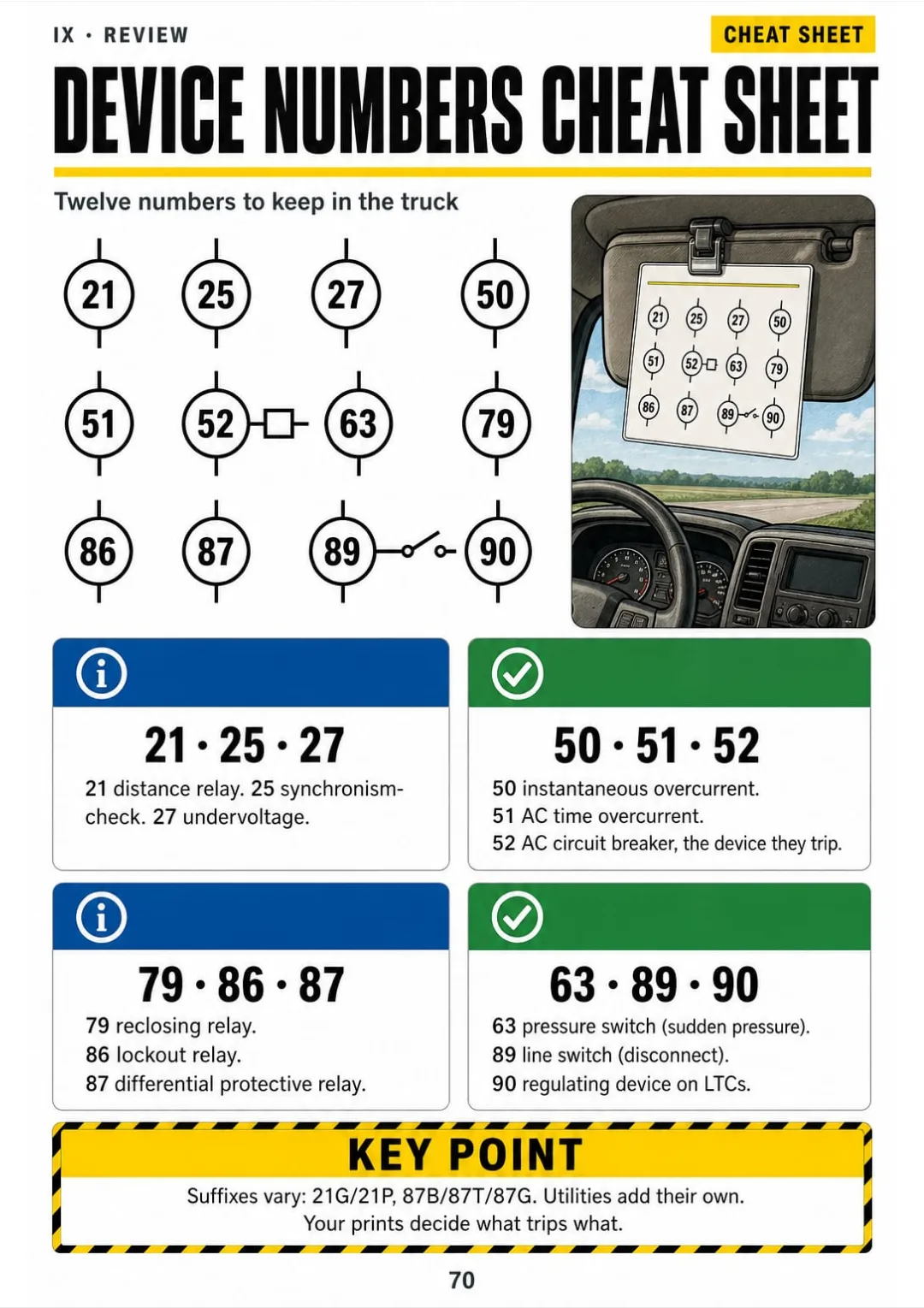
IEEE C37.2-2022: 21, 25, 27, 50, 51, 52, 63, 79, 86, 87, 89, 90.

Take a Look at the 9 Parts and 67 Topics

Safety Before Anything Else

pp. 6-12
  1. Qualified vs. Unqualified: Who Can Do What in the Yard
  2. Minimum Approach Distance, Explained in One Drawing
  3. Arc Flash: Boundary, Incident Energy and PPE
  4. Step and Touch Potential
  5. Test Before Touch: Live–Dead–Live
  6. Protective Grounds: Ground End First, Ground End Last
  7. Clearances, Hold Orders and Tags

The Substation Yard

pp. 13-20
  1. Four Kinds of Substations
  2. US Voltage Classes at a Glance
  3. The Yard in One Labeled Drawing
  4. The Control House
  5. Bus Work: Rigid Bus and Strain Bus
  6. Insulators and Bushings
  7. Lightning Protection: Arresters and Shield Wires
  8. The Ground Grid and the Fence

Reading the One-Line

pp. 21-28
  1. One-Line vs. Three-Line
  2. The Symbols You Must Recognize
  3. Device Numbers: The Short List
  4. Reading a One-Line Always in the Same Order
  5. Worked Example: Tracing a Feeder
  6. Normally Open, Normally Closed
  7. Bus Configurations Compared
  8. Main and Transfer Bus in Detail

Power Transformers

pp. 29-36
  1. How a Transformer Works in One Drawing
  2. Reading the Nameplate
  3. Delta and Wye Connections
  4. Cooling Classes: ONAN, ONAF, ONAF2
  5. Gauges on the Tank
  6. Conservator vs. Sealed Tank
  7. Transformer Protection: 87, 63, 51 and Thermal
  8. Dissolved Gas Analysis in One Page

Tap Changers and Voltage Control

pp. 37-40
  1. De-Energized Tap Changer (DETC)
  2. Load Tap Changer (LTC)
  3. The 90 Control: Bandwidth and Time Delay
  4. Step Voltage Regulators on Feeders

Breakers and Switches

pp. 41-49
  1. Breaker vs. Disconnect: Two Different Jobs
  2. Oil, SF6 and Vacuum Breakers Side by Side
  3. Operating Mechanisms: Spring, Pneumatic, Hydraulic
  4. SF6 Gas: Density Alarms and Handling
  5. Trip-Free and Anti-Pump
  6. Disconnect Switch Types
  7. Load Break vs. No-Load Break
  8. Reclosers and Fuses
  9. Capacitor Banks and Reactors

Instrument Transformers and Relays

pp. 50-59
  1. Current Transformers: Ratio and Polarity
  2. Never Open a CT Secondary
  3. Voltage Transformers (PT/VT)
  4. Protection Zones That Overlap
  5. Overcurrent: 50 and 51
  6. Differential: 87
  7. Distance Protection: 21
  8. Reclosing 79 and Lockout 86
  9. The DC System: Batteries and Charger
  10. From Relay to Trip Coil

Switching Orders

pp. 60-66
  1. Anatomy of a Switching Order
  2. Three-Part Communication
  3. Removing a Feeder Breaker from Service
  4. Restoring to Service: The Reverse
  5. Placing a Feeder on the Transfer Bus
  6. Isolating a Transformer
  7. Verify Position Every Time

Inspection, Review and Test Day

pp. 67-72
  1. The Yard Walk-Through
  2. Infrared Hot Spots
  3. Electrical Math on One Page
  4. Device Numbers Cheat Sheet
  5. Mistakes That Come Up Most Often
  6. Test-Day Checklist

Who This Book Is For

You're a substation apprentice

Each step of your program has its pages: the yard, the one-line, transformers and relays, drawn in the order you'll meet them.

Your step-up or journeyman test is coming

You review part by part, test yourself with the practice questions and go through the mistakes book before test day.

You already work for a utility

Lineworker moving to the substation crew or plant electrician new to the yard: print the pages you need and keep them in the truck.

Plus: 2 Free Books

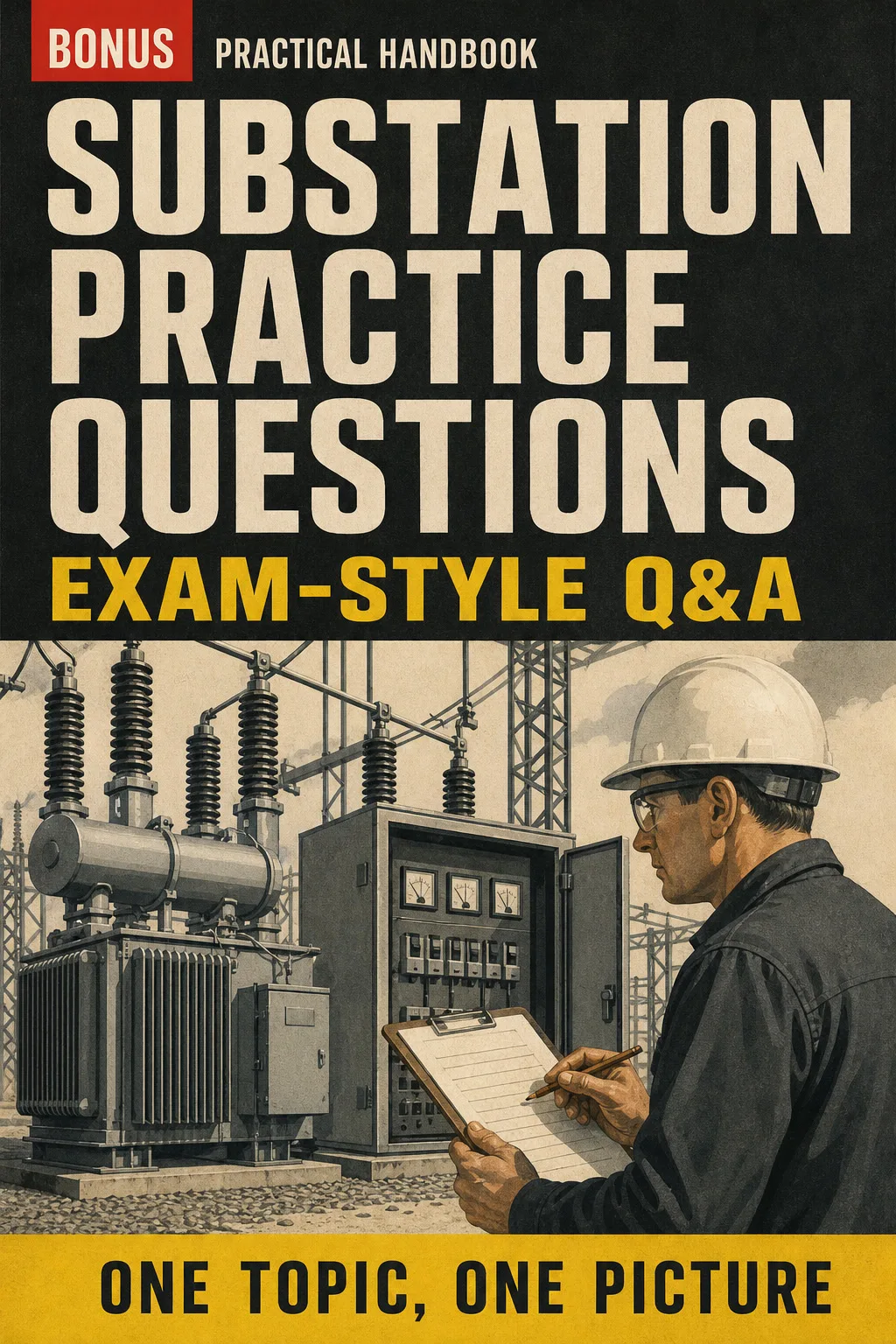
Substation Practice Questions: Exam-Style Q&A
BONUS 1

Substation Practice Questions: Exam-Style Q&A

Test yourself topic by topic with exam-style questions and a short, drawn explanation for every answer, so you find your weak spots before test day.
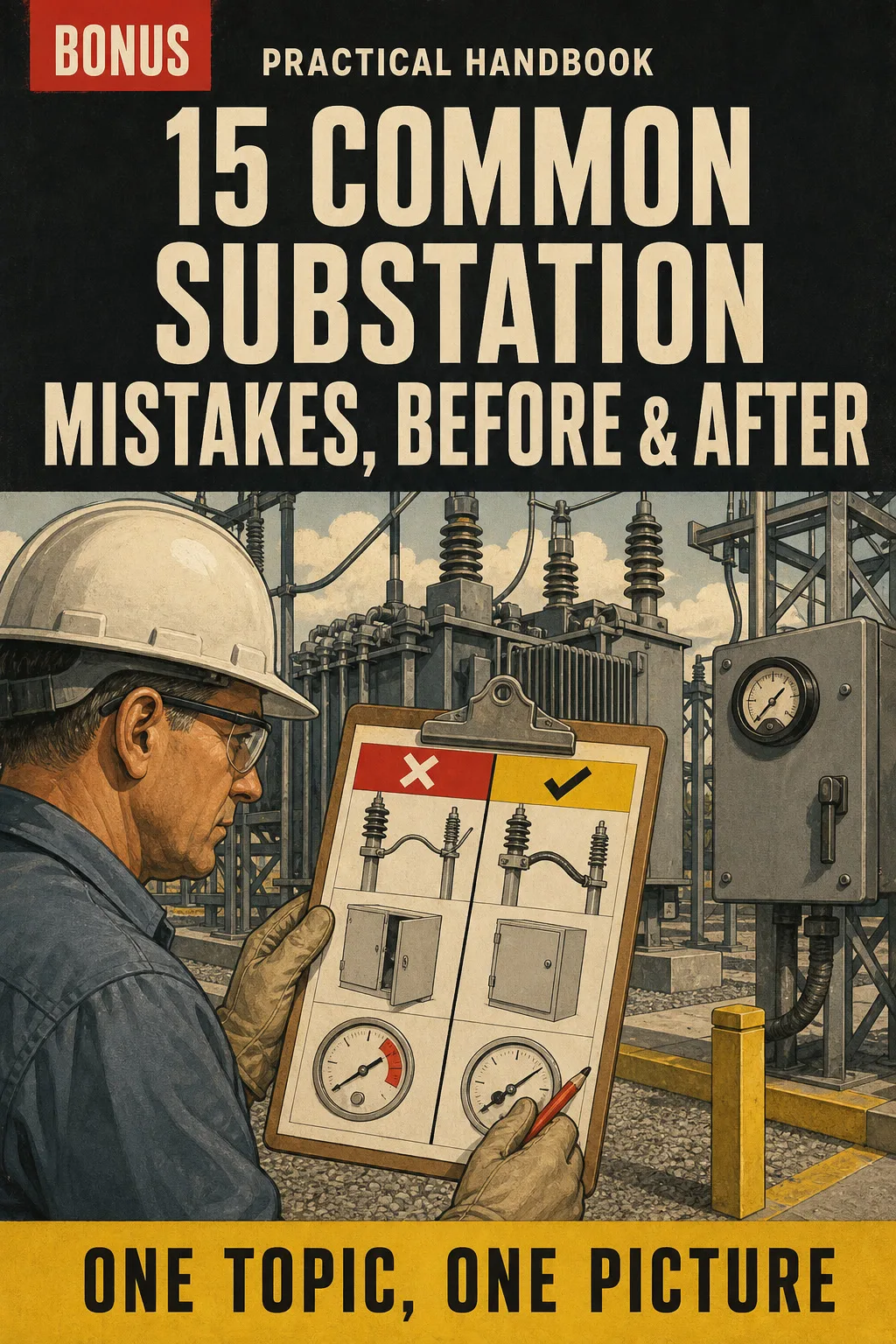
15 Common Substation Mistakes, Before & After
BONUS 2

15 Common Substation Mistakes, Before & After

See the mistakes apprentices make most often (switching out of order, mixing up CT and PT ratios, confusing load break and no-load break switches) and the right way, side by side on one page each.

30-Day Guarantee

30-day guarantee: if a file doesn't open, if the content isn't what the product page describes, if you were charged twice or the email never arrived, write to us and we'll refund you in full. You pay once. No subscriptions.

Frequently Asked Questions

Is it for me if I'm a lineworker or utility electrician moving to substation work?

Yes. It's built for substation apprentices, lineworkers moving to the substation crew and plant electricians new to the yard. It doesn't explain what a volt is: it goes straight to what changes in a substation, from the yard and the one-line to tap changer control, CT polarity, the 50/51 and 87 relays and switching orders. Every utility and local has its own tests and procedures: the book covers the technical topics they share.

Where does the content come from?

From OSHA 29 CFR 1910.269, NFPA 70E, the National Electrical Safety Code, IEEE device function numbers and IEEE transformer standards. Every page that gives a distance, interval or value names the rule it comes from, so you can check it against the edition your employer uses. Where your utility's procedure is stricter, your procedure wins.

Is it official material?

No. It's an independent illustrated study book. It isn't issued or endorsed by any utility, union, program or standards body.

Does it replace my apprenticeship training?

No. It's study material to review and understand. Your program's training, qualified supervision and your employer's procedures always come first. Only qualified and authorized personnel work on energized equipment.

Are the practice questions the ones on the test?

No. They're exam-style questions written for this book, each with a short drawn explanation, to help you find your weak spots.

When and how do I get it?

The book and the 2 bonus books arrive as PDFs by email, to the address you enter at checkout.

Do I have to pay every month?

No. It's a one-time payment. It's a study book, so it doesn't come with a certificate and doesn't count toward your apprenticeship hours: it helps you prepare for the tests your program gives.

Can I have it on paper?

Yes. The PDF is made to print: print the whole book or just the pages you want to keep in the truck.

How does the refund work?

You have 30 days. We refund everything if the file won't open, if the book isn't what you see on this page, if you were charged twice or if the email doesn't arrive: just email us.

US$ 27US$ 63
Get the book · US$ 27

This is a digital PDF book sent to your email: nothing is printed or shipped.