Study in Pictures🌐 English (United States)
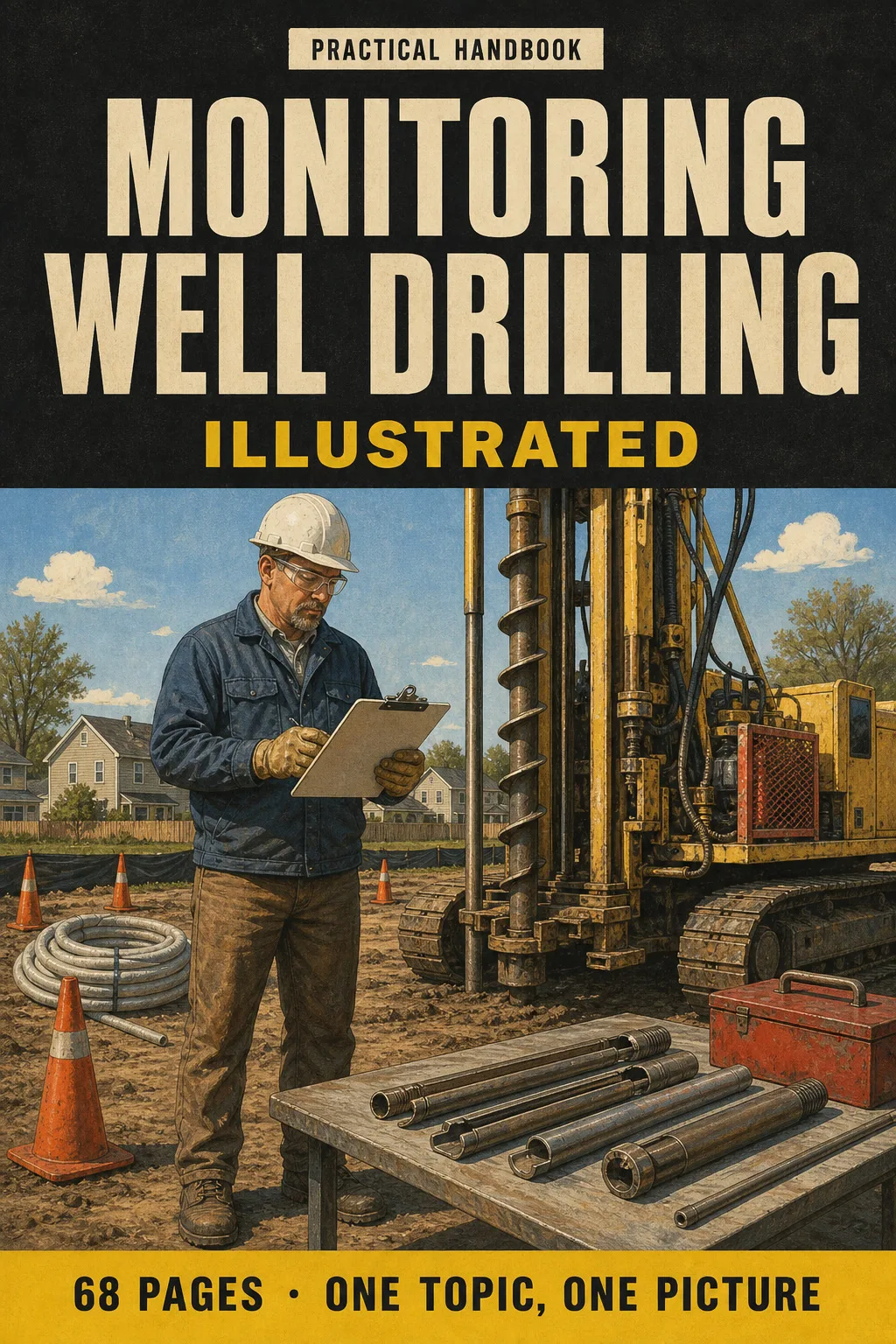
Monitoring Well Drilling Illustrated

Digital book in PDF · read it on your phone or print it

Monitoring Well Drilling Illustrated

Hollow-stem auger, split-spoon and the N value, screen slot, filter pack, bentonite seal, tremie grout, flush-mount completion, development and plugging. Every topic gets its own page: the drawing first, then what you need to remember.

  • 68 illustrated pages
  • English
  • 30-day guarantee
US$ 27US$ 63
Get the book · US$ 27

Price shown for: United States. In other countries, the checkout shows the price that applies there.

About this book

What it is

Hollow-stem auger, split-spoon and the N value, screen slot, filter pack, bentonite seal, tremie grout, flush-mount completion, development and plugging. Every topic gets its own page: the drawing first, then what you need to remember.

Who This Book Is For
  • You're the helper on an environmental rig
  • Your state license exam is coming up
  • You drill water wells and now work environmental jobs
What it covers
  1. The Monitoring Well at a Glance
  2. Before the Rig Moves
  3. Drilling Methods
  4. Sampling and Logging the Ground
  5. Building the Well
  6. Seals, Grout and the Surface
  7. Development and Water
  8. Plugging and Paperwork
  9. Exam Review and Field Checklists
Language
English (United States)
Pages
68
Format
Digital book in PDF · read it on your phone or print it
Price
US$ 27 (United States)
Delivery
This is a digital PDF book sent to your email: nothing is printed or shipped.
30-Day Guarantee
30-day guarantee: if a file doesn't open, if the content isn't what the product page describes, if you were charged twice or the email never arrived, write to us and we'll refund you in full.

Look Inside the Book

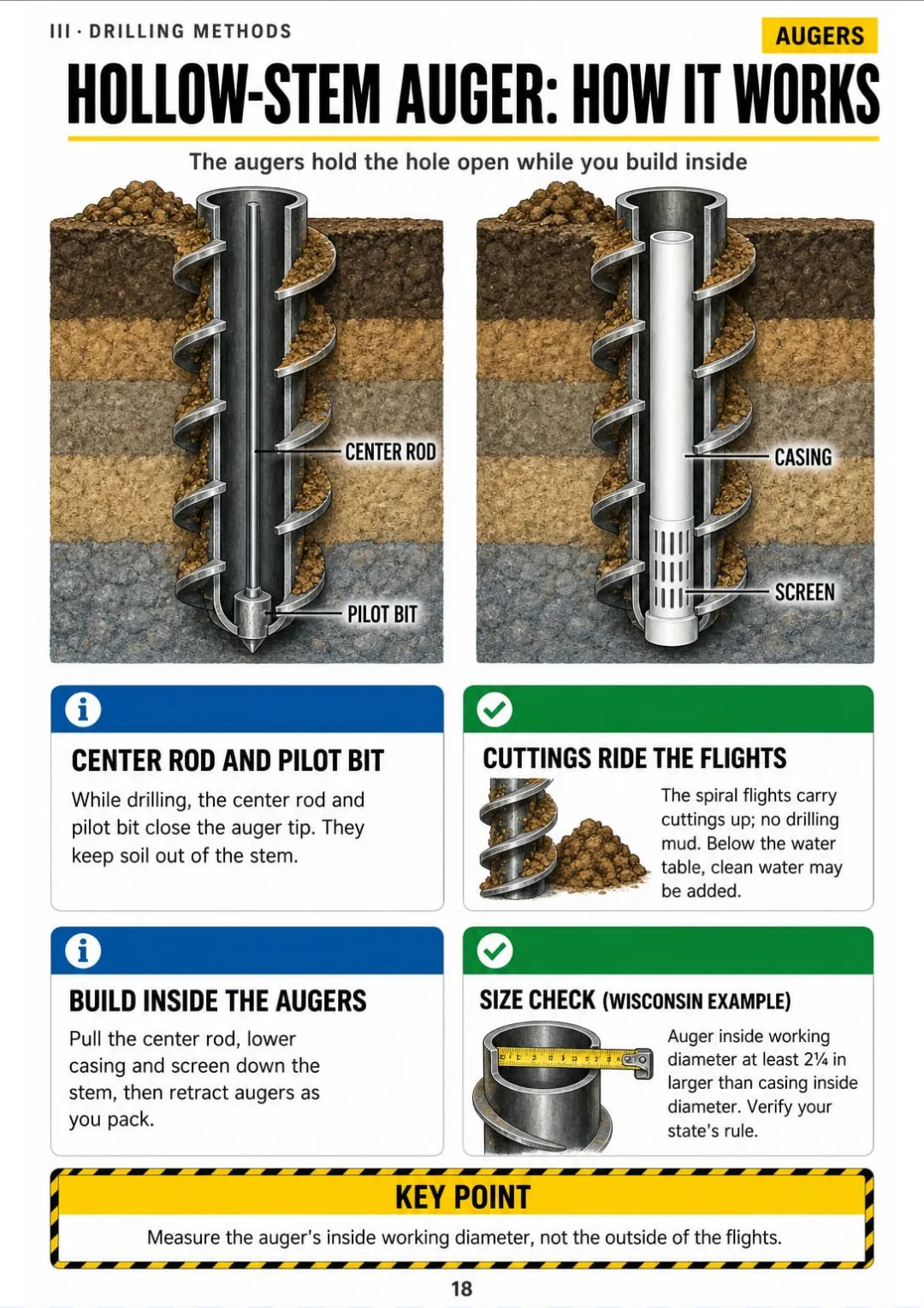
Hollow-stem auger: center rod and pilot bit while drilling, casing set inside the stem.
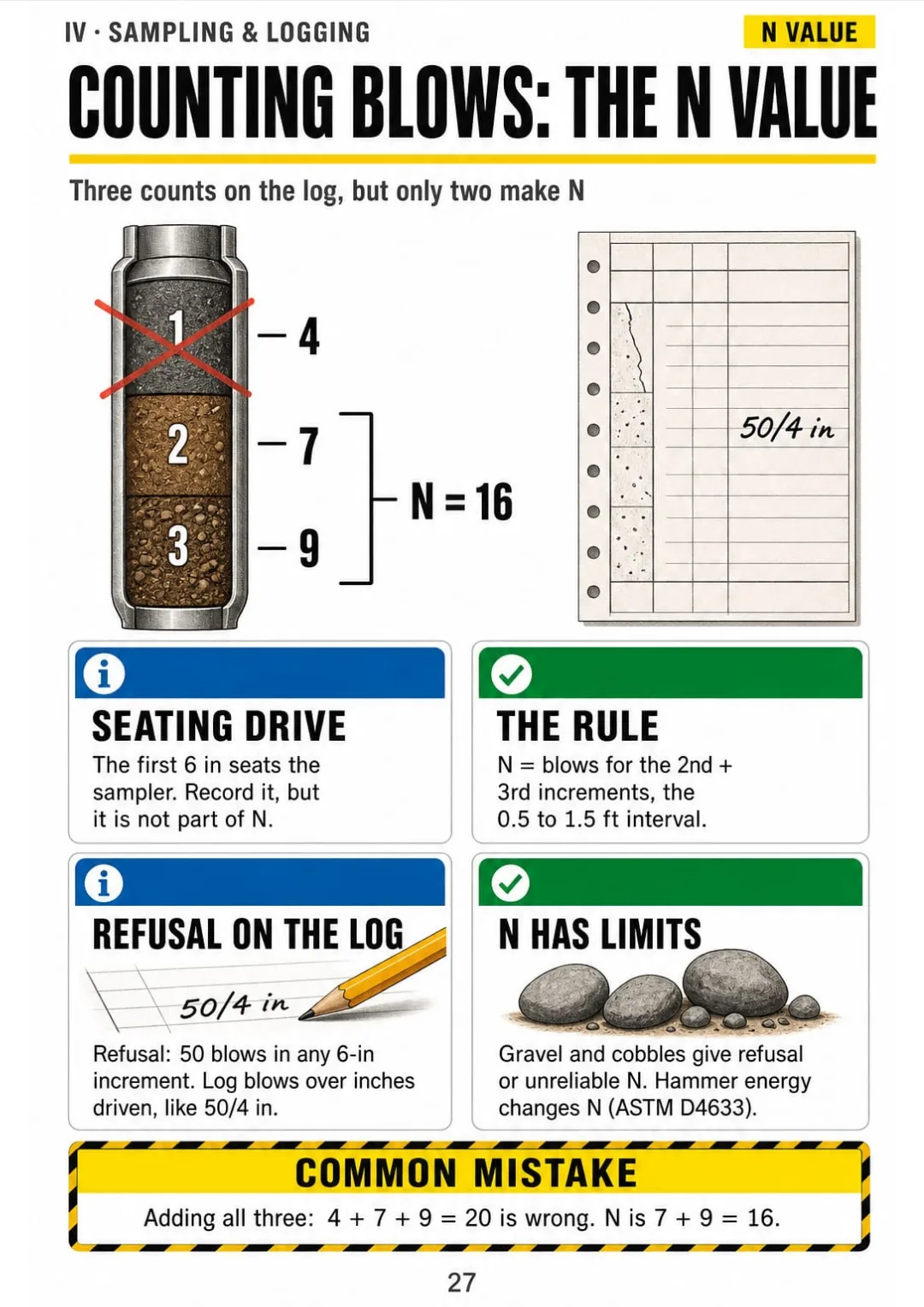
N value: 2nd + 3rd 6-in counts. 4-7-9 → N = 16.
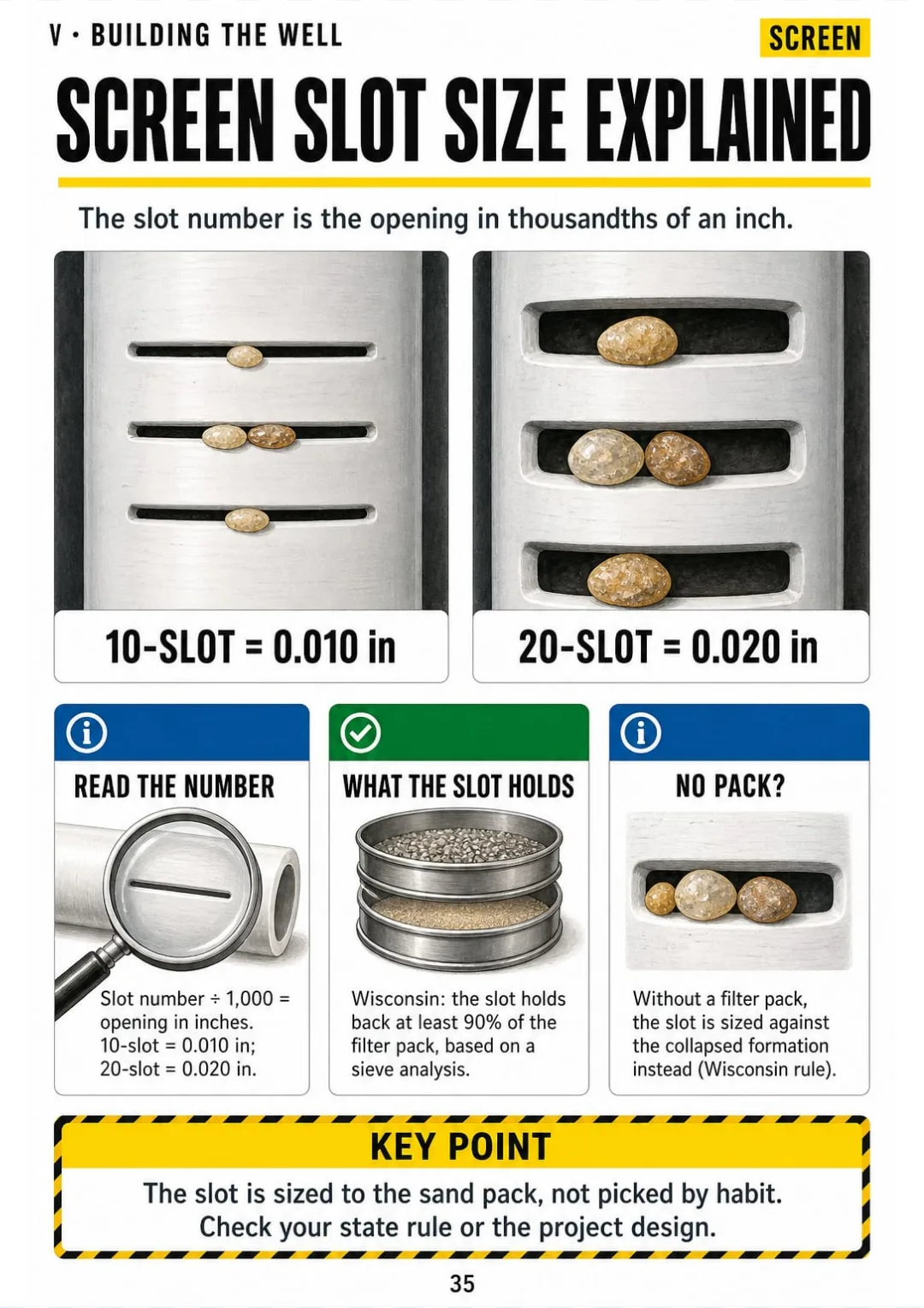
Slot number = thousandths of an inch: 10-slot is 0.010 in, 20-slot is 0.020 in.
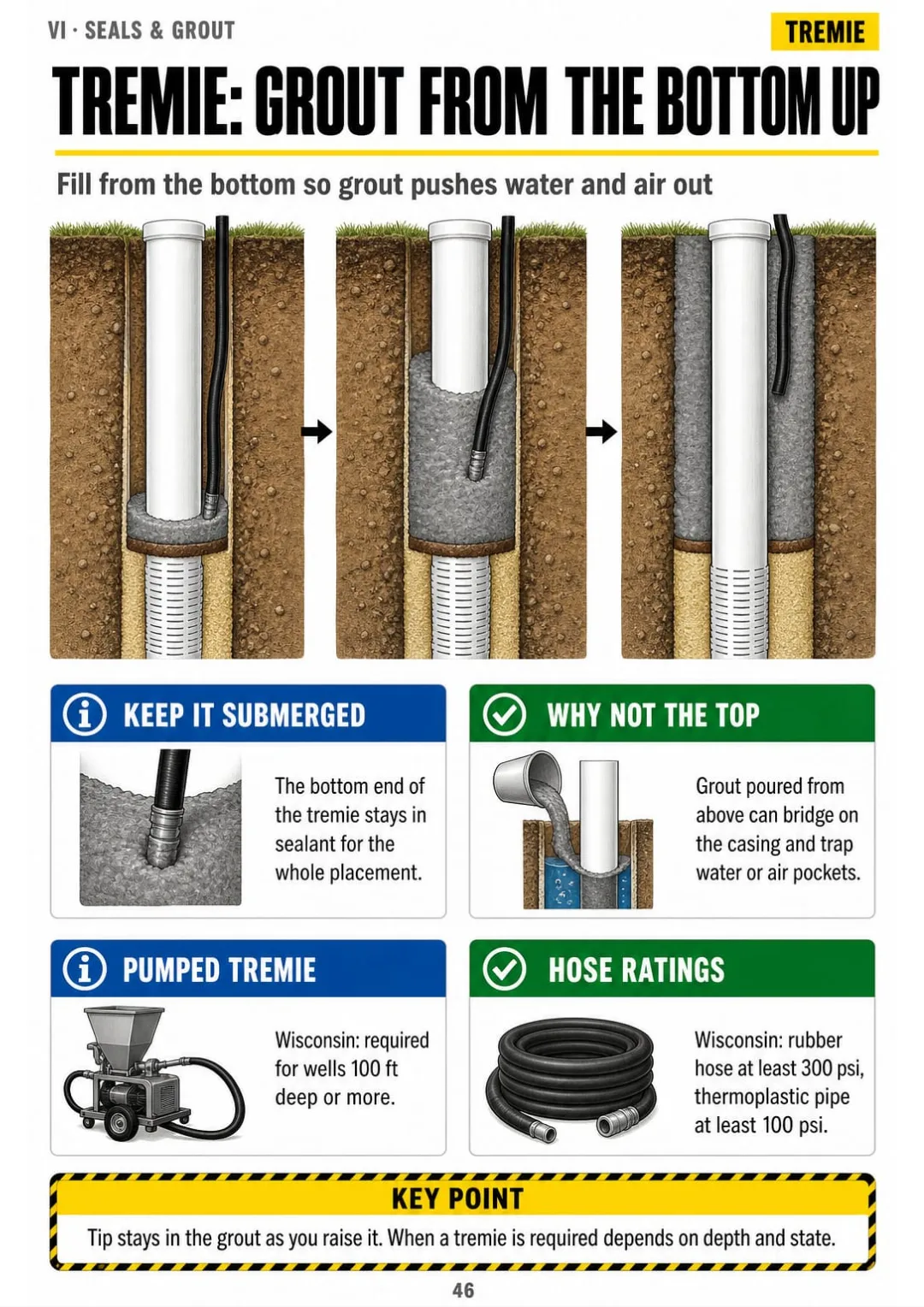
Tremie tip stays submerged from seal to surface; Wisconsin requires a pumped tremie at 100 ft or deeper.
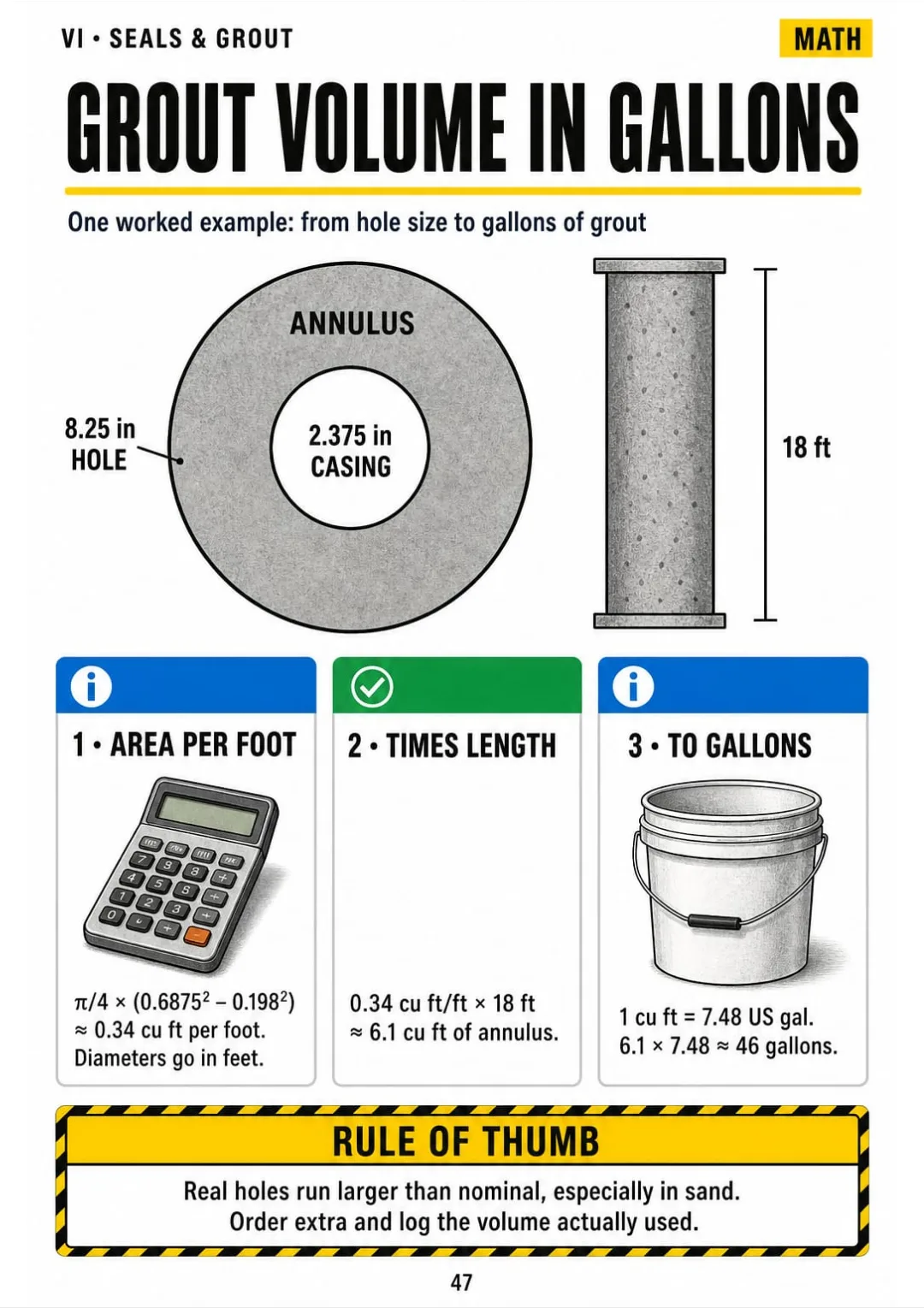
18 ft of annulus, 8.25-in hole, 2.375-in casing ≈ 6.1 cu ft ≈ 46 gallons, plus extra.
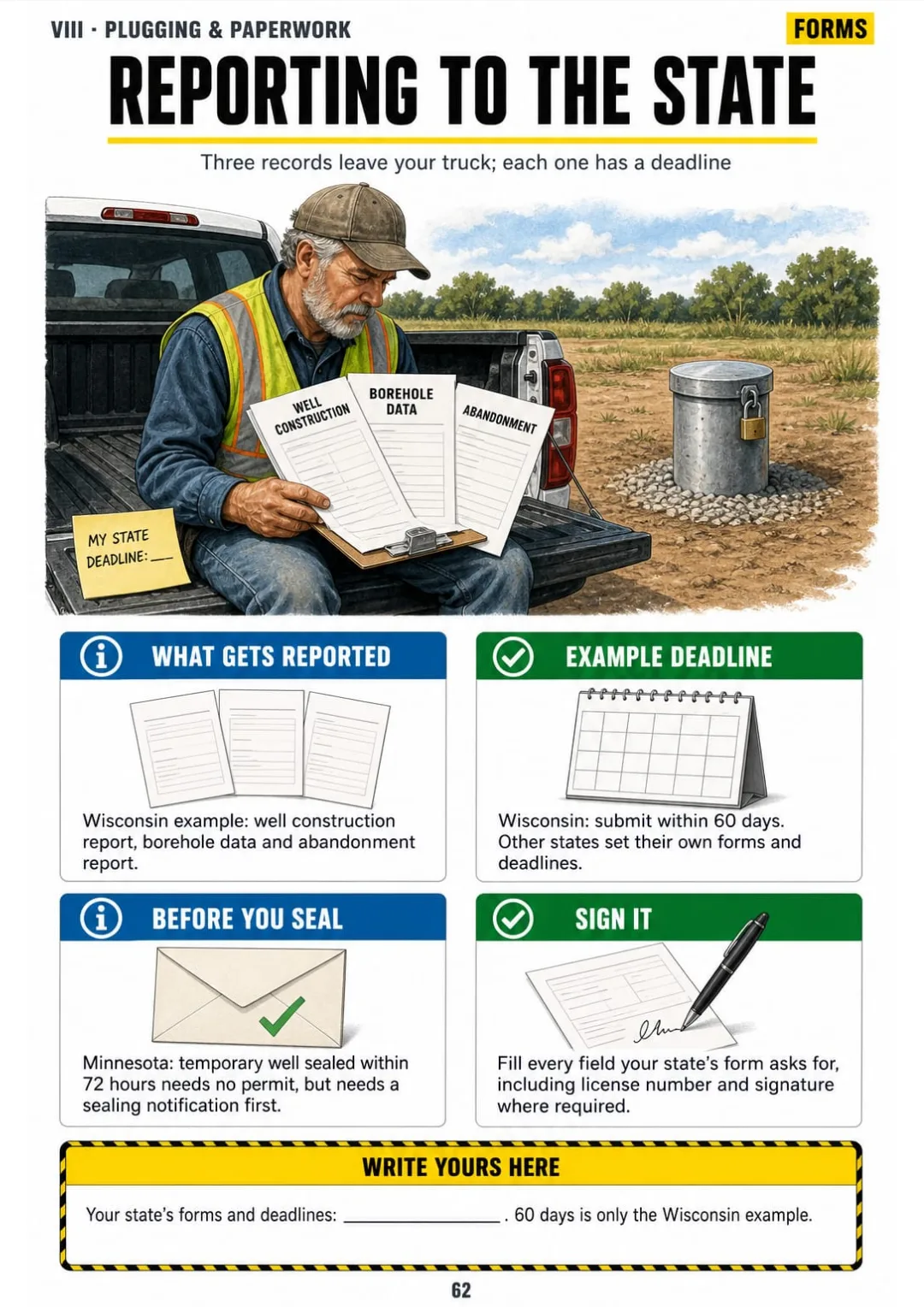
Wisconsin example: construction, borehole and abandonment reports within 60 days.
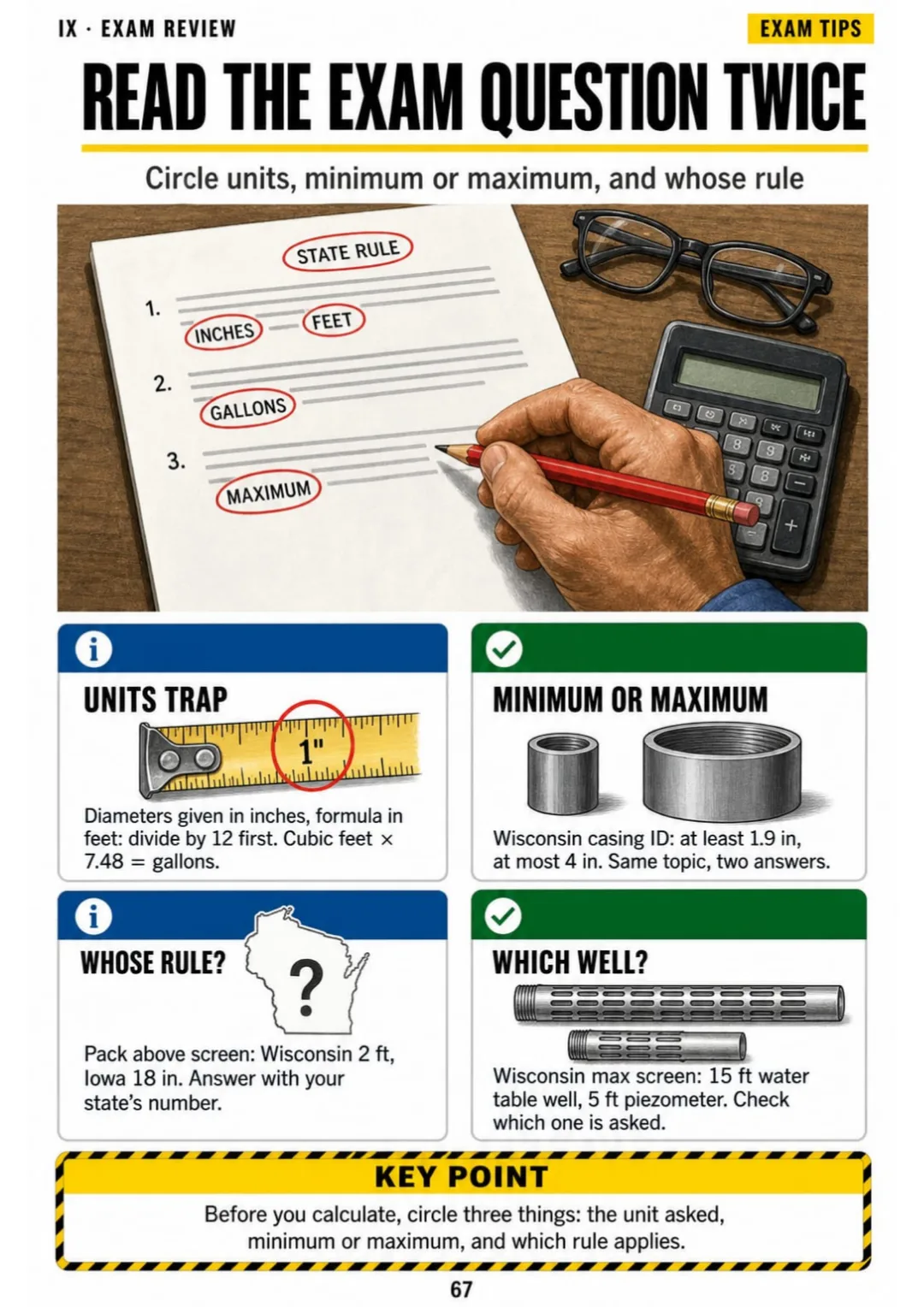
Worked traps: inches vs feet, gallons vs cubic feet, minimum vs maximum, state rule.
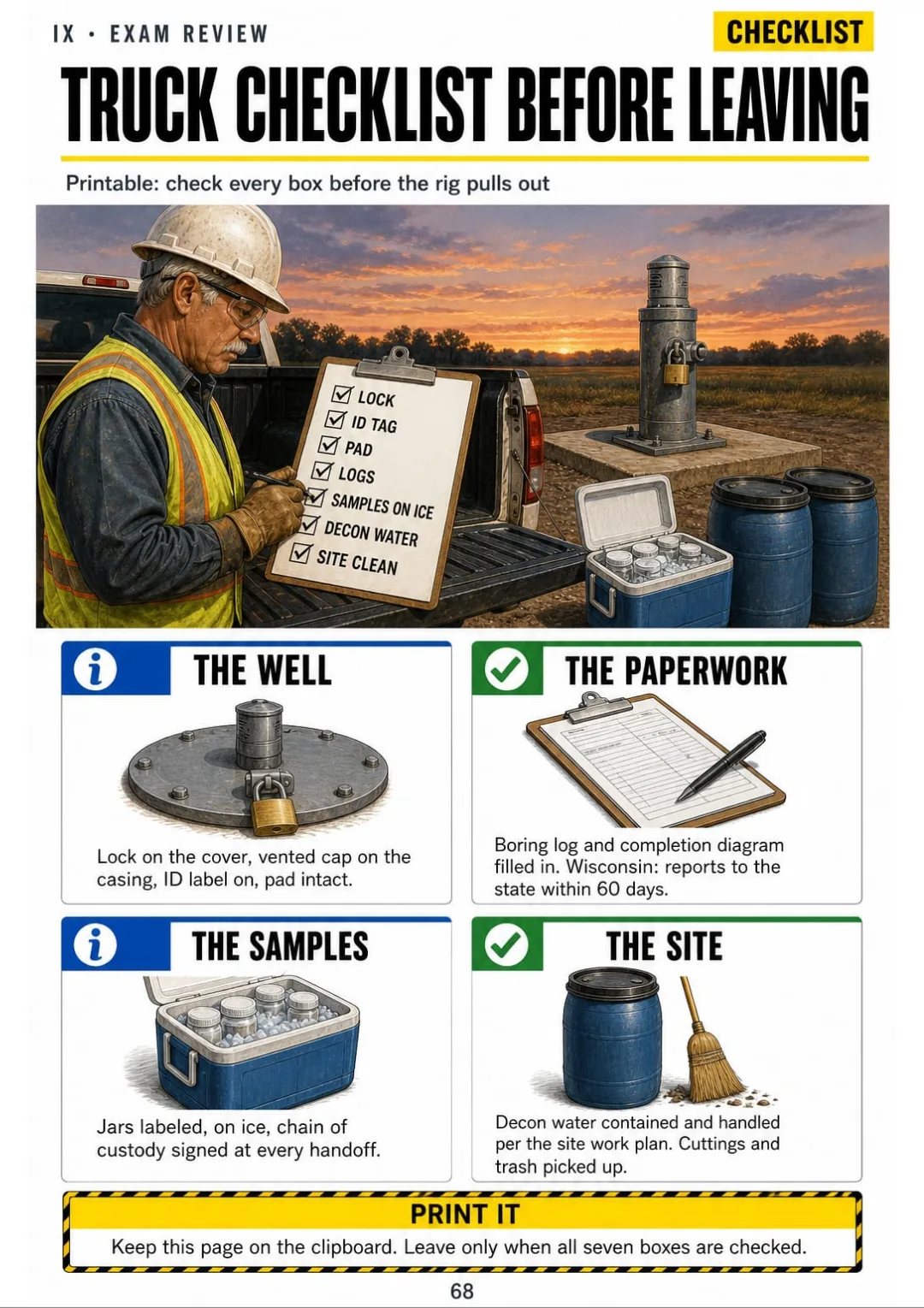
Lock, ID tag, pad, logs, samples on ice, decon water, site clean: printable checklist.

Take a Look at the 9 Parts and 64 Topics

The Monitoring Well at a Glance

pp. 5-10
  1. A Monitoring Well Is Not a Water Well
  2. The Whole Well, Bottom to Top
  3. Who's on the Site and What They Ask You
  4. Where Your License Fits
  5. Reading the Groundwater Picture
  6. Floaters and Sinkers: LNAPL and DNAPL

Before the Rig Moves

pp. 11-17
  1. Call 811 and Clear the First Feet
  2. Overhead Lines and Mast Clearance
  3. Working on a Contaminated Site
  4. PPE and Air Monitoring at the Borehole
  5. Decon Sequence for Sampling Tools
  6. Decon for Augers, Rods and the Rig
  7. Permits, Well Numbers and Setbacks

Drilling Methods

pp. 18-25
  1. Hollow-Stem Auger: How It Works
  2. Heaving Sands in the Augers
  3. Direct Push: Probing Without Cuttings
  4. Sonic Drilling: Vibration and Continuous Core
  5. Mud Rotary and Air Rotary on a Monitoring Job
  6. Three Rigs Side by Side
  7. Borehole Size vs Casing Size
  8. Refusal, Lost Circulation and Other Problems

Sampling and Logging the Ground

pp. 26-33
  1. The Split-Spoon Sampler
  2. Counting Blows: The N Value
  3. Shelby Tubes and Core Liners
  4. Recovery and Depth on the Log
  5. Describing Soil by Eye: Grain Size
  6. Color, Moisture and Density
  7. Screening Samples with the PID
  8. Sample Jars, Labels and Chain of Custody

Building the Well

pp. 34-42
  1. Casing and Screen Materials
  2. Screen Slot Size Explained
  3. Matching Sand Pack to Slot
  4. Screen Length and Placement
  5. End Cap, Sump and Centralizers
  6. Setting the String in the Hole
  7. Placing the Filter Pack
  8. Bridging: Sand Hung Up in the Annulus
  9. Filter Pack Volume in Cubic Feet

Seals, Grout and the Surface

pp. 43-50
  1. The Bentonite Seal Above the Sand
  2. Hydrating Bentonite Above the Water Table
  3. Annular Grout: Cement or Bentonite
  4. Tremie Pipe: Grout From the Bottom Up
  5. Grout Volume in Gallons
  6. Stick-Up Completion
  7. Flush-Mount Completion
  8. Measuring Point and Well ID

Development and Water

pp. 51-57
  1. Why You Develop a New Well
  2. Surge Block, Bailer and Pump
  3. When Development Is Done
  4. Well Volume in Gallons
  5. Measuring Water Level
  6. Interface Probe for Product
  7. Purging Before Sampling: Volume vs Low-Flow

Plugging and Paperwork

pp. 58-62
  1. When a Well Must Be Abandoned
  2. Plugging a Well Step by Step
  3. The Boring Log
  4. The Well Completion Diagram
  5. Reporting to the State

Exam Review and Field Checklists

pp. 63-68
  1. The Whole Build in 10 Steps
  2. The Numbers to Know
  3. Most Frequent Mix-Ups
  4. Most Frequent Field Errors
  5. Read the Exam Question Twice
  6. Truck Checklist Before Leaving the Site

Who This Book Is For

You're the helper on an environmental rig

See every step your driller does, in build order, one drawing per page, so you know what comes next before he asks.

Your state license exam is coming up

Review part by part, then check yourself with the practice questions: each answer points back to the page with the drawing.

You drill water wells and now work environmental jobs

You already know the rig. The book shows the environmental side: sand pack, seal, grout, decon and paperwork, ready to print for the truck.

Plus: 2 Free Books

Monitoring Well Exam Practice: Questions with Answers
BONUS 1

Monitoring Well Exam Practice: Questions with Answers

Exam-style questions grouped by topic, each answer pointing back to the page with the drawing, so you find what you still mix up before test day.
Monitoring Well Pocket Cards: Depths, Volumes and Checklists
BONUS 2

Monitoring Well Pocket Cards: Depths, Volumes and Checklists

The numbers and sequences you need on one card each, from filter pack height to the decon sequence, ready to print and keep in the truck.

30-Day Guarantee

30-day guarantee: if a file doesn't open, if the content isn't what the product page describes, if you were charged twice or the email never arrived, write to us and we'll refund you in full. You pay once. No subscriptions.

Frequently Asked Questions

Is it for me if I've drilled water wells for years and now work environmental sites?

Yes. It isn't a beginner's book: it skips what you already know about the rig and draws the environmental side, from sampling and logging to sand pack, seals, grout, development and plugging.

Does it work for my state's exam, and where does the content come from?

It covers what monitoring well and environmental drilling exams have in common: drilling, sampling, building, sealing, developing and plugging the well. It's built from state well construction rules, cross-checked against ASTM D5092 and U.S. EPA groundwater monitoring guidance. Seal thickness, grout depths and setbacks change by state, so every state-specific number is marked to check against your state's current rule. Pumps and water-supply-only topics of the general exam are not covered.

Is this official material?

No. It's an independent illustrated study book. It isn't published, approved or endorsed by any state agency, licensing board or exam provider.

Does it replace a course or on-the-job training?

No. It helps you review and understand each step, but it doesn't replace required training, supervised field experience or your state's rules. It doesn't give a certificate or continuing education credit.

Are the practice questions the ones on the exam?

No. They're written for this book, grouped by topic and modeled on what's covered in the exam material, not copied from any real exam.

When and how do I get it?

The book and the 2 bonus books come as PDFs by email, to the address you enter at checkout.

Do I have to pay every month?

No. It's a one-time payment. No subscription.

Can I have it on paper?

Yes. It's a printable PDF: print the whole book or just the pages and pocket cards you want in the truck.

How does the refund work?

You have 30 days. We refund everything if the file won't open, if the book isn't what you see on this page, if you were charged twice or if the email doesn't arrive: just email us.

US$ 27US$ 63
Get the book · US$ 27

This is a digital PDF book sent to your email: nothing is printed or shipped.