Study in Pictures🌐 English (United States)
Industrial Hygiene Illustrated

Digital book in PDF · read it on your phone or print it

Industrial Hygiene Illustrated

Pump calibration, the breathing zone, the 8-hour TWA, noise dose, heat stress, capture hoods and respirator fit testing. One topic per page: the drawing first, then the numbers and steps you use on the floor. PDF by email, made to print for your binder.

  • 70 illustrated pages
  • English
  • 30-day guarantee
US$ 27US$ 63
Get the book · US$ 27

Price shown for: United States. In other countries, the checkout shows the price that applies there.

About this book

What it is

Pump calibration, the breathing zone, the 8-hour TWA, noise dose, heat stress, capture hoods and respirator fit testing. One topic per page: the drawing first, then the numbers and steps you use on the floor. PDF by email, made to print for your binder.

Who This Book Is For
  • You just inherited industrial hygiene
  • You have a survey coming up
  • You already run surveys
What it covers
  1. The Four-Step Loop
  2. Reading Exposure Limits
  3. Air Sampling in the Field
  4. The Math, Worked Out
  5. Noise
  6. Heat and Other Physical Hazards
  7. Controls and Ventilation
  8. Respirators and Fit Testing
  9. Report, Review, Common Mistakes
Language
English (United States)
Pages
70
Format
Digital book in PDF · read it on your phone or print it
Price
US$ 27 (United States)
Delivery
This is a digital PDF book sent to your email: nothing is printed or shipped.
30-Day Guarantee
30-day guarantee: if a file doesn't open, if the content isn't what the product page describes, if you were charged twice or the email never arrived, write to us and we'll refund you in full.

Look Inside the Book

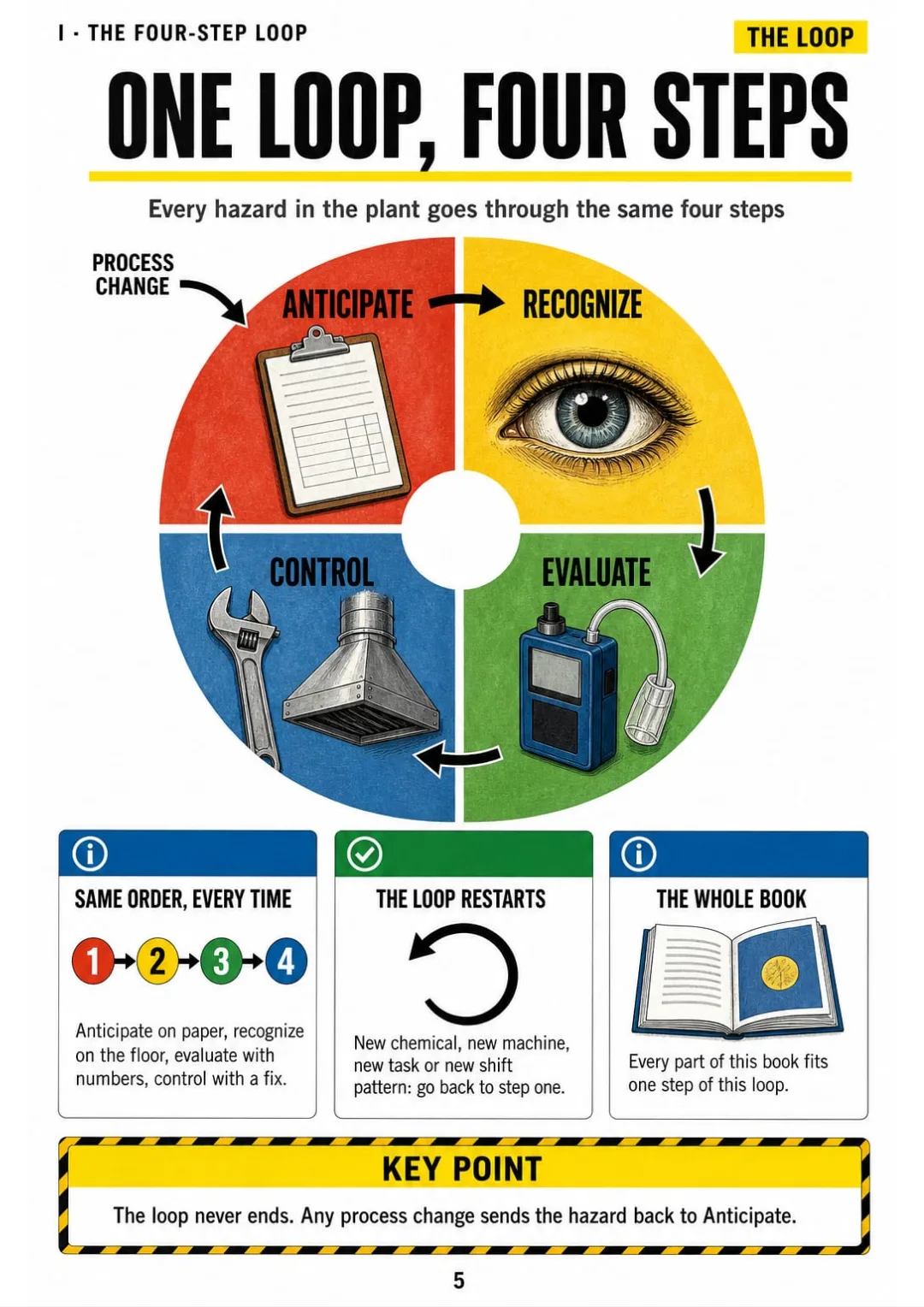
Anticipate → Recognize → Evaluate → Control, and back to the start after any change.
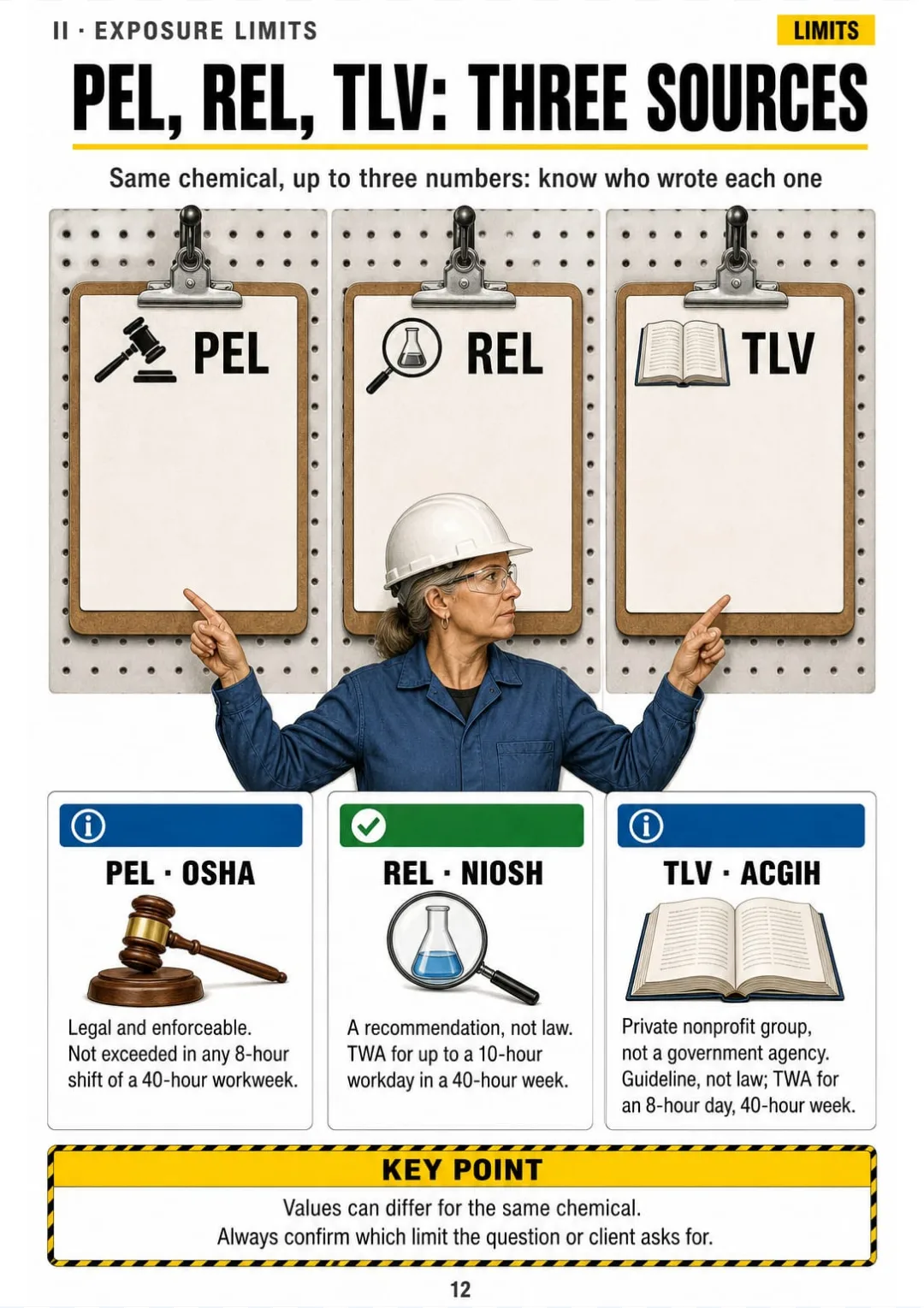
PEL = OSHA law (8 h) · REL = NIOSH advice (up to 10 h) · TLV = ACGIH guideline (8 h)
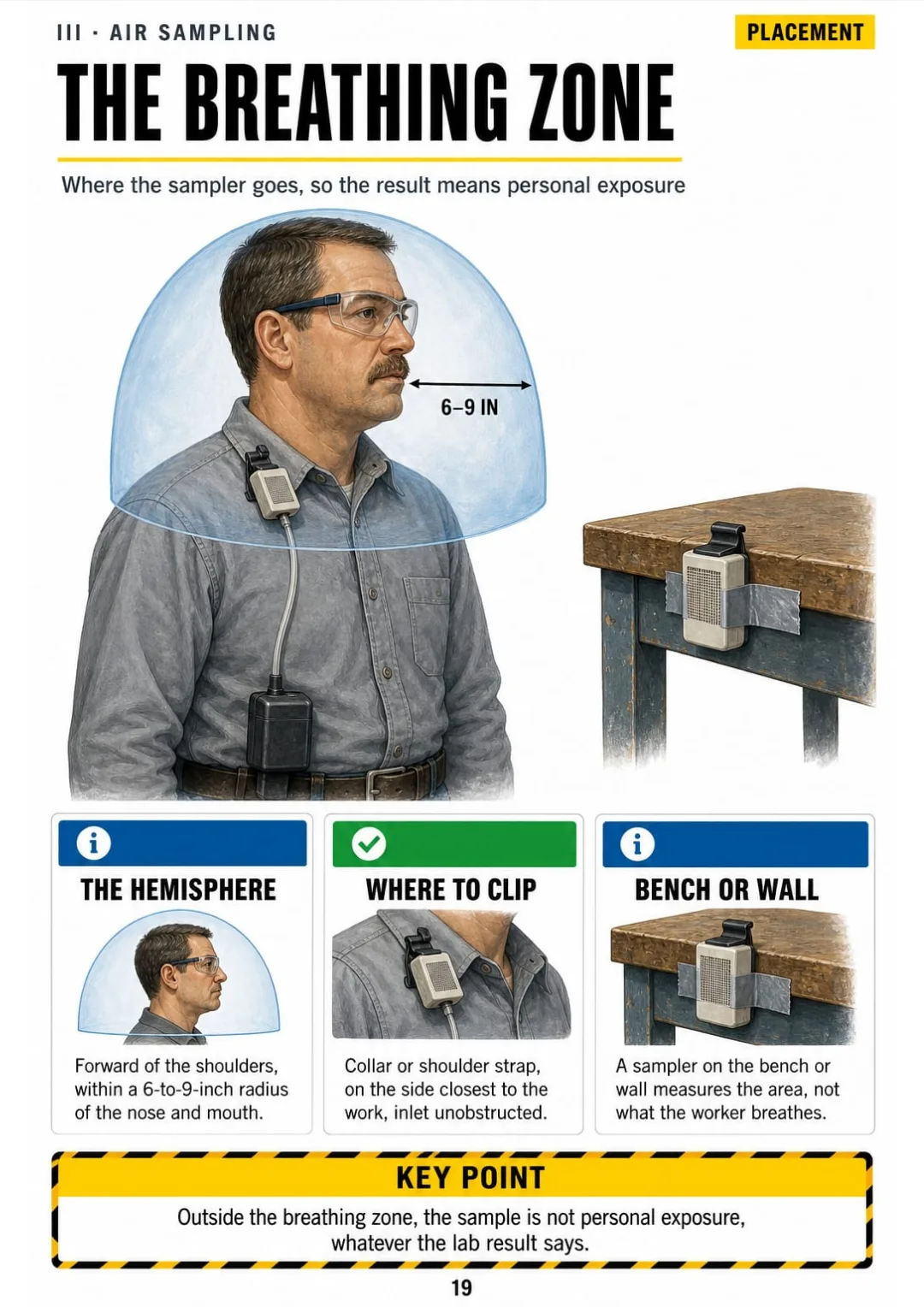
Breathing zone: forward of the shoulders, 6–9 inches from nose and mouth.
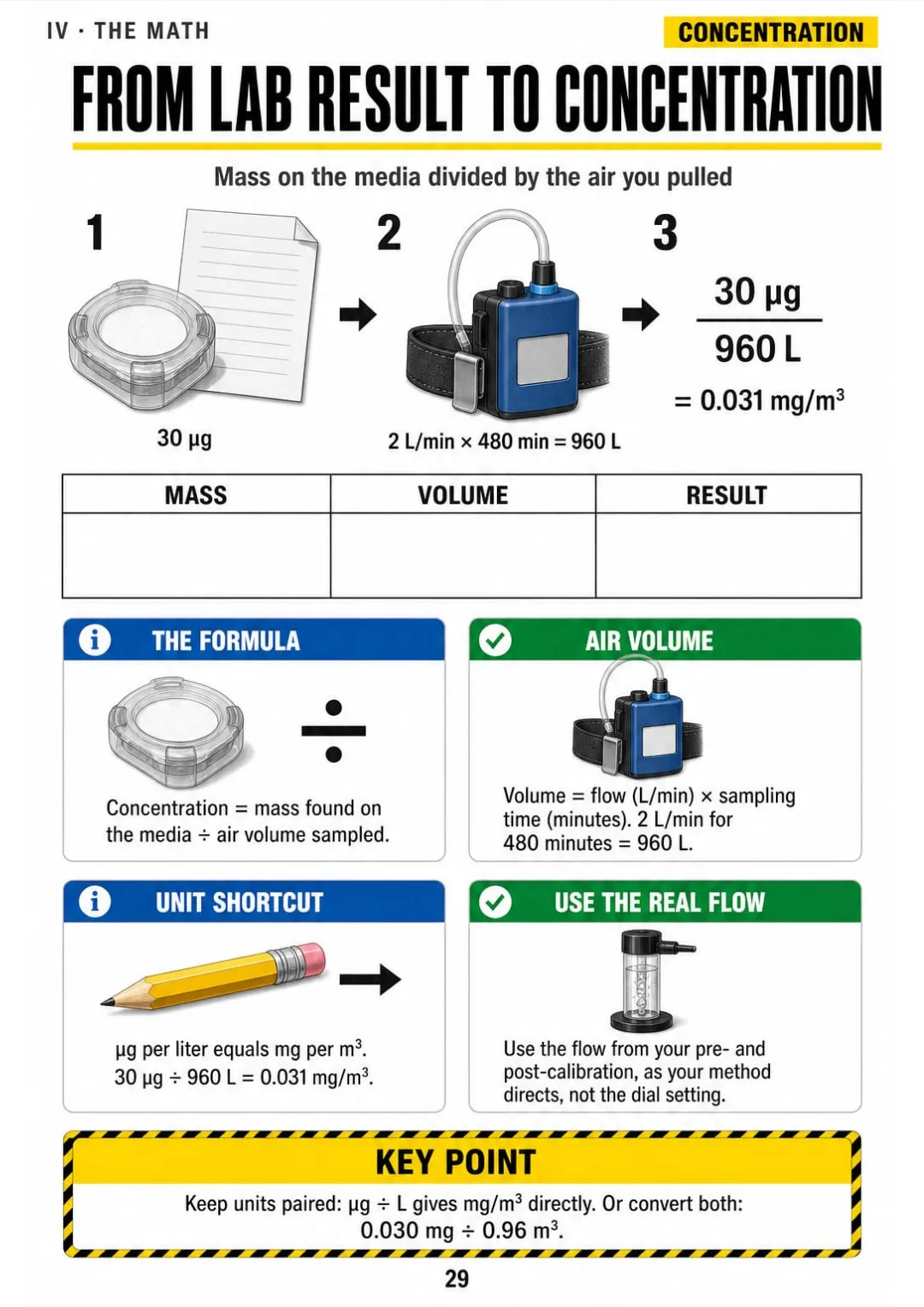
30 µg in 960 L of air = 0.031 mg/m³, worked step by step
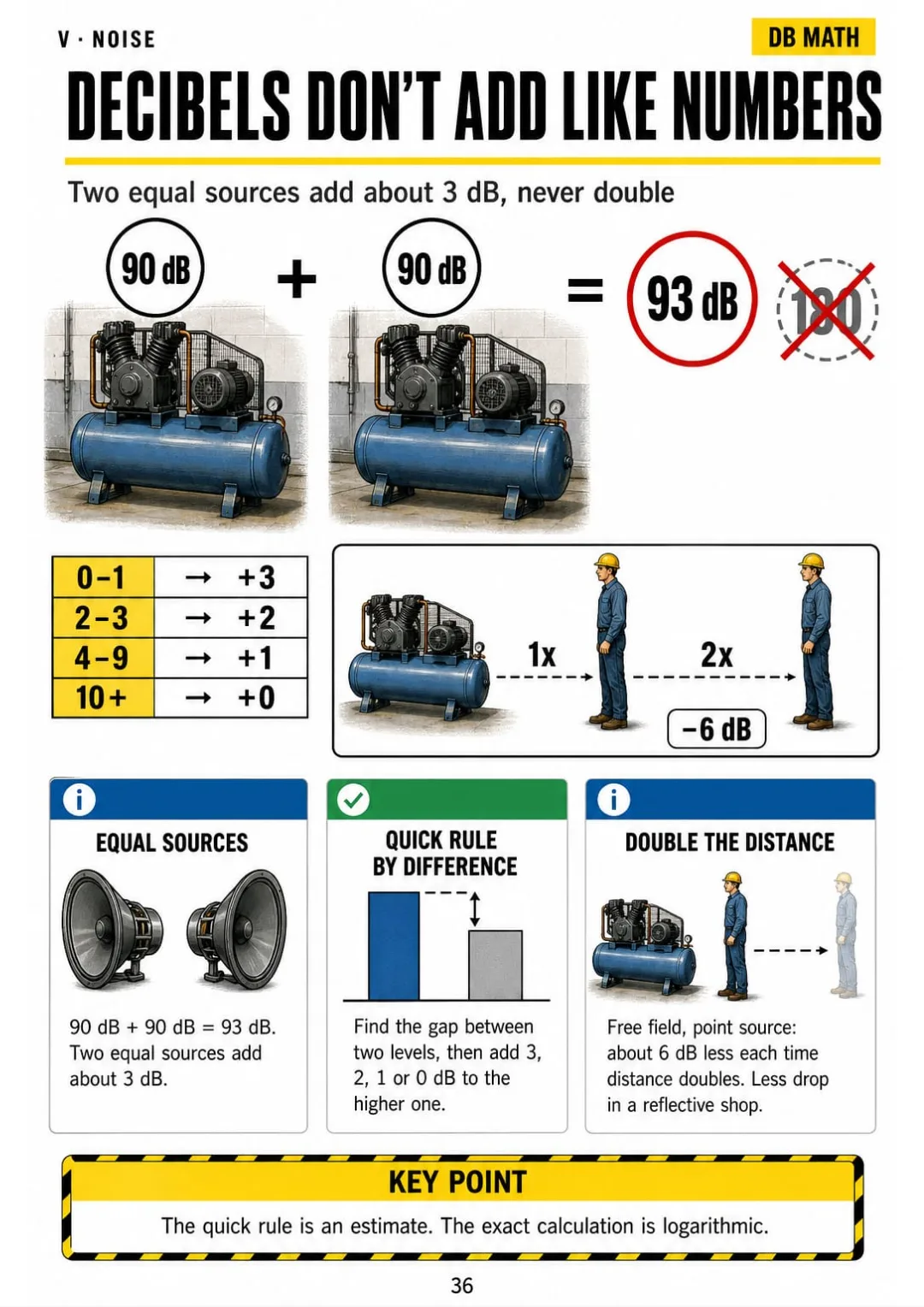
90 dB + 90 dB = 93 dB: the quick rule to add decibels by their difference
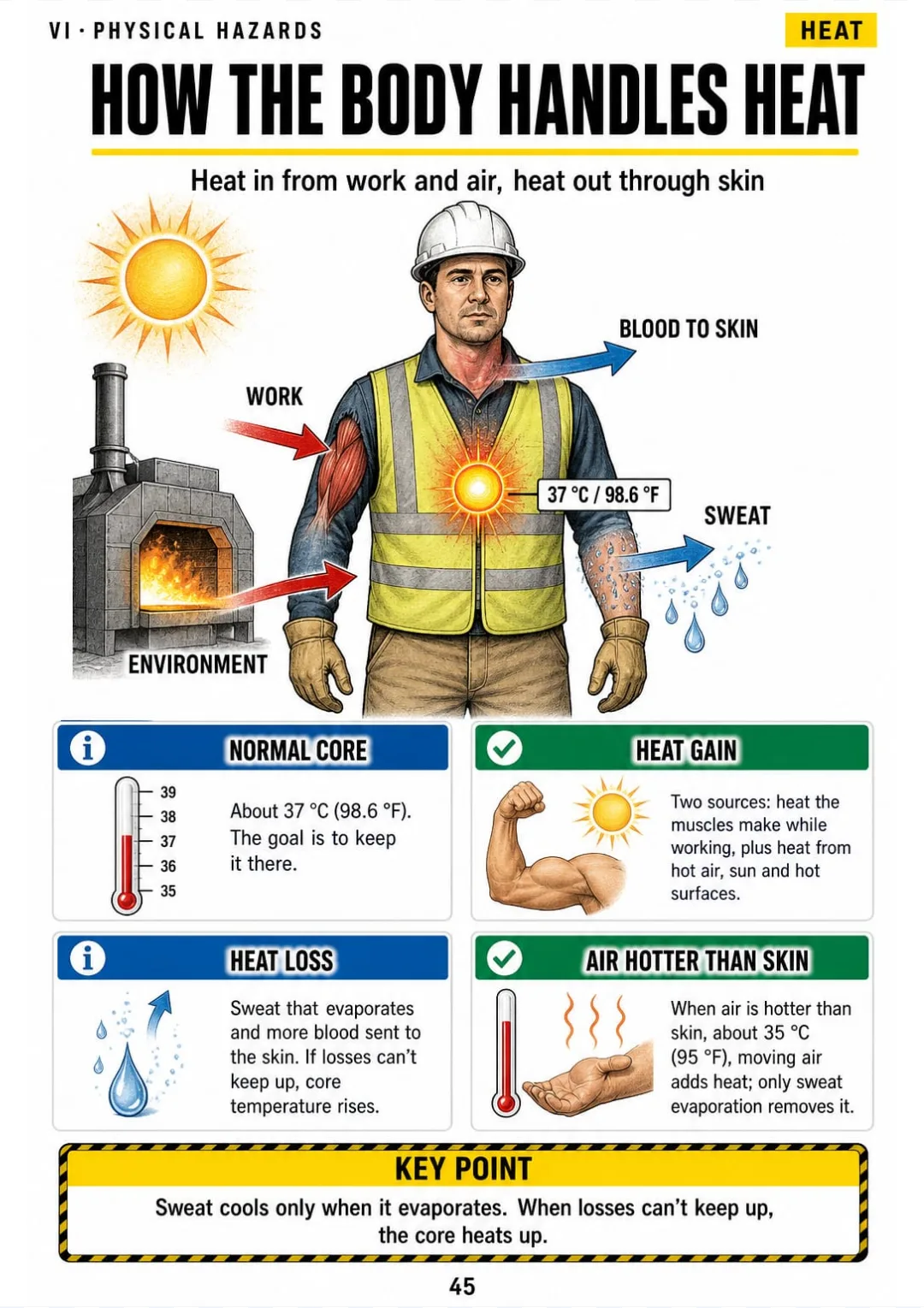
Core about 37 °C (98.6 °F): two ways heat comes in, two ways it goes out
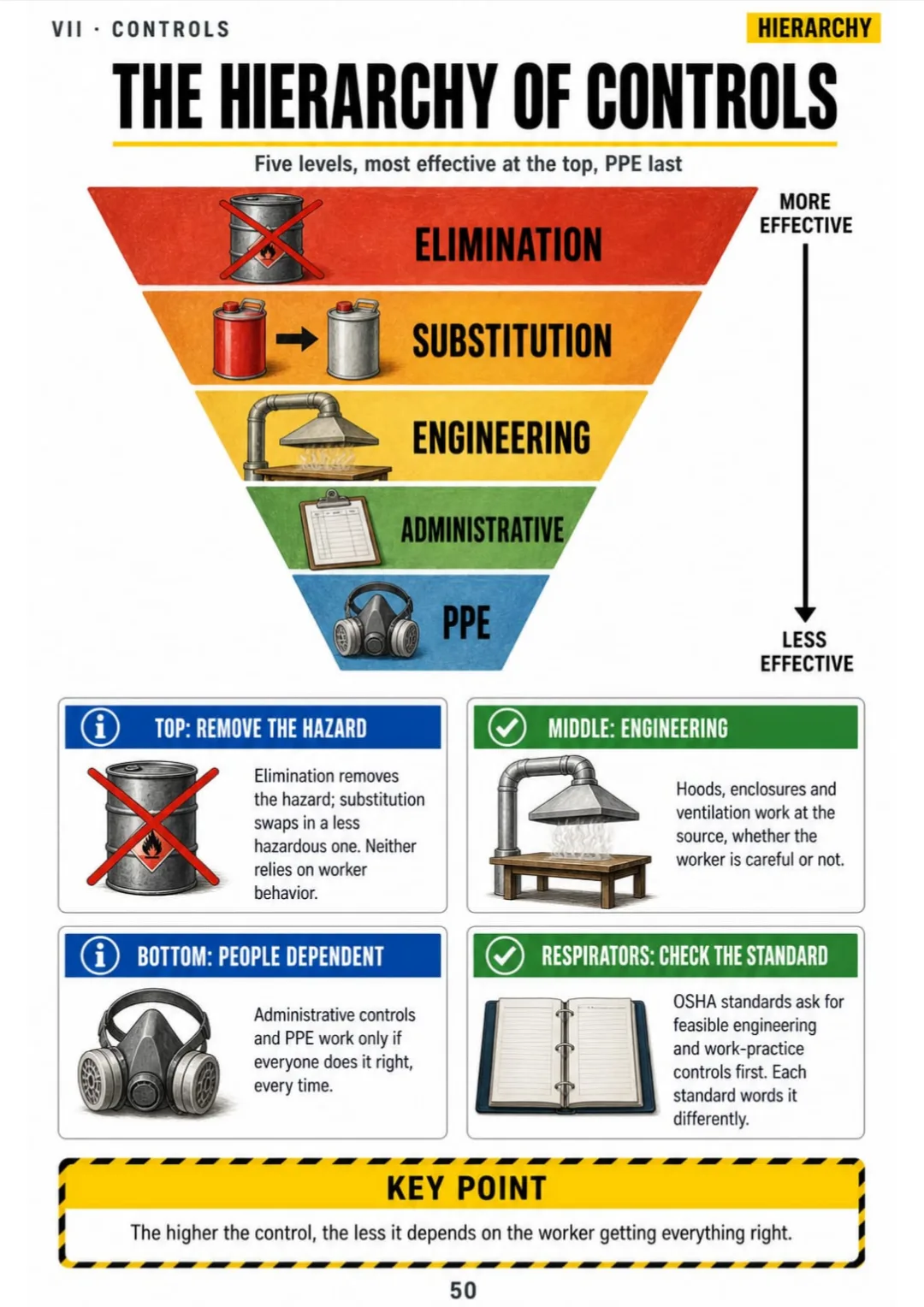
Elimination → substitution → engineering → administrative → PPE, drawn as one inverted pyramid
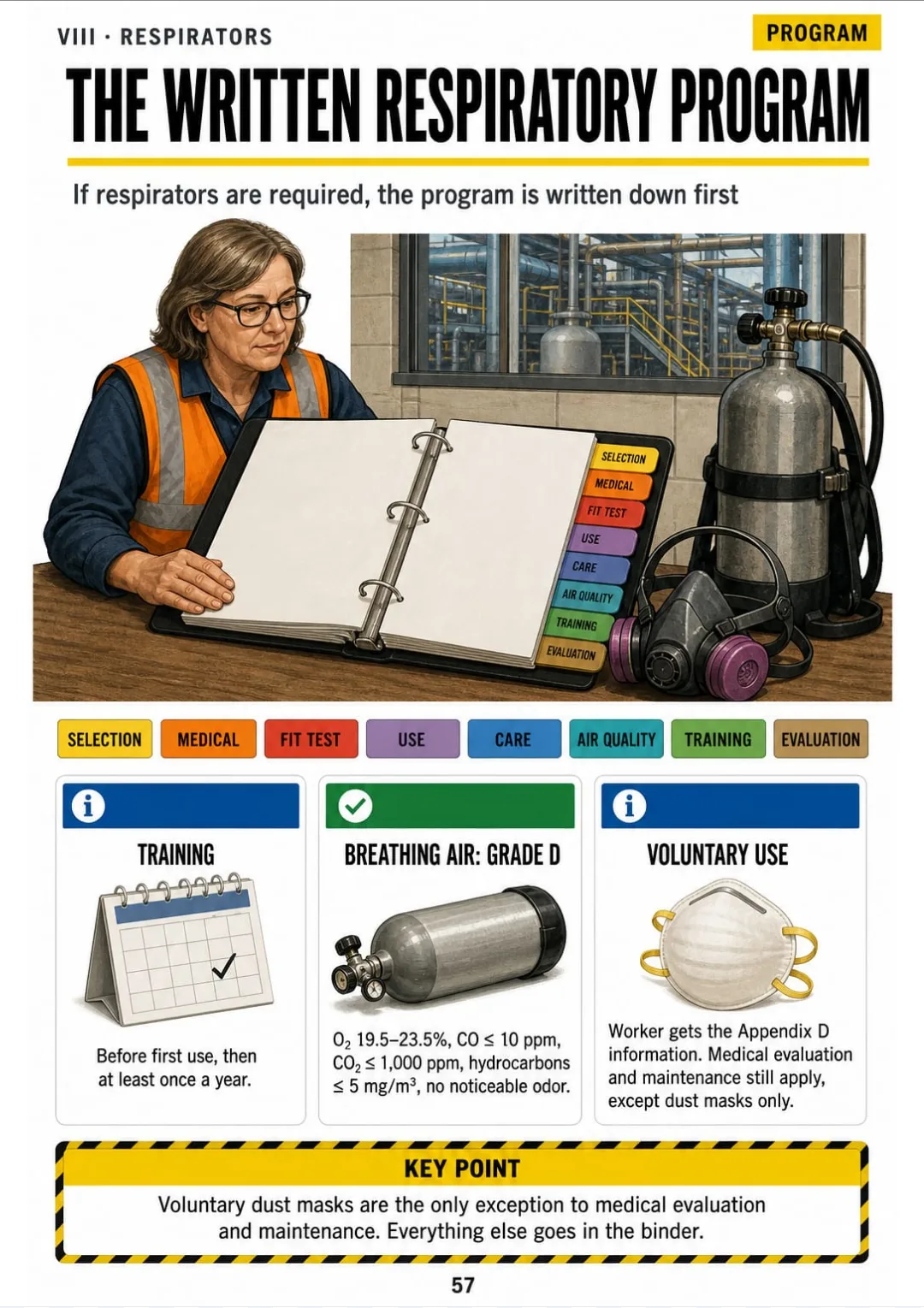
Training yearly, Grade D air limits, and the voluntary-use exception, per 29 CFR 1910.134

Take a Look at the 9 Parts and 66 Topics

The Four-Step Loop

pp. 5-11
  1. Anticipate, Recognize, Evaluate, Control
  2. Anticipate: Read the Process Before You Walk It
  3. Recognize: The Walkthrough Survey
  4. Evaluate: Measure, Then Compare
  5. Control: Fix It, Then Check It Again
  6. The Four Families of Hazards
  7. Four Routes of Entry

Reading Exposure Limits

pp. 12-18
  1. PEL, REL, TLV: Three Limits, Three Sources
  2. TWA, STEL and Ceiling
  3. The Action Level
  4. ppm vs. mg/m³
  5. The Skin Notation
  6. IDLH: The Line You Never Cross Without SCBA
  7. Mixtures: When Two Chemicals Add Up

Air Sampling in the Field

pp. 19-28
  1. The Breathing Zone
  2. Personal vs. Area Sampling
  3. The Sampling Train
  4. Choosing the Media
  5. Pump Calibration, Step by Step
  6. Flow Rates You Should Recognize
  7. Particle Sizes: Inhalable, Thoracic, Respirable
  8. Blanks and Chain of Custody
  9. Direct-Reading Instruments
  10. Who and When to Sample

The Math, Worked Out

pp. 29-35
  1. From Lab Result to Concentration
  2. The 8-Hour TWA in One Table
  3. The Unsampled Time Trap
  4. Extended Shifts: 10 and 12 Hours
  5. Comparing STEL and Ceiling Results
  6. Reading the Result Against the Limit
  7. Sampling Error, in Plain Words

Noise

pp. 36-44
  1. Decibels Don't Add Like Normal Numbers
  2. dBA and dBC
  3. The OSHA Numbers: 90, 85, 5
  4. Allowed Time at Each Level
  5. Noise Dose, Step by Step
  6. From Dose to TWA
  7. Sound Level Meter vs. Dosimeter
  8. Hearing Conservation Program
  9. Hearing Protector Ratings in Real Life

Heat and Other Physical Hazards

pp. 45-49
  1. How the Body Handles Heat
  2. WBGT, the Heat Number
  3. Heat Illness Ladder
  4. Acclimatization: The First Days
  5. Vibration, Radiation and Lighting at a Glance

Controls and Ventilation

pp. 50-56
  1. The Hierarchy of Controls
  2. Substitution That Doesn't Backfire
  3. Local Exhaust: Hood, Duct, Cleaner, Fan, Stack
  4. Capture Distance: The Rule That Surprises
  5. Velocities to Recognize
  6. Dilution vs. Local Exhaust
  7. Administrative Controls and Their Limits

Respirators and Fit Testing

pp. 57-64
  1. The Written Respiratory Program
  2. Air-Purifying vs. Atmosphere-Supplying
  3. Filters: N, R, P and 95, 99, 100
  4. Cartridge Colors and Change Schedules
  5. Assigned Protection Factor and MUC
  6. Medical Evaluation Comes First
  7. Fit Testing: Qualitative and Quantitative
  8. User Seal Check, Every Time

Report, Review, Common Mistakes

pp. 65-70
  1. Hazard Communication in One Page
  2. Records You Must Keep
  3. Writing a Survey Report That Holds Up
  4. Explaining Results to the Manager and the Operator
  5. Most Common Field Mistakes
  6. The Whole Loop on One Page

Who This Book Is For

You just inherited industrial hygiene

You came up from production or maintenance and now the pump is yours. The book walks you through it in one order, one drawn page at a time.

You have a survey coming up

Before you walk the paint booth or the welding bay, you open the pages you need: breathing zone, pump calibration, the TWA table. You show up knowing the steps.

You already run surveys

You keep it in the binder for the numbers you don't use every week: allowed noise time, capture velocities, filter classes. One glance and you're set.

Plus: 2 Free Books

Exposure Math Workbook: TWA and Noise Dose Practice
BONUS 1

Exposure Math Workbook: TWA and Noise Dose Practice

Practice TWA and noise dose calculations on blank tables with step-by-step answers, so the numbers feel routine before you face real sampling data.
Industrial Hygiene Quick-Reference Cards
BONUS 2

Industrial Hygiene Quick-Reference Cards

Print one card per topic (routes of entry, particle sizes, hood placement, seal checks) and keep it in your binder or truck for a glance before a walkthrough.

30-Day Guarantee

30-day guarantee: if a file doesn't open, if the content isn't what the product page describes, if you were charged twice or the email never arrived, write to us and we'll refund you in full. You pay once. No subscriptions.

Frequently Asked Questions

Is this for me if I came up from production and got handed industrial hygiene?

Yes. It starts from the four-step loop and builds from there, with no academic background assumed. Every topic is one drawing plus the numbers and steps you use on the plant floor. It isn't written as prep for a certification exam such as the CIH.

Where does the content come from?

From OSHA general industry standards (29 CFR 1910: air contaminants, noise, respiratory protection, hazard communication, records) and NIOSH guidance (analytical methods, the Pocket Guide, heat stress criteria), checked against those published sources. It covers general industry, not the construction standards in 1926. Each limit shows whether it's a PEL, REL or TLV and who sets it, so you can confirm it against the current version before you use it.

Is this official material?

No. It's an independent illustrated study book. It is not affiliated with or endorsed by OSHA, NIOSH or any other organization.

Does it replace formal training?

No. It's study material to understand and review. It doesn't come with a certificate and doesn't count as required training hours. It doesn't replace formal training, your company's written respiratory protection program, or medical and occupational health advice.

Does it work in my state?

It's written around the federal general industry standards (29 CFR 1910) and NIOSH methods. If your state runs its own plan, such as California, some limits can be stricter: check your state's current tables. Construction standards are not covered. The practice exercises are written for this book, not official problems.

When and how does it arrive?

The book and the 2 bonus books arrive as PDFs by email, at the address you enter at checkout.

Do I have to pay every month?

No. It's a one-time payment. No subscription.

Can I have it on paper?

Yes. The PDF is made to print: you can print the whole book or just the pages you need and keep them in your binder or truck.

How does the refund work?

You have 30 days. We refund everything if the file won't open, if the book isn't what you see on this page, if you were charged twice or if the email doesn't arrive: just email us.

US$ 27US$ 63
Get the book · US$ 27

This is a digital PDF book sent to your email: nothing is printed or shipped.