
BONUS 1
Well Math Workbook: 20 Worked Problems in Feet and Gallons
Practice every number your well needs (static level, drawdown, rod sections, gallons per minute, disinfection volume) with your own figures before you lift a single pipe.

Digital book in PDF · read it on your phone or print it
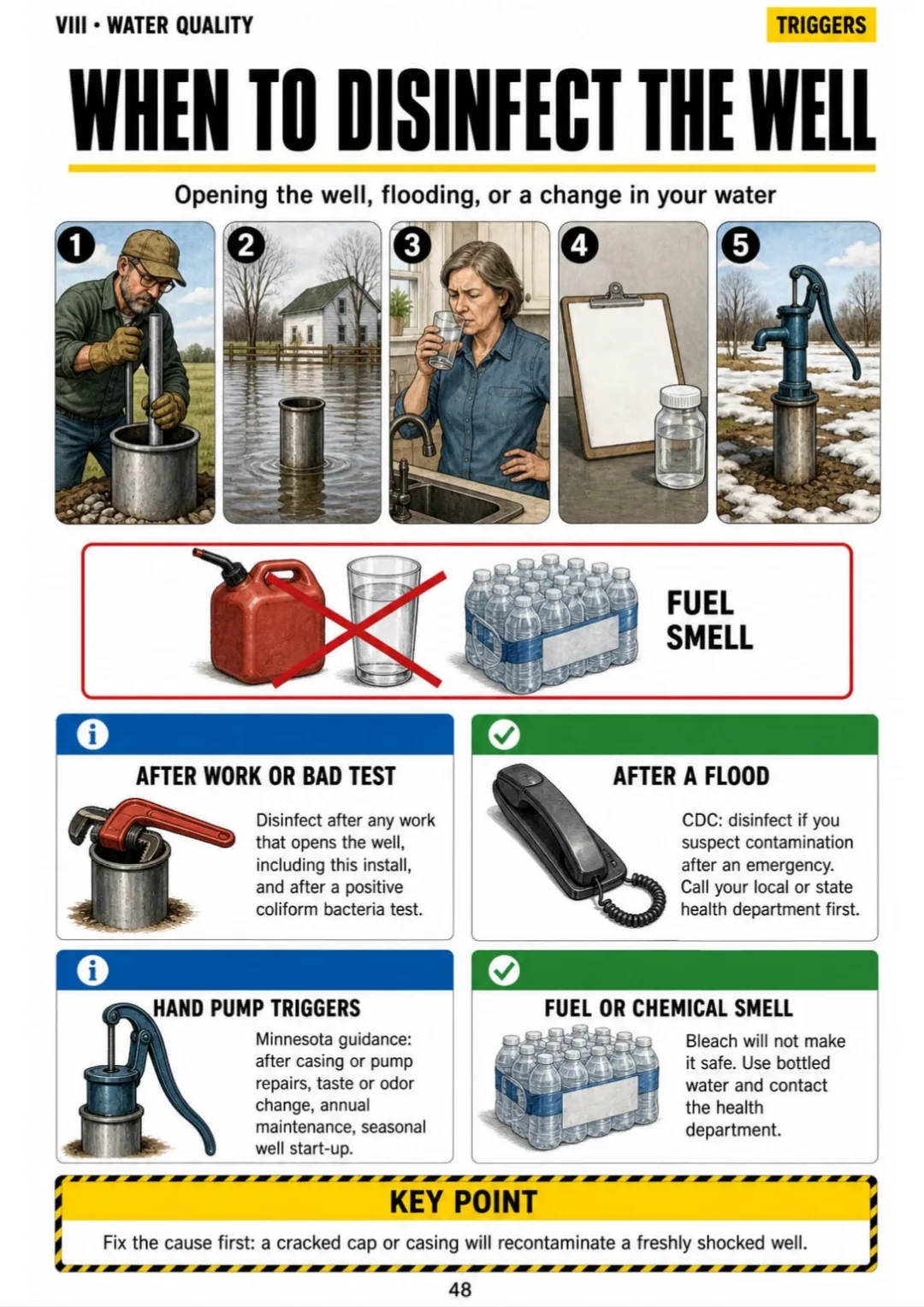
Static level, the suction ceiling, cylinder depth, rod sections, the sanitary cap, the weep hole, shock chlorination and troubleshooting. Every topic gets its own page: the drawing first, then what you need to remember.
Price shown for: United States. In other countries, the checkout shows the price that applies there.
Static level, the suction ceiling, cylinder depth, rod sections, the sanitary cap, the weep hole, shock chlorination and troubleshooting. Every topic gets its own page: the drawing first, then what you need to remember.
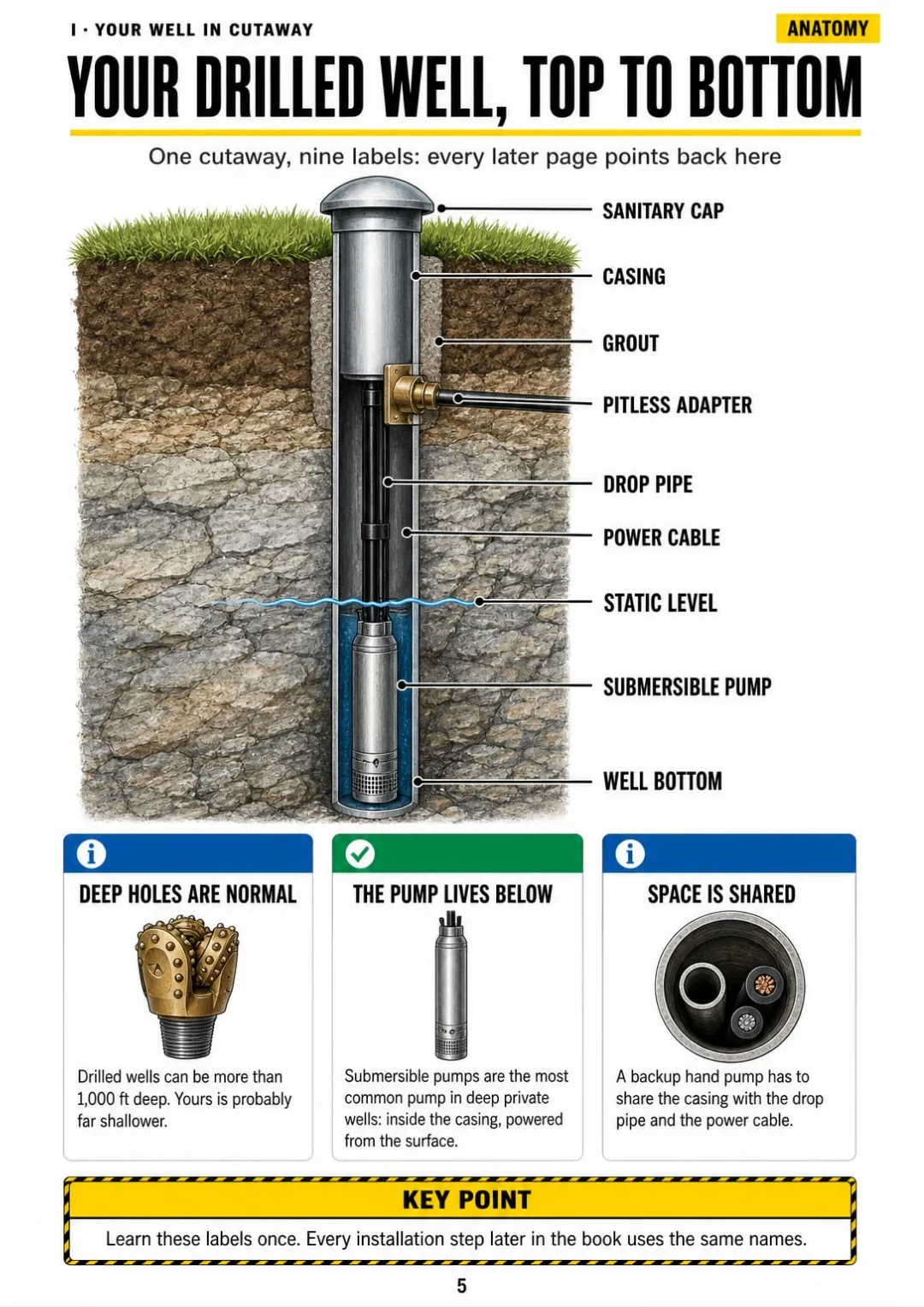
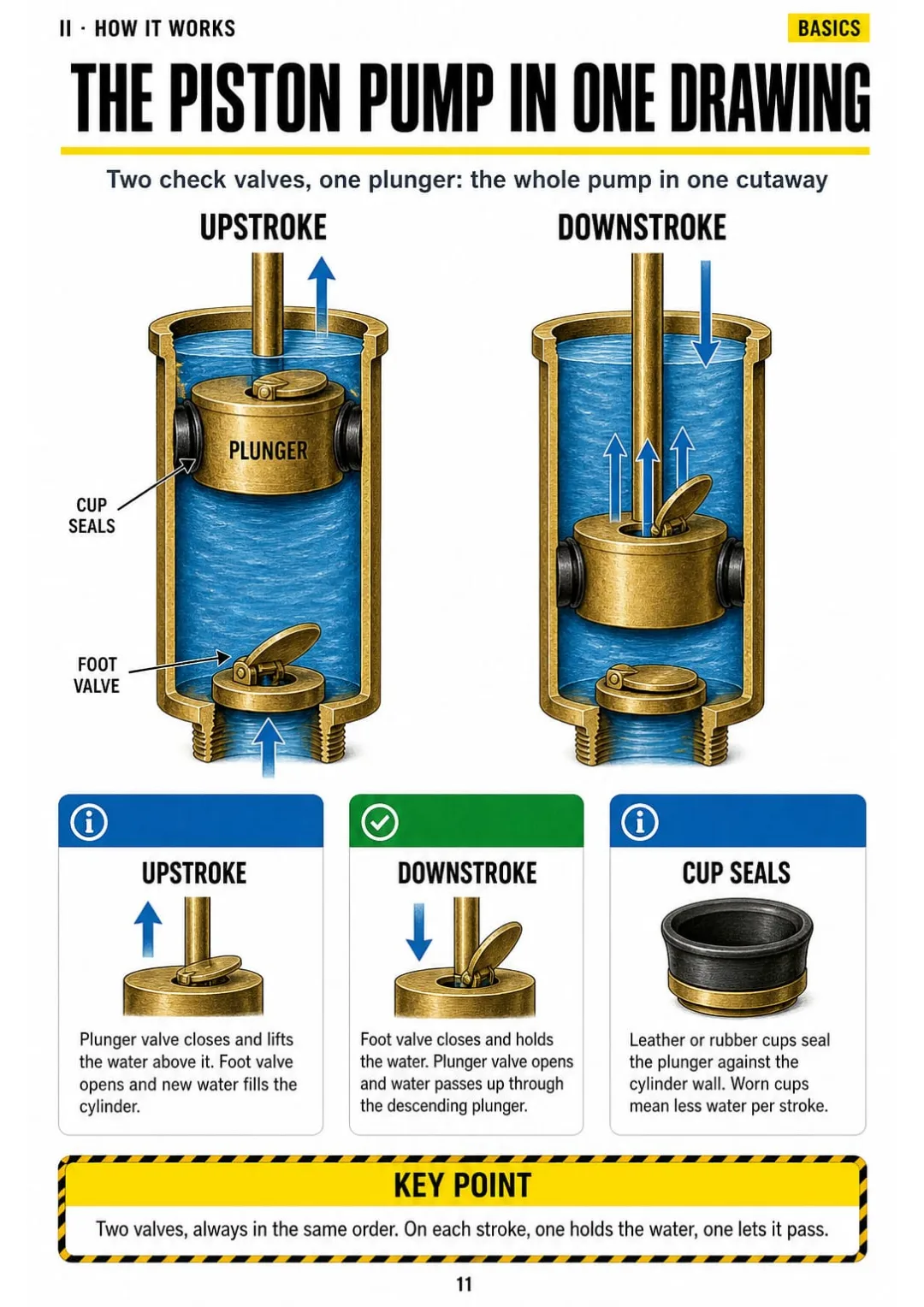
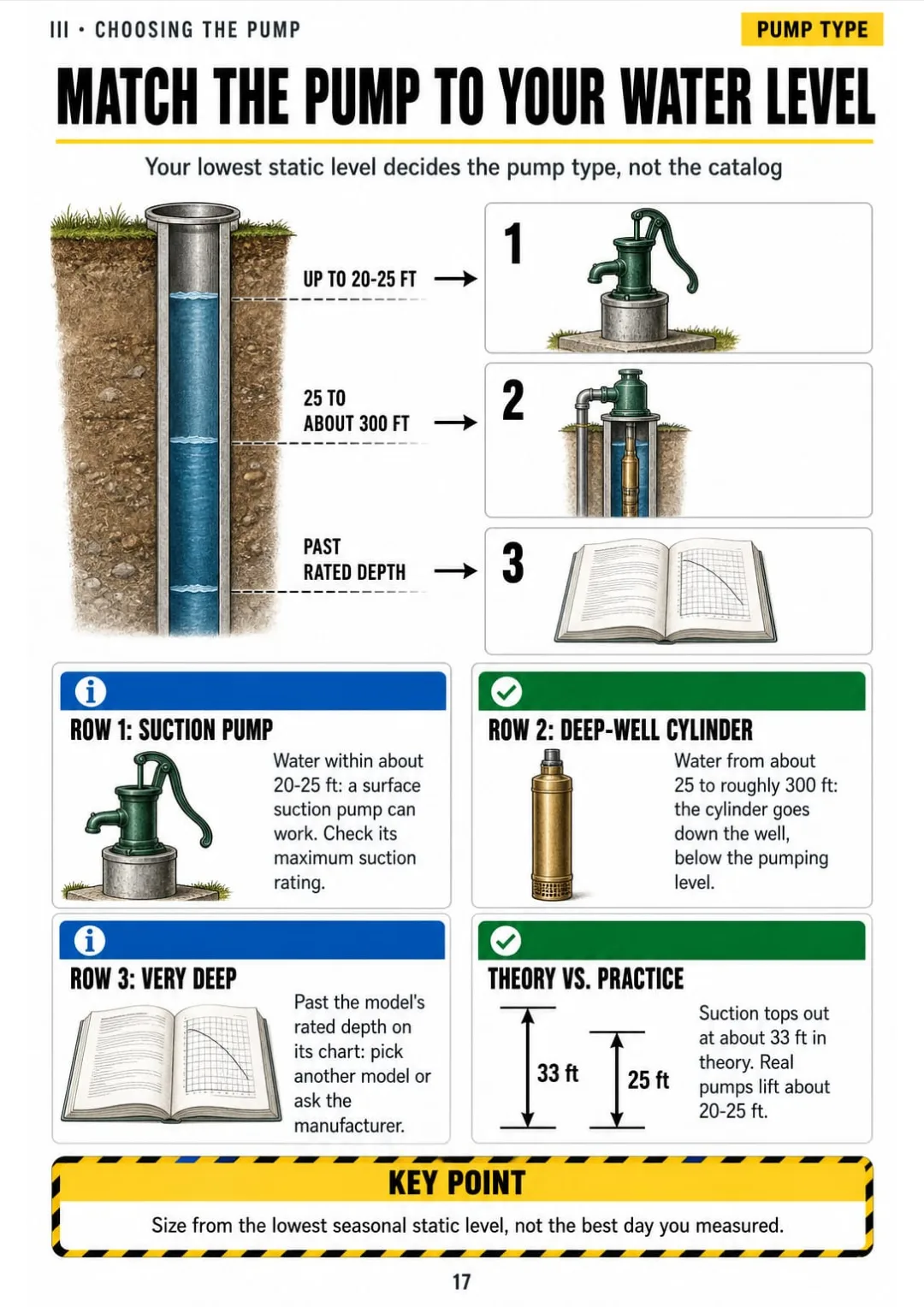
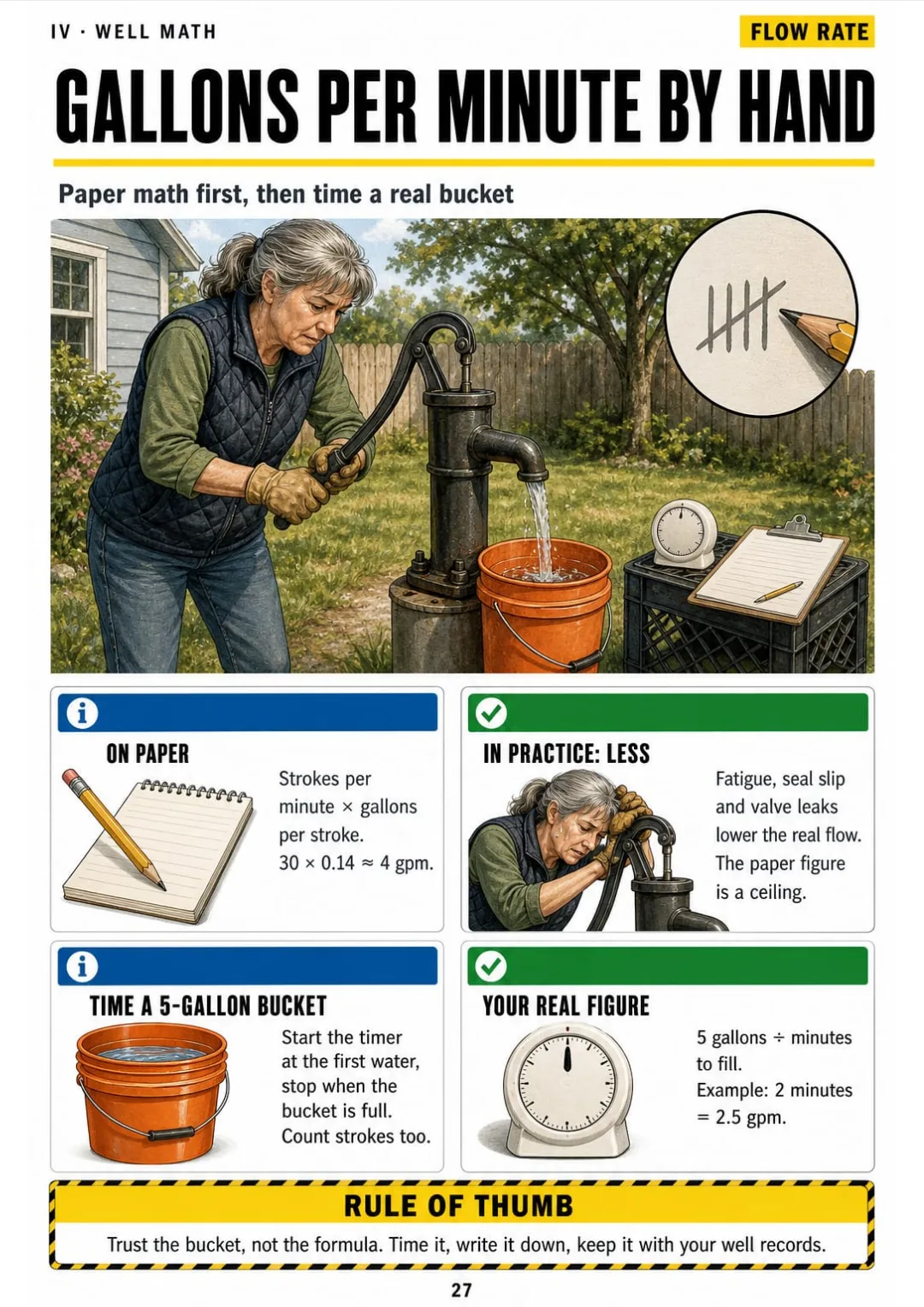
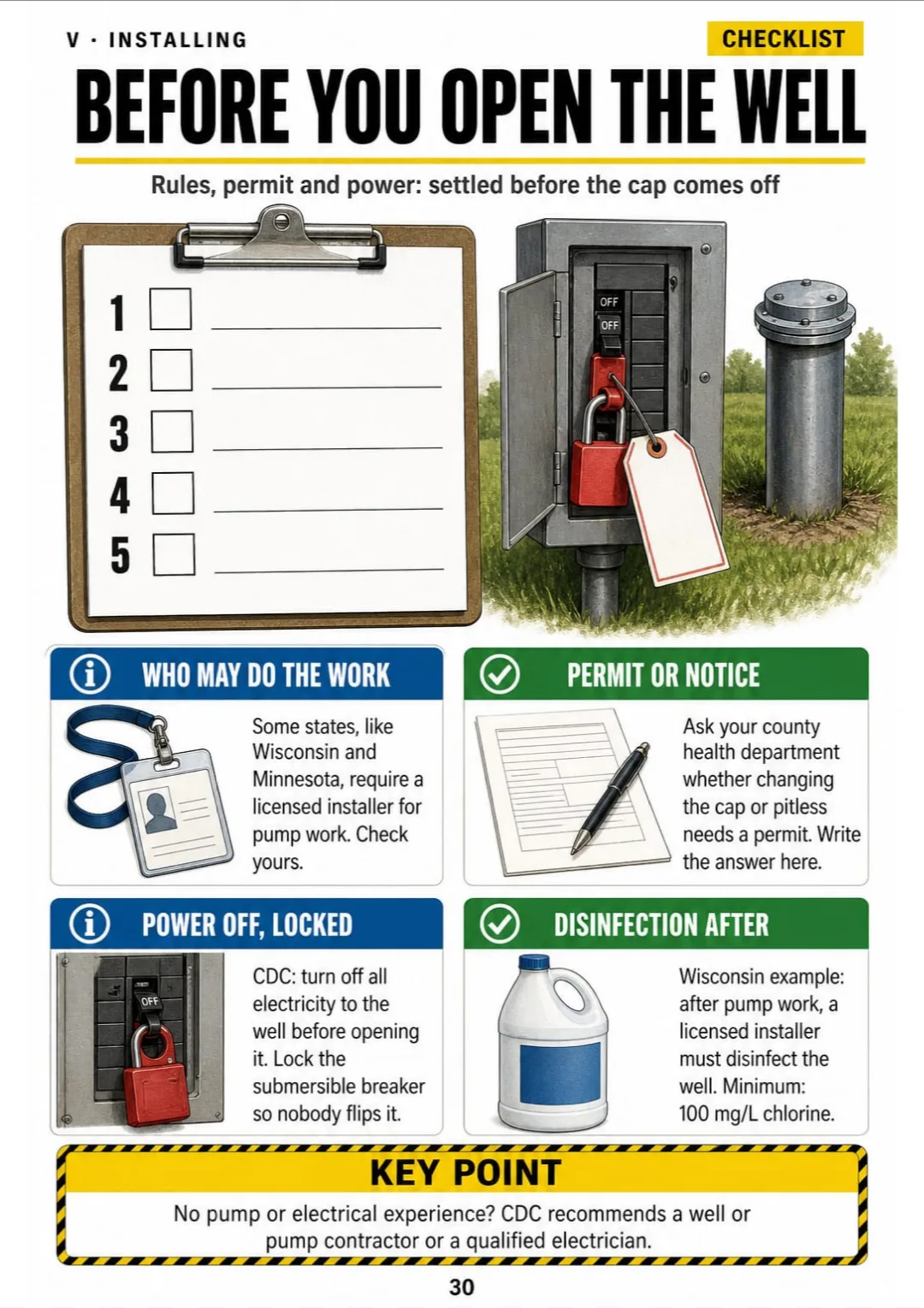
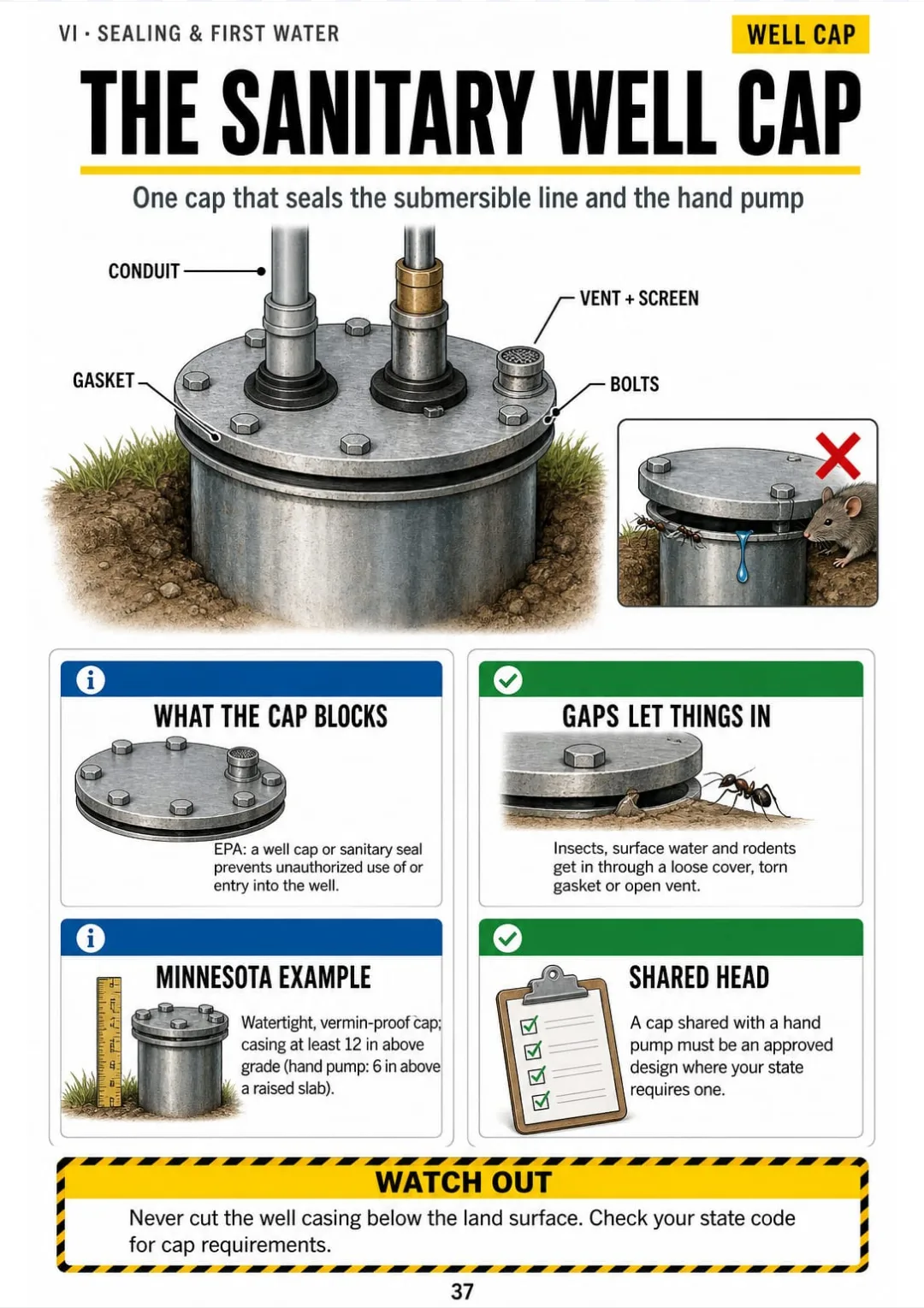
You read your well log, put your static level on the drawing and see whether you need a suction pump or a cylinder down the well, and if it fits beside the submersible.
You work out where the cylinder goes and how many pipe and rod sections you need, then follow the install pages in order, with the safety rope on.
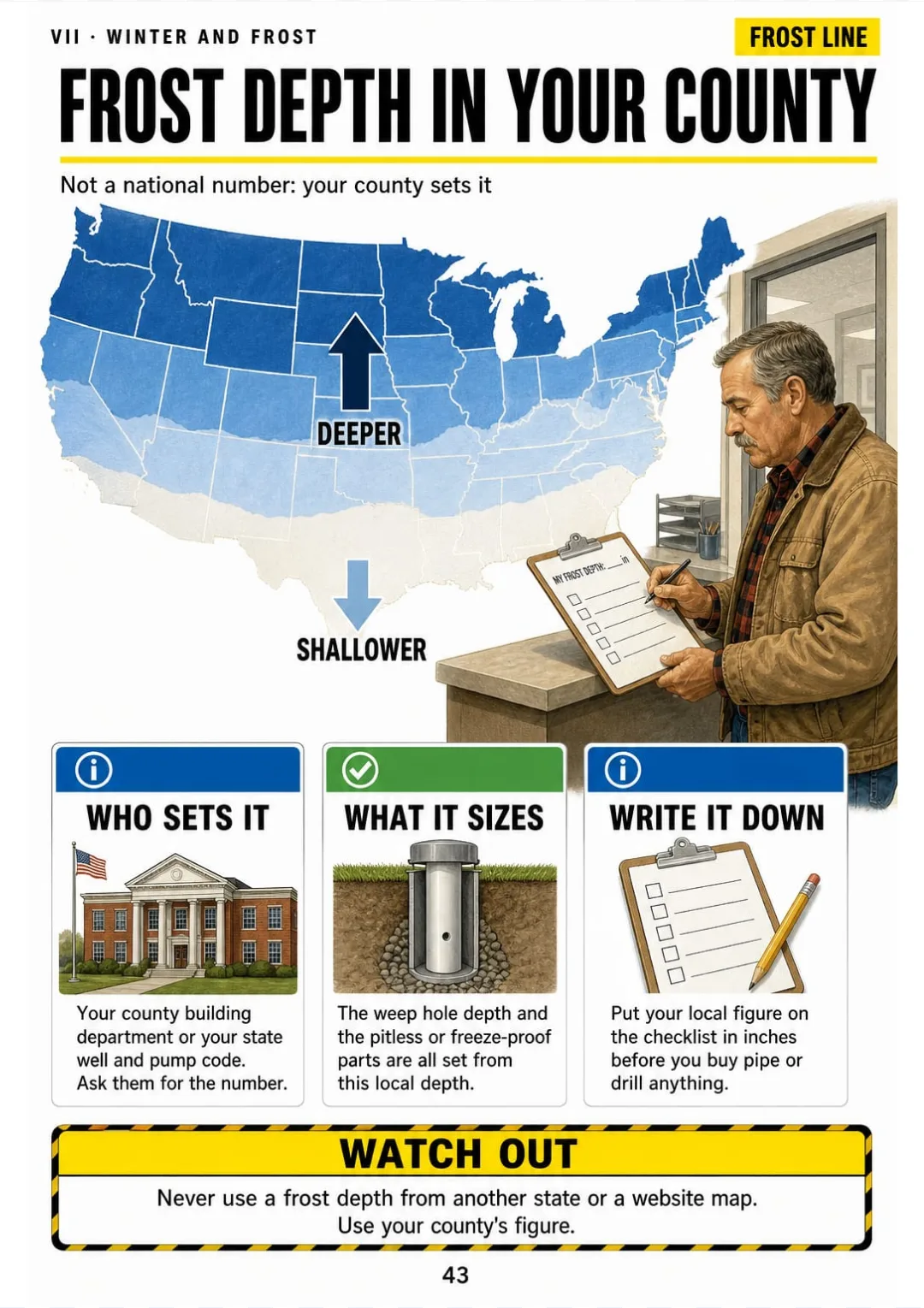
You keep the maintenance calendar, protect it from frost and narrow down a pump that loses prime or gives little water, one page at a time.
Practice every number your well needs (static level, drawdown, rod sections, gallons per minute, disinfection volume) with your own figures before you lift a single pipe.

The most frequent install and maintenance mistakes drawn side by side with the right way, so you catch them on the cards and not down the casing.
30-day guarantee: if a file doesn't open, if the content isn't what the product page describes, if you were charged twice or the email never arrived, write to us and we'll refund you in full. You pay once. No subscriptions.
Yes. That's the setup the book draws: a hand pump beside an existing submersible. One page draws the cylinder, its drop pipe and the submersible's pipe and cable inside the casing, so you check clearance with your own casing size before you buy. Deeper water is covered too: setting the cylinder below your pumping level, the weight of the water column and handle leverage. It's written for owners who do the work themselves, not for well contractors.
From EPA and CDC private well guidance, Ready.gov emergency water guidance, state well construction codes and pump manufacturers' installation manuals. Anything that changes by state, county or pump model is marked so you check it locally.
No. It's an independent illustrated guide, not published or endorsed by any agency or pump manufacturer.
No. Some states require a licensed installer or a permit to open a well, so check with your county first: the state and county checklist in Part 10 lists what to ask. Your pump's manual has the final word on its parts. The book helps you understand each step and know what to ask.
The manual covers its own parts, and a video shows someone else's well. The book starts from your numbers (static level, drawdown, casing size, frost depth) and draws each step in order on its own page, ready to print. The 20 workbook problems use example figures, so you then run the same math with yours.
The book and the 2 bonus books arrive as a PDF by email, at the address you enter at checkout.
No. It's a one-time payment.
Yes. It's a PDF you can print at home or at a print shop and keep in the shop or by the wellhead.
You have 30 days. We refund everything if the file won't open, if the book isn't what you see on this page, if you were charged twice or if the email doesn't arrive: just email us.
This is a digital PDF book sent to your email: nothing is printed or shipped.