Study in Pictures🌐 English (United States)
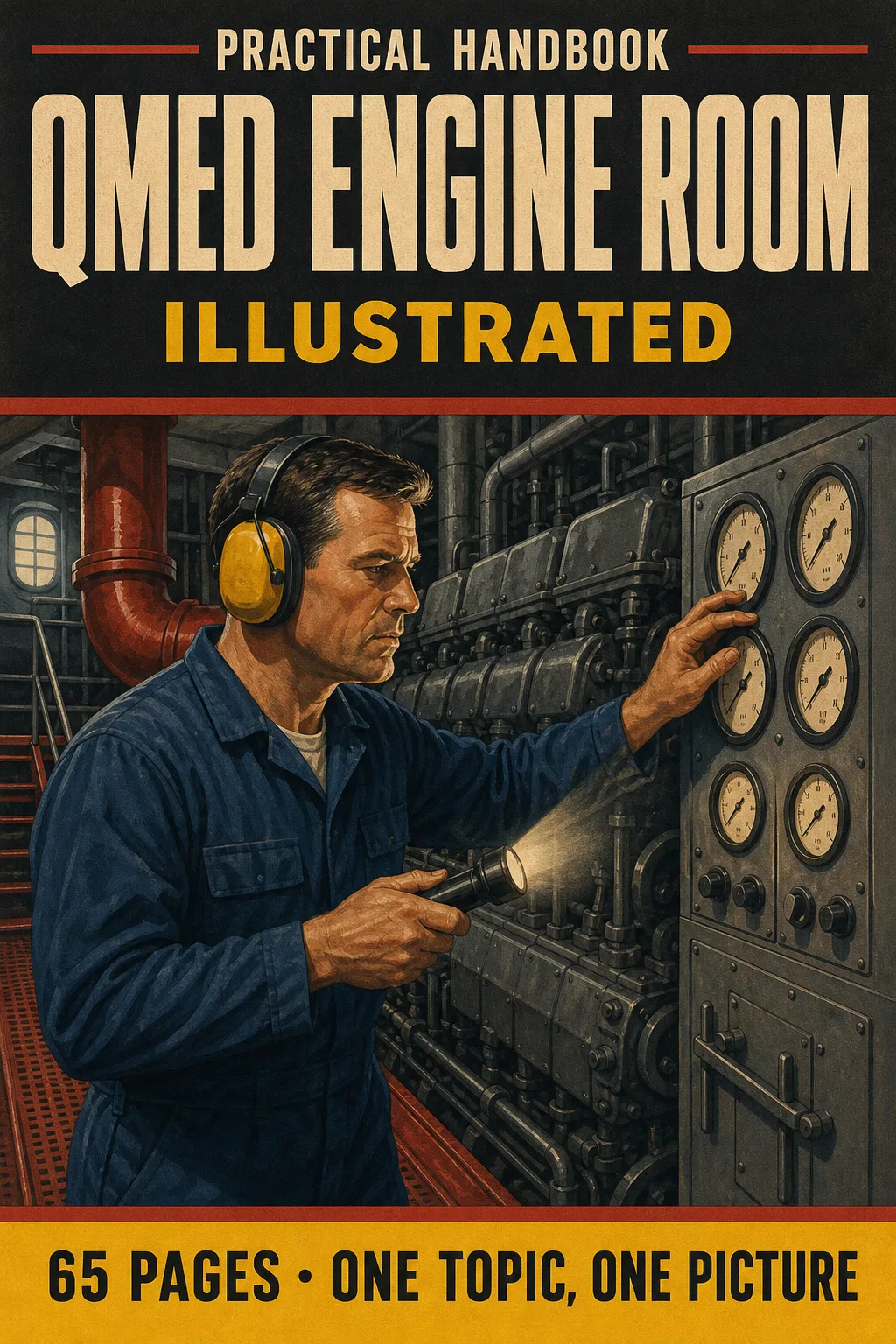
QMED Engine Room Illustrated

Digital book in PDF · read it on your phone or print it

QMED Engine Room Illustrated

Diesel cycles, fuel oil and purifiers, lube oil, jacket and sea water cooling, starting air, pumps and valves, the oily water separator and watchstanding. Every topic has its own page: the drawing first, then what you need to remember.

  • 65 illustrated pages
  • English
  • 30-day guarantee
US$ 27US$ 63
Get the book · US$ 27

Price shown for: United States. In other countries, the checkout shows the price that applies there.

About this book

What it is

Diesel cycles, fuel oil and purifiers, lube oil, jacket and sea water cooling, starting air, pumps and valves, the oily water separator and watchstanding. Every topic has its own page: the drawing first, then what you need to remember.

Who This Book Is For
  • You're putting in sea time as a wiper
  • Your QMED exam is coming up
  • You already stand watch as an oiler
What it covers
  1. The Engine Room Map
  2. The Diesel Engine
  3. Fuel Oil System
  4. Lube Oil and Cooling Water
  5. Starting Air, Pumps and Valves
  6. Boilers, Steam and Refrigeration
  7. Electrical
  8. Pollution Prevention and Safety
  9. Watchstanding and Exam Review
Language
English (United States)
Pages
65
Format
Digital book in PDF · read it on your phone or print it
Price
US$ 27 (United States)
Delivery
This is a digital PDF book sent to your email: nothing is printed or shipped.
30-Day Guarantee
30-day guarantee: if a file doesn't open, if the content isn't what the product page describes, if you were charged twice or the email never arrived, write to us and we'll refund you in full.

Look Inside the Book

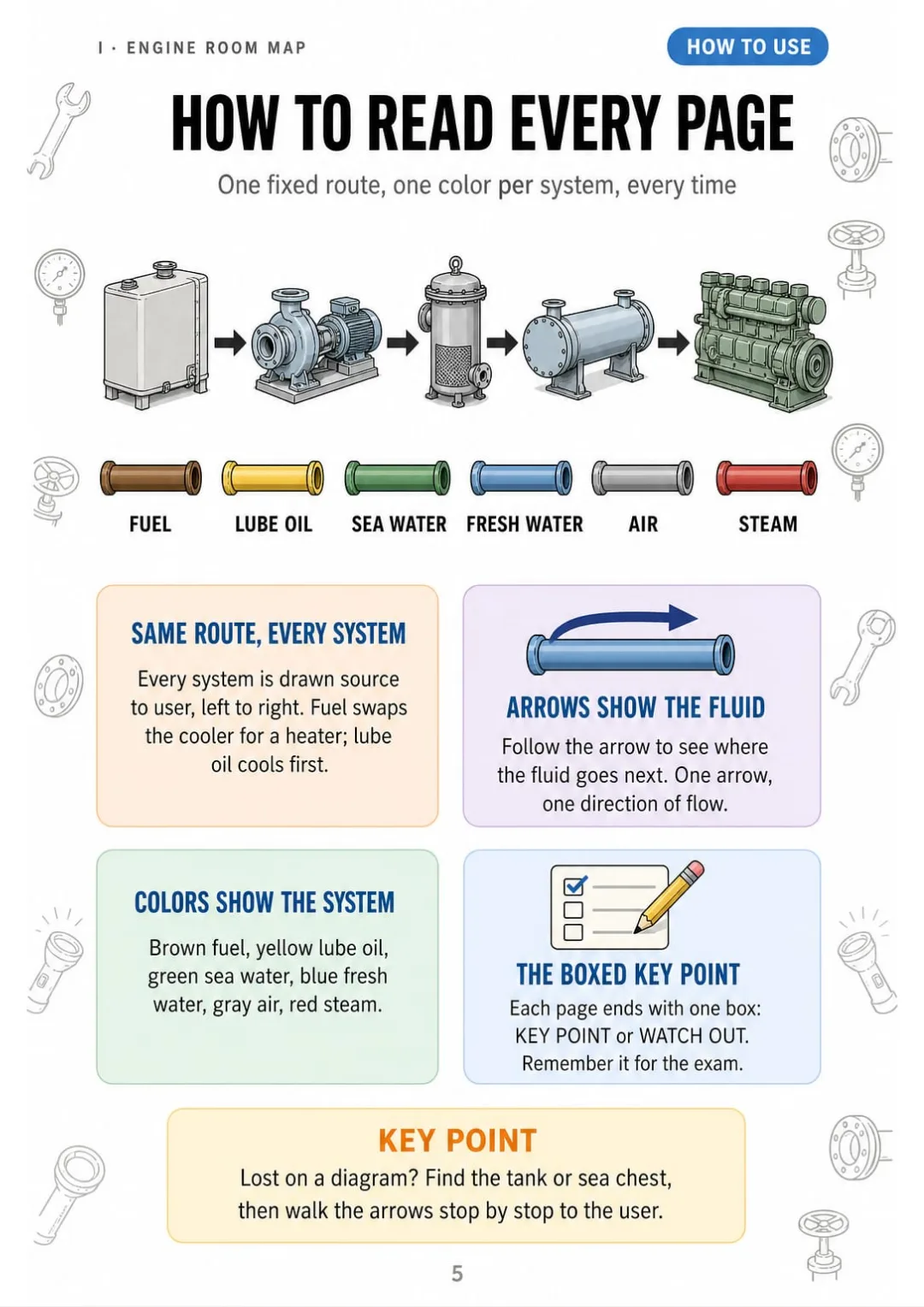
One fixed route and six colors: fuel brown, lube yellow, sea green, fresh blue, air gray, steam red
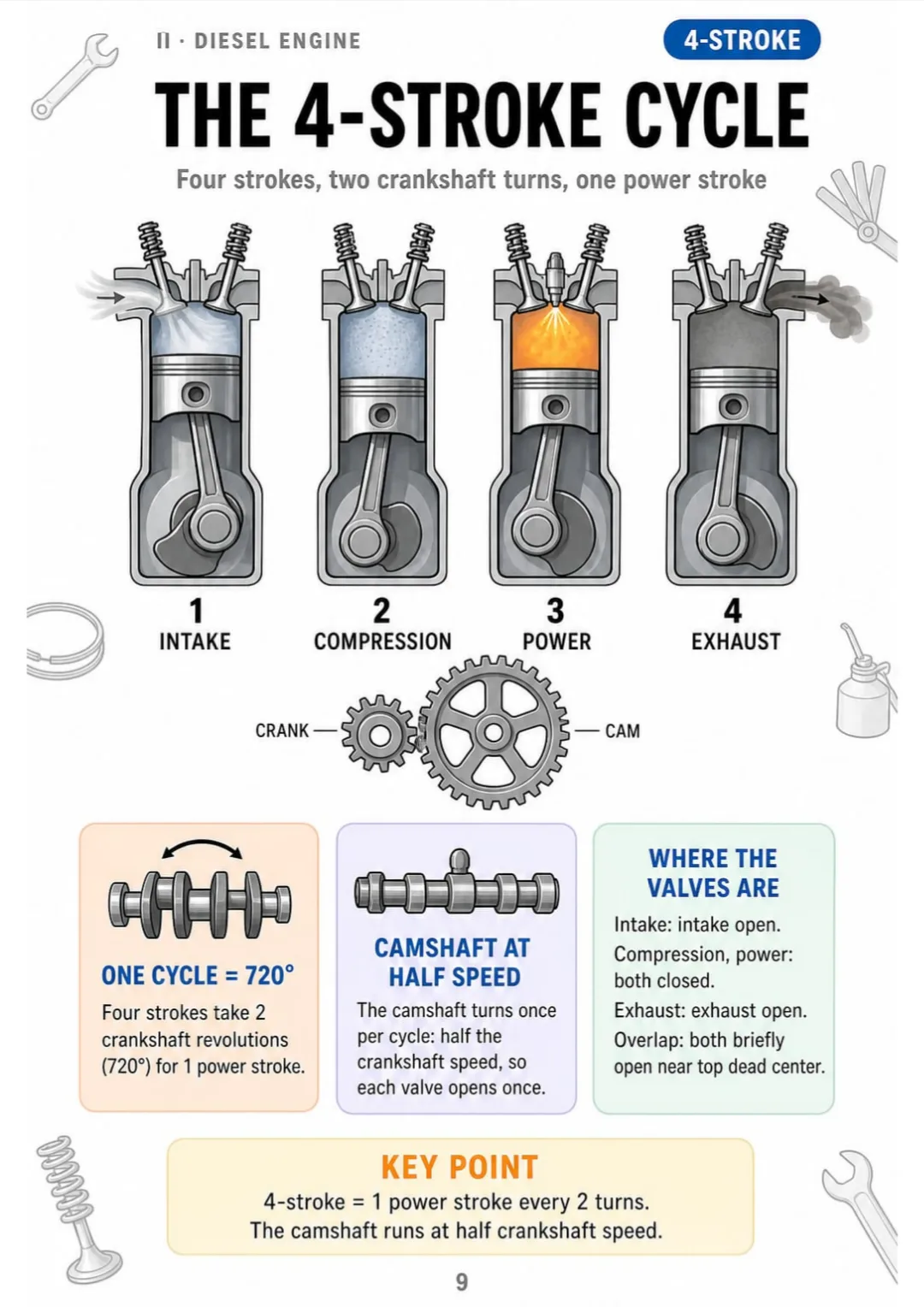
4-stroke: 1 power stroke every 2 crankshaft turns (720°), camshaft at half speed.
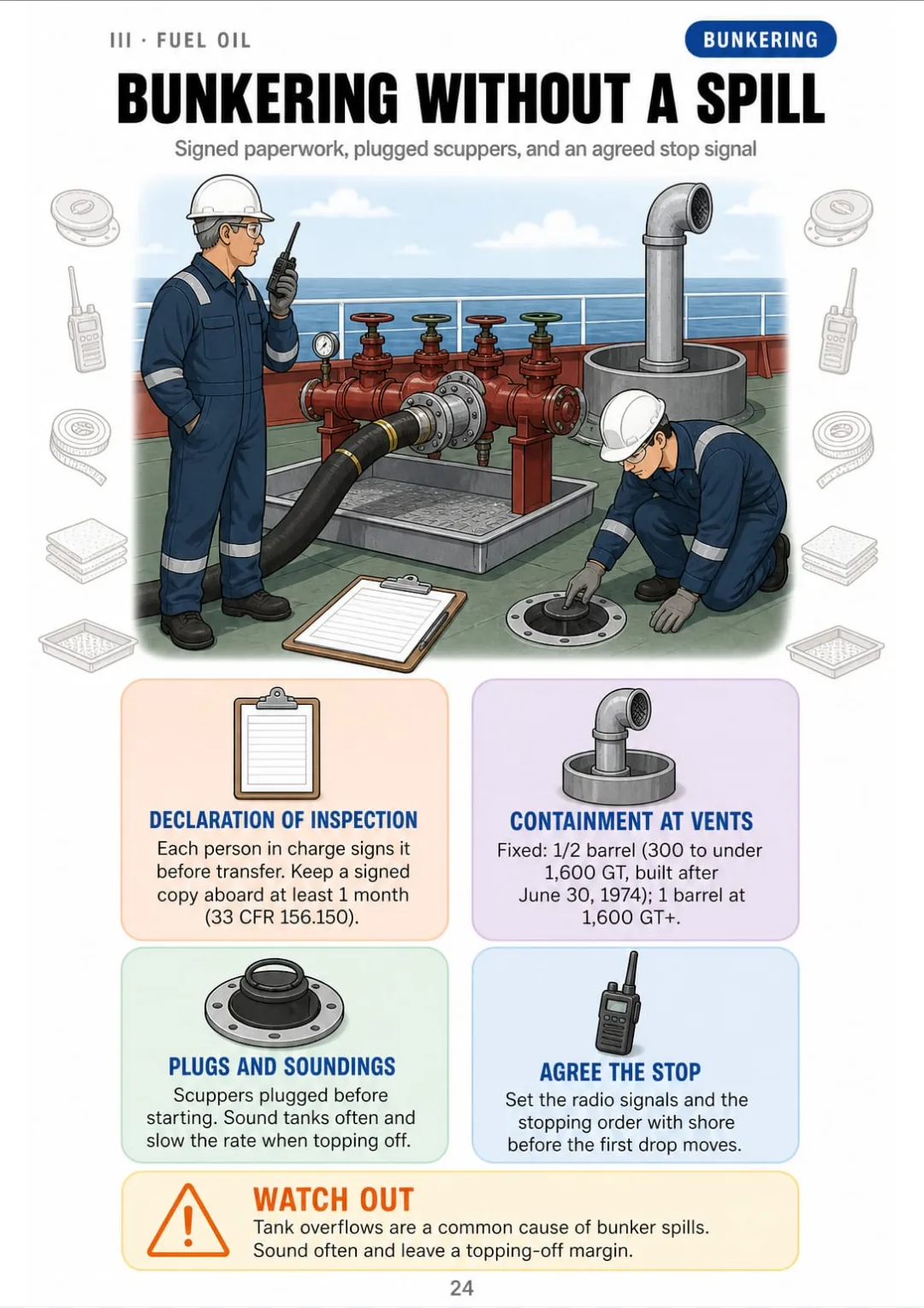
Signed Declaration of Inspection, plugged scuppers, vent containment by GT, agreed stop signal.
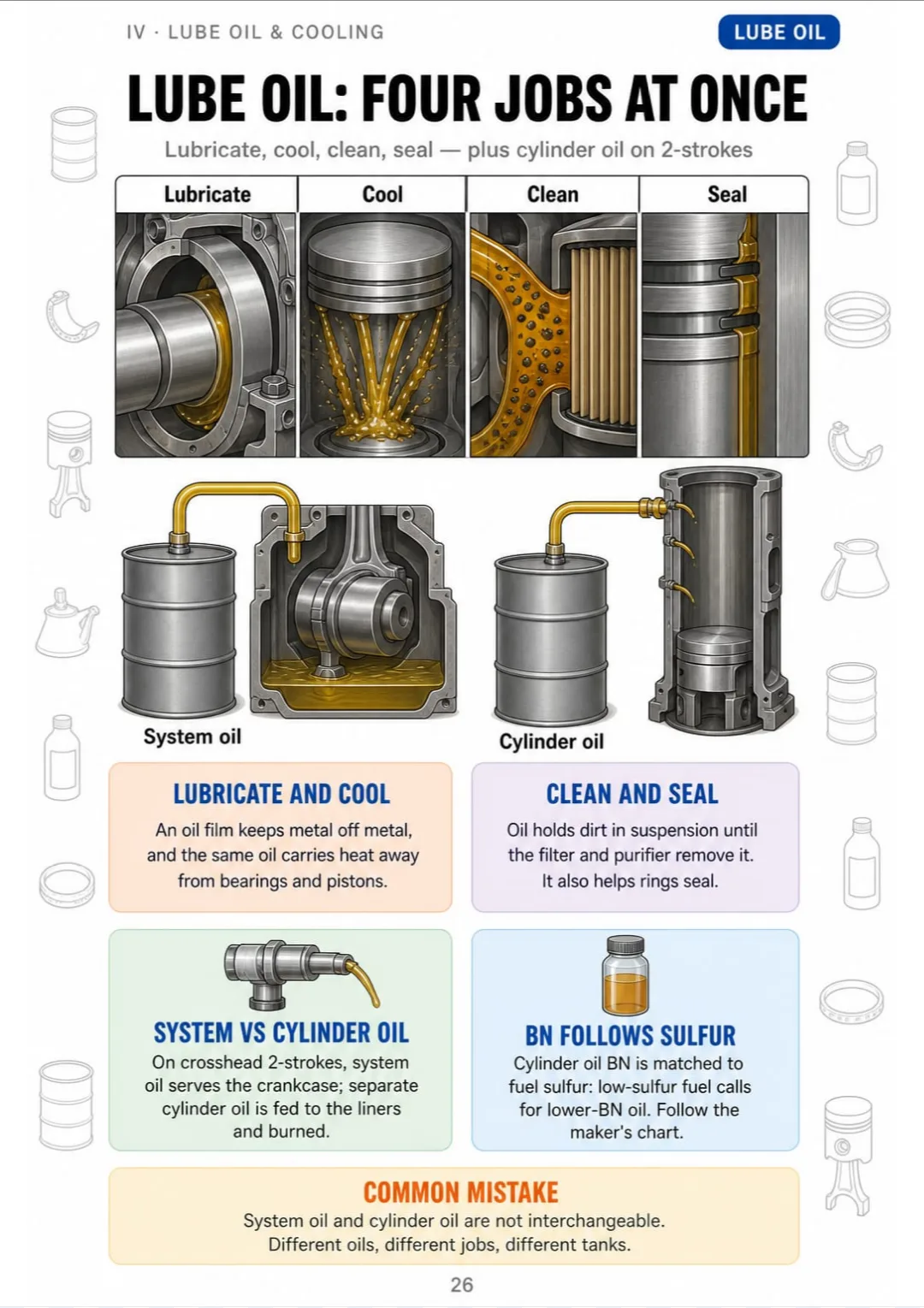
Lubricate, cool, clean, seal — and cylinder oil BN matched to the fuel's sulfur on 2-stroke engines.
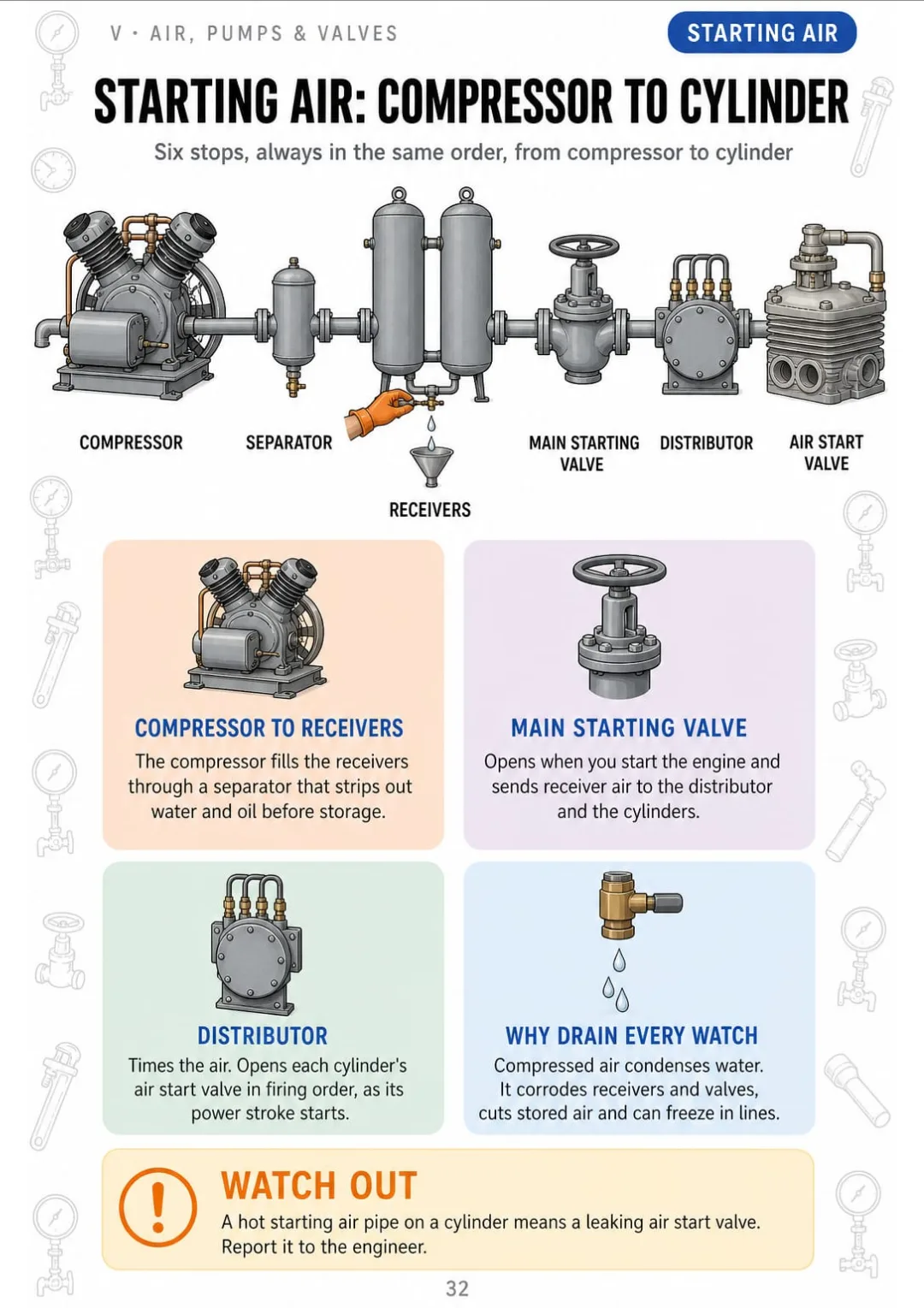
Compressor → separator → receivers → main valve → distributor → air start valve
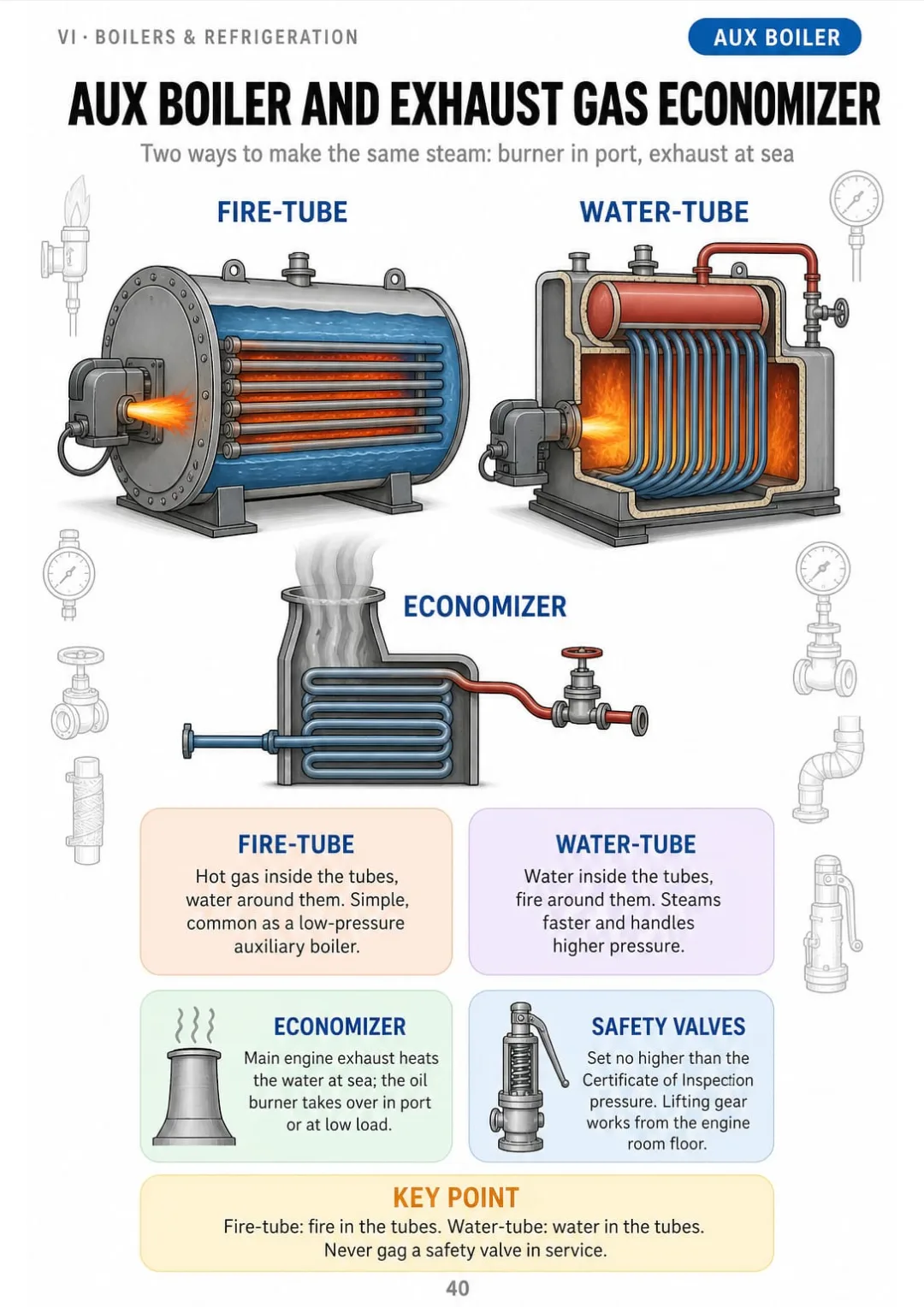
Fire-tube vs water-tube, the exhaust gas economizer, and the safety valve set to the COI pressure
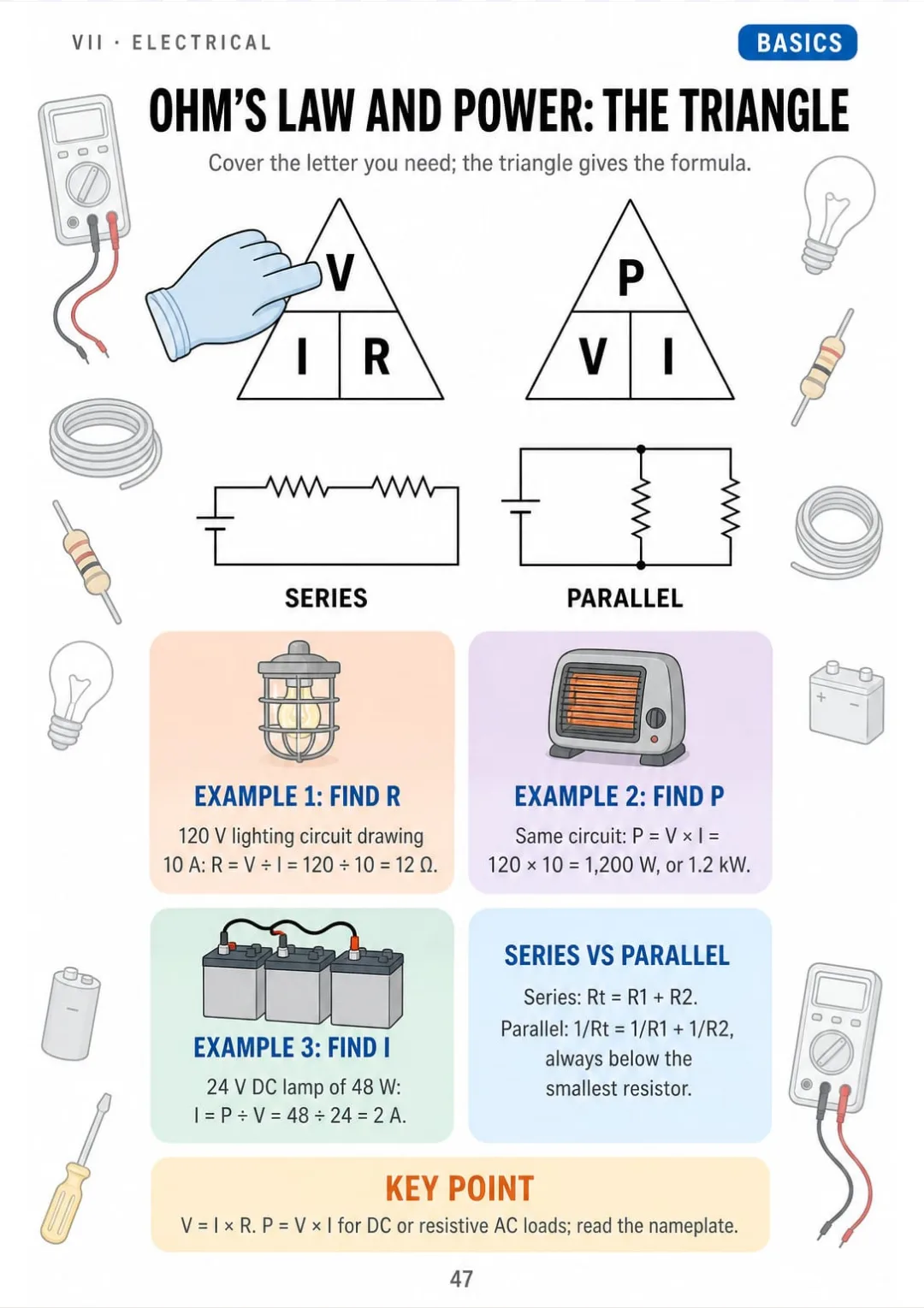
V = I × R, P = V × I: 120 V at 10 A = 12 Ω and 1,200 W.
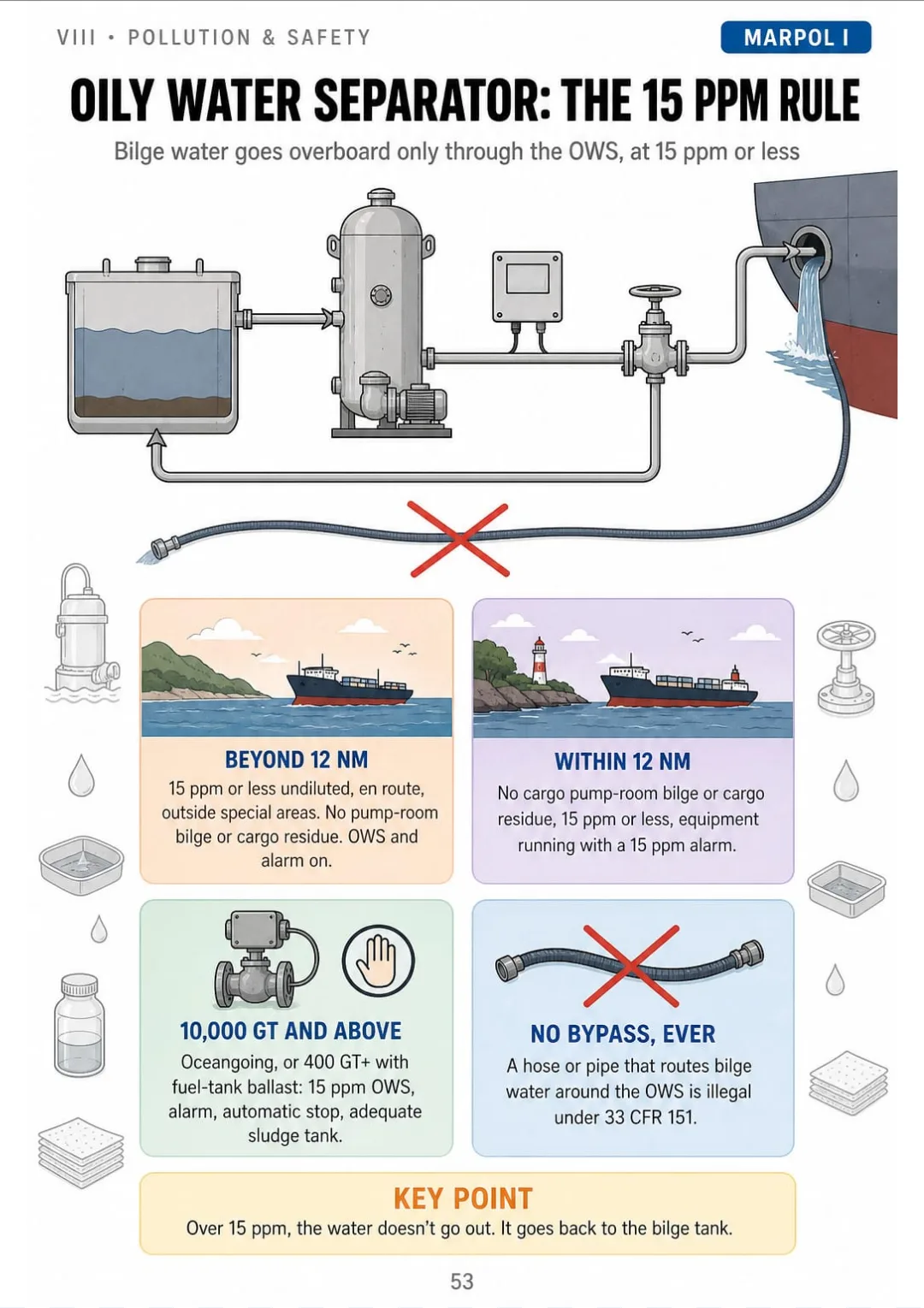
Bilge tank → OWS → 15 ppm monitor → overboard or recirculate (33 CFR 151.10)

Take a Look at the 9 Parts and 61 Topics

The Engine Room Map

pp. 5-8
  1. How to Read Every Page: Tank → Pump → Filter → Cooler → User
  2. Your QMED Ratings and the USCG Exam
  3. The Whole Engine Room on One Page
  4. Units You'll See on the Exam

The Diesel Engine

pp. 9-17
  1. The 4-Stroke Cycle: Intake, Compression, Power, Exhaust
  2. The 2-Stroke Cycle: One Power Stroke Every Turn
  3. Compression Ignition: Why a Diesel Needs No Spark Plug
  4. Engine Parts: From Crankshaft to Cylinder Head
  5. Fuel Injection: Pump, Injector and Timing
  6. Turbocharger and Scavenge Air
  7. Governor and Overspeed Trip
  8. Reading Exhaust Temperatures Cylinder by Cylinder
  9. Crankcase Safety: Oil Mist and Explosion Relief

Fuel Oil System

pp. 18-24
  1. Fuel Route: Bunker Tank to Injector
  2. Fuel Grades and Viscosity
  3. Settling and Service Tanks: Drain the Water
  4. Purifier vs Clarifier
  5. Purifier Start-Up and Shutdown Sequence
  6. Fuel Filters and Duplex Strainers
  7. Bunkering: Transfer Procedure and Spill Prevention

Lube Oil and Cooling Water

pp. 25-31
  1. Lube Oil Route: Sump to Bearings and Back
  2. What Lube Oil Does: Lubricate, Cool, Clean, Seal
  3. Low Lube Oil Pressure: What to Check, in Order
  4. Fresh Water (Jacket) Cooling Loop
  5. Sea Water Cooling: Sea Chest to Overboard
  6. Central Cooling and Heat Exchangers
  7. High Jacket Water Temperature: What to Check

Starting Air, Pumps and Valves

pp. 32-39
  1. Starting Air Route: Compressor to Cylinder
  2. Air Compressor Stages and Safety Valves
  3. Air Receivers: Relief Valve, Drain and Inspection
  4. Centrifugal vs Positive Displacement Pumps
  5. Priming a Centrifugal Pump That Won't Pick Up
  6. Packing vs Mechanical Seals
  7. Valve Types: Gate, Globe, Ball, Butterfly, Check
  8. Bilge vs Ballast System

Boilers, Steam and Refrigeration

pp. 40-46
  1. Auxiliary Boiler and Exhaust Gas Economizer
  2. Boiler Water Level: The Gauge Glass
  3. Boiler Water Treatment and Blowdown
  4. Steam Traps, Condensate and the Hot Well
  5. The Refrigeration Cycle in 4 Points
  6. Superheat, Subcooling and the TXV
  7. Refrigerants and EPA Rules on Board

Electrical

pp. 47-52
  1. Ohm's Law and Power: The Triangle
  2. AC Generators and Paralleling
  3. Main Switchboard and Breakers
  4. Emergency Generator and Emergency Power
  5. Motors, Starters and Insulation Testing
  6. Lockout/Tagout Before You Touch Anything

Pollution Prevention and Safety

pp. 53-59
  1. Oily Water Separator and the 15 ppm Rule
  2. Oil Record Book Part I: What Gets Logged
  3. Sewage, Garbage and Other Discharges
  4. Engine Room Fire: Triangle, Classes, Extinguishers
  5. Fixed CO2 System: Alarm, Evacuate, Release
  6. Remote Shut-Offs and Quick-Closing Valves
  7. Enclosed Space Entry

Watchstanding and Exam Review

pp. 60-65
  1. The Oiler's Round, Always in the Same Order
  2. Taking Over and Handing Over the Watch
  3. When to Call the Engineer
  4. Steering Gear: Checks and Emergency Steering
  5. The 10 Most Common Mix-Ups
  6. How to Read a USCG Multiple-Choice Question

Who This Book Is For

You're putting in sea time as a wiper

You put a name to every pump and valve you already see on your rounds, and see where each one fits, one system per page, in the order the fluid runs.

Your QMED exam is coming up

You review every system in the same order and test yourself with exam-style questions, so you know what you really know before exam day.

You already stand watch as an oiler

You keep the routes and the numbers at hand for your next rating, and you can answer the engineer without second-guessing yourself.

Plus: 2 Free Books

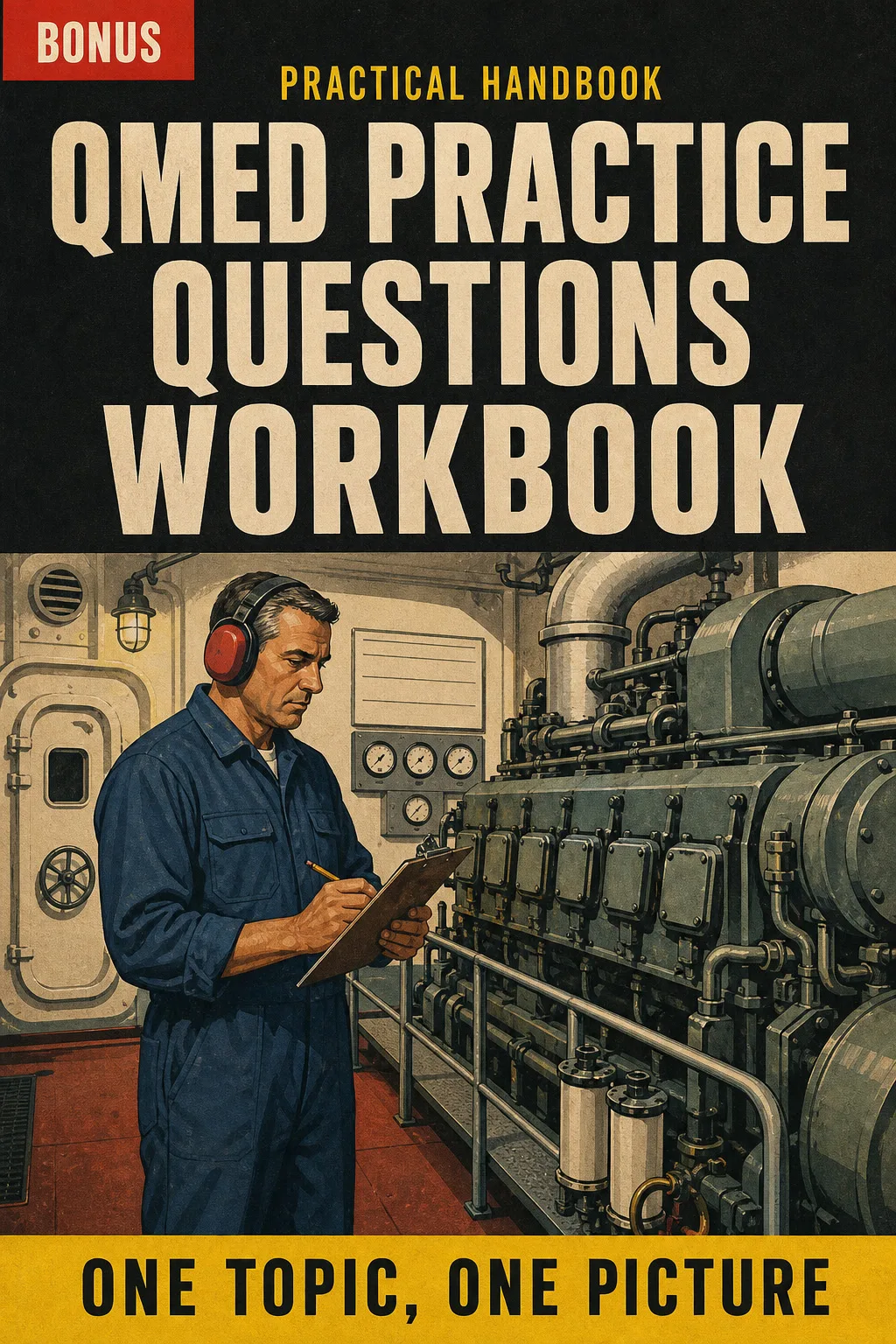
QMED Practice Questions Workbook
BONUS 1

QMED Practice Questions Workbook

Exam-style multiple-choice questions by system, each with the answer explained and the page of the book to go back to, so you find out what you really know before exam day.
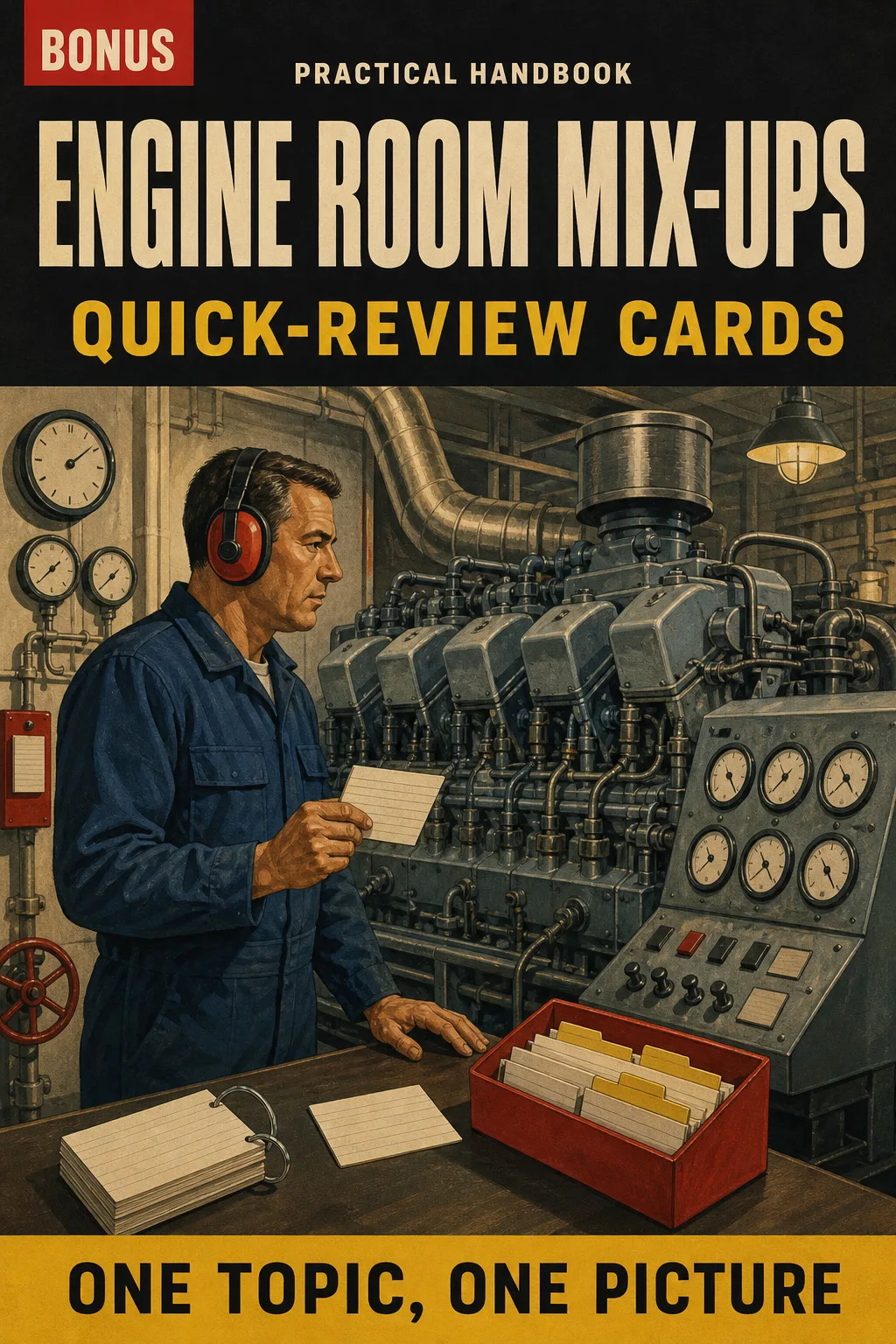
Engine Room Mix-Ups: Quick-Review Cards
BONUS 2

Engine Room Mix-Ups: Quick-Review Cards

The most common mix-ups (2-stroke vs 4-stroke, centrifugal vs positive displacement, purifier vs clarifier, bilge vs ballast) on printable one-glance cards to review between watches.

30-Day Guarantee

30-day guarantee: if a file doesn't open, if the content isn't what the product page describes, if you were charged twice or the email never arrived, write to us and we'll refund you in full. You pay once. No subscriptions.

Frequently Asked Questions

Is it for me if I've worked below deck for years and I'm going for my first QMED rating?

Yes. It doesn't explain what a wrench is: it starts from the engine room you already know and draws each system as a route. It covers the general engine topics the QMED ratings share (diesel, fuel, lube oil, cooling, starting air, pumps and valves, boilers, refrigeration, electrical, pollution prevention and watchstanding), with the most depth for Oiler and Junior Engineer. If you're going for Electrician or Refrigerating Engineer, it gives you the base, not the full specialty.

Where does the content come from?

From the USCG National Maritime Center QMED exam topics and the endorsement rules in 46 CFR Part 12, the oil pollution rules in 33 CFR Parts 151 and 155 (MARPOL Annex I), and 46 CFR Subchapters F, H and J. Every rule value on a page (the 15 ppm limit, the Oil Record Book, the fixed CO2 system) carries its CFR or MARPOL reference, so you can check it against the current text on eCFR.

Is it official material?

No. It's an independent study book. It isn't published, approved or endorsed by the U.S. Coast Guard, the NMC or any approved school, and it doesn't give you a certificate, sea time or course credit.

Does it replace an approved course or training?

No. It's a review tool to use alongside your course, your sea time and what the engineers teach you on board.

Are the practice questions the ones on the exam?

No. They're exam-style questions written for this book, each with the answer explained. They aren't official USCG questions.

When and how do I get it?

As a PDF by email, at the address you enter at checkout. The 2 bonus books come in the same email.

Do I have to pay every month?

No. It's a one-time payment. No subscription.

Can I have it on paper?

It's a PDF, not a printed book. It prints fine at home or at a print shop, best in color since every fluid has its own color, so you can keep a copy in your locker on board.

How does the refund work?

You have 30 days. We refund everything if the file won't open, if the book isn't what you see on this page, if you were charged twice or if the email doesn't arrive: just email us.

US$ 27US$ 63
Get the book · US$ 27

This is a digital PDF book sent to your email: nothing is printed or shipped.

More books on this topic

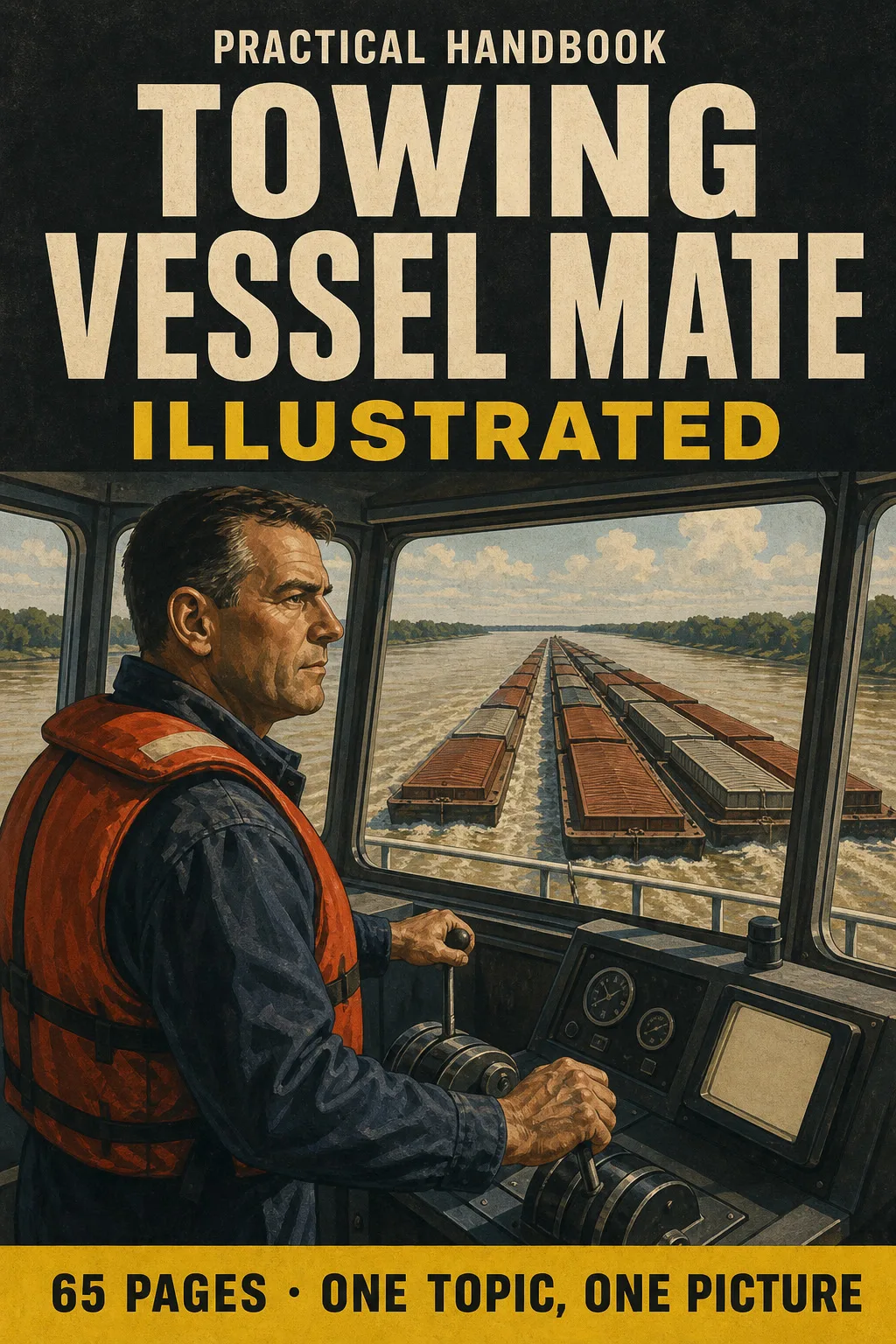
Towing Vessel Mate Illustrated

Towing vessel lights, day shapes, navigation rules, sound signals, tow rigging, locks and river charts, one topic per…

From US$ 27 US$ 63

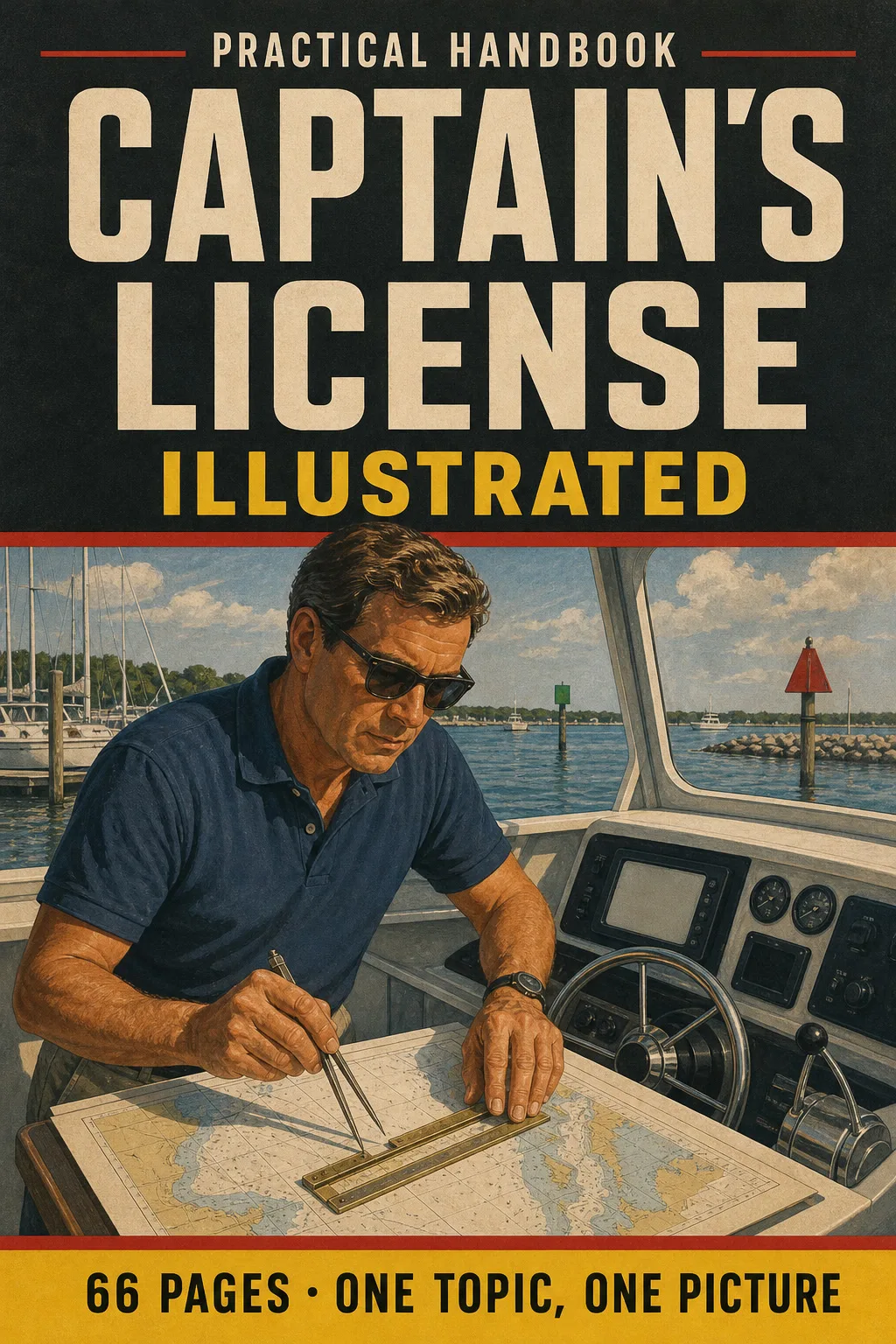
Captain's License Illustrated

An illustrated study book for the USCG OUPV (six-pack) and Master captain's license exams: Rules of the Road, lights…

From US$ 27 US$ 63

Boater Safety Exam Illustrated

The rules and safe habits covered in US boater education courses, one topic per page with a clear drawing: right of…

From US$ 27 US$ 63