Study in Pictures🌐 English (United Kingdom)
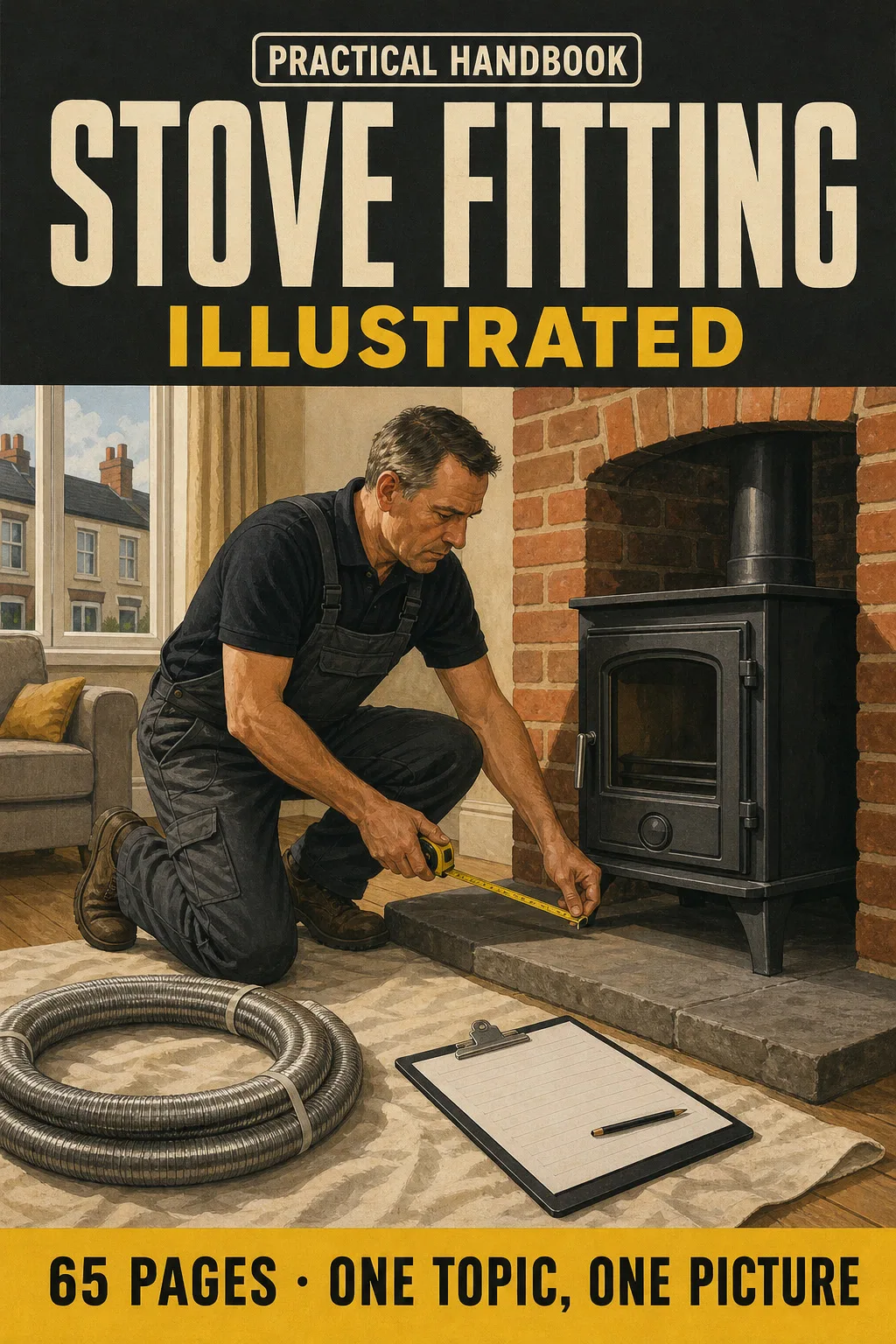
Stove Fitting Illustrated

Digital book in PDF · read it on your phone or print it

Stove Fitting Illustrated

For England and Wales. Hearths, clearances to combustibles, air supply, flue pipe and liners, register plates, twin-wall, terminals, CO alarms and commissioning. Every topic has its own page: the drawing first, then the numbers to have to hand.

  • 65 illustrated pages
  • English
  • 30-day guarantee
£19.99£57.99
Get the book · £19.99

Price shown for: United Kingdom. In other countries, the checkout shows the price that applies there.

About this book

What it is

For England and Wales. Hearths, clearances to combustibles, air supply, flue pipe and liners, register plates, twin-wall, terminals, CO alarms and commissioning. Every topic has its own page: the drawing first, then the numbers to have to hand.

Who This Book Is For
  • You're booked on a solid fuel installer course
  • You've got an install booked
  • You already fit stoves
What it covers
  1. How a Stove and Chimney Work Together
  2. Survey Before You Quote
  3. The Hearth
  4. Clearances to Combustibles
  5. Air Supply
  6. Flue Pipe, Liners and Register Plates
  7. Twin-Wall Systems and Terminals
  8. Commissioning and Handover
  9. On-Site Review: Faults, Mistakes and Checklist
Language
English (United Kingdom)
Pages
65
Format
Digital book in PDF · read it on your phone or print it
Price
£19.99 (United Kingdom)
Delivery
This is a digital PDF book sent to your email: nothing is printed or shipped.
30-Day Guarantee
30-day guarantee: if a file doesn't open, if the content isn't what the product page describes, if you were charged twice or the email never arrived, write to us and we'll refund you in full.

Look Inside the Book

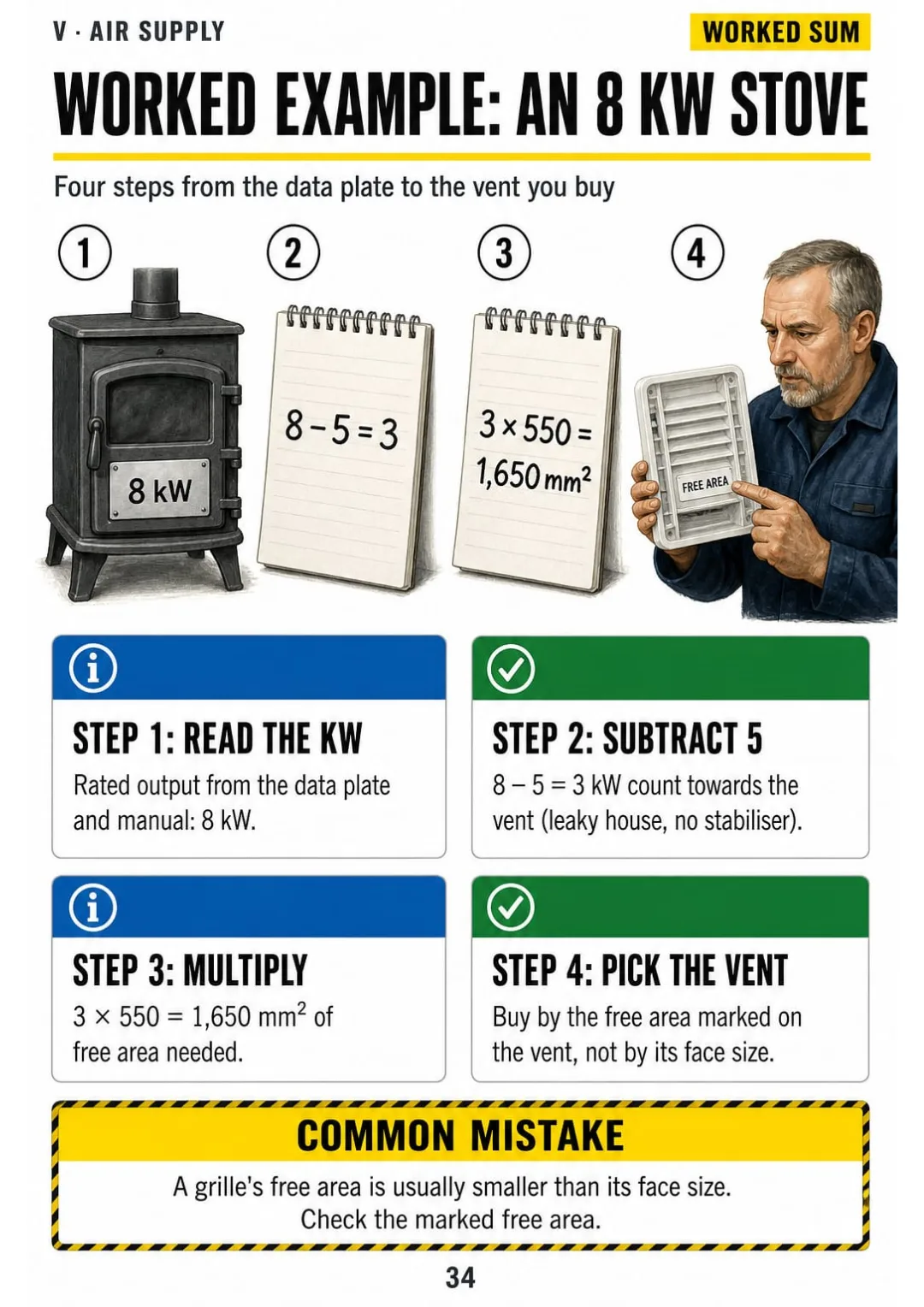
8 kW stove, leaky house: (8 − 5) × 550 = 1,650 mm² free area.
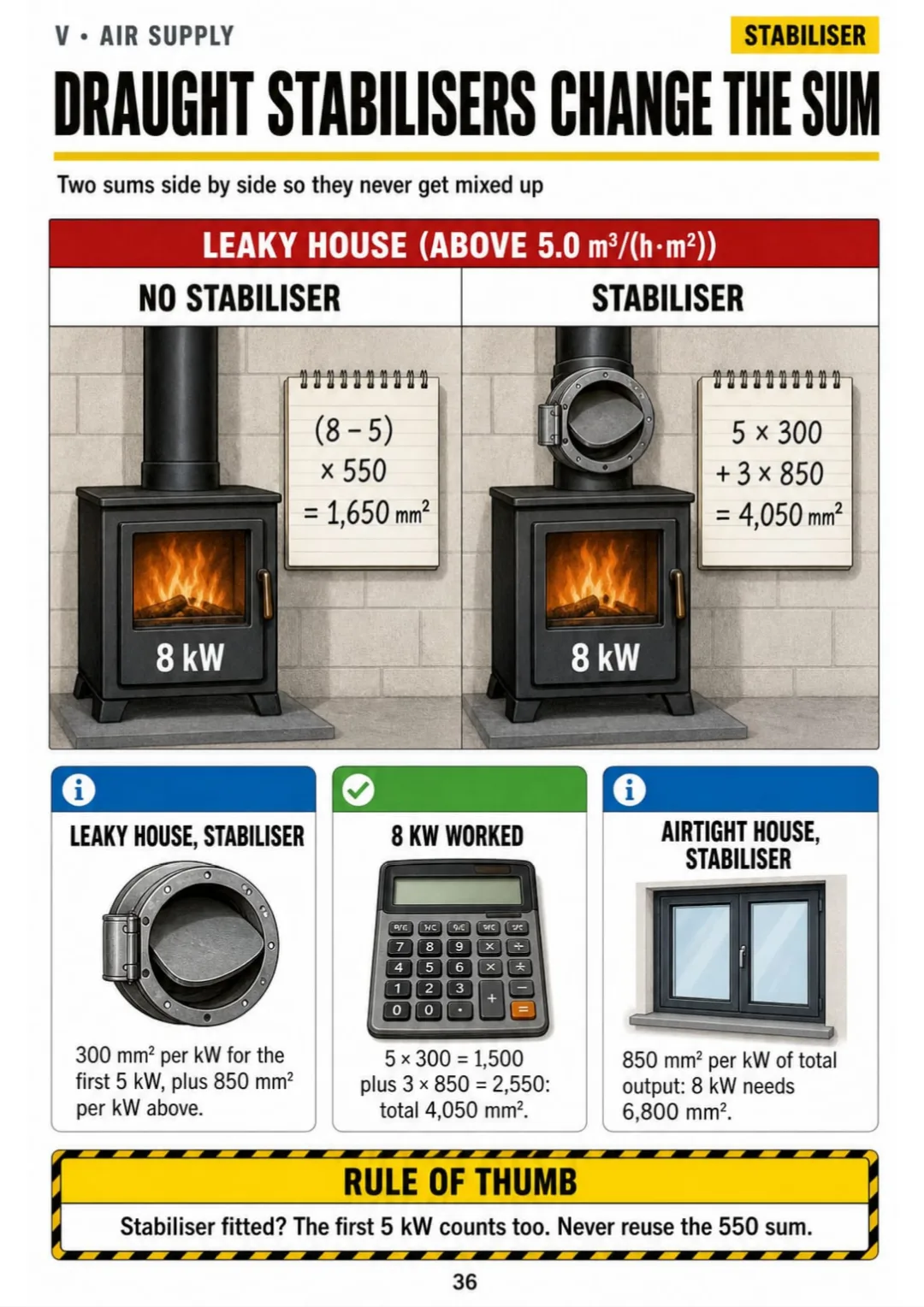
Leaky house, with stabiliser, 8 kW: 5 × 300 + 3 × 850 = 4,050 mm².
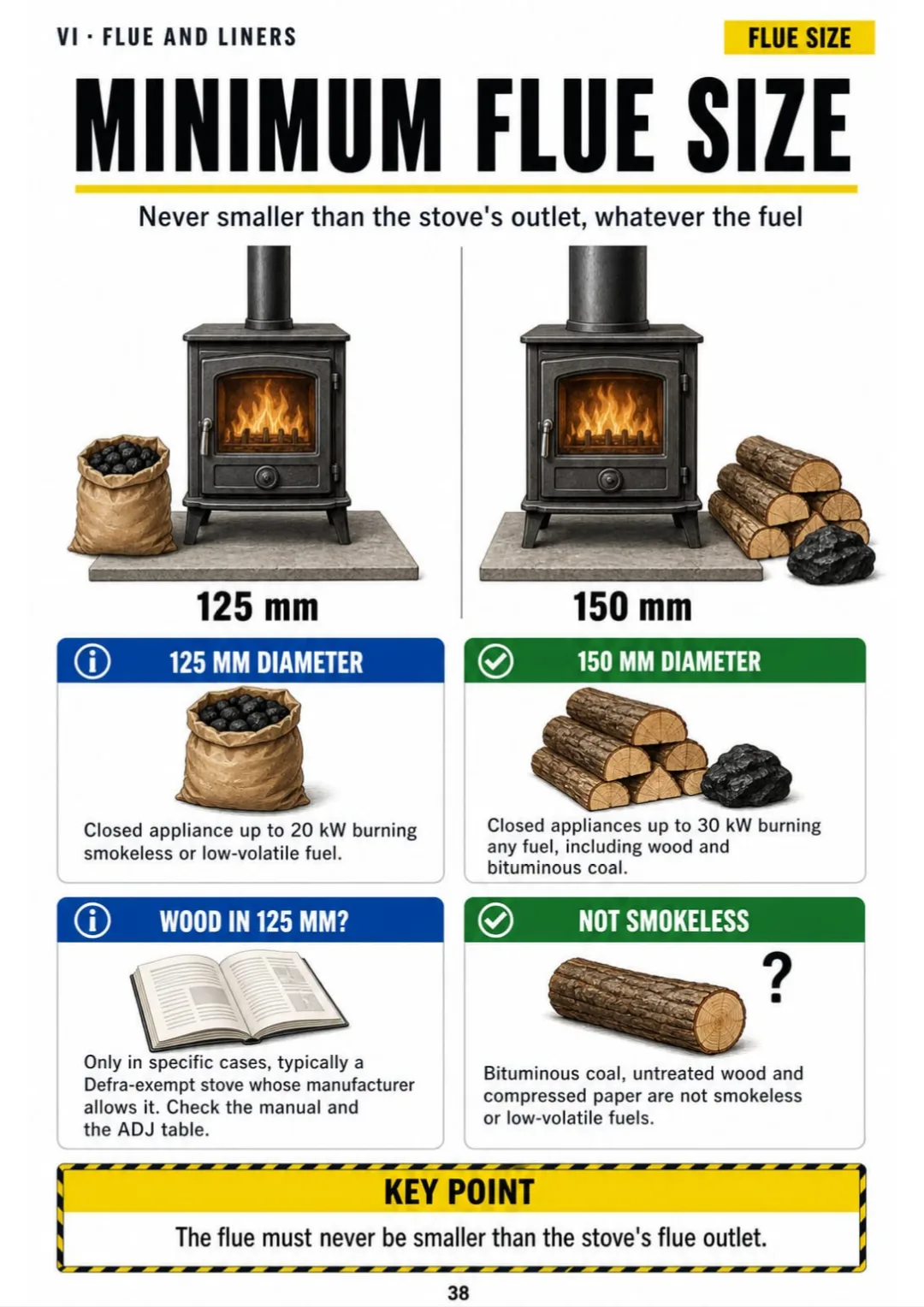
125 mm for smokeless fuel up to 20 kW, 150 mm for any fuel up to 30 kW
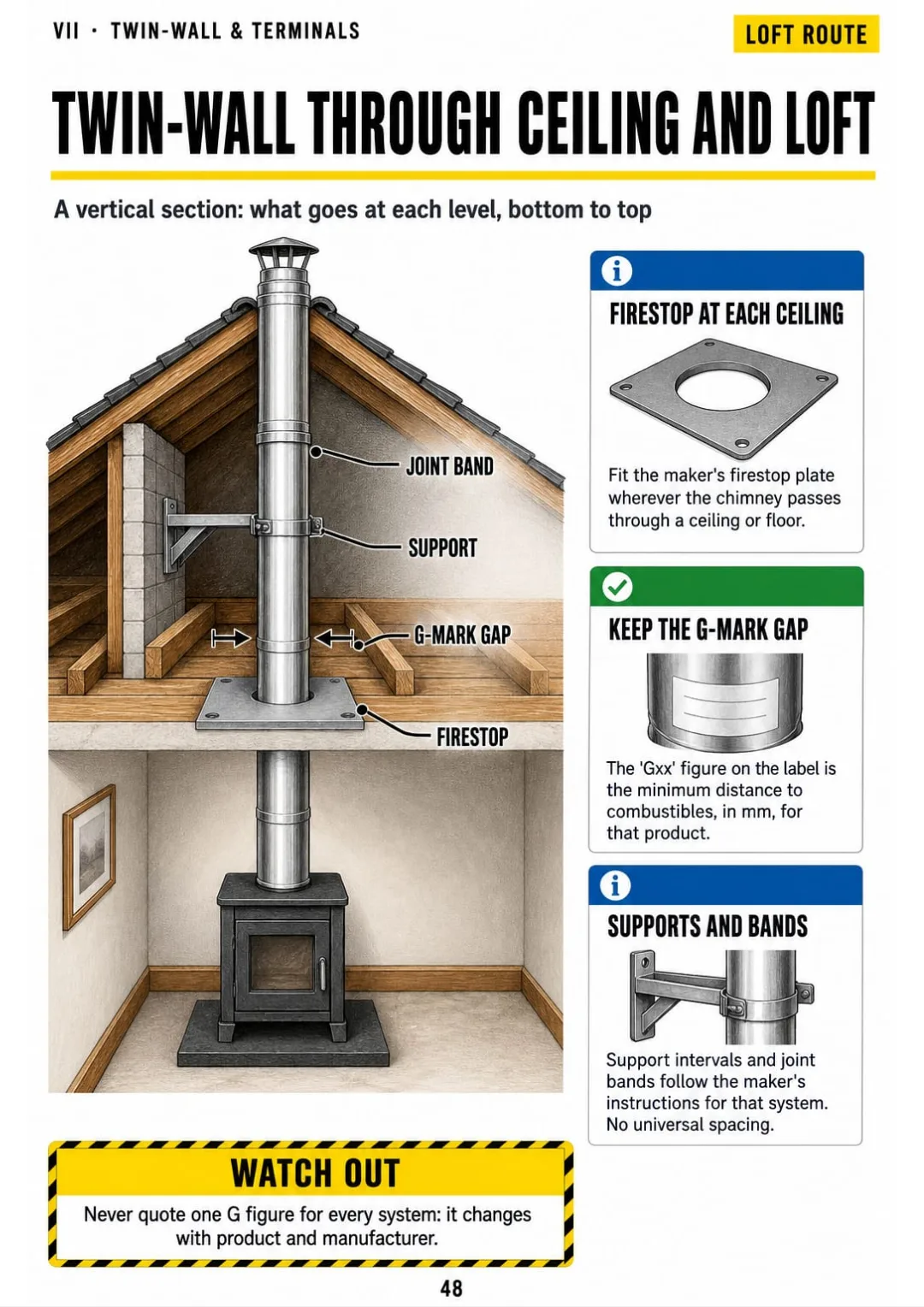
Firestop at each ceiling, G-mark gap all round, supports to the manual.
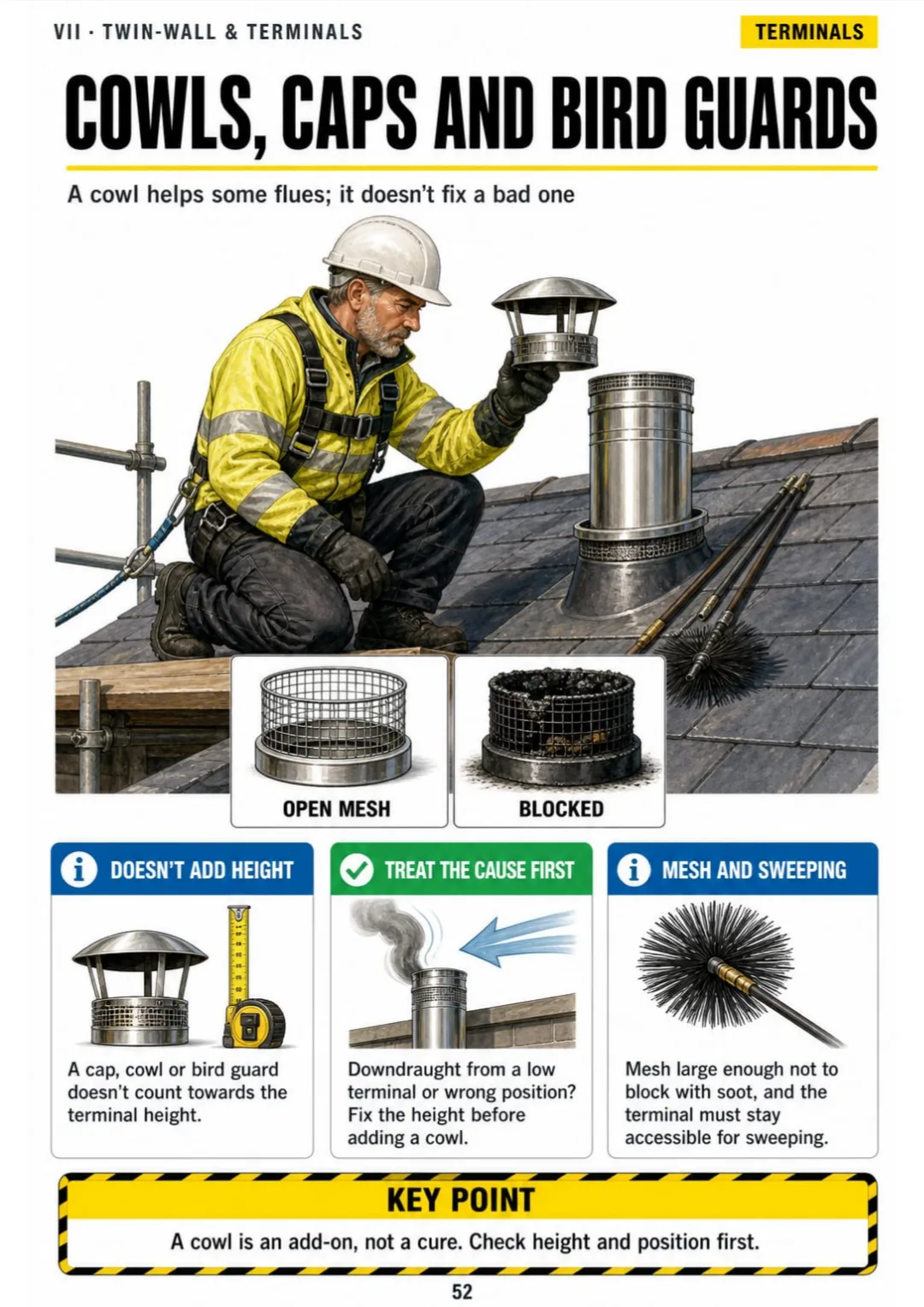
Cowls don't count towards height and mustn't block sweeping.
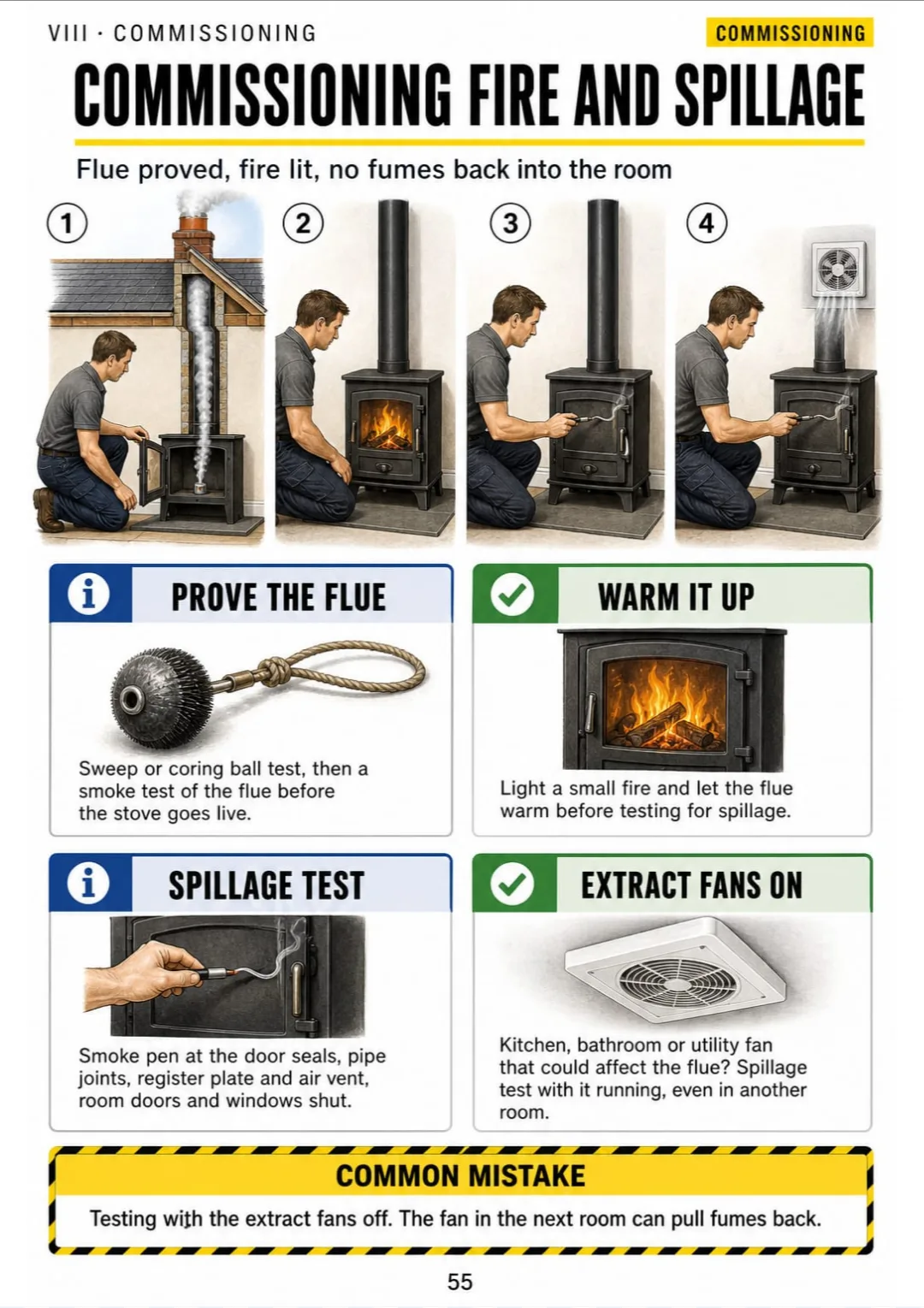
Commissioning: sweep or coring ball, smoke test, spillage test on a warm flue
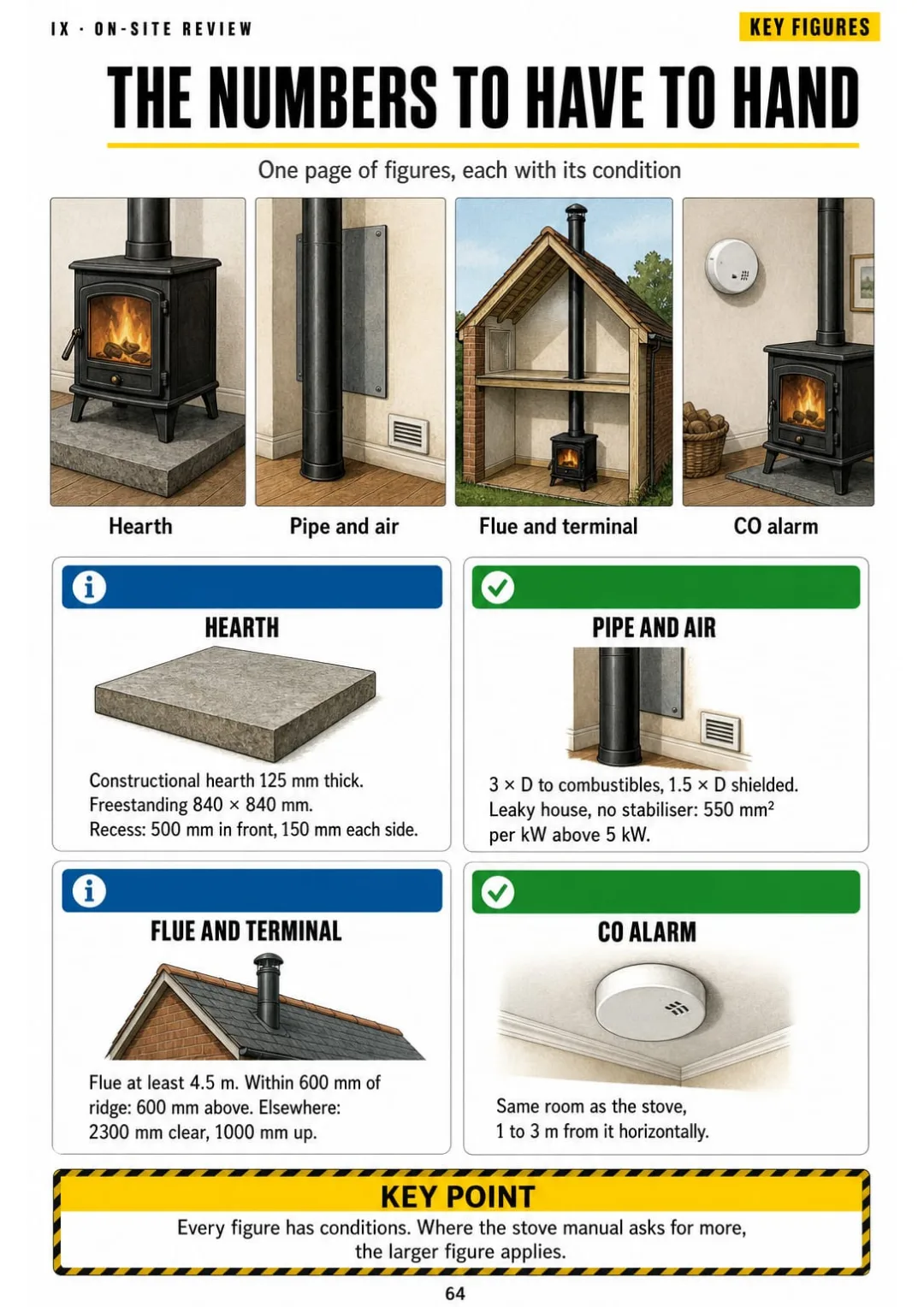
125 mm, 840 × 840 mm, 3 × D, 550 mm² per kW, 4.5 m, 600 mm, 1–3 m
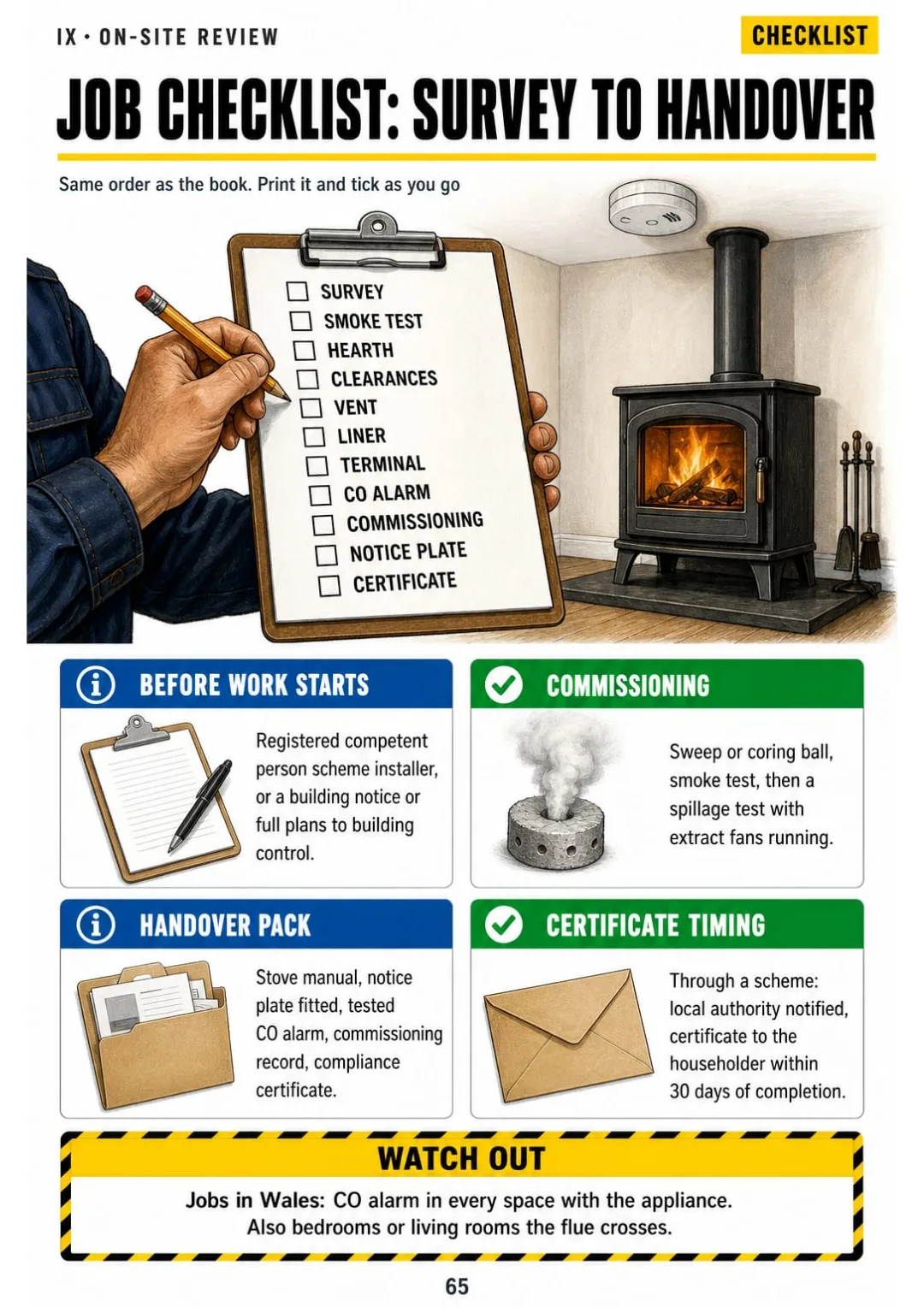
A tick-box list: smoke test, hearth, vent, liner, terminal, CO alarm, notice plate, certificate

Take a Look at the 9 Parts and 61 Topics

How a Stove and Chimney Work Together

pp. 5-10
  1. One System, Not Two Parts
  2. What Draught Really Is
  3. Closed Appliance vs Open Fire
  4. Wood, Multi-Fuel and Smokeless Fuel
  5. Rated Output and Why Every Sum Starts There
  6. The Job in the Same Order Every Time

Survey Before You Quote

pp. 11-17
  1. What Approved Document J Covers
  2. Notifying the Work
  3. Smoke Control Areas
  4. Ecodesign and Ready to Burn
  5. Inspecting an Existing Chimney
  6. The Smoke Pellet Test on the Old Flue
  7. Measuring the Room and Fireplace

The Hearth

pp. 18-24
  1. Constructional vs Superimposed Hearth
  2. Hearth Size for a Freestanding Stove
  3. Hearth Inside a Fireplace Recess
  4. Space Around the Stove on the Hearth
  5. When a 12 mm Hearth Is Enough
  6. Timber Floors Under the Hearth
  7. Marking the Hearth Edge

Clearances to Combustibles

pp. 25-31
  1. Manufacturer's Clearances Come First
  2. Walls Next to the Hearth
  3. The Single-Wall Pipe Rule: 3 × Diameter
  4. Shields Cut the Distance to 1.5 × Diameter
  5. The Oak Beam Over the Fireplace
  6. Masonry Chimney: 200 mm or 40 mm
  7. Twin-Wall Clearance Markings

Air Supply

pp. 32-37
  1. Why a Stove Needs Air From Outside
  2. The 5 kW Rule and 550 mm² per kW
  3. Worked Example: an 8 kW Stove
  4. Airtight Houses and New Builds
  5. Draught Stabilisers Change the Sum
  6. Where the Vent Goes

Flue Pipe, Liners and Register Plates

pp. 38-46
  1. Minimum Flue Size
  2. Flue Height: at Least 4.5 m
  3. Bends and Horizontal Runs
  4. Connecting Pipe Rules
  5. Choosing a Flexible Liner
  6. Fitting the Liner in Stages
  7. The Register Plate
  8. Rear vs Top Outlet
  9. Masonry Flue Without a Liner

Twin-Wall Systems and Terminals

pp. 47-52
  1. When to Use an Insulated Twin-Wall Chimney
  2. Through the Ceiling and Loft
  3. Terminal Height Near the Ridge
  4. Terminal Height on a Roof Slope
  5. Windows, Roof Lights and Neighbours
  6. Cowls, Caps and Bird Guards

Commissioning and Handover

pp. 53-59
  1. The CO Alarm Rule
  2. Where the CO Alarm Goes
  3. Commissioning Fire and Spillage Check
  4. Measuring Draught
  5. The Notice Plate
  6. What the Customer Must Be Left With
  7. Talking the Customer Through the First Burn

On-Site Review: Faults, Mistakes and Checklist

pp. 60-65
  1. Smoke Into the Room: Where to Start
  2. Poor Draught on a Warm Flue
  3. Tar, Creosote and Glass Blackening
  4. The Mistakes Seen Most Often
  5. The Numbers to Have to Hand
  6. Job Checklist From Survey to Handover

Who This Book Is For

You're booked on a solid fuel installer course

Sweep or builder, you arrive with the whole install already in one order, survey to handover, each step drawn on its own page.

You've got an install booked

Before the job you check the hearth size, the vent sum and the terminal height at a glance, and turn up with the numbers to hand.

You already fit stoves

You keep it printed in the van: when the spillage test fails or the customer asks why, you open the page and show them.

Plus: 2 Free Books

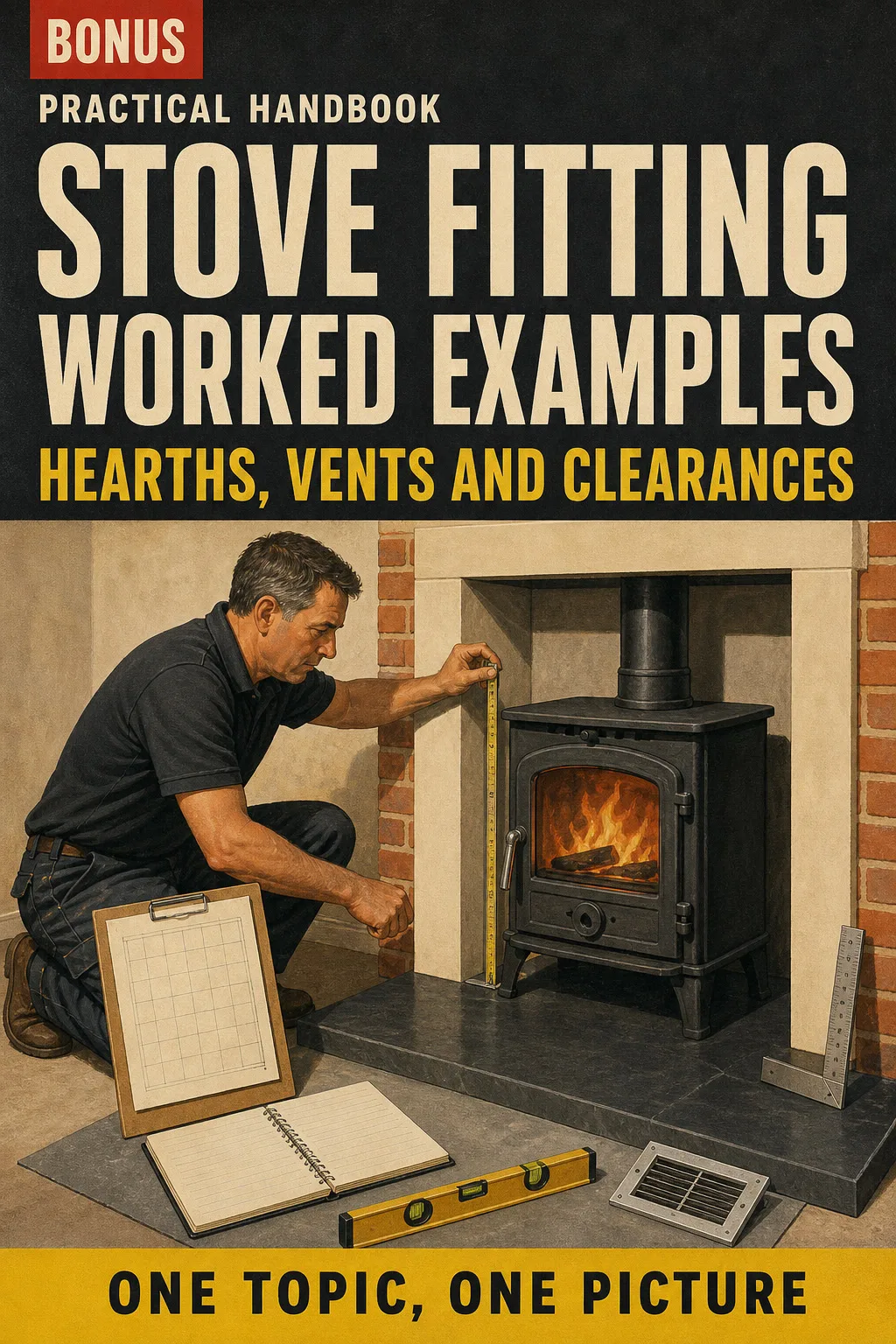
Stove Fitting Worked Examples: Hearths, Vents and Clearances
BONUS 1

Stove Fitting Worked Examples: Hearths, Vents and Clearances

Practise the sums you do on every job — hearth size, vent size, distances to combustibles — on real-style rooms, with the answer drawn on the next page.
15 Stove Fitting Mistakes, Before and After
BONUS 2

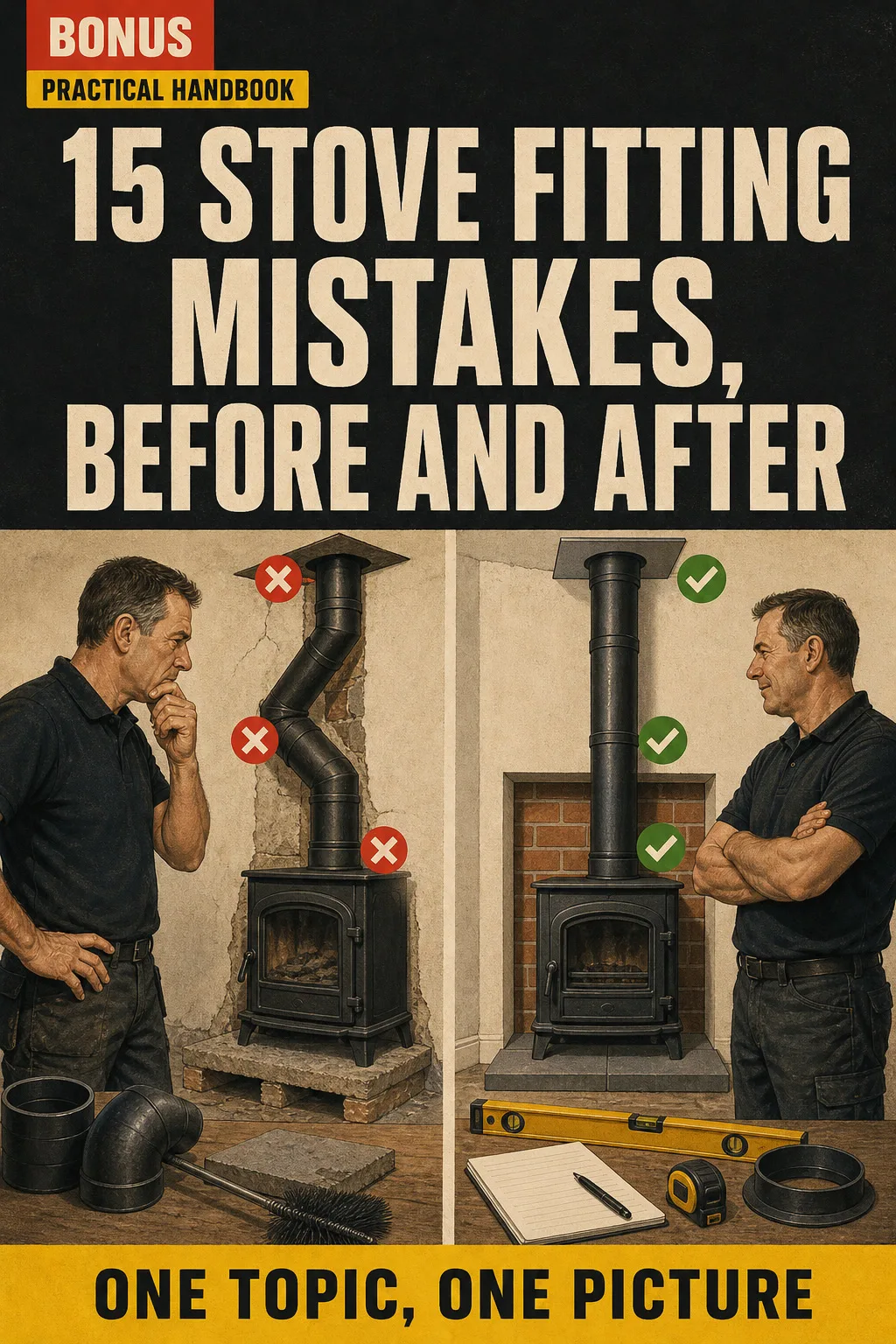
15 Stove Fitting Mistakes, Before and After

See the 15 most common installation mistakes drawn wrong and then right, so you spot them before the customer or the inspector does.

30-Day Guarantee

30-day guarantee: if a file doesn't open, if the content isn't what the product page describes, if you were charged twice or the email never arrived, write to us and we'll refund you in full. You pay once. No subscriptions.

Frequently Asked Questions

Is it for me if I've been fitting stoves for years?

Yes. It isn't a beginner's course: it puts the whole job in one order with the numbers drawn, so you find the hearth, vent or terminal rule at a glance and can show it to the customer. It suits sweeps and builders taking on installs too.

Where does the content come from?

From the Approved Document J in force in England and the Welsh Approved Document J, BS EN 15287-1 for chimneys, BS EN 50291-1 for CO alarms, Defra smoke control area guidance and the Ecodesign rules for stoves sold since January 2022. Distances to combustibles always defer to the manufacturer's instructions. It's written for England and Wales only: Scotland and Northern Ireland have their own regulations, so it isn't meant for jobs there.

Is it official material?

No. It's an independent illustrated guide, not published or endorsed by any government department, standards body or competent person scheme. It doesn't give you a certificate or a qualification, and it doesn't let you self-certify work.

Does it replace training or a competent person scheme?

No. It's a reference to study and keep in the van. It doesn't replace training, the manufacturer's instructions or notifying the work through building control or a competent person scheme.

Are the practice examples taken from an official assessment?

No. The worked examples and the mistakes are written for this book. They aren't questions from any official assessment.

When and how do I get it?

The book and the 2 bonus books arrive in PDF by email, at the address you enter at checkout.

Do I have to pay every month?

No. It's a one-off payment, with no subscription.

Can I have it on paper?

Yes. The PDF prints on A4 at home or at a print shop, so you can keep it in the van.

How does the refund work?

You have 30 days. We refund everything if the file won't open, if the book isn't what you see on this page, if you were charged twice or if the email doesn't arrive: just email us.

£19.99£57.99
Get the book · £19.99

This is a digital PDF book sent to your email: nothing is printed or shipped.