Study in Pictures🌐 English (United Kingdom)
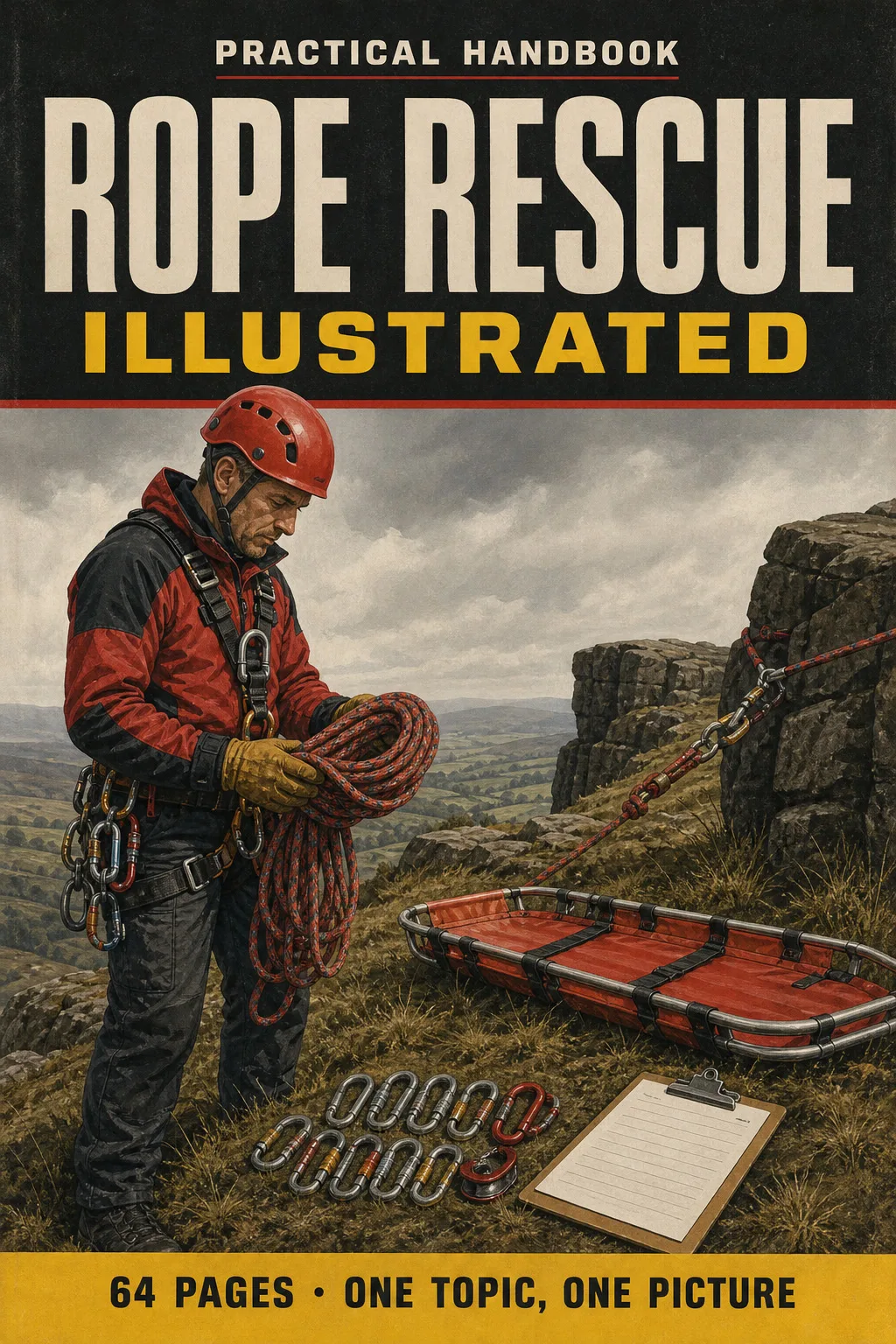
Rope Rescue Illustrated

Digital book in PDF · read it on your phone or print it

Rope Rescue Illustrated

For rescuers who've done the training: knots, anchors, main and backup lines, lowers, the 3:1 and 5:1, the lower-to-raise changeover, pick-offs and stretcher rigging. Every topic has its own page: the drawing first, then what you need to remember.

  • 64 illustrated pages
  • English
  • 30-day guarantee
£19.99£57.99
Get the book · £19.99

Price shown for: United Kingdom. In other countries, the checkout shows the price that applies there.

About this book

What it is

For rescuers who've done the training: knots, anchors, main and backup lines, lowers, the 3:1 and 5:1, the lower-to-raise changeover, pick-offs and stretcher rigging. Every topic has its own page: the drawing first, then what you need to remember.

Who This Book Is For
  • You train every few weeks
  • Your assessment or a big exercise is coming
  • You already work at height
What it covers
  1. Before the Edge: Kit and Rules
  2. Knots and Hitches
  3. Anchors
  4. Lowering and Belay
  5. Mechanical Advantage
  6. Changeovers and Edges
  7. Pick-offs and Stretchers
  8. Revision: Errors and Checks
Language
English (United Kingdom)
Pages
64
Format
Digital book in PDF · read it on your phone or print it
Price
£19.99 (United Kingdom)
Delivery
This is a digital PDF book sent to your email: nothing is printed or shipped.
30-Day Guarantee
30-day guarantee: if a file doesn't open, if the content isn't what the product page describes, if you were charged twice or the email never arrived, write to us and we'll refund you in full.

Look Inside the Book

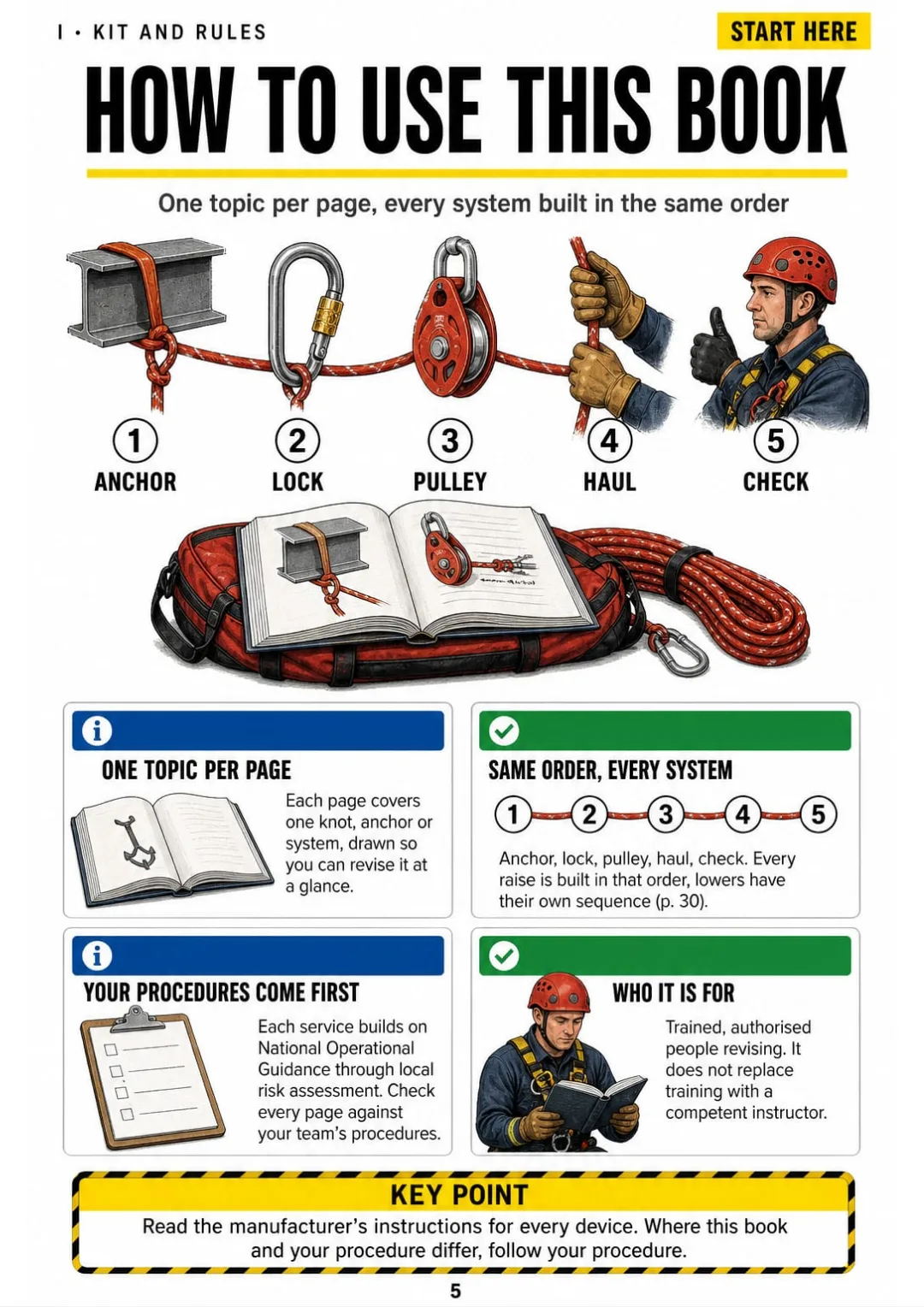
Anchor → lock → pulley → haul → check: the same order on every page
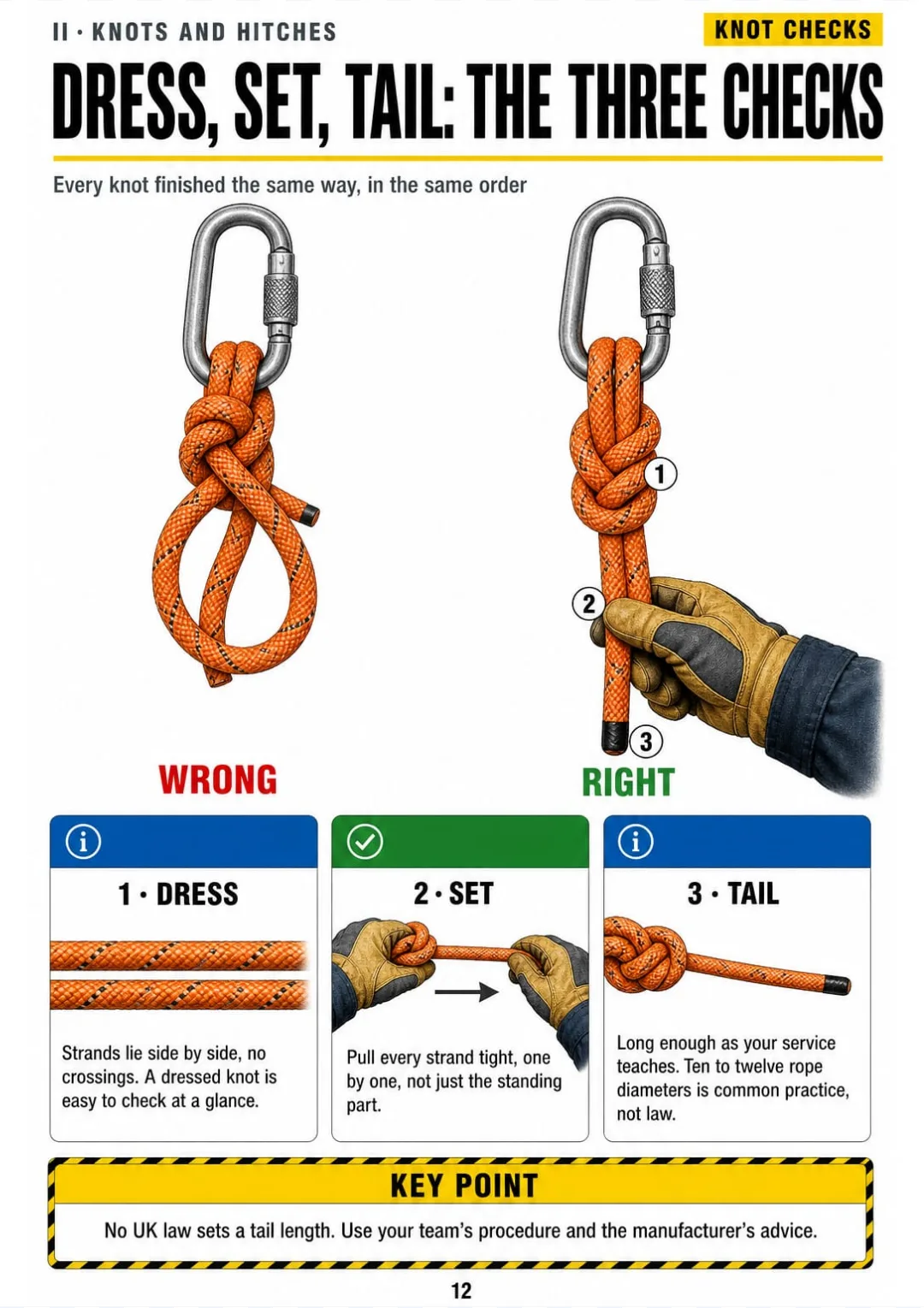
Every knot is finished by dressing it, setting it and checking the tail.
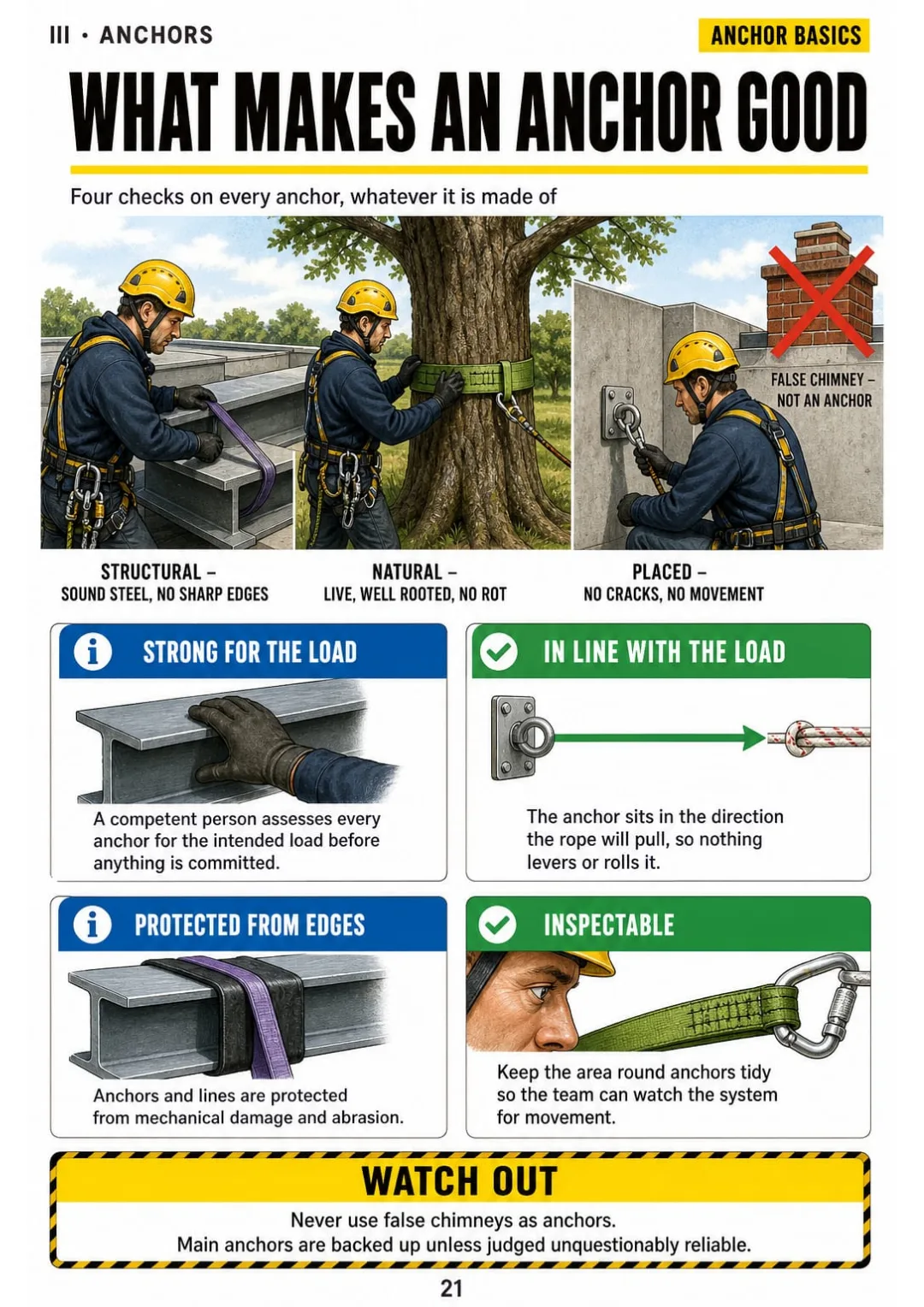
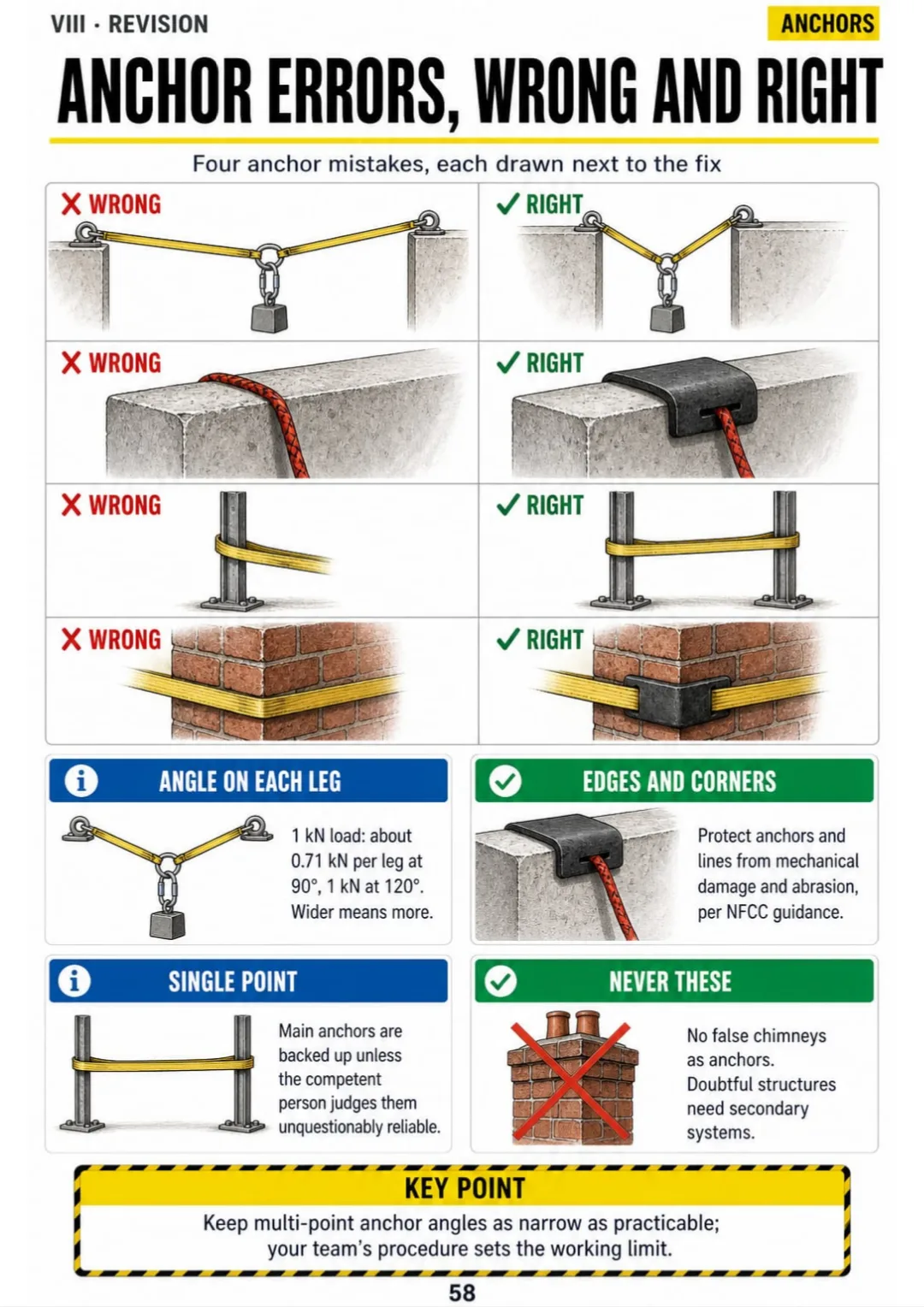
Strong, in line, protected, inspectable – and never a false chimney.
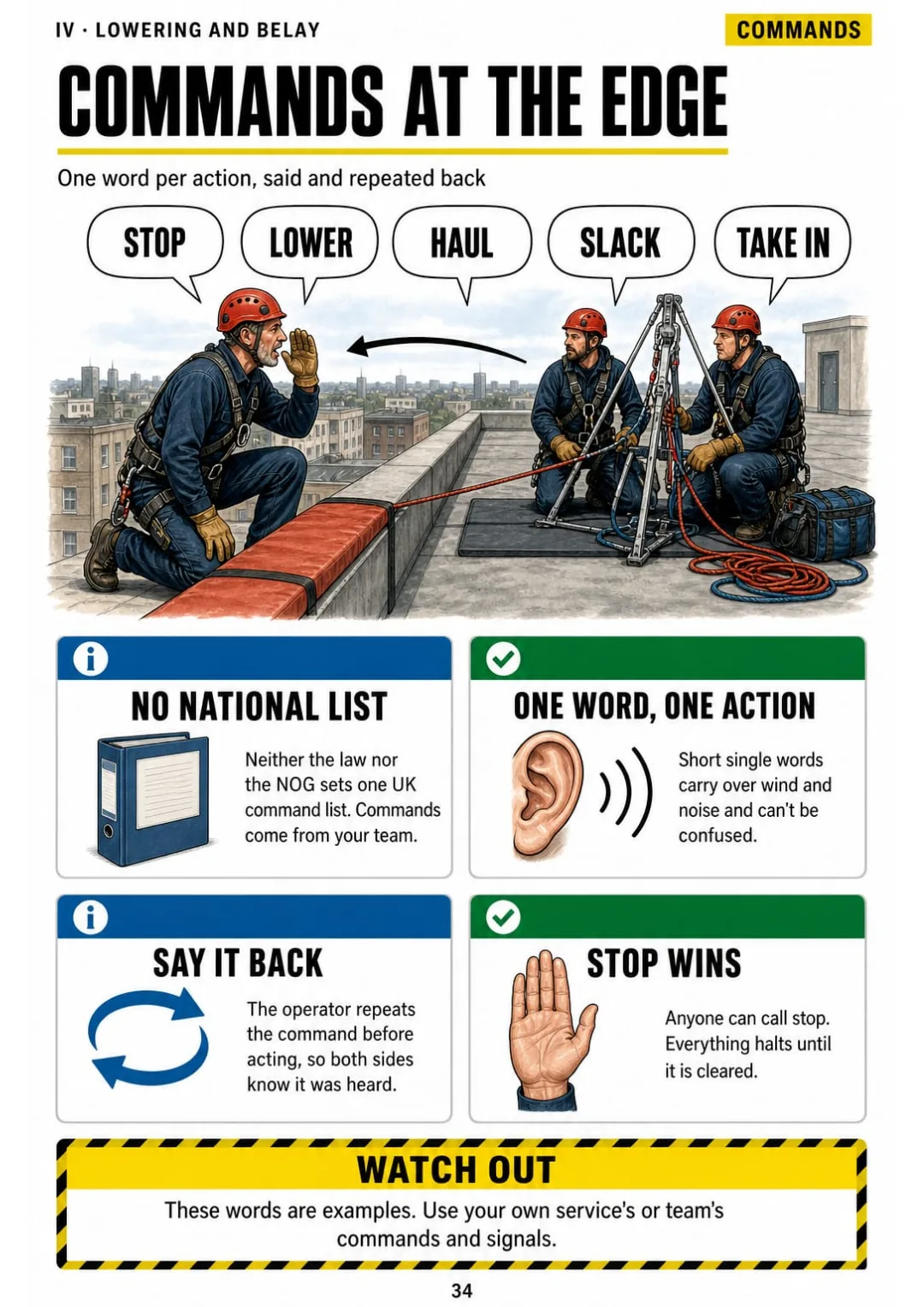
Example edge commands: stop, lower, haul, slack, take in, each said and repeated back
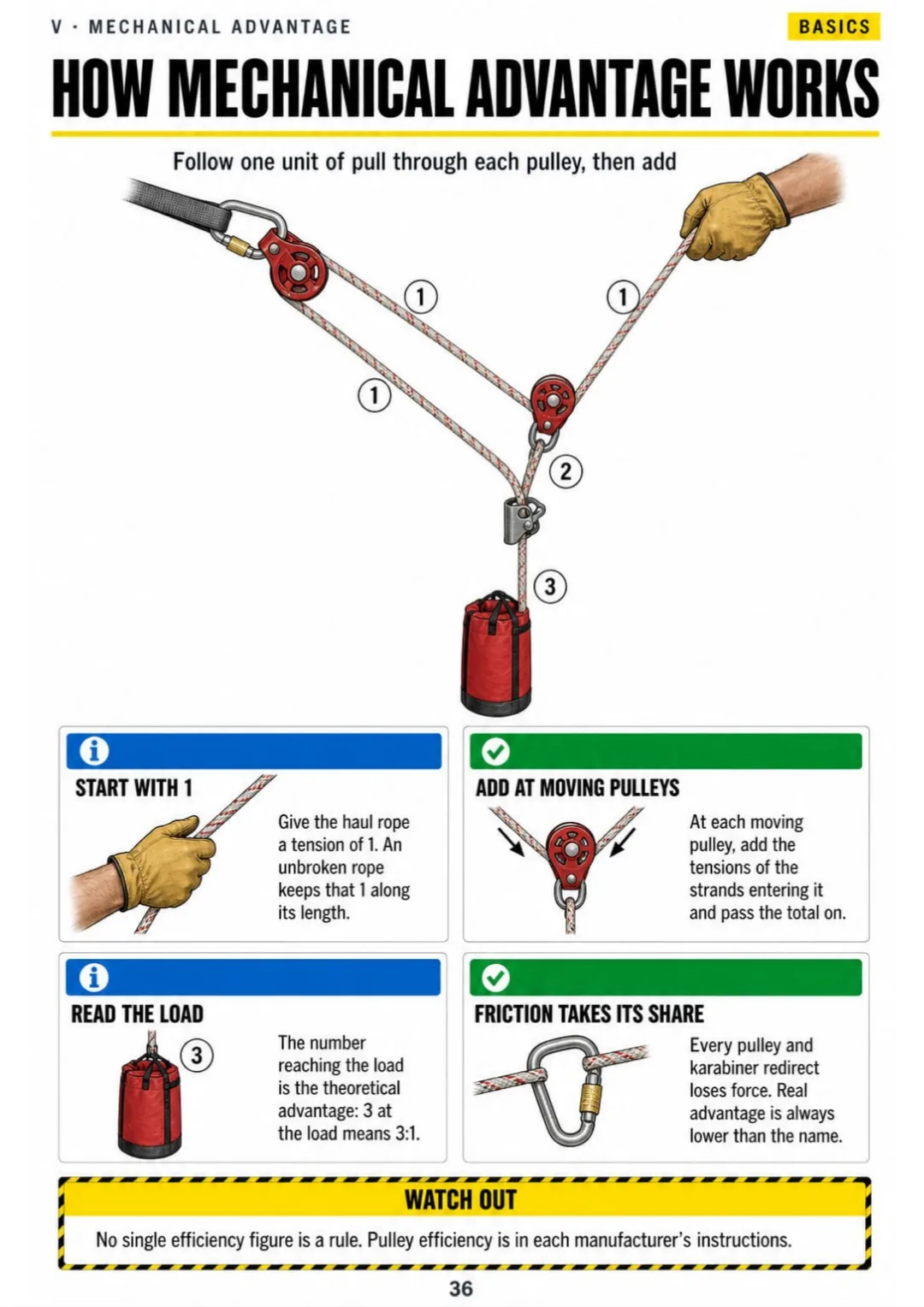
The tension method: 1 on the haul, add at each moving pulley, read the number at the load
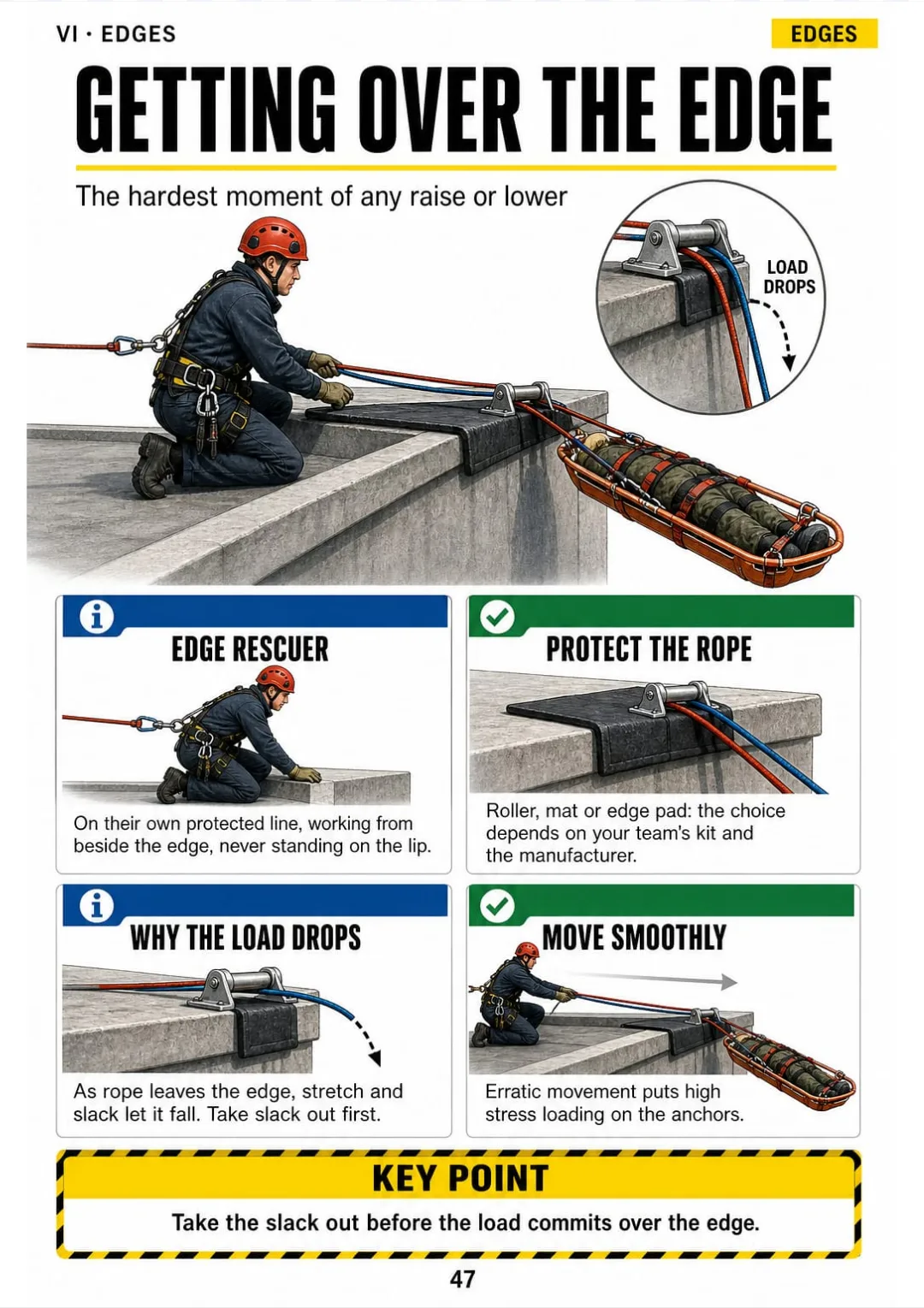
The edge: rescuer position, roller and why the load drops
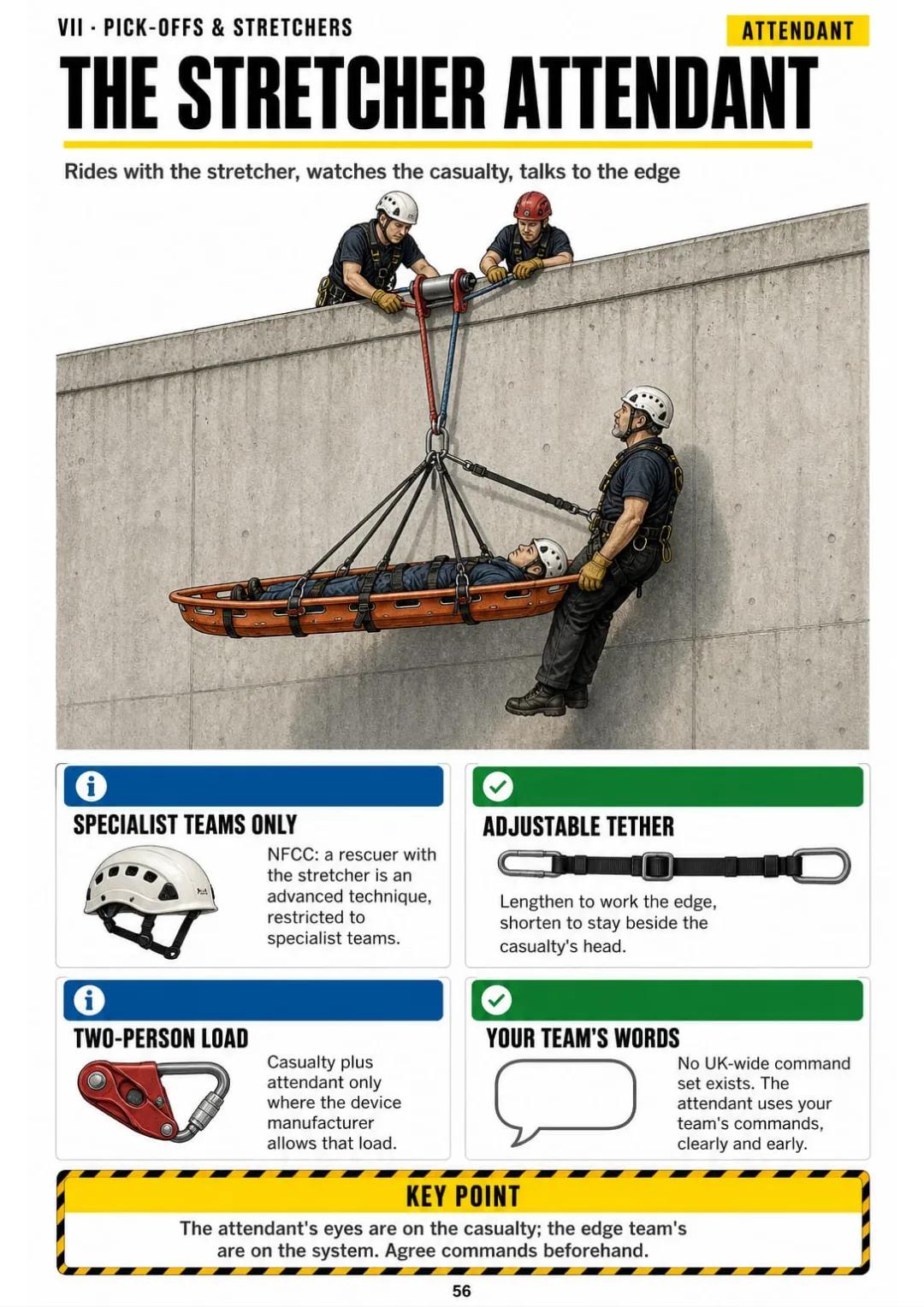
The attendant: adjustable tether, eyes on the casualty, commands from your own team.
Above 120°, each anchor leg carries more than the load itself.

Take a Look at the 8 Parts and 60 Topics

Before the Edge: Kit and Rules

pp. 5-11
  1. How to use this book
  2. The UK rules in one page
  3. Kilonewtons without maths
  4. Low-stretch rope, drawn
  5. Connectors: major axis, gate locked
  6. Slings, pulleys and rope grabs
  7. Pre-use check, always the same order

Knots and Hitches

pp. 12-20
  1. Dress, set, tail: the three checks
  2. Figure of eight on a bight
  3. Figure of eight follow-through
  4. Alpine butterfly
  5. Double fisherman's
  6. Clove hitch
  7. Italian hitch (munter)
  8. Prusik and other friction hitches
  9. Tying off a lowering device

Anchors

pp. 21-28
  1. What makes an anchor good
  2. Single-point anchor wrap
  3. Load-sharing two-point anchor
  4. The anchor angle that changes everything
  5. Pre-equalised vs self-equalising
  6. Back-tying an anchor
  7. Edge protection and rope paths
  8. Redirect anchors

Lowering and Belay

pp. 29-35
  1. Two ropes: main and backup
  2. Building a lower: always the same order
  3. The descender, threaded right
  4. Adding friction
  5. The backup line in action
  6. Commands at the edge
  7. Lowering a casualty on a single rope pick

Mechanical Advantage

pp. 36-44
  1. How mechanical advantage works
  2. Simple vs compound vs complex
  3. 2:1 on the load
  4. The 3:1 (Z-rig) step by step
  5. Progress capture: where the lock goes
  6. Resetting the haul
  7. The 5:1 complex system
  8. Compound: 6:1 and 9:1
  9. Too much advantage

Changeovers and Edges

pp. 45-50
  1. Lower to raise: the changeover
  2. Raise to lower
  3. Getting over the edge
  4. High directionals
  5. Passing a knot
  6. Ascending and descending a fixed line

Pick-offs and Stretchers

pp. 51-57
  1. Suspension intolerance: why time matters
  2. The pick-off, step by step
  3. Transferring the load
  4. Stretcher rigging: horizontal
  5. Stretcher rigging: vertical
  6. The stretcher attendant
  7. Packaging the casualty

Revision: Errors and Checks

pp. 58-64
  1. Anchor errors, wrong and right
  2. Haul system errors, wrong and right
  3. Connector and knot errors
  4. The buddy check before the edge
  5. Every system on one page
  6. Ten questions to ask yourself
  7. After the job: inspect and record

Who This Book Is For

You train every few weeks

Each system is on its own page, in the same order, so a quick look before training night brings back what goes first.

Your assessment or a big exercise is coming

The changeover, the anchors and the haul systems are drawn step by step, so you go to the edge with the order already in your head.

You already work at height

For rope access technicians who have to cover a colleague's rescue: the pick-off, the load transfer and suspension intolerance, each drawn on one page.

Plus: 2 Free Books

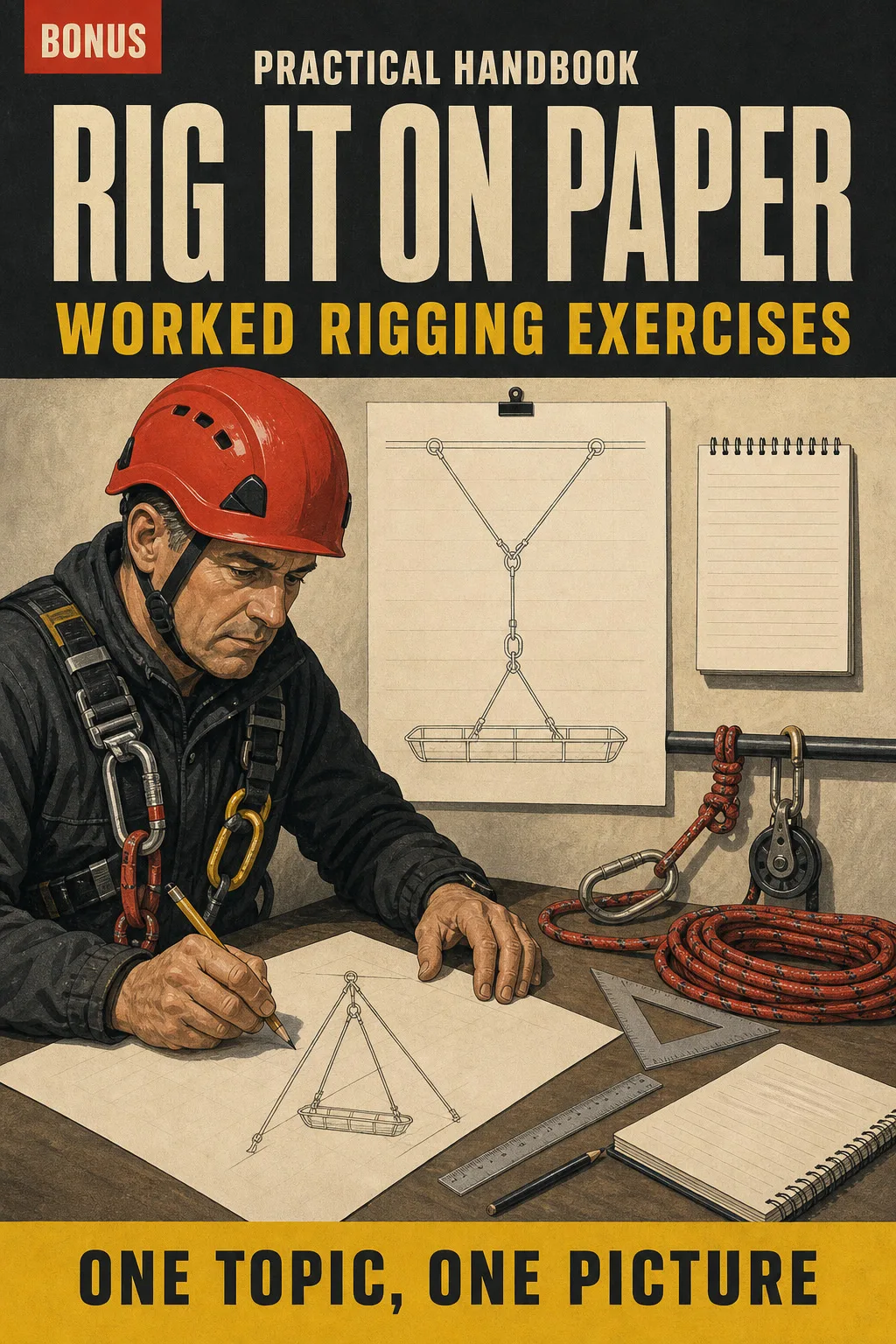
Rig It on Paper: Worked Rigging Exercises
BONUS 1

Rig It on Paper: Worked Rigging Exercises

Practise building lowers, raises and haul systems on paper, step by step, so the order is already in your head before the next training night.
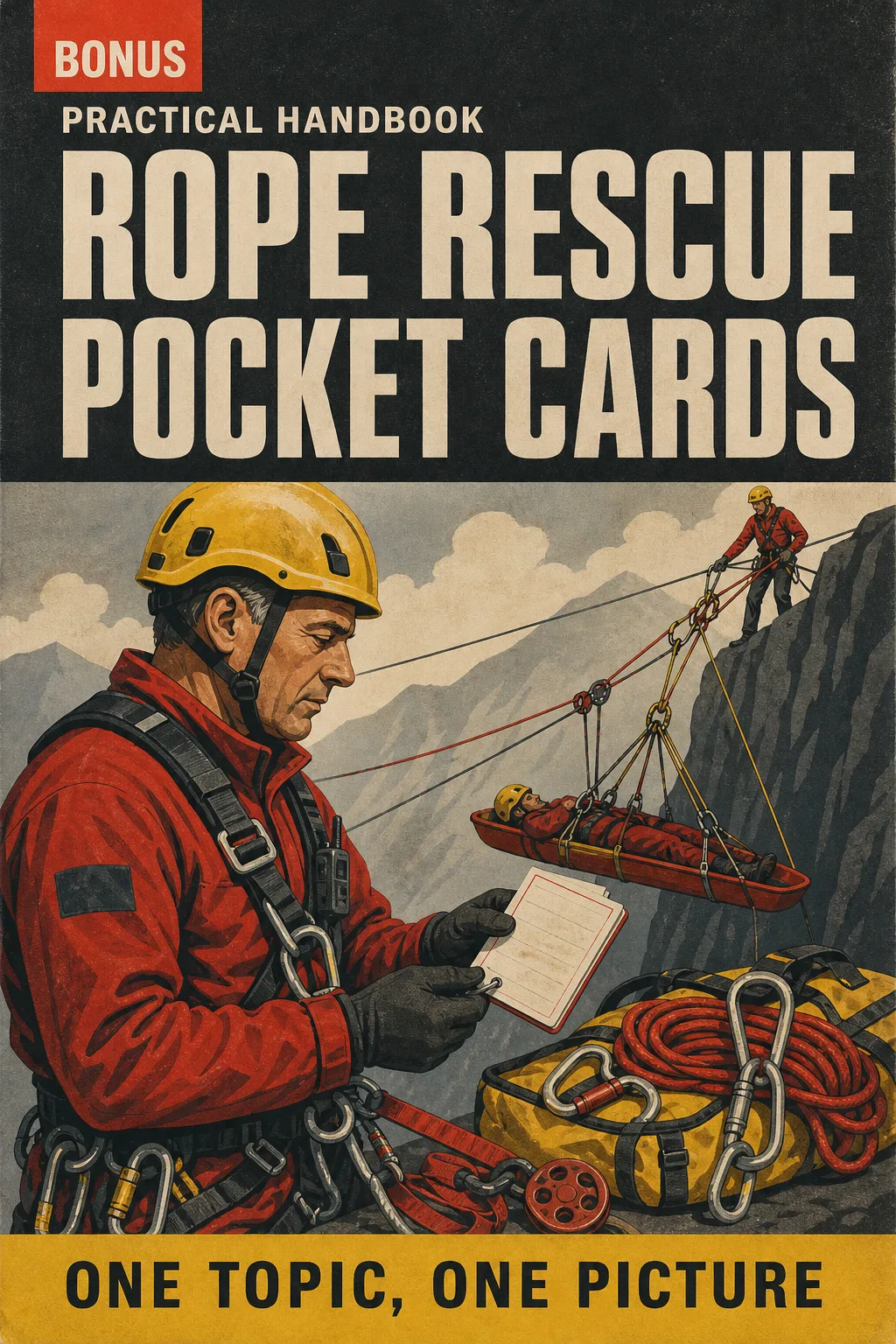
Rope Rescue Pocket Cards
BONUS 2

Rope Rescue Pocket Cards

Every system, knot and spoken command on one small card each, to print and keep in your kit bag for a quick look before you go to the edge.

30-Day Guarantee

30-day guarantee: if a file doesn't open, if the content isn't what the product page describes, if you were charged twice or the email never arrived, write to us and we'll refund you in full. You pay once. No subscriptions.

Frequently Asked Questions

Is it for me if I'm already trained and only rig every few months?

Yes. It doesn't explain what a rope is: it's a revision book for firefighters, mountain and lowland rescue volunteers and rope access technicians who have done the training, with every system drawn in the same order. It's written for the UK: UK terms, the Work at Height Regulations, LOLER and BS EN equipment standards, not American material.

Where does the content come from?

From the Work at Height Regulations 2005 and LOLER 1998 with HSE guidance, the National Operational Guidance on working at height and rope rescue, the relevant BS EN equipment standards and the manufacturers' instructions. Each figure and rule shows which of these it comes from, so you can check it against the current version.

Is it official material?

No. It's independent illustrated revision material. It isn't issued, approved or endorsed by any service, team, association, standards body or manufacturer, and it doesn't give you a certificate or count as a qualification.

Does it replace my training?

No. Rope rescue is only for trained, authorised personnel with a competent instructor. Teams rig differently (main and backup or twin tension, different devices and edge commands), so the book shows the principles and one consistent order. Where your service or team does it differently, follow theirs: the book never overrides your procedures or the manufacturer's instructions.

Are the practice exercises taken from an official assessment?

No. The rigging exercises are written for this book, to practise the order of each system on paper. They aren't official assessment questions.

When and how does it arrive?

As a PDF by email, to the address you enter at checkout. The two bonus books come the same way.

Do I have to pay every month?

No. It's a one-off payment, with no subscription.

Can I have it on paper?

Yes. The PDF is made to print, so you can keep the pages or the pocket cards in your kit bag or on the appliance.

How does the refund work?

You have 30 days. We refund everything if the file won't open, if the book isn't what you see on this page, if you were charged twice or if the email doesn't arrive: just email us.

£19.99£57.99
Get the book · £19.99

This is a digital PDF book sent to your email: nothing is printed or shipped.