Study in Pictures🌐 English (United Kingdom)
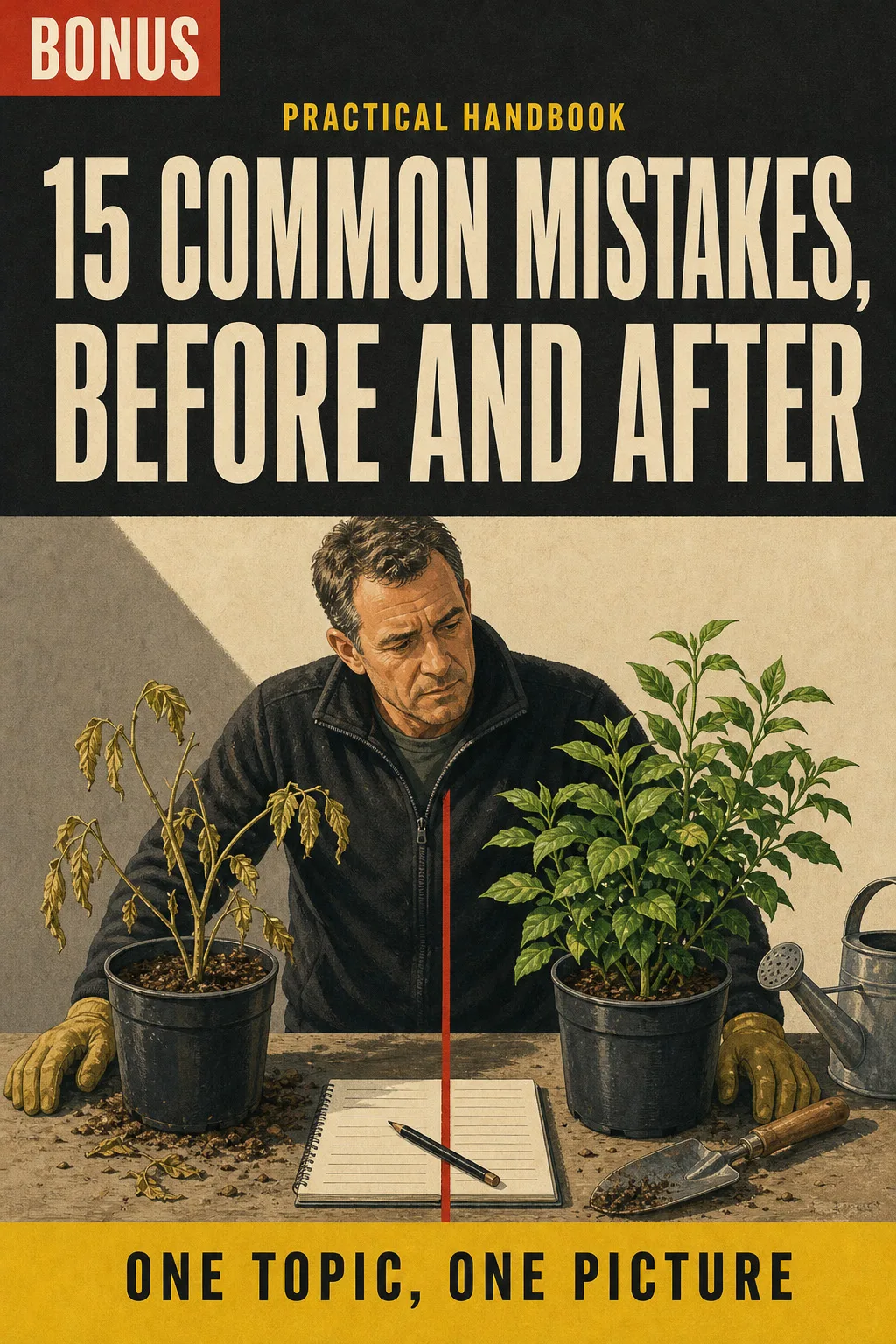
Plant Growth Level 2 Illustrated

Digital book in PDF · read it on your phone or print it

Plant Growth Level 2 Illustrated

Plant cells, xylem and phloem, the leaf, the flower, photosynthesis, soil pH, propagation, pruning and plant health. Every topic has its own page: the drawing first, then what you need to remember.

  • 70 illustrated pages
  • English
  • 30-day guarantee
£19.99£57.99
Get the book · £19.99

Price shown for: United Kingdom. In other countries, the checkout shows the price that applies there.

About this book

What it is

Plant cells, xylem and phloem, the leaf, the flower, photosynthesis, soil pH, propagation, pruning and plant health. Every topic has its own page: the drawing first, then what you need to remember.

Who This Book Is For
  • You're on the Level 2 course
  • Your written exam is close
  • You already work as a gardener
What it covers
  1. Cells and plant names
  2. Roots, stems and leaves
  3. Flowers, seeds and fruits
  4. How a plant works
  5. Soil, water and nutrients
  6. Propagation
  7. Pruning and plant growth
  8. Plant health
  9. Exam revision
Language
English (United Kingdom)
Pages
70
Format
Digital book in PDF · read it on your phone or print it
Price
£19.99 (United Kingdom)
Delivery
This is a digital PDF book sent to your email: nothing is printed or shipped.
30-Day Guarantee
30-day guarantee: if a file doesn't open, if the content isn't what the product page describes, if you were charged twice or the email never arrived, write to us and we'll refund you in full.

Look Inside the Book

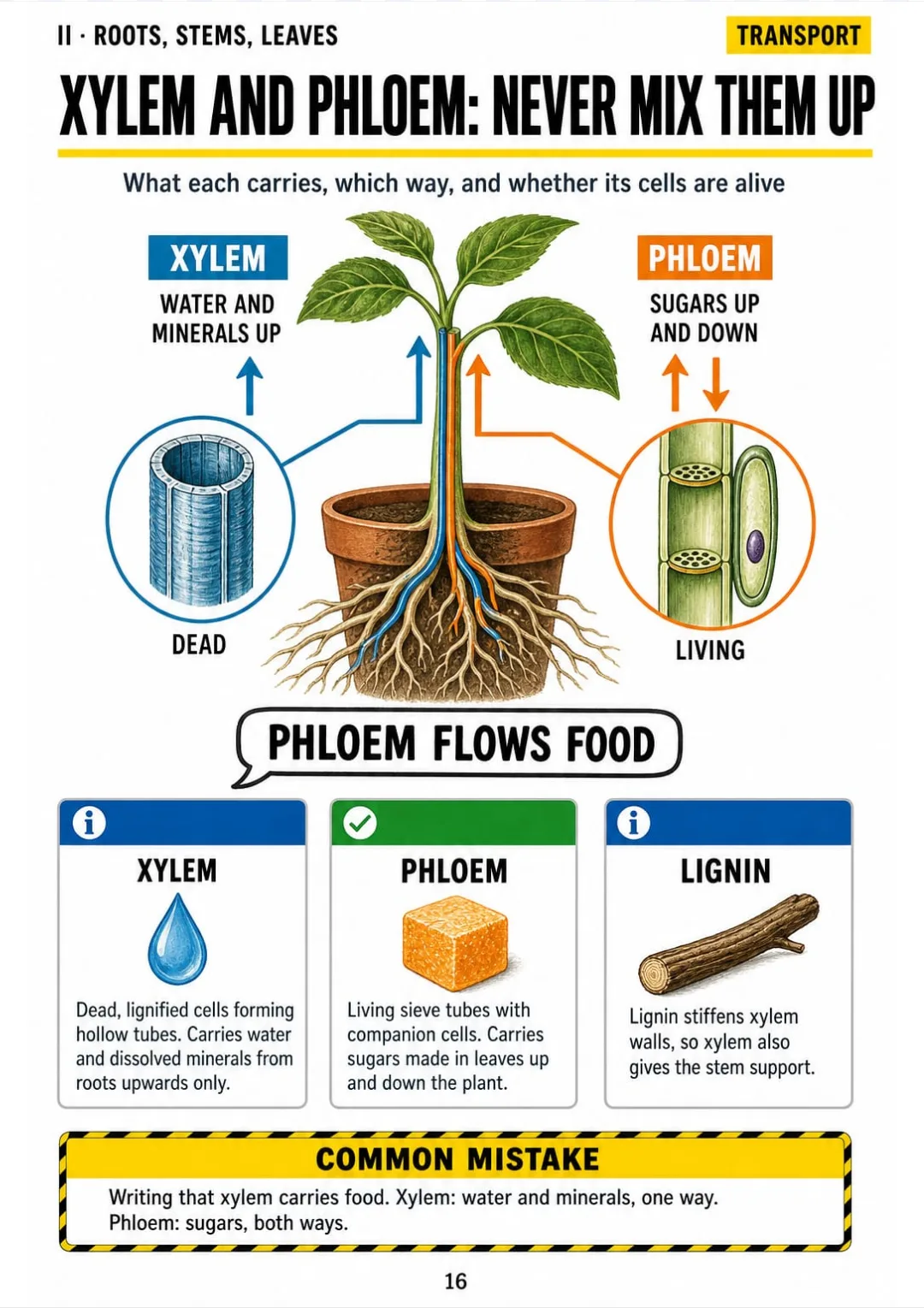
Xylem: dead cells, water and minerals up only. Phloem: living sieve tubes, sugars up and down
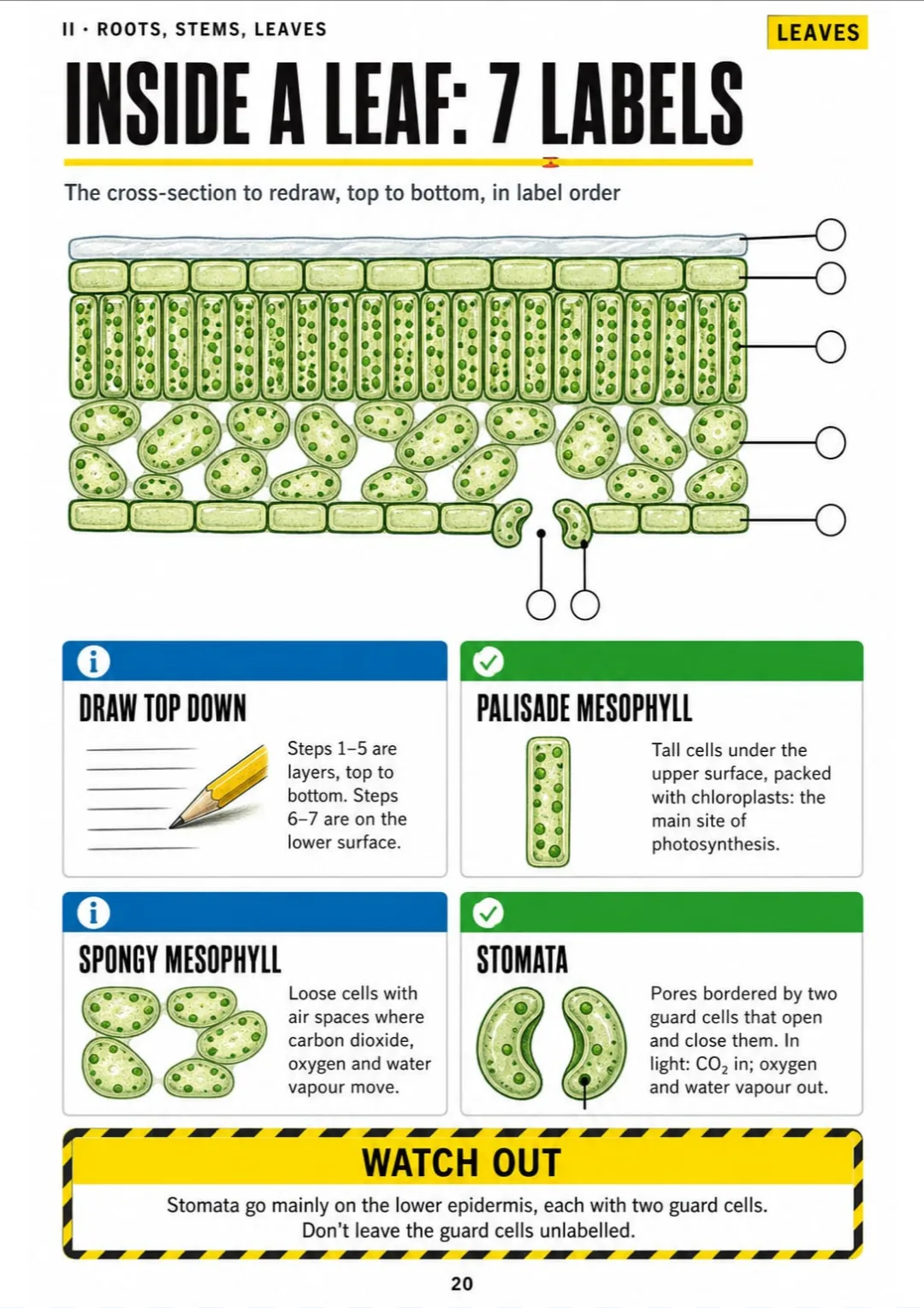
Cuticle, upper epidermis, palisade, spongy mesophyll, lower epidermis, stoma, guard cells
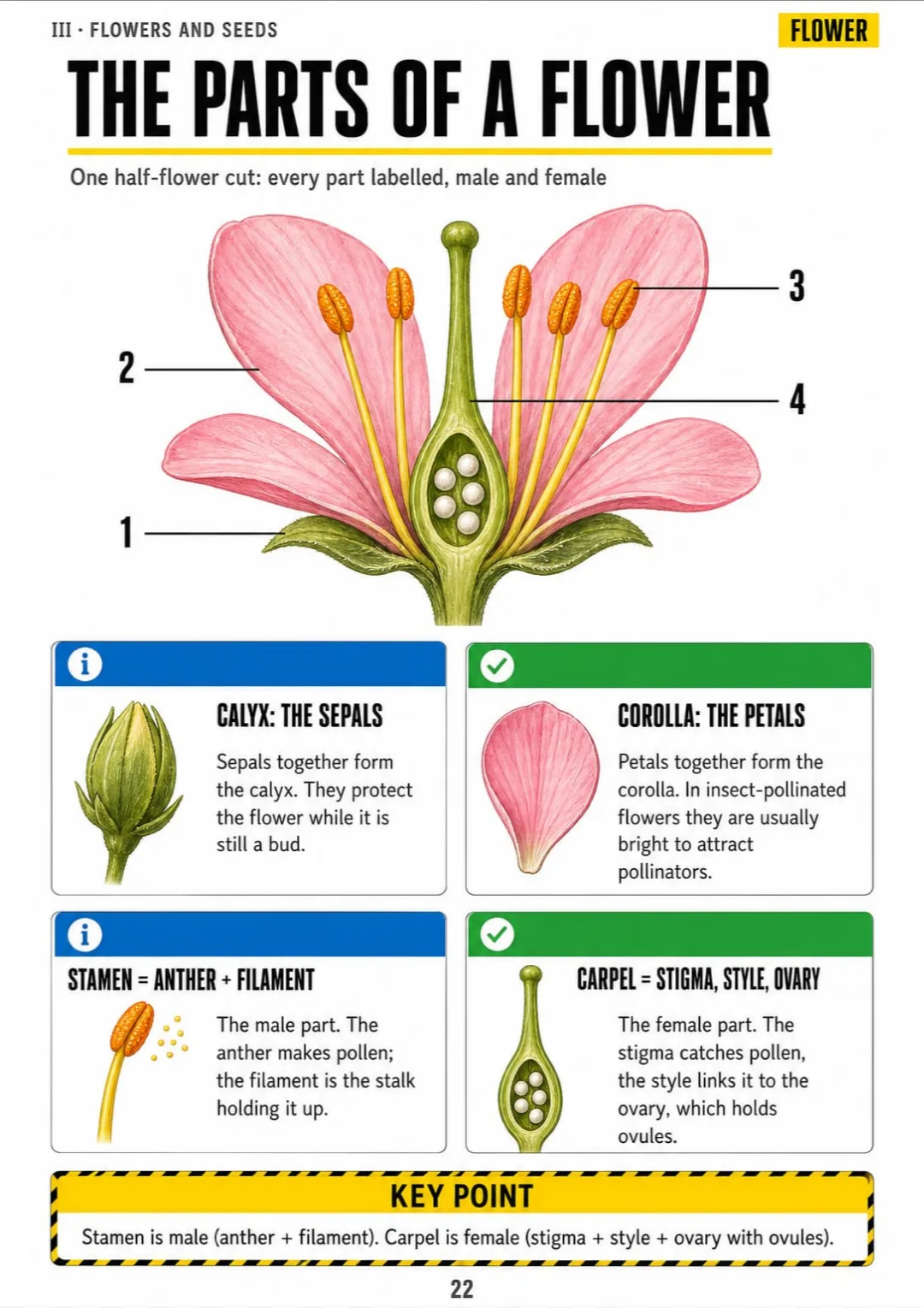
Stamen = anther + filament (male) · Carpel = stigma + style + ovary (female)
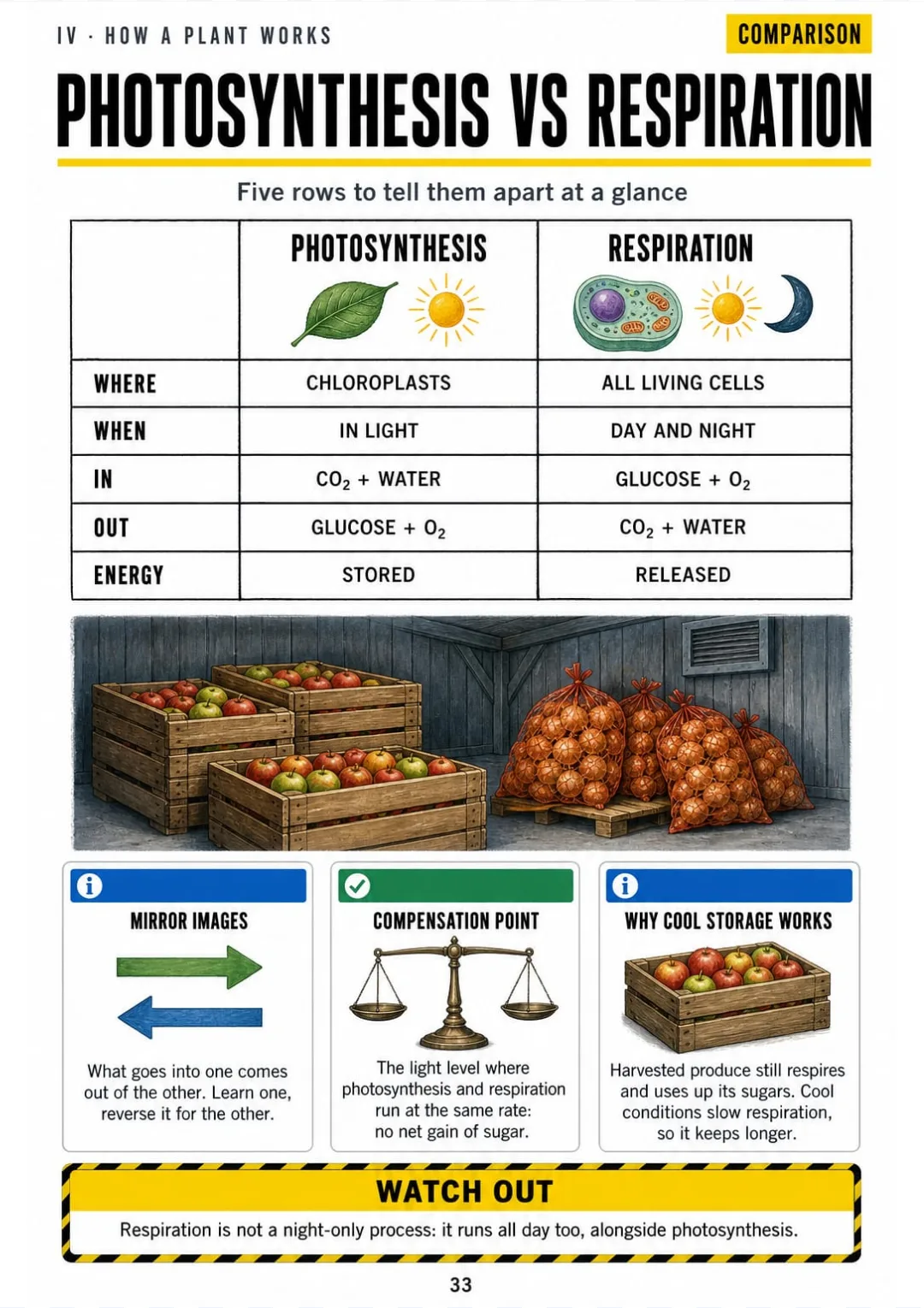
Photosynthesis stores energy, in light only; respiration releases it, day and night
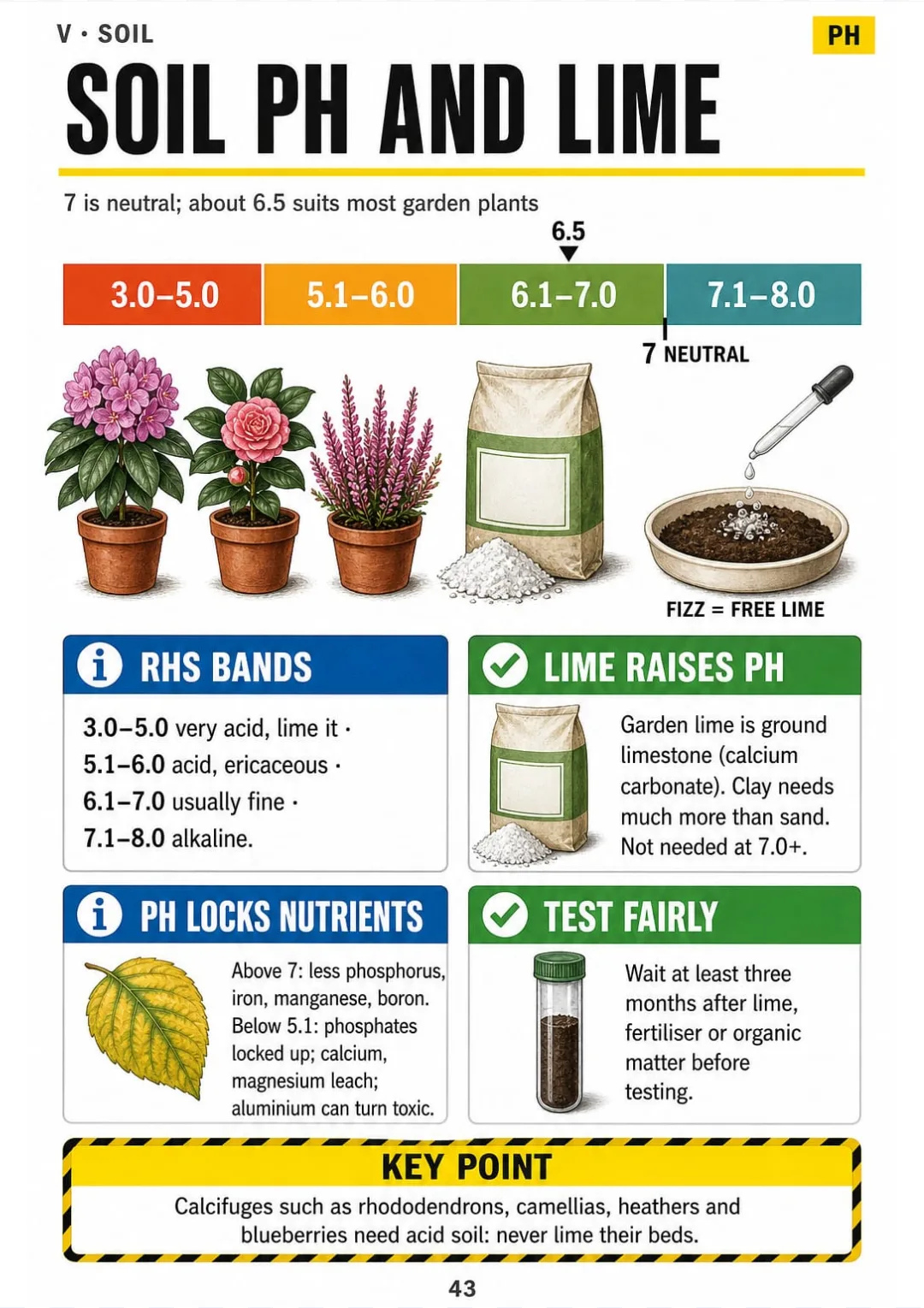
pH 7 is neutral, about 6.5 suits most plants, lime raises it.
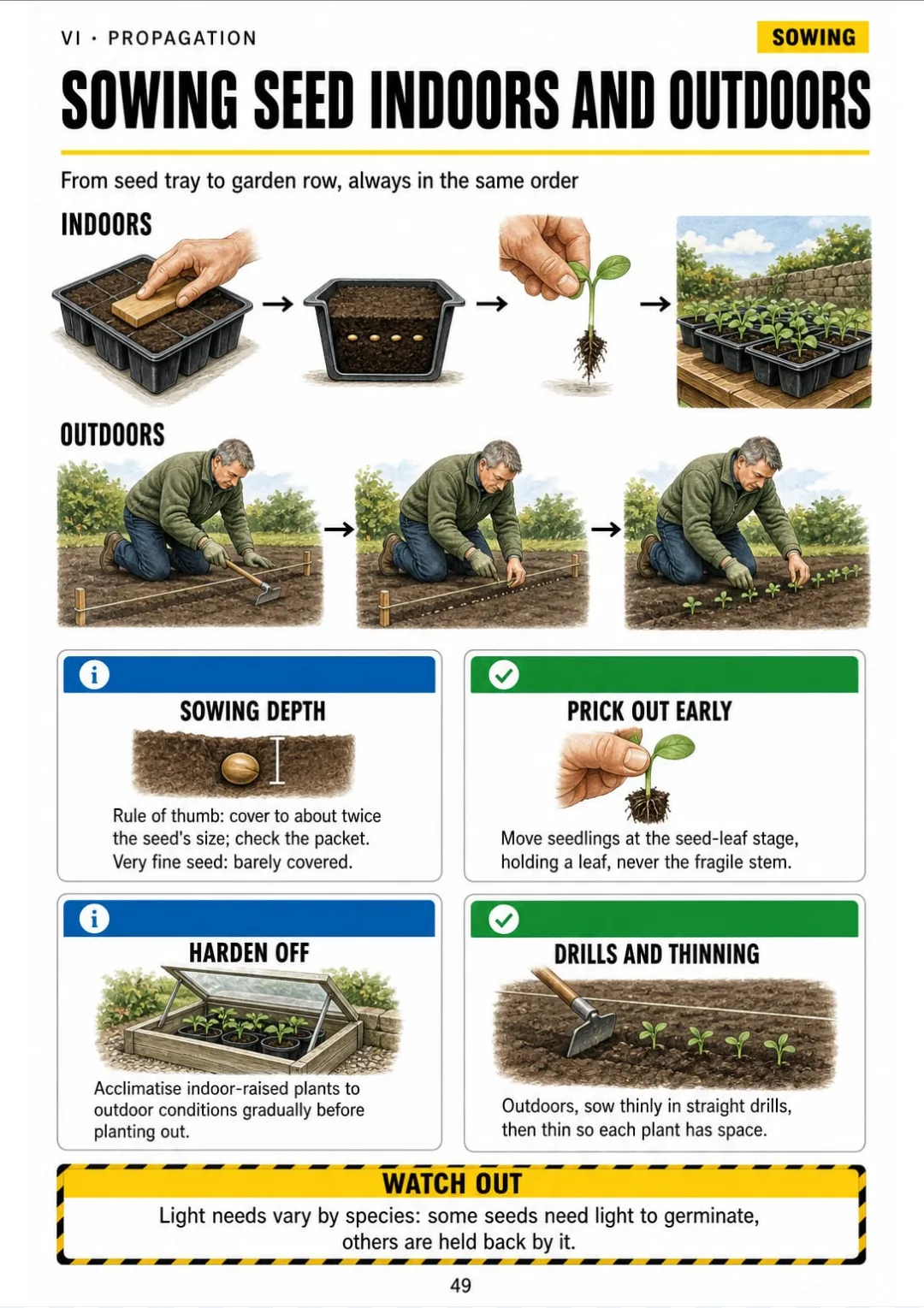
Sow about twice the seed's size deep · prick out at seed-leaf stage · harden off before planting out
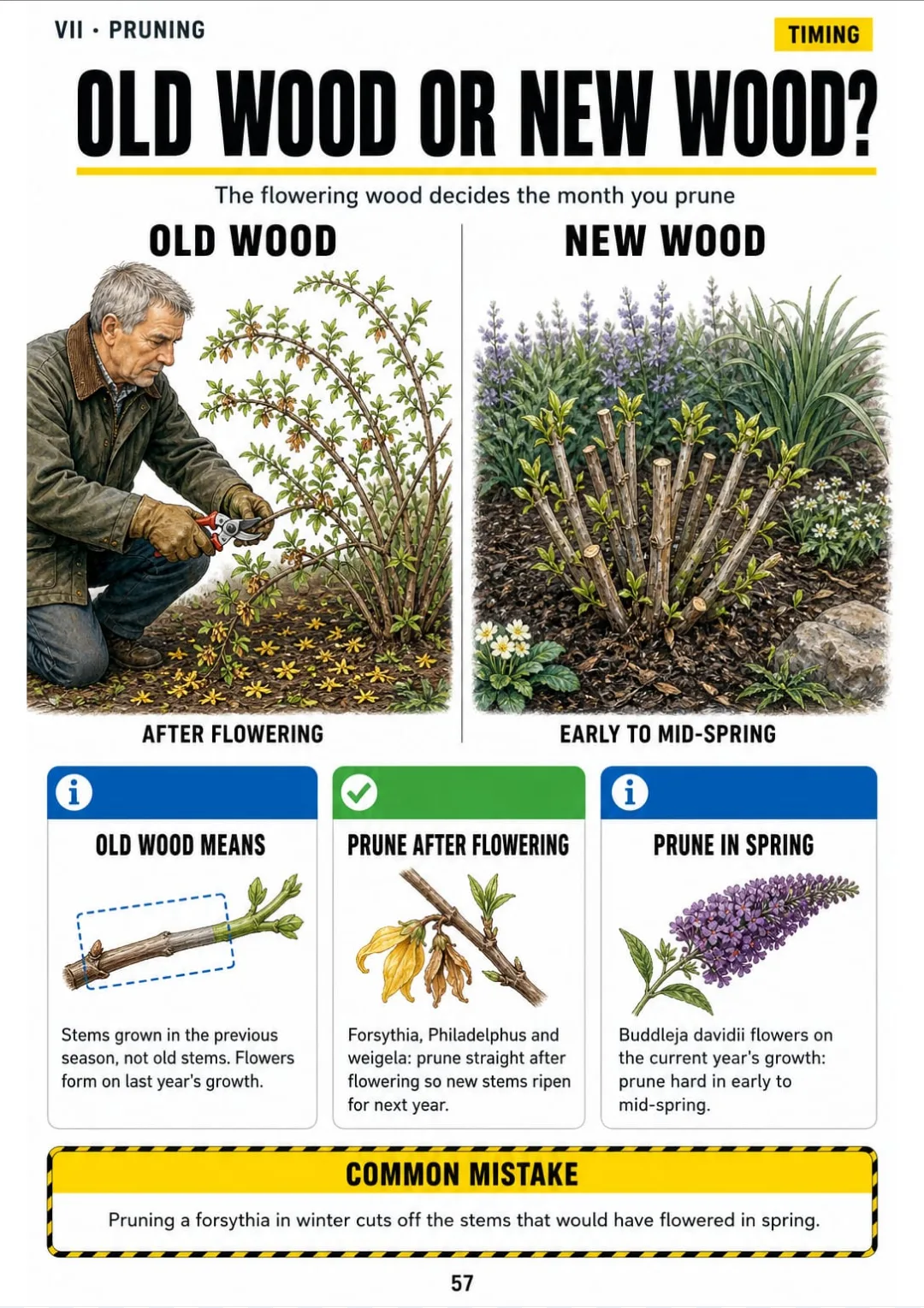
Old wood (forsythia, weigela): prune after flowering. New wood (buddleja): early to mid-spring.
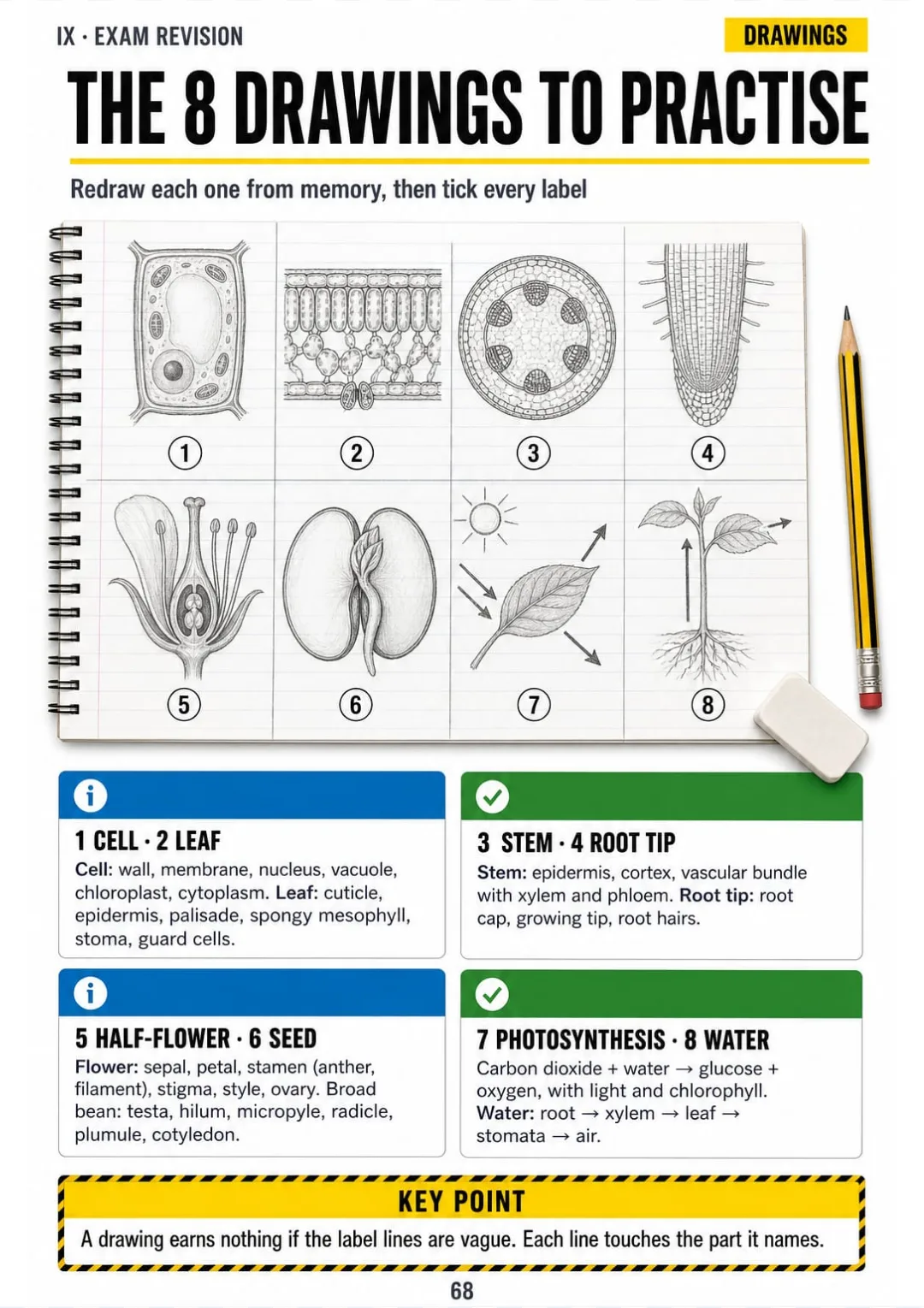
8 drawings to redraw from memory, with every label they need

Take a Look at the 9 Parts and 66 Topics

Cells and plant names

pp. 5-12
  1. How to use this book: one page, one order
  2. The plant cell, labelled
  3. From cell to organ
  4. Plant groups: from mosses to flowering plants
  5. Monocots and dicots side by side
  6. Family, genus, species, cultivar
  7. Why botanical names beat common names
  8. Annual, biennial, perennial, ephemeral

Roots, stems and leaves

pp. 13-21
  1. Tap roots and fibrous roots
  2. Inside a root: root hairs and absorption
  3. Inside a stem: the vascular bundle
  4. Xylem and phloem: never mix them up
  5. Woody stems and secondary growth
  6. Modified stems: bulb, corm, rhizome, tuber, stolon
  7. The outside of a leaf
  8. Inside a leaf: the cross-section to redraw
  9. Leaves adapted to their place

Flowers, seeds and fruits

pp. 22-29
  1. The parts of a flower
  2. Insect and wind pollination
  3. From pollination to fertilisation
  4. Self-pollination, cross-pollination and F1 hybrids
  5. Inside a seed
  6. Fruits and how seeds travel
  7. Germination: what a seed needs
  8. Seed dormancy and how to break it

How a plant works

pp. 30-37
  1. Photosynthesis as a flow drawing
  2. What limits photosynthesis
  3. Respiration: the other way round
  4. Photosynthesis vs respiration in one table
  5. Osmosis and turgor
  6. Transpiration: water from root to air
  7. What speeds transpiration up or slows it down
  8. Plant hormones and tropisms

Soil, water and nutrients

pp. 38-47
  1. What soil is made of
  2. Sand, silt and clay
  3. Soil texture by feel
  4. Soil structure: crumbs and how to keep them
  5. Organic matter and soil organisms
  6. Soil pH and lime
  7. Water in the soil and drainage
  8. The main nutrients and what they do
  9. Deficiency symptoms: old leaves or young leaves
  10. Fertilisers: organic, inorganic, fast and slow

Propagation

pp. 48-54
  1. Seed or vegetative: which and why
  2. Sowing seed indoors and outdoors
  3. Softwood, semi-ripe and hardwood cuttings
  4. Getting a cutting to root
  5. Division
  6. Layering
  7. Grafting and budding in one page

Pruning and plant growth

pp. 55-58
  1. Why we prune
  2. Apical dominance and the pruning cut
  3. When to prune: flowering on old or new wood
  4. Pruning tools and clean cuts

Plant health

pp. 59-66
  1. Pest, disease or disorder?
  2. Pests that suck and pests that chew
  3. Fungal diseases
  4. Bacteria and viruses
  5. Disorders caused by growing conditions
  6. Cultural and physical control
  7. Biological control
  8. Integrated approach and weeds

Exam revision

pp. 67-70
  1. State, describe, explain: what each question wants
  2. The 8 drawings to practise before the exam
  3. Pairs students mix up
  4. Last-week revision checklist

Who This Book Is For

You're on the Level 2 course

Each week's topic sits on one page you can read on the train or before class, drawn the same way every time.

Your written exam is close

You go back over the 8 drawings to practise and the pairs students mix up, and you know how each process goes, in order.

You already work as a gardener

You already know what plants do. The book shows you why, in the words the exam uses, one drawing per page.

Plus: 2 Free Books

Exam-Style Questions Workbook: Units 1 and 2
BONUS 1

Exam-Style Questions Workbook: Units 1 and 2

Practise writing the short and longer answers the written exams ask for, then check yourself against clear model answers.
15 Common Mistakes, Before and After
BONUS 2

15 Common Mistakes, Before and After

See the mix-ups students make most often (xylem and phloem, genus and cultivar, deficiency and disease) corrected side by side, so you don't repeat them in the exam.

30-Day Guarantee

30-day guarantee: if a file doesn't open, if the content isn't what the product page describes, if you were charged twice or the email never arrived, write to us and we'll refund you in full. You pay once. No subscriptions.

Frequently Asked Questions

Is it for me if I'm doing the Level 2 at evening class or by distance learning, with a job and little time?

Yes. Each topic is one page, so you can go over it in a few minutes, on paper or on your phone, and come back to it before class.

Does it cover my specification, Unit 1 and Unit 2?

Every page is checked against the published specification for the Level 2 Certificate in the Principles of Plant Growth and Development, Units 1 and 2, and standard horticultural references. If your centre teaches the specification that started in September 2026, compare the contents list on this page with your syllabus before you buy: every topic and its pages are listed there.

Is it official material?

No. It's an independent study guide. It is not affiliated with or endorsed by the RHS or any awarding body, and it doesn't give you a certificate or count towards your qualification: it helps you revise for the exam you sit with your centre.

Does it replace my course?

No. It goes alongside your course, your textbook and your practical classes. It doesn't teach you from scratch: it takes what your textbook explains in paragraphs and puts each topic on one drawn page, with the labels and rules in a box, so you can revise it at a glance and write it in your own words.

Are the practice questions the ones from the exam?

No. They're exam-style questions written for this book, with model answers. They are not questions from any real exam paper.

When and how does it arrive?

As a PDF by email, to the address you give at checkout. The 2 free books arrive the same way.

Is it for beginners, or for people who already garden?

Both. It starts from the plant cell and builds up in order, and if you already work with plants, it puts what you do into the terms the Level 2 uses.

Can I have it on paper?

Yes. The PDF is ready to print at home or at a print shop, so you can take the pages to class or the greenhouse.

How does the refund work?

You have 30 days. We refund everything if the file won't open, if the book isn't what you see on this page, if you were charged twice or if the email doesn't arrive: just email us.

£19.99£57.99
Get the book · £19.99

This is a digital PDF book sent to your email: nothing is printed or shipped.