Study in Pictures🌐 English (United Kingdom)
Marine Electronics Illustrated

Digital book in PDF · read it on your phone or print it

Marine Electronics Illustrated

Chartplotter, AIS, VHF aerial, depth transducer, cable size, fuses, backbone and terminators, the first sea trial. Each topic has its own page: the drawing first, then what you need to remember.

  • 65 illustrated pages
  • English
  • 30-day guarantee
£19.99£57.99
Get the book · £19.99

Price shown for: United Kingdom. In other countries, the checkout shows the price that applies there.

About this book

What it is

Chartplotter, AIS, VHF aerial, depth transducer, cable size, fuses, backbone and terminators, the first sea trial. Each topic has its own page: the drawing first, then what you need to remember.

Who This Book Is For
  • You're planning a winter refit
  • Sea trial day is coming
  • You've already fitted something
What it covers
  1. Before You Touch a Cable
  2. DC Power Without Guesswork
  3. The Data Network
  4. Chartplotter and Displays
  5. VHF, AIS and Aerials
  6. Instruments and Sensors
  7. Commissioning and Fault Finding
  8. Checklists and Frequent Mistakes
Language
English (United Kingdom)
Pages
65
Format
Digital book in PDF · read it on your phone or print it
Price
£19.99 (United Kingdom)
Delivery
This is a digital PDF book sent to your email: nothing is printed or shipped.
30-Day Guarantee
30-day guarantee: if a file doesn't open, if the content isn't what the product page describes, if you were charged twice or the email never arrived, write to us and we'll refund you in full.

Look Inside the Book

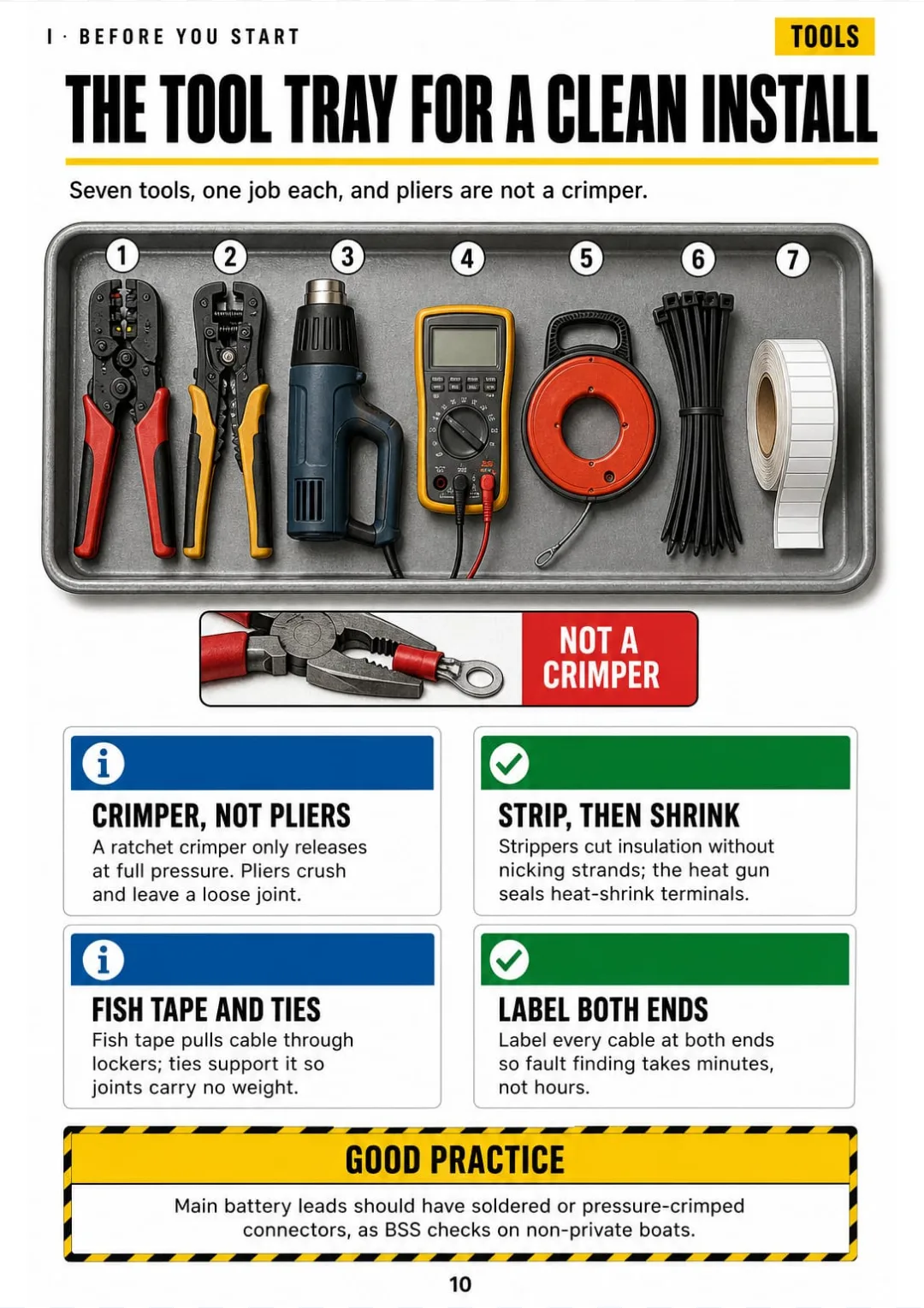
Crimper, strippers, heat gun, meter, fish tape, ties, labels
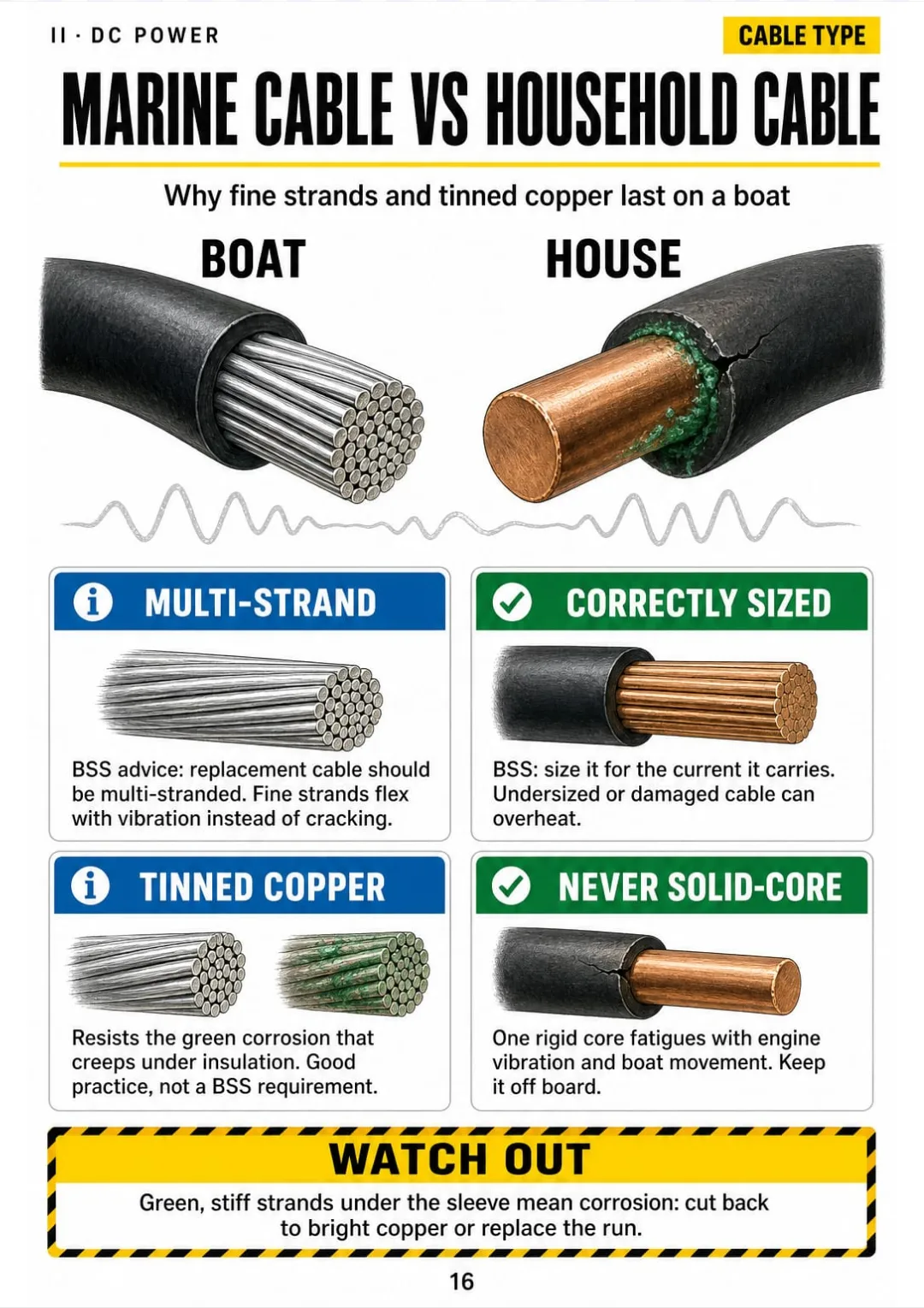
BSS: multi-strand, sized by ISO 13297 Table A.1. Tinning is good practice.
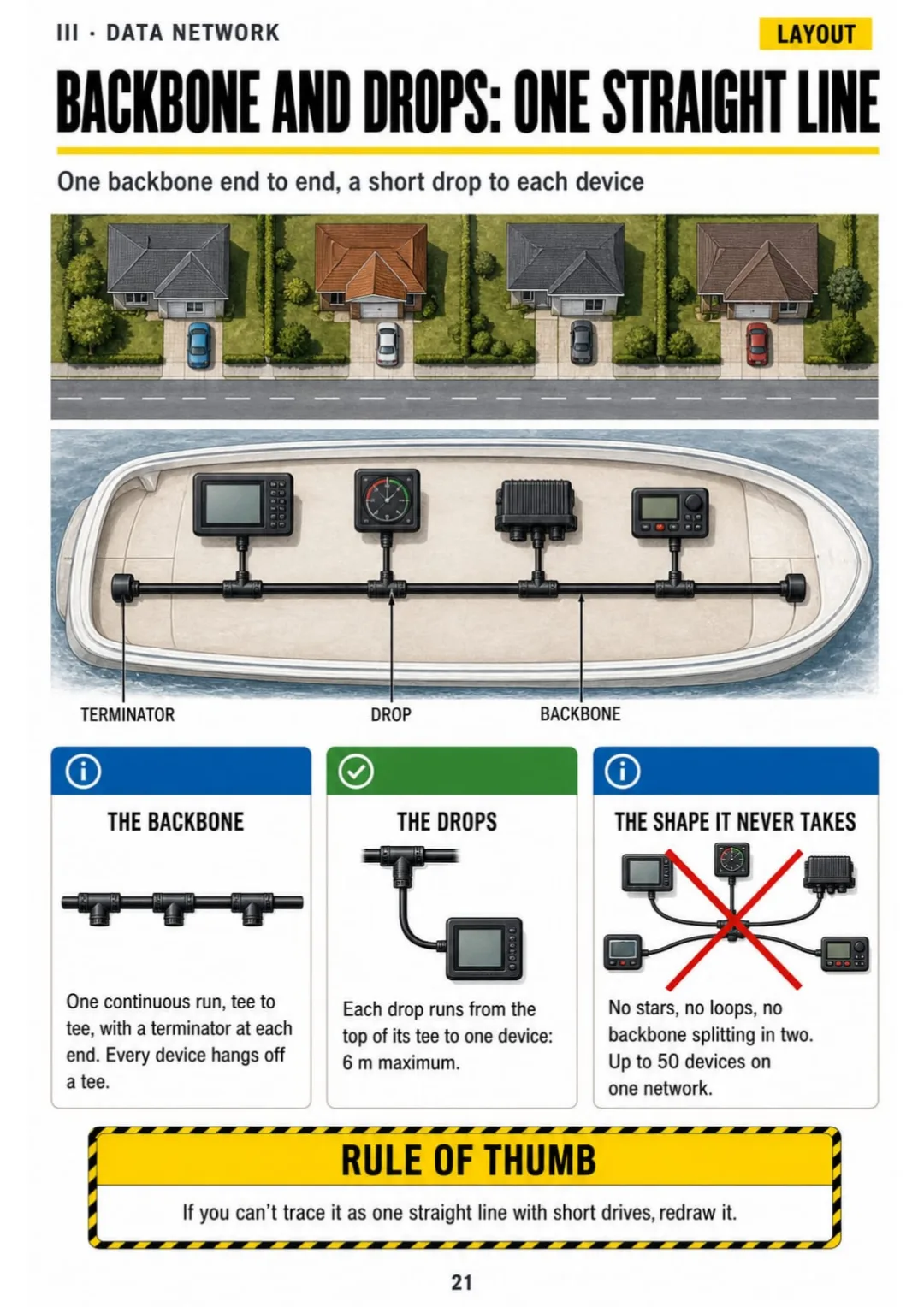
One straight backbone, terminator at each end, drops of 6 m maximum, up to 50 devices.
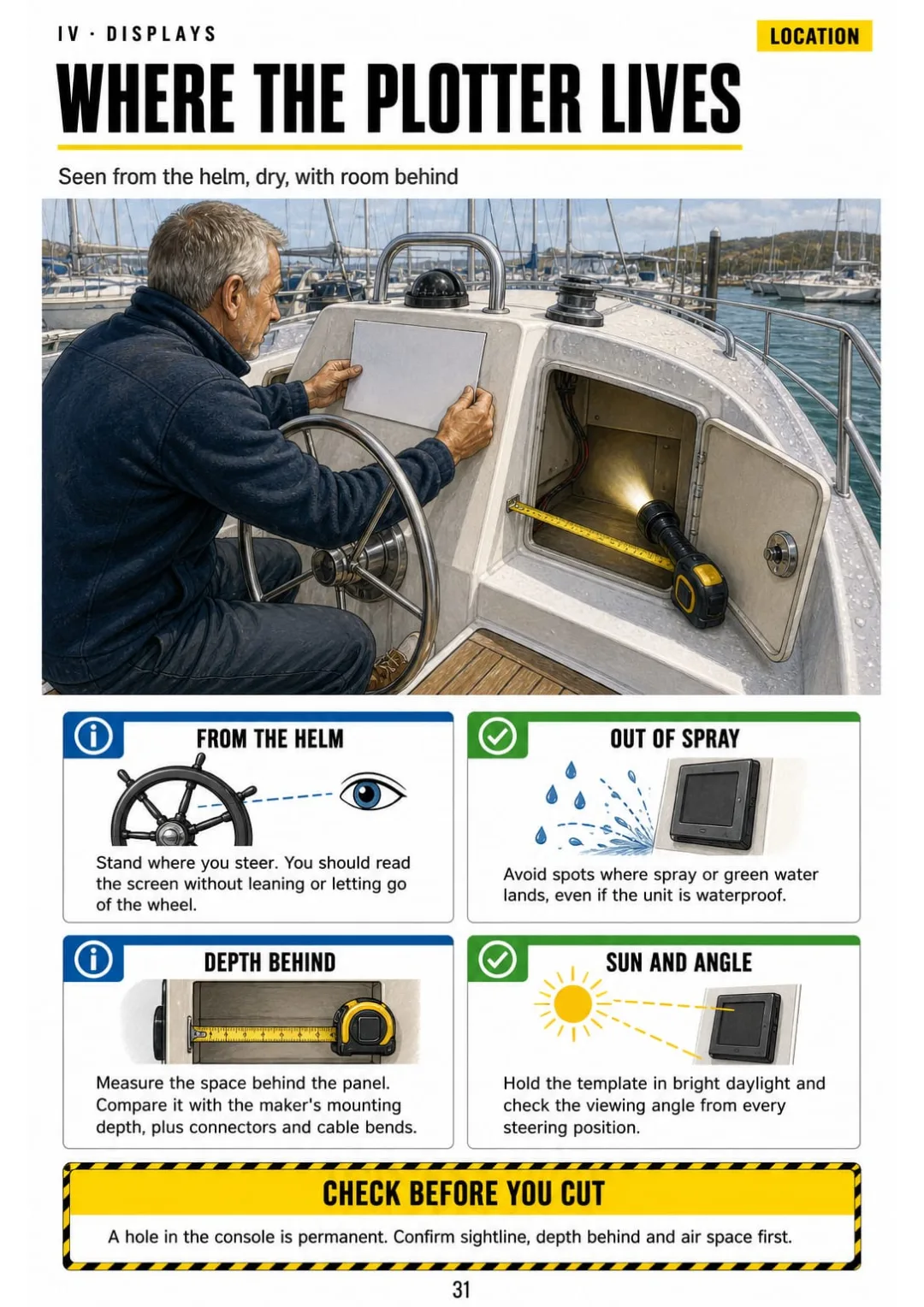
Helm sightline, out of spray, maker's mounting depth checked behind the panel
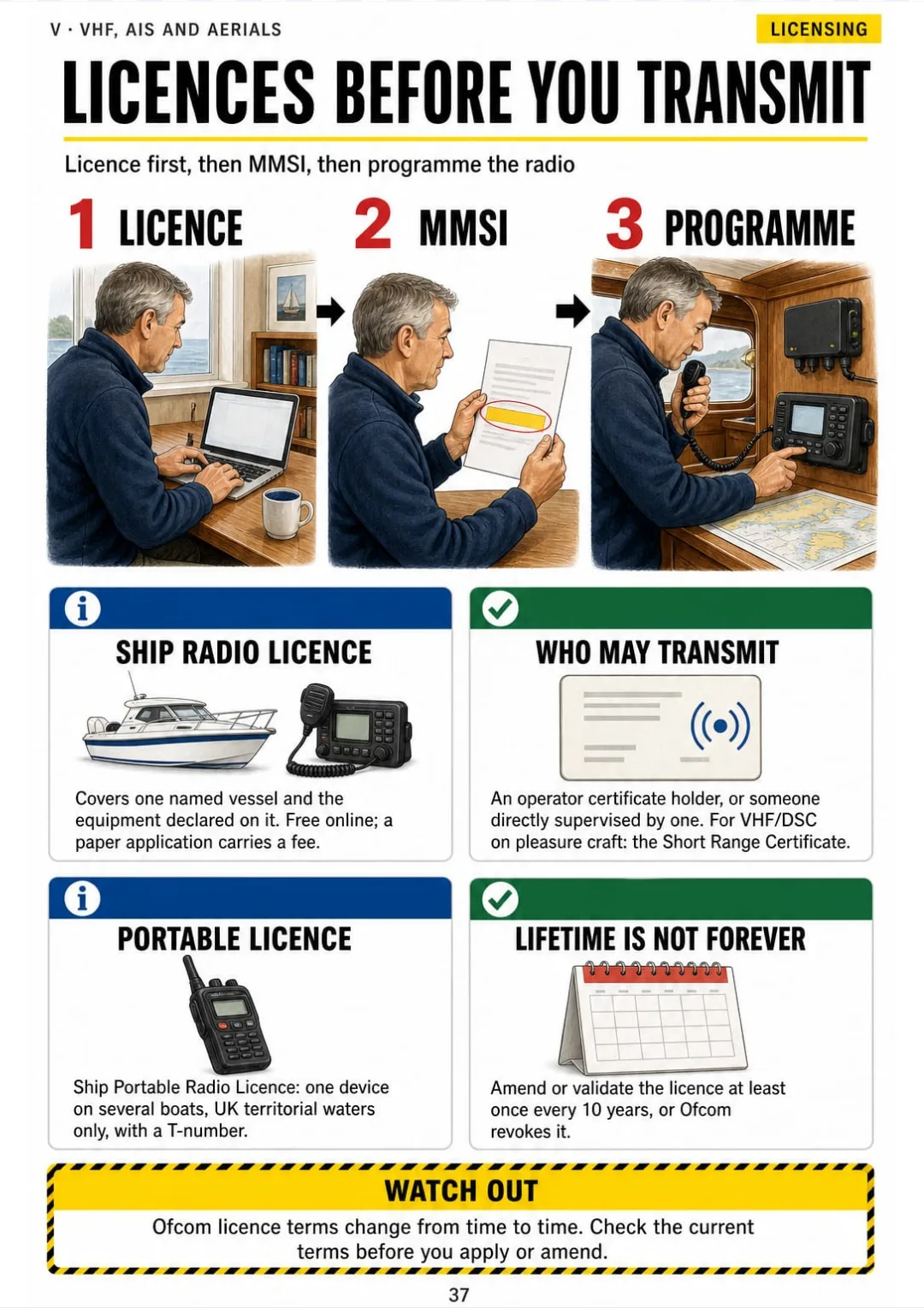
Ship Radio Licence covers one named vessel; the user needs an SRC or direct supervision.
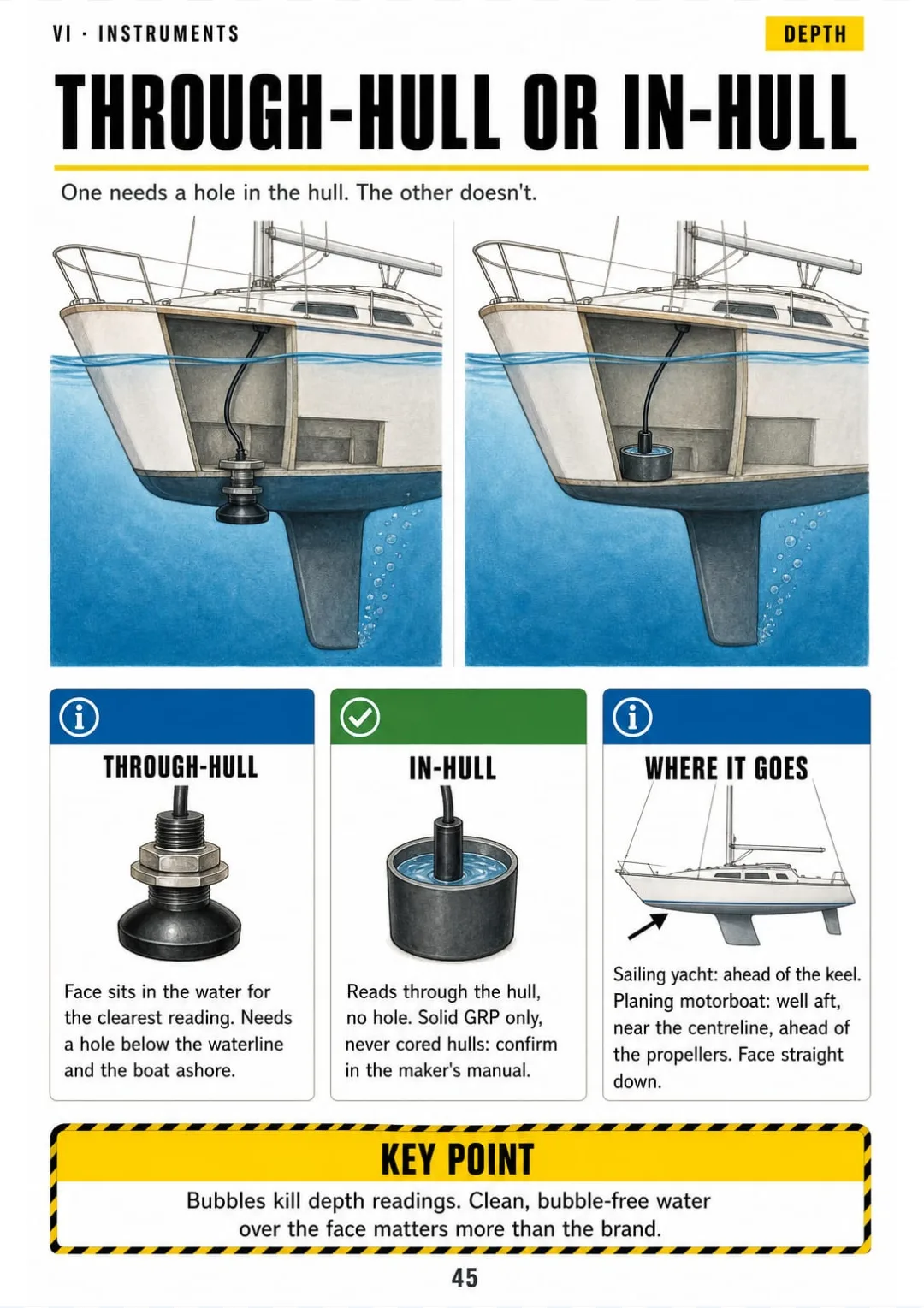
Through-hull vs in-hull: placed in clean water away from turbulence, face pointing straight down.
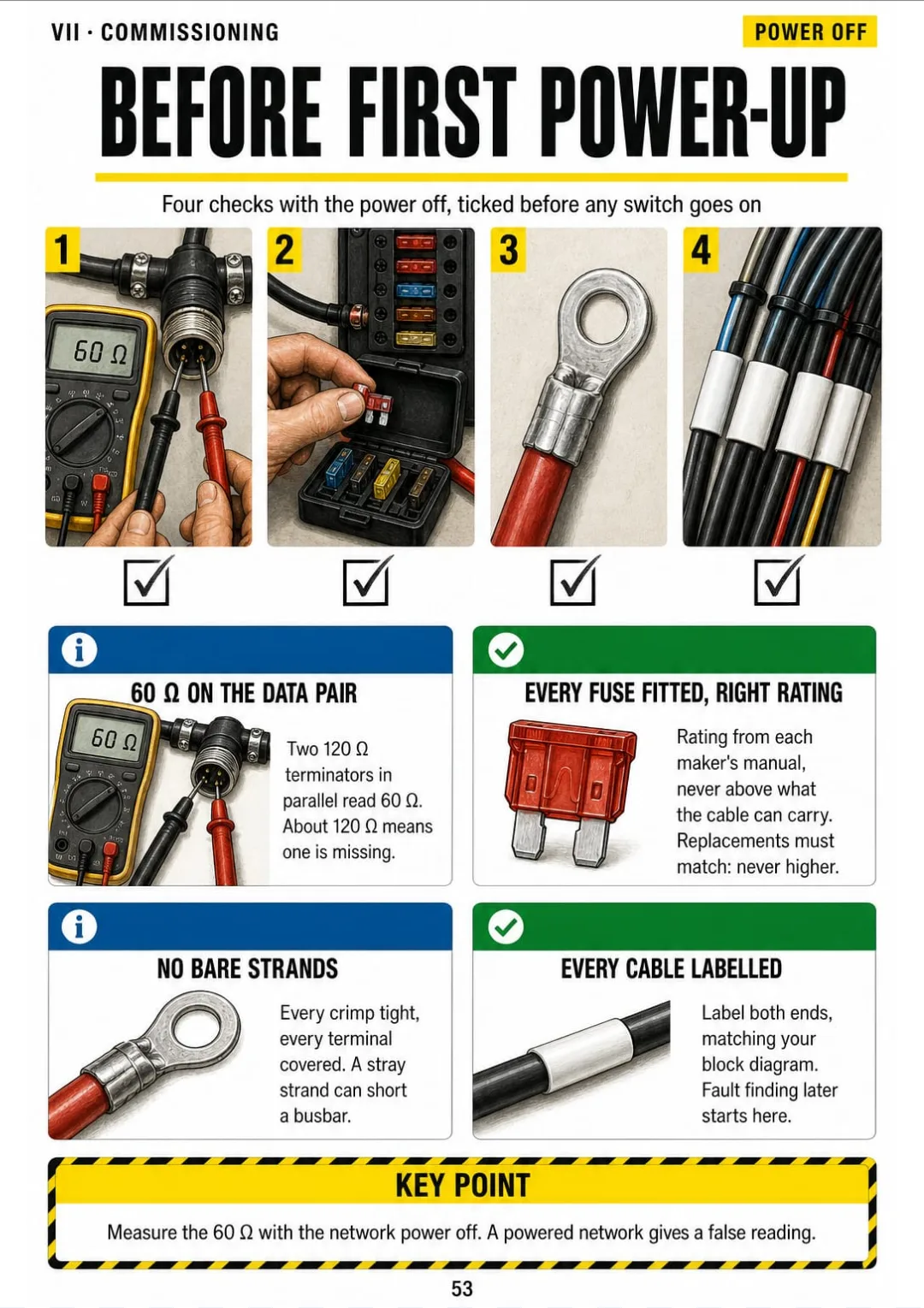
60 Ω across the data pair, every fuse right, no bare strands, every cable labelled
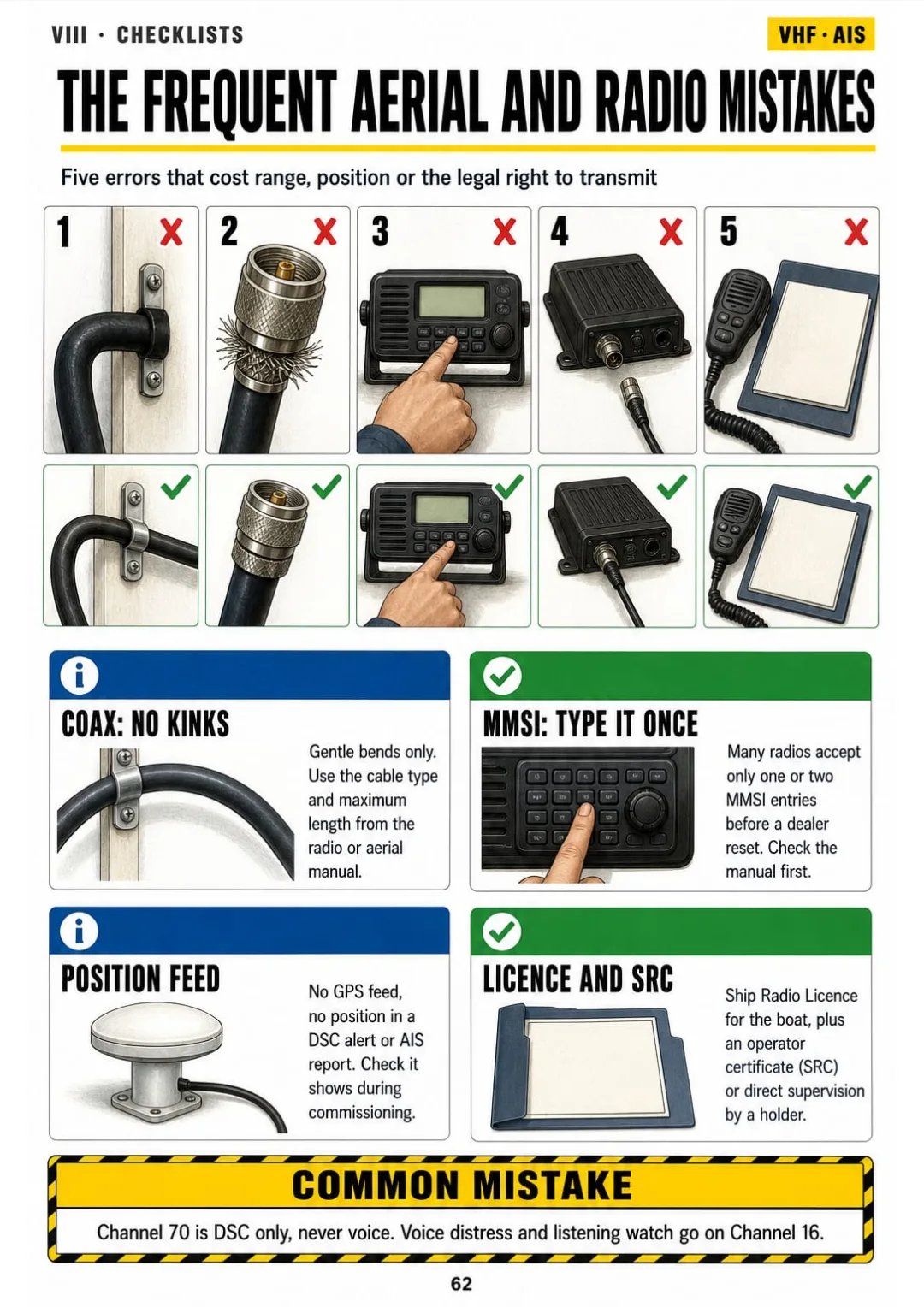
Check the MMSI before you enter it: many radios take only one or two tries

Take a Look at the 8 Parts and 61 Topics

Before You Touch a Cable

pp. 5-11
  1. How a Boat Electronics System Fits Together
  2. The Same Five Steps for Every Job
  3. 12 V or 24 V: Know Your Boat First
  4. Reading the Maker's Manual for the Numbers That Matter
  5. Safety First: Isolate, Test, Then Work
  6. The Tool Kit for a Clean Install
  7. Your First Block Diagram

DC Power Without Guesswork

pp. 12-20
  1. Volts, Amps and Watts on One Page
  2. Voltage Drop: Why Long Cables Starve Electronics
  3. The 3% Target for Electronics
  4. Choosing Cable Size in mm²
  5. Marine Cable: Tinned, Multi-Strand, Rated
  6. Fuses and Breakers: Protecting the Cable
  7. Where the Fuse Goes
  8. The Distribution Panel and Busbars
  9. Crimp, Seal, Support

The Data Network

pp. 21-30
  1. Backbone and Drops: The Shape of the Network
  2. Two Terminators, One at Each End
  3. Powering the Network: One Feed, the Right Place
  4. Network Load: Counting the 50 mA Units
  5. Cable Length Limits
  6. Data Networks on a 24 V Boat
  7. The Older Serial Connection: Talker and Listener
  8. Gateways: Joining Old and New
  9. Shield and Drain: Where It Connects
  10. Planning the Backbone on Paper

Chartplotter and Displays

pp. 31-36
  1. Choosing Where the Plotter Lives
  2. Compass Safe Distance
  3. Flush or Bracket Mount
  4. Routing Cables From Panel to Pod
  5. Sealing Deck and Bulkhead Glands
  6. Multiple Displays and Repeaters

VHF, AIS and Aerials

pp. 37-44
  1. Licences Before You Transmit
  2. Programming the MMSI
  3. AIS Classes: What Your Boat Sends
  4. VHF Aerial Height and Range
  5. Coax Cable and Signal Loss
  6. Fitting a Coax Connector
  7. One Aerial or Two: Splitters and Separation
  8. GPS Aerial Placement

Instruments and Sensors

pp. 45-52
  1. Depth Transducer: Through-Hull or In-Hull
  2. Fitting a Through-Hull Safely
  3. Depth Offset: Keel or Waterline
  4. Speed Log Paddlewheel
  5. Masthead Wind Sensor
  6. Heading Sensor and Compass Calibration
  7. Autopilot on the Network
  8. Engine Data and Tank Senders

Commissioning and Fault Finding

pp. 53-59
  1. Before First Power-Up
  2. Power-Up in Order
  3. Setting Data Sources
  4. Dockside Checks
  5. The First Sea Trial
  6. Fault Finding: No Power
  7. Fault Finding: No Data

Checklists and Frequent Mistakes

pp. 60-65
  1. The Frequent Backbone Mistakes
  2. The Frequent Power Mistakes
  3. The Frequent Aerial and Radio Mistakes
  4. Winter Install Plan: Weekend by Weekend
  5. Annual Checks Before the Season
  6. The One-Page Recap

Who This Book Is For

You're planning a winter refit

You draw the whole system on paper before buying kit or drilling a hole: what goes where, which cable and which fuse.

Sea trial day is coming

You follow the power-up order and the dockside checks page by page, so you arrive at the trial with everything switching on and showing data.

You've already fitted something

The plotter's on but the instruments say 'no data'? The fault-finding pages take you from the terminators to the power feed, step by step.

Plus: 2 Free Books

Boat Electronics Workbook: 25 Worked Problems
BONUS 1

Boat Electronics Workbook: 25 Worked Problems

Practise the sums before you cut a cable: network load in amps, cable size over the run in metres, fuse choice and backbone plans, each with the answer drawn out.
Chart Table Quick Cards: Mistakes and Checks
BONUS 2

Chart Table Quick Cards: Mistakes and Checks

The most frequent installation mistakes and the key checks on printable cards, to keep by the switch panel and see at a glance before you power up.

30-Day Guarantee

30-day guarantee: if a file doesn't open, if the content isn't what the product page describes, if you were charged twice or the email never arrived, write to us and we'll refund you in full. You pay once. No subscriptions.

Frequently Asked Questions

Is it for me if I've never wired a boat network before?

Yes. It's written for owners who fit their own electronics: short sentences, every step drawn, from the first block diagram to the sea trial. It covers 12 V and 24 V DC boats.

Where does the content come from?

It's checked against ISO 10133 for small craft DC installations, the published marine instrument network standards, Ofcom guidance on the Ship Radio Licence and MMSI, and the Boat Safety Scheme checklists. Where a limit depends on your kit, the page flags it so you can confirm it in the maker's manual.

Is it official material?

No. It's an independent illustrated book, not affiliated with any standards body, regulator or equipment maker. It doesn't give you a certificate: to use a VHF you still need the Short Range Certificate, and the book explains where it fits in the job.

Does it replace the maker's manual or a qualified installer?

No. It explains how the system works and the order to do the job. Always check your equipment's manual, and call a qualified marine electrician if you're unsure.

Does it work with my plotter and instruments if it doesn't name brands?

Yes. It explains how any NMEA 2000 or NMEA 0183 instrument network works: backbone, drops, terminators, power feed and data sources. Where a number depends on the maker (drop length, network load, fuse rating), the page tells you to check it in your equipment's manual. The 25 worked problems are written for this book.

When and how does it arrive?

As a PDF by email, sent to the address you enter at checkout. The two free books come the same way.

Do I have to pay every month?

No. It's a one-off payment, with no subscription.

Can I have it on paper?

Yes. The PDF is made to print, so you can keep it on board or by the chart table.

How does the refund work?

You have 30 days. We refund everything if the file won't open, if the book isn't what you see on this page, if you were charged twice or if the email doesn't arrive: just email us.

£19.99£57.99
Get the book · £19.99

This is a digital PDF book sent to your email: nothing is printed or shipped.